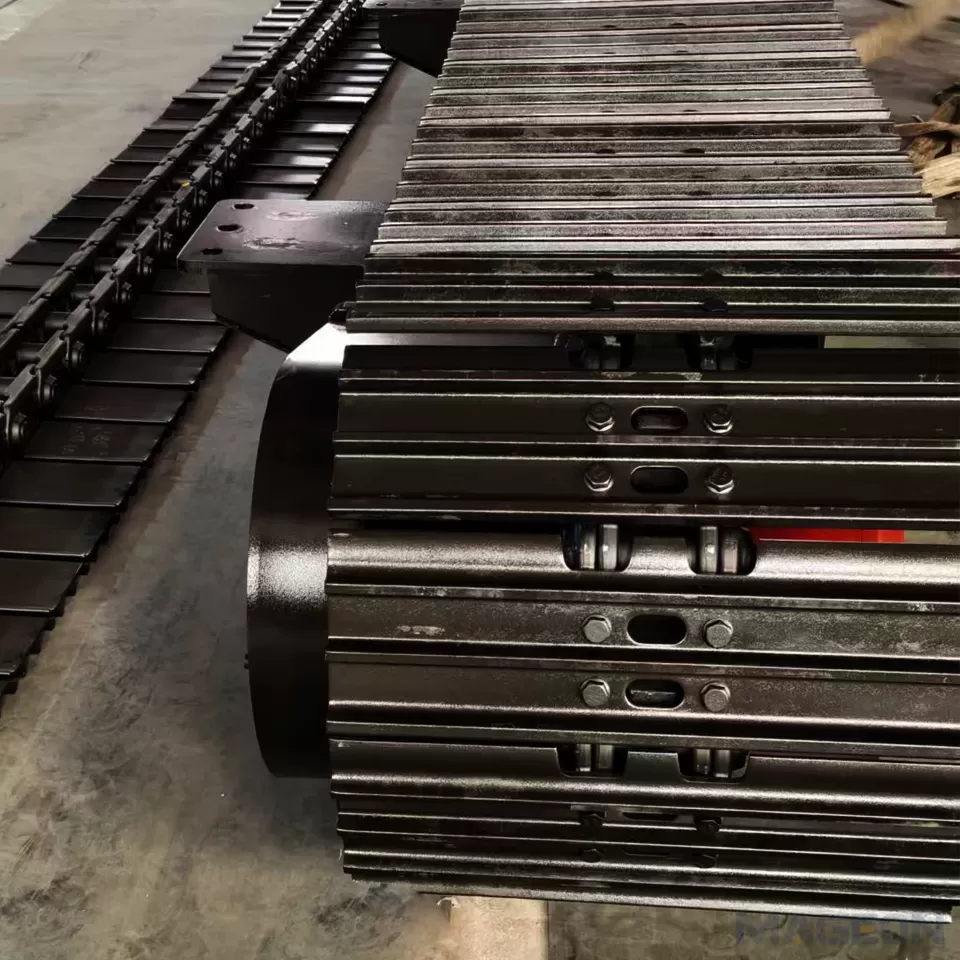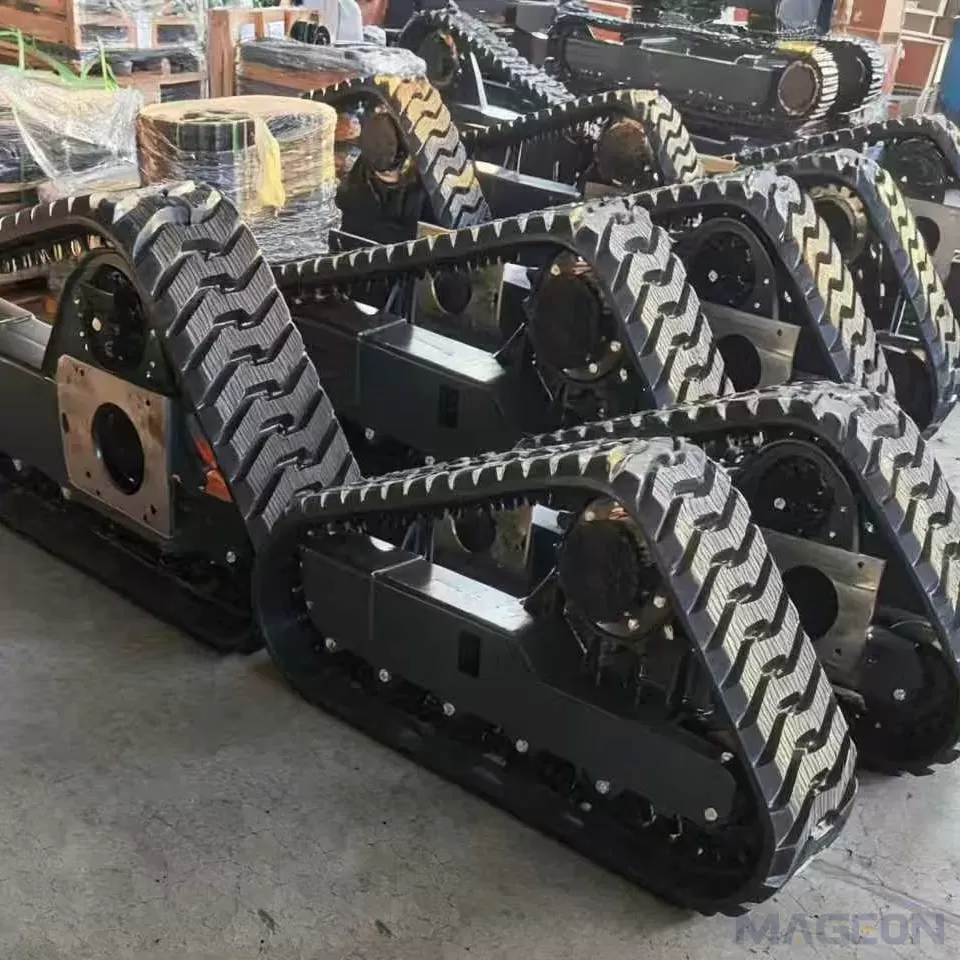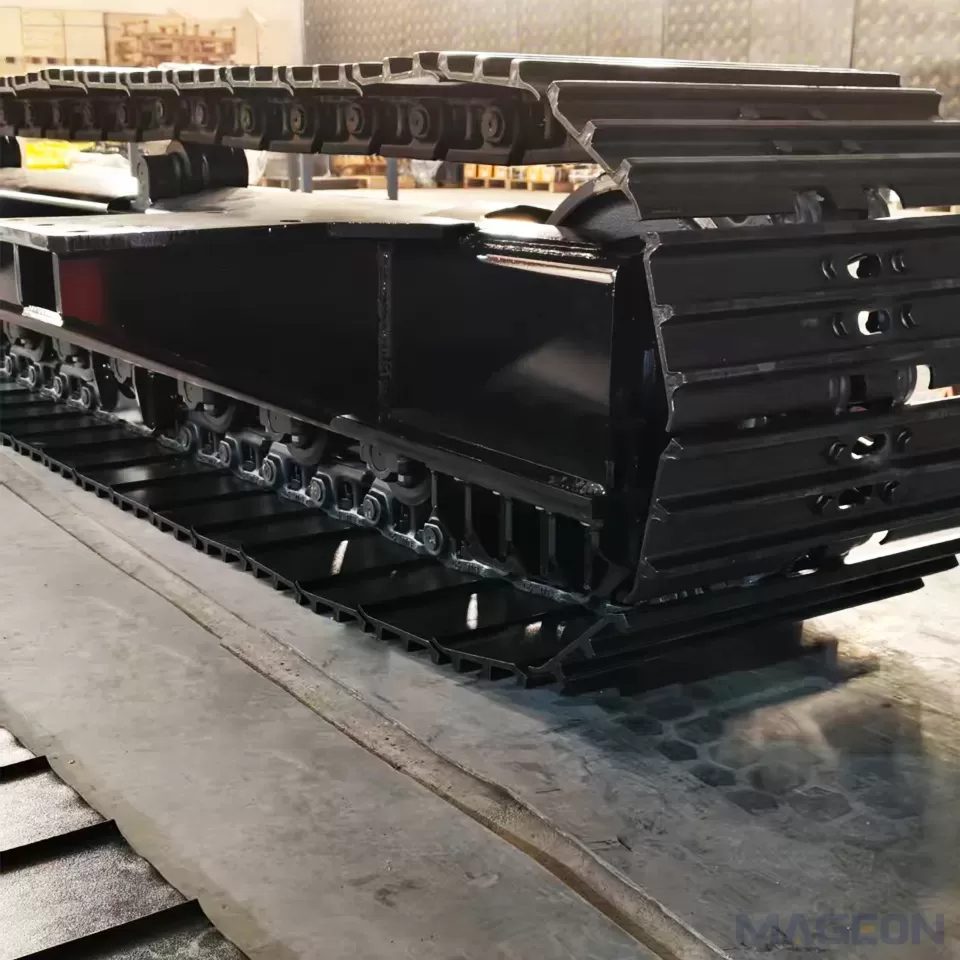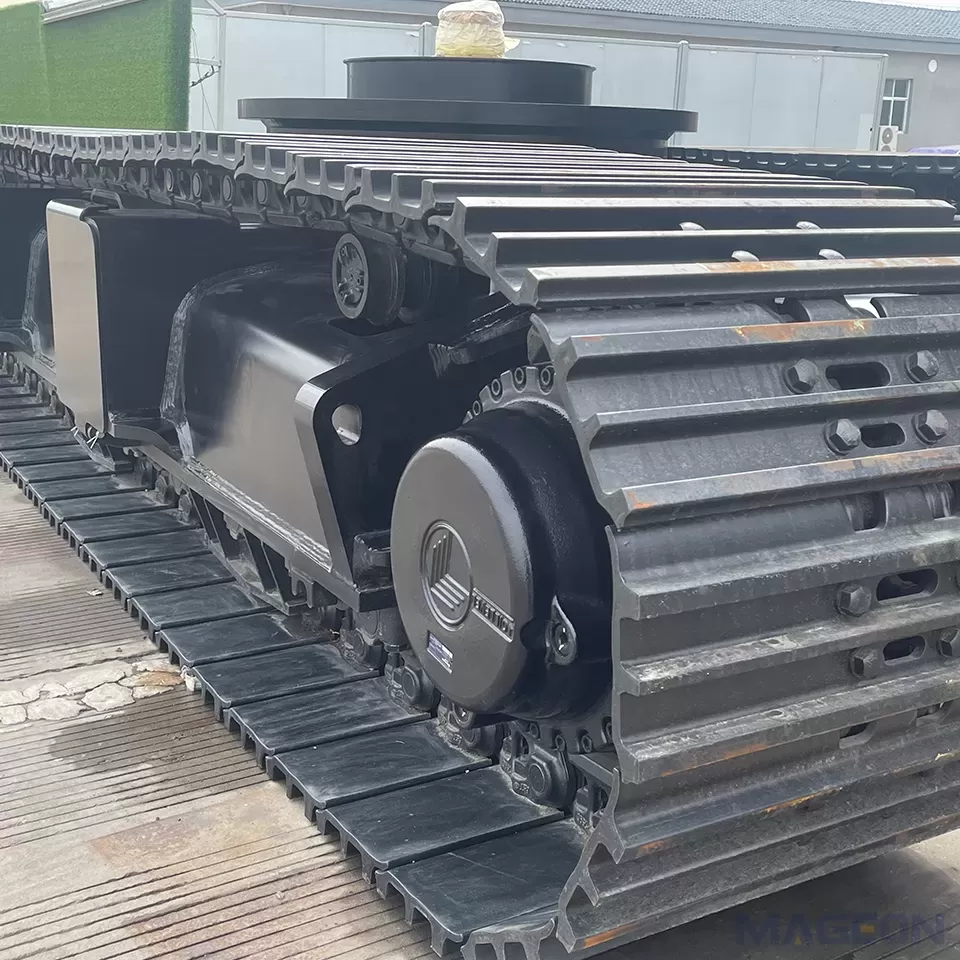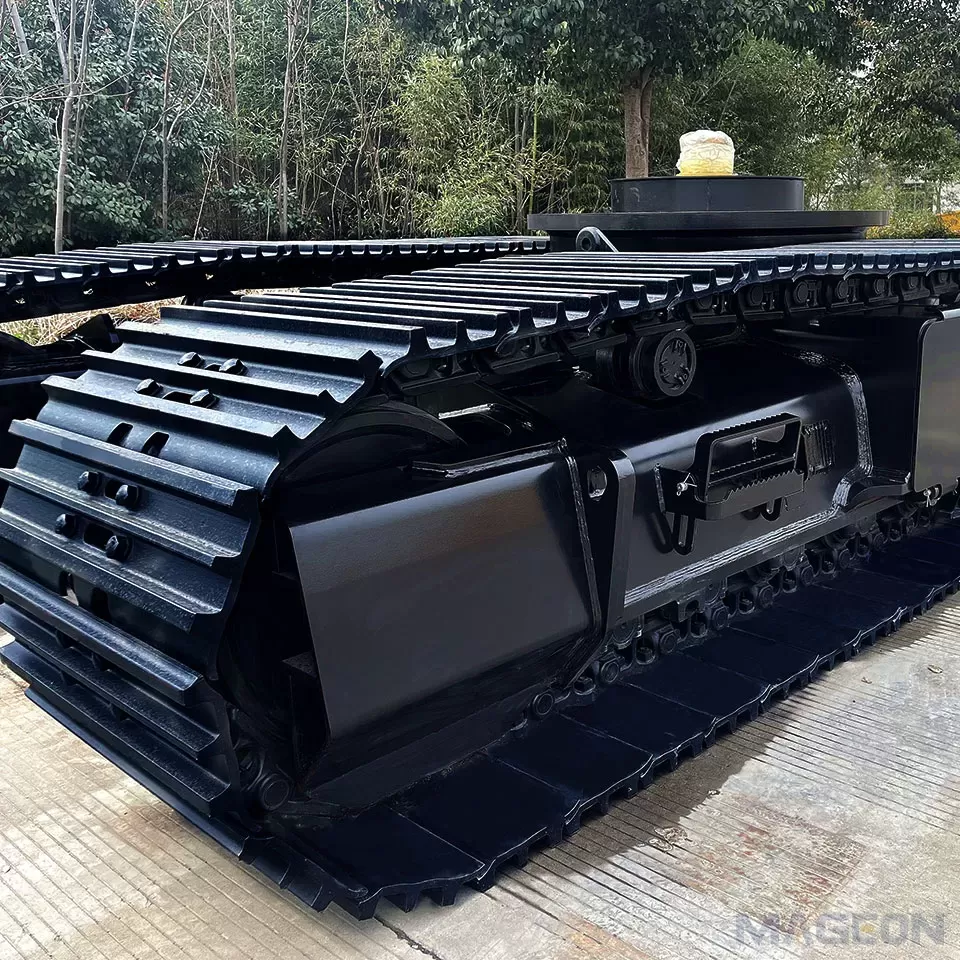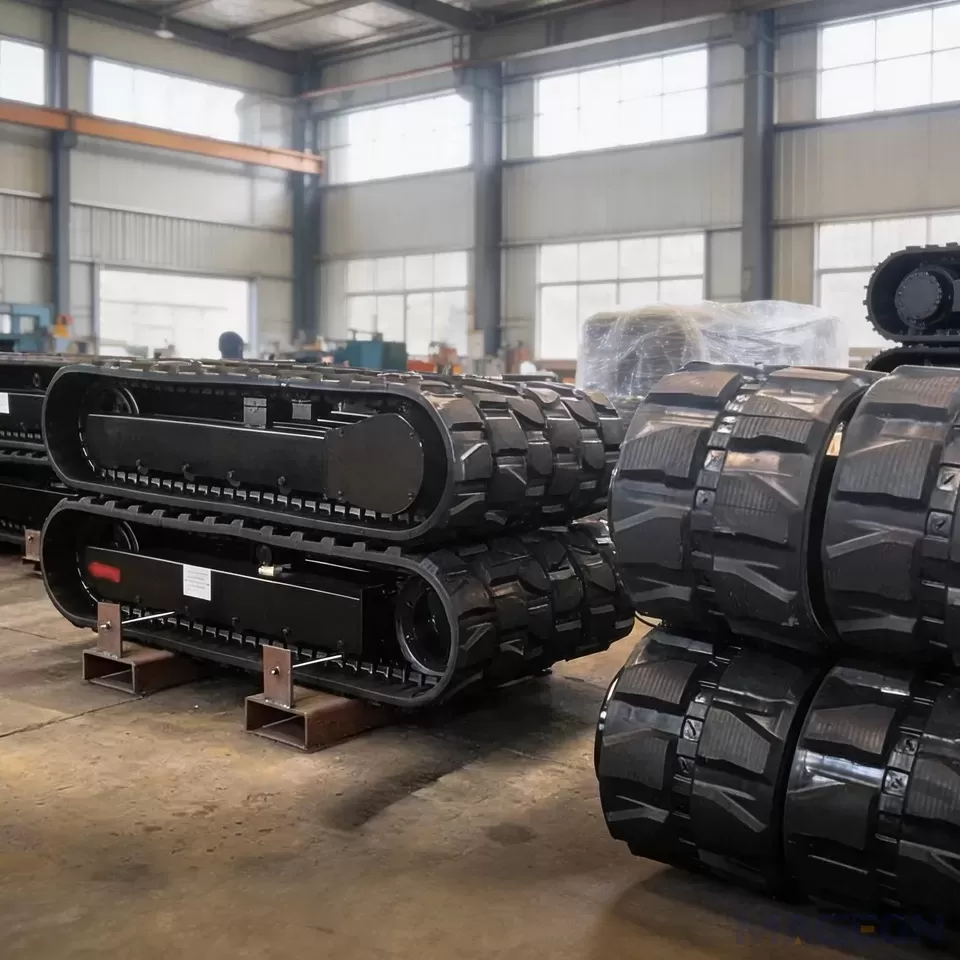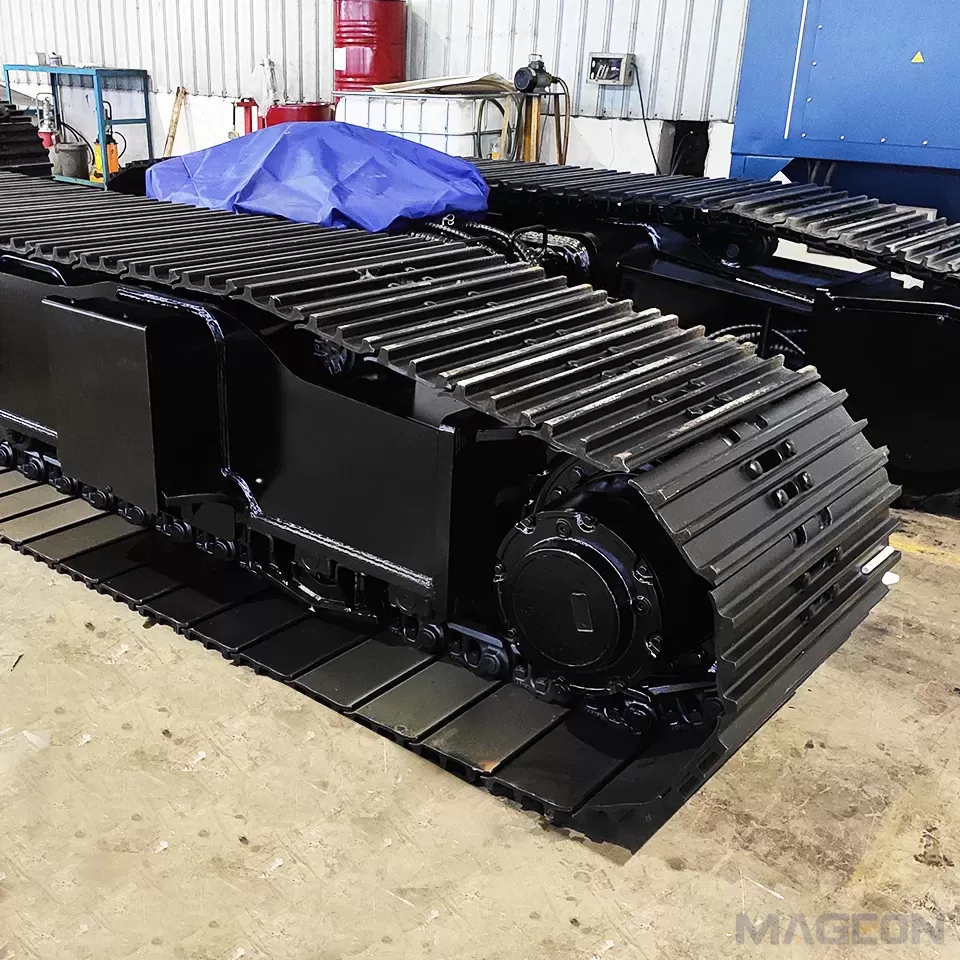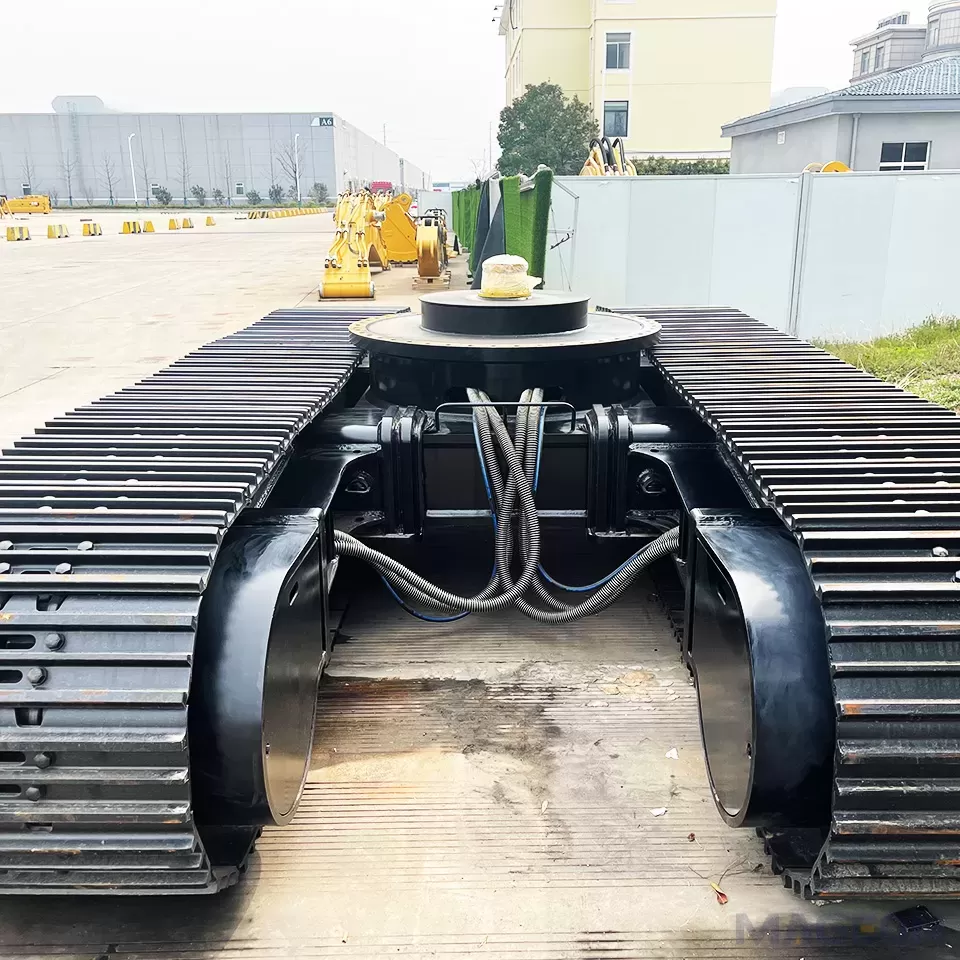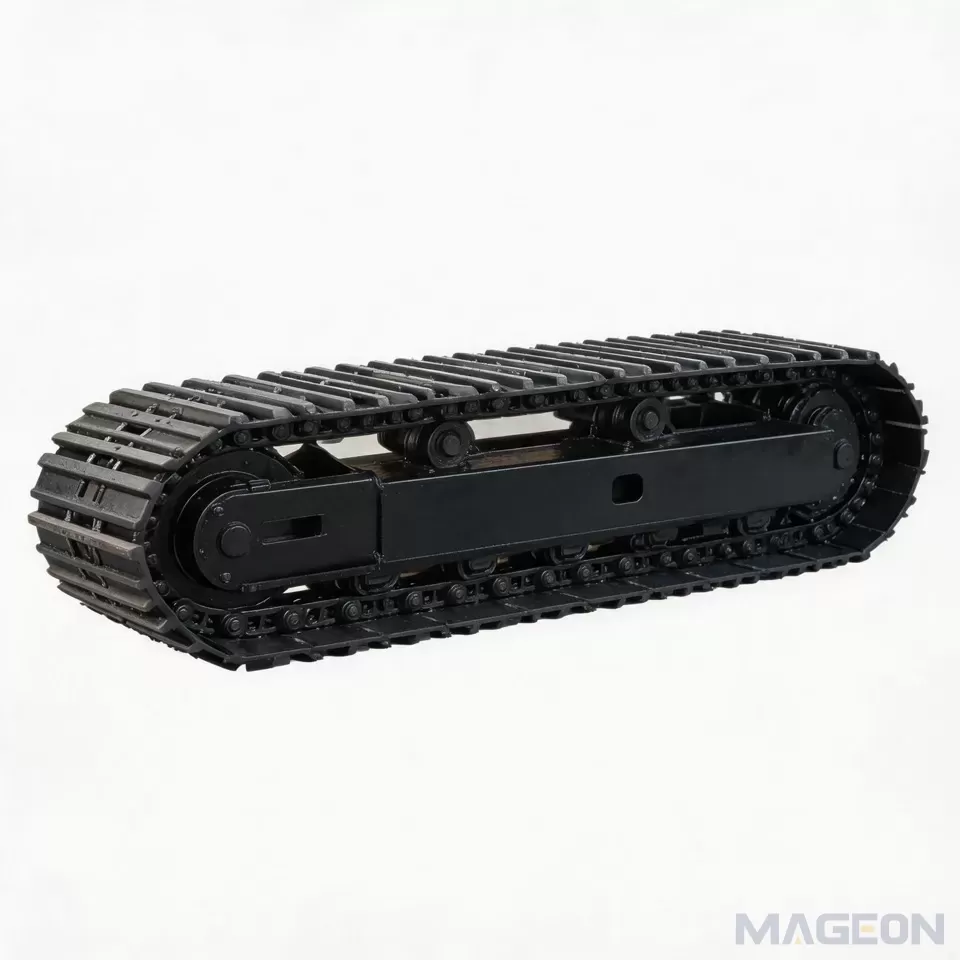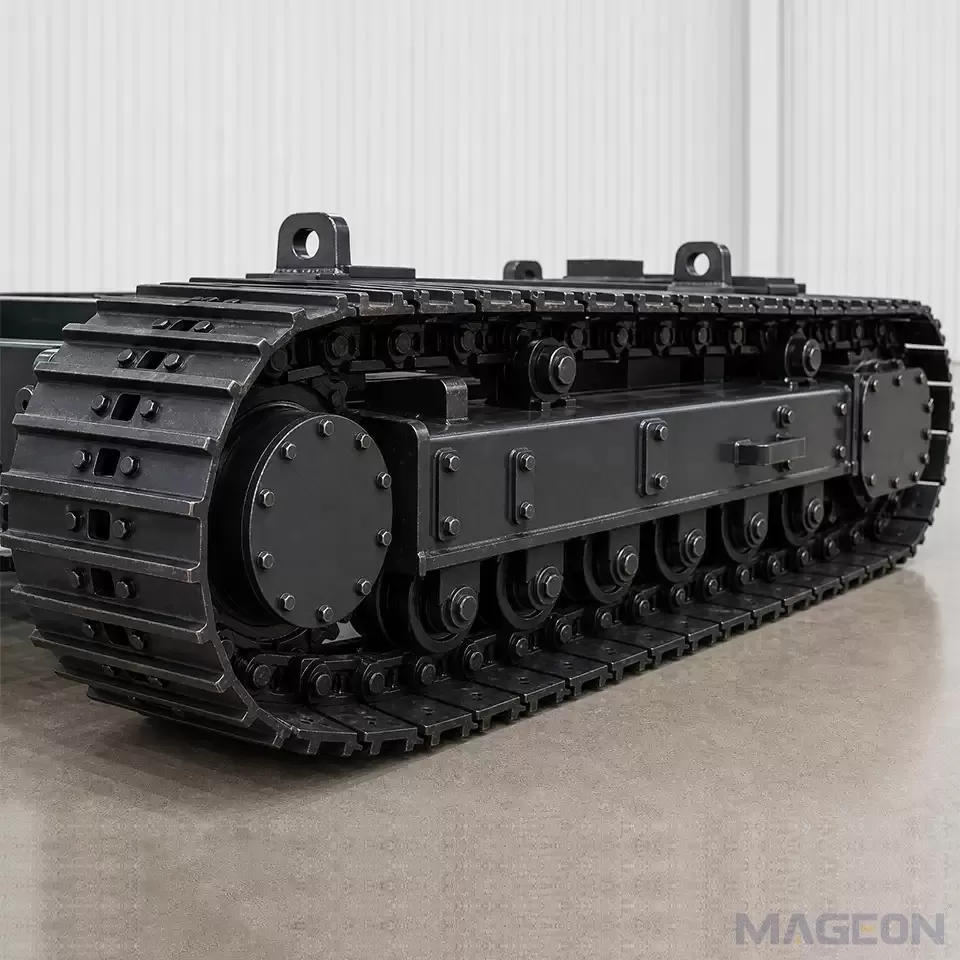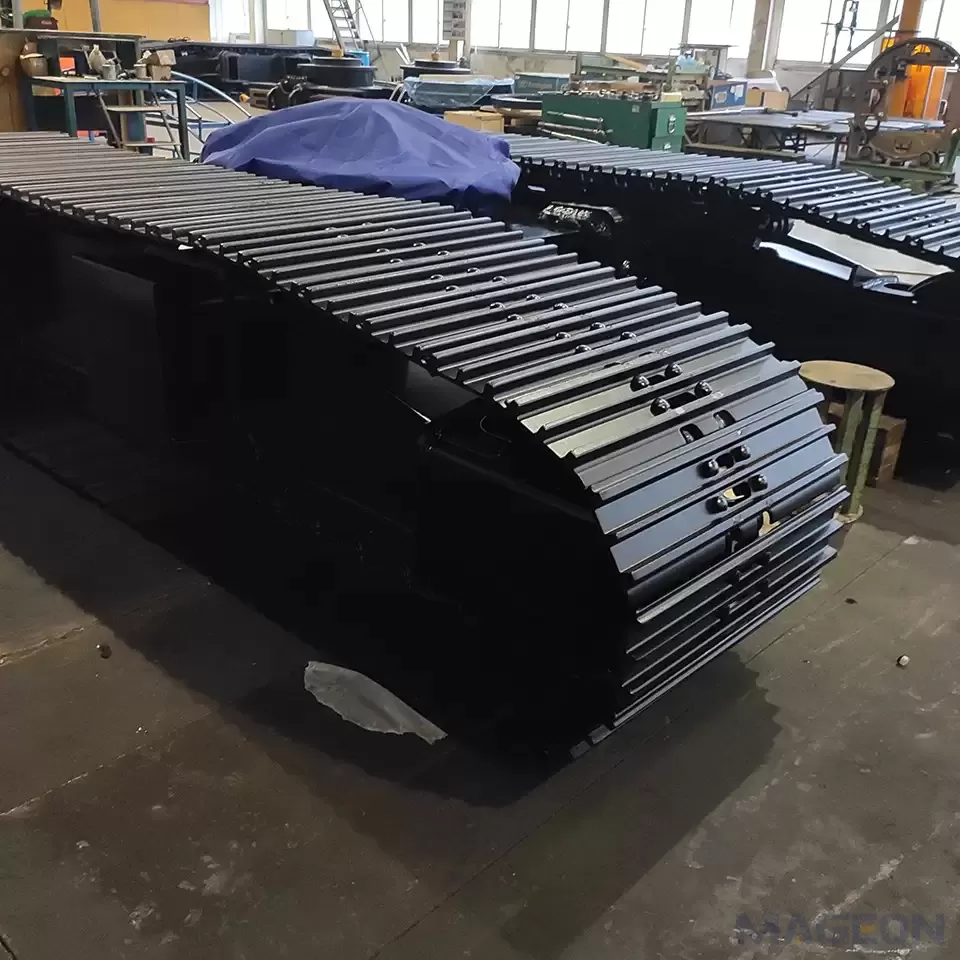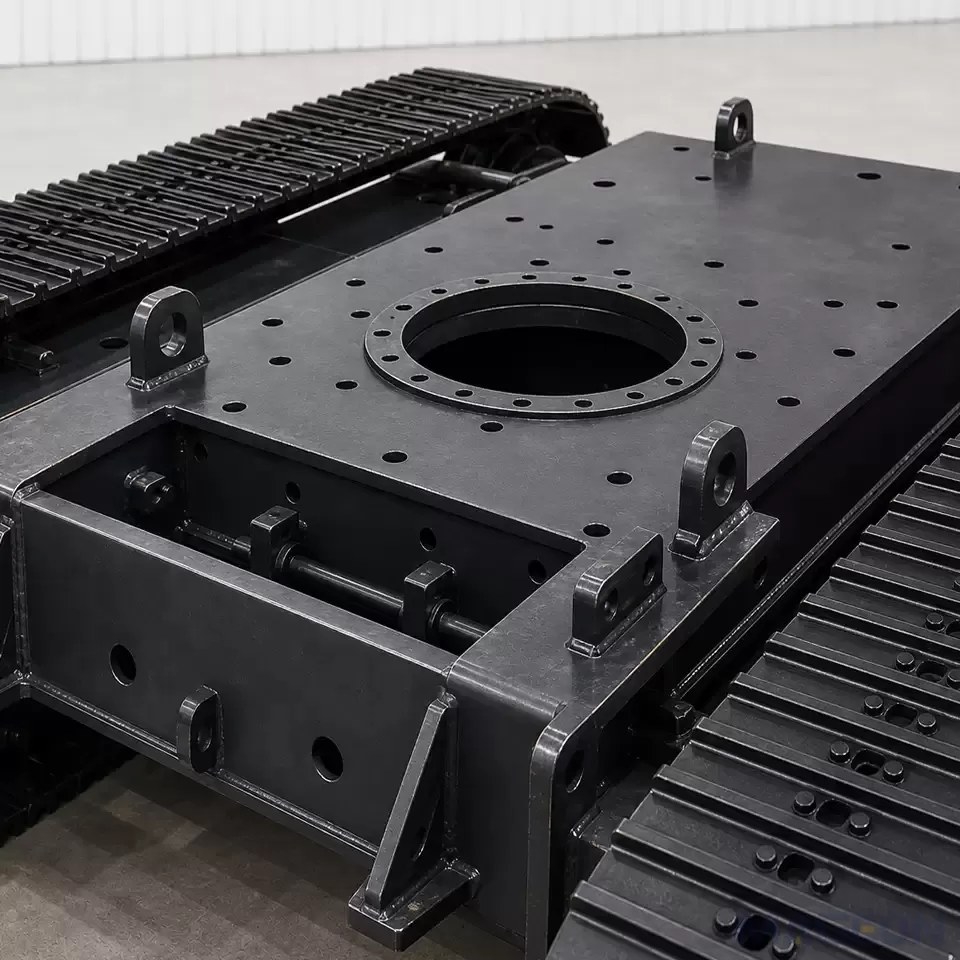
What kind of equipment is this steel track undercarriage designed for?
Machine Types We Build For
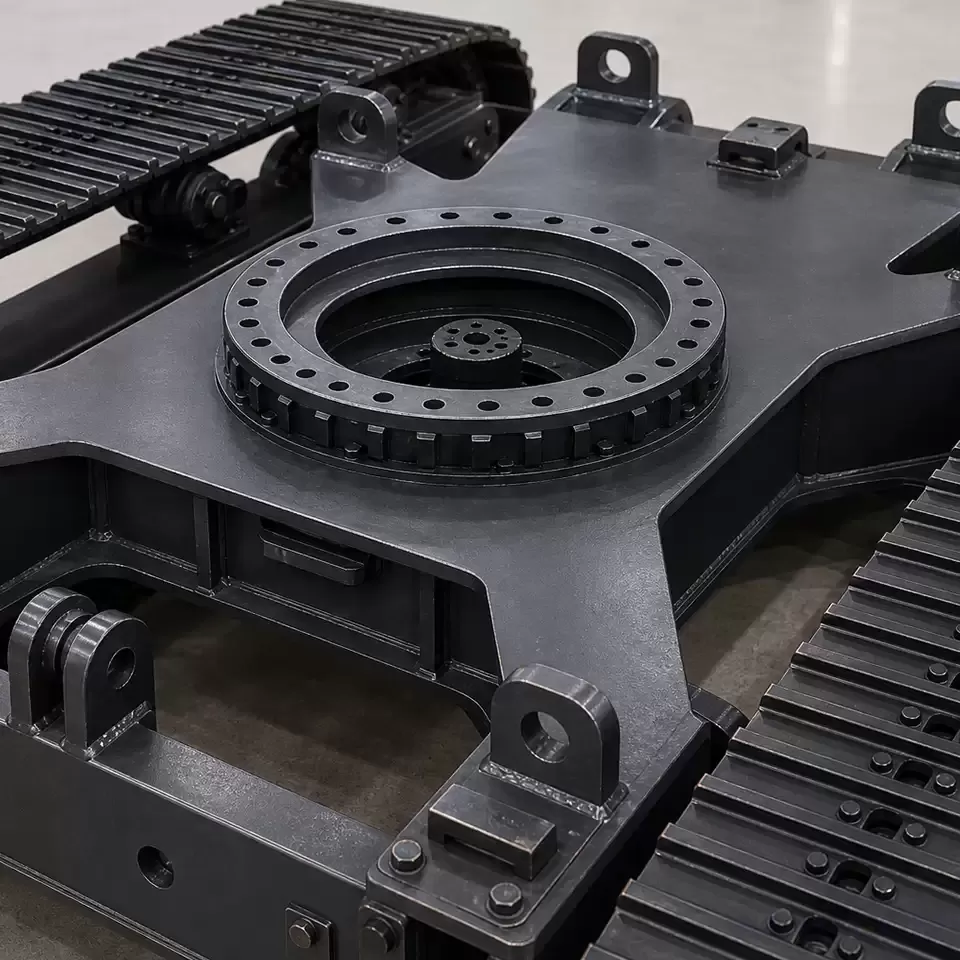
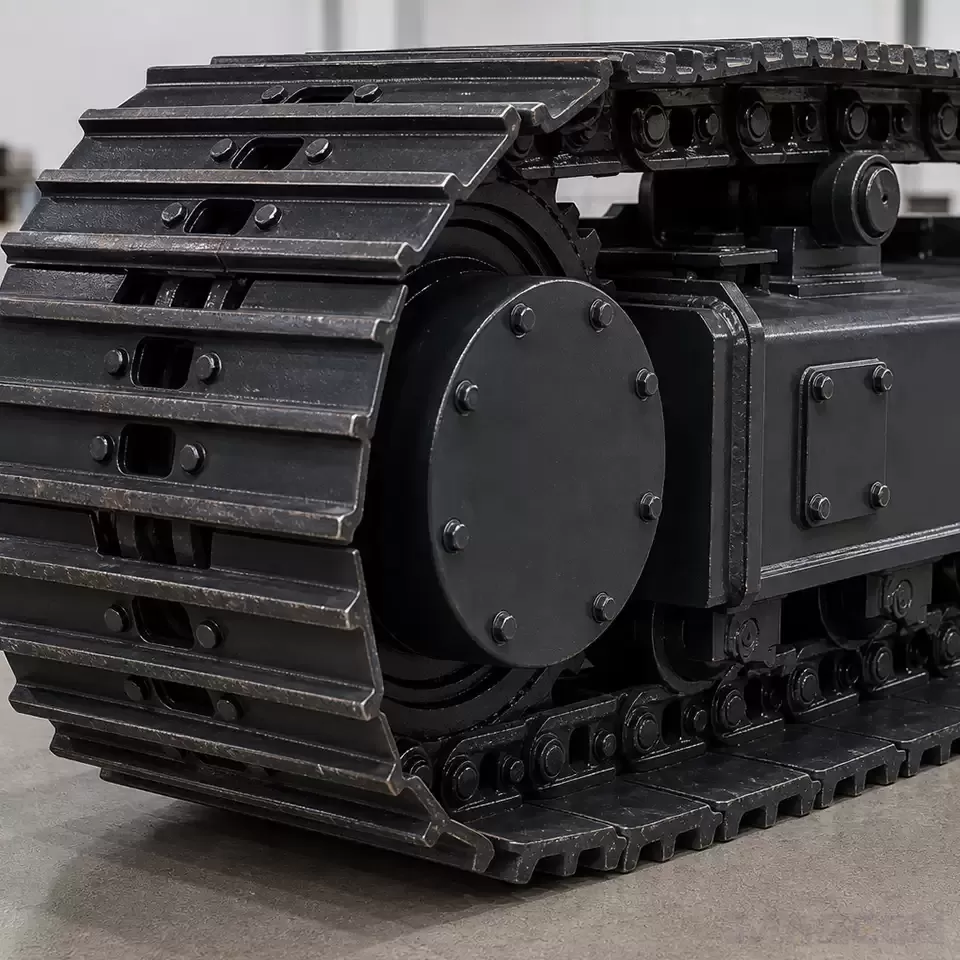
MAGEON steel crawler undercarriages are designed for tracked machines across five main categories. The architecture differs mainly in how the load is distributed and how the drive is arranged, so the same chassis family covers a very wide machine range.
| Machine category | Typical application | Load range | Key design driver |
|---|---|---|---|
| Rotary drilling rigs | Geotechnical drilling, foundation work, water well drilling | 5-150T | High downforce and stability against drilling reaction torque |
| Excavators | Hydraulic excavators, mining shovels, trenchers | 5-80T | Arm reaction force transmission through the frame |
| Drilling and foundation equipment | Piling rigs, screw rigs, crawler cranes | 10-150T | Ground pressure and stability on soft terrain |
| Material handling | Tracked dumpers, pipe layers, grapples, slew loaders | 3-60T | Centre of gravity shift as the load moves |
| Special and modified machines | Agicultural robots, aerial platforms, tunnel vehicles, walking machines | 0.5-30T | Interface fit and unusual ground clearance |
Four-Wheels-One-Track Configurations
Many modern machines use a mixed arrangement - rubber wheels at one end and a crawler track at the other. This is the configuration used on most rotary drilling rigs and on walking excavators, and it is worth understanding because it changes the design logic.
With a conventional full-track chassis, the machine sits on a rigid frame and the whole undercarriage is the structural member. With four-wheels-one-track, the track section becomes a mobile base while the wheels carry part of the load and control the steering. The engineering focus shifts to the track section's own stiffness and to how the transition between the wheel line and the track line handles articulation.
Why the Interface Matters More Than the Machine Type
In practice, the machine type alone is not enough to select a chassis. The four things that actually determine the design are the mounting interface, the total machine weight, the load distribution including the working envelope, and the ground condition. Two machines of the same nominal type can need completely different chassis if the mounting points or the weight distribution differ - for example, a drilling rig with a tall mast has a very different load profile from a low-reach rig of the same nominal capacity.
This is why we ask for the interface drawing rather than just the machine name. A chassis that is correct for one rig and wrong for another will show up as track wear problems or frame cracking, and both are expensive to rectify after delivery.
Configurations We Have Built
- Standard rigid crawler frame, sprocket at the rear, idler at the front
- Four-wheels-one-track with a raised walking beam
- Telescopic booms with hydraulic width adjustment for narrow passage work
- Low-profile chassis with reduced ground clearance for tunnel and indoor work
- High-clearance chassis with a raised sprocket for mud and marsh work
- Traction-optimised configurations with larger shoes and wider grousers for soft ground
- Undercarriages for fully electric machines, with no hydraulic drive and a different motor interface
Tell us the machine type, the gross weight, the working load, the ground condition, and the interface dimensions, and we will confirm which configuration is appropriate and what it will take to build it.
Please leave your customization requirements, and we will contact you as soon as possible!
Leave your requirements, we'll get back to you within 24 hours.