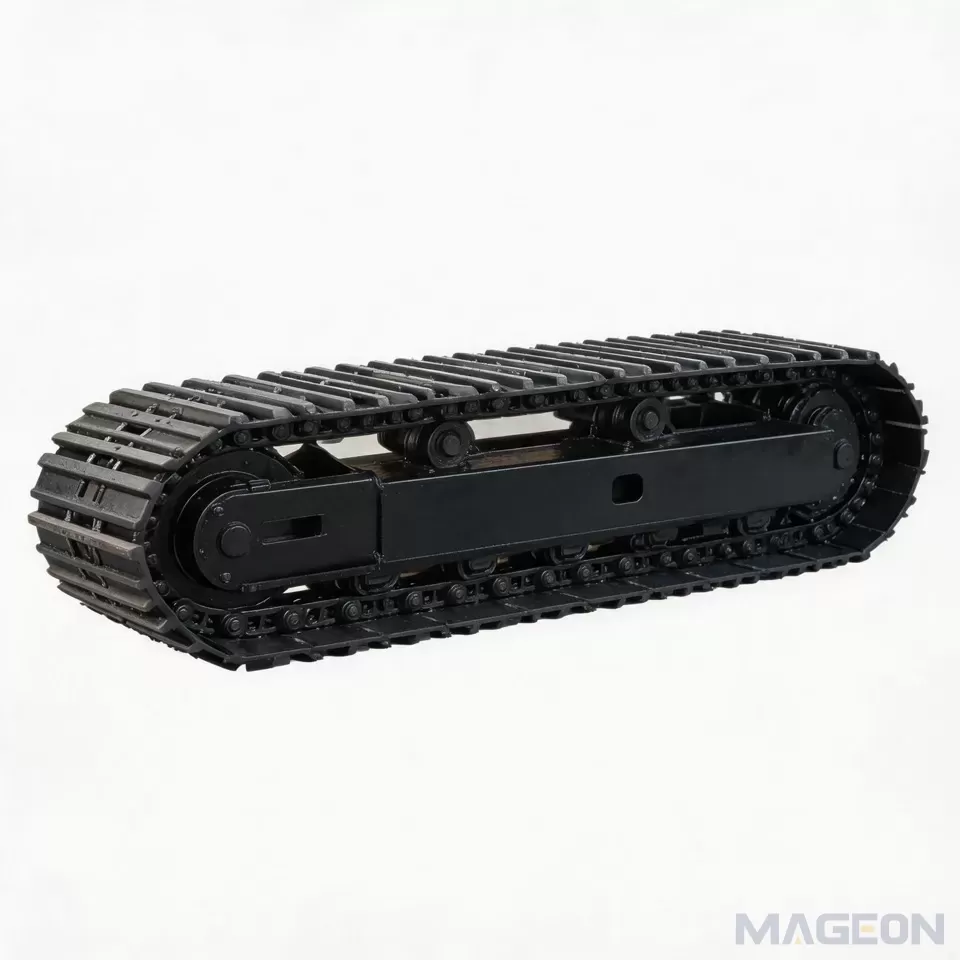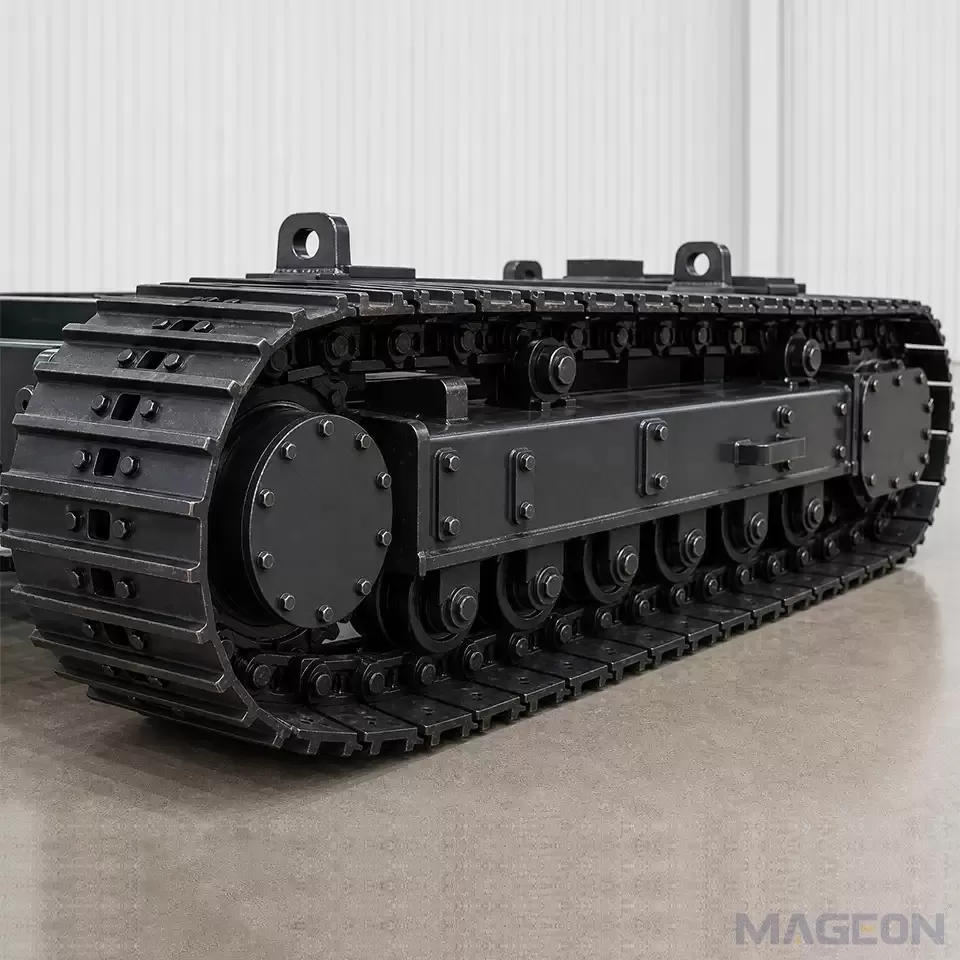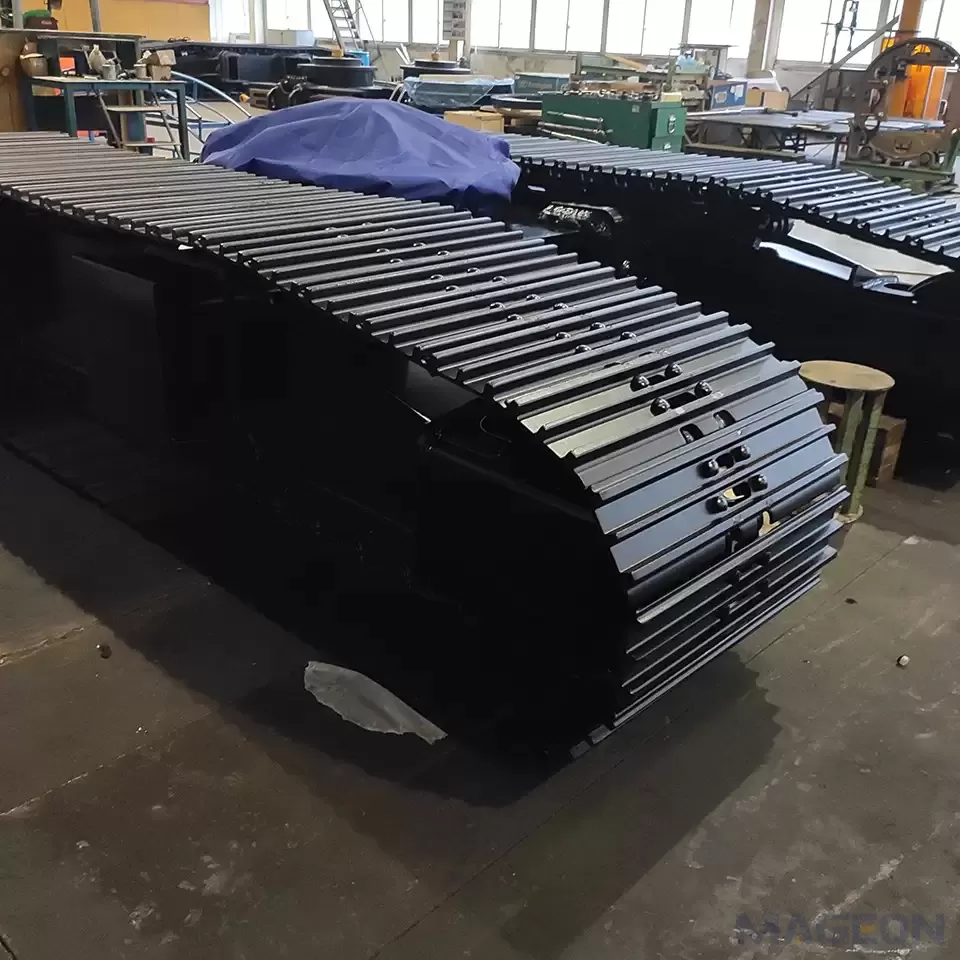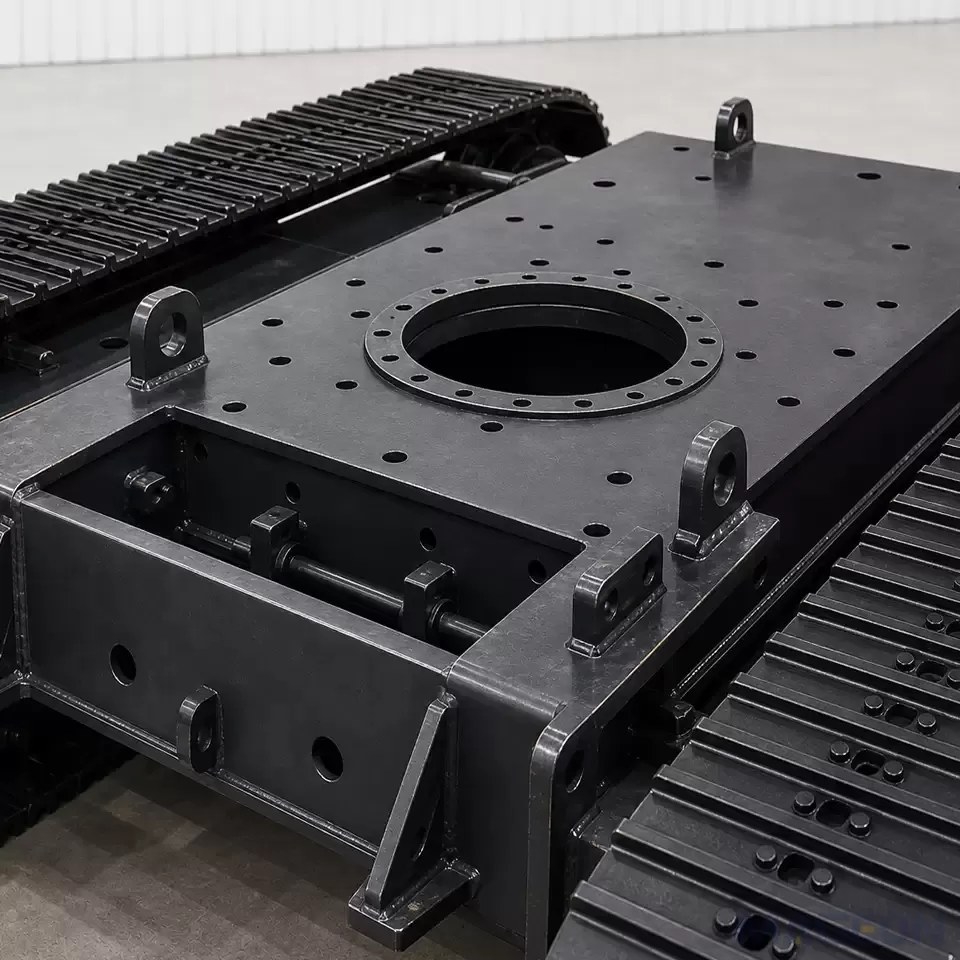
Can this undercarriage work on complex urban ground conditions?
Yes, With the Right Configuration
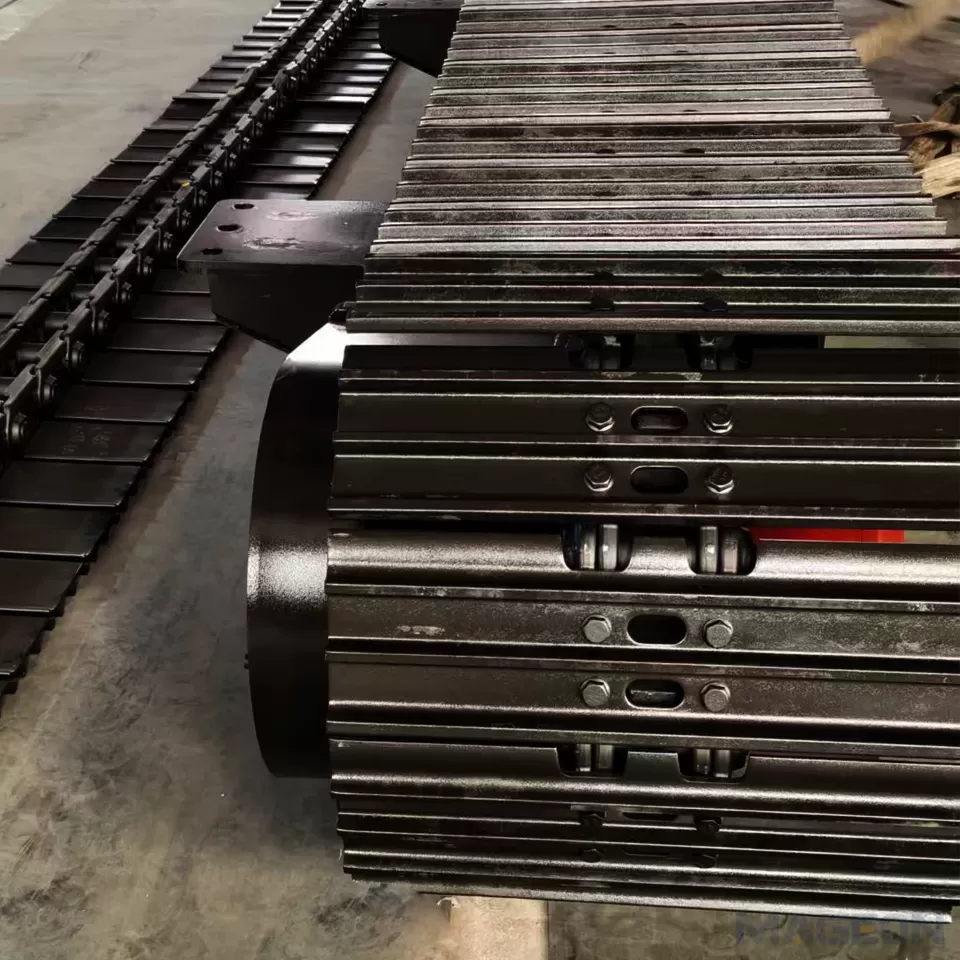
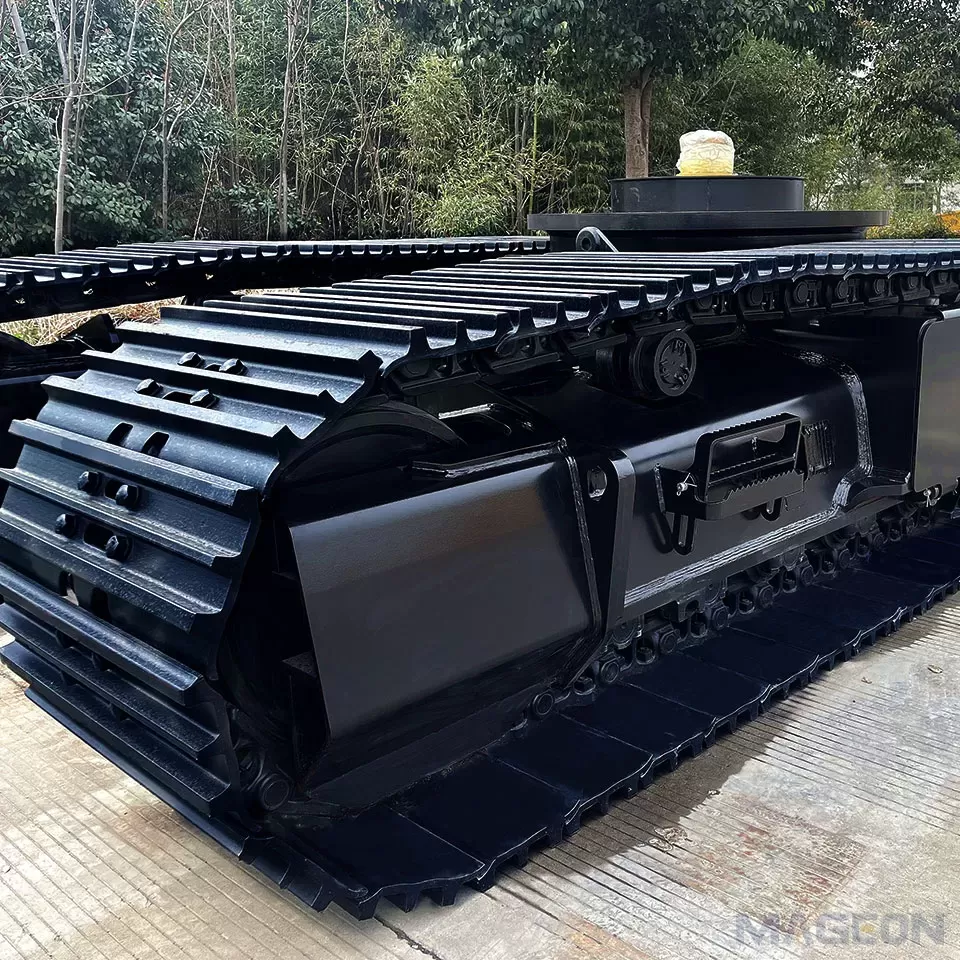
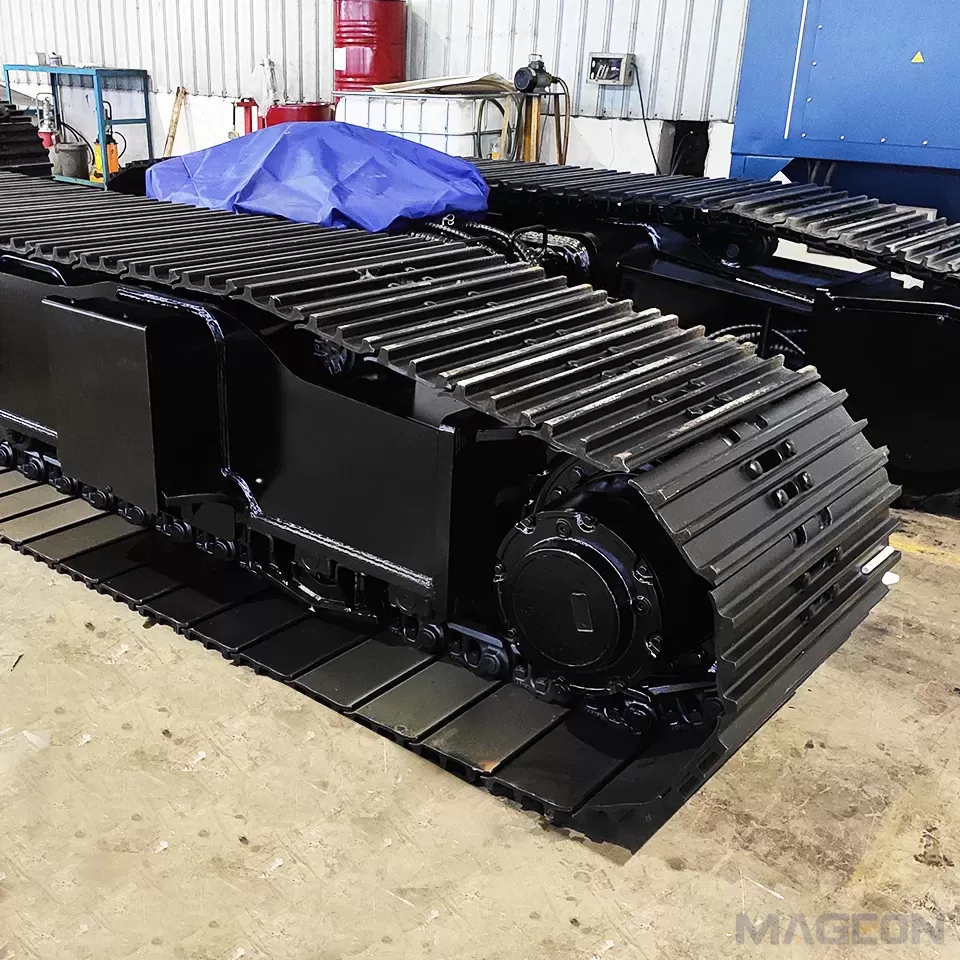
A steel crawler undercarriage can work on complex urban ground, but the answer always comes with conditions. Urban sites combine several demanding features in one place, and the chassis has to be configured for the worst of them rather than the average.
What Makes Urban Sites Demanding
| Urban condition | Effect on the chassis | Configuration response |
|---|---|---|
| Broken asphalt, rubble, kerbstones | Point loading on the track chain and impact on the roller mounts | Reinforced track chain pitch, hardened roller rims, thicker shoe wear plate |
| Narrow streets and doorways | Turning radius exceeds the machine width | Telescopic width adjustment, or a narrow fixed-width design |
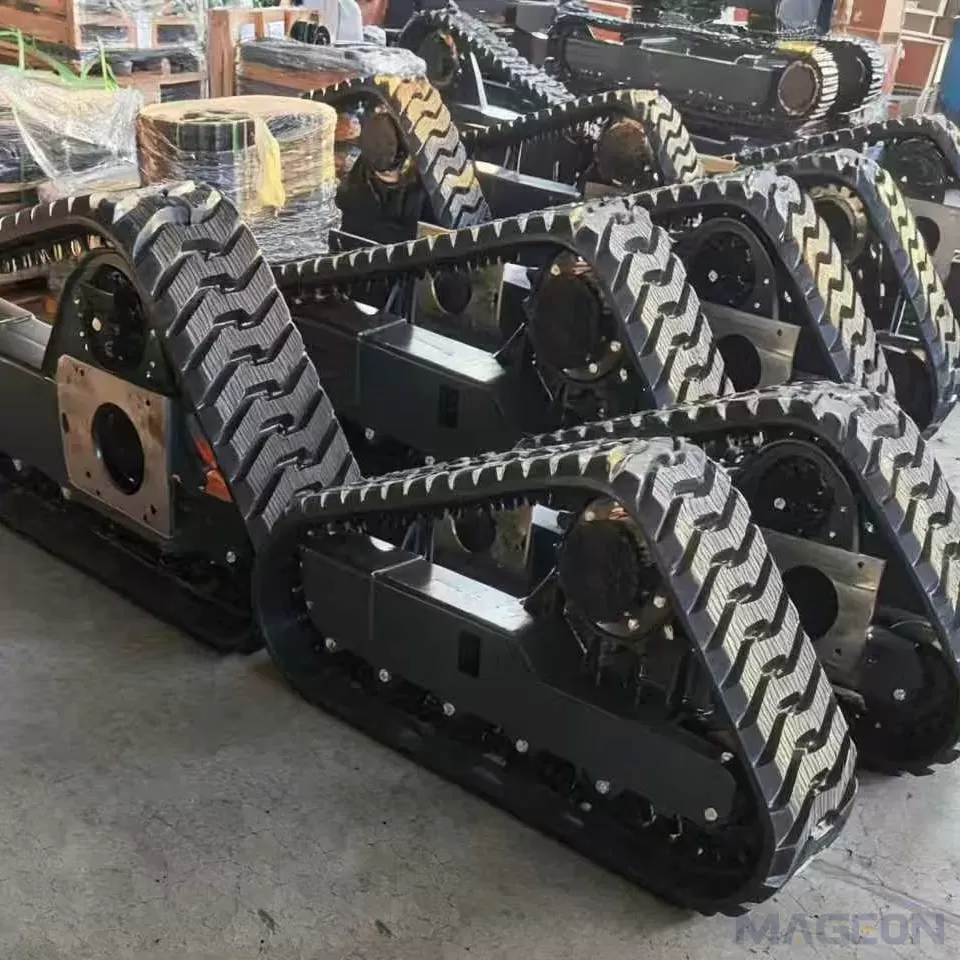
| Soft asphalt and landscaped verges | Ground pressure damages the surface and the machine sinks | Wider tracks with lower ground pressure, or rubber-pad conversion |
| Pipes, cables and shallow utilities | Track chain damage and derailment risk | Protective track shoes, careful ground clearance selection |
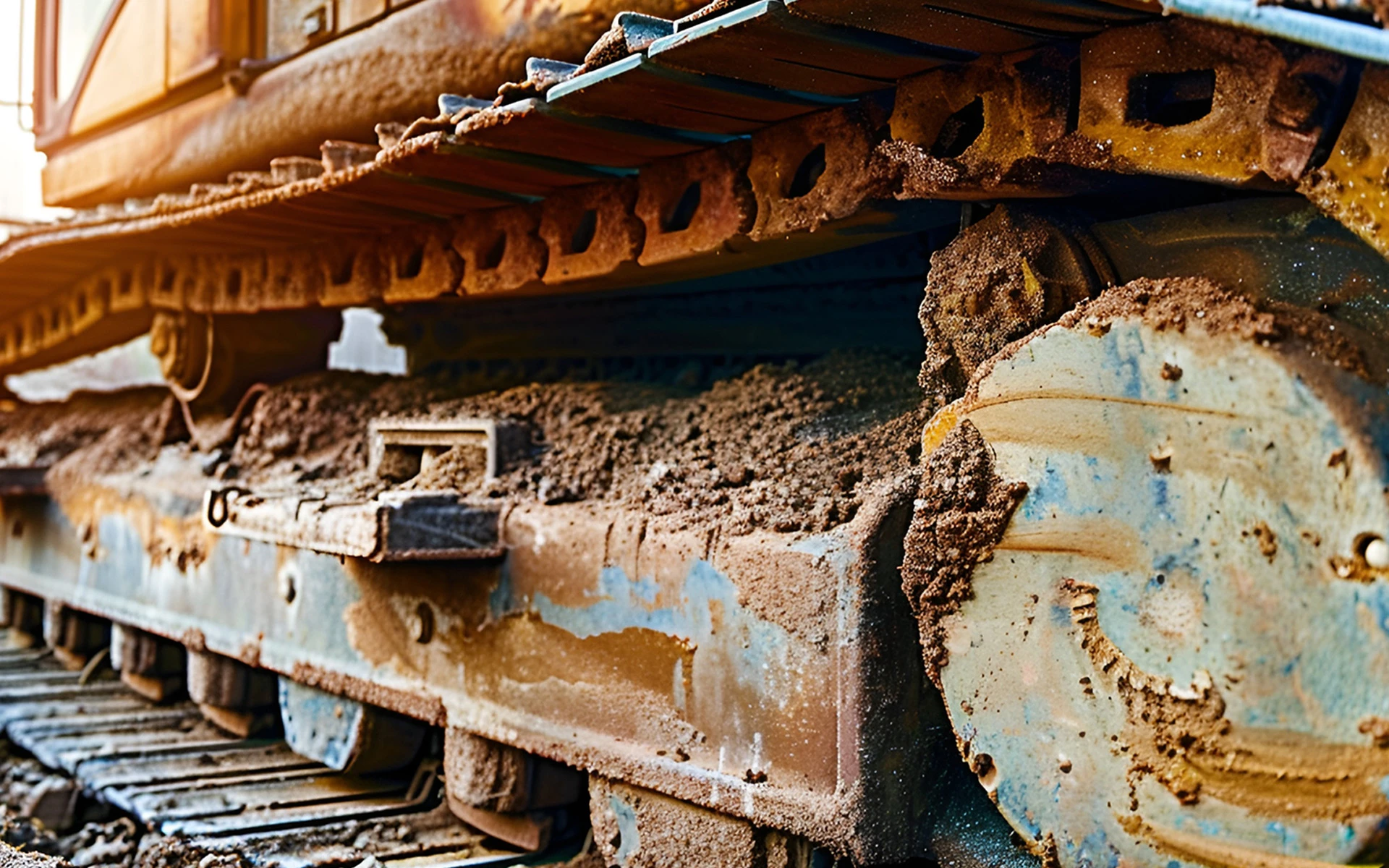
| Wet, oily, chemically aggressive surfaces | Corrosion of pins, bushings and hydraulic components | Anti-corrosion coating, sealed and greased track chains, stainless pin sleeves |
| Continuous travel on hard surface | Accelerated wear on rubber elements and pin seals | Steel-on-steel configuration with appropriate grease intervals |
Three Configurations We Recommend for Urban Work
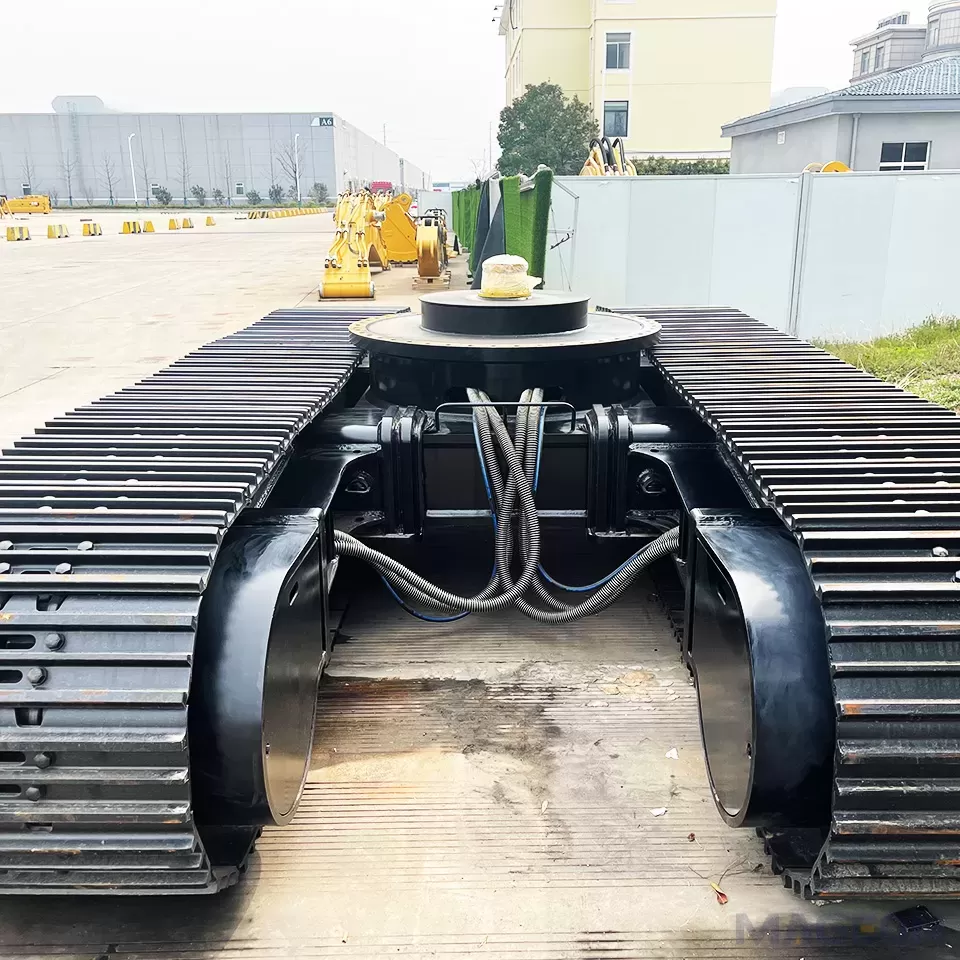
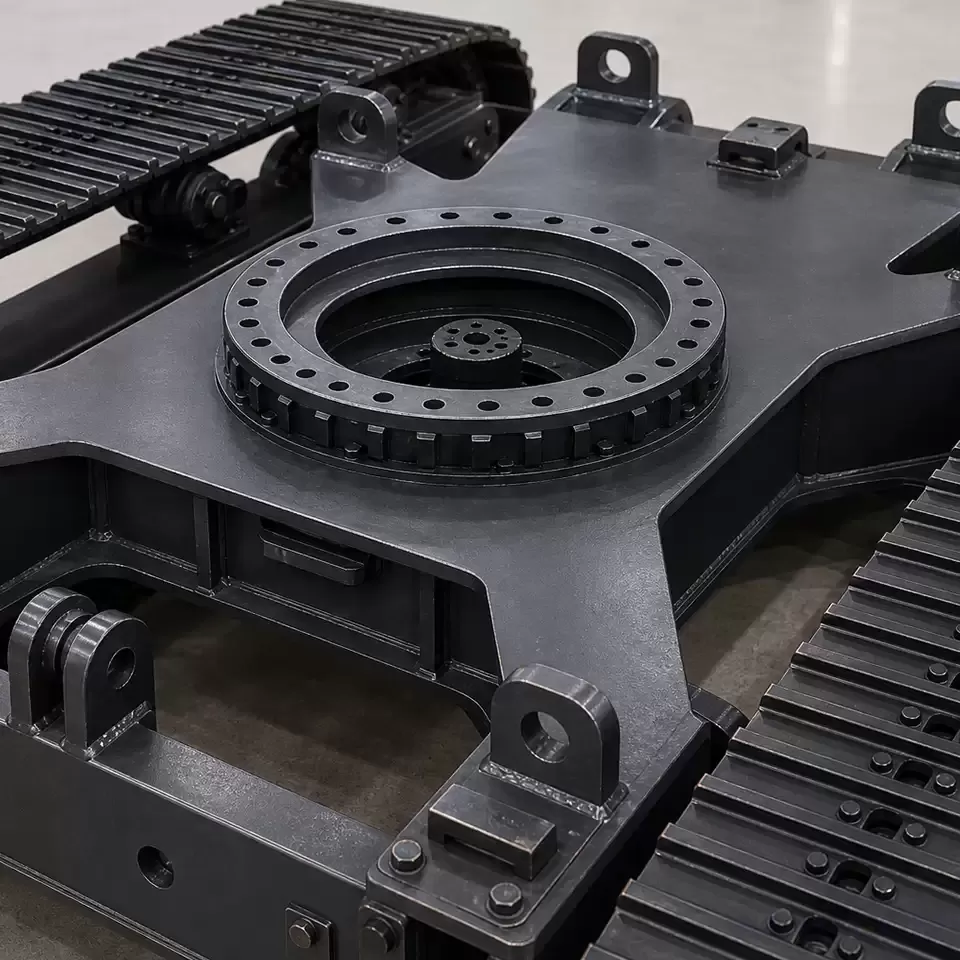
- Telescopic crawler undercarriage - the track width retracts hydraulically to pass through a standard doorway or a confined site entrance, then extends for stability during digging. This is the most requested configuration for urban utility and foundation work.
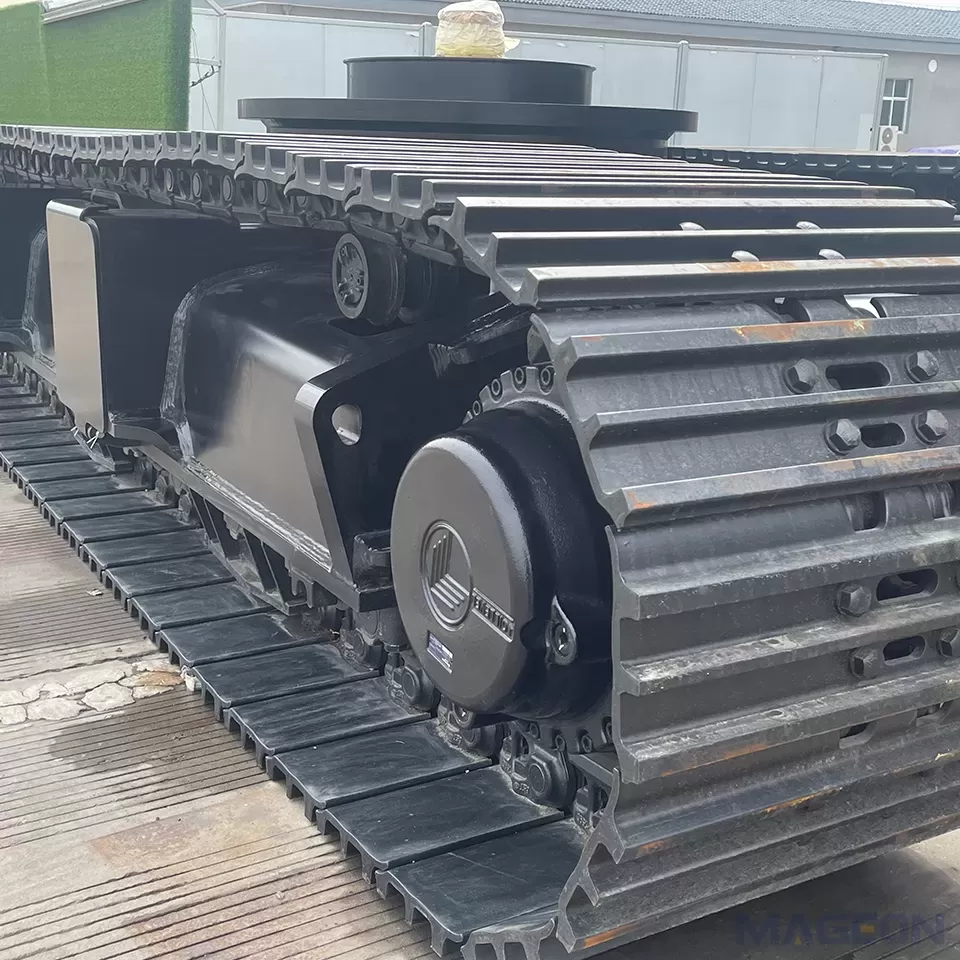
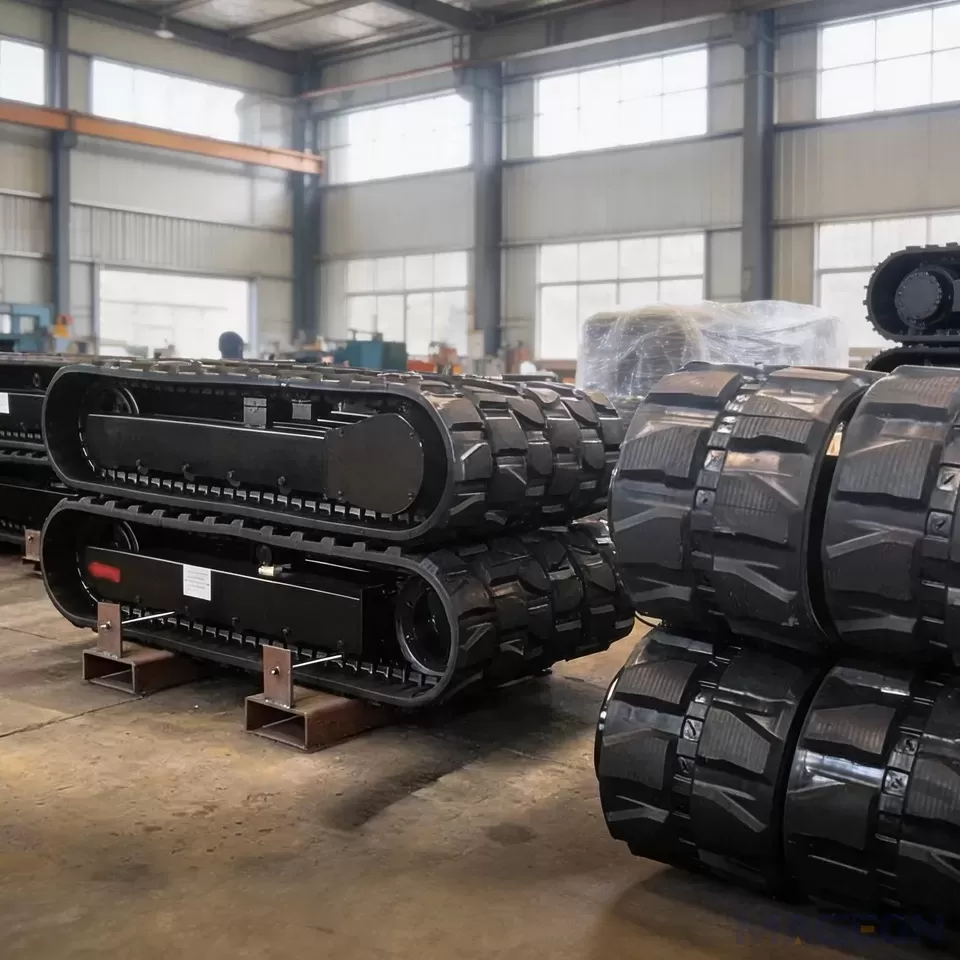
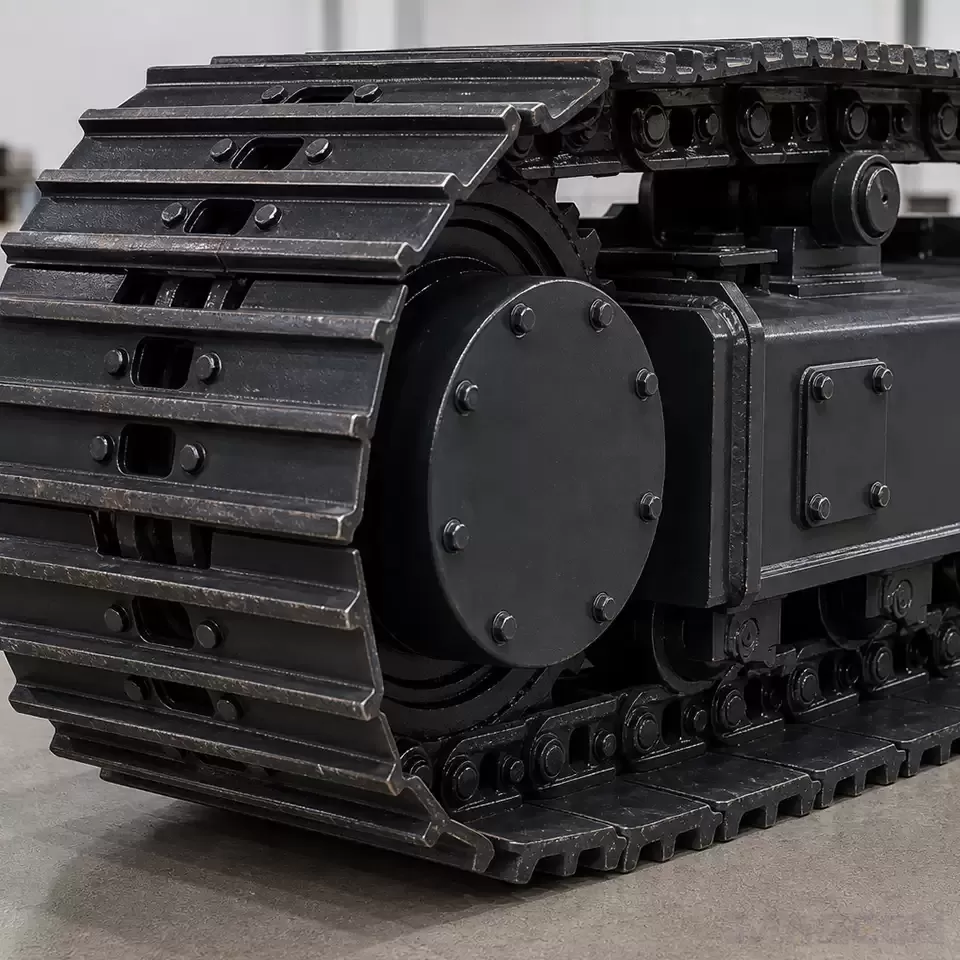
- Rubber-pad steel track - steel chain with bolt-on rubber pads. Keeps the steel load capacity of a crawler while avoiding damage to paved surfaces and reducing noise in residential areas.
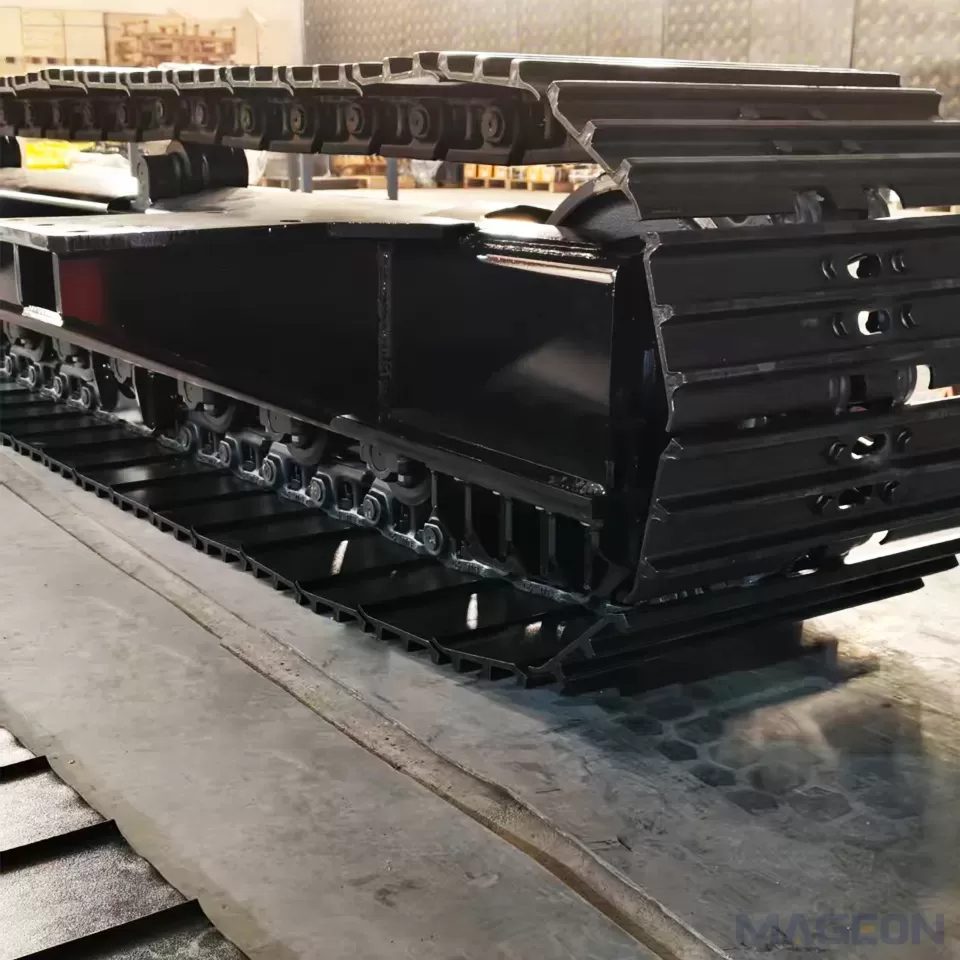
- Low-profile rigid steel track - reduced ground clearance and low overall height, for sites with height restrictions such as underpasses, tunnels, and covered work areas.
Where Steel Beats Rubber on Urban Sites
It is worth being direct about this, because the assumption often goes the other way. On urban sites with substantial broken surface, steel outlasts rubber significantly. A rubber track is cut by rebar and sharp rubble, and a cut rubber track cannot be repaired in the field. Steel chain in this environment may lose shoes, but a damaged shoe is a 30-minute swap with standard tooling and the chain continues in service. For a contractor working a congested city site, steel is usually the lower total cost despite the higher noise and vibration transfer to the machine.
How to Assess Your Site
Before specifying, walk the site and note four things: the narrowest access point, the softest ground area and its depth, the amount of loose rubble or broken surface, and whether the machine will travel on public roads between sites. Send us those four observations along with the machine weight, and we can tell you which configuration will hold up and where the wear will concentrate. If you are unsure, we can also supply a wear part kit sized to your expected hours on that specific site.
Please leave your customization requirements, and we will contact you as soon as possible!
Leave your requirements, we'll get back to you within 24 hours.