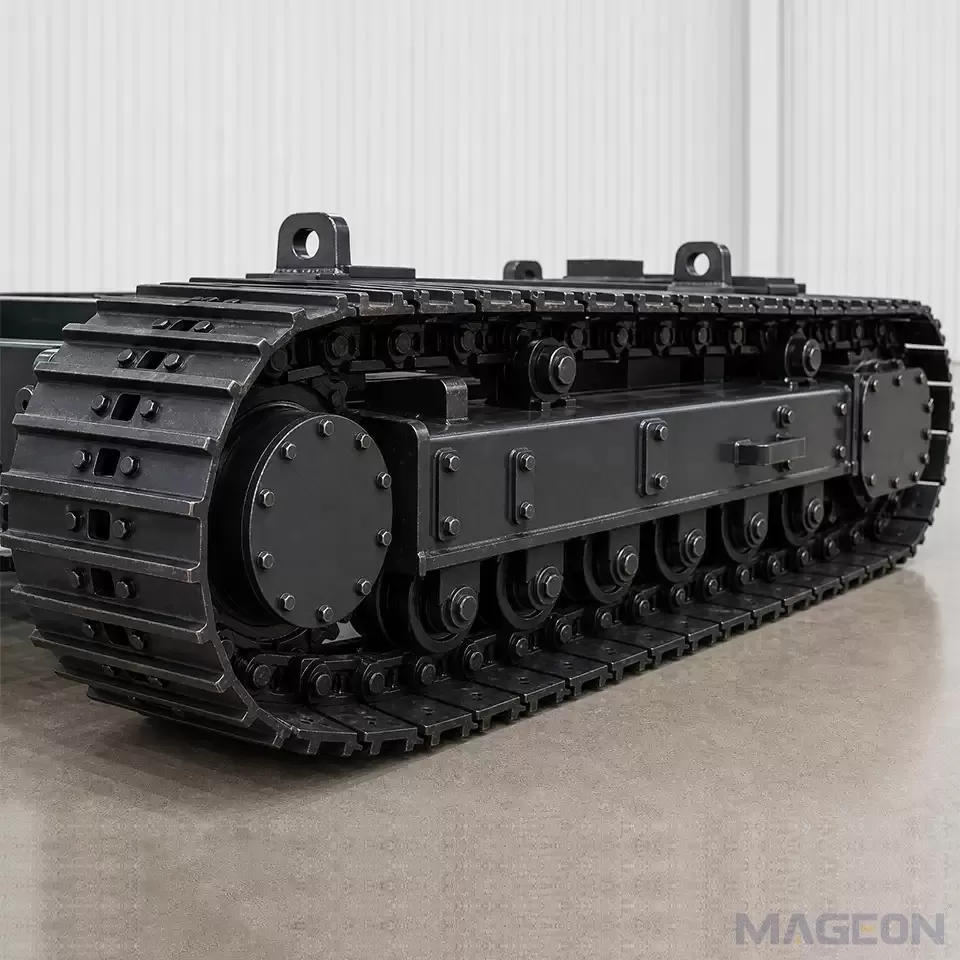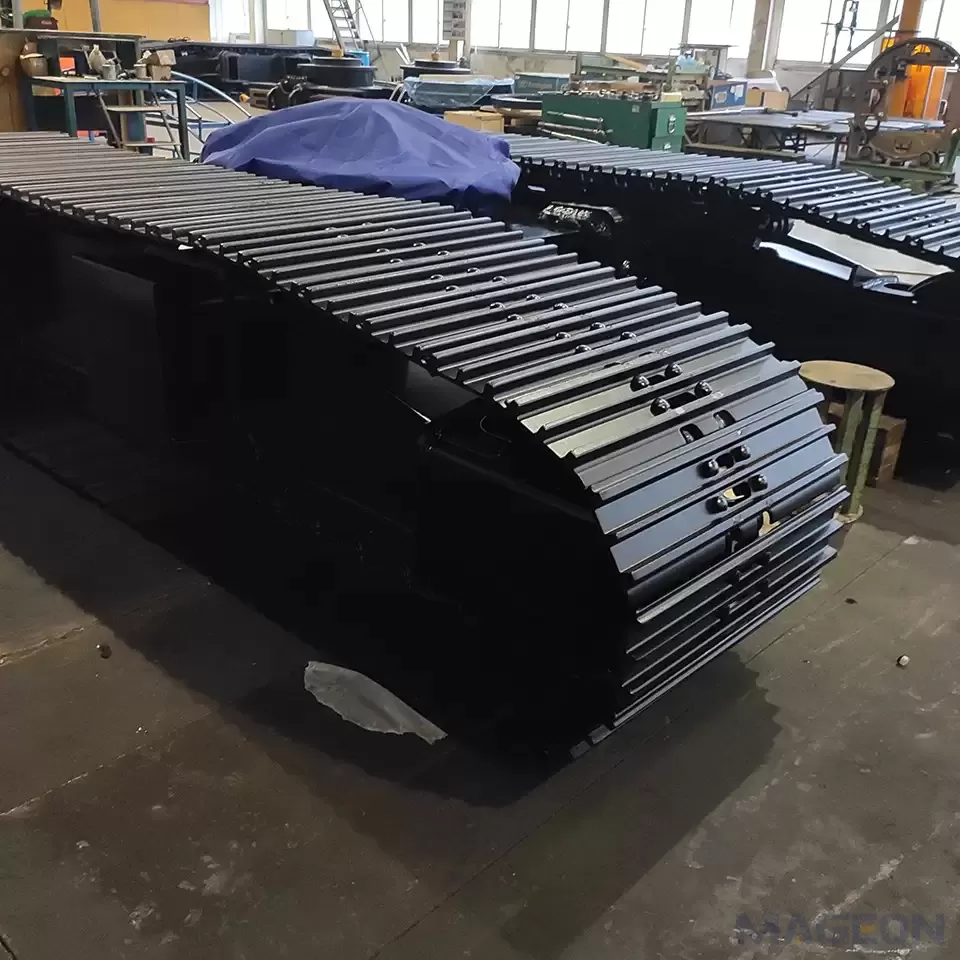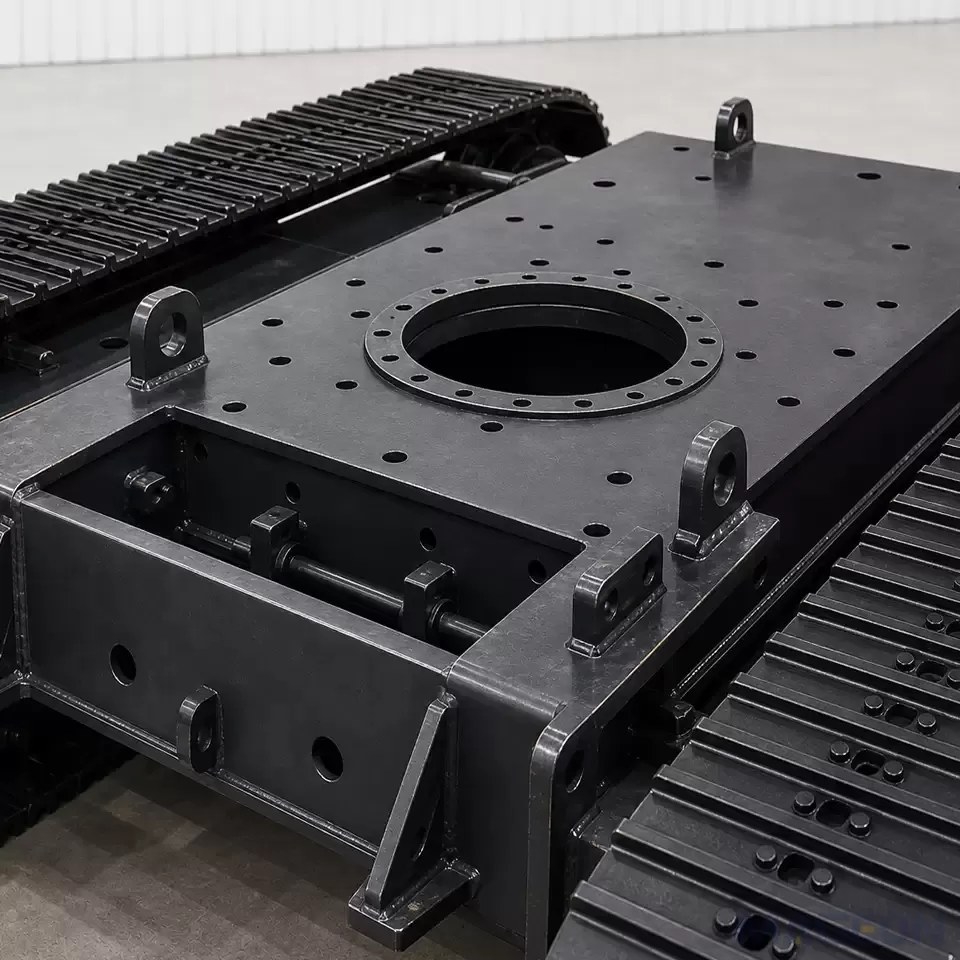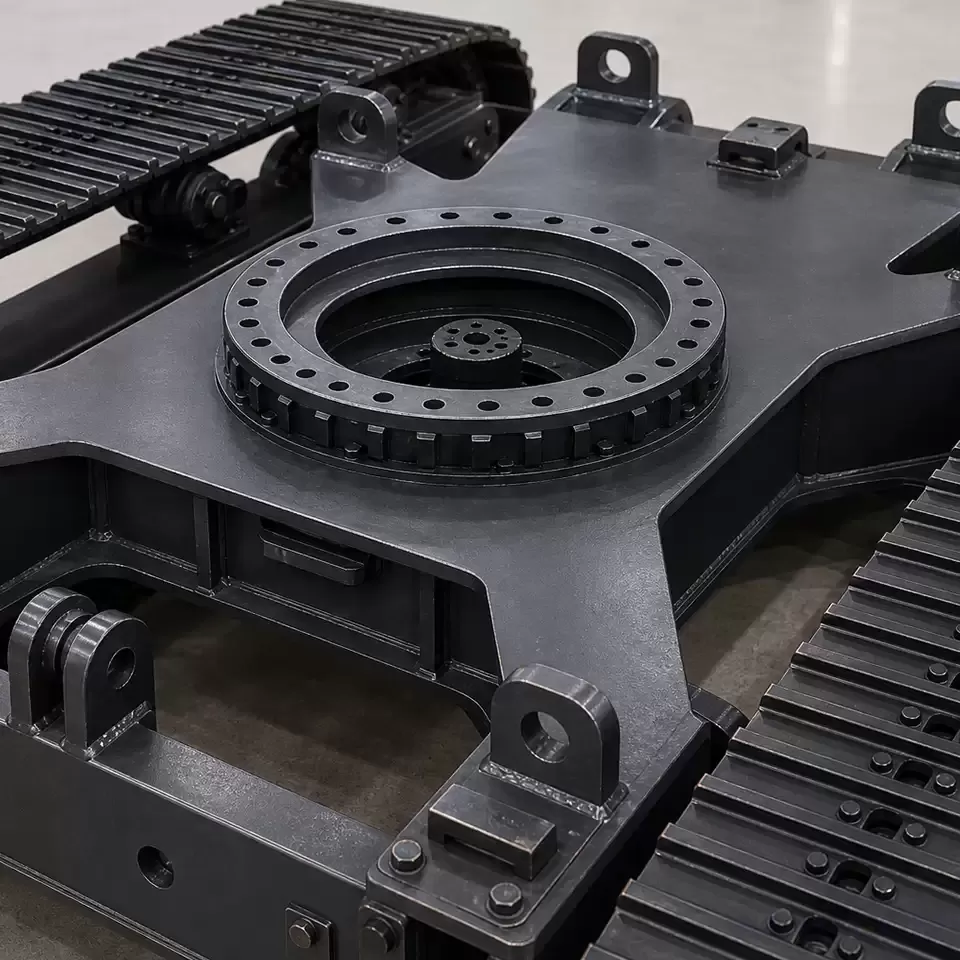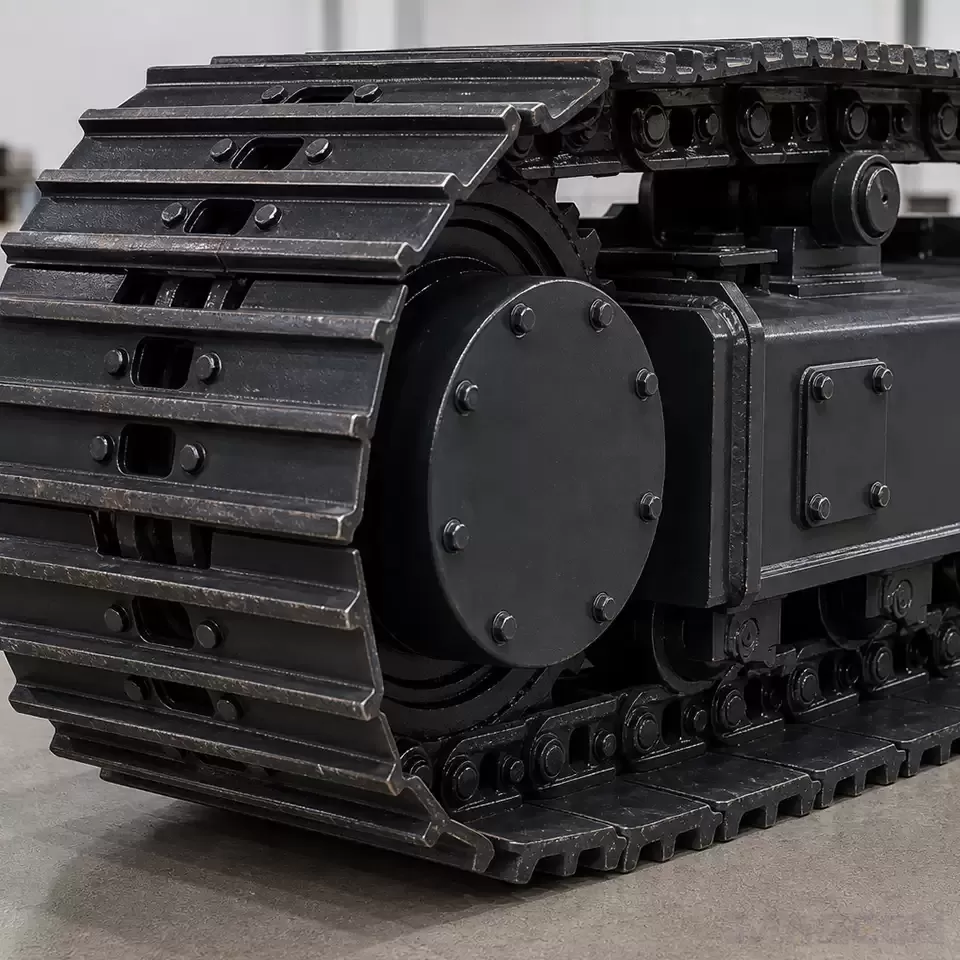
Cold-Climate Crawler Undercarriage Specification: Steel, Seals and Hydraulic Fluids
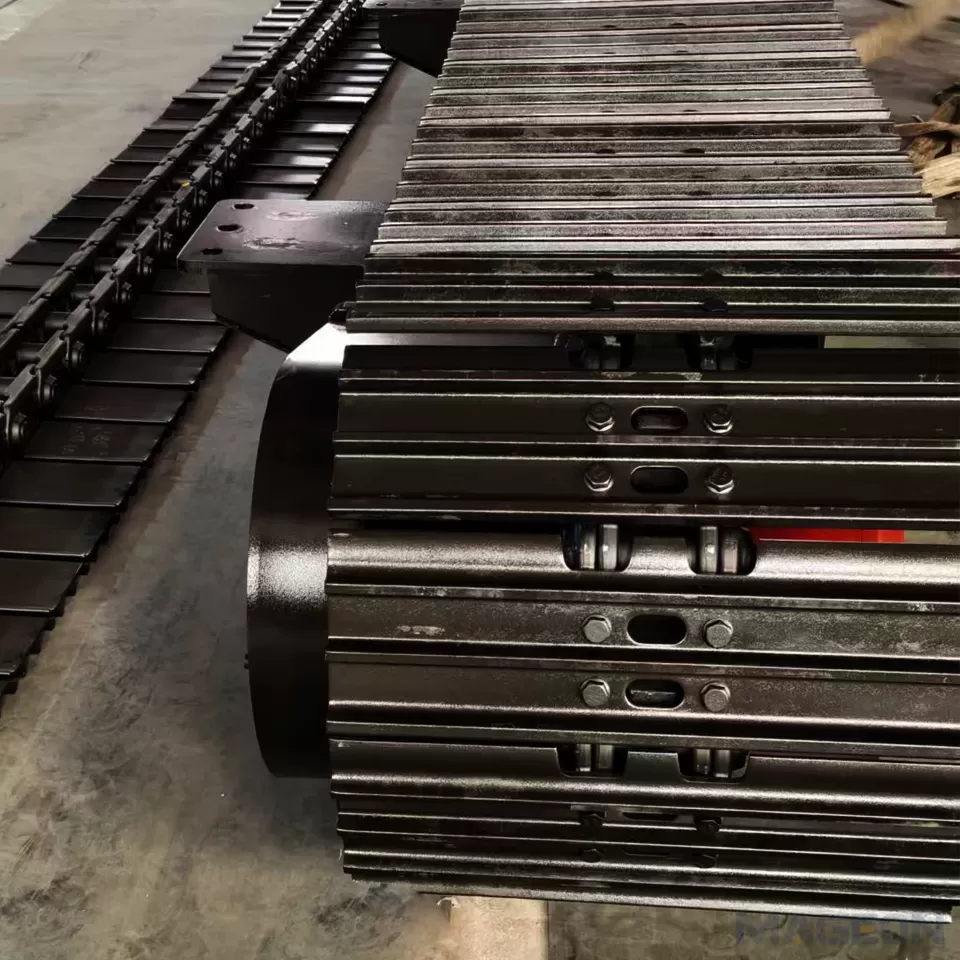
A cold-climate crawler undercarriage is not a standard chassis with a different paint colour; it is a specification change across four systems: structural steel toughness, elastomer and seal selection, lubricant and hydraulic fluid viscosity, and the cold-start procedure. Below roughly −20 °C, ordinary structural steel loses ductility, standard nitrile seals harden, and hydraulic oil can become too viscous to reach the final drive before the pump cavitates. Specifying these four systems explicitly at the enquiry stage is what separates a machine that starts at −35 °C from one that needs a heated workshop every morning.
The guidance below applies to steel crawler undercarriages used in Nordic, Canadian, high-altitude and winter-construction projects, and to equipment that is parked outdoors between shifts.
1. What Actually Changes Below −20 °C
Cold does not usually break an undercarriage by overloading it. It changes material behaviour until a load that would be harmless in summer becomes a crack initiator. The table maps the operating condition to the component affected and the specification response.
| Condition | Component at risk | What changes physically | Specification response |
|---|---|---|---|
| Sustained low ambient temperature | Track frame weldments, cross-members | Ferritic steel loses notch ductility; a small weld flaw becomes a brittle fracture origin | Fine-grain steel with certified Charpy V-notch energy at the design temperature |
| Impact loading on frozen ground | Track shoes, rollers, idlers | Shock loads rise sharply because frozen ground does not deform | Higher toughness castings, revised impact factor in the load case, wider shoes |
| Cold soak overnight | Hydraulic oil, final drive | Viscosity rises; pump inlet starves and the brake release circuit responds slowly | High viscosity-index fluid, low-temperature start-up sequence, reservoir heating |
| Elastomer hardening | Floating seals, O-rings, hose covers | NBR approaches its glass transition; sealing lip loses contact pressure | Low-temperature HNBR or suitable FKM compound, cold-flexible hose specification |
| Freeze / thaw cycling | Track chain pins and bushings | Meltwater enters the pin/bush clearance and refreezes, locking the chain | Sealed and lubricated chain, drainage and mud-clearance geometry, parking procedure |
| Condensation in breathers | Gearboxes, hydraulic reservoir | Moisture condenses as temperature swings, contaminating oil and corroding internals | Desiccant breathers, water-separating filtration, shortened oil sampling interval |
2. Structural Steel: Specify Toughness, Not Just Strength
Standard S355JR-type structural plate is normally supplied without a guaranteed impact-energy value at low temperature. For a chassis that will work below −20 °C, specify a fine-grain normalised grade with a documented Charpy V-notch test at the design temperature — for example an EN 10025-3 S355NL / S420NL grade tested at −50 °C, or an equivalent grade with a stated minimum absorbed energy in joules. The number that matters is the test temperature and the joule value, not the yield strength.
Toughness must extend through the welded joint, not just the base plate. Ask for a welding procedure specification qualified for the same temperature range, controlled heat input, and consumables with matching low-temperature toughness. Hydrogen-induced cracking is more likely in cold, thick, restrained weldments, so preheat, low-hydrogen consumables and post-weld inspection deserve explicit callouts on the drawing.
Equally important: do not solve a toughness problem by simply making sections thicker. Thicker plate raises restraint and triaxial stress in the weld, which can make brittle behaviour worse. It also adds mass, which increases ground pressure and fuel consumption.
3. Seals, Bearings and Lubricants
Elastomer compounds have a low-temperature limit just as steel does. Standard nitrile (NBR) hardens in severe cold; hydrogenated nitrile (HNBR) or a suitably selected low-temperature FKM compound retains sealing lip flexibility. The specification should state the minimum operating and storage temperature for every seal in the bill of materials, including O-rings in hydraulic couplings and the floating seals in track rollers and idlers.
For grease, a winter-grade NLGI 0 or 00 lithium-complex or synthetic product with a low-temperature torque value is typically more appropriate than the NLGI 2 grease used in temperate climates, because stiff grease simply will not reach the pin/bush interface. Confirm compatibility with the seal compound before substituting a different base oil.
Sealed and grease-lubricated track chains are worth specifying in freeze/thaw conditions. They exclude meltwater from the pin/bush clearance, which is the main mechanism behind a chain that locks solid overnight. Where an open chain is unavoidable, provide drainage paths and a self-cleaning shoe profile rather than relying on the operator to dig out packed ice.
4. Hydraulic Fluid and the Cold-Start Sequence
Viscosity is the governing property. A high viscosity-index (HVLP / ISO 11158 HV) fluid with a low pour point and a viscosity index above about 140 will flow at low temperature while still protecting the pump at operating temperature. The fluid's viscosity at the coldest expected start temperature should be checked against the pump manufacturer's maximum permissible suction viscosity, not just against the ISO VG grade on the data sheet.
The mechanical specification and the operating procedure have to be written together. A workable cold-start sequence usually includes:
- Warm the hydraulic reservoir with an immersion heater or circulate through a bypass until the oil reaches the supplier's minimum start temperature.
- Idle at low engine speed with all actuators centred; do not command travel until pressure is stable at the final drive ports.
- Cycle the track drive slowly in both directions before applying load, so warm oil reaches the motor case and the brake release circuit.
- Verify negative brake release and towing behaviour, since a partially released brake generates heat and glazes the friction discs.
- Keep breathers clear of snow and ice; a blocked breather can collapse a reservoir or draw in contamination as the oil cools.
On electrically driven chassis, the same logic applies to gearbox oil and battery temperature: range and available torque both fall in deep cold, so the duty cycle should be derated rather than assuming the summer figure still holds.
5. Track, Shoe and Ground Interaction
Frozen ground is abrasive and unforgiving, while snow cover conceals obstacles. A wider shoe reduces ground pressure and improves flotation on snow, but it increases bending stress on the shoe and on the track link when the machine crosses a hard frozen ridge. The selection should therefore be made from the actual ground bearing pressure and the obstacle profile, not from a rule of thumb.
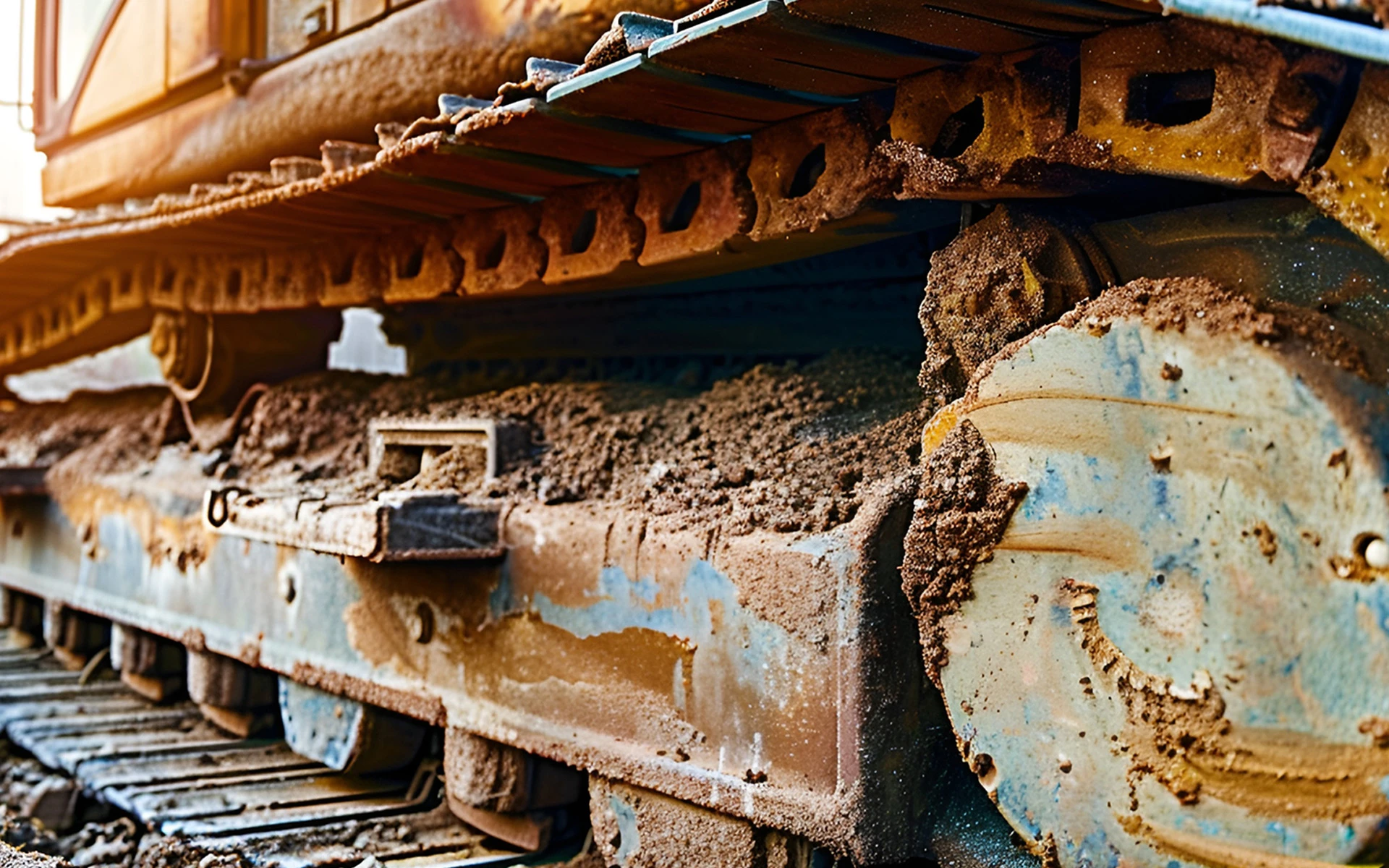
Ice adhesion is a separate problem from mud packing. Shoe profiles with open relief areas and adequate clearance around the sprocket and idler shed ice more effectively than a closed, flat pad. On sites where de-icing salts are used, upgrade the coating system and wash-down provisions, because chloride exposure combined with freeze/thaw cycling accelerates corrosion at weld toes and bolted joints.
6. What to Put in the Enquiry
A supplier can only engineer for the temperature you state. Include the minimum operating temperature, the minimum storage temperature (often lower), the number of cold starts per week, whether the machine is parked outdoors, the ice and snow conditions, and any de-icing chemical exposure. Ask explicitly for the Charpy test temperature, the seal compound temperature rating, the hydraulic fluid grade and pour point, and the cold-start procedure as line items in the quotation — they are specification commitments, not marketing statements.
Frequently Asked Questions
At what temperature does a standard undercarriage need a cold-climate specification?
As a working rule, below −20 °C sustained ambient temperature. Between −10 °C and −20 °C, fluid and grease changes are often sufficient; below −20 °C, steel toughness and elastomer selection should also be specified.
Can a standard chassis be retrofitted for winter use?
Partly. Fluids, grease, heaters and some seals can be changed in the field, but the toughness of the welded frame and the residual stress state of the weldments are set at manufacture. A frame built from non-certified plate cannot be upgraded by changing oil.
Does low-temperature operation shorten undercarriage life?
It can, mainly through impact loading on frozen ground, ice-locked chains, and condensation-driven oil contamination. A cold-climate specification plus a disciplined start-up and parking routine largely removes these mechanisms.
Related Products and Next Step
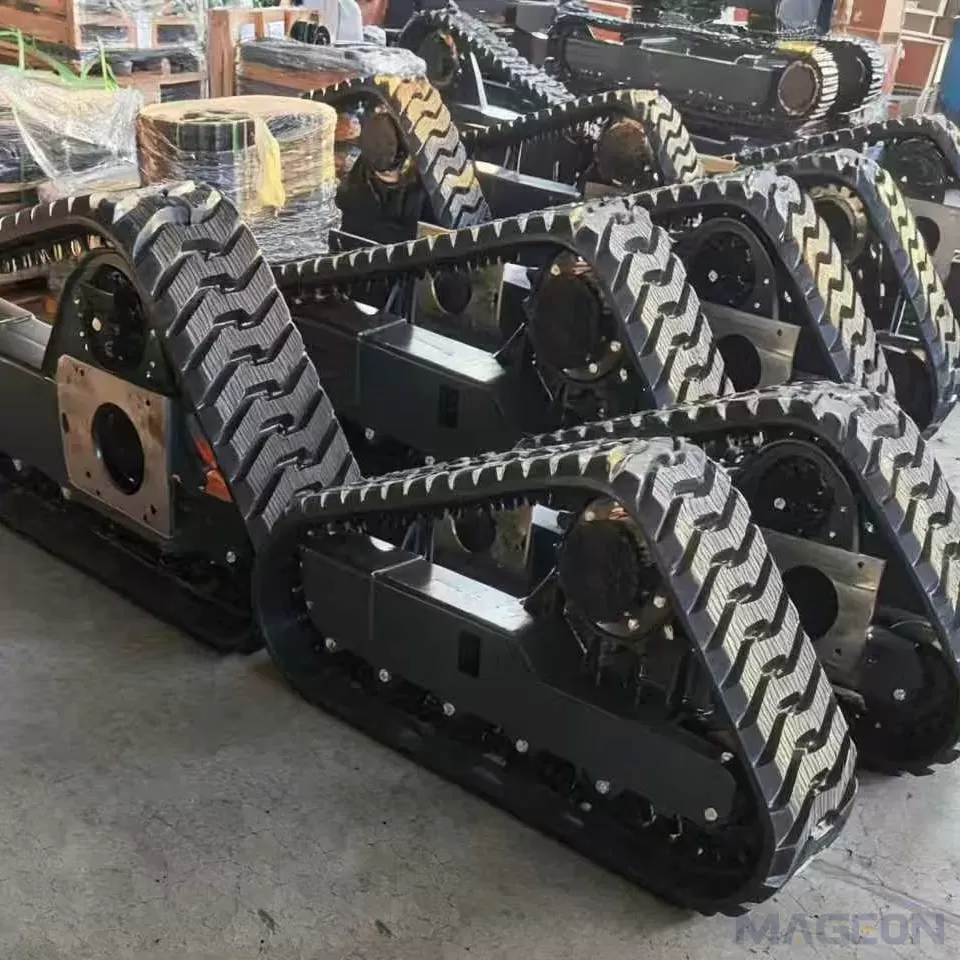
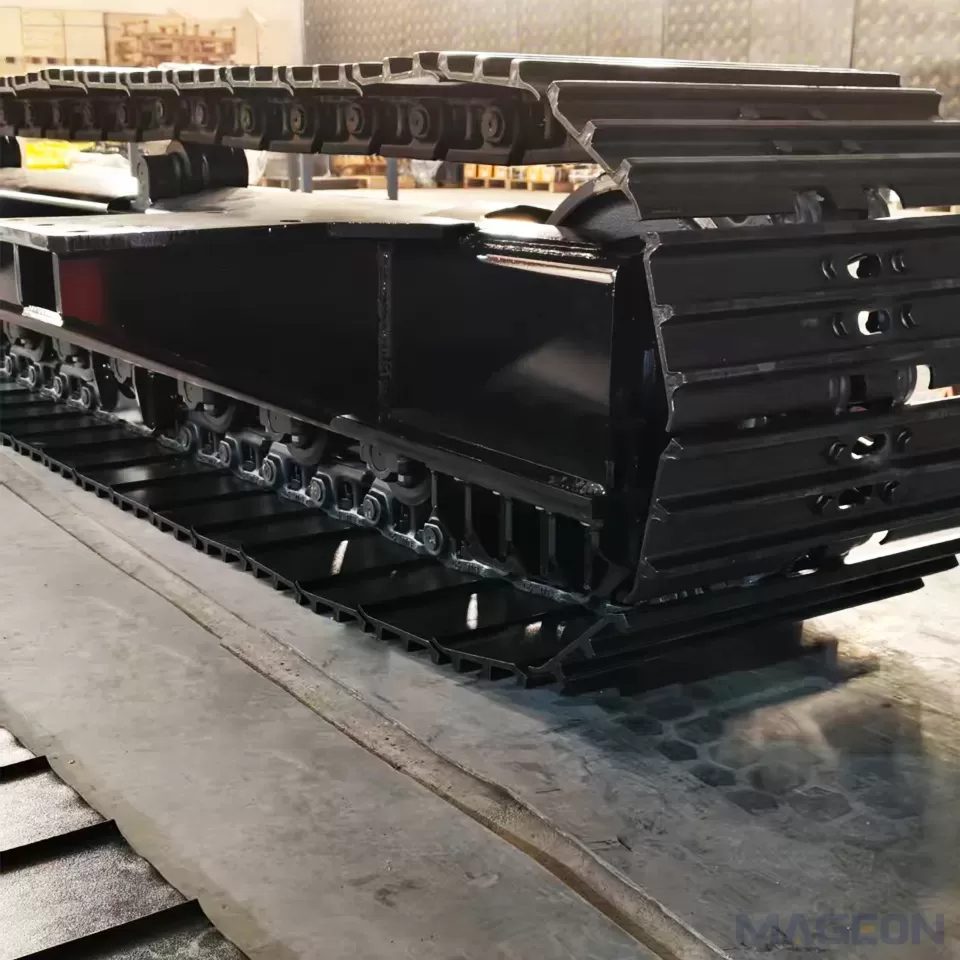
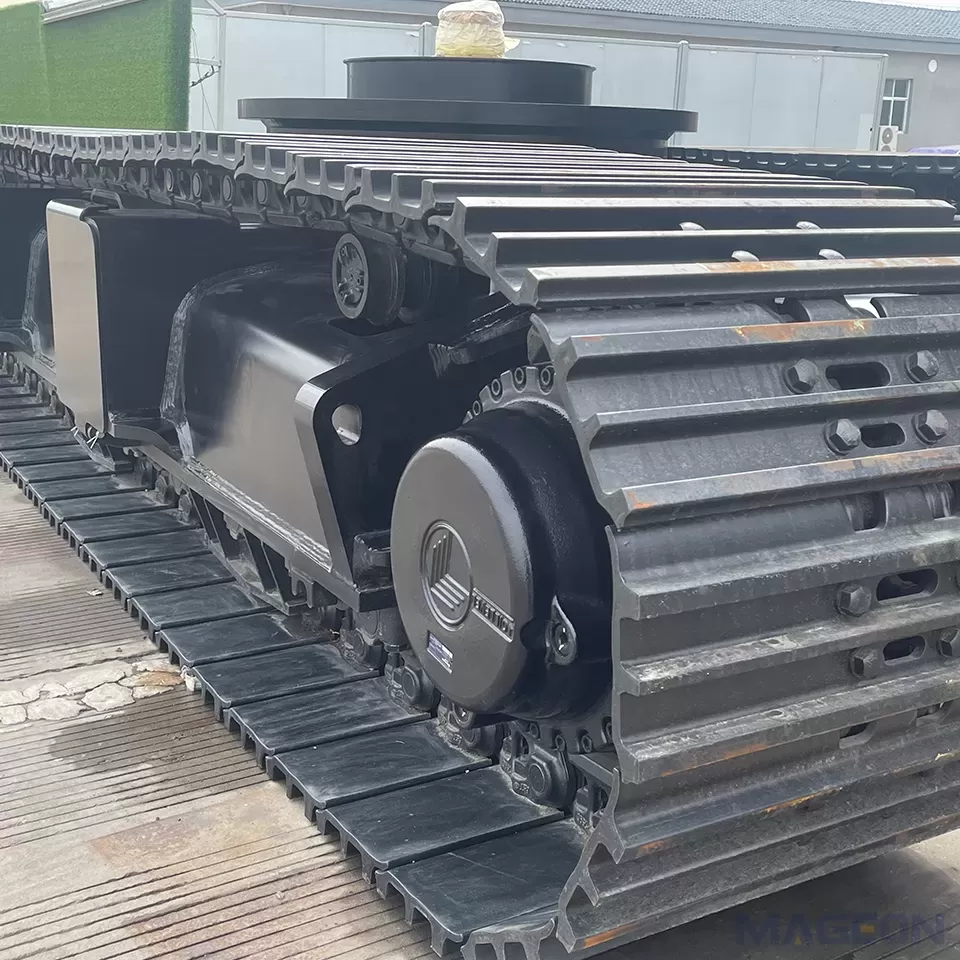
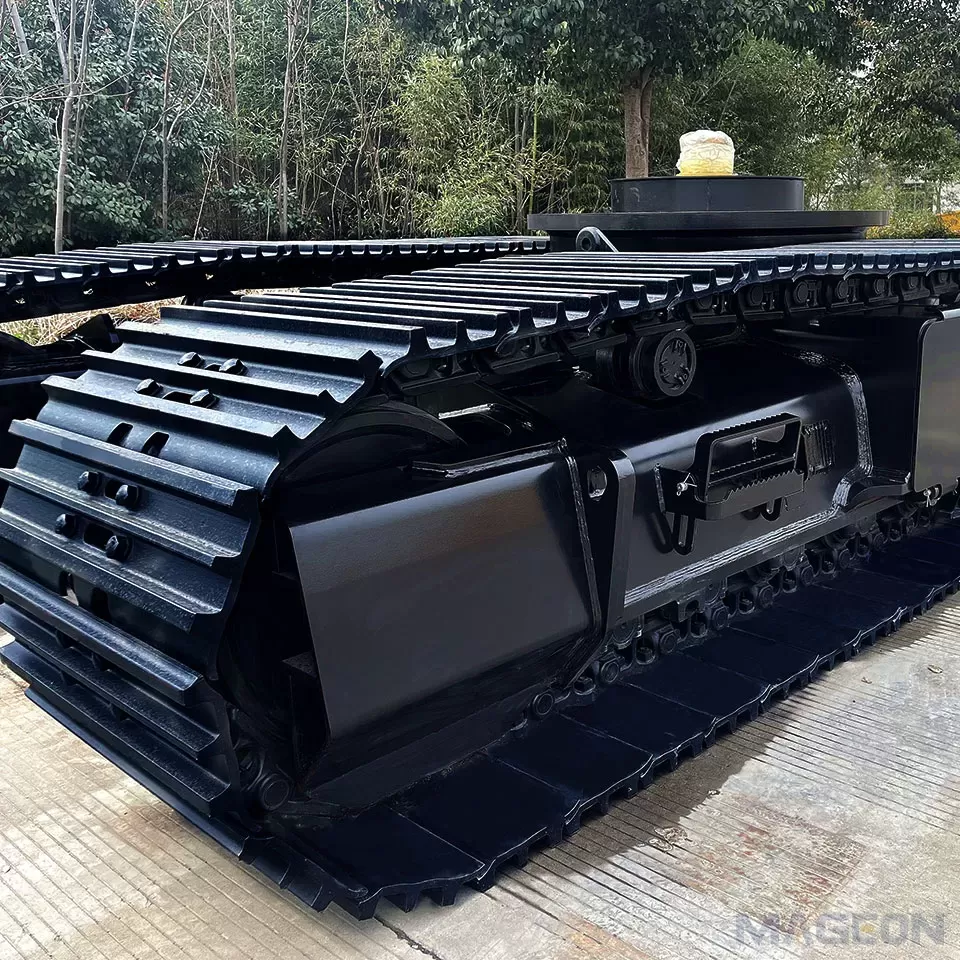
MAGEON supplies steel crawler undercarriages and custom tracked chassis engineered to a stated minimum operating temperature, with undercarriage parts and sealed track chain options selected to match. For a cold-climate project, send the minimum ambient and storage temperature, the machine mass and ground pressure target, and the expected cold-start frequency; our OEM/ODM engineering team will return a material, seal and fluid schedule alongside the chassis drawing.
Please leave your customization requirements, and we will contact you as soon as possible!
Leave your requirements, we'll get back to you within 24 hours.