Tracked Chassis for Tunnel and Underground Equipment: Low-Profile Geometry and Emission Constraints
A tunnel or underground tracked chassis is designed against an envelope, not against a load rating alone. Maximum height, width, turning radius, ventilation capacity and the ability to work without combustion exhaust define the machine before ground pressure or travel speed do. In confined headings, a chassis that is 150 mm too tall or cannot turn within the available width is unusable regardless of how strong it is.
This guide covers the geometric, drive and environmental constraints that should be fixed at the start of an underground equipment project, and how they map onto custom tracked chassis and telescopic crawler undercarriage configurations.
1. Define the Envelope Before the Components
Underground projects fail at the interface between machine and worksite more often than at the component level. Start with a dimensioned cross-section of the heading or shaft, including the worst-case clearance, and derive the chassis limits from it.
| Site constraint | Chassis parameter it fixes | Commonly overlooked detail |
|---|---|---|
| Clear height of the heading | Frame height, upper structure mounting height, overall machine height | Suspension or track sag under load raises the machine locally; allowance for overhead services and ventilation ducting |
| Minimum width / shaft diameter | Retracted track gauge and overall width | Door and cage dimensions on the transport route, not just the working section |
| Bend radius of the adit | Turning radius, counter-rotation capability, track gauge | Tail swing of the upper structure, which often exceeds the chassis width |
| Ventilation capacity | Permitted heat rejection and exhaust emissions | Hydraulic oil cooling load, which is significant even with an electric prime mover |
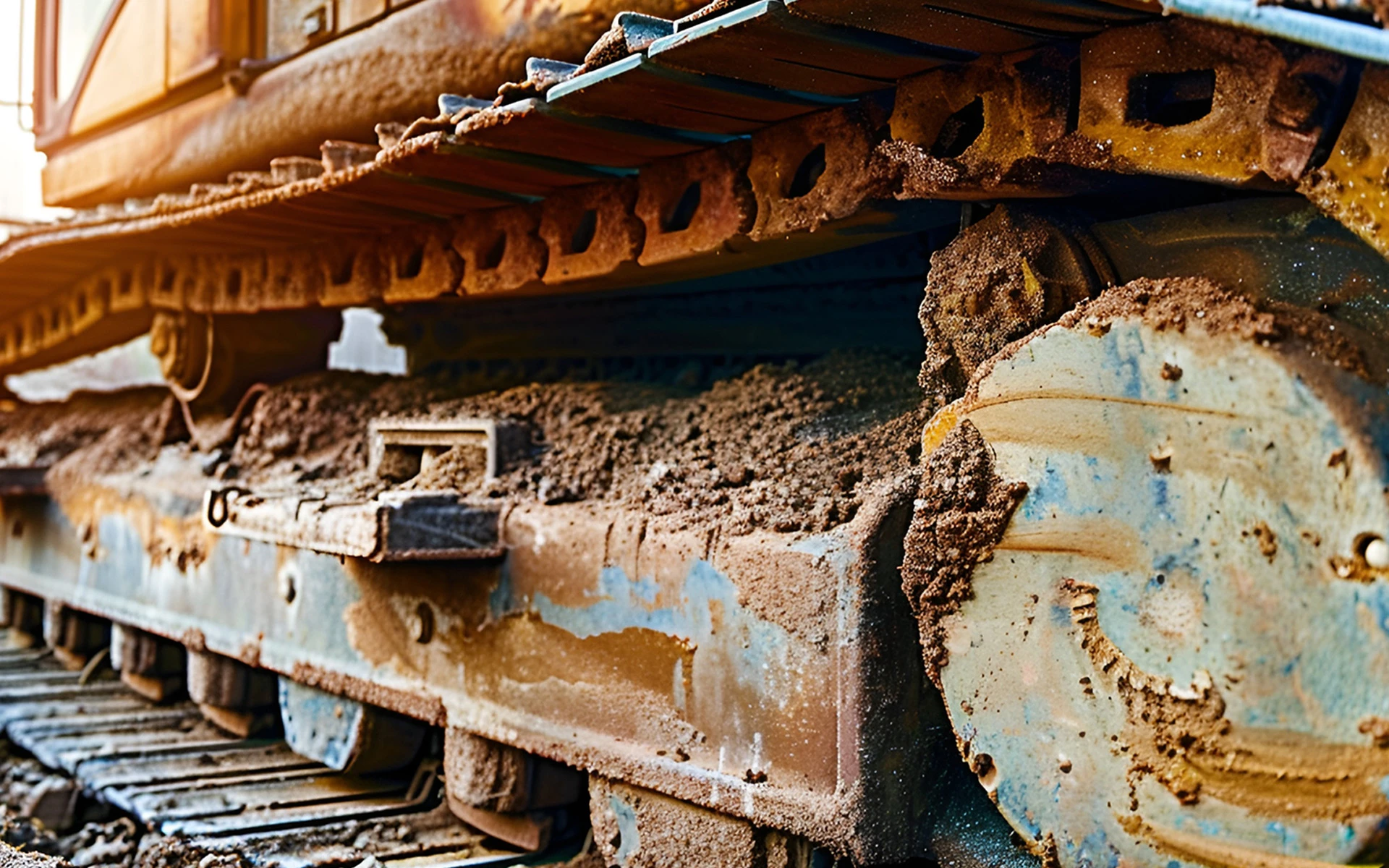
| Floor condition | Shoe type, ground pressure, clearance and sealing | Standing water and slurry accelerate seal and bearing contamination |
| Gradient of ramps | Tractive effort, brake holding, oil sump and pickup geometry | Lubrication starves on sustained inclines even when traction is adequate |
Record each limit as a hard number with the location it came from. A drawing of the narrowest point in the access route is more useful than a general statement that "space is limited".
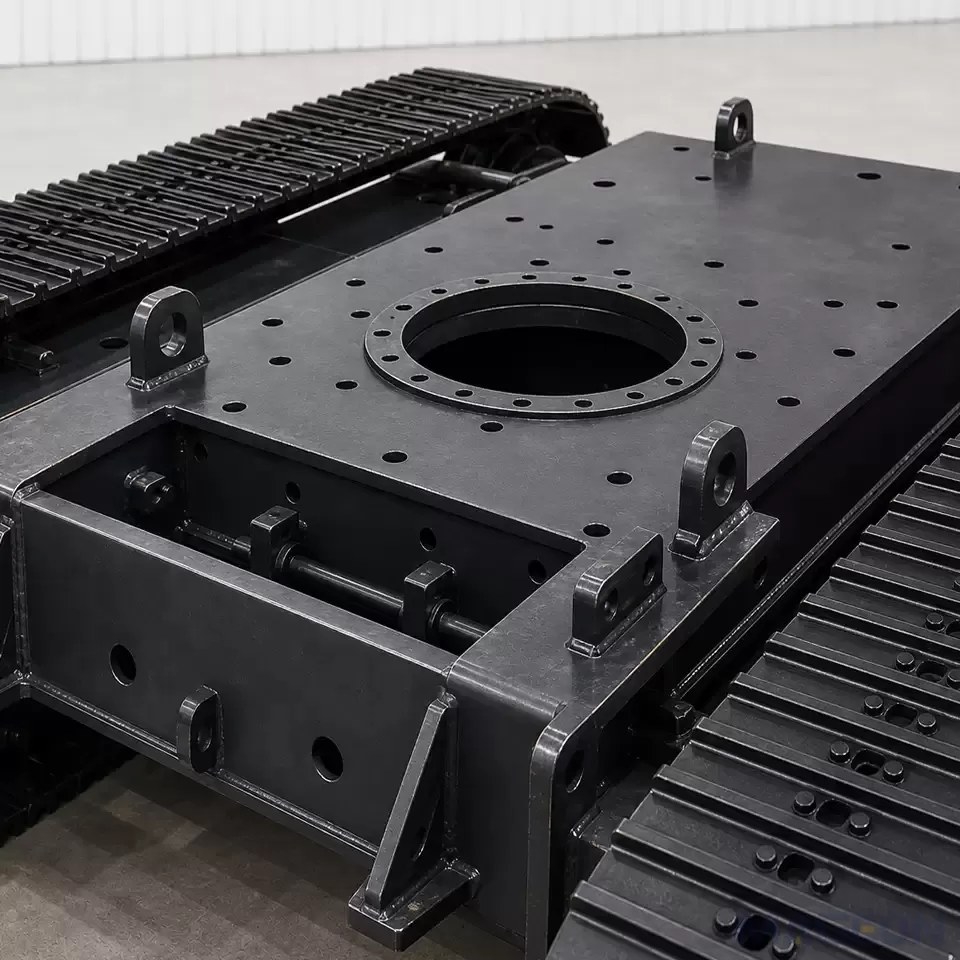
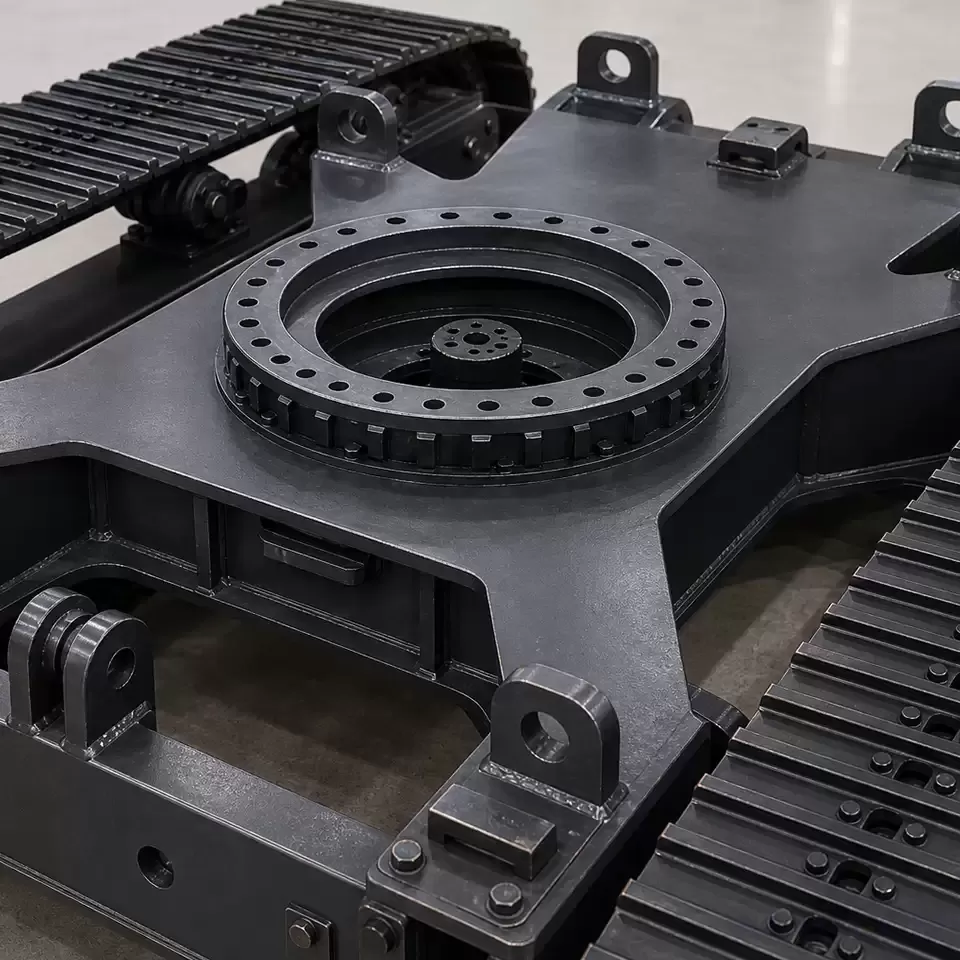
2. Low-Profile Geometry Without Losing Ground Clearance
Reducing overall height usually means flattening the track frame and relocating the final drive. Three layouts are common, each with a trade-off:
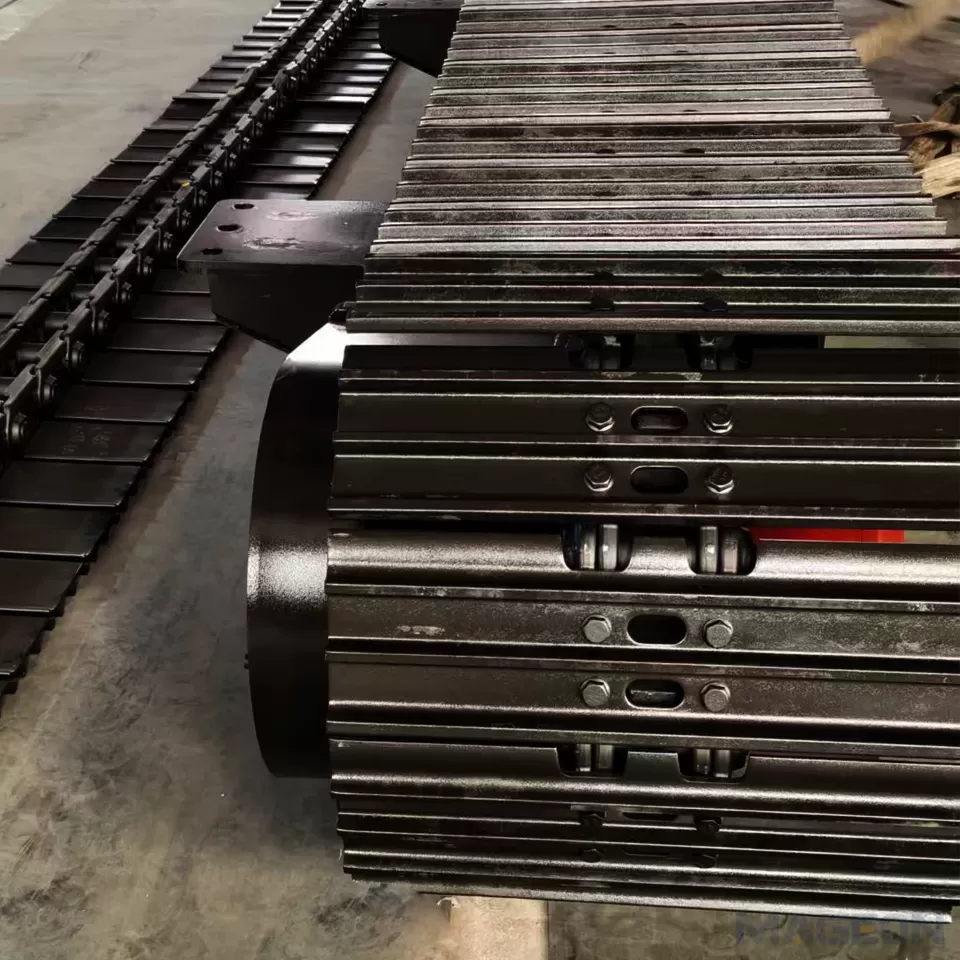
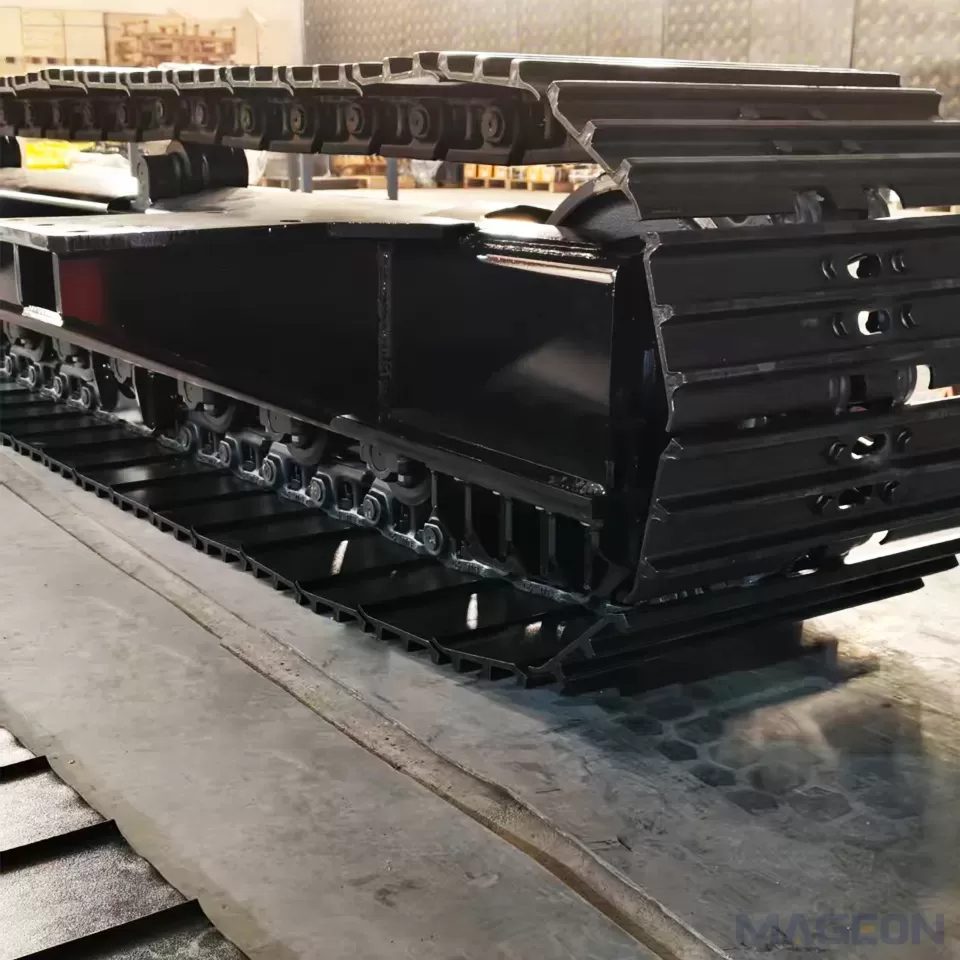
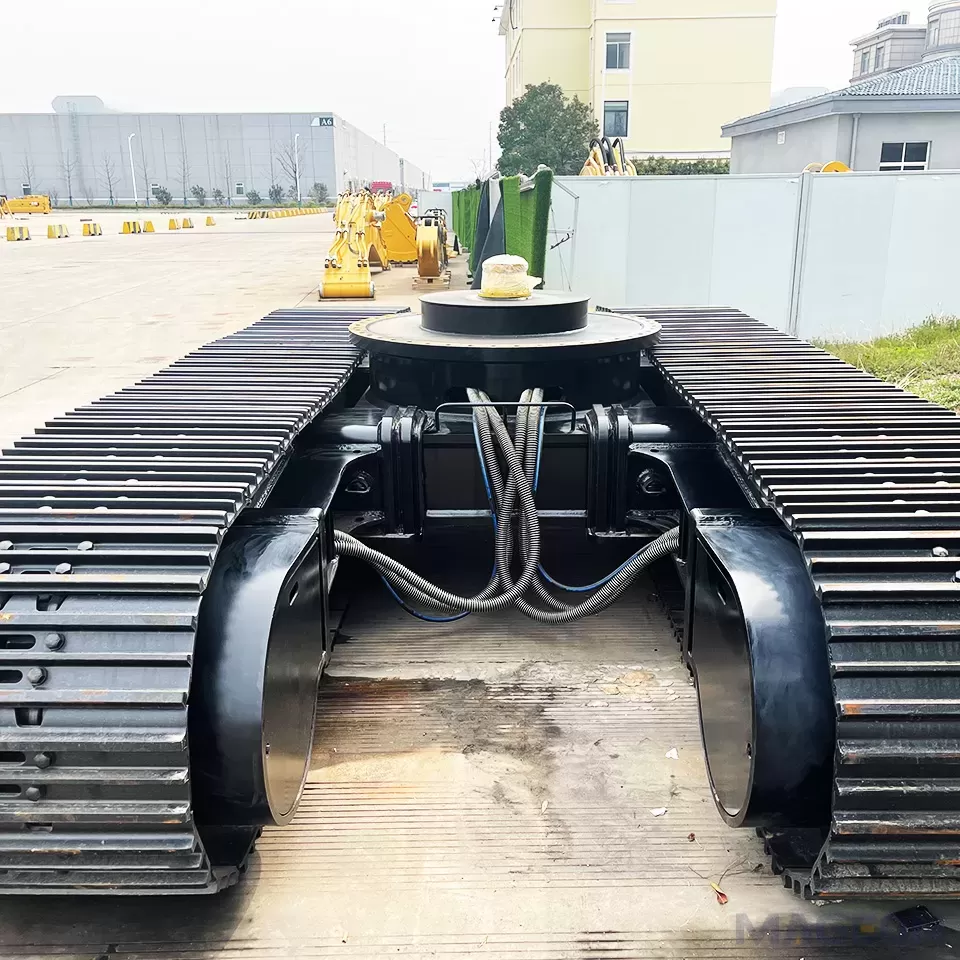
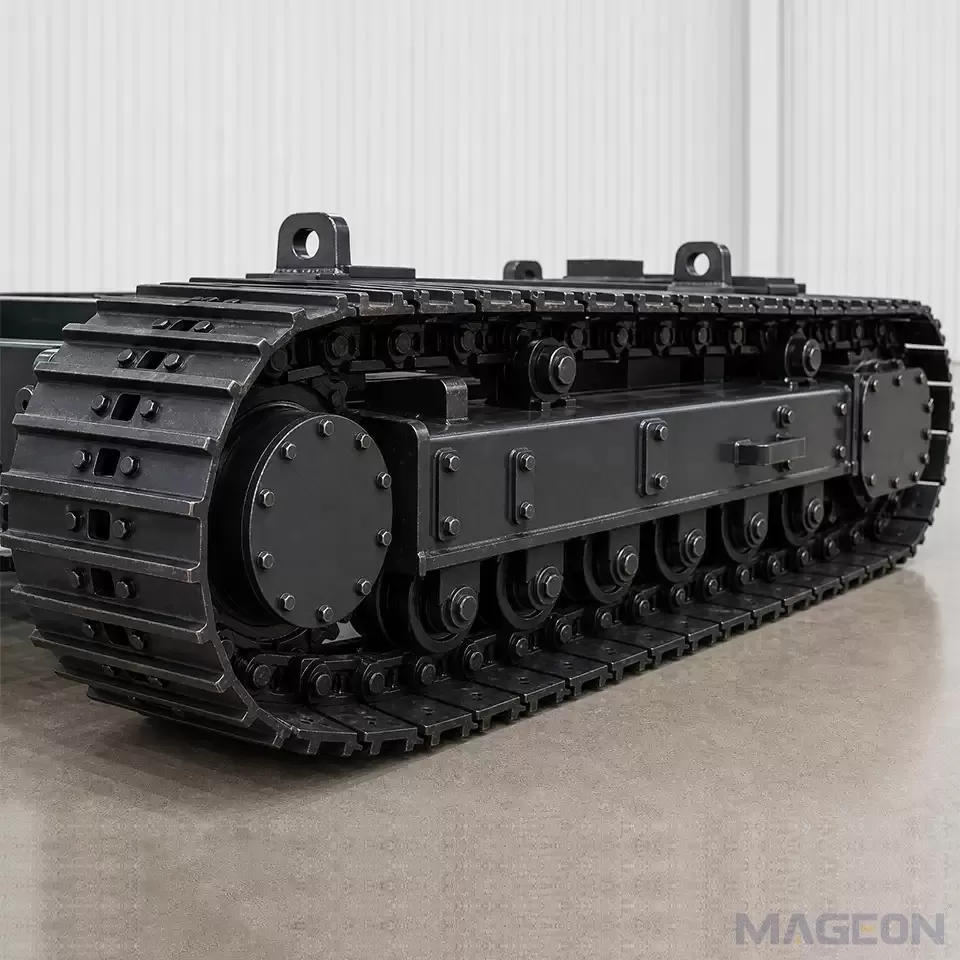
- Rear-drive with an inline planetary reducer — compact in width, keeps the drive protected inside the frame, but sets a minimum frame height around the sprocket diameter.
- Internal / hub drive — moves the motor and reducer inside the track frame, reducing overall width and protecting hoses, at the cost of more difficult service access and heat dissipation.
- Offset or raised drive — lifts the sprocket above the idler centreline, which shortens the ground contact length and changes the load distribution; useful where the floor is uneven but it reduces flotation.
Ground clearance is the competing requirement. Underground floors are rarely flat, and a chassis lowered to the point where the belly plate grounds out on a ramp will lose traction even on good ground. Specify the minimum clearance under full load, with track sag accounted for, and check break-over and ramp angles with the actual wheelbase.
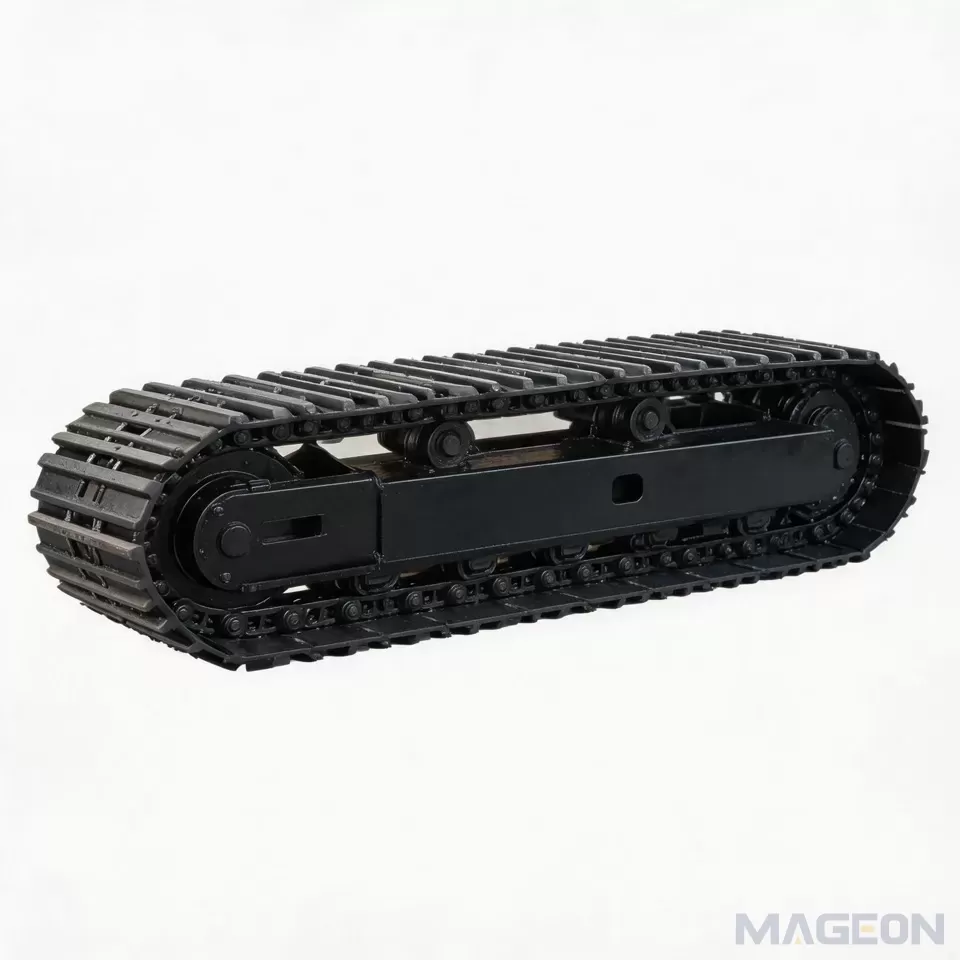
Where the machine must pass a narrow access and then work wider, a telescopic crawler undercarriage lets the track gauge change on site. Confirm the extension mechanism's sealing and locking arrangement for wet, abrasive conditions; an unprotected sliding beam is a maintenance liability underground.
3. Turning, Counter-Rotation and Floor Damage
Confined spaces favour skid steering, but counter-rotation (tracks running in opposite directions to turn on the spot) places the highest load on the chain, sprocket and floor surface. If the working cycle requires frequent pivot turns, size the drive for that case and specify shoes with a profile that limits lateral shear on concrete or shotcrete.
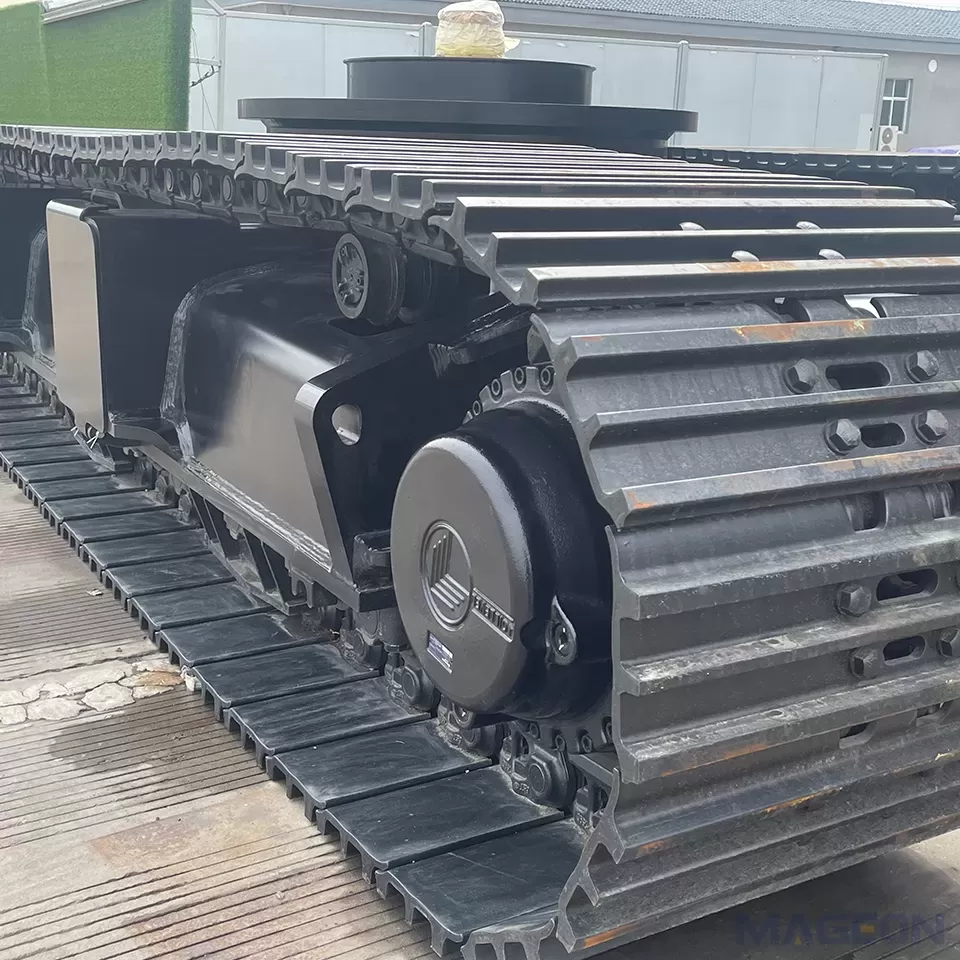
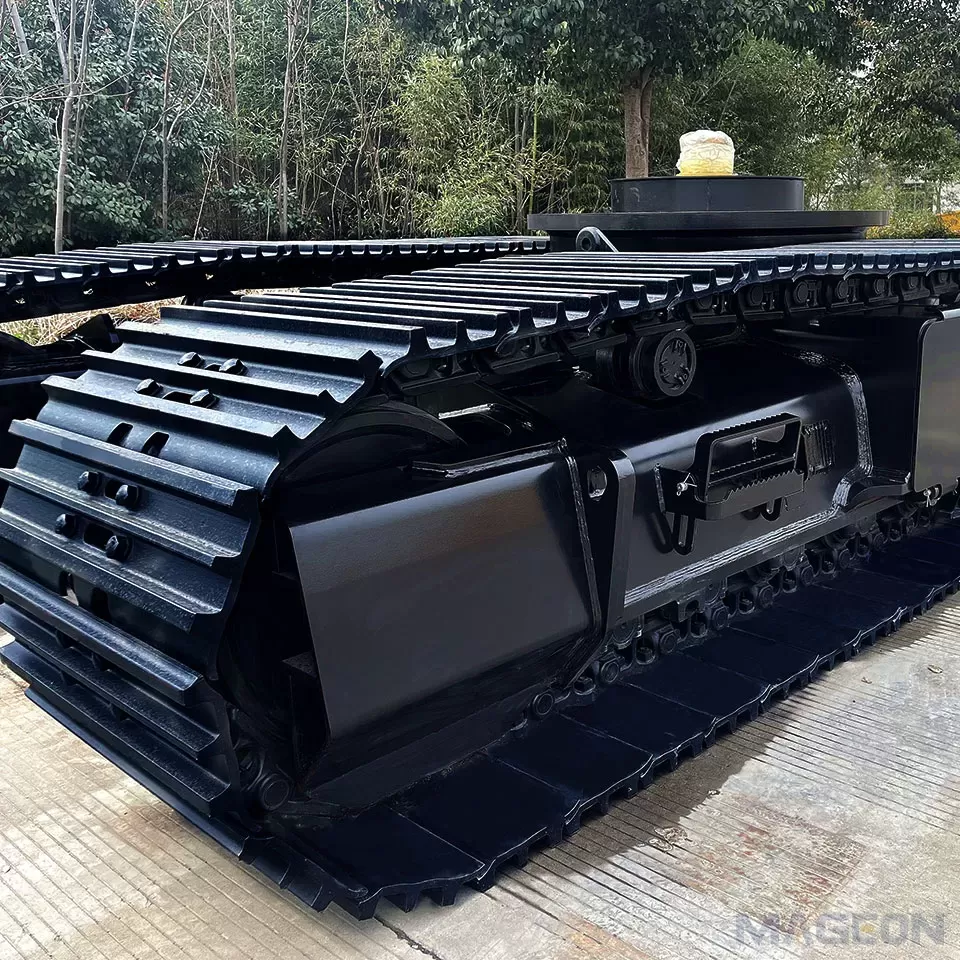
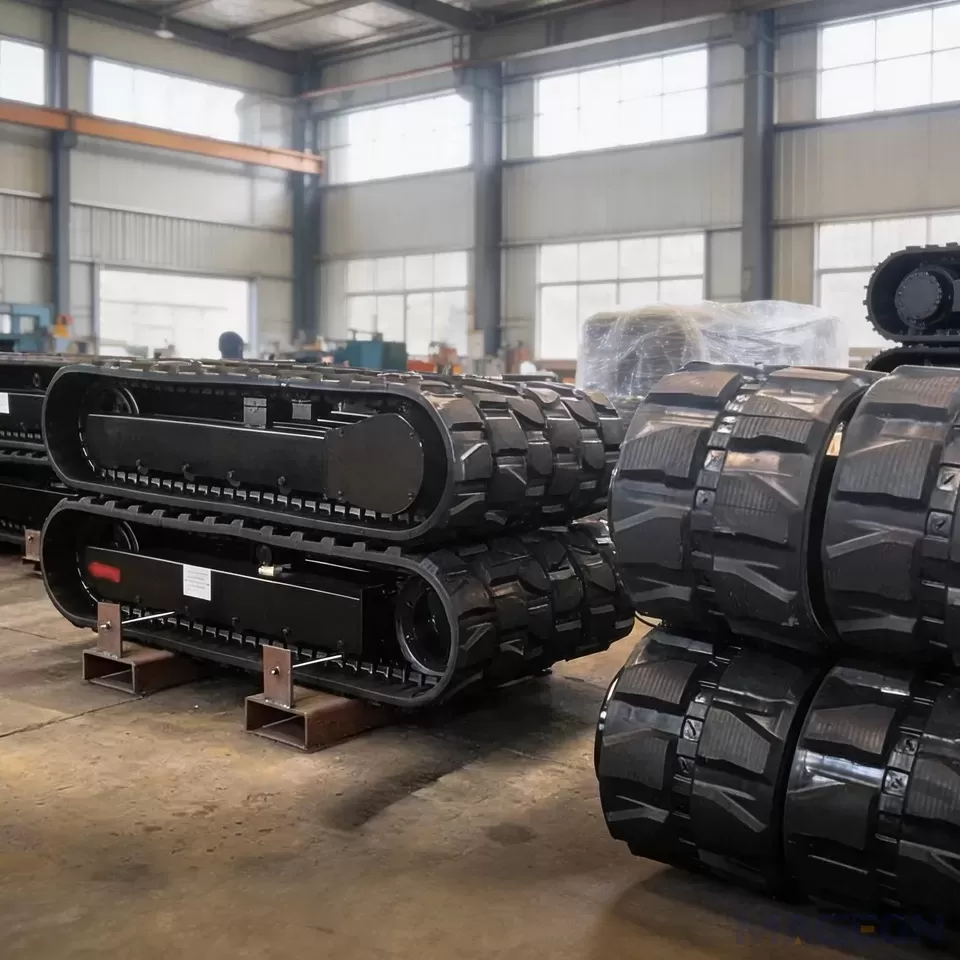
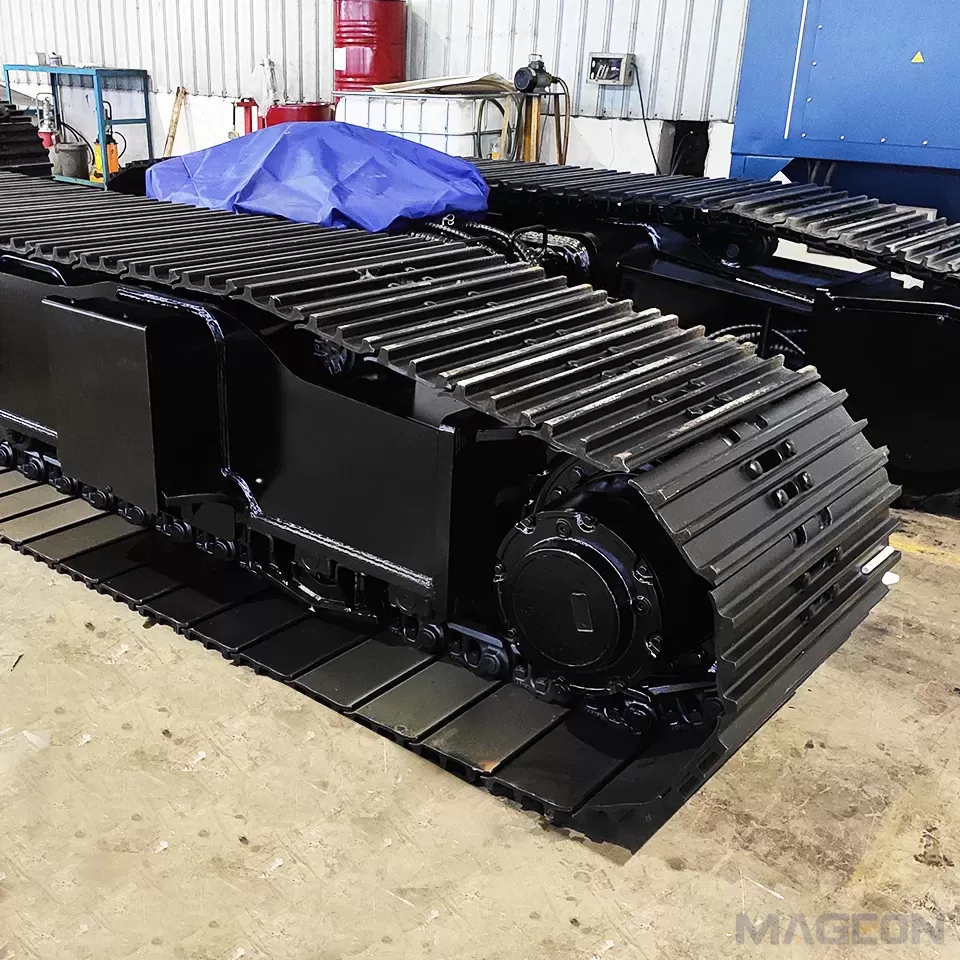
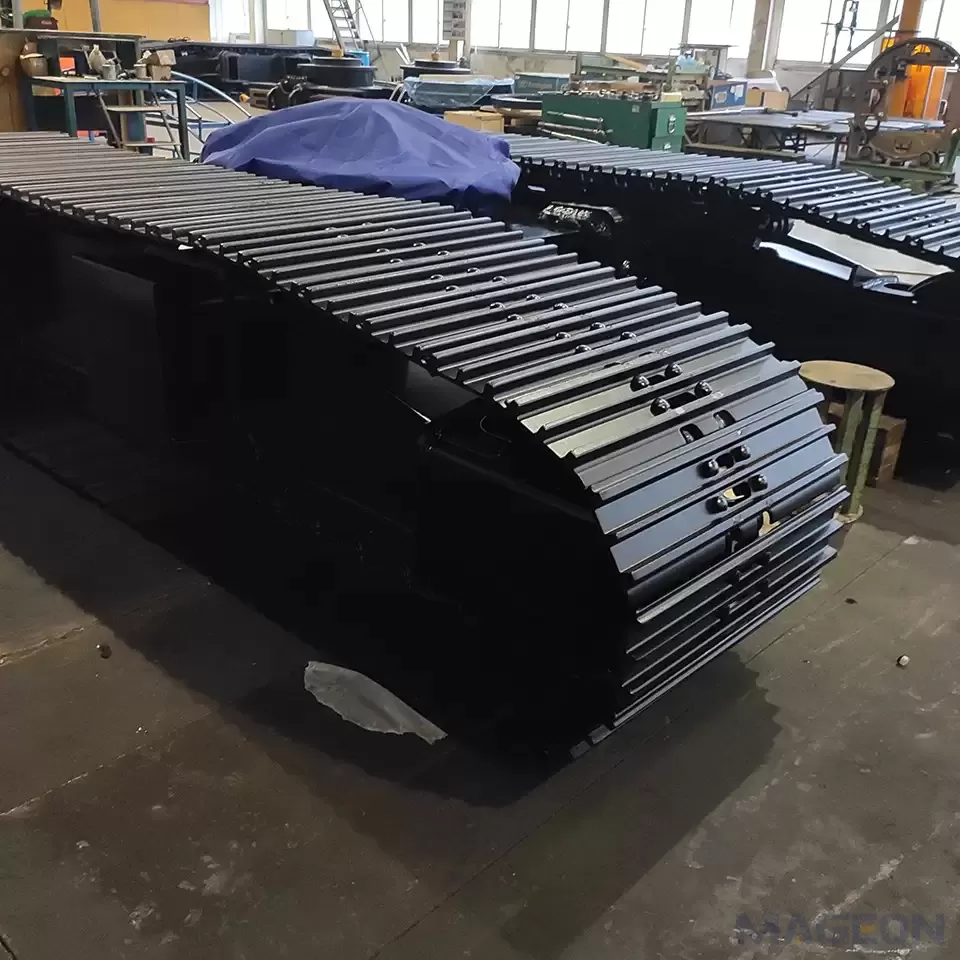
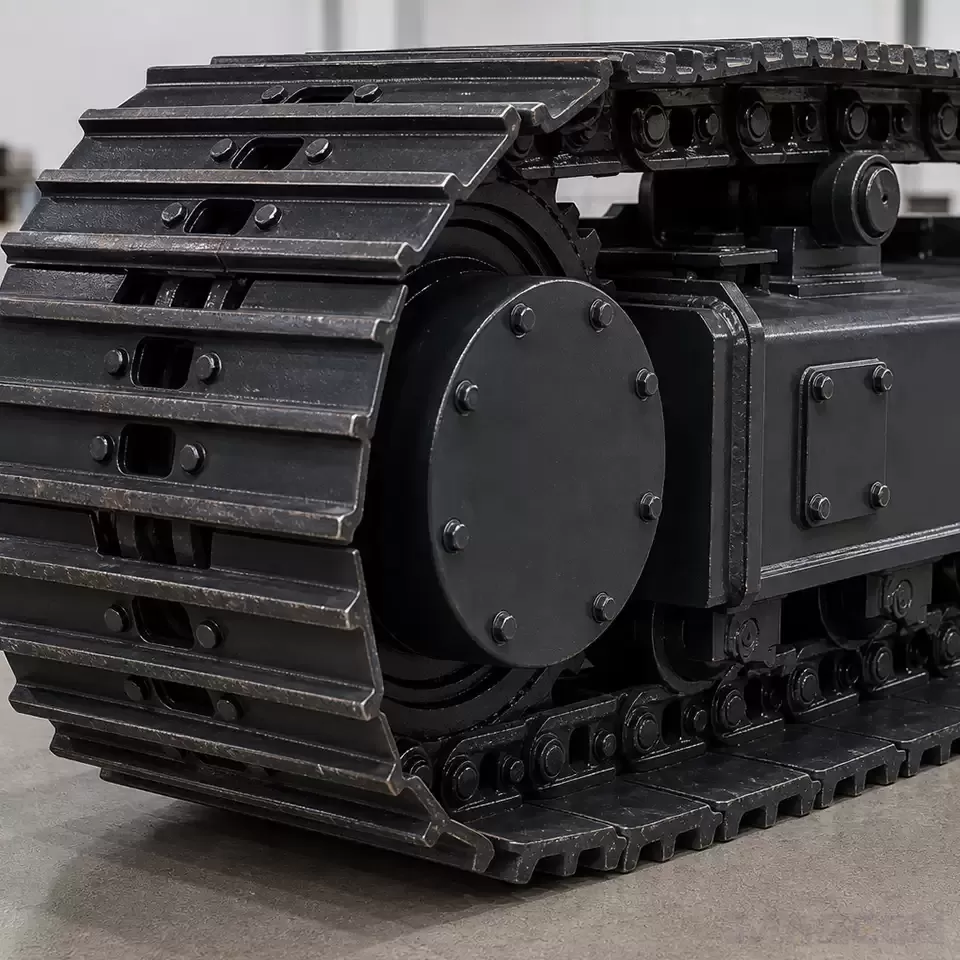
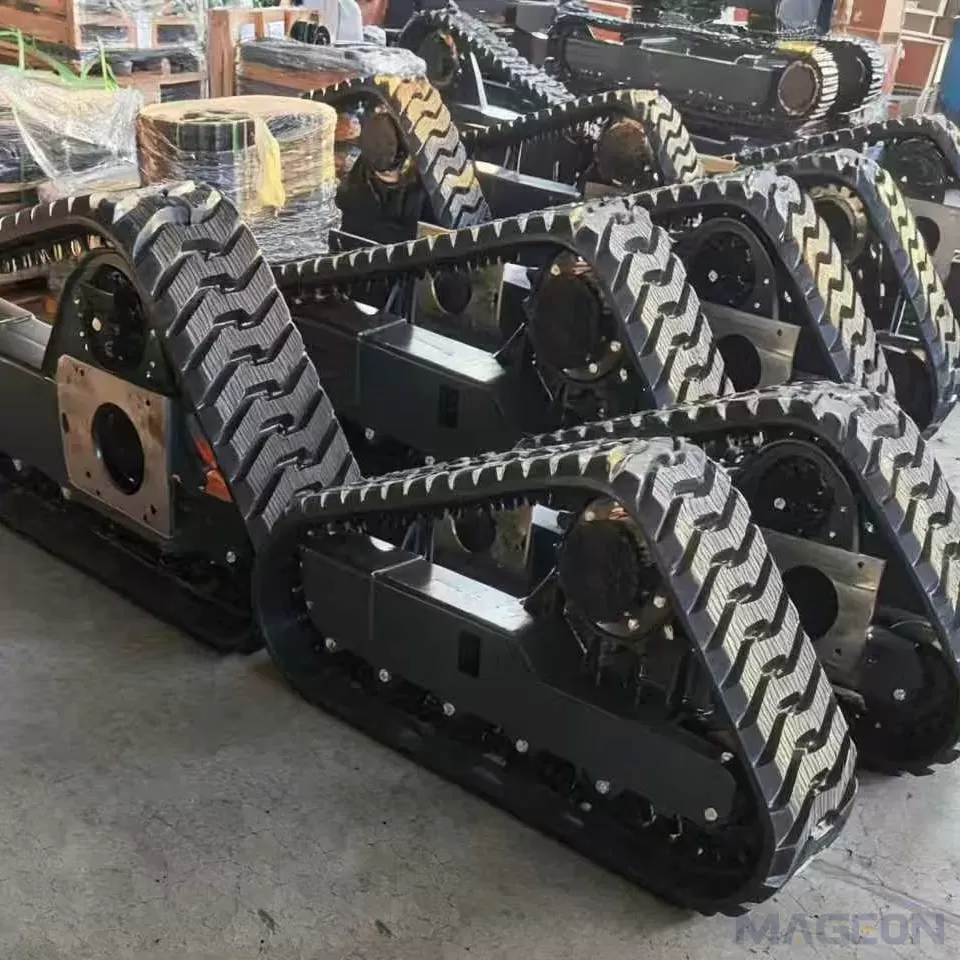
For finished or sensitive floors, a rubber track undercarriage reduces surface damage, noise and vibration. For broken rock, shotcrete with exposed aggregate or steel-fibre reinforced lining, steel crawler undercarriages with replaceable shoes are usually more economical because a damaged shoe can be changed individually. Rubber-pad steel track is a middle option where both abrasion resistance and surface protection matter.
4. Emissions, Heat and Ventilation
Underground ventilation is sized for the whole fleet, so a machine's heat and exhaust contribution is a procurement question, not just an engineering one. Electric drive with a cable or battery supply eliminates local exhaust and reduces the ventilation requirement, but it adds a cable management or battery charging constraint and still requires hydraulic oil cooling.
Where a diesel prime mover is unavoidable, ask for the exhaust after-treatment class, the rated heat rejection in kW and the minimum ventilation volume the machine requires. Do not assume a "low emission" engine removes the need for ventilation calculations: carbon dioxide and heat remain.
Hydraulic efficiency matters here too. A drive sized with excessive flow and throttling losses converts directly into heat that has to be removed by the ventilation system. Correct motor displacement and final drive ratio selection reduces both fuel or battery consumption and cooling load.
5. Sealing, Contamination and Wash-Down
Underground conditions combine abrasive dust, standing water and frequent high-pressure wash-down. The specification should call out:
- Floating face seals or equivalent on rollers and idlers, with a stated contamination class for the lubricant
- Sealed and lubricated track chain where the machine works in slurry
- Desiccant breathers and sealed reservoir filler points to exclude moisture during temperature cycling
- Connector ingress protection ratings, cable routing protected from rock impact, and guarded hose runs
- Drainage and clean-out openings in the track frame so slurry cannot pack around the sprocket
- Corrosion protection appropriate to wash-down and any de-icing or water-treatment chemicals used on site
Access is part of the reliability specification. If the tensioning adjuster, grease points or drain plugs cannot be reached with the upper structure fitted, they will not be serviced on shift. Review the maintenance access on the assembled 3D model, not on the bare chassis.
Frequently Asked Questions
What is the lowest practical height for a tracked chassis?
It is set by the sprocket diameter, the ground clearance requirement and the mounting height of the upper structure, so there is no single minimum. A realistic figure can only be derived from the machine's load case and the site's floor profile; ask for a dimensioned general arrangement rather than a catalogue minimum.
Is rubber or steel track better underground?
Rubber suits finished, noise-sensitive floors where surface protection matters. Steel suits broken rock, sharp aggregate and steel-fibre shotcrete, where cutting and abrasion are the dominant failure modes. The floor condition, not the location alone, decides it.
Does an electric chassis remove the ventilation requirement?
It removes local exhaust emissions, but not heat. Hydraulic losses, motor losses and battery or cable systems still reject heat that the site ventilation must remove, so the thermal balance should still be calculated.
Related Products and Next Step
MAGEON engineers custom tracked chassis to a supplied tunnel cross-section, including telescopic crawler undercarriages, rubber track undercarriages and steel crawler undercarriages. Send the clear height, minimum width, bend radius, gradient and ventilation allowance; our OEM/ODM engineering team will return a general arrangement drawing showing the achievable machine envelope before any component is ordered.
Please leave your customization requirements, and we will contact you as soon as possible!
Leave your requirements, we'll get back to you within 24 hours.