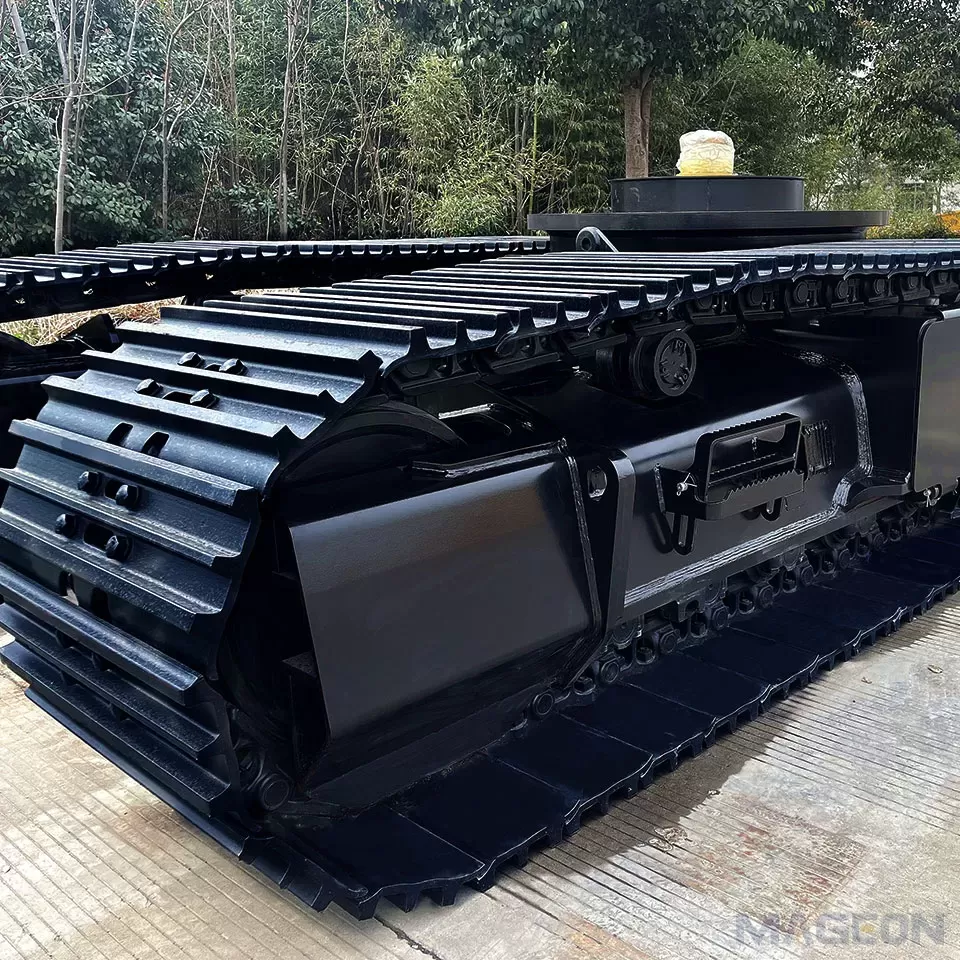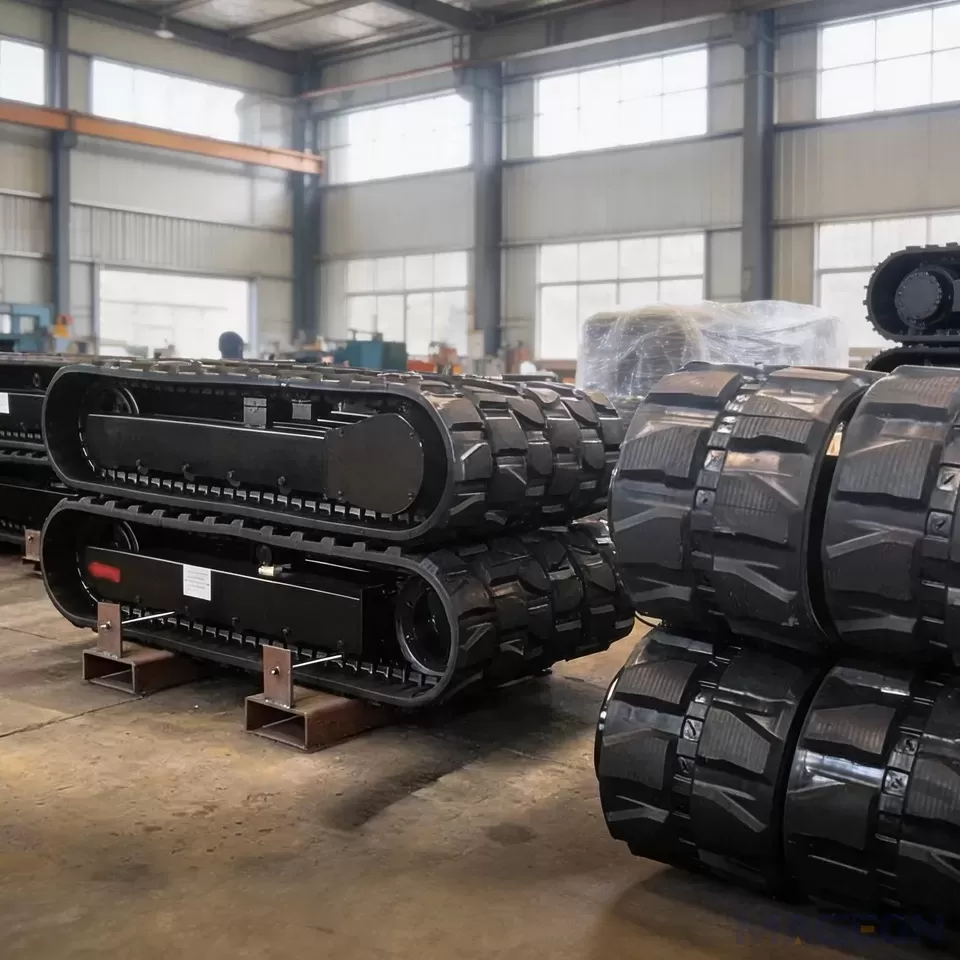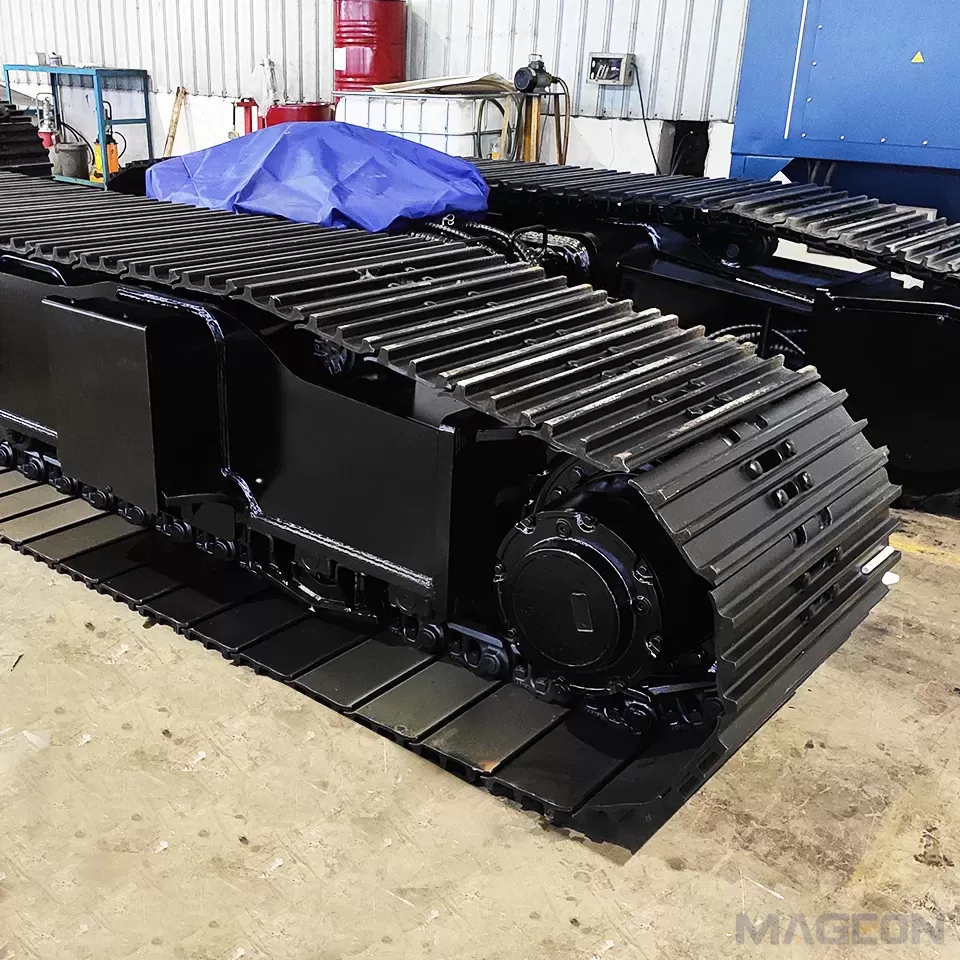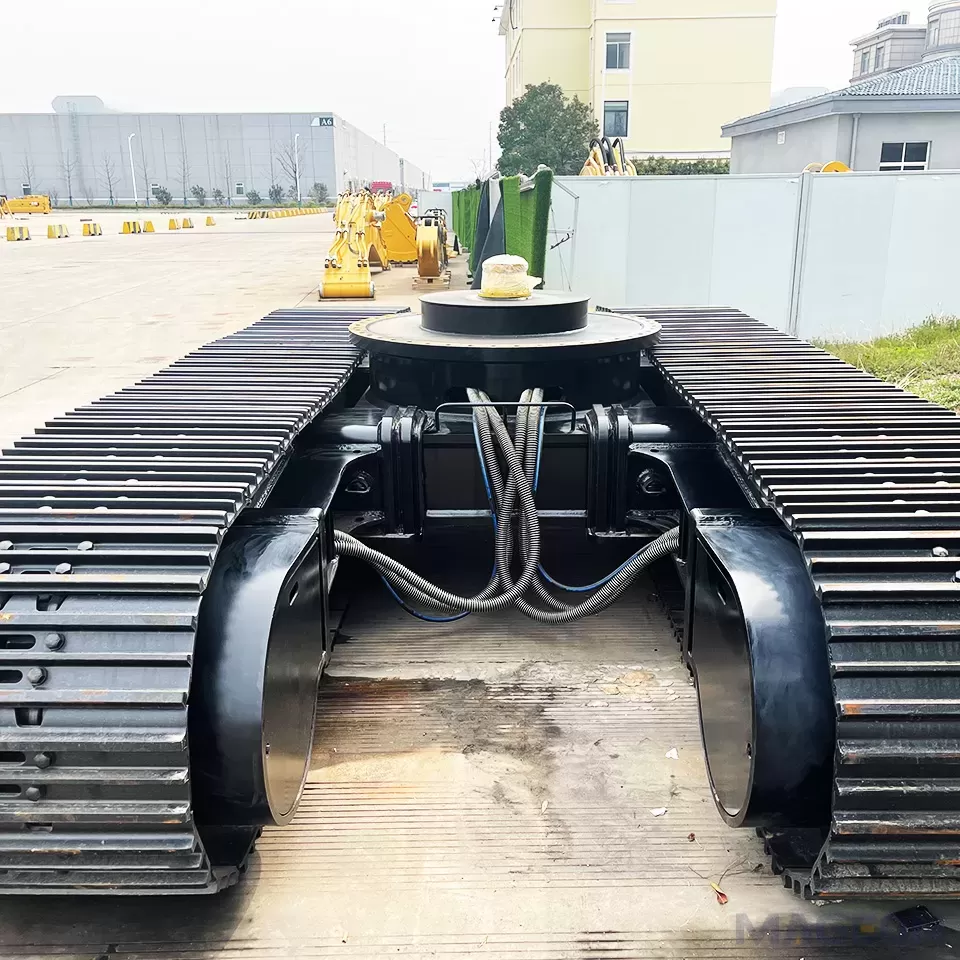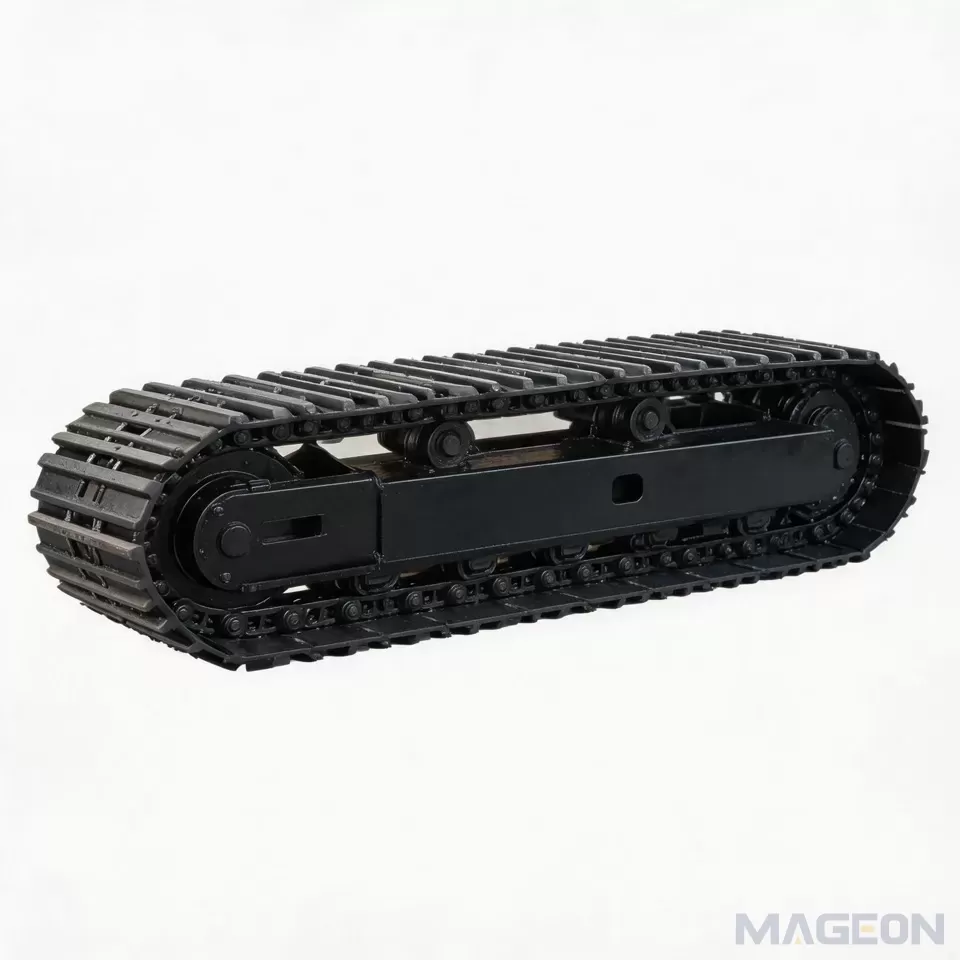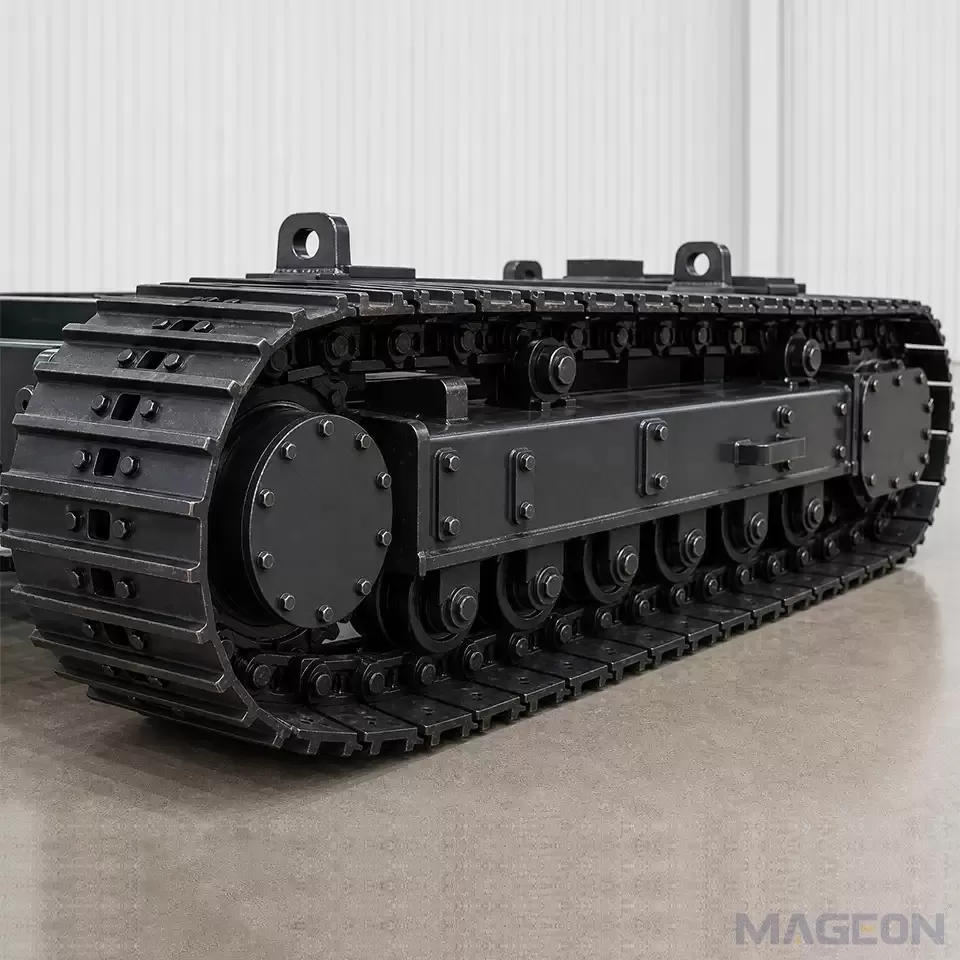
What are the applicable conditions and limitations of steel track undercarriages for loaders?
Where Steel Tracks Are the Right Choice for Loaders
Wheel loaders work in a specific way - a cycle of load, carry, dump, and return - and the undercarriage's job during that cycle is different from an excavator's. The conditions steel handles well and the ones it does not are worth separating, because the answer is not always steel.
Conditions Where Steel Is the Better Choice
| Working condition | Why steel wins | Watch out for |
|---|---|---|
| Quarry and aggregate | Abrasive material destroys rubber belts quickly; steel chain life is several times longer | High chain wear - plan a replacement interval |
| Steel scrap yards and foundries | Sharp metal debris cuts rubber and cannot be field-repaired; on steel only a shoe is lost | Shear pins and the track frame need guarding in hot work areas |
| Mining and coal handling | Continuous load, high abrasivity, and long service intervals make steel's lower total cost decisive | Routine sprocket and roller inspection |
| Demolition | Impact loading is absorbed by the track, and the track is the sacrificial part | Track frame and roller mount fatigue - inspect after severe impact |
| Long haul on hard or paved surfaces | Steel tolerates continuous travel on hard ground without the pin and seal wear that destroys rubber | Noise and vibration into the operator station |
| Heavy load on soft ground | Steel track chains and shoes are far stronger, and a wide steel track can be specified for a low ground pressure | Machine weight and total cost of ownership are higher |
Conditions Where Rubber Is the Better Choice
- Finished surfaces - warehouse floors, factory yards, and paved logistics areas. Steel track shoes mark and can cut asphalt, and in some facilities surface damage is a contractual penalty.
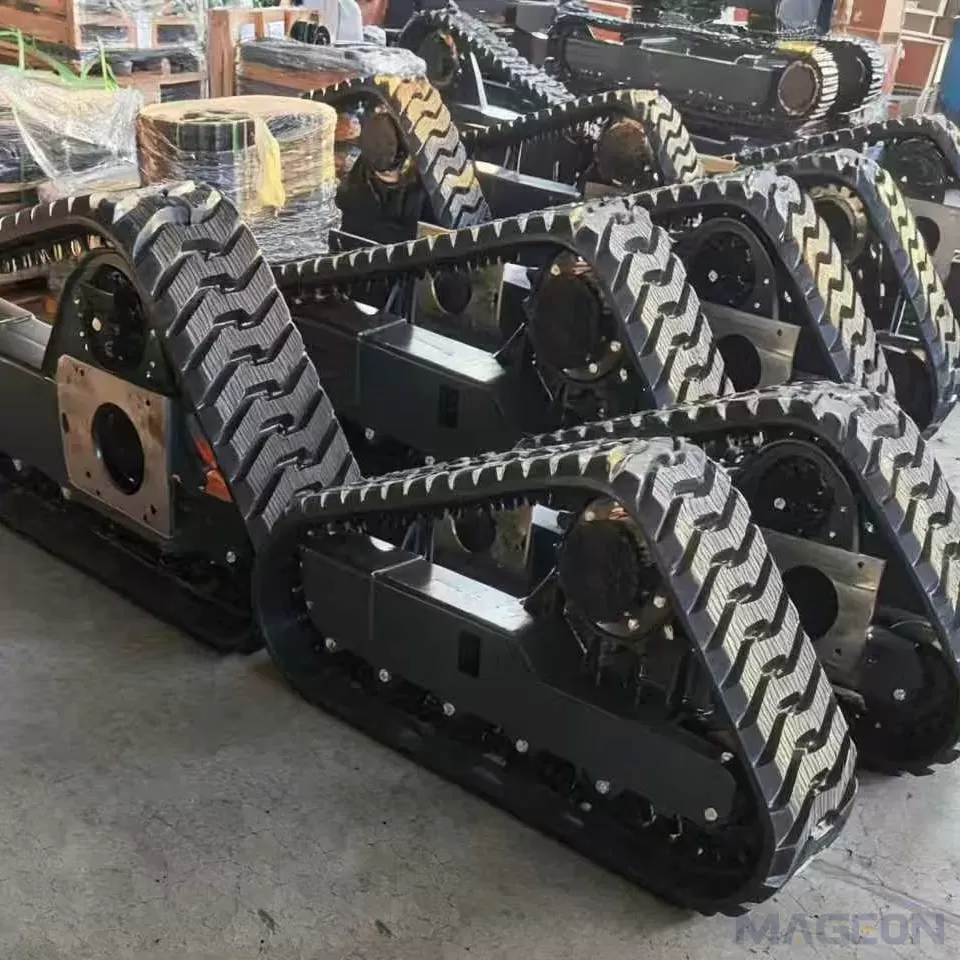
- Soft ground and low bearing capacity - a rubber track of the same width develops roughly 40-50% less ground pressure, because the pads conform to the surface. On mud, sand, or reclaimed ground this is often decisive.
- Noise-sensitive sites - urban waste collection, night-time logistics, and any operation near residential or hospital boundaries. Rubber is significantly quieter and transmits less vibration.
- Light duty, short cycle work - where the loader spends most of its time on firm ground travelling between short dig and dump cycles, rubber's higher initial speed and lower rolling resistance can offset the wear difference.
What Actually Determines the Choice
Three numbers decide it in practice: the abrasivity of the material being handled, the proportion of the working day spent on soft ground, and whether the machine travels on paved surfaces. If abrasivity is high, steel wins regardless of the other two. If ground pressure is the binding constraint, rubber or a wider track wins. If the machine crosses a customer site regularly, surface protection matters more than most operators expect.
Limitations to Be Aware Of With Steel
- Speed - steel chains have more internal friction than a rubber belt, so top travel speed is typically 10-15% lower. For a loader this is rarely decisive, but it matters if the machine spends a lot of time travelling.
- Noise and operator comfort - steel transmits more vibration into the cab. On long shifts this is a genuine fatigue factor, and it is the most common reason operators ask for rubber after working a steel machine.
- Ground damage - steel track shoes will mark paved surfaces, and the point loading from the grouser can be significant on soft asphalt.
- Shock damage - a steel track is stronger but not unbreakable. A track frame can be damaged by a severe impact, and it will not absorb the energy the way a rubber belt does.
The Compromise: Rubber-Pad Steel Track
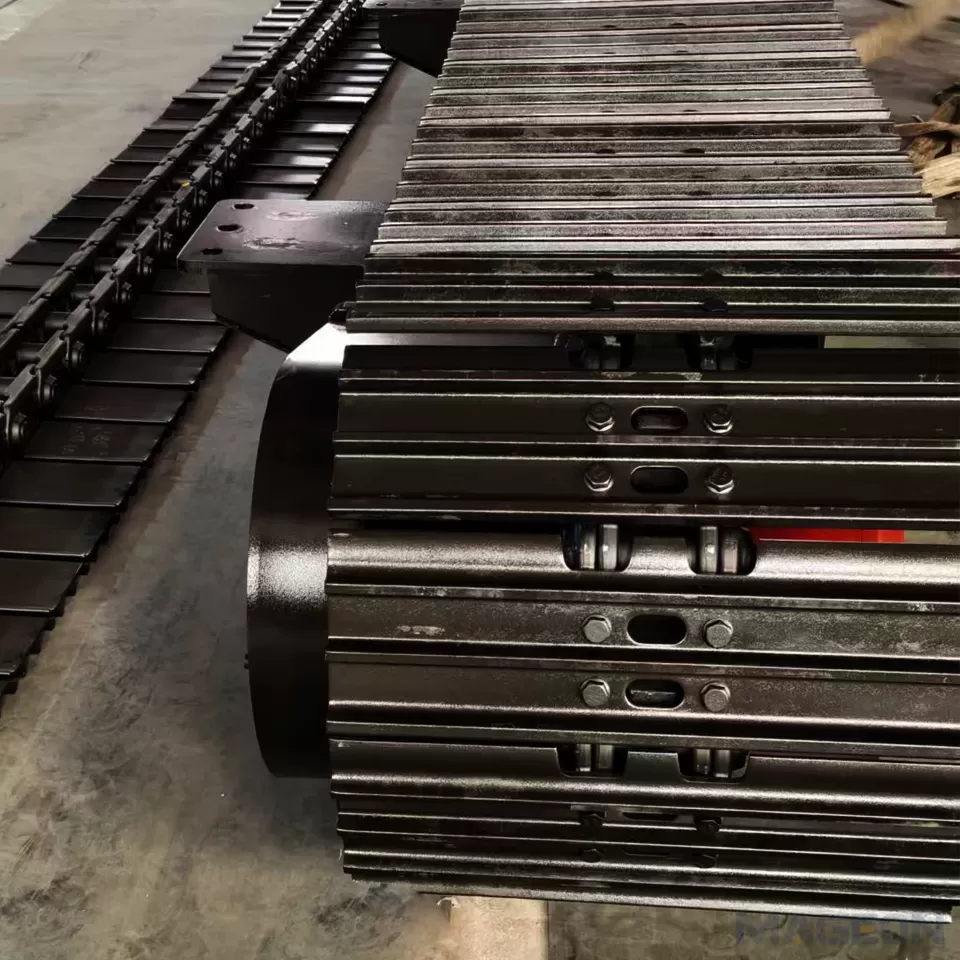
For a loader working on mixed ground, a rubber-pad steel track is often the most practical answer. It keeps the steel load capacity and the field-repairability of the chain, while the bolt-on pads protect paved surfaces and cut the ground pressure by roughly 30%. The trade-off is that the pads themselves become a wear item, and they need replacing more often than bare steel shoes. We can size the pad thickness and the grouser pattern to your actual abrasivity, which is often much better than specifying a heavy pad that will only abrade faster.
What to Send Us
The loader operating weight, the bucket capacity and the material being handled, the typical ground conditions including how often the machine works on soft ground, and whether it travels on paved surfaces. From that we will specify the configuration, calculate the ground bearing pressure, and give you an indicative wear part consumption figure for a year of operation in those conditions, so you can compare the running cost of steel against rubber honestly rather than on purchase price alone.
Please leave your customization requirements, and we will contact you as soon as possible!
Leave your requirements, we'll get back to you within 24 hours.