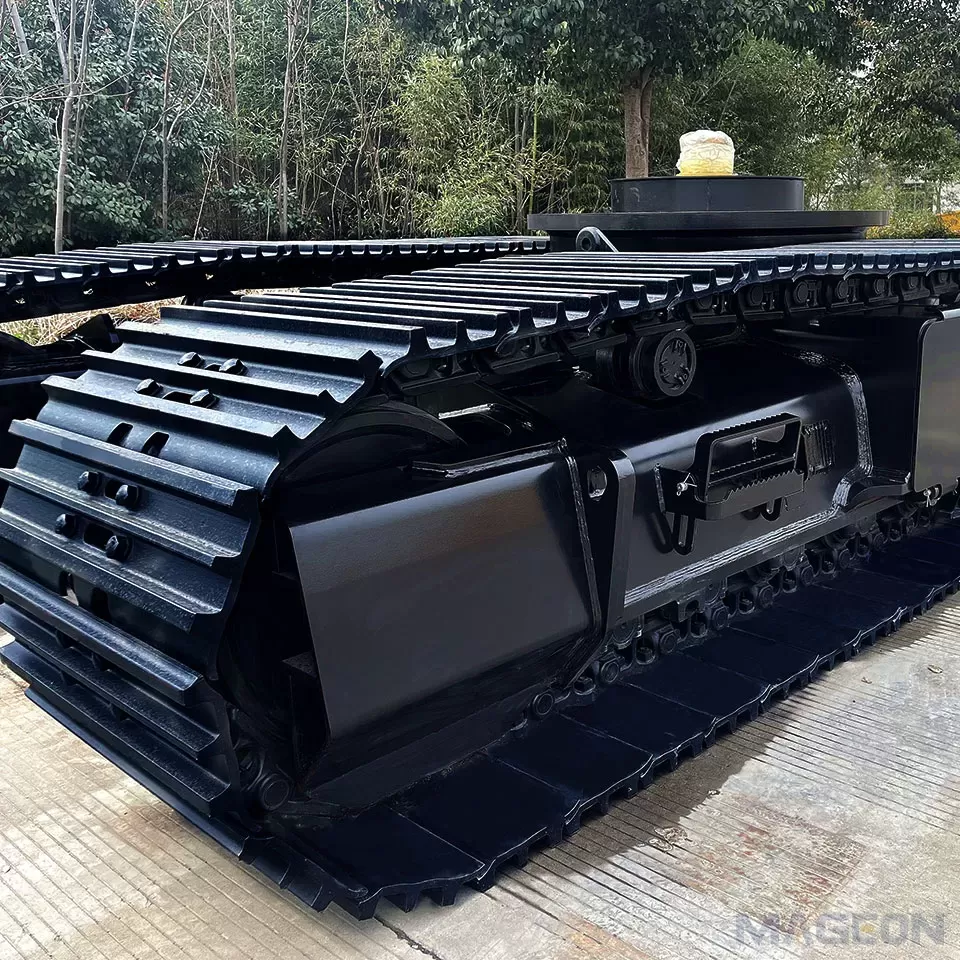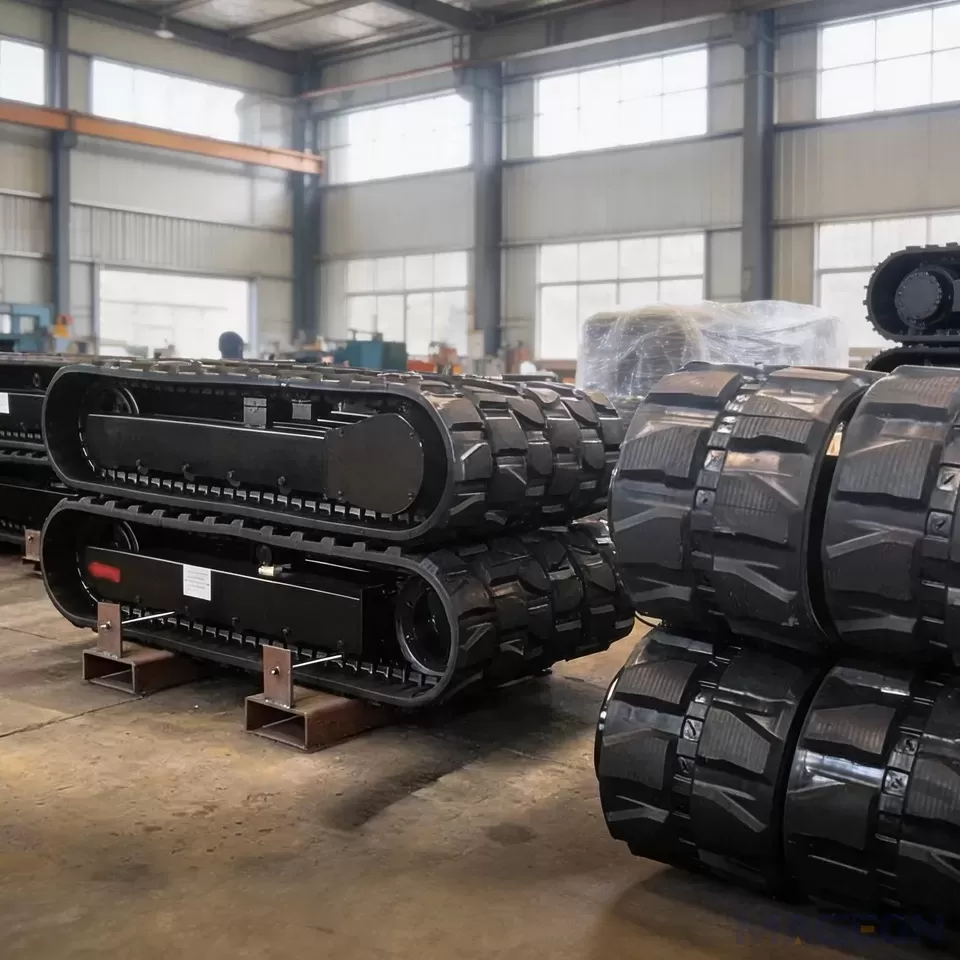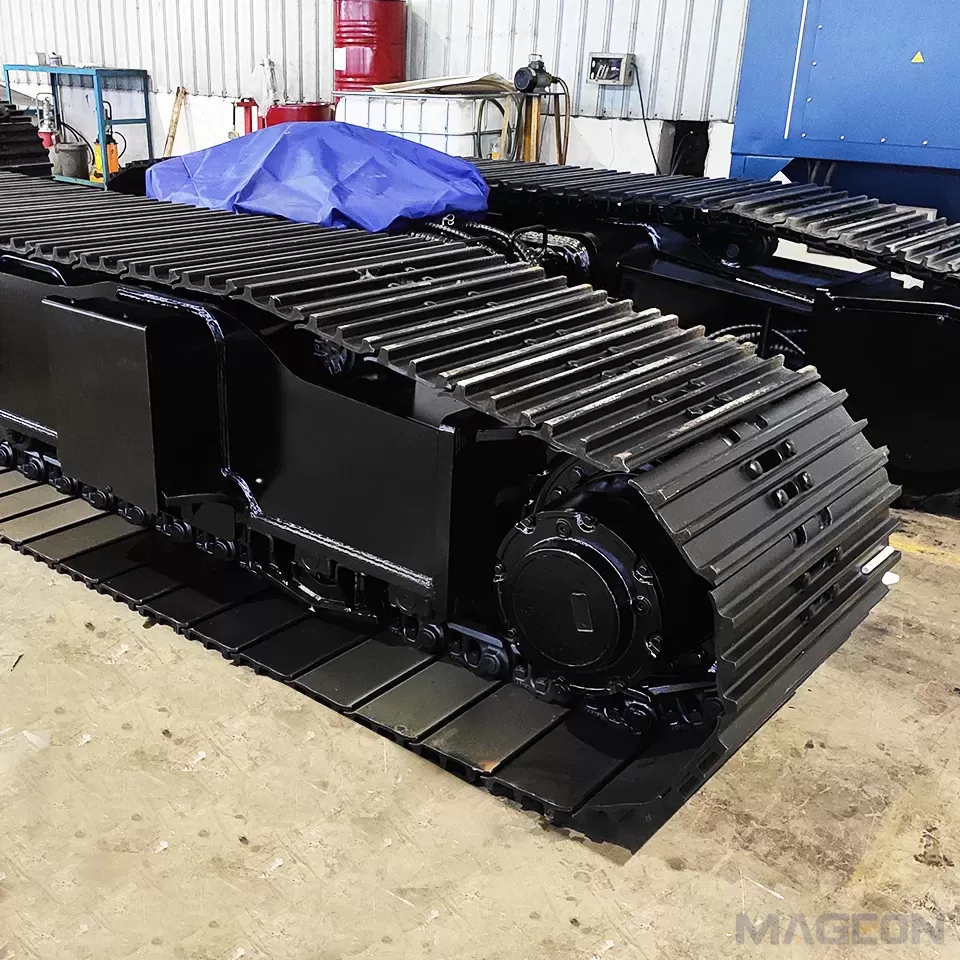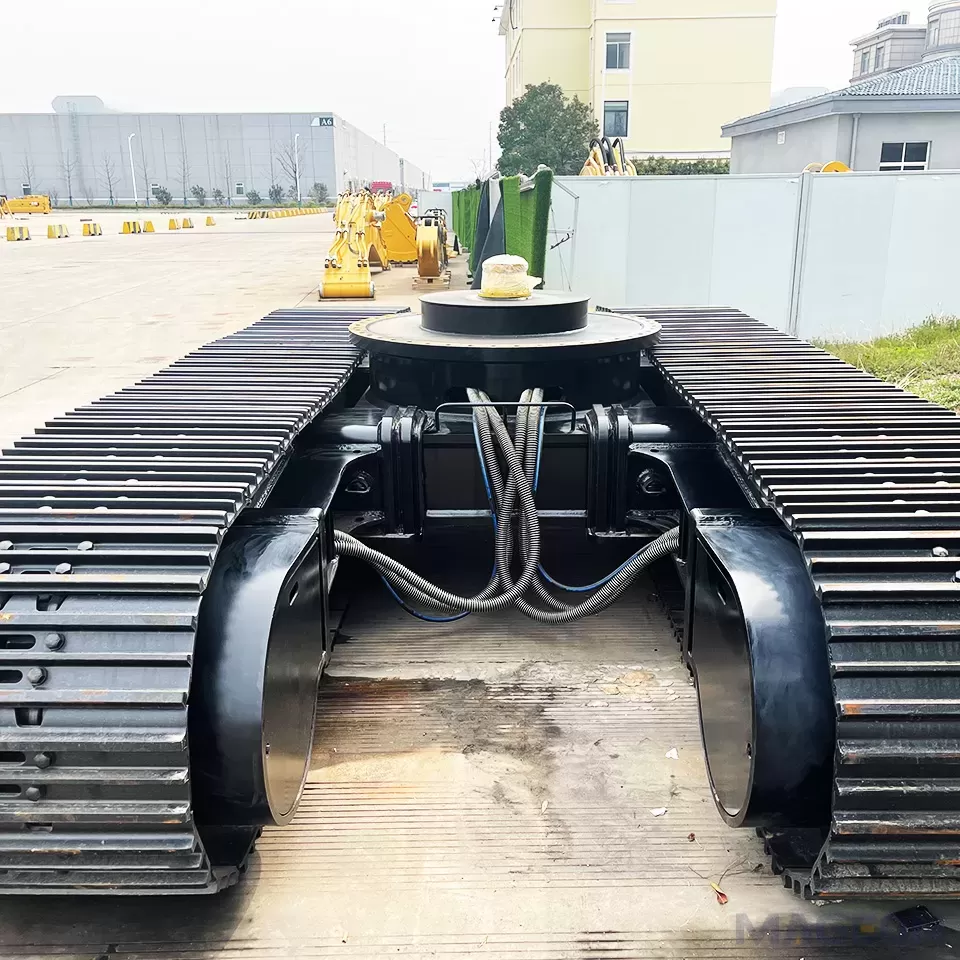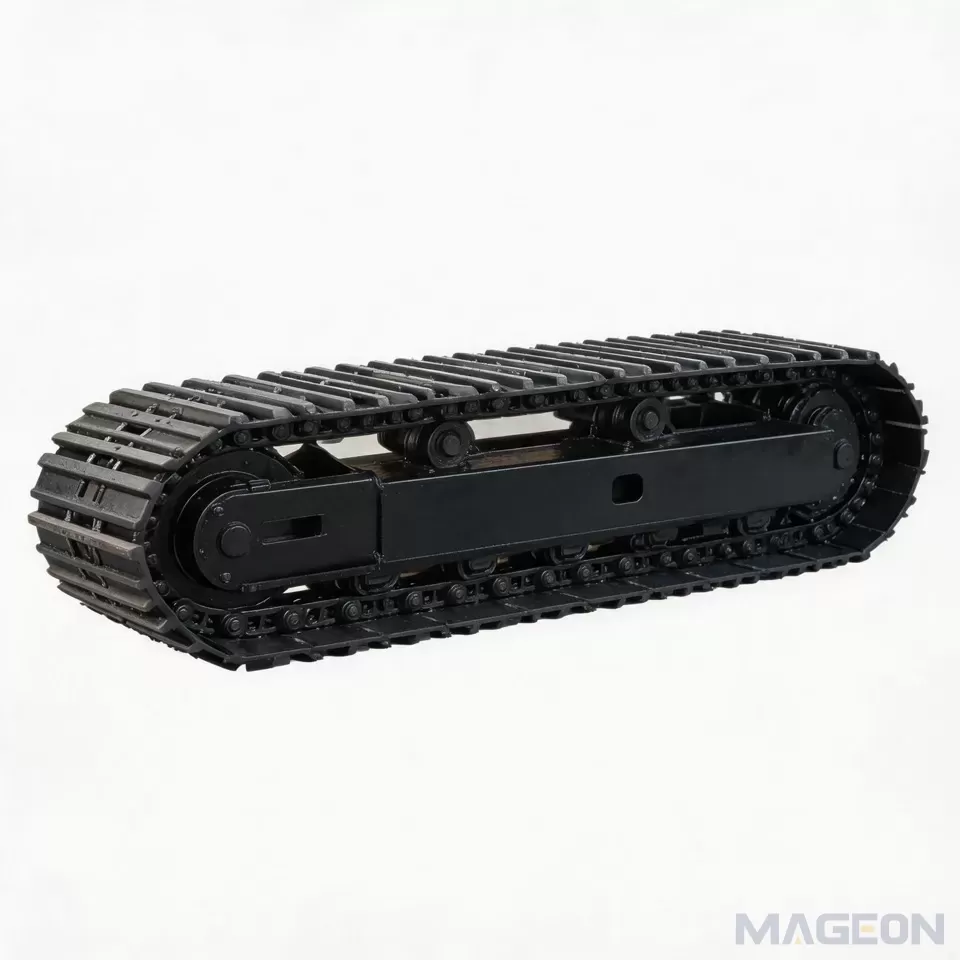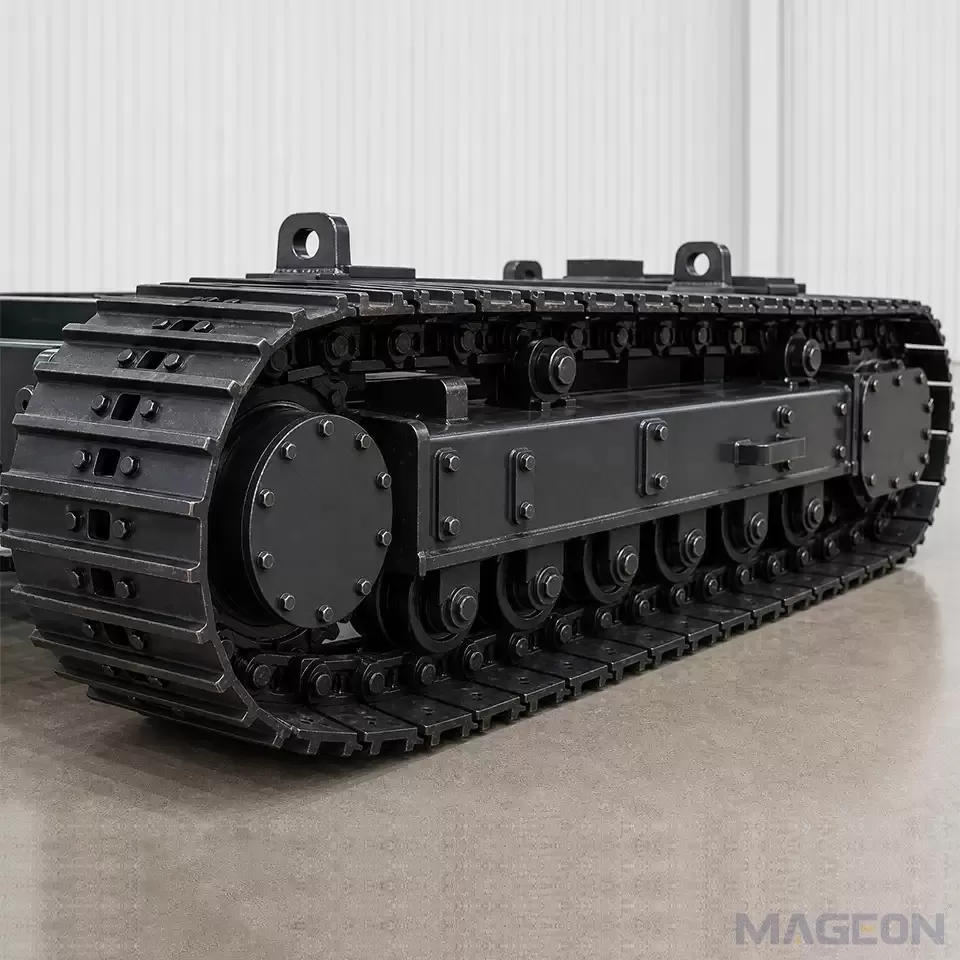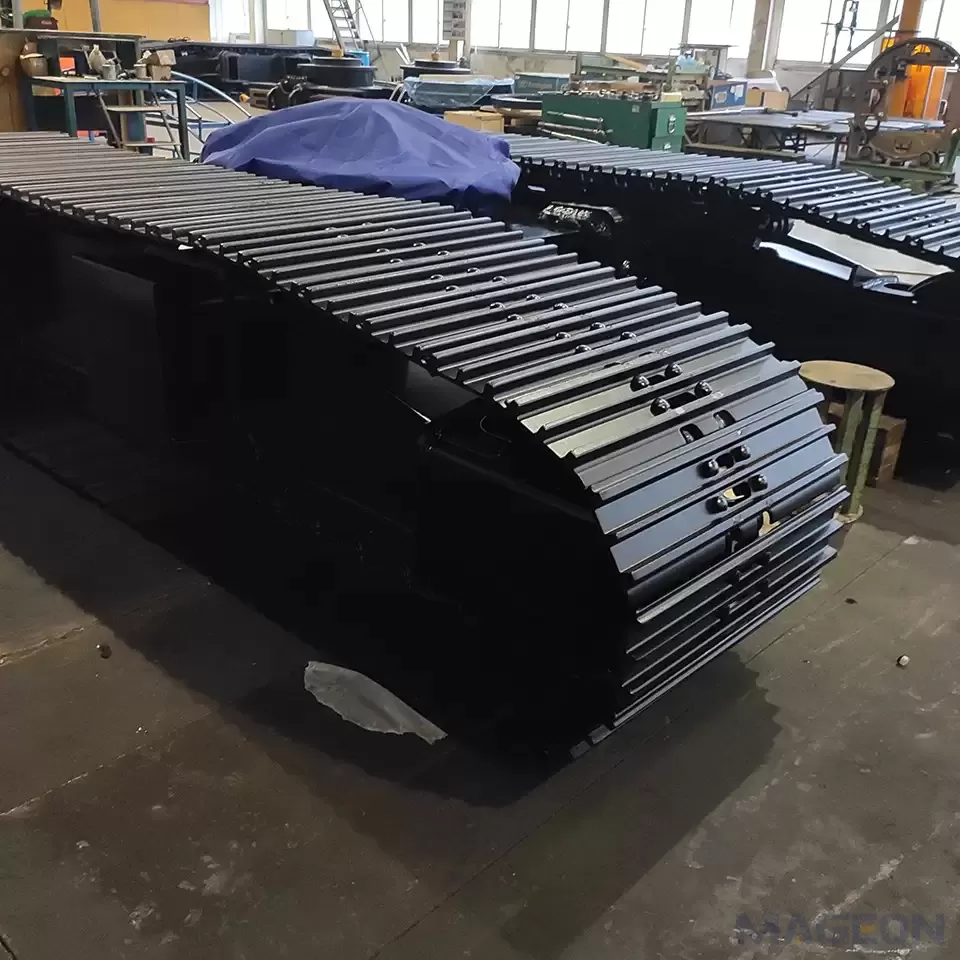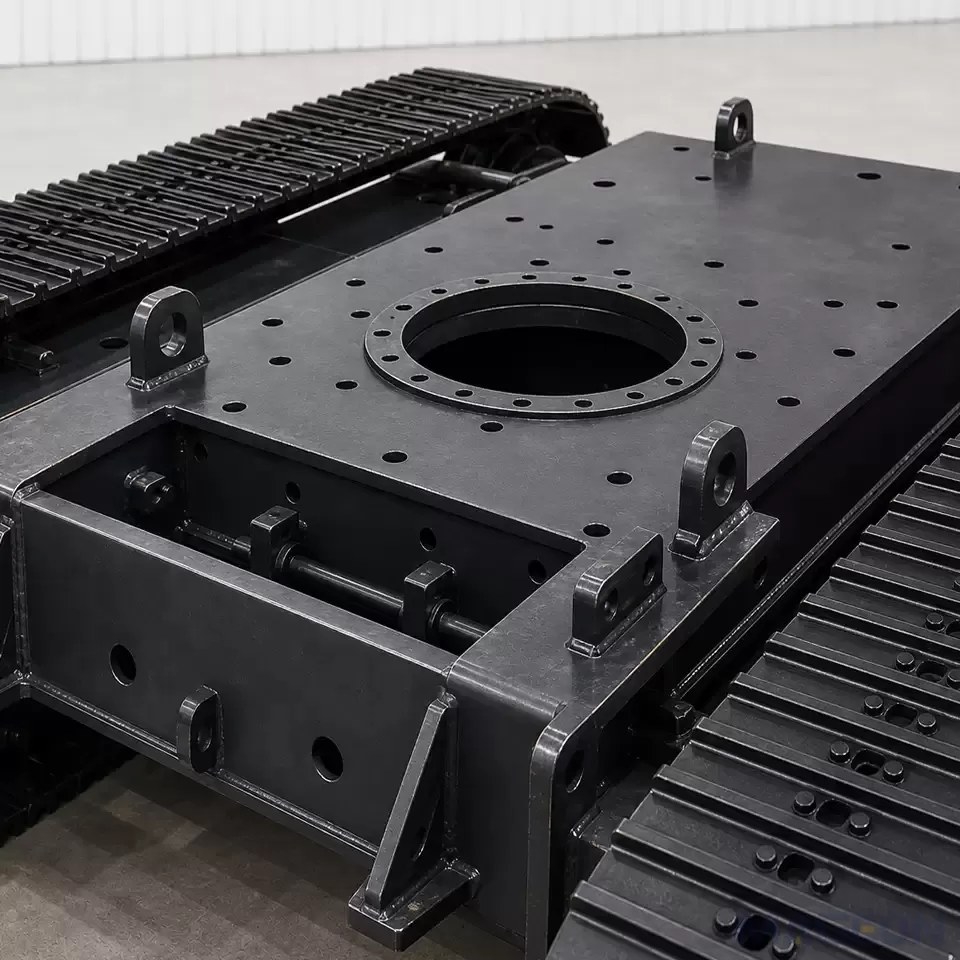
What are the stability advantages of steel track undercarriages for cranes?
Why a Steel Track Gives a Crane Better Stability
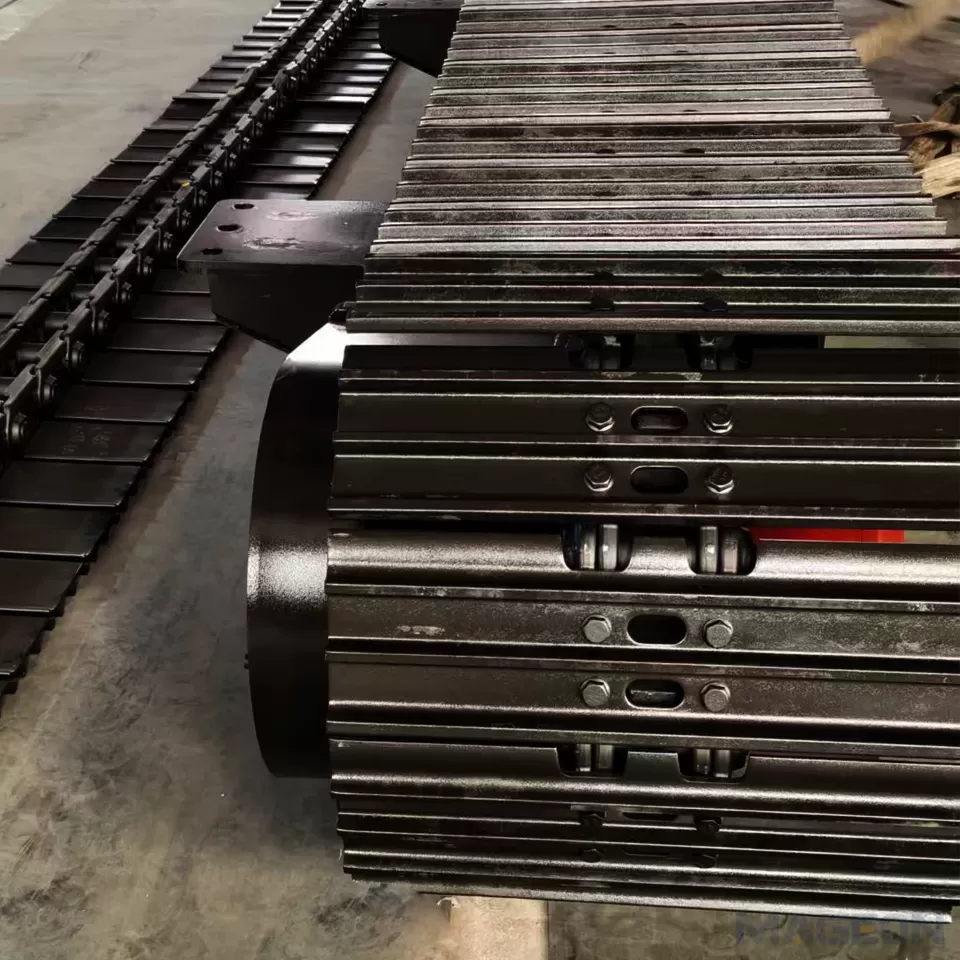
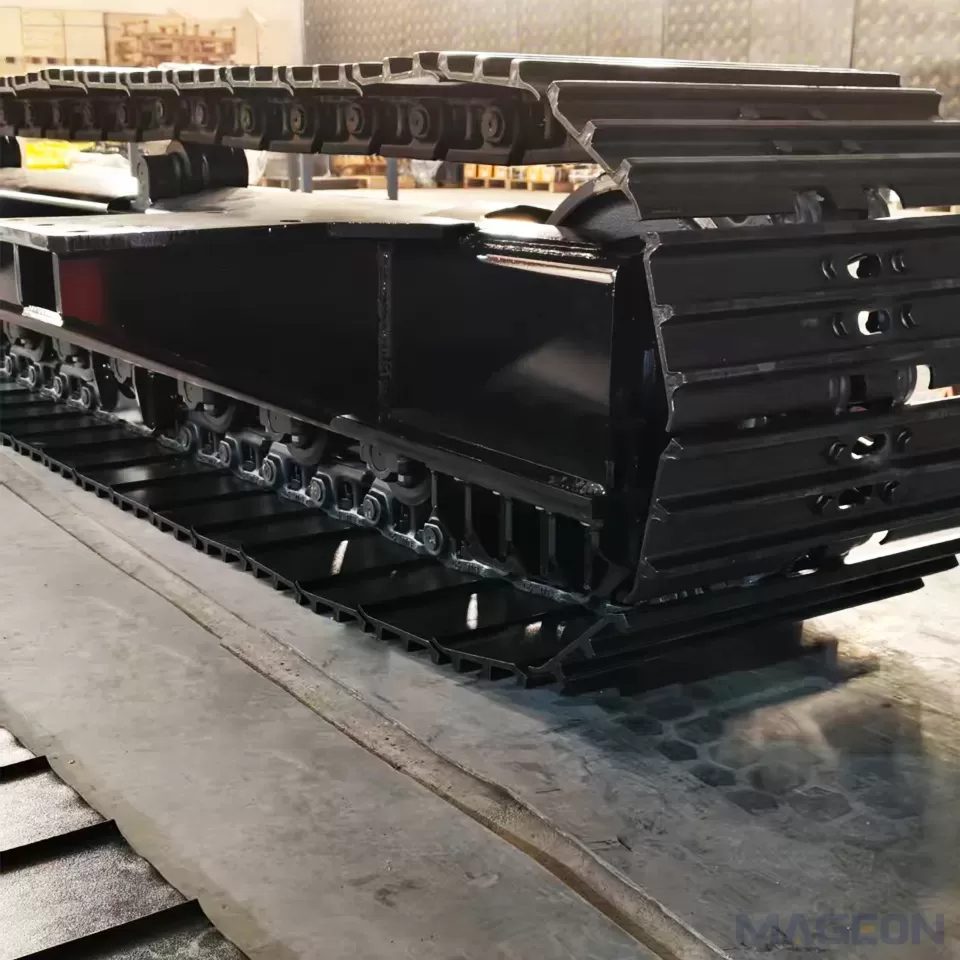
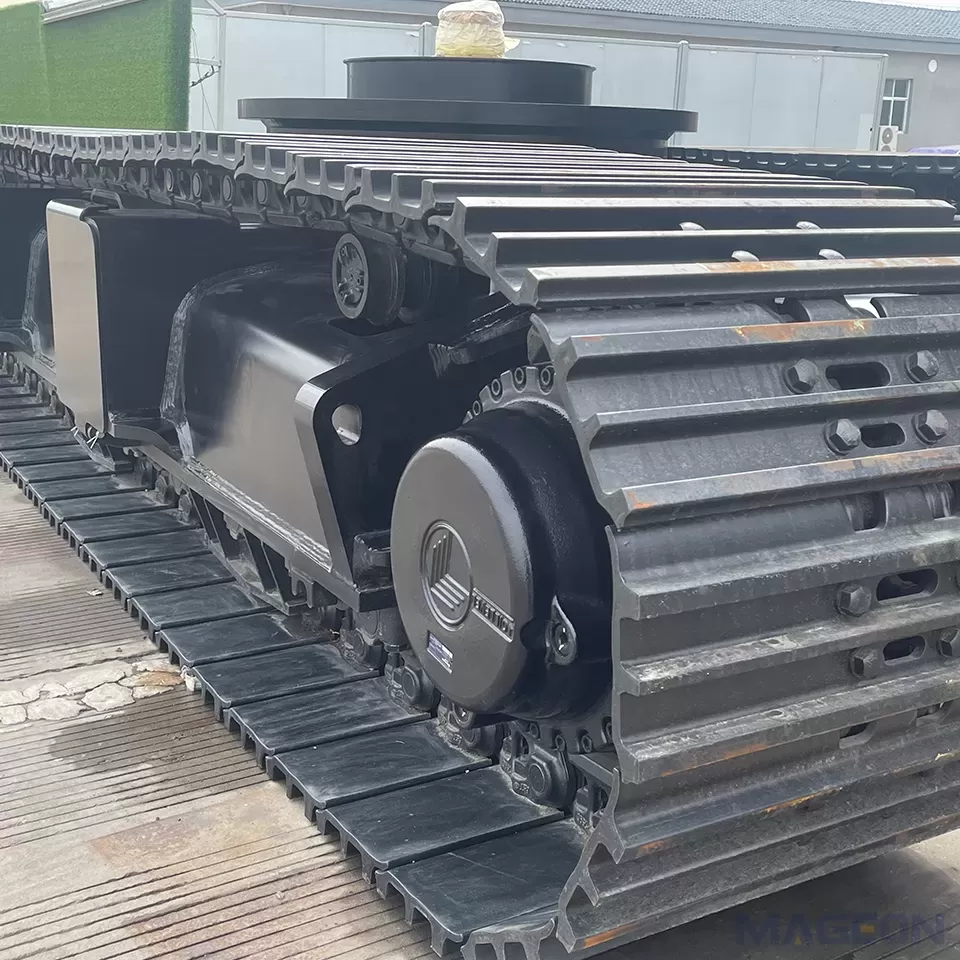
A crawler crane lifts its load at radius. That single fact drives everything about the undercarriage, because the tipping moment increases with the square of the load radius while the resisting moment from the machine's weight increases only linearly. A steel crawler undercarriage contributes to that resistance in three distinct ways, and a rubber track contributes to only one of them.
The Three Sources of Stability Gain
| Mechanism | What it does | Available on a rubber track? |
|---|---|---|
| Wider contact patch | The same machine weight spread over a larger area, so the tipping line moves outward | Partially - a rubber track can be made wide, but the drive is limited by the belt's permissible tension |
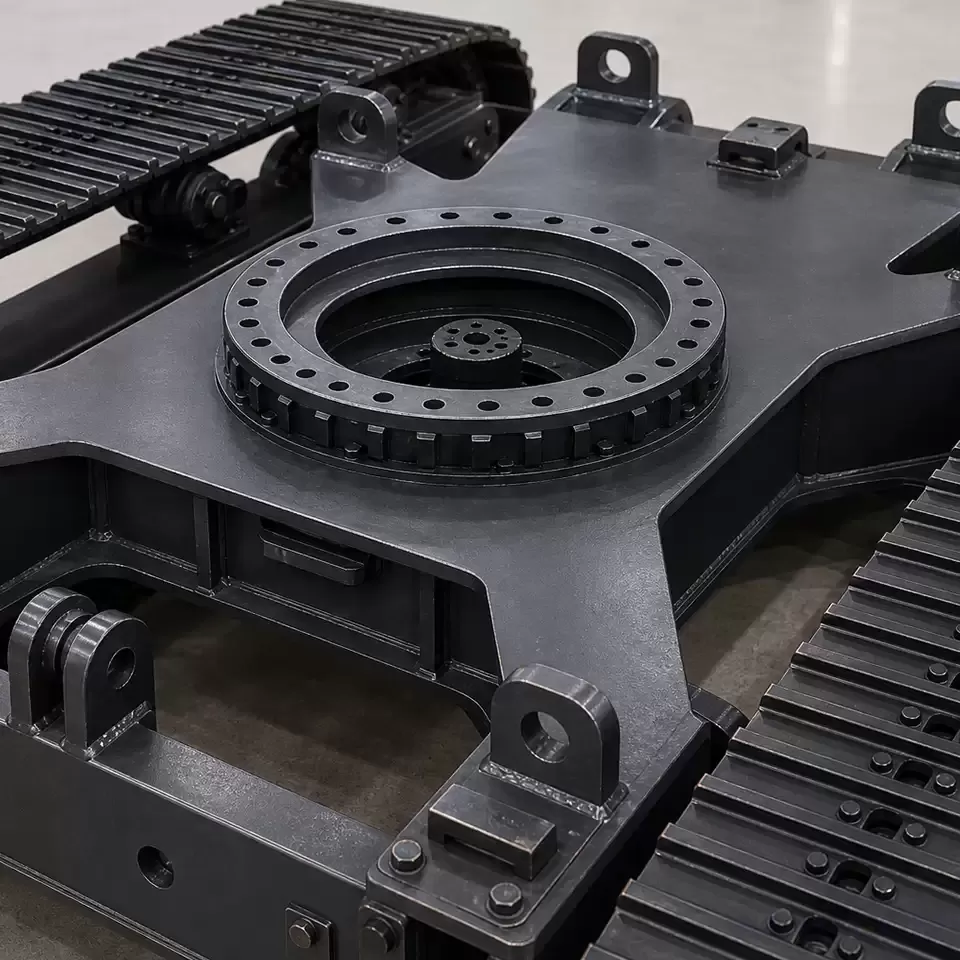
| Continuous rigid frame | The load path from the slew ring into the track frame is uninterrupted, so the machine weight is transferred directly | No - a rubber belt is compliant and takes up load in tension rather than compression |
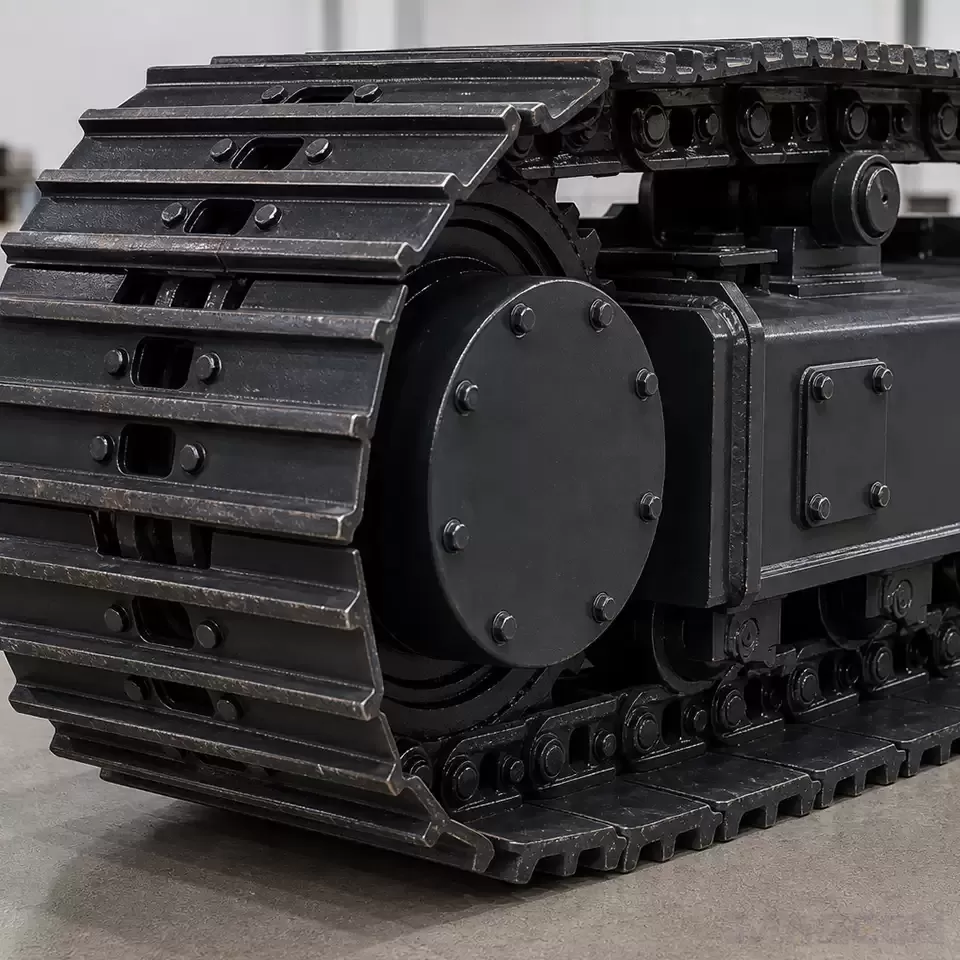
| Lower centre of gravity | A steel track assembly sits lower because the chain and roller stack can be shallower than a rubber belt of equal capacity | No - a rubber belt needs a deeper tensioning and drive structure |
The Numbers Behind It
Consider a 50T crawler crane with a 3.0m track width. The contact length is typically 4.0m, giving a contact area of 12 square metres, and a rated tipping load of around 60% of machine weight at a 2.5m radius. The same machine on a rubber track of the same width will have a noticeably lower tipping load, typically in the region of 10-20% lower, and this is not a manufacturing quality difference - it is inherent to the belt's construction.
The practical consequence is a smaller load chart. A crane operator working at 80% of the steel chart may find that the same configuration on rubber sits above 100% of the rubber chart, which means the load must be reduced or the radius shortened. In excavation and lifting work where productivity depends on cycle time, that is a real cost.
Ground Pressure Matters Too
On soft ground the equation reverses, and this is where rubber has a genuine advantage. A rubber track of 3.0m width develops roughly 40-50% less ground pressure than a steel track of the same width, because the rubber pads conform to the surface and the effective contact area is larger. On reclaimed ground, sand, or mud, this can be the deciding factor.
Steel answers this with wide tracks and, where the situation allows, with a raised-sprocket configuration that increases the contact length. A 3.0m wide steel track with a 4.5m contact length brings the ground pressure close to a 3.5m rubber track, at the cost of a larger machine footprint and turning circle.
Which to Choose
- Steel - where the load chart is the constraint: heavy lifting, high radius work, and operations on hard compacted ground. Also where the machine travels on roads or hardstand between sites, since steel tolerates that far better.
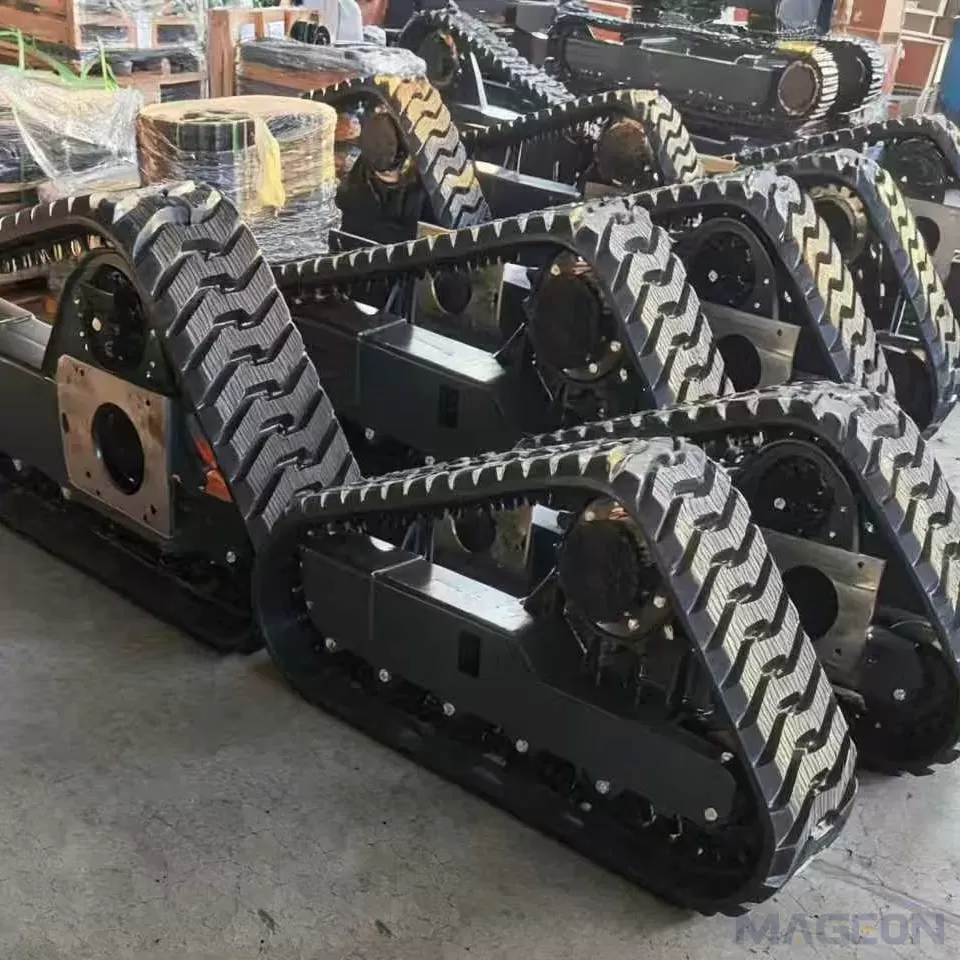
- Rubber - where ground pressure is the constraint: soft ground, confined urban sites, and work over finished surfaces where surface damage is a contractual issue.
- Rubber-pad steel track - the compromise used on many smaller cranes: steel chain for load capacity and durability, with bolt-on rubber pads for surface protection and a moderate ground pressure reduction. It also reduces vibration into the machine, which matters on a crane where the operator's comfort over long shifts affects productivity.
What to Confirm Before Specifying
The machine weight, the maximum lift radius and the lift height at that radius, the ground bearing capacity at the site, and the proportion of the working day spent travelling on hard surface. From that we can calculate the tipping margin and the ground bearing pressure for either configuration and show you the numbers side by side. If the site conditions are marginal, we will say so rather than quote a crane that will not lift the load in practice.
Please leave your customization requirements, and we will contact you as soon as possible!
Leave your requirements, we'll get back to you within 24 hours.