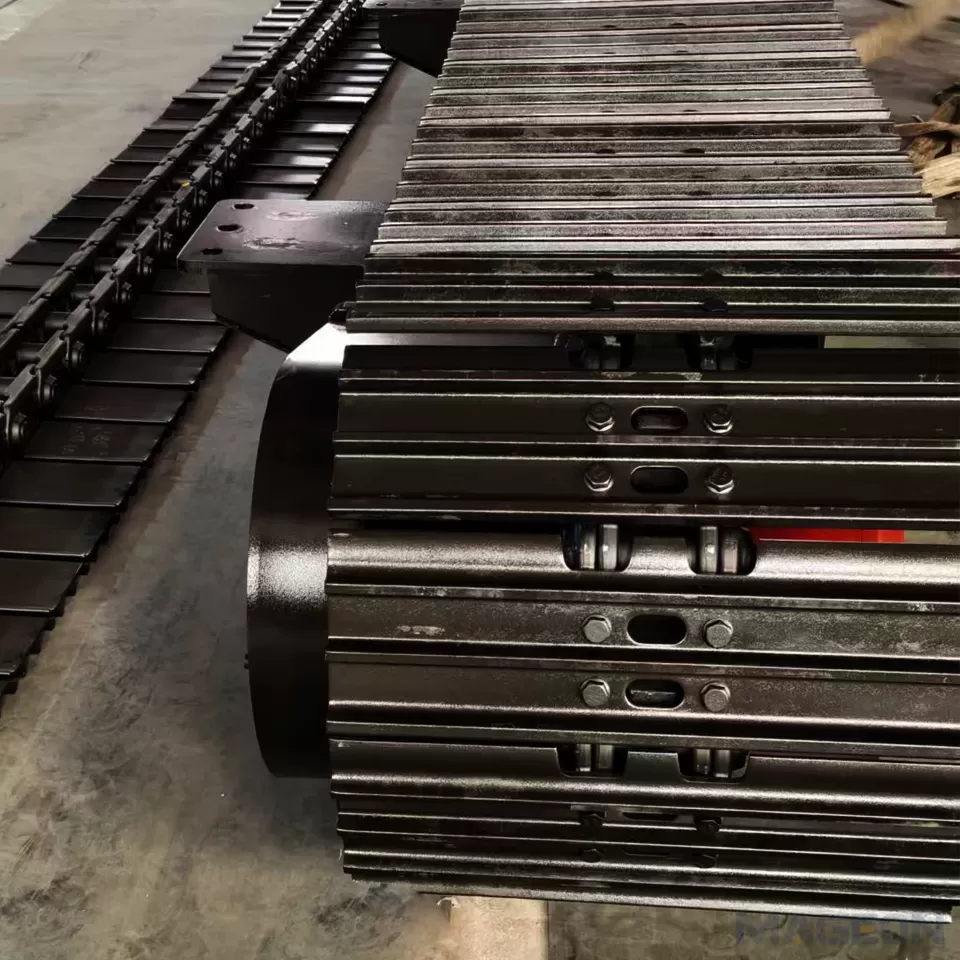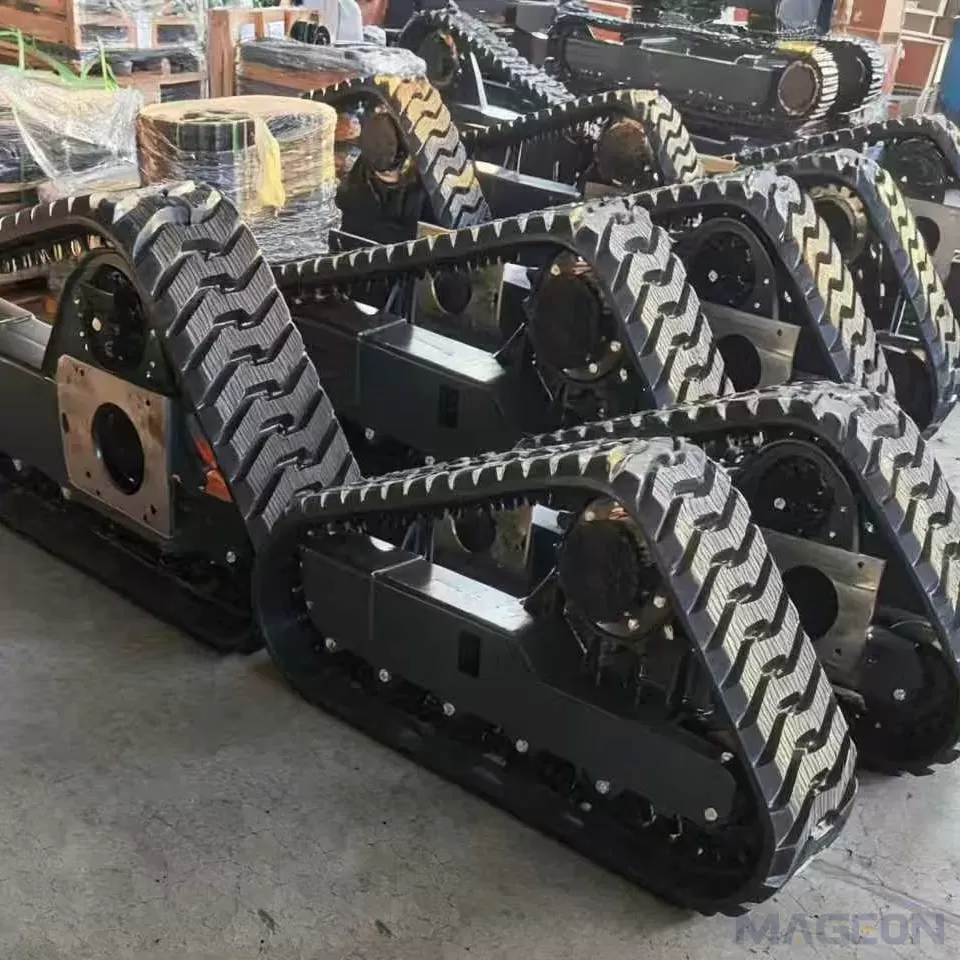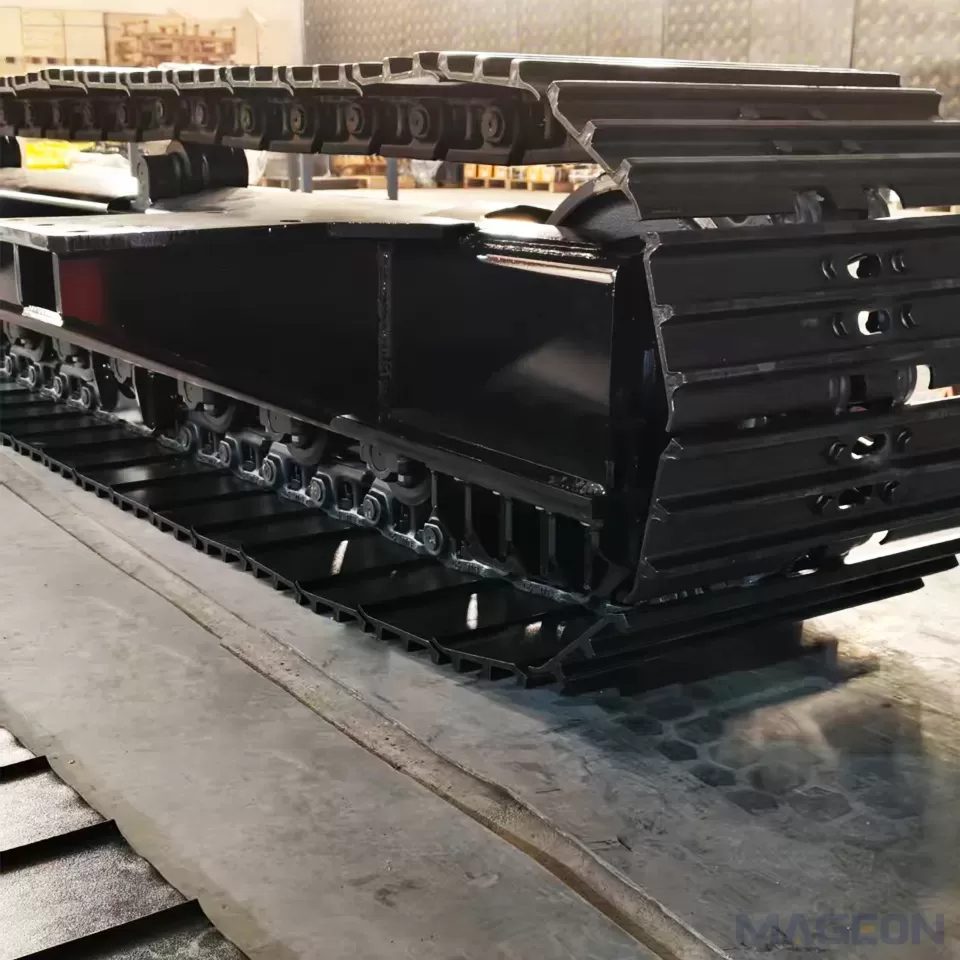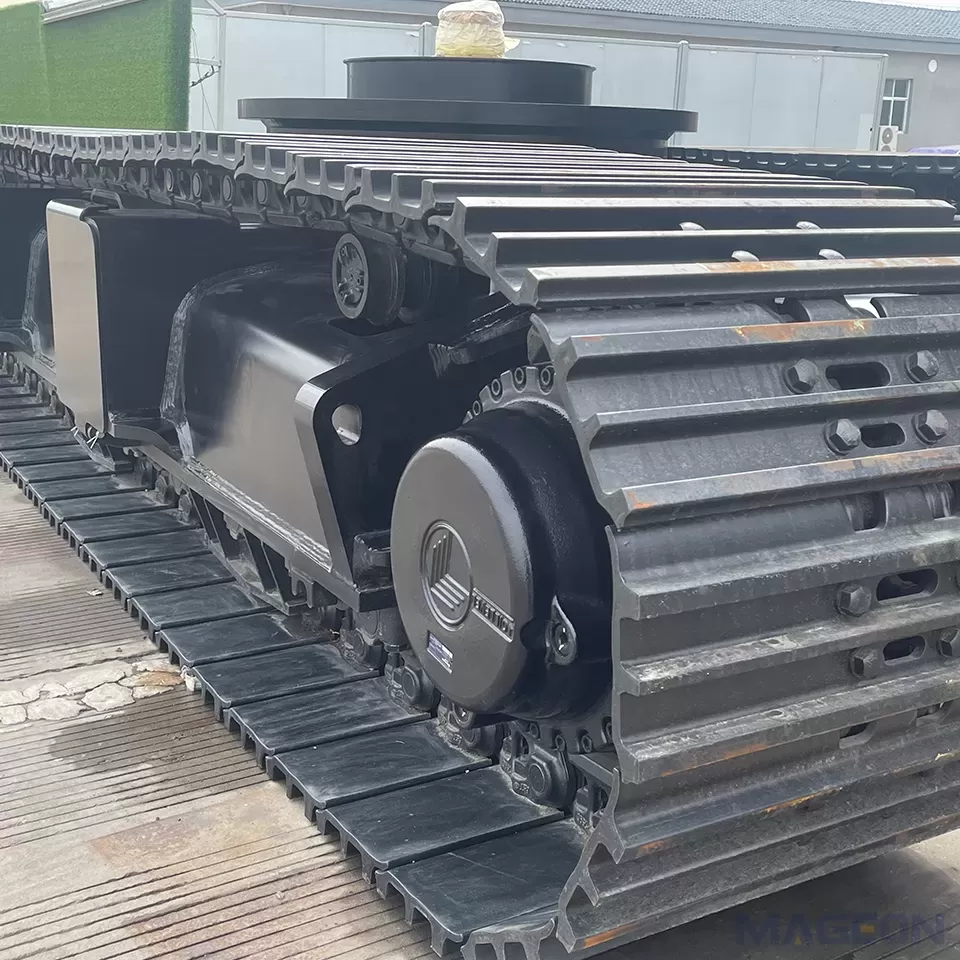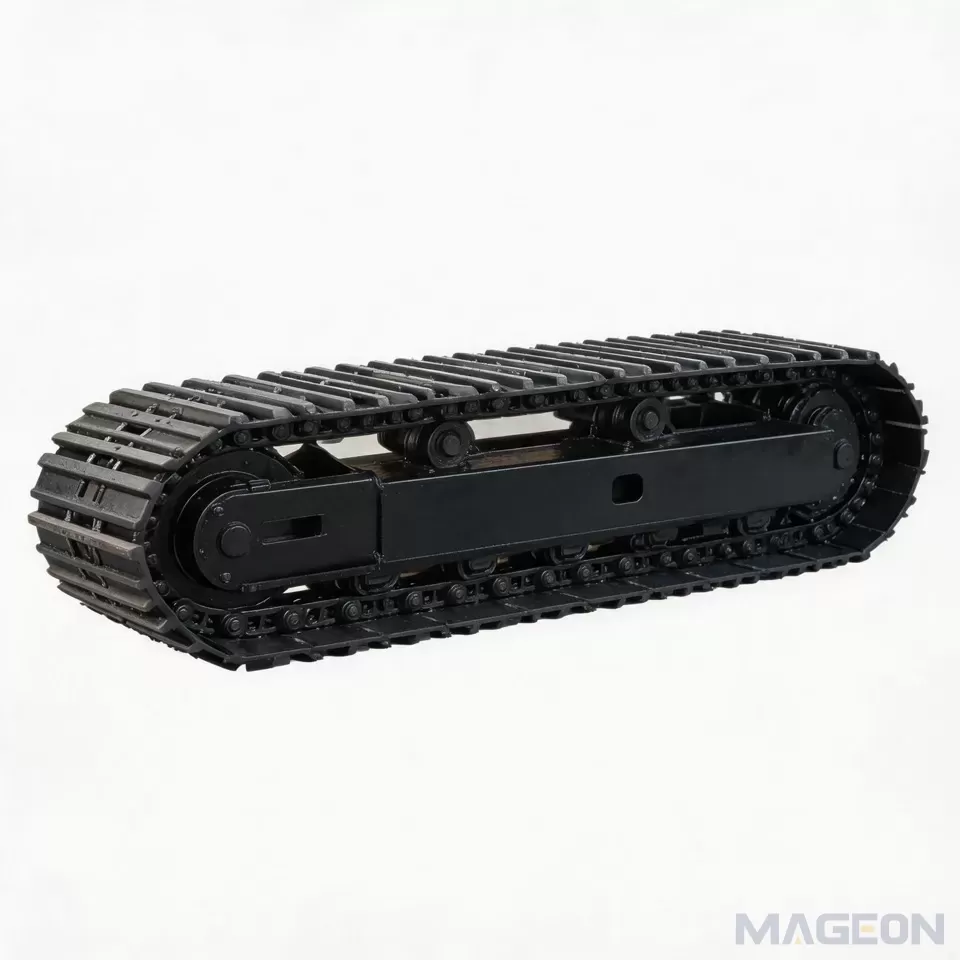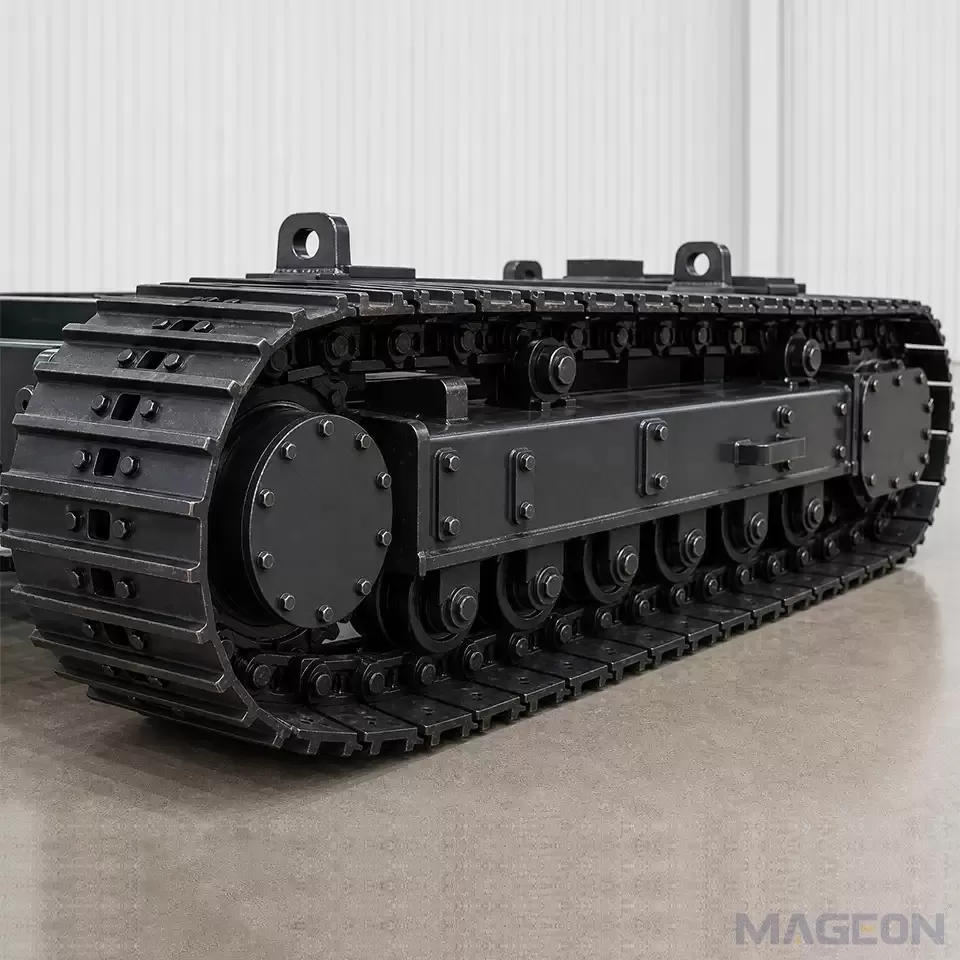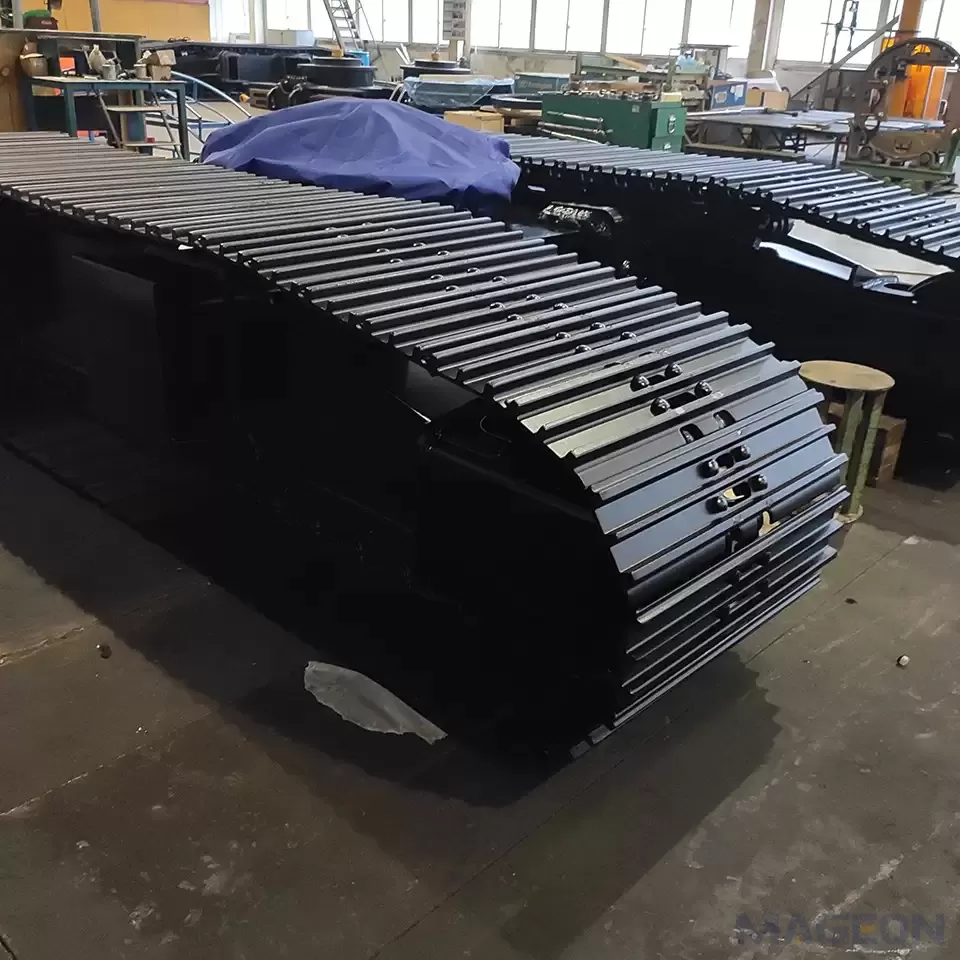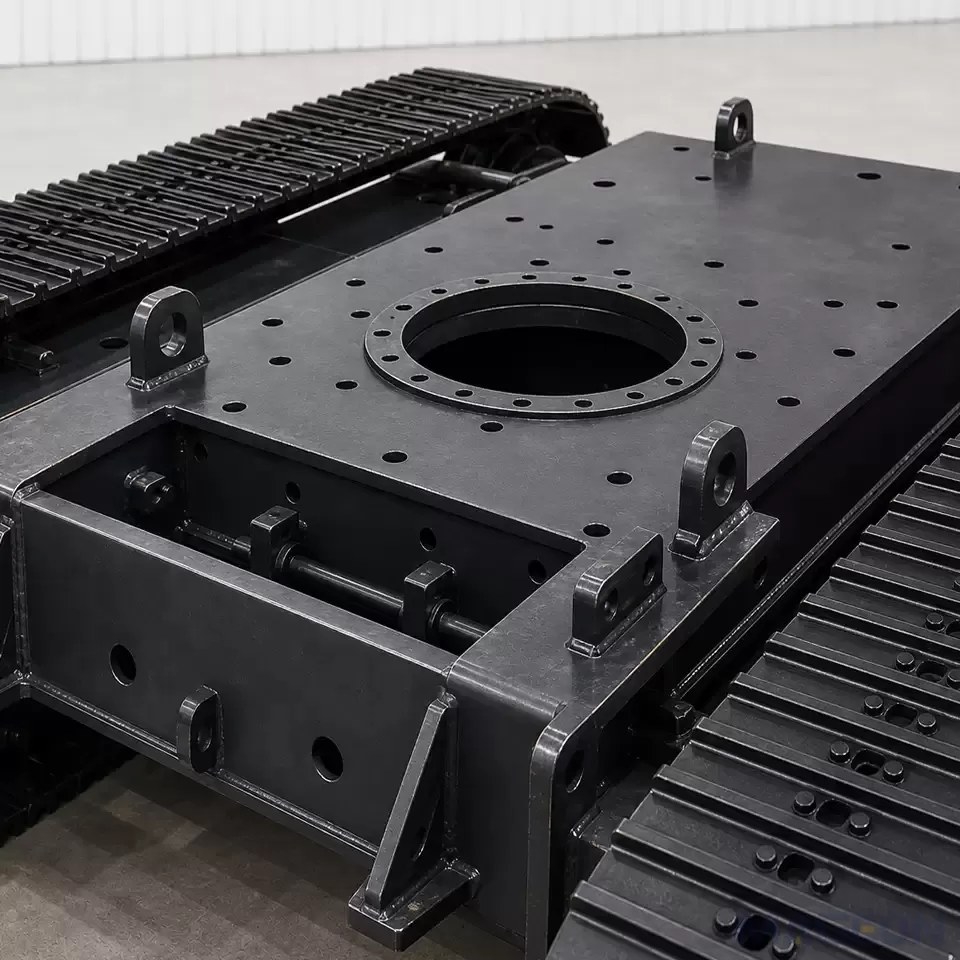
What are the core advantages of steel track undercarriages for excavators?
Why Steel Tracks Fit Excavators
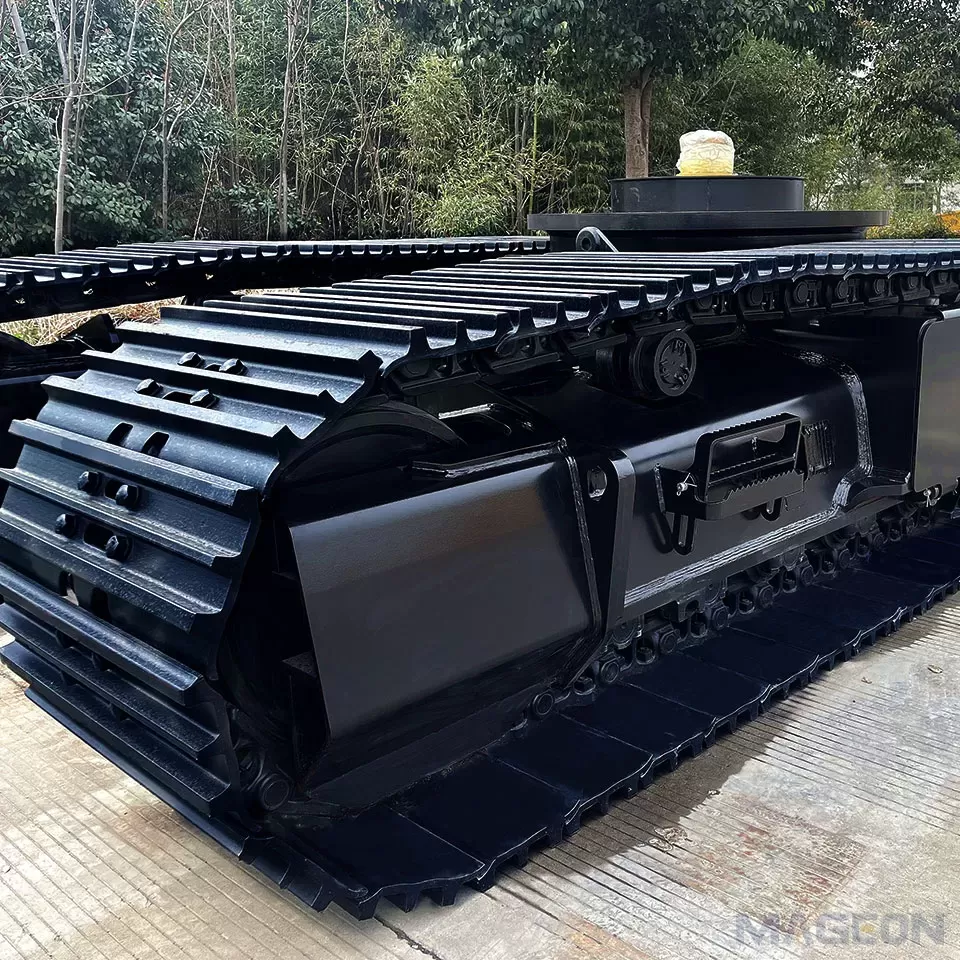
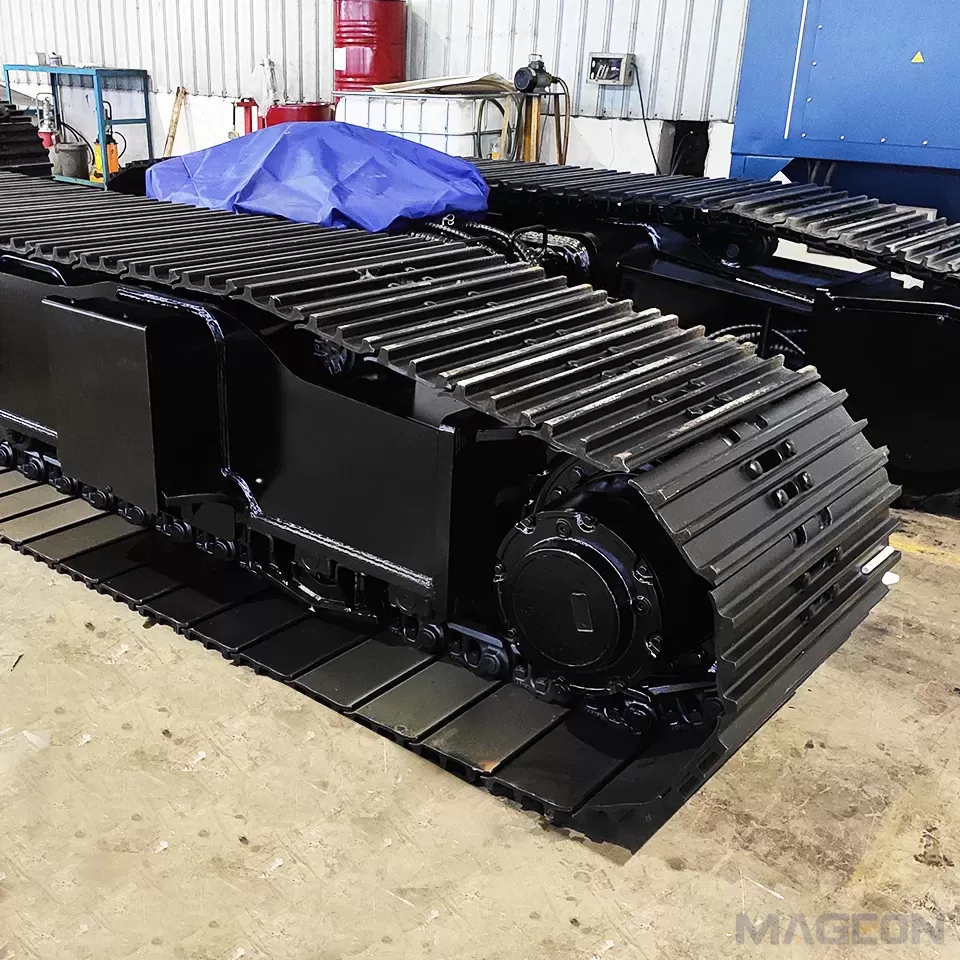
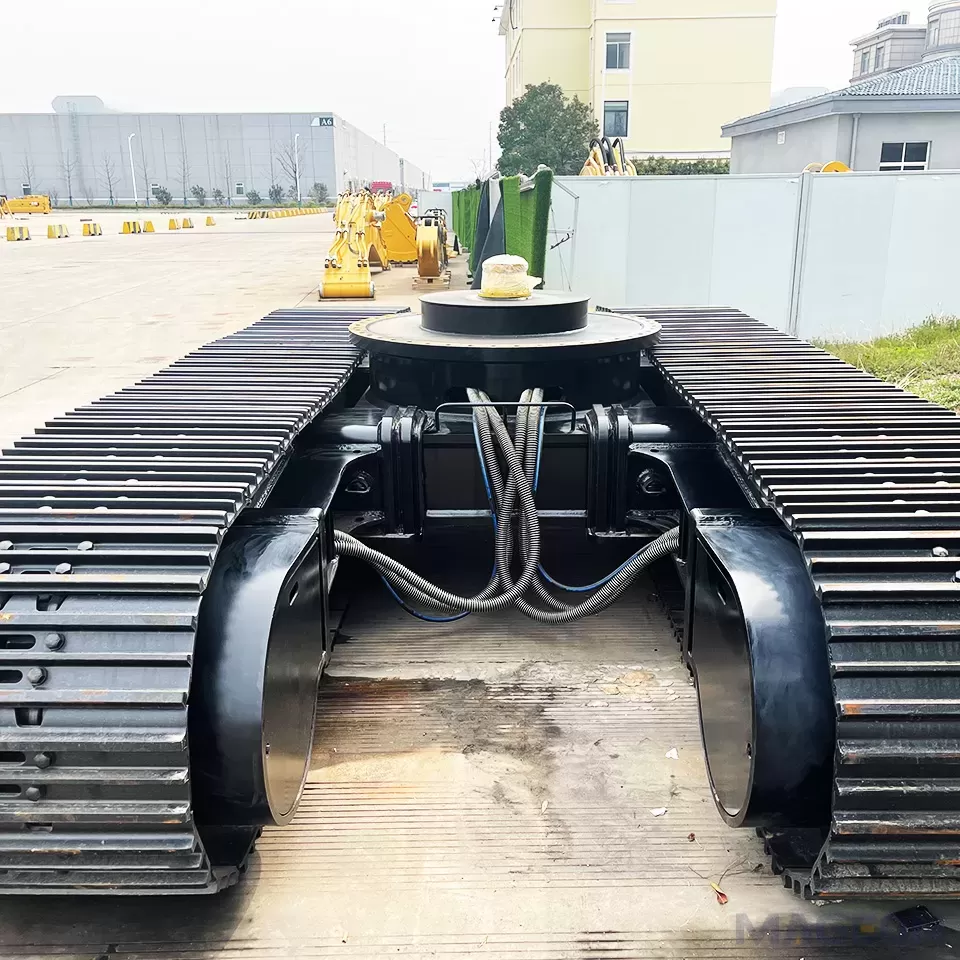
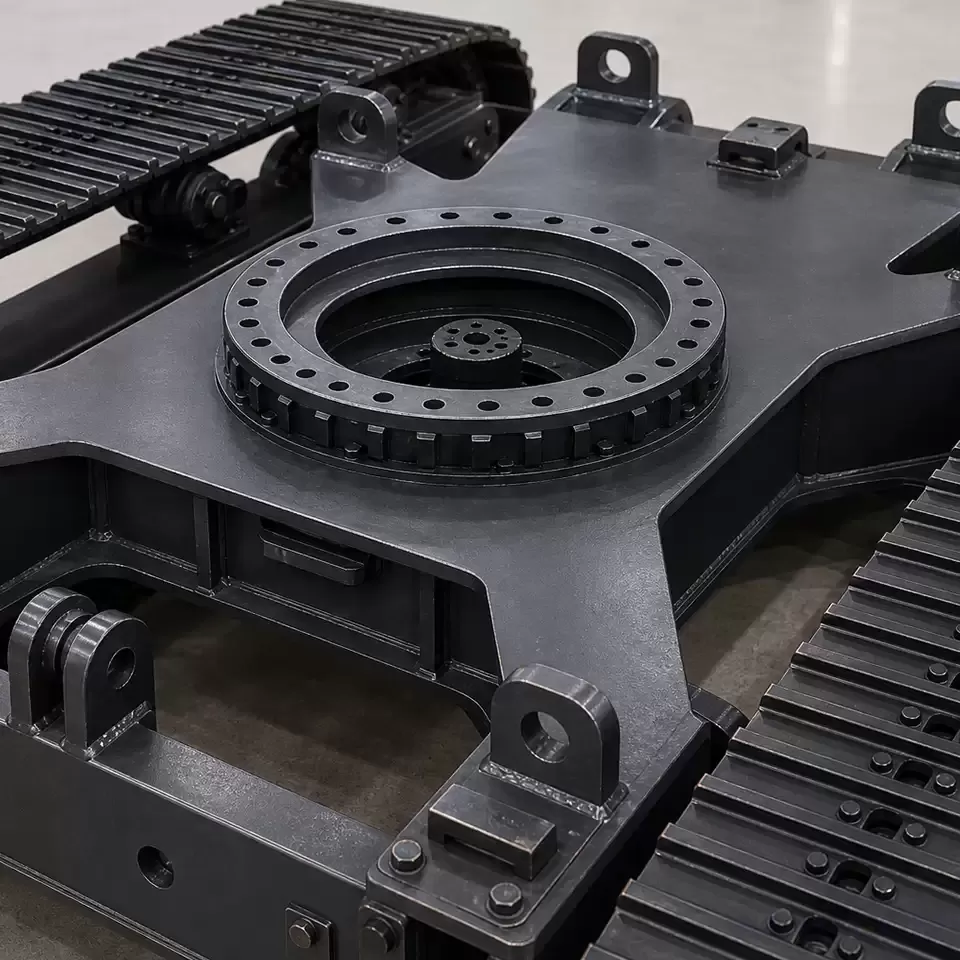
An excavator spends most of its working life stationary - digging, lifting, slewing - and the undercarriage's job during that time is to resist three forces at once: the machine's own weight, the digging force reacted through the boom, and the overturning moment as the load swings out beyond the tracks. Steel handles that combination well, and the comparison with rubber comes down to what the machine actually does.
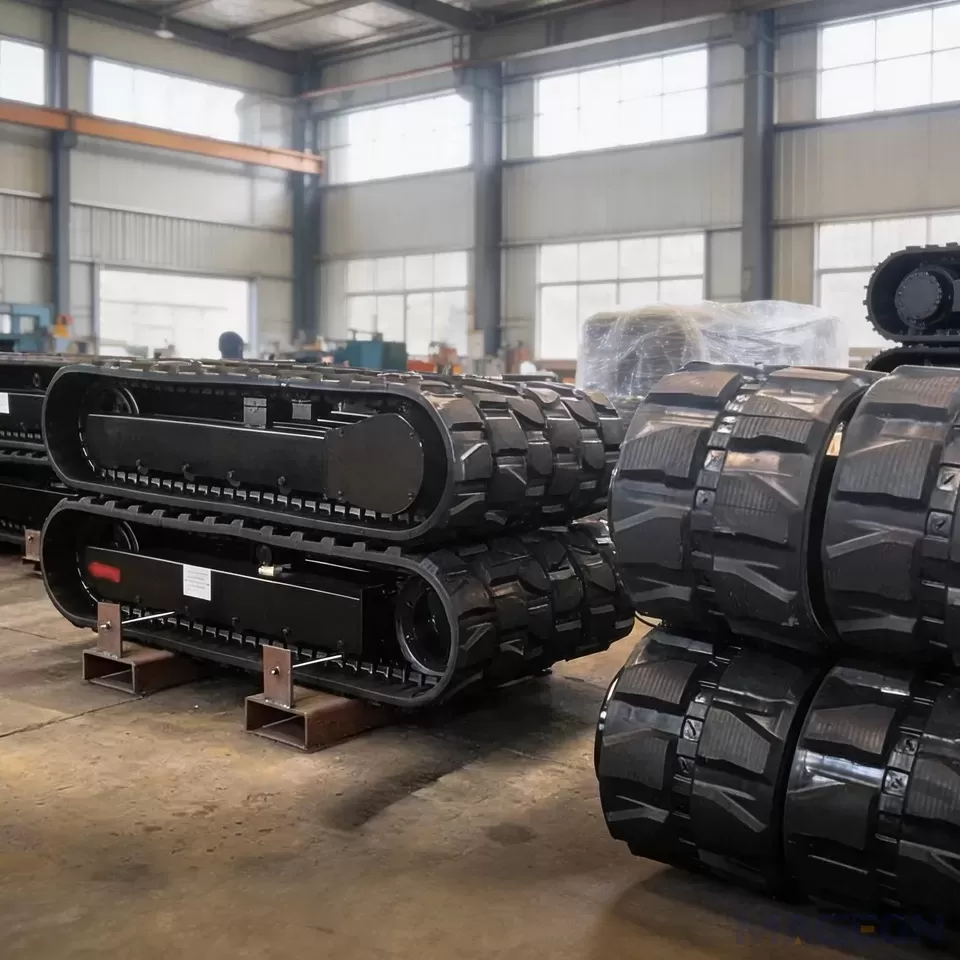
Steel vs Rubber for Excavator Work
| Factor | Steel crawler track | Rubber track |
|---|---|---|
| Ground damage on paved surfaces | Chain and steel shoes mark and can cut asphalt | Marking is minimal; suitable for finished surfaces |
| Noise and vibration into the machine | Higher - the operator feels the ground through the frame | Lower, noticeably more comfortable over long shifts |
| Sharp debris resistance | Excellent - a broken shoe is swapped in minutes | Poor - rebar and rubble cut the rubber, and it cannot be field-repaired |
| Long travel on hard surface | Best suited; chain links are the wear item | Accelerated wear on the rubber and the pin seals |
| Ground pressure | Higher for the same width; wide steel tracks are needed for soft ground | Lower - a real advantage on soft ground |
| Purchase and running cost | Lower purchase, longer life, cheaper track chain to replace | Higher purchase, shorter rubber life, dearer replacement |
Where Steel Wins Clearly
- Rock and demolition work - the track is the sacrificial element. On steel, teeth and grousers wear progressively and are replaceable. On rubber, the whole track is destroyed by the same work.
- Quarry and aggregate - continuous high load and abrasive material. Steel chain life in these conditions is typically three to five times rubber.
- Demolition and scrap handling - where the machine works on rubble and rebar, a cut rubber track ends the shift.
- Any machine doing significant digging - the reaction force from a full bucket can exceed the machine's own weight, and a steel frame transmits that into the ground rather than absorbing it in the rubber.
Where Rubber Wins
- Urban work on finished surfaces where surface damage is a contractual issue
- Pipeline and utility trenching on sensitive ground, where low ground pressure prevents heave
- Long-duration operator work where vibration fatigue is a concern for both the operator and the machine
- Environments where hydraulic oil or fuel spills are a concern - rubber does not contaminate the ground
The Sprocket and Chain Trade-off
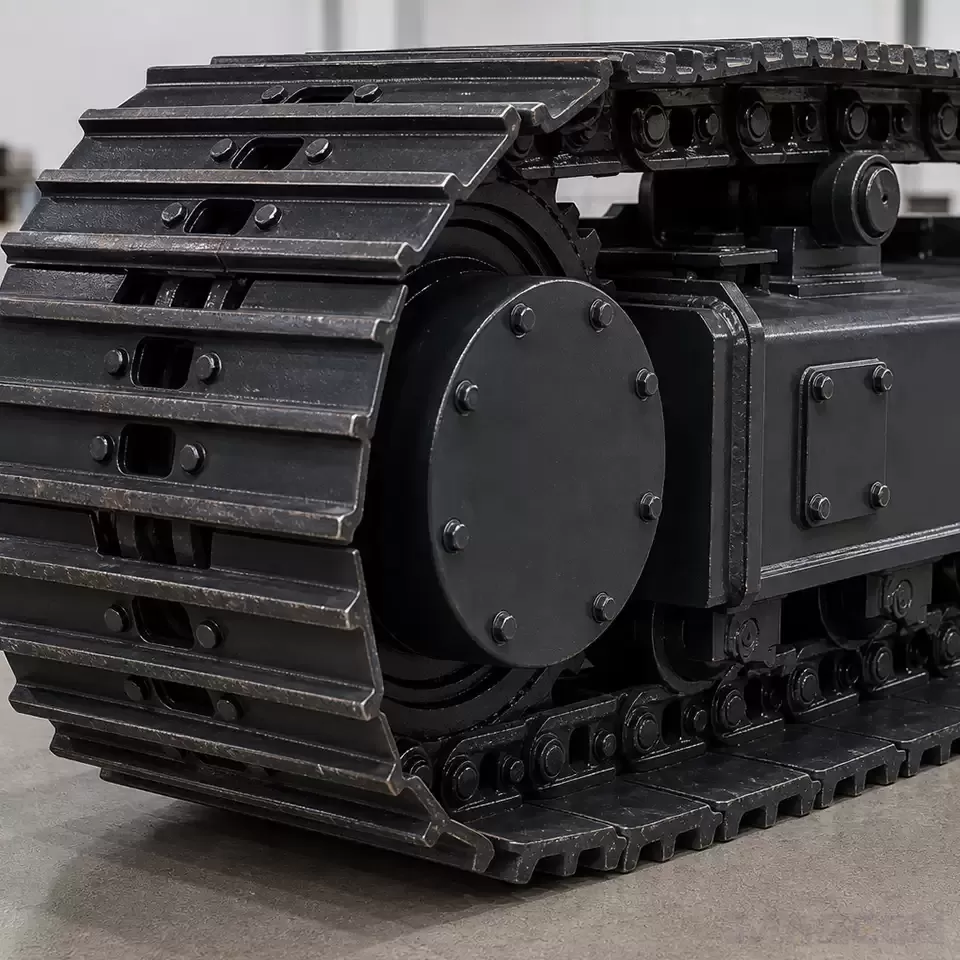
A steel track does put more load into the final drive, because the chain engages the sprocket teeth rather than a rubber belt. This is a design point, not a defect: MAGEON sizes the sprocket and the motor for the full rated working load, and the drive is selected against the duty cycle rather than the machine's static weight. For machines working predominantly at high breakout force, we often specify a larger sprocket and a slightly lower reduction ratio, which improves both the digging force and the heat margin in the final drive.
What to Specify
For an excavator, the key inputs are the machine weight, the maximum digging force and its reach, the average bucket fill, the ground condition, and the proportion of the working day spent travelling versus digging. That last number often decides the question on its own - above roughly 40% travel on hard surface, steel becomes the more economical choice even on a site with sensitive ground, because the track chain replacement cost over the machine's life more than offsets the surface protection rubber provides.
Send us the machine model, operating weight, and the typical ground and travel conditions, and we will confirm the configuration and the expected wear part consumption for your duty cycle.
Please leave your customization requirements, and we will contact you as soon as possible!
Leave your requirements, we'll get back to you within 24 hours.