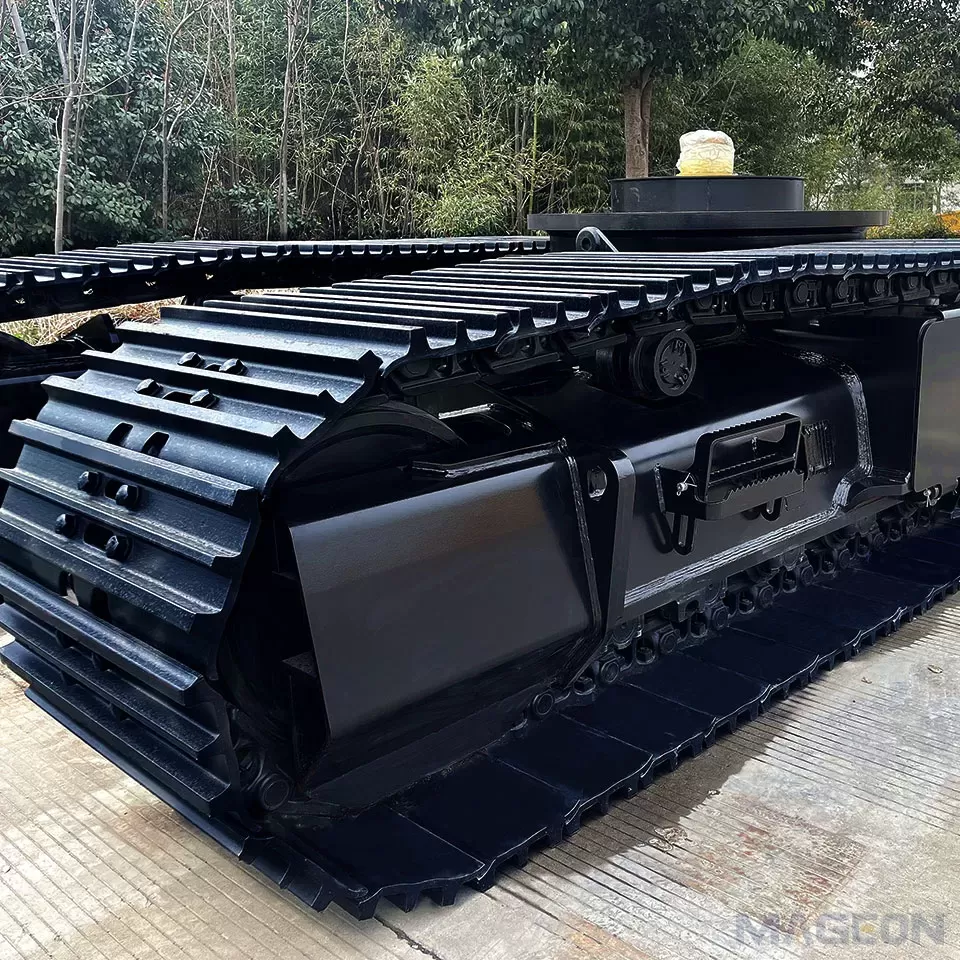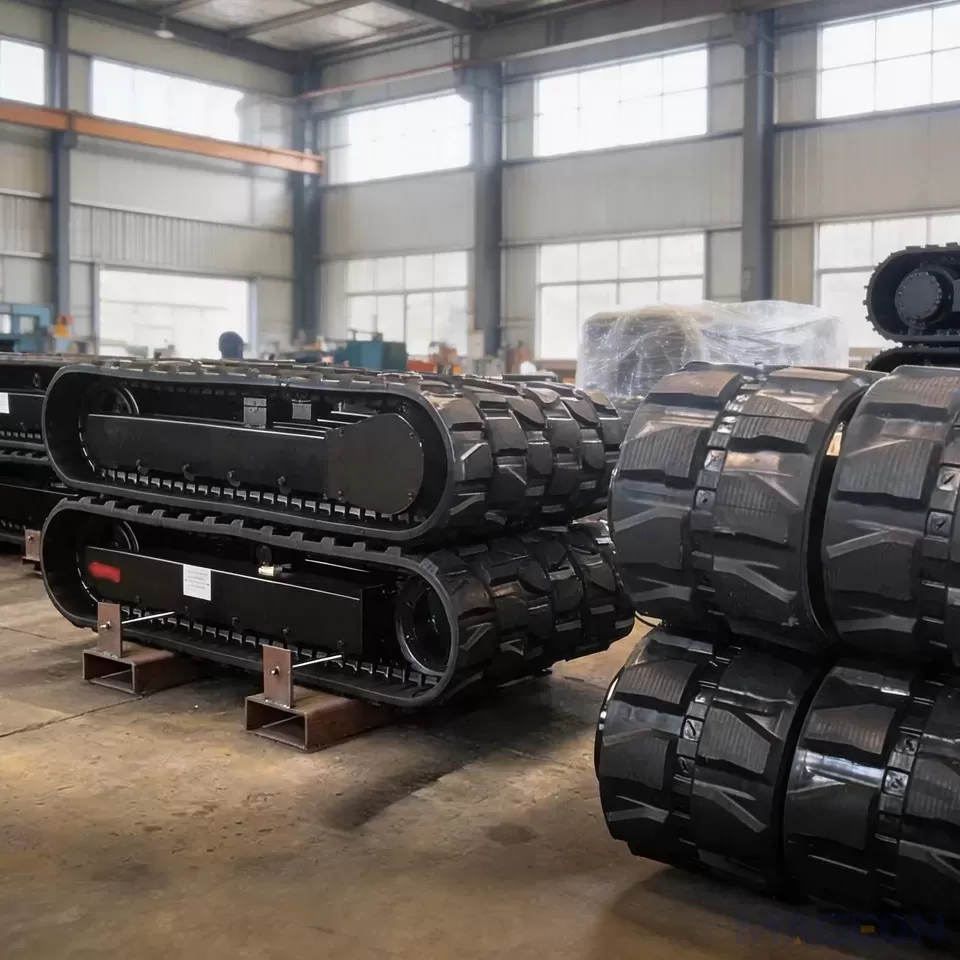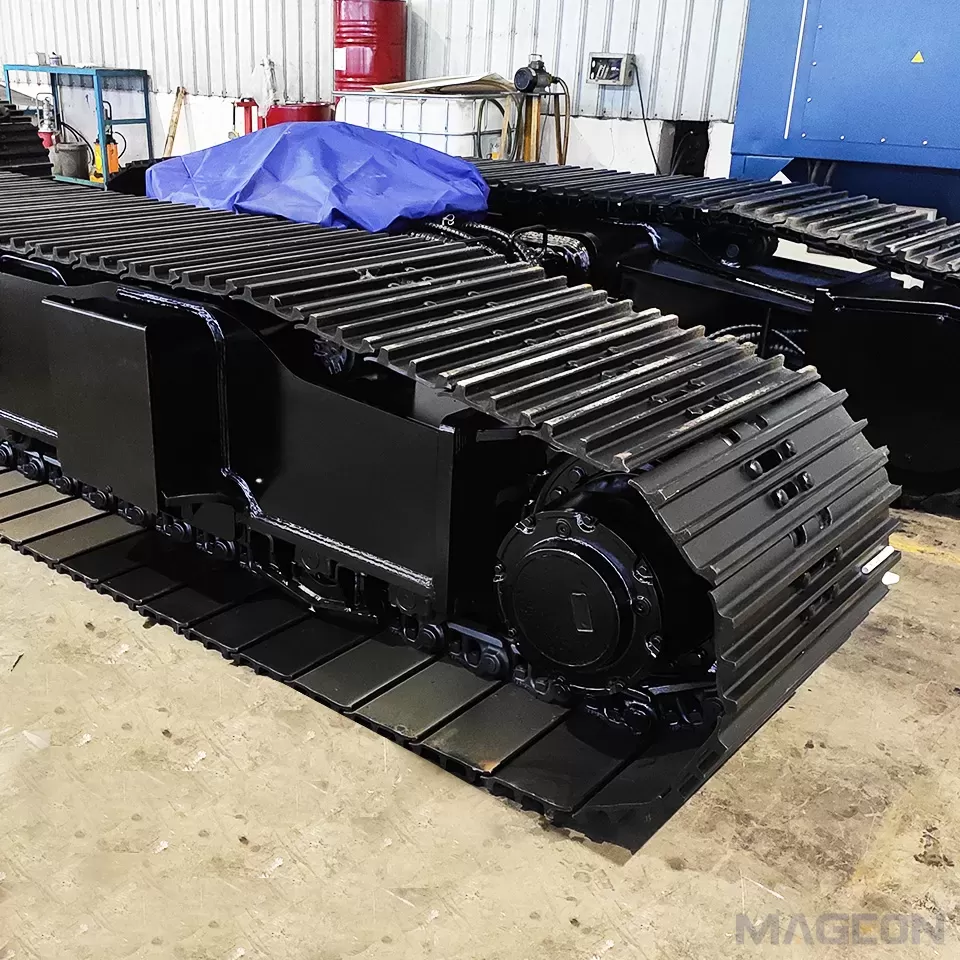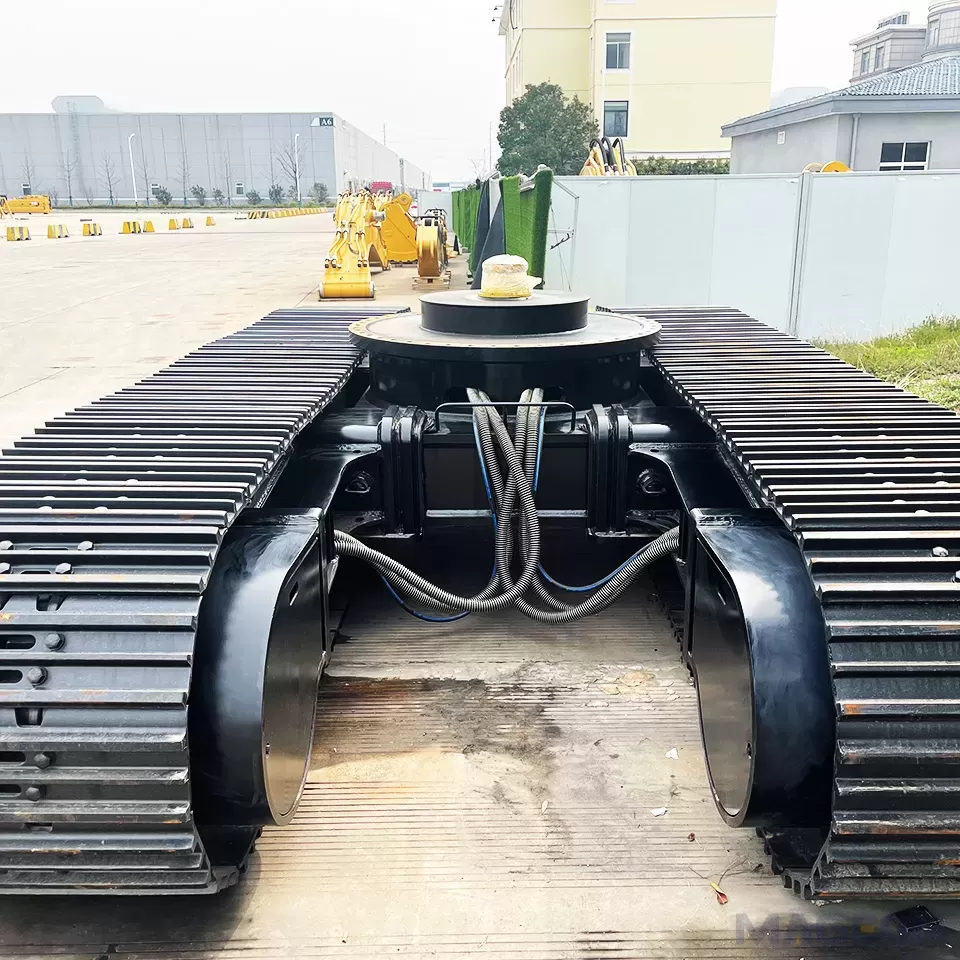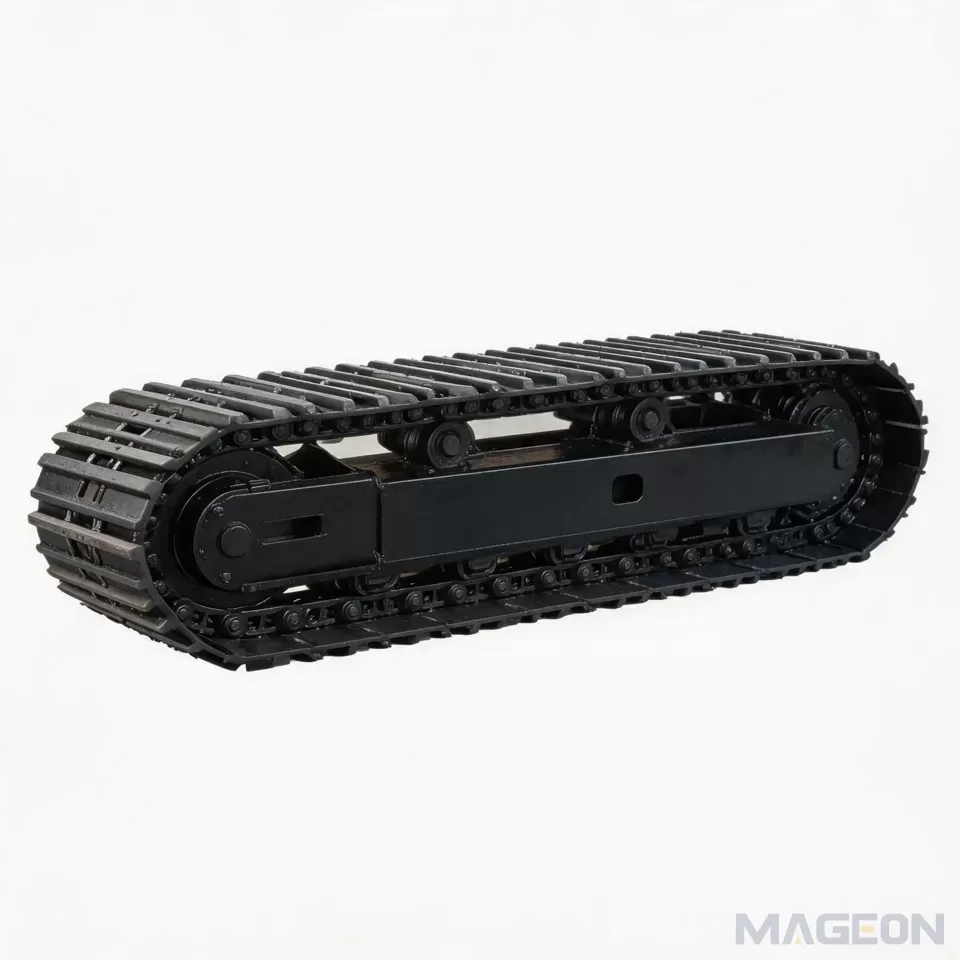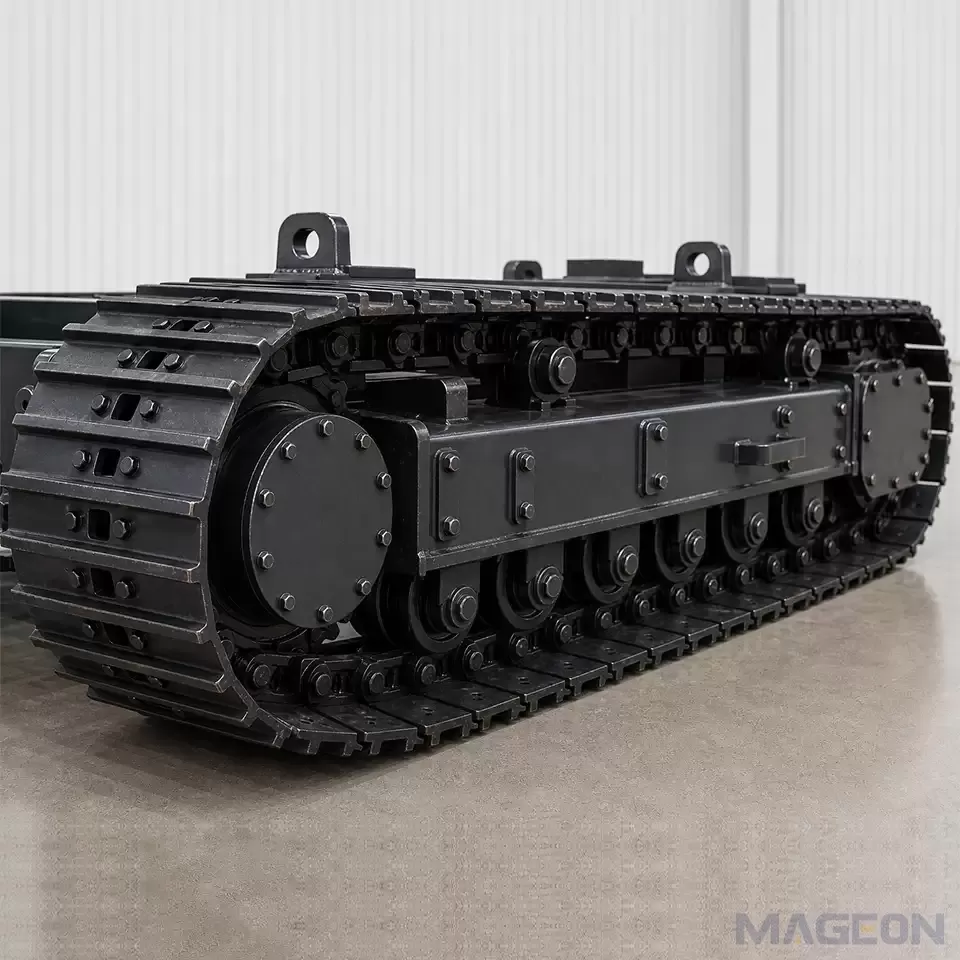
How Does Travel Speed Affect Crawler Undercarriage Design Inputs?
Travel speed should be defined as part of an operating requirement, not as an isolated number. For an OEM, the useful question is not simply “How fast should the machine travel?” It is “At what speed, with what load, on what terrain, for which task, and for how much of the work cycle?” Those conditions give an engineering team the context needed to evaluate a crawler undercarriage.
A requirement that only states a maximum speed can leave important decisions unresolved. A short unloaded transfer on level ground is different from repeated travel under working load, movement on a grade, or frequent direction changes on uneven ground. The article below provides a way to define the input clearly without assuming one machine’s specification applies to another.
Why Is Travel Speed a Design Input Rather Than a Standalone Target?
Travel speed belongs in the same discussion as the equipment layout, operating task, expected load, ground profile, and duty cycle. It describes an intended operating outcome; it does not by itself establish the complete drive, traction, or undercarriage requirement.
For that reason, a custom crawler undercarriage specification should record the operating context behind the speed request. A technical review can then distinguish a brief repositioning requirement from a sustained travel requirement, rather than treating them as identical conditions.
Official OEM specifications provide a useful but limited illustration of this approach. Caterpillar’s published 304 Mini Excavator specifications list high and low travel speeds alongside high and low maximum traction force and travel-hydraulic information. That presentation does not create a universal design rule, but it shows why a speed request should be considered with related operating inputs rather than read alone. Caterpillar 304 Mini Excavator specifications
Which Operating Conditions Change the Travel-Speed Requirement?
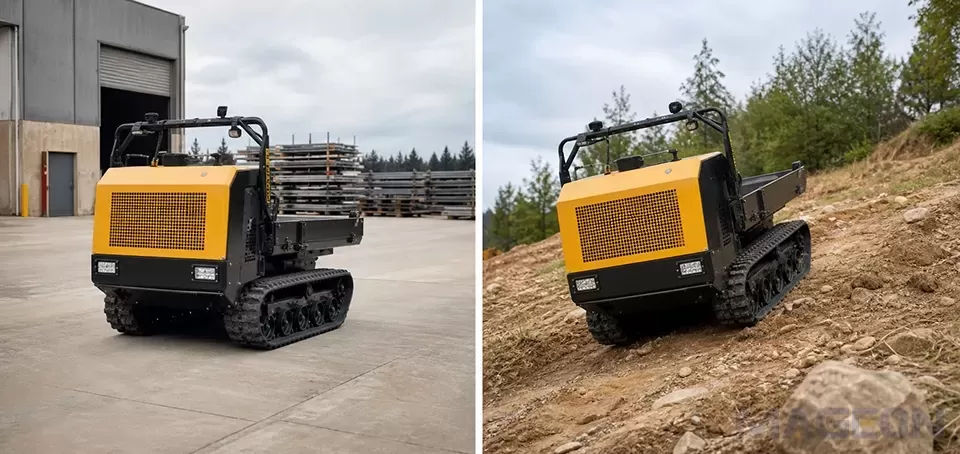
Start by describing the condition in which the requested speed is expected. The same nominal target can mean different things when the machine is carrying a working load, crossing uneven ground, climbing, turning, or moving repeatedly during a shift.
Useful questions include:
Is the stated speed needed for short transfers, sustained travel, or both?
Is the machine expected to travel empty, with its normal working load, or in several loading states?
Does the route include level ground, slopes, soft ground, obstacles, or frequent turns?
How often does travel occur during the duty cycle, and how long does each travel period last?
Are there packaging, service-access, or control requirements that must be considered with the travel objective?
These questions do not prescribe a solution. They prevent a speed request from being interpreted without the information that gives it meaning. A requirement should also identify which condition governs the evaluation when several operating scenarios exist.
How Does Travel Speed Interact With Traction and Drive-System Evaluation?
Speed, traction, and drive-system evaluation should be reviewed as a group, while keeping the conclusion specific to the equipment being evaluated. The relevant issue is not a generic formula; it is whether the requested operating condition is fully described and whether the resulting requirements can be confirmed for that machine.
For example, Komatsu’s PC138US-8 brochure discusses travel performance with its drive arrangement and drawbar-pull context, including rough terrain and climbing. This is useful evidence that travel performance is discussed with operating context in OEM material. It is not evidence that another crawler machine will have the same configuration, behavior, or limits. Komatsu PC138US-8 Crawler Excavator brochure
In a technical evaluation, the OEM should therefore state the intended speed scenario and identify the surrounding conditions. The engineering team can then decide which system relationships require confirmation. Do not infer travel capability from a competitor’s brochure, a nominal top speed, or a visually similar machine.
What Information Should an OEM Provide for Travel-Speed Evaluation?
The goal is to provide enough context for a focused evaluation, not to guess at a finished design. The following inputs are especially useful:
Equipment type and intended application.
The travel-speed scenario: short transfer, sustained travel, loaded movement, or another defined use.
Expected load condition during travel and any material change in loading state.
Key equipment and undercarriage dimensions available at the planning stage.
Ground profile, slope, turning requirement, and obstacles expected in normal operation.
Duty-cycle description, including how often and how long the travel scenario occurs.
Any control, layout, inspection, or service-access constraints relevant to the machine.
These undercarriage design requirements should be supplied as project information, not replaced with assumed values. If a required field is unavailable, the evaluation should make that gap visible instead of converting it into an unsupported parameter.
A Travel-Speed Input Checklist for OEMs
| Why It Matters | Who Should Confirm It | Evidence or Document | |
|---|---|---|---|
| Intended travel scenario | Separates short transfers from sustained or repeated travel | OEM product and engineering team | Operating description or duty-cycle summary |
| Load state during travel | Clarifies the condition under which travel is expected | OEM engineering team | Load description and equipment information |
| Terrain and route profile | Makes level travel, slopes, uneven ground, and turning conditions explicit | OEM engineering team | Application description, route sketch, or operating notes |
| Target speed use case | States when the speed is needed instead of presenting an unexplained number | OEM product owner and engineering team | Requirement document |
| Key dimensions and layout constraints | Identifies integration information that may need engineering review | OEM engineering team | Layout drawing or dimensional information |
| Duty cycle | Shows whether travel is occasional or a recurring part of operation | OEM product and operations team |
This checklist is not a design calculation or a substitute for engineering confirmation. It is a practical way to make the request complete enough for a technical discussion.
When Is Engineering Confirmation Required?
Engineering confirmation is needed whenever the requested speed depends on a specific machine condition that has not been defined or verified. Examples include a change in intended load, a new terrain profile, a different operating cycle, a revised equipment layout, or a target speed borrowed from another machine.
The same applies when the operating requirement contains competing goals. A faster transfer objective, a difficult route, and a demanding work cycle may need to be assessed together instead of being approved one at a time. The appropriate result may be a request for clearer input, an evaluation of alternatives, or confirmation against the applicable machine documentation. Public guidance should not fill those gaps with generic limits.
If you are evaluating a complete crawler undercarriage assembly, provide the equipment type, load, available dimensions, target travel-speed scenario, and actual duty conditions for technical evaluation or an inquiry.
Frequently Asked Questions
Does a higher travel speed automatically mean a better crawler undercarriage?
No. A higher target is only one operating requirement. Its relevance depends on the equipment task, loading condition, terrain, duty cycle, and the engineering evaluation of the complete machine.
Can an OEM specify travel speed without describing the terrain?
The request can be recorded, but it is incomplete for technical evaluation. Level transfer, slope travel, uneven ground, and repeated turning may need to be distinguished.
Is the maximum travel speed the same as the normal operating travel requirement?
Not necessarily. The requirement should state whether the target applies to a brief transfer, normal working movement, or another defined scenario.
Should a similar machine’s brochure be used as a design specification?
No. It can help identify questions to ask, but its configuration and published data do not verify the requirements of a different machine.
What should be prepared before a technical evaluation?
Prepare the equipment description, load condition, available dimensions, speed scenario, terrain or route description, and duty-cycle information. Identify any unknown fields clearly.
When should the speed requirement be reviewed again?
Review it when the equipment layout, load, application, route, or expected work cycle changes. A changed operating condition can change the meaning of the original speed request.
Please leave your customization requirements, and we will contact you as soon as possible!
Leave your requirements, we'll get back to you within 24 hours.