What Should OEMs Know About Crawler Undercarriage Bearing and Sealing Options?
The bearing and sealing choices inside each track roller directly affect machine service life, maintenance intervals, and total cost of ownership. An OEM that matches the wrong combination to its duty conditions faces premature failures, unplanned downtime, and field complaints. The right combination, by contrast, delivers predictable performance at a justifiable cost. This article explains how bearing types and sealing systems work, how operating conditions drive the selection between them, and what information an OEM should prepare before making a decision.
The Role of Track Rollers in the Undercarriage Load Path
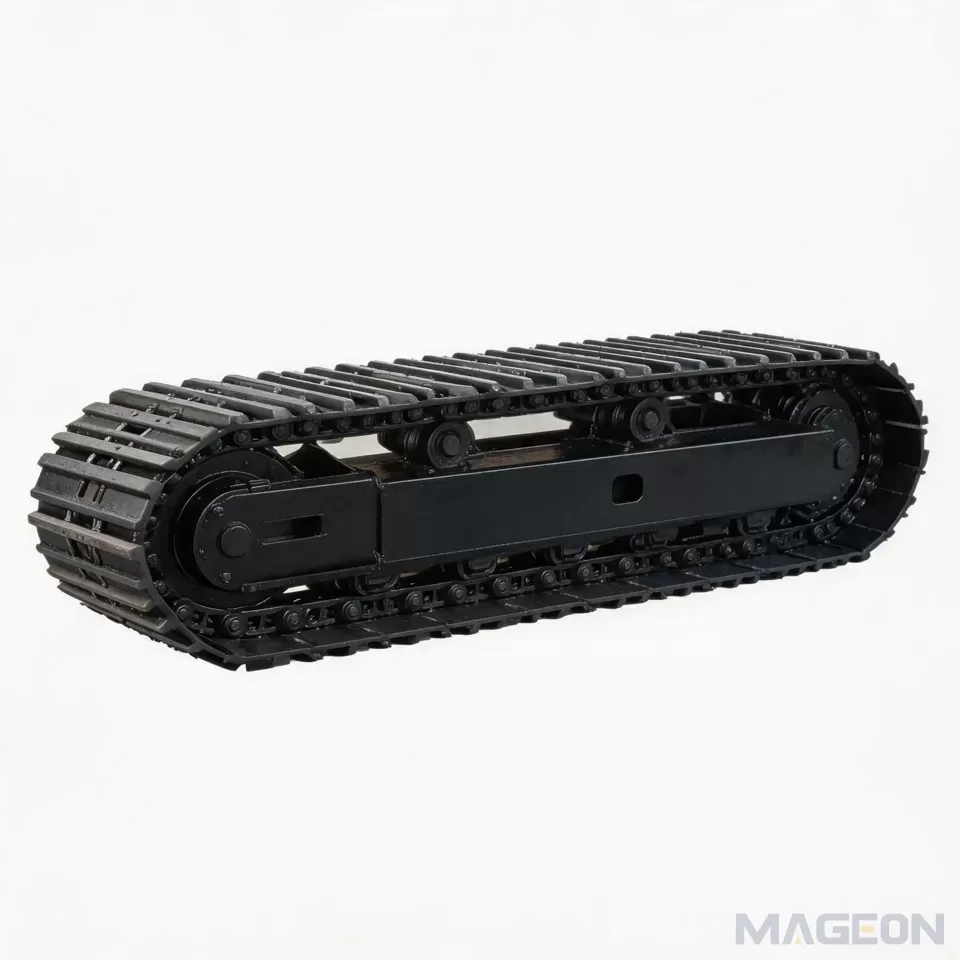
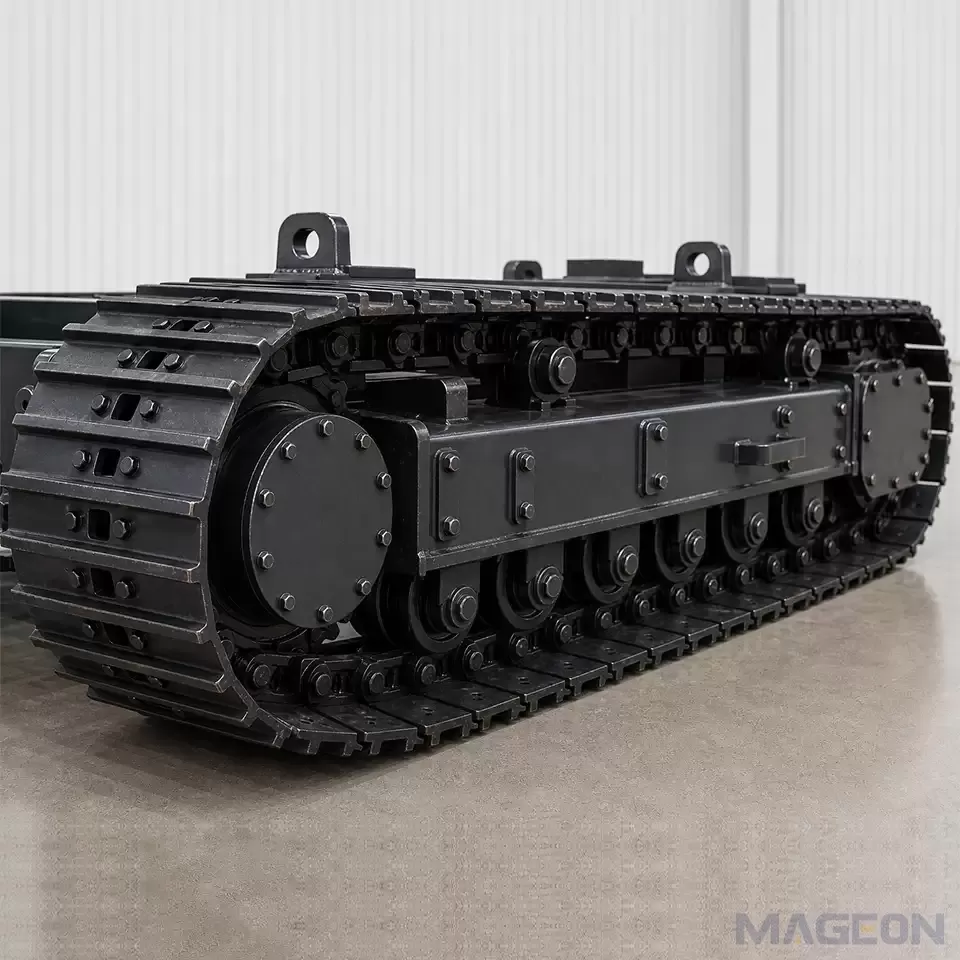
Track rollers (also called bottom rollers or lower rollers) carry the machine's weight and transfer it to the track chain. Every roller supports a portion of the static load plus dynamic components from terrain irregularities, turning forces, and implement reactions. The bearing inside each roller must sustain combined radial and axial loads while rotating continuously or intermittently depending on travel speed. The seal must retain lubricant and exclude abrasive particles, water, and contaminants that would otherwise destroy the bearing surface.
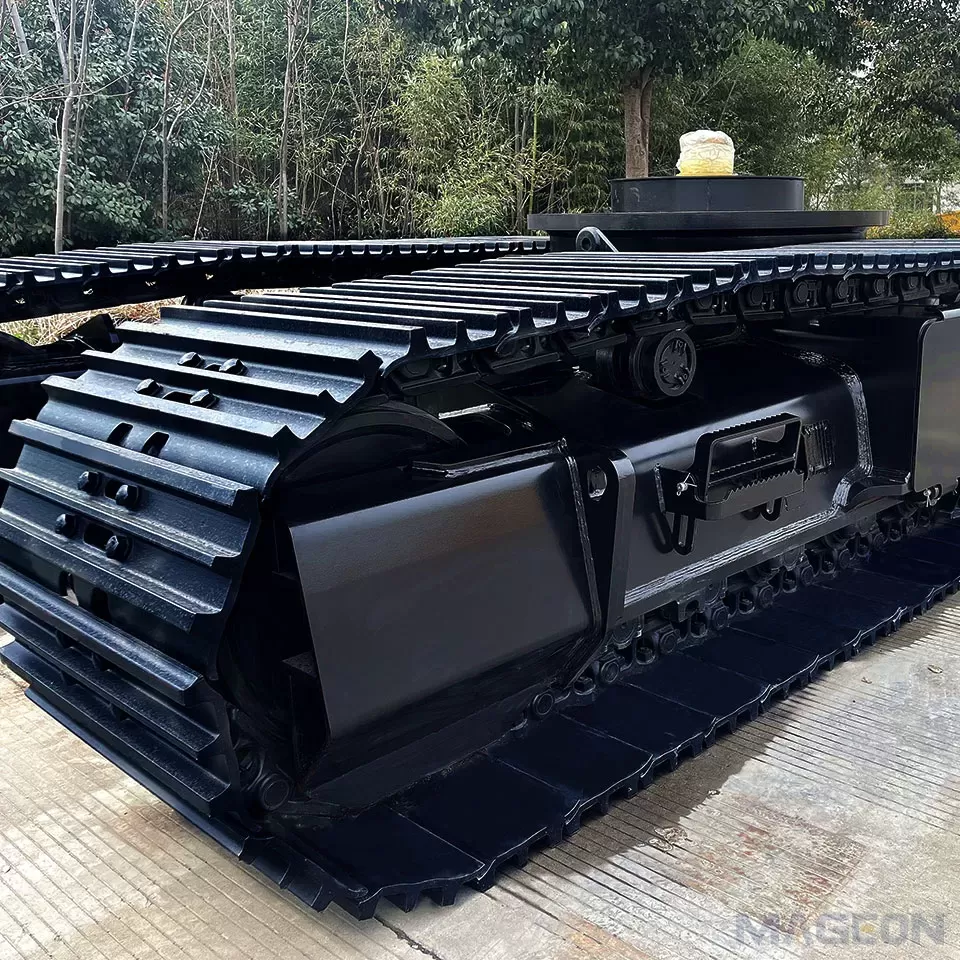
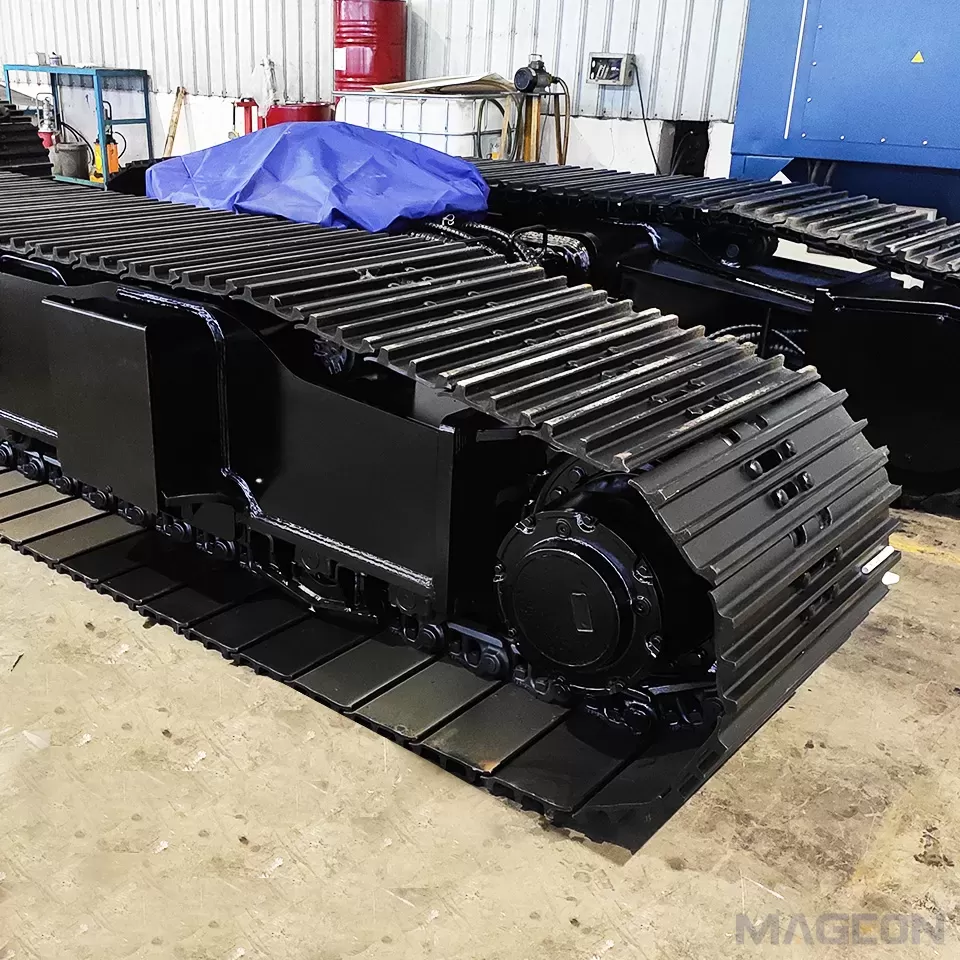
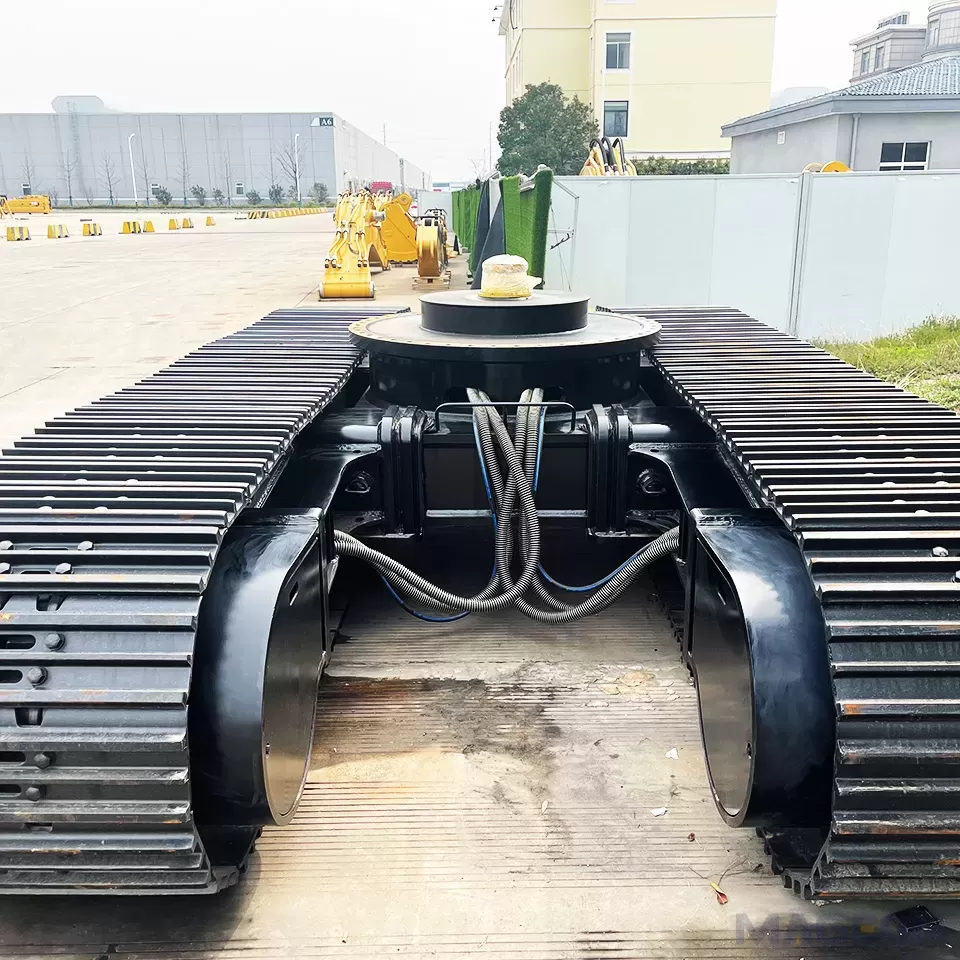
In a typical crawler undercarriage with multiple track rollers distributed along the frame, the load distribution is not uniform. Rollers near the sprocket and idler often see higher peak loads than those in the middle of the frame. Understanding this track roller layout context is essential because a bearing and sealing specification that works for one position may be inadequate for another.
Bearing Types — Tapered Roller Bearings vs. Bushings (Plain Bearings)
Two bearing designs dominate track roller applications: tapered roller bearings and plain bushings. Each has distinct advantages and limitations that map to different operating profiles.
Tapered roller bearings use rolling elements arranged between conical raceways. They handle combined radial and axial loads efficiently through controlled rolling contact. The rolling friction coefficient is low, which reduces heat generation at higher rotational speeds. Tapered roller bearings generally offer higher load ratings per unit volume than bushings of comparable size. However, they are more sensitive to contamination — hard particles caught between raceways and rollers can cause surface spalling and premature failure. They also require more precise mounting surfaces and are typically higher in unit cost.
Bushings (plain bearings) rely on sliding contact between the shaft and a sleeve or liner. The friction coefficient is higher, which limits their suitability for continuous high-speed operation. Bushings tolerate contamination better than rolling-element bearings because the softer liner material can embed small particles without immediate surface damage. They also absorb shock loads well and require less manufacturing precision in the housing. The trade-off is higher frictional losses, greater sensitivity to marginal lubrication, and a need for larger diameter to achieve equivalent load capacity.
| Tapered Roller Bearing | Bushing (Plain Bearing) | |
|---|---|---|
| Friction type | Rolling | Sliding |
| Load capacity per size | Higher | Lower; requires larger OD for same rating |
| Speed suitability | Good for moderate to high travel speeds | Best for low-speed, intermittent travel |
| Contamination tolerance | Sensitive; particles cause spalling | More tolerant; liner can embed particles |
| Lubrication requirement | Grease or oil bath; less frequent replenishment | Continuous film required; grease channels critical |
| Typical cost range | Higher unit cost | Lower unit cost |
| Common applications | Excavators, drilling rigs, high-speed carriers |
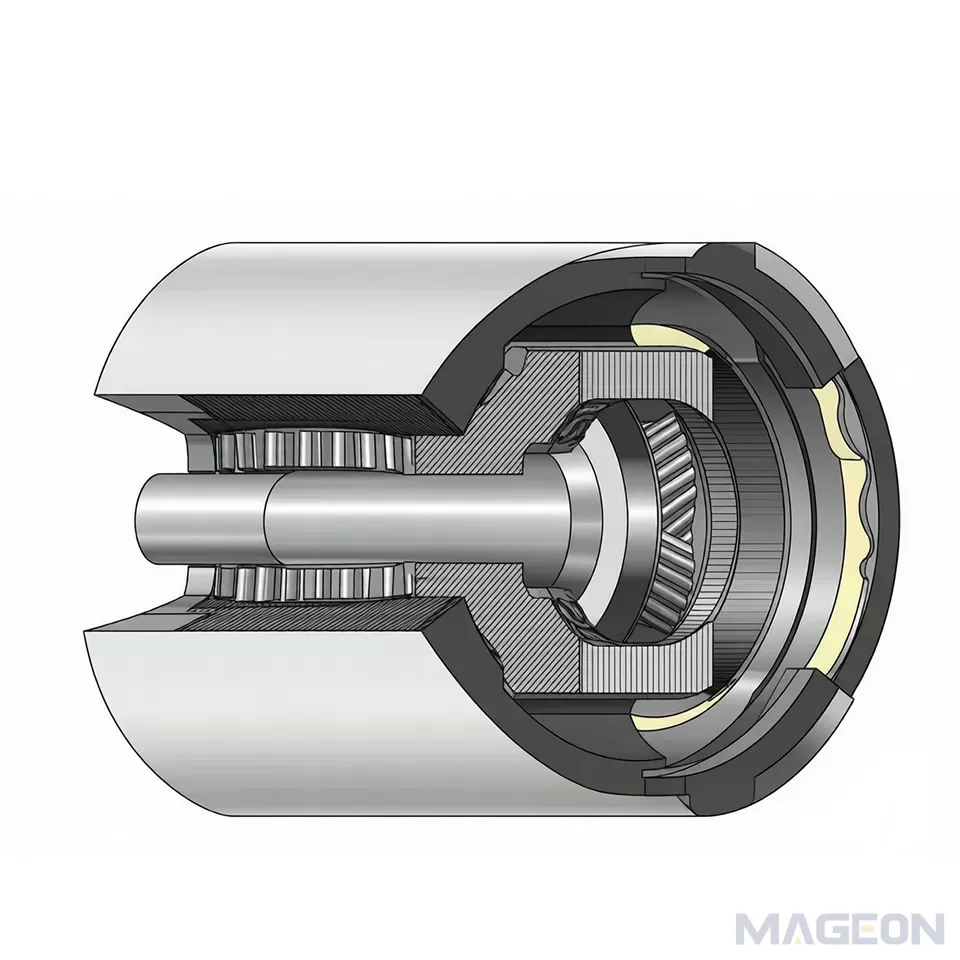
Figure 1: Internal cross-section view of a track roller showing the spatial relationship between the outer shell, shaft, bearing assembly, and floating seal.
Sealing Systems — Floating Seals, O-Rings, and Labyrinth Designs
The seal is as important as the bearing. Without effective sealing, even the best bearing will fail quickly when abrasive material enters the lubricant cavity.
Floating seals (duo-cone seals) are the most widely used seal type in crawler undercarriages. Two metallic sealing rings — one stationary relative to the housing, one rotating with the hub — press together at their flat end faces under elastic or fluid pressure. The interface forms a dynamic seal that retains lubricant while excluding external contaminants. Floating seals perform well under heavy loads, mud, and abrasive conditions. Their main limitation is that they occupy significant radial space and add weight.
Lip seals (radial shaft seals using elastomeric lips) offer a compact, lower-cost alternative. A flexible lip maintains contact against the rotating surface, creating a barrier to contaminant ingress. Lip seals work adequately in cleaner environments where dust and water exposure is limited. However, the wearing contact surface has a finite life, and the seal can be damaged by shaft misalignment or aggressive chemicals.
Labyrinth seals use a non-contact design. Grooves or chambers create a tortuous path that impedes particle entry without rubbing contact. Labyrinth seals generate no wear but cannot fully prevent ingress on their own. In practice, they are typically used as a primary barrier ahead of a secondary contact seal, extending the secondary seal's service life.
How Operating Conditions Influence Bearing and Sealing Selection
Four operating variables dominate the selection decision:
Load magnitude and direction. Heavier machines and implements that impose high static and dynamic loads favor tapered roller bearings for their superior load density. Applications with frequent shock loading may still benefit from bushings if the shock includes debris intrusion risk.
Travel speed. Higher travel speeds increase bearing rotational speed and heat generation. Tapered roller bearings dissipate this heat more effectively due to lower friction. At very low speeds, the advantage shifts toward bushings, where the reduced heat output makes sliding contact acceptable.
Environmental conditions. Abrasive soil, mud, standing water, and chemical exposure all challenge the seal first and the bearing second. These are the same environmental factors that drive track shoe selection, and they should be evaluated jointly when specifying undercarriage components. Floating seals are the baseline choice for harsh environments. Lip seals may suffice on paved surfaces or indoor applications. Labyrinth arrangements help extend seal life in any condition where fine particles are present.
Maintenance expectations. If the operator can commit to regular greasing and inspection intervals, bushings with proper lubrication channels can deliver long service. If maintenance will be infrequent or performed by untrained personnel, sealed-for-life tapered roller units reduce the risk of lubrication-related failure.
| Recommended Bearing Type | Recommended Sealing Type | Key Consideration | |
|---|---|---|---|
| Heavy load + low speed | Bushing or tapered roller | Floating seal | Shock tolerance favors bushing; load density favors roller |
| High speed + clean ground | Tapered roller bearing | Lip seal or floating seal | Low friction and heat matter most here |
| Abrasive / muddy environment | Either; sealing is critical | Floating seal (primary choice) | Seal integrity determines bearing life |
| Intermittent use + low maintenance priority | Tapered roller (sealed unit) | Floating seal | Minimize lubrication dependency |
| Submerged / high-moisture operation | Tapered roller preferred | Floating seal + labyrinth backup |
Life and Failure Factors for Bearings and Seals
Bearing life is governed by load, speed, lubrication quality, contamination level, and installation accuracy. For tapered roller bearings, the classic rated life calculation (L10 life) applies when loads and speeds are known. Real-world life is often shorter because contamination and misalignment are not captured in catalog ratings. For bushings, the PV factor (pressure × velocity) is the governing design limit — exceeding the material's PV rating causes rapid wear and seizure.
Seal life depends primarily on wear rate at the sealing interface, temperature extremes, pressure fluctuations, and chemical compatibility with both the lubricant and the environment. Floating seals can last thousands of hours in properly maintained undercarriages, but their life drops sharply if the elastic loading element loses tension or if the sealing faces score from embedded abrasives.
Shared factors that shorten both bearing and seal life include:
Infrequent or incorrect lubrication
Operation beyond the designed temperature range
Misalignment from worn frame mounts or bent axles
Excessive track tension increasing side loads on rollers
Using incompatible lubricants or mixing grease types
Information OEMs Should Prepare for Bearing and Sealing Decisions
Before consulting a supplier or finalizing a specification, an OEM should compile the following information:
1、Machine type and application — excavator, carrier, drill rig, dozer, crane, agricultural vehicle, or specialized equipment
2、xpected working loads — static weight on the undercarriage, dynamic load factors, and any implement-induced side or moment loads
3、Design travel speed range — maximum continuous speed and typical operating speed
4、Operating environment description — predominant terrain (rock, soil, sand, clay), temperature range, moisture level, and presence of corrosive or abrasive substances
5、Target maintenance interval — how often greasing, inspection, or component replacement is feasible in the field
6、Dimensional and interface constraints — available space envelope, axle diameter, track gauge, and compatibility with existing frame or sprocket/idler specifications
7、Budget and service-life targets — acceptable cost range and expected or required service hours before overhaul
This information allows a supplier to recommend a technically appropriate configuration rather than guessing from incomplete data.
FAQs
Can tapered roller bearings and bushings be used interchangeably in the same roller position?
Not without engineering evaluation. The two bearing types have different load ratings, friction characteristics, dimensional requirements, and lubrication needs. Substituting one for the other changes the load distribution in the undercarriage and may affect adjacent components. Any change should be validated for the specific machine and duty cycle.
How often do floating seals need to be replaced?
There is no fixed interval. Seal life depends on operating conditions, maintenance quality, and whether the seal was installed correctly. In well-maintained equipment operating within its design envelope, floating seals commonly last 2,000–5,000 hours. In abrasive, poorly maintained conditions, replacement may be needed much sooner. Visual inspection during routine undercarriage checks is the practical way to monitor seal condition.
What are the signs that a track roller bearing or seal has failed?
Common indicators of abnormal wear patterns include: audible grinding or growling noise from the roller area, visible lubricant leakage at the seal lip, excessive heat radiating from the roller housing, uneven or increased track tension, and the roller seizing or turning intermittently. Early detection prevents secondary damage to the track chain and frame.
Does selection differ between high-speed and low-speed equipment?
Yes. High-speed applications favor tapered roller bearings for their lower friction and better heat dissipation, typically paired with high-quality floating seals. Low-speed, high-load applications can use bushings effectively, especially where shock loads and contamination are present. The sealing choice remains important in both cases, but the bearing decision flips based on speed profile.
Which combination is most reliable in muddy or sandy conditions?
A floating seal is non-negotiable in abrasive conditions regardless of bearing type. The bearing choice then depends on speed and load: tapered roller bearings with robust floating seals for moderate-to-high speeds, bushings with floating seals for low-speed heavy-duty applications where shock tolerance matters. The key principle is that seal integrity, not bearing type alone, determines survival in mud and sand.
Can bearings and seals from different brands be mixed?
Mixing brands is not recommended unless the supplier confirms compatibility. Dimensional tolerances, material hardness, and seal face geometry vary between manufacturers. Mismatched components can cause uneven loading, accelerated wear, or sudden seal failure. Use matched sets from a single supplier whenever possible.
How much does grease selection affect bearing life?
Significantly. Grease viscosity, base oil type, thickener consistency, and additive package all influence film formation, wear protection, and contamination tolerance. Using a grease outside the manufacturer's specified temperature range or NLGI grade can reduce bearing life substantially. Follow the equipment or component supplier's lubrication recommendation.
Are there special considerations for extreme temperature operation?
Yes. At low temperatures, grease stiffens and seal elastomers lose flexibility, requiring cold-rated materials. At high temperatures, grease oxidizes faster, seal materials may degrade, and bearing clearances change due to thermal expansion. Both extremes may necessitate specialty lubricants and seal compounds rated for the expected temperature band.
If you are evaluating bearing and sealing options for a crawler undercarriage application, provide your equipment type, expected loads, dimensional requirements, and operating conditions for a technical assessment or quotation.
Please leave your customization requirements, and we will contact you as soon as possible!
Leave your requirements, we'll get back to you within 24 hours.