How Should OEMs Select Crawler Track Shoes for Different Machines and Terrain?
OEMs should select crawler track shoes in this order: machine function and work mode, duty cycle and terrain mix, then shoe geometry and service level. Terrain is essential, but it is not a standalone selector. A dozer pushing material, an excavator travelling and digging, and a material handler working on a paved yard can face the same ground while needing different traction, turning, surface-protection, and impact-resistance tradeoffs.
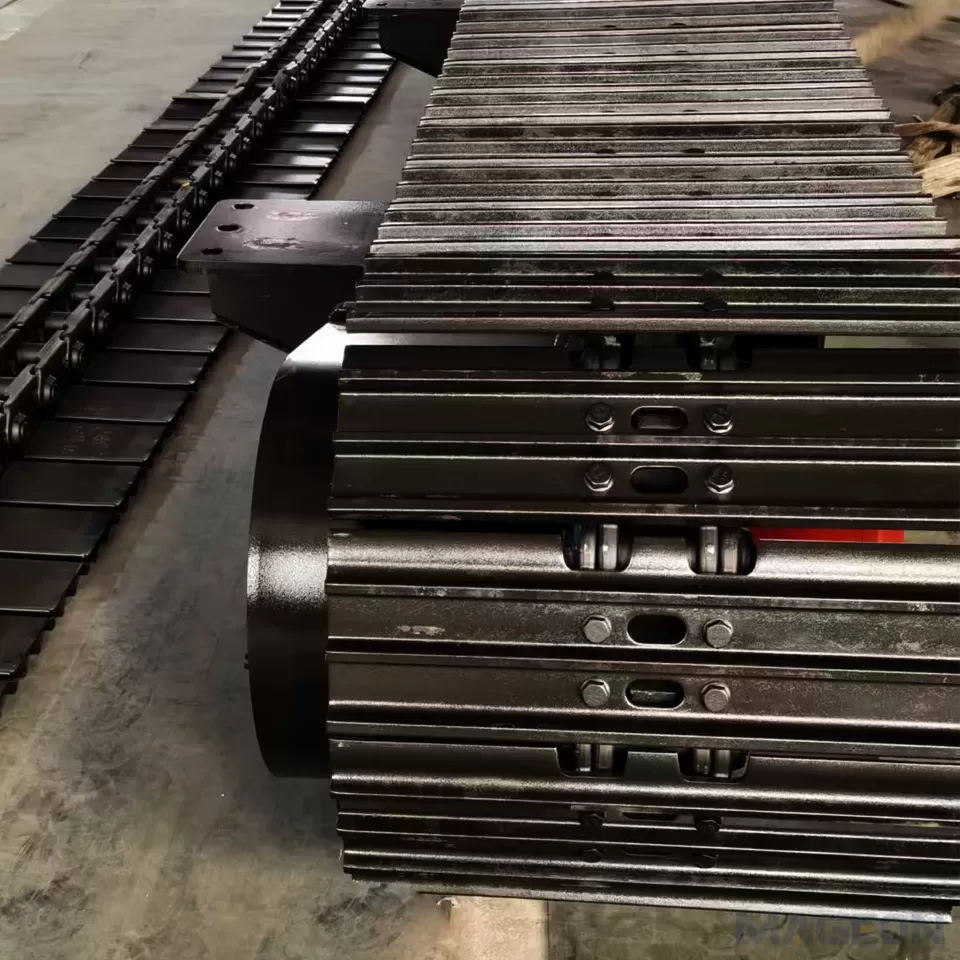
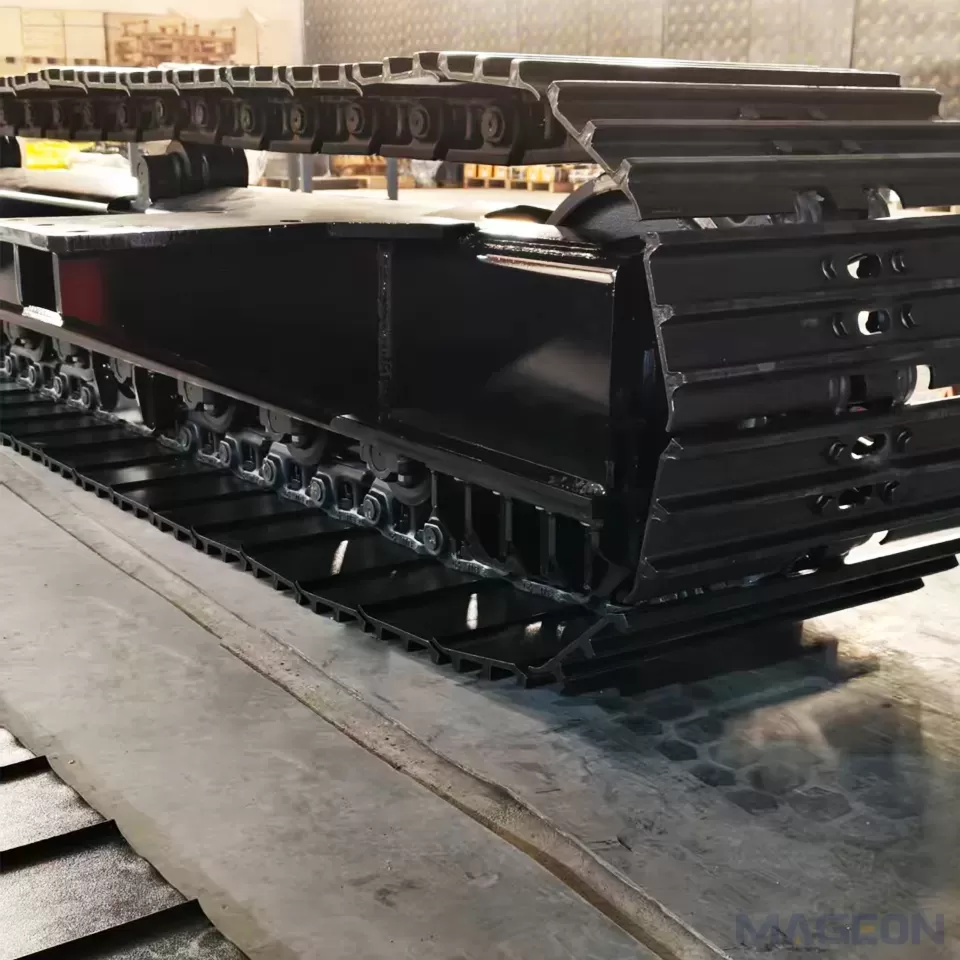
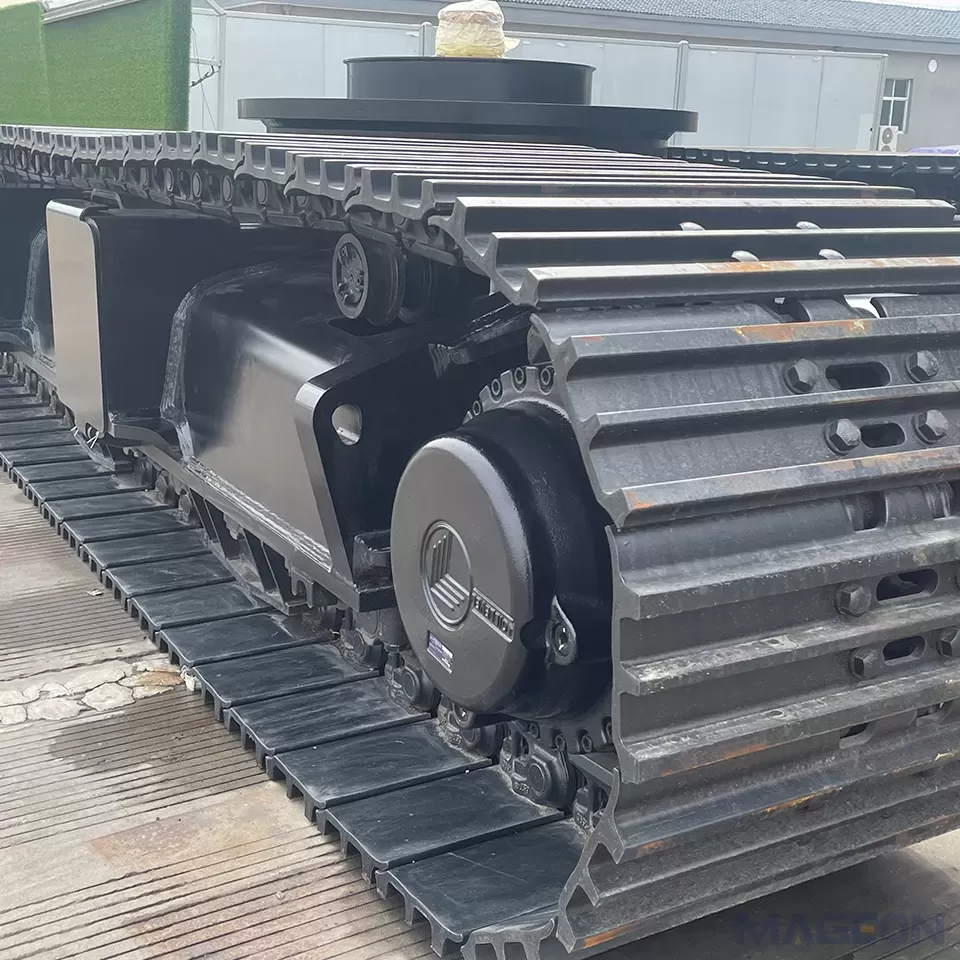
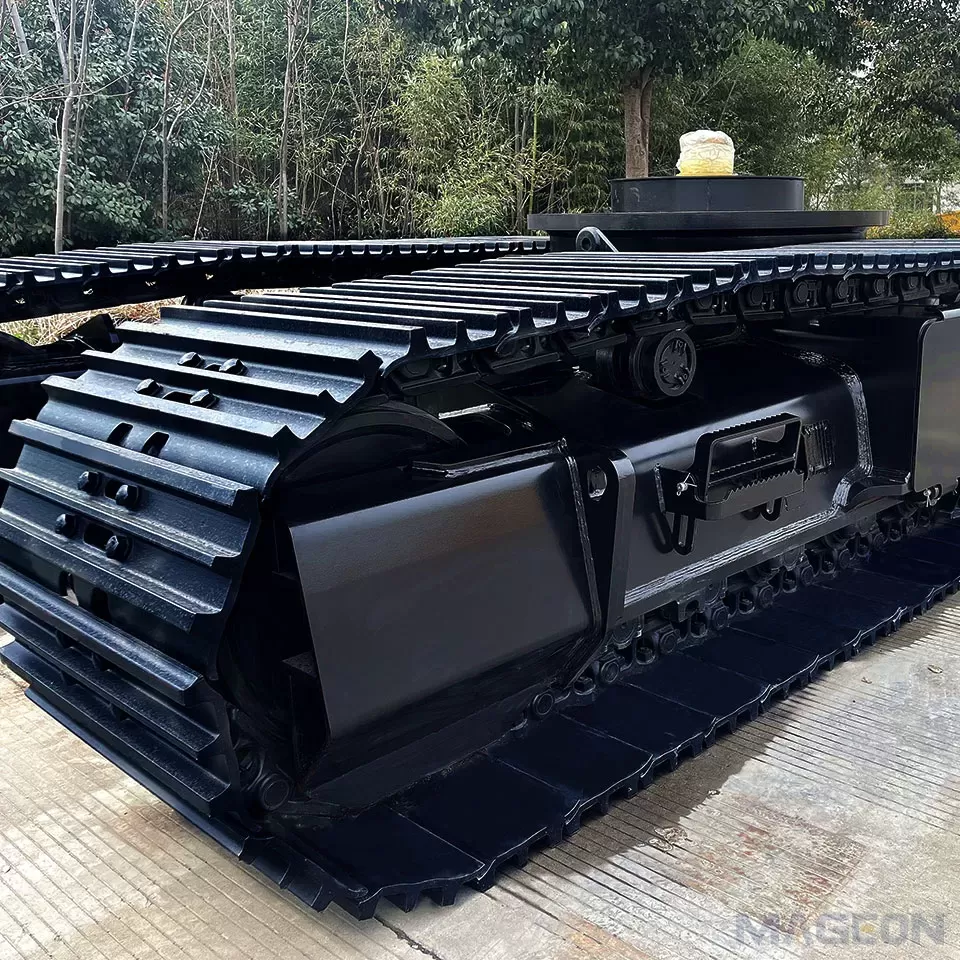
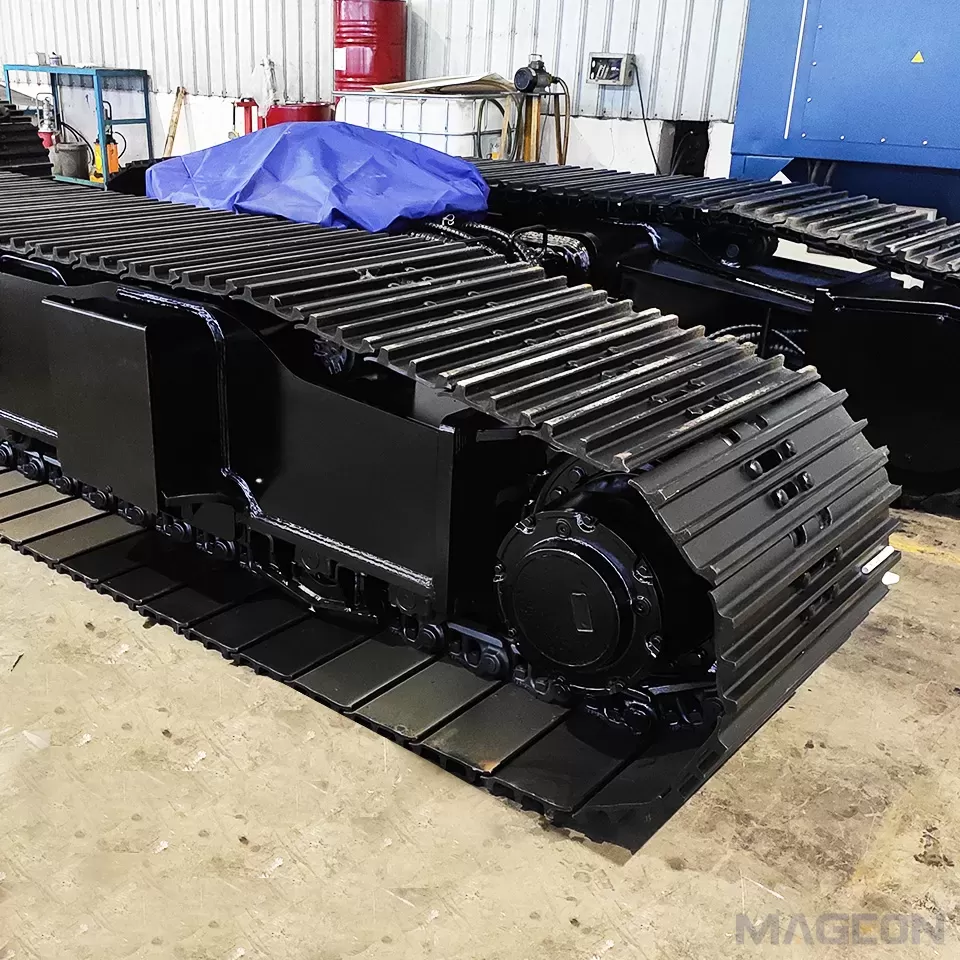
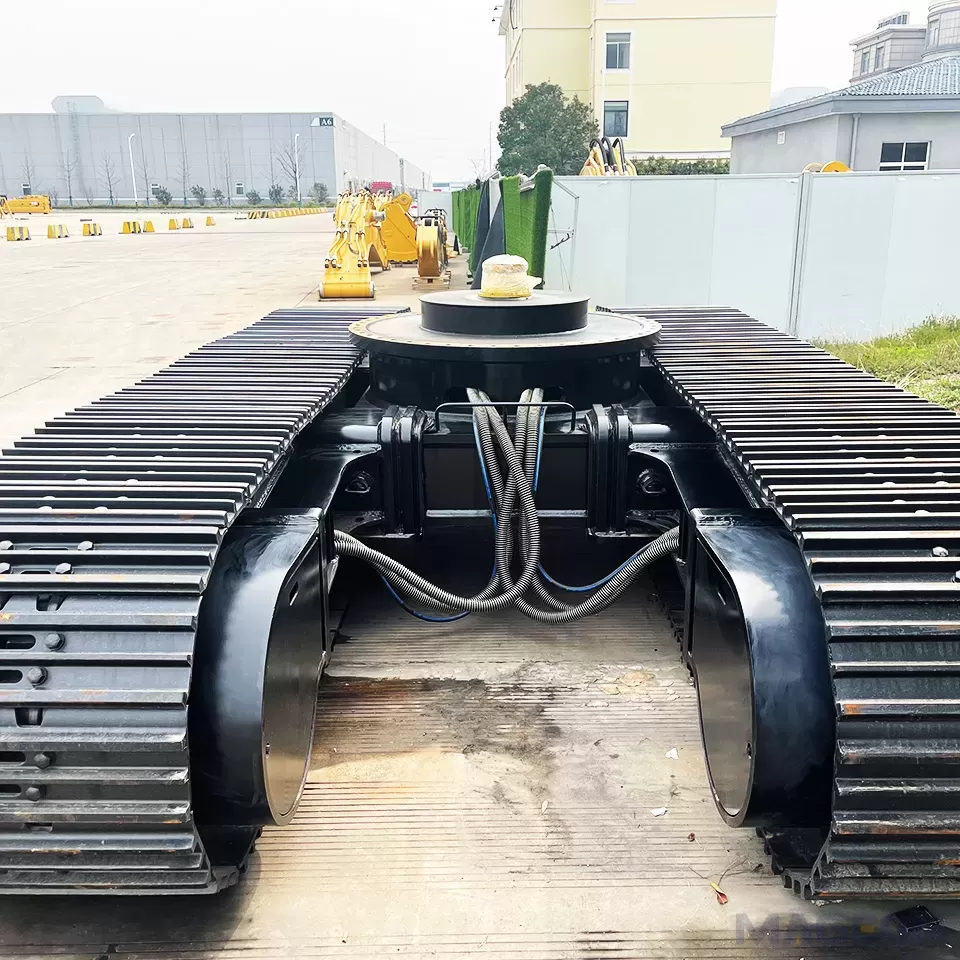
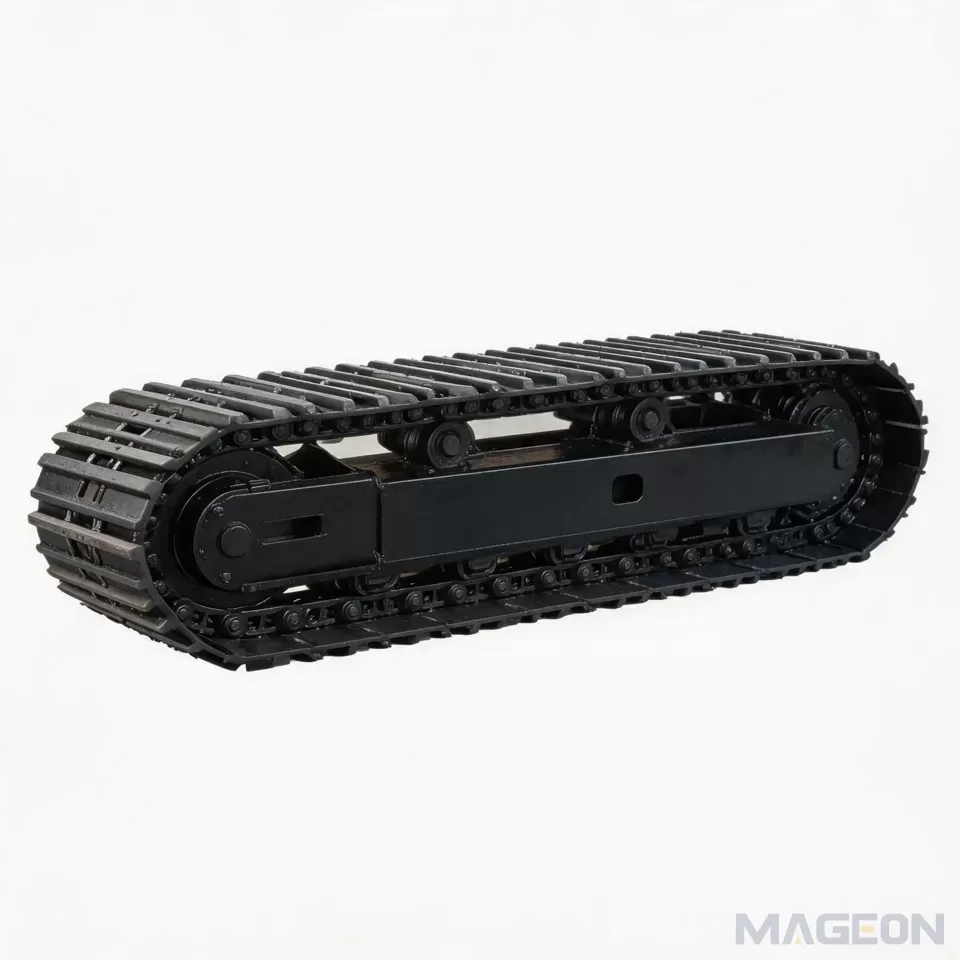
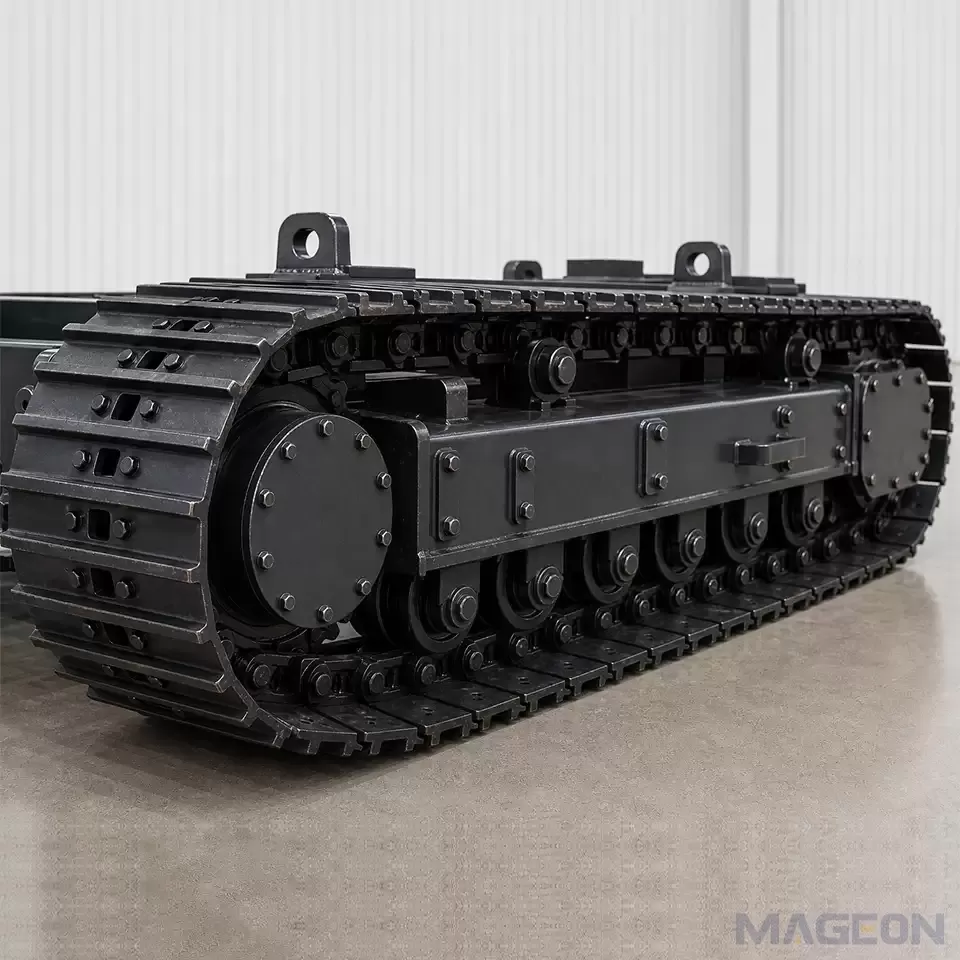
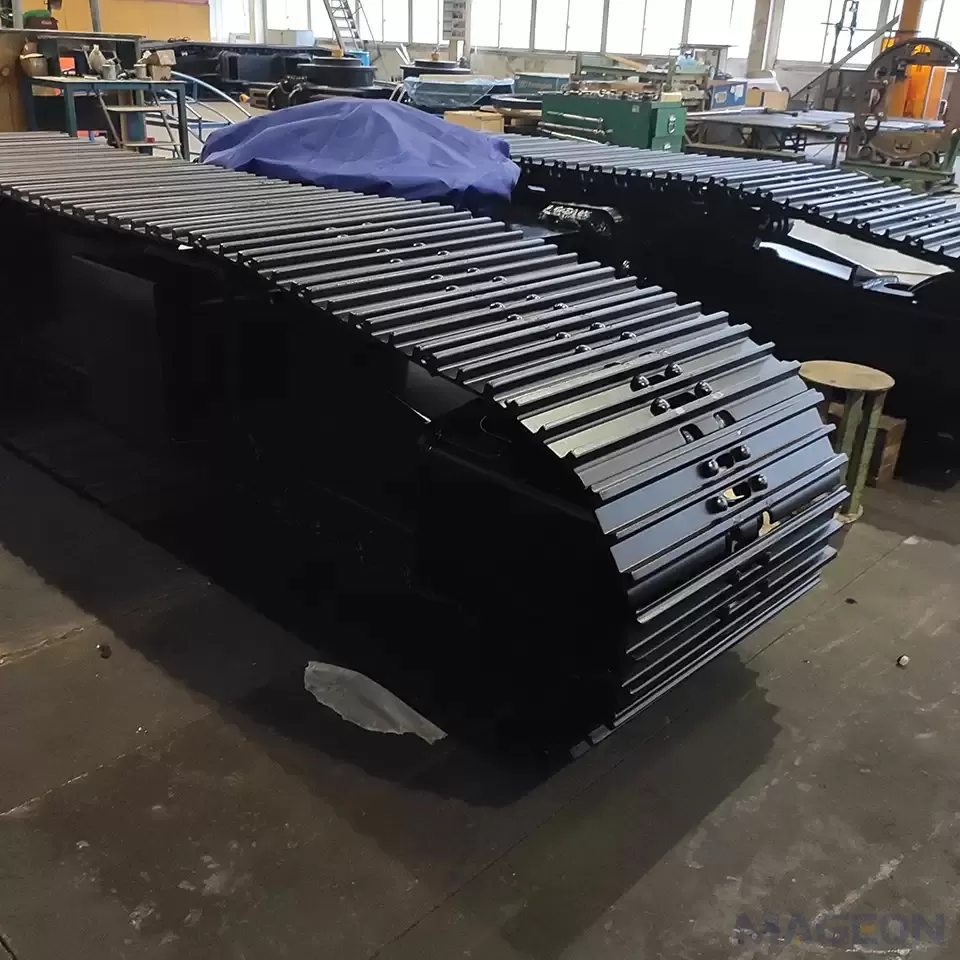
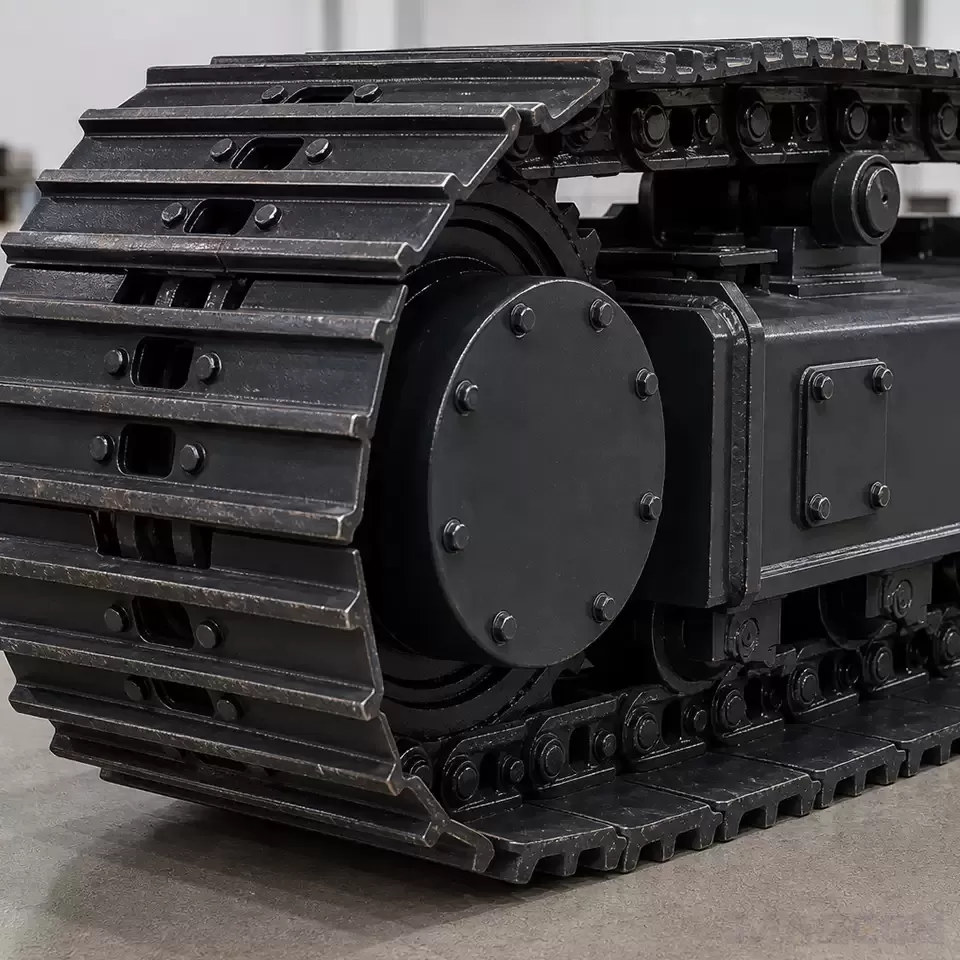
Track shoes are the undercarriage components that contact the ground. Their profile, width, height, plate construction, and attachment interface affect flotation, traction, turning resistance, wear, and compatibility with the complete undercarriage. A final specification therefore requires machine-specific engineering validation; this guide provides a selection framework rather than a universal shoe recommendation.
What Should OEMs Decide Before Comparing Terrain?
Start with the machine's primary function. The same terrain can call for different shoe priorities when the machine must push continuously, dig from a stationary position, travel frequently, make tight turns, carry a suspended load, or protect a finished surface.
| Why it comes first | What to define | |
|---|---|---|
| Machine type and work mode | Sets the required balance between traction, maneuverability, stability, and surface protection | Primary action, attachment, travel versus stationary work, and turning method |
| Duty-cycle breakdown | Prevents a short but severe condition from being ignored | Operating hours by terrain, moisture, slope, travel distance, and turn frequency |
| Failure to avoid | Identifies the governing tradeoff | Loss of traction, sinkage, excessive turning load, shoe bending, wear, or surface damage |
| Undercarriage architecture | Limits what can be fitted safely |
This sequence explains why manufacturers offer more than one grouser and shoe-width option for a machine family. Caterpillar describes single-grouser shoes as providing higher traction with less turning ability, while its triple-grouser shoes have lower penetration and traction but better turning ability and are common on track-type loaders and excavators. Caterpillar single-grouser guidance and triple-grouser guidance illustrate the tradeoff; they are not a substitute for the applicable machine specification.
What Track Shoe Options Should Be Considered?
Shoe naming and availability vary by machine family and supplier. The options below are common starting points, not a complete catalogue or a direct terrain-to-shoe rule.
Single-grouser shoes prioritize soil penetration and tractive engagement. They are often considered where the machine's work function demands high drawbar pull or positive engagement in loose ground. The tradeoff is greater turning resistance and higher localized contact on firm surfaces.
Triple-grouser shoes distribute contact across several lower grousers. They are commonly used where maneuverability, travel, and general-purpose ground performance matter alongside useful traction. They do not automatically become the correct choice for every mixed or rocky job.
Flat shoes provide low penetration and can be designed for severe abrasive work. Caterpillar identifies flat shoes for hot slag and other heavily abrasive materials where low penetration and resistance to wear and bending are required. Caterpillar flat-shoe guidance This is different from a general rule that every hard or paved surface needs a flat steel shoe.
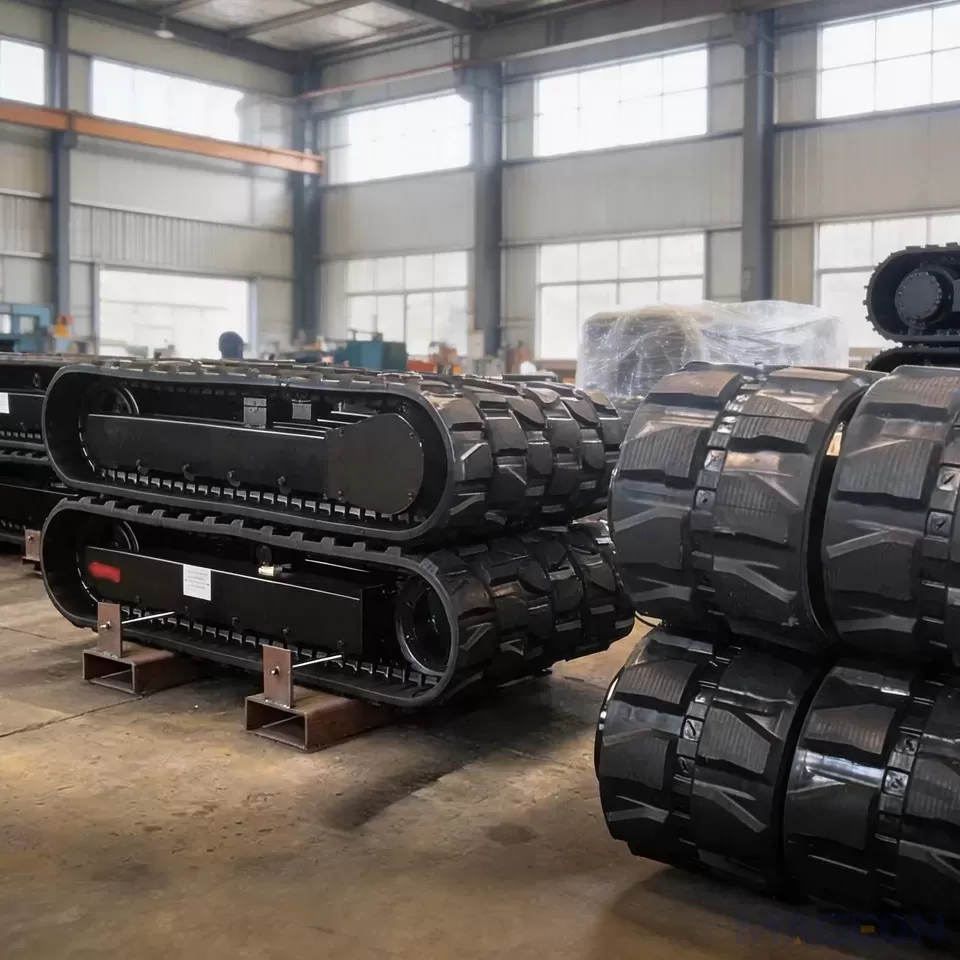
Wide and low-ground-pressure configurations increase the contact area available for flotation. “LGP” should be treated as an undercarriage-system configuration, not as a synonym for one shoe profile: track width, ground-contact length, gauge, and roller arrangement can all be relevant. For example, Komatsu describes its D155PX-8 LGP with both wide shoes and an eight-roller undercarriage. Komatsu D155PX-8 LGP
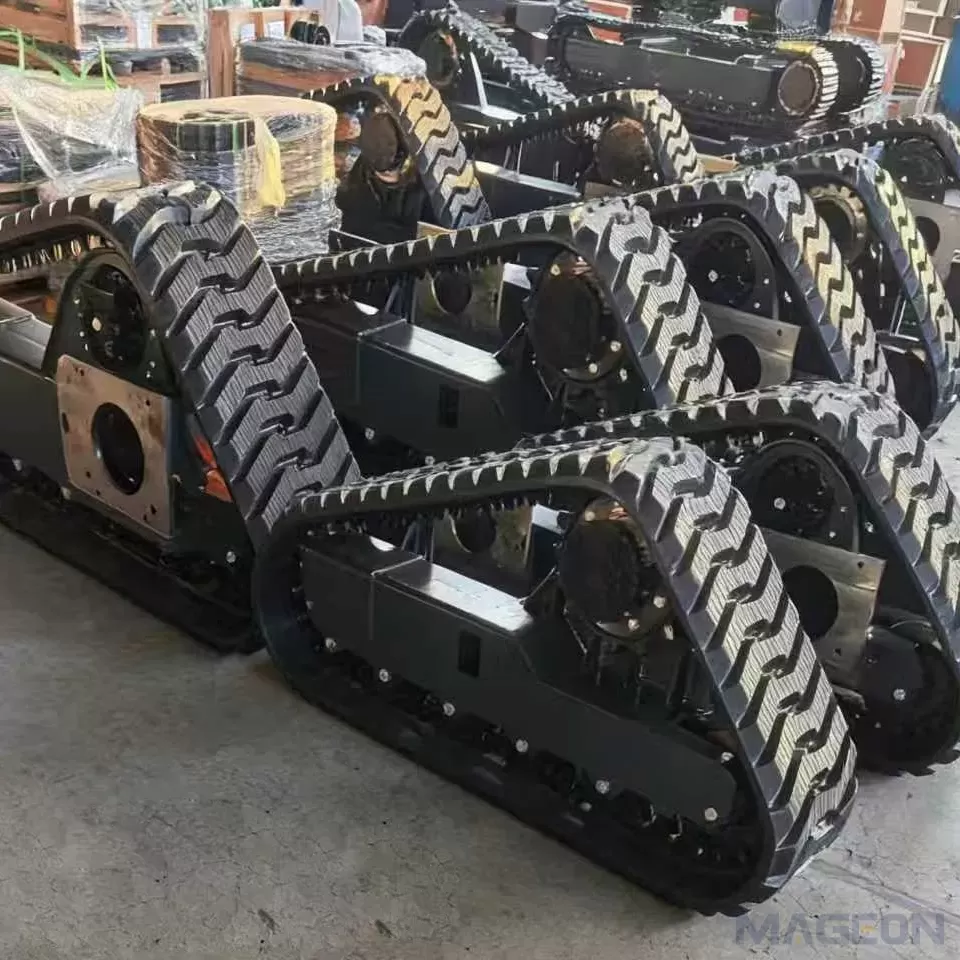
Other options may include double-grouser shoes, clipped or slotted shoe variants, bolt-on rubber pads, and roadliner-style solutions. These should be checked where turning load, debris release, pavement protection, or the approved track interface makes them relevant.
| Often considered when | Primary benefit | Key limitation to verify | |
|---|---|---|---|
| Single grouser | High traction or penetration is central to the work function | Strong ground engagement | Turning load and hard-surface wear |
| Triple grouser | General-purpose travel and maneuverability are important | Balanced contact and turning behavior | Whether penetration is sufficient for the required drawbar pull |
| Flat or low-penetration shoe | Abrasive materials or a surface-protection requirement governs | Reduced penetration and potentially better surface treatment | Actual traction, heat, abrasion, and compatibility requirements |
| Wide / LGP configuration | Flotation is the dominant constraint | Lower average ground pressure through greater contact area |
How Does Terrain Change the Selection Decision?
Terrain changes the loads at the shoe-to-ground interface, but the correct response depends on the machine's work function and duty-cycle share.
Soft or loose soil raises two questions: can the shoe develop the traction the work requires, and can the machine maintain acceptable sinkage? A penetration-oriented grouser may help traction, while added contact area may improve flotation. Neither choice should be made without checking machine load distribution and the expected ground condition.
Prepared hard surfaces such as concrete, asphalt, and compacted access roads limit penetration and can accelerate wear or damage the surface. The selection may involve a lower-penetration steel shoe, a compatible pad or roadliner option, altered operating practice, or a different undercarriage system. It should not be reduced to “flat shoe by default.”
Rock and broken ground create impact, bending, abrasion, and debris-packing risks. The governing specification may be shoe plate thickness, service class, reinforcement, hole pattern, or debris-relief features rather than grouser count alone. A machine that must push or climb can still need a high-traction profile; a machine that travels and turns frequently may prioritize a different compromise.
Mixed terrain requires a weighted decision. Identify the terrain with the largest hour share, the terrain that creates the highest consequence if the shoe is wrong, and the work mode used on each surface. A mixed-terrain choice should protect the machine's primary function before seeking a generic average.
| Selection question | Possible direction | Mandatory check | |
|---|---|---|---|
| Soft or loose soil | Is traction or flotation the first constraint? | Match grouser engagement and contact area to the work requirement | Weight distribution, sinkage risk, slope, and drawbar-pull demand |
| Prepared hard surface | Is surface protection, wear, or travel efficiency the governing issue? | Consider low-penetration, pad, or roadliner solutions where compatible | Surface rules, thermal and abrasive exposure, and traction margin |
| Rock or broken ground | Is impact, bending, abrasion, or debris packing the main risk? | Select the required shoe service level and geometry for the machine function | Plate durability, hardware, packing relief, and turning behavior |
| Mixed terrain | Which condition dominates hours or failure consequence? | Use the primary function as the baseline, then manage the secondary condition |
How Do Shoe Width and Grouser Height Affect the Result?
Shoe width changes total ground-contact area and therefore average ground pressure. It can improve flotation on weak ground, but it can also raise turning resistance, increase scrubbing loads, create transport-width conflicts, and increase exposure to debris packing. Caterpillar's general dozer guidance is to use the narrowest shoe that still provides adequate flotation. Caterpillar undercarriage guidance
Grouser height and profile influence how the shoe engages soil. More height can increase penetration capacity in suitable soil, but the available traction is limited by the ground's shear strength and the machine's loading. Extra height can add bending exposure and localized wear when the machine operates on rock or firm surfaces. Final height should therefore be checked with the selected shoe width, ground-contact length, load distribution, slope, and work demand.
Do not assign final width or grouser-height values from a general article. Validate ground pressure, expected sinkage, traction demand, turning load, overall machine width, and stability against the actual platform and its intended duty cycle.
What Information Should OEMs Prepare for a Track Shoe Evaluation?
| What to provide | Why it matters | |
|---|---|---|
| Machine and work mode | Equipment category, attachment, primary action, travel pattern, and turning method | Establishes traction, maneuverability, and stability priorities |
| Weight and geometry | Operating-mass range, load cases, weight distribution, gauge, contact length, and allowable envelope | Supports flotation, stability, width, and integration checks |
| Terrain and environment | Terrain mix by operating hours, moisture, slope, abrasive material, rock size, and paved-surface exposure | Defines shoe-to-ground and wear conditions |
| Performance requirement | Required drawbar pull, gradeability, allowable sinkage, travel speed, and turn frequency | Converts the duty cycle into engineering constraints |
| Track interface | Track pitch, link dimensions, bolt pattern, rail width, and existing shoe details for retrofits | Prevents an otherwise suitable shoe from being incompatible |
| Lifecycle requirement | Expected service interval, inspection access, replacement strategy, and surface-damage constraints |
The supplier may need further project information. The purpose of this list is to prevent a catalogue-width or grouser-height choice from becoming a premature final specification.
Frequently Asked Questions
Can terrain alone determine the right track shoe?
No. Terrain describes the shoe-to-ground condition, but machine function determines the relative importance of traction, turning, stability, travel, impact resistance, and surface protection. Start with the machine and work mode, then use terrain and duty-cycle data to refine the choice.
Is a triple-grouser shoe always best for mixed terrain?
No. Triple-grouser shoes are a common general-purpose option for some machine categories, especially where maneuverability matters, but they are not a universal mixed-terrain default. The correct baseline depends on the machine's primary function and the highest-consequence operating condition.
Does a wider track shoe always improve flotation?
It generally lowers average ground pressure by increasing contact area, but width alone does not guarantee acceptable flotation. Ground-contact length, weight distribution, soil condition, and sinkage behavior also matter, while excess width can increase turning resistance and transport conflicts.
How should rock conditions change the specification?
Treat rock as an impact, abrasion, bending, and debris-management condition rather than as an automatic grouser-count rule. Confirm the required shoe service level, plate construction, hardware, packing relief, and traction requirement for the specific machine and work mode.
What should be used on paved or finished surfaces?
First determine whether the priority is reducing surface damage, limiting wear, retaining traction, or meeting a site rule. Depending on the approved machine configuration, the answer may involve a low-penetration shoe, a compatible pad or roadliner, altered travel practice, or a different track system.
Can shoes be changed after the machine enters service?
Often, but a retrofit must be checked against the existing chain pitch, bolt pattern, rail width, machine width, stability, and operating duty. A shoe that fits physically may still create unacceptable turning, flotation, or surface-performance tradeoffs.
Next Step
Track shoe selection is a system decision, not a catalogue lookup. For a technical evaluation, provide the machine type and work mode, operating-mass range, undercarriage geometry, terrain and duty-cycle breakdown, slope and turning conditions, and required track interface. MAGEON can use those inputs to evaluate a crawler undercarriage configuration for the application.
Please leave your customization requirements, and we will contact you as soon as possible!
Leave your requirements, we'll get back to you within 24 hours.