
How Should OEMs Prepare a Crawler Undercarriage Request for Heavy-Duty Drilling Equipment?
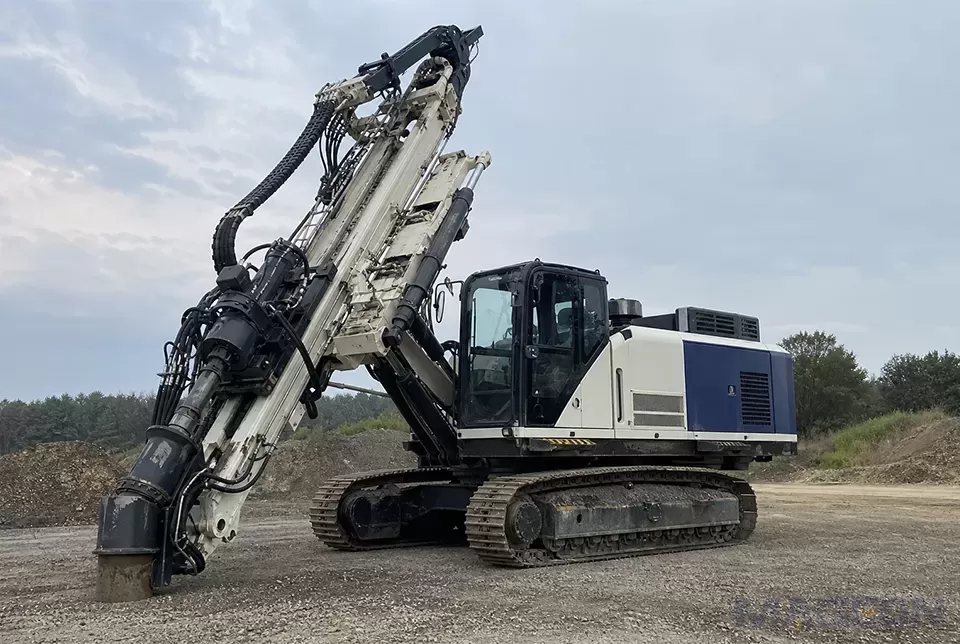
An OEM should begin a heavy-duty drilling rig crawler undercarriage request with a defined project input package, not a generic equipment description. The package should identify the complete machine, the relevant working states, the mounting boundary, the expected duty conditions, and the questions that still require engineering confirmation. Without those inputs, a discussion may be useful for early planning, but it cannot responsibly become a confirmed configuration, interface, or performance conclusion.
This distinction matters because a drilling machine can present different loads, clearances, access constraints, and service needs across transport, positioning, drilling, and maintenance. The purpose of the request is therefore to make the project evaluable, not to make an incomplete description look complete.
Why Heavy-Duty Drilling Requests Need a Defined Input Package
The phrase “heavy-duty drilling equipment” does not define a crawler undercarriage. It does not state how the upper machine is arranged, which working states are relevant, where the mounting loads are transferred, what the machine must cross or stand on, or which service access requirements apply. Those questions affect the scope of an engineering evaluation even when no final dimensions or ratings have yet been agreed.
Start by deciding what the request must enable. An OEM may need an early feasibility discussion, a technical evaluation, a quotation-ready package, or confirmation of a specific project change. Each requires a different level of information. Combining them in one unstructured request often causes later clarification loops and can blur the line between an initial concept and an approved design decision.
The useful rule is simple: describe the machine and the decision context before asking for a conclusion. Identify known inputs, label unresolved inputs, and state which party owns each confirmation. That creates a traceable route from a project question to the documents and engineering review needed to answer it.
Start With the Complete Machine and Working States
A crawler undercarriage is evaluated as part of a complete machine context. The request should explain the upper structure, drilling arrangement where applicable, accessory layout, and intended operating states. It should also distinguish a travelling condition from a drilling, parking, transport, maintenance, or other relevant condition. The same equipment description may be adequate for one early discussion but inadequate for another if the working state has changed.
| Why it matters | What still requires confirmation | |
|---|---|---|
| Whole-machine arrangement | Connects the undercarriage request to the upper machine, attachments, and available installation area | Final packaging and project-specific layout |
| Relevant working states | Prevents a travel-only description from standing in for drilling, parking, transport, or service conditions | Which states govern the technical evaluation |
| Known mass and distribution information | Establishes what project data is available for a load-path review | Accuracy, revision control, and use in a final engineering decision |
| Planned attachments and optional equipment | Identifies changes that may alter the machine context | Whether each option is included in the requested scope |
| Service and access expectations | Makes maintenance access a stated project input rather than a late-stage assumption |
Do not replace missing project data with a verbal label such as “standard rig” or “typical drilling duty.” If a value, arrangement, or working state is not confirmed, record it as an open input. That is more useful than presenting a provisional assumption as a design basis.
Clarify Mounting Interfaces and Package Boundaries
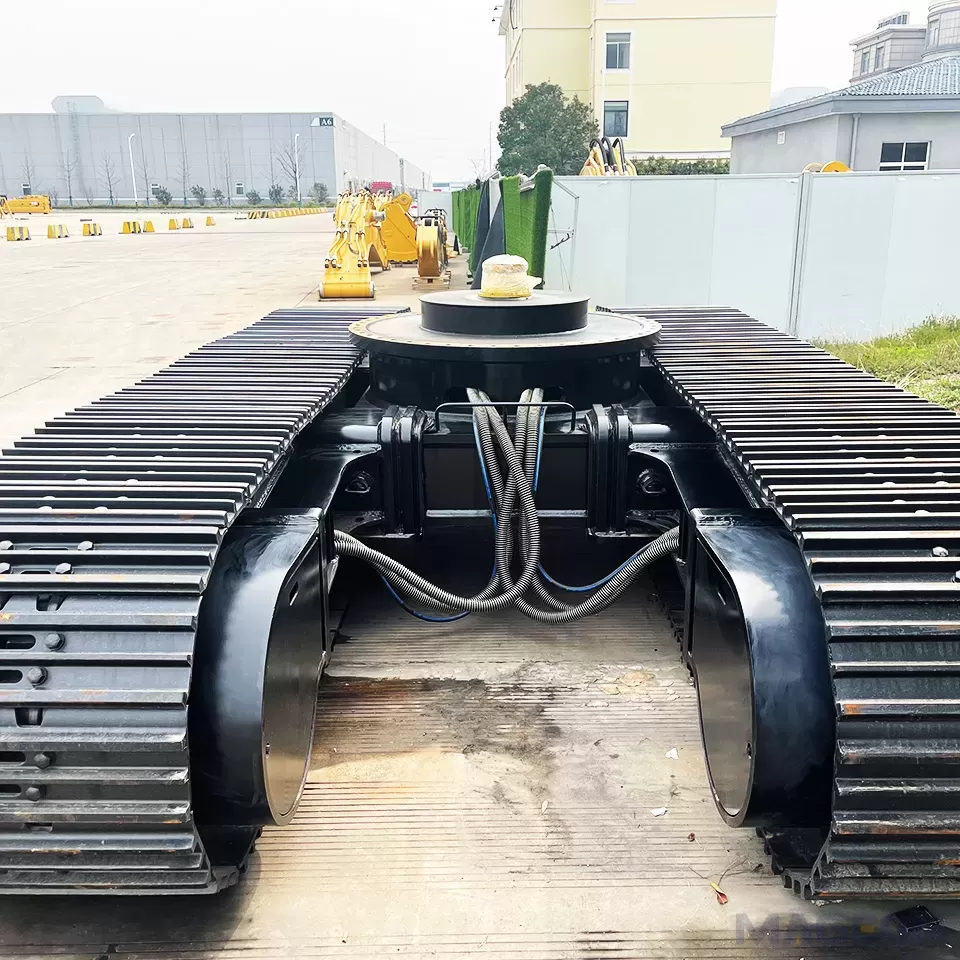
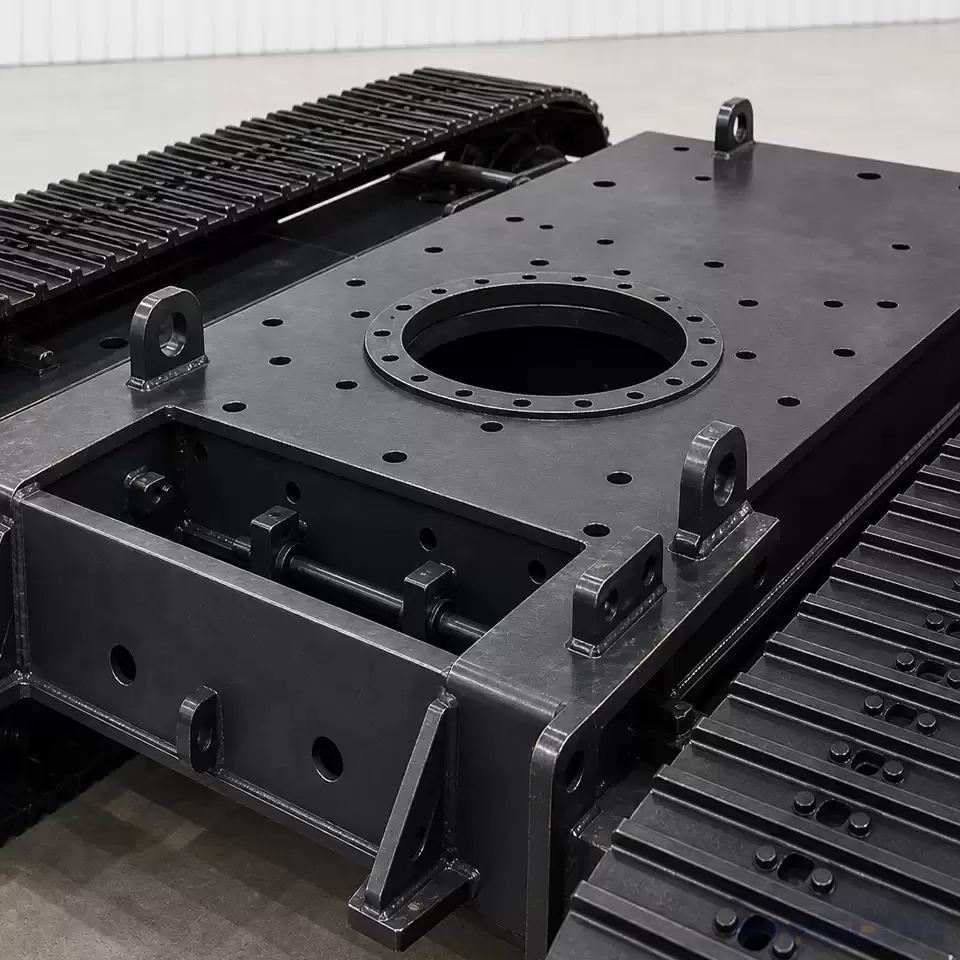
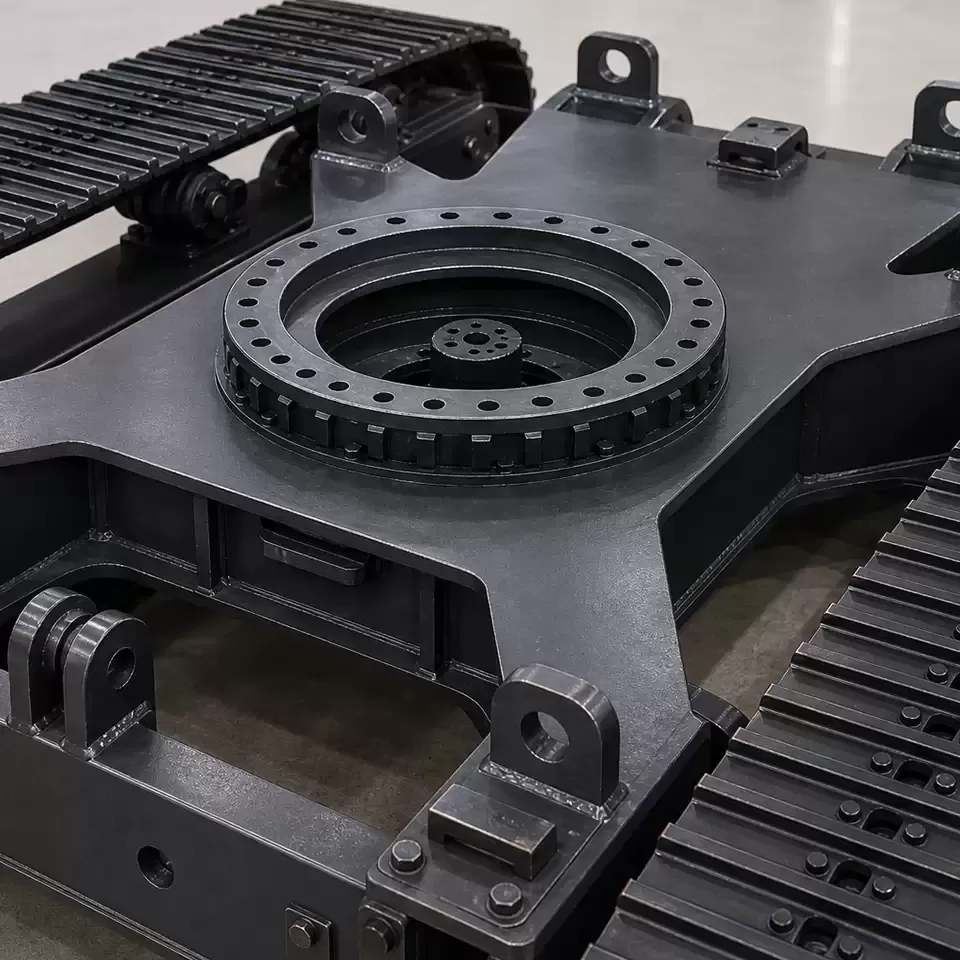
The request should define where the upper machine and crawler undercarriage meet. Drawings, interface descriptions, available envelope information, and stated responsibilities help each party understand what is being evaluated. The objective is not to prescribe an interface before the project has been reviewed; it is to prevent the interface from remaining undefined while other decisions move forward.
| Input to provide | Owner of the input | Confirmation boundary | |
|---|---|---|---|
| Mounting arrangement | Available drawings, reference surfaces, and constraints | OEM engineering team | Final connection design requires project-specific confirmation |
| Space envelope | Known clearance, access, and packaging restrictions | OEM project team | Changes caused by optional equipment or service access remain open until reviewed |
| Drive and utility boundary | Relevant information about the intended whole-machine interface | OEM engineering team | No hydraulic, electrical, or control compatibility is assumed from a general request |
| Crawler undercarriage mounting dimensions | Existing layout references and controlled revisions, if available | OEM engineering team |
For a related layout checklist, an OEM can use the phrase crawler undercarriage mounting dimensions to distinguish controlled interface references from a general equipment sketch. The same principle applies to brackets, structural transitions, and service envelopes: the request should show what is known, who controls the information, and what remains subject to engineering review.
Describe Ground, Access, and Duty Conditions
Ground and access conditions should be described as project context, not as a shortcut to a performance claim. An OEM can identify the expected work area, surface variability, travel route, access limits, transport boundaries, and any recurring obstacles or grade changes. These inputs give the evaluation team a clearer picture of the intended use without asserting that a particular undercarriage will meet every condition.
The request should also state whether the drilling operation is expected to remain in one area, reposition frequently, travel between work zones, or operate with special restrictions. Where information is unknown, identify the uncertainty and its owner. This is especially important when an early equipment concept may later receive a different mast, tool, accessory, or transport arrangement.
The phrase piling rig crawler undercarriage can be a useful comparison point when a project includes site access and working-condition questions, but it does not establish that a heavy-duty drilling machine shares the same inputs or operating limits. The applicable conditions still need to be documented for the actual project.
Separate Request Inputs From Engineering Confirmation
An effective request separates three things: information supplied by the OEM, the scope that can be evaluated from that information, and the decisions that remain subject to confirmation. This distinction prevents a request package from being mistaken for a completed design review.
| Information or action | Decision supported | Confirmation boundary | |
|---|---|---|---|
| OEM | Machine arrangement, available drawings, operating context, and requested scope | Defines the project question and supplied inputs | Remains responsible for controlled project information and changes |
| Undercarriage supplier | Review of the supplied request within the agreed technical scope | Identifies information gaps and evaluation needs | Does not assume final whole-machine approval or unprovided interfaces |
| Joint engineering process | Resolution of open inputs, revisions, and project-specific questions | Supports a confirmed project decision when evidence is available |
This is also how the article differs from compact drilling rig crawler undercarriage selection guidance. A compact-rig selection discussion may help frame an equipment category, while a heavy-duty project request must identify the specific inputs needed before the evaluation can move beyond general direction.
Build a Review-Ready Request Package
A review-ready request package is organized so the next responsible party can see what is known, what is missing, and what action is needed. It does not need to contain every final answer at the first contact. It does need to avoid hiding open items inside a broad equipment description.
| Purpose | Status to verify | Next action | |
|---|---|---|---|
| Machine overview and configuration reference | Establish the machine context | Current revision and included equipment | Confirm the document set and scope owner |
| Working-state description | Identify the conditions relevant to review | Which states are included or excluded | Escalate unclear states for project discussion |
| Interface and layout material | Define available mounting and packaging information | Controlled source and current revision | Request drawing or engineering confirmation where incomplete |
| Ground, access, and transport context | Describe intended use without converting it into a performance claim | Known conditions and unresolved constraints | Identify which conditions require further review |
| Open-question log | Preserve gaps rather than silently assuming answers | Owner and required confirmation |
Before sending the request, check that the documents use the same machine identity and configuration reference. Then separate information that is confirmed from information that is still estimated, planned, or unavailable. This makes later revisions easier to trace and reduces the risk that an early assumption becomes an unexamined project requirement.
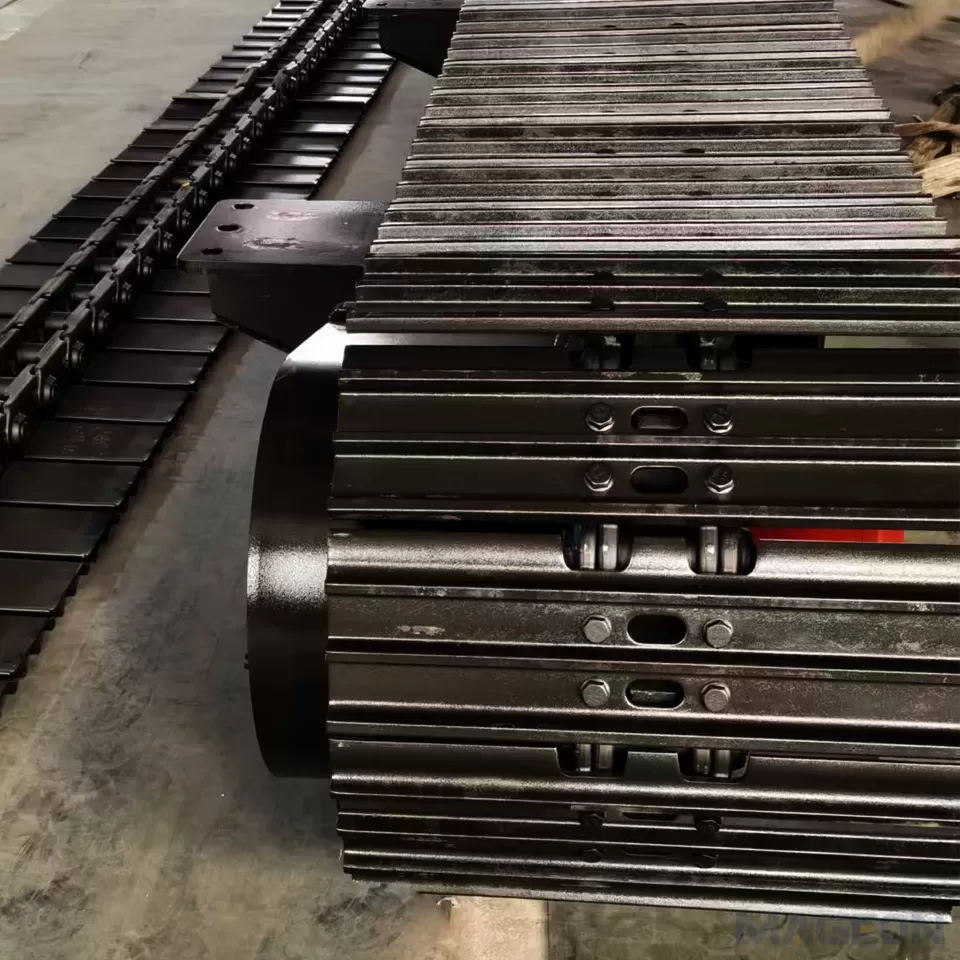
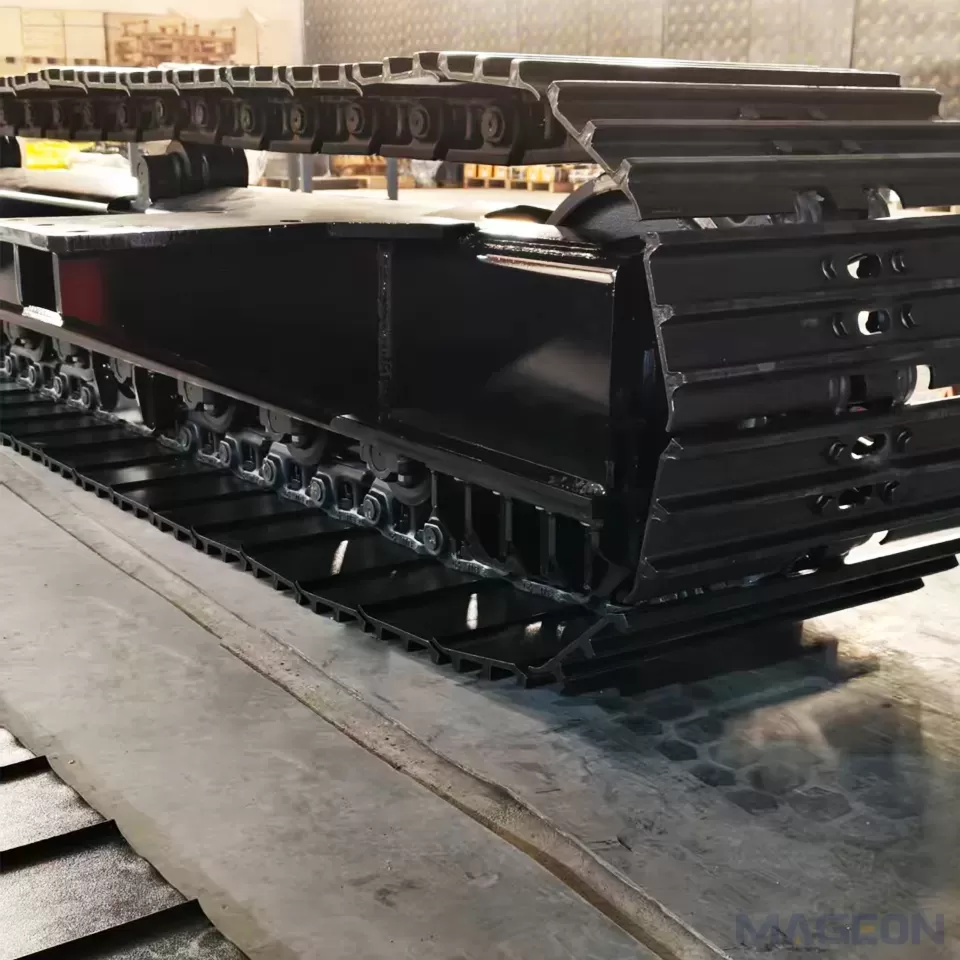
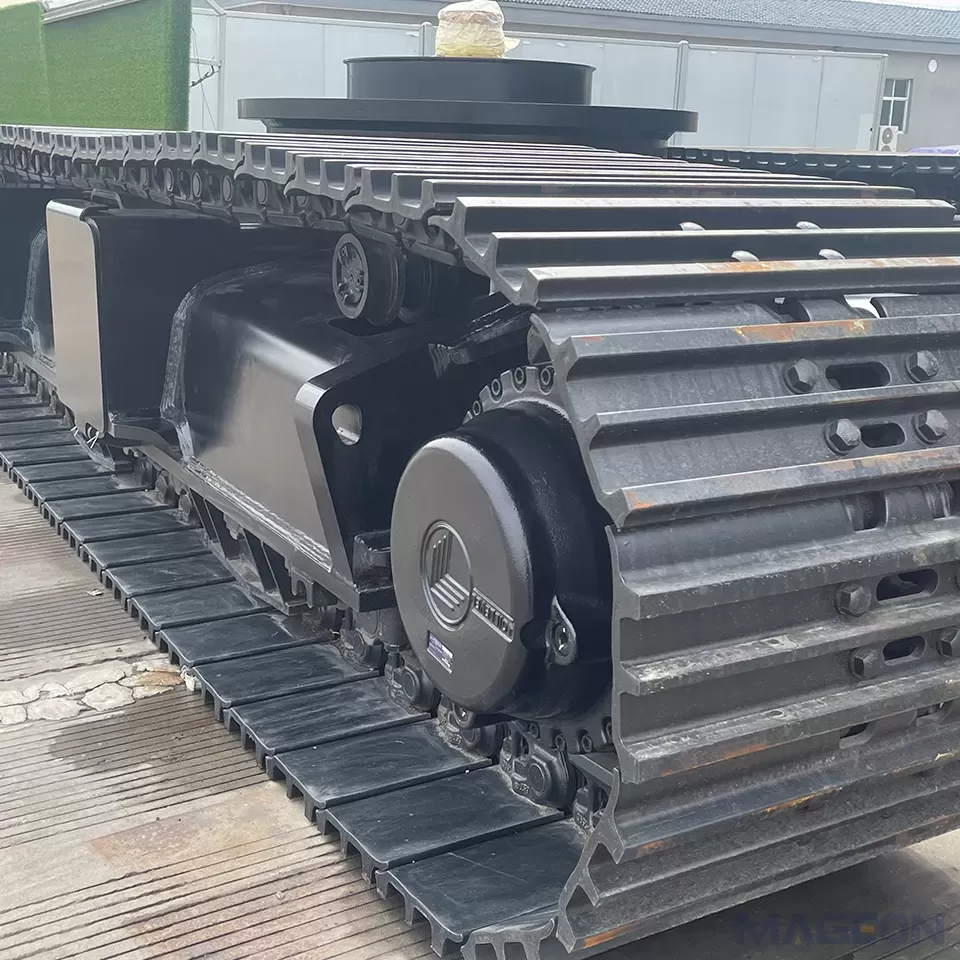
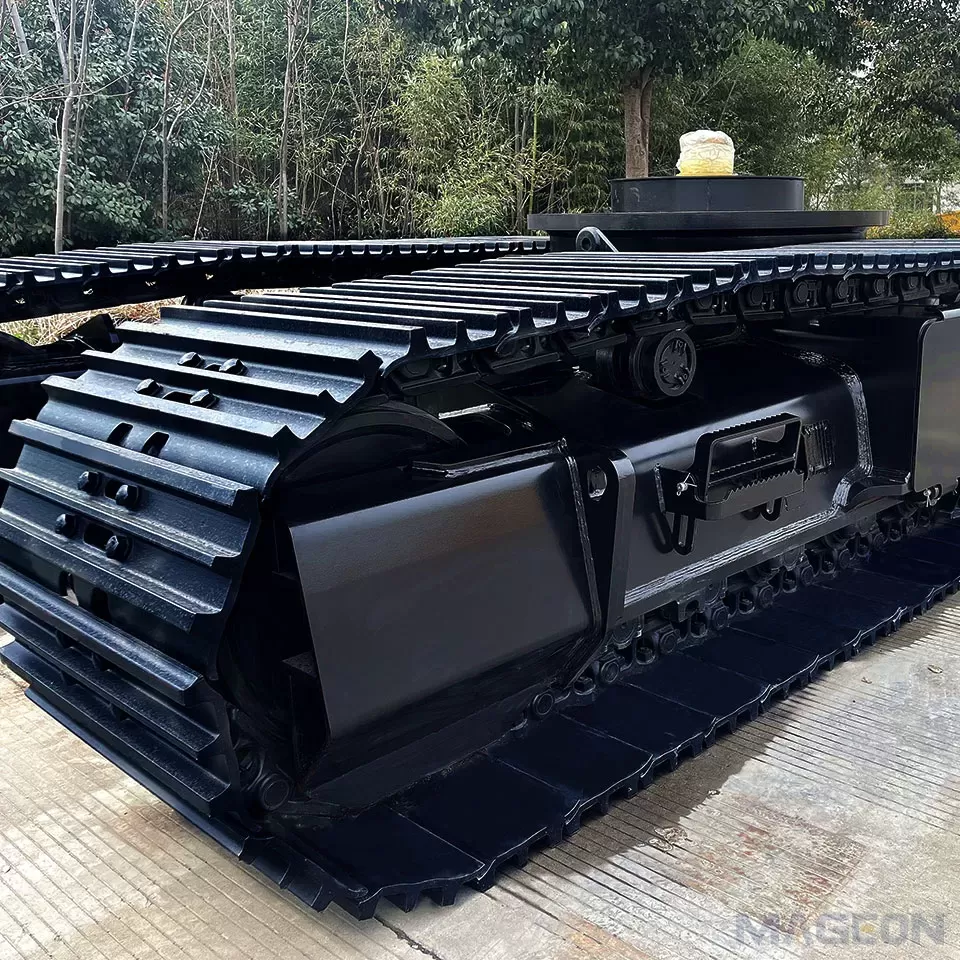
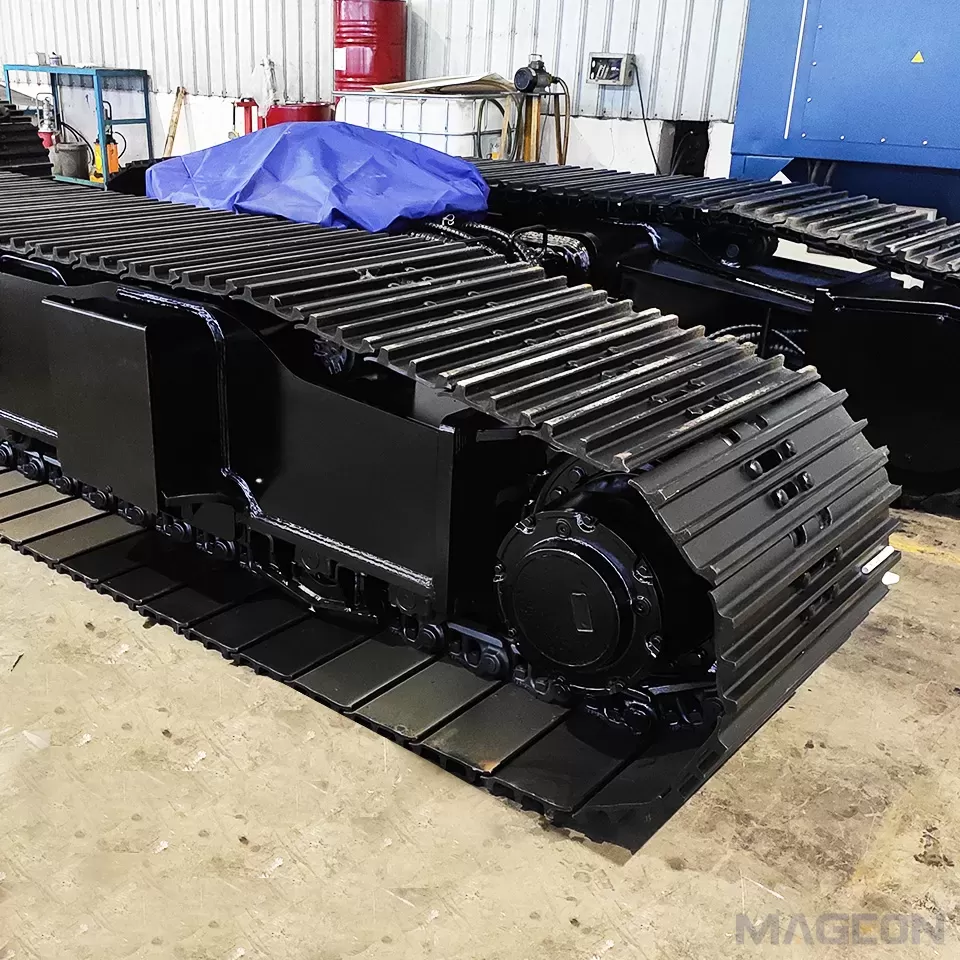
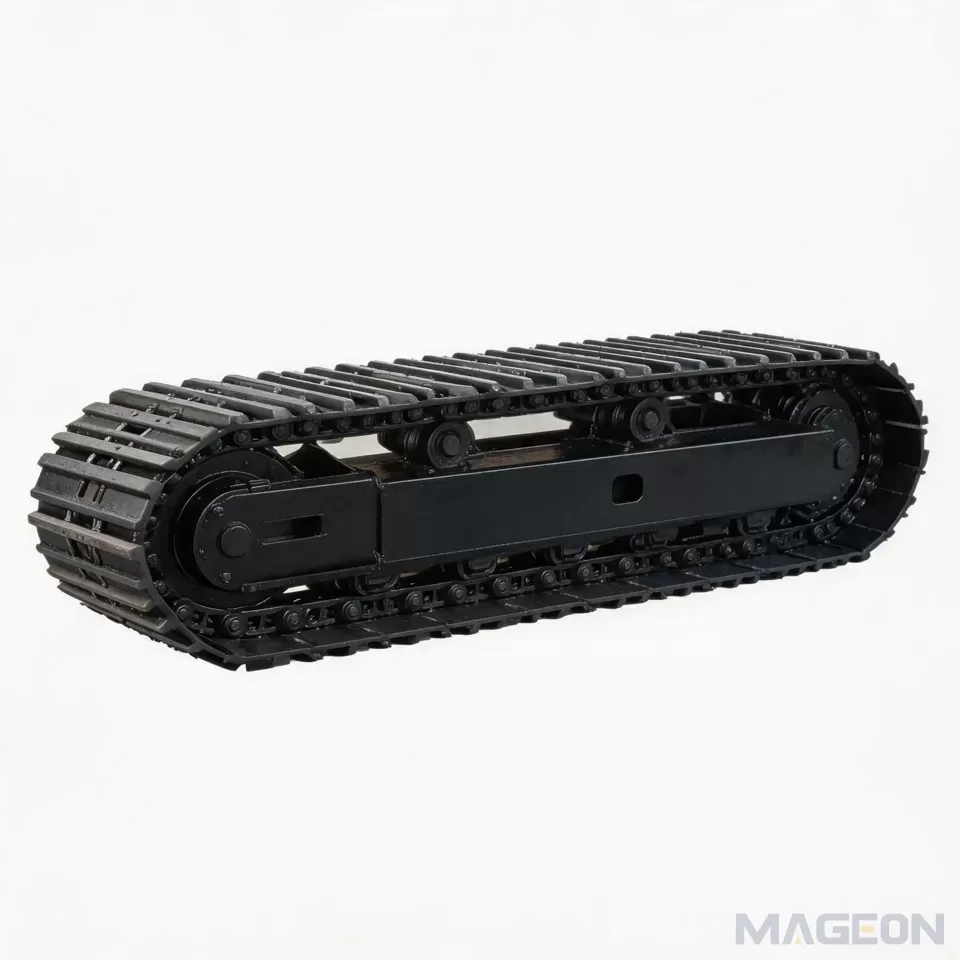
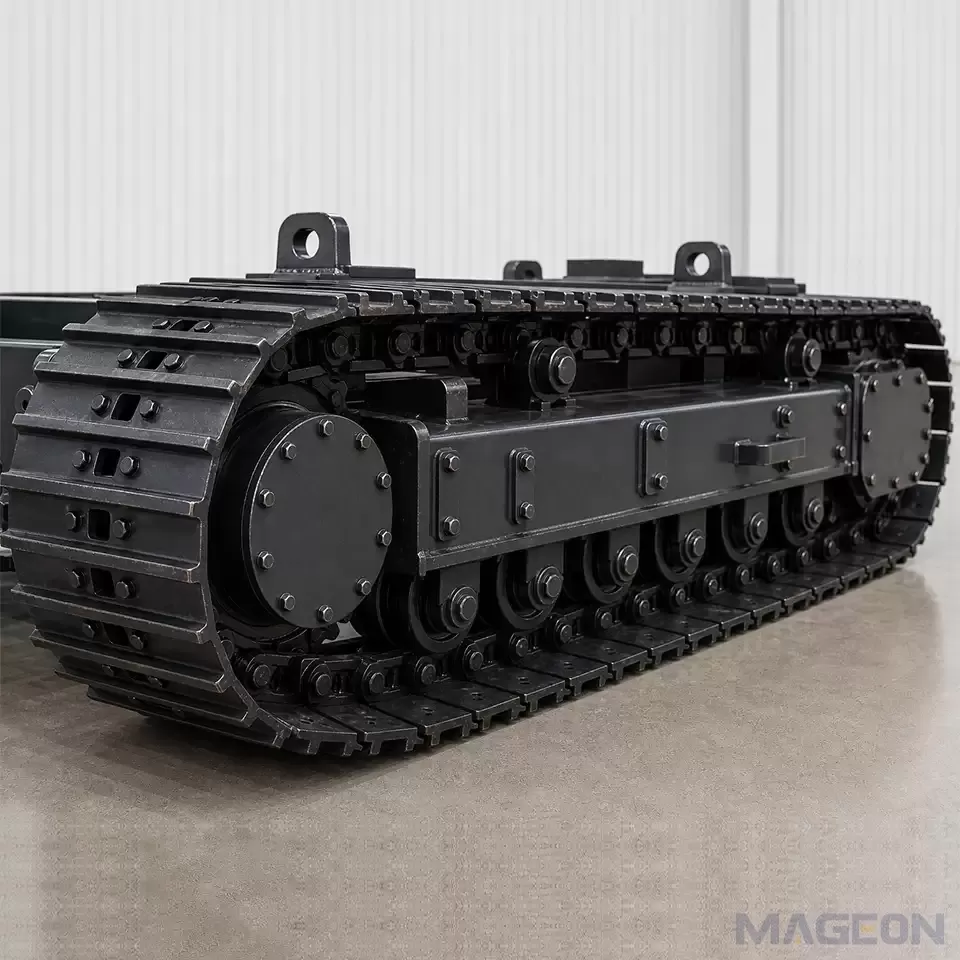
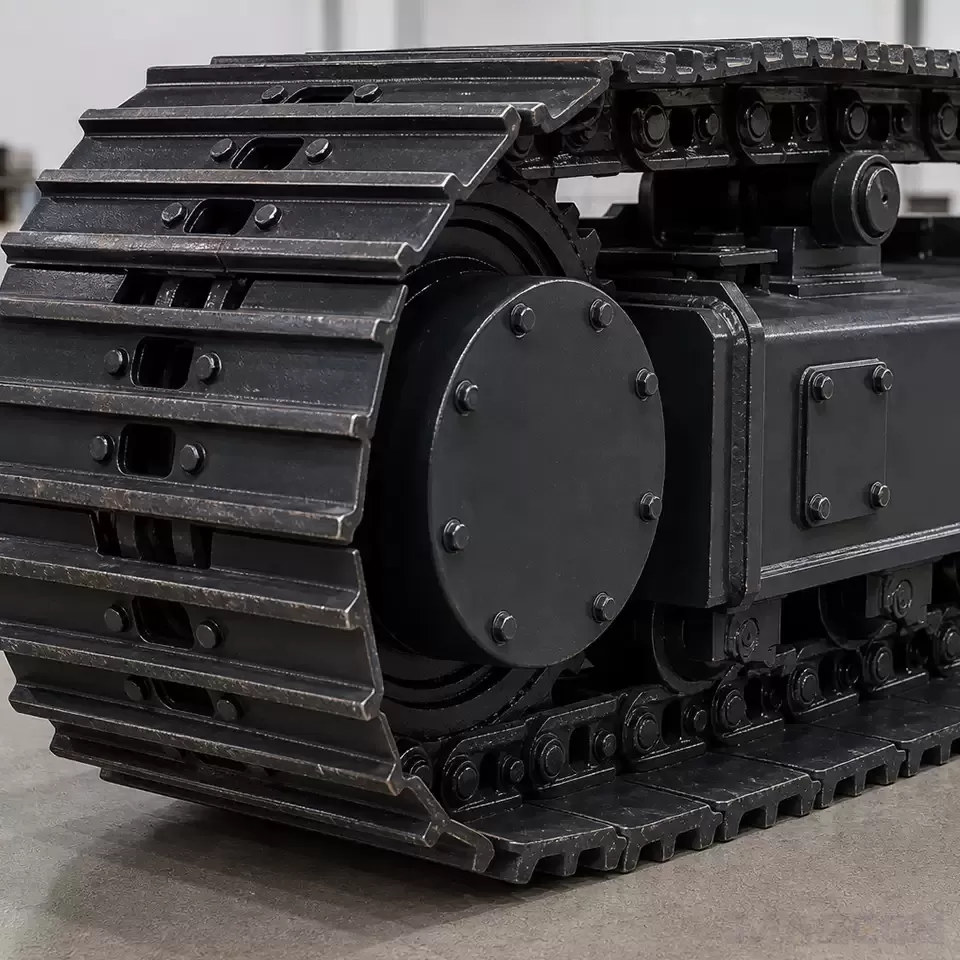
For a crawler-undercarriage technical evaluation or project inquiry, provide the equipment type, upper-machine arrangement, available interface information, relevant working states, ground and access context, transport constraints, maintenance expectations, and the questions requiring confirmation. A complete crawler undercarriage assembly can then be discussed within a defined project scope rather than against an unspecified machine description.
Frequently Asked Questions
Is an equipment name enough to request a crawler undercarriage?
No. An equipment name can begin an early conversation, but it does not define the upper-machine arrangement, working states, interface boundaries, or duty conditions needed for a responsible evaluation. Add the available project information and identify what remains open.
Should transport conditions be included if the machine will mainly drill in one place?
Yes, when transport or site access is part of the planned project. A condition can be relevant even if it is not the primary working state. State whether it is in scope rather than assuming it is covered.
Can preliminary drawings be used in an early request?
Yes, if they are clearly identified as preliminary and their revision status is known. They support an early discussion but do not replace controlled drawings or project-specific confirmation when a final decision is needed.
Who confirms the mounting interface?
The OEM should provide the available interface information and control its project revisions. The final interface decision requires the appropriate engineering confirmation within the agreed project scope; a supplier review does not automatically approve the whole-machine connection.
What should happen when key project inputs are not available?
Keep them visible in an open-question log. Explain which input is missing, who owns it, and what decision it affects. Do not silently substitute a typical value or treat the request as technically complete.
Please leave your customization requirements, and we will contact you as soon as possible!
Leave your requirements, we'll get back to you within 24 hours.