What Should OEMs Confirm Before Selecting a Crawler Undercarriage for Amphibious Construction Equipment?
OEMs should first define the equipment's operating states and separate undercarriage integration inputs from whole-machine amphibious requirements. A crawler undercarriage may be part of a construction machine used across land, wet ground, water-edge transitions, or water-related tasks. It does not, by itself, establish the machine's flotation, watertight integrity, water propulsion, corrosion resistance, control safety, or regulatory status.
That distinction makes the selection discussion more useful. The undercarriage can be evaluated as part of the complete machine, while the requirements that belong to the hull, sealing strategy, propulsion system, controls, safety system, or compliance programme stay with the responsible whole-machine engineering process.
Define the Operating States Before Selecting the Undercarriage
Begin with a clear description of what the equipment does in each relevant state. A project may include land travel, work on wet or deformable ground, transition between surfaces, transport, or a water-related task. Do not assume that every machine described as amphibious performs the same functions or uses the same system architecture.
For each state, record the equipment function, attachment arrangement, operating mass case, expected route or surface condition, and the transitions that occur between states. This gives the technical team a controlled basis for discussing the undercarriage rather than relying on a generic product category.
Crawler undercarriage selection should begin after the OEM has defined each operating state and the information that changes between them. If the mass case, layout, attachment, or terrain condition is not known, the correct output is an input checklist, not a claimed final configuration.
Separate Undercarriage Inputs From Whole-Machine Amphibious Requirements
An amphibious project includes both undercarriage integration questions and whole-machine system questions. Keeping them separate prevents a common error: treating a running gear decision as evidence that the complete machine is ready for a water-related duty.
| Undercarriage integration input | Whole-machine or project confirmation responsibility | |
|---|---|---|
| Machine layout and operating mass | Provide the upper-machine layout, mass cases, attachment positions, and mounting information. | Confirm the complete-machine design assumptions for each operating state. |
| Land and water-edge conditions | Describe ground, route, transitions, and expected work cycle. | Confirm mission boundaries, access conditions, and any site-specific restrictions. |
| Flotation and watertight integrity | Identify interfaces that may affect the undercarriage installation. | Confirm hull, buoyancy, sealing, testing, and responsible engineering scope. |
| Water propulsion and controls | Identify relevant installation or control interfaces. | Confirm propulsion, steering, controls, safety functions, and their verification. |
| Corrosion, safety, and compliance | Identify project inputs that affect mounting or service planning. |
Research on multi-terrain tracked amphibious vehicles can illustrate why terrain, structure, and load cases are system-level questions. Its results are specific to the studied vehicle and materials, however, and cannot be transferred as design values or performance claims for another construction machine. Lightweight Design and Optimization of Multi-Terrain Multi-Functional Tracked Amphibious Vehicle
Review the Undercarriage Integration Inputs
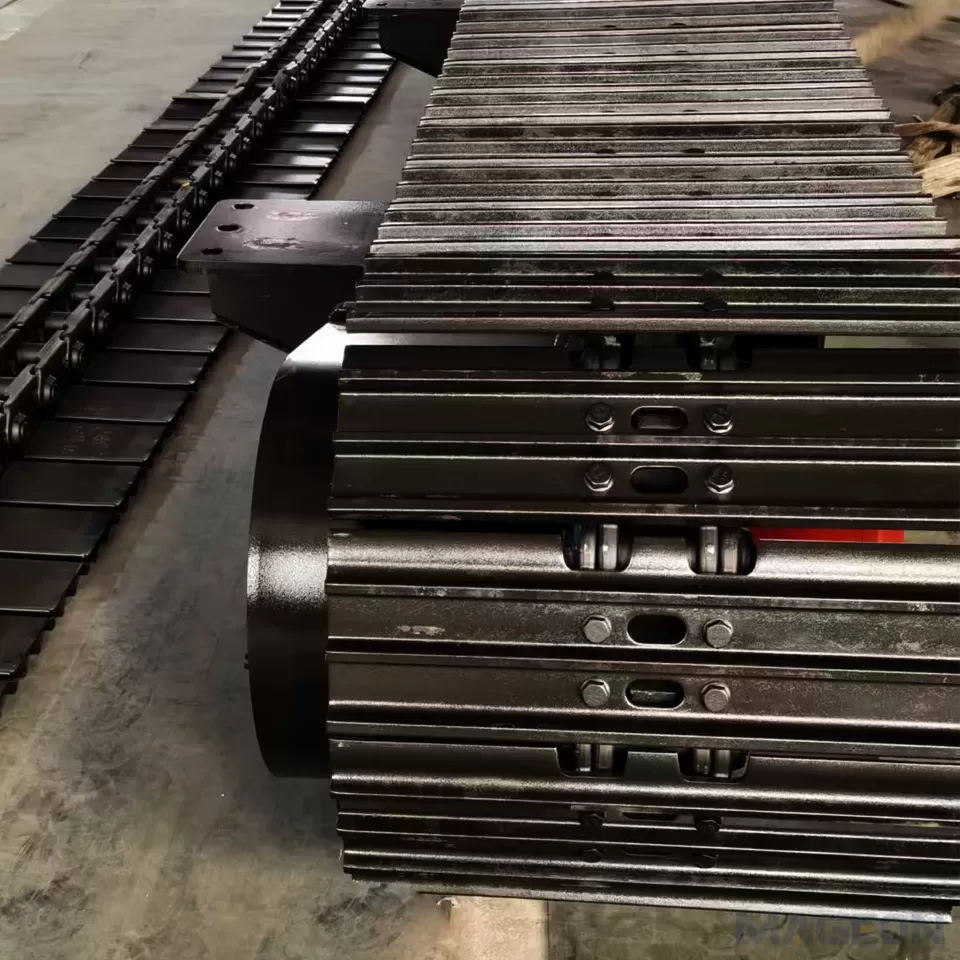
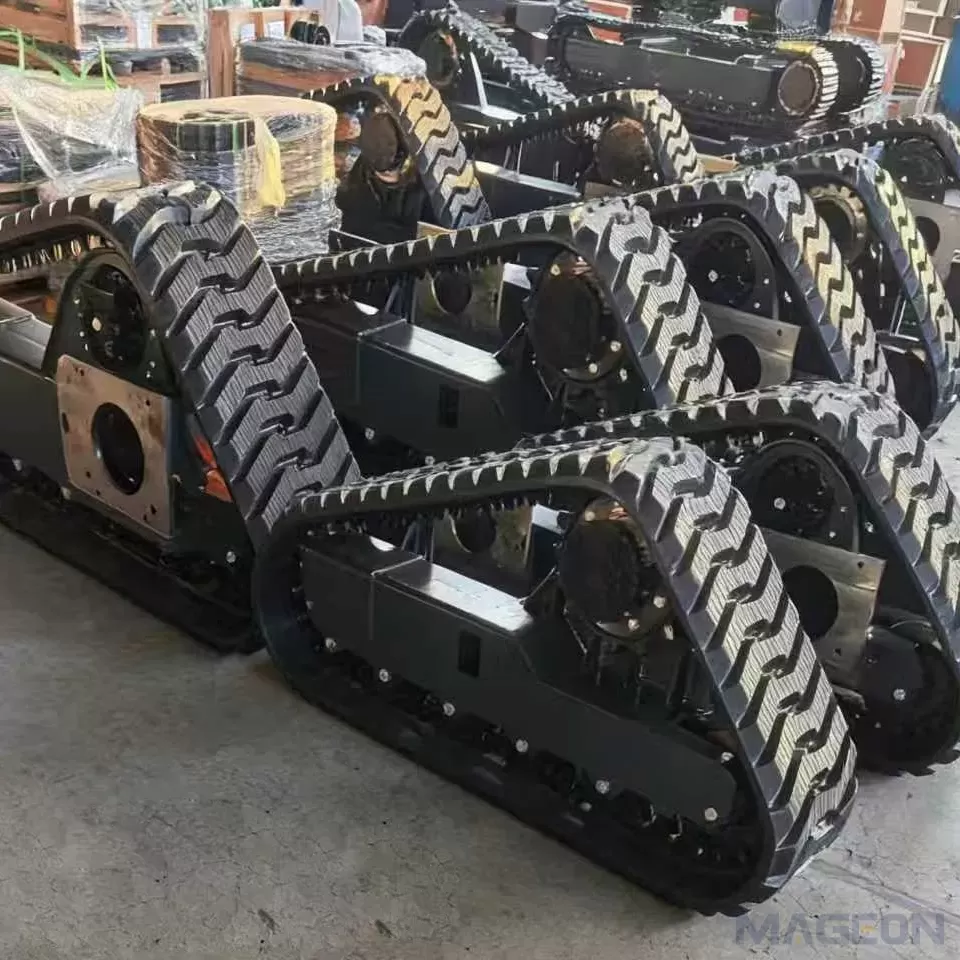
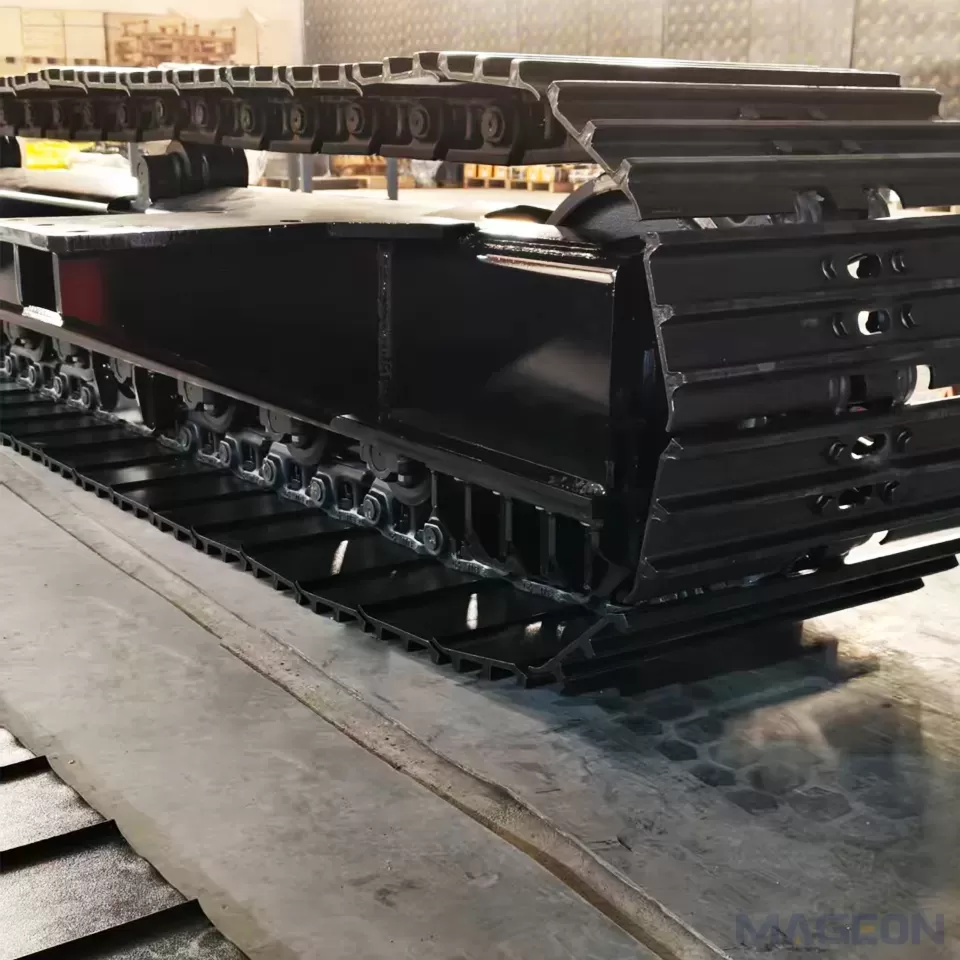
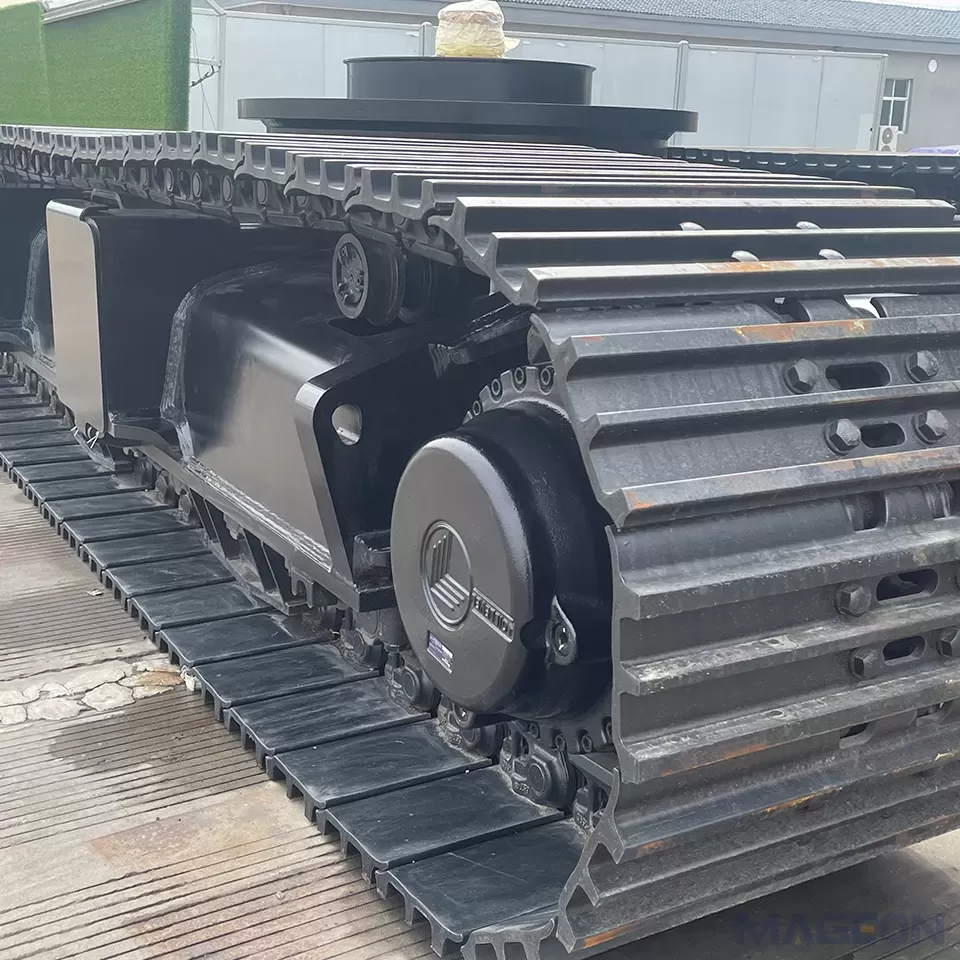
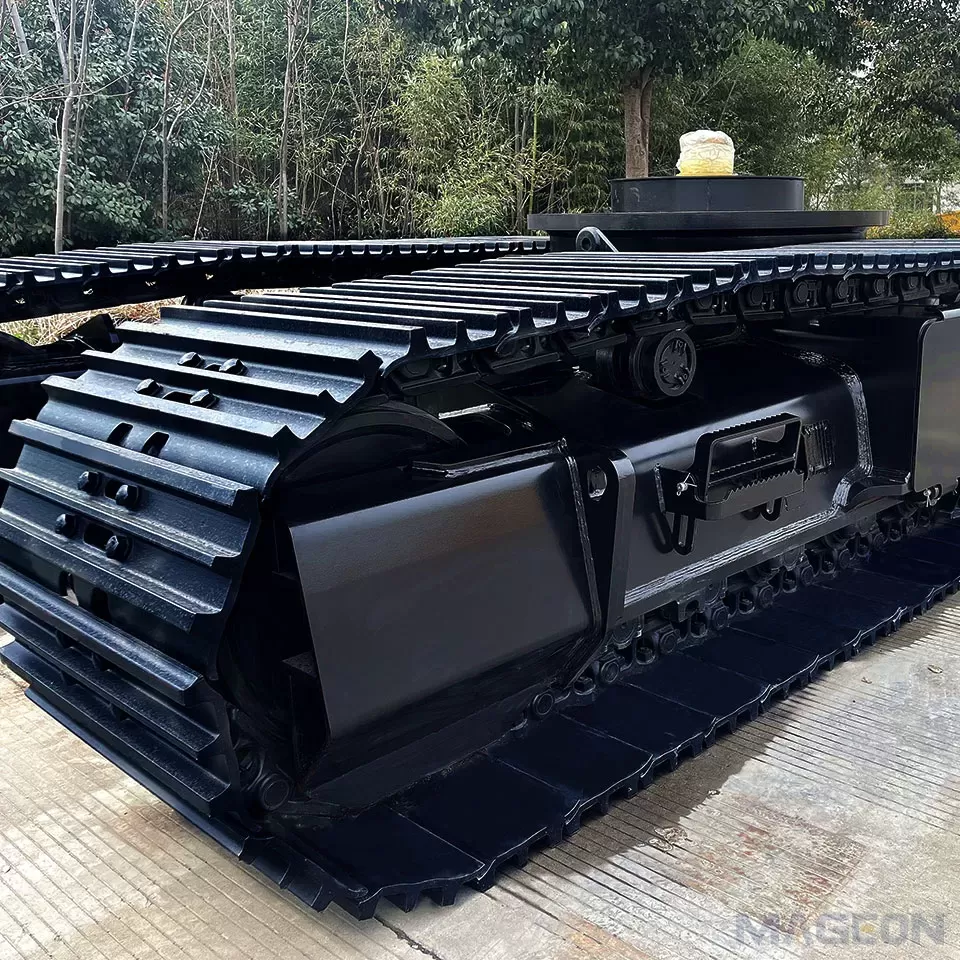
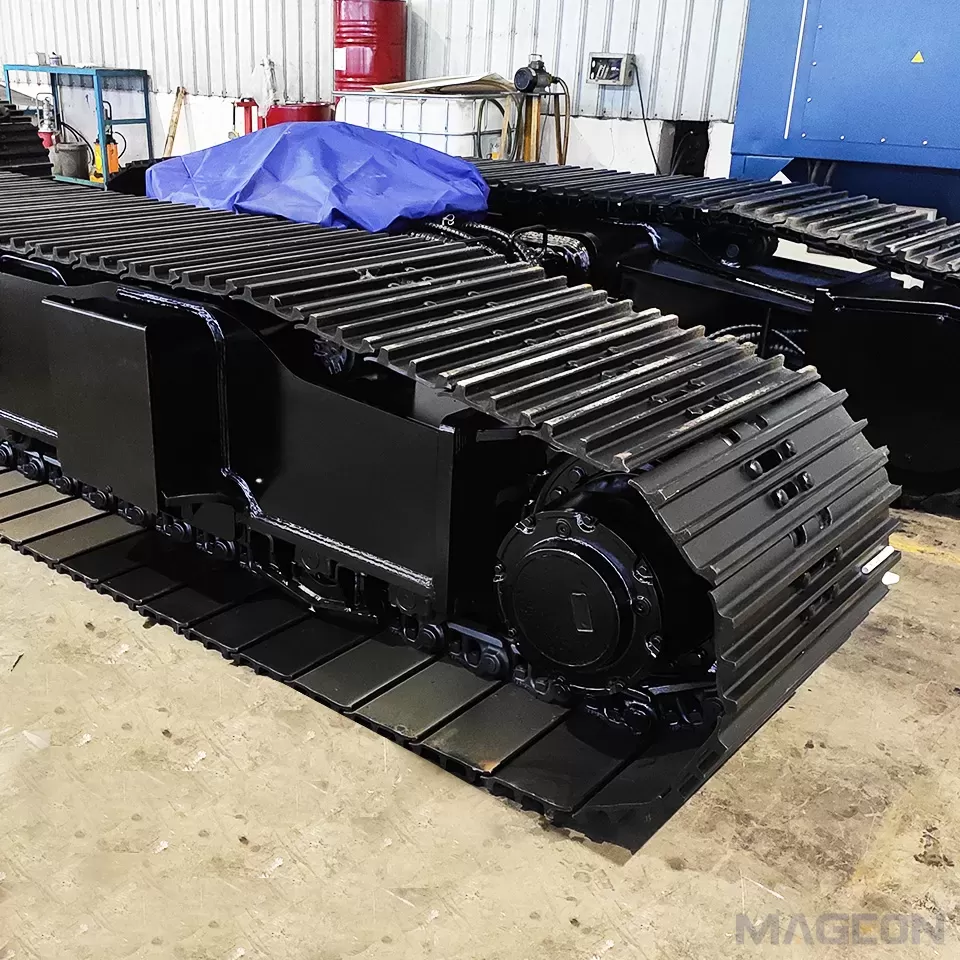
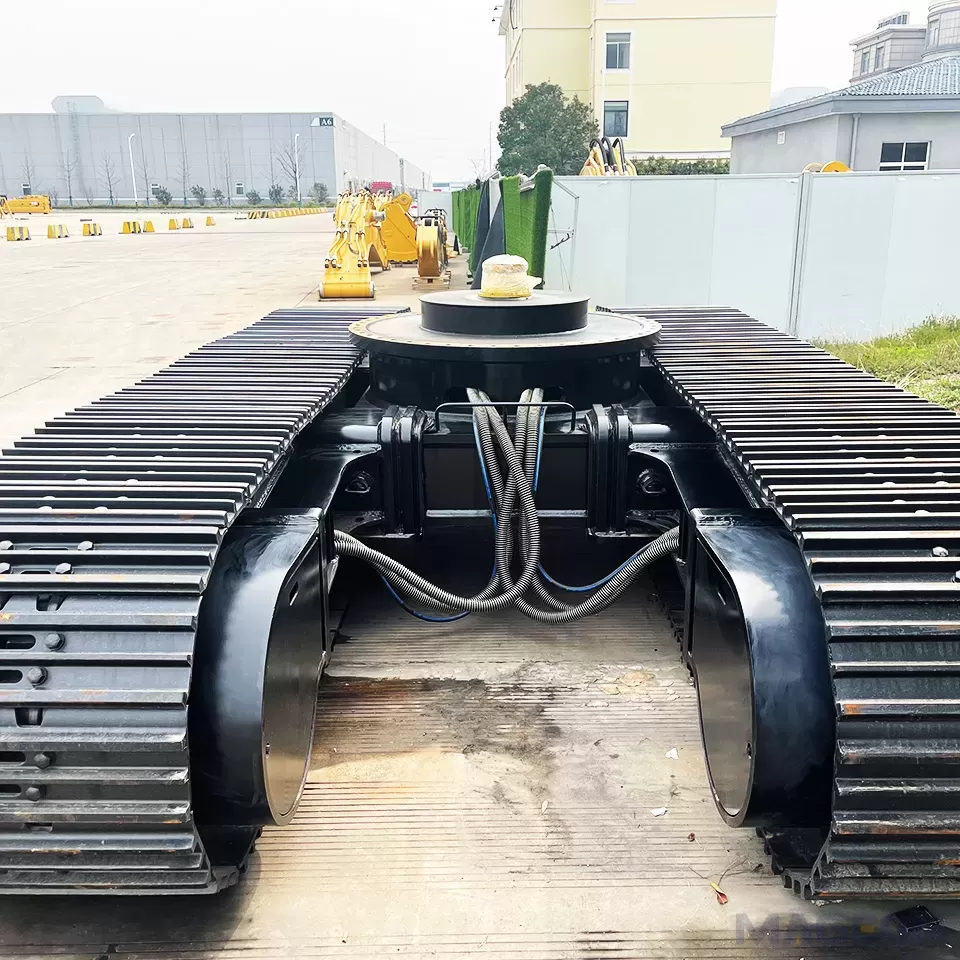
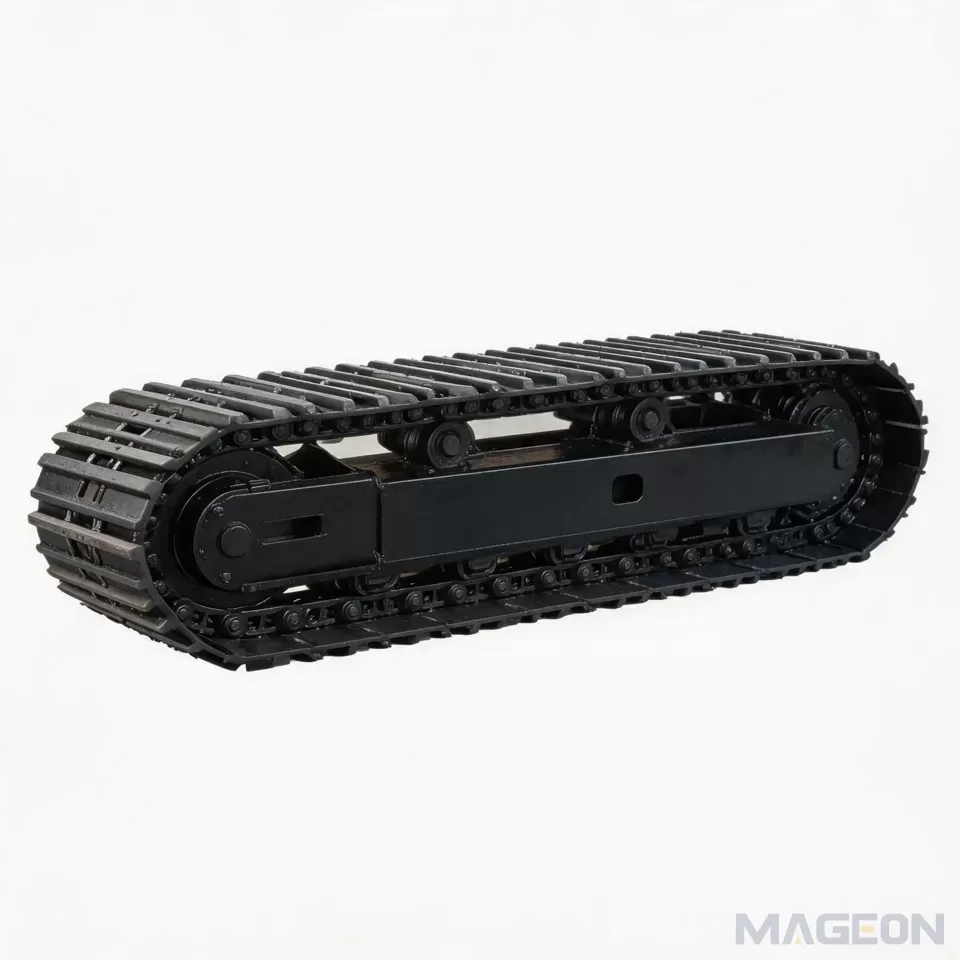
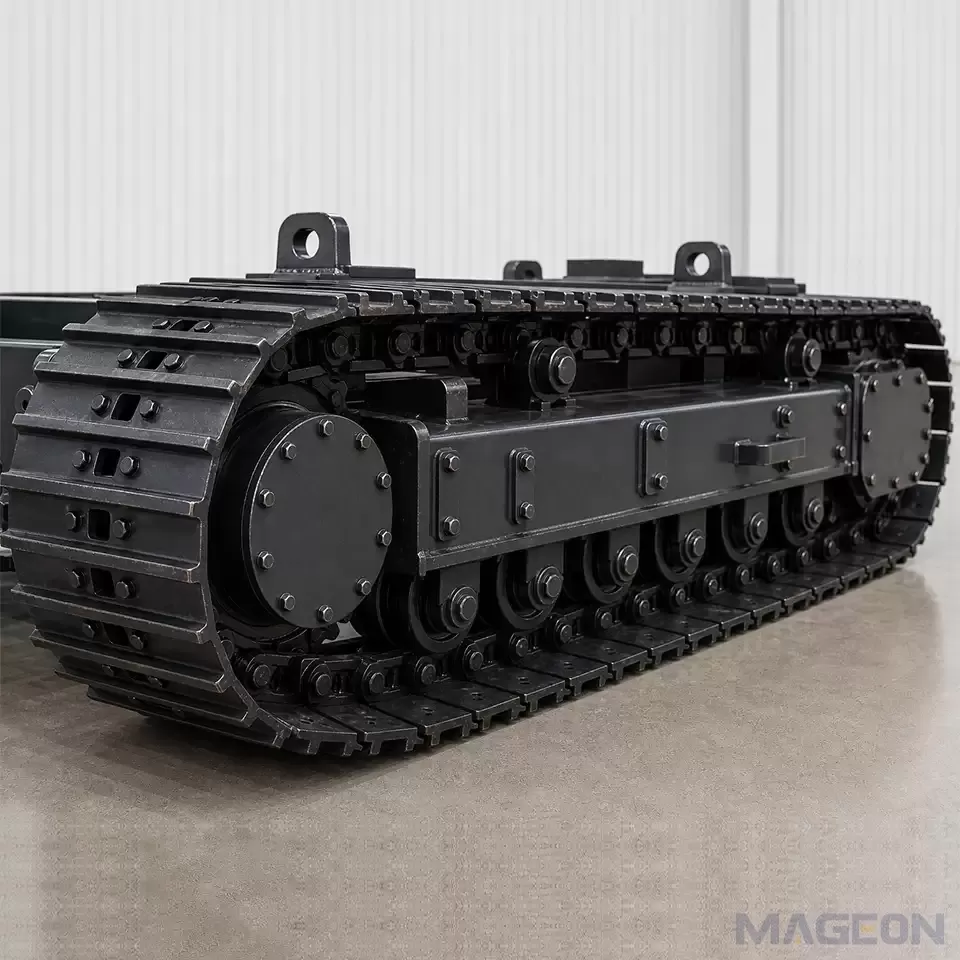
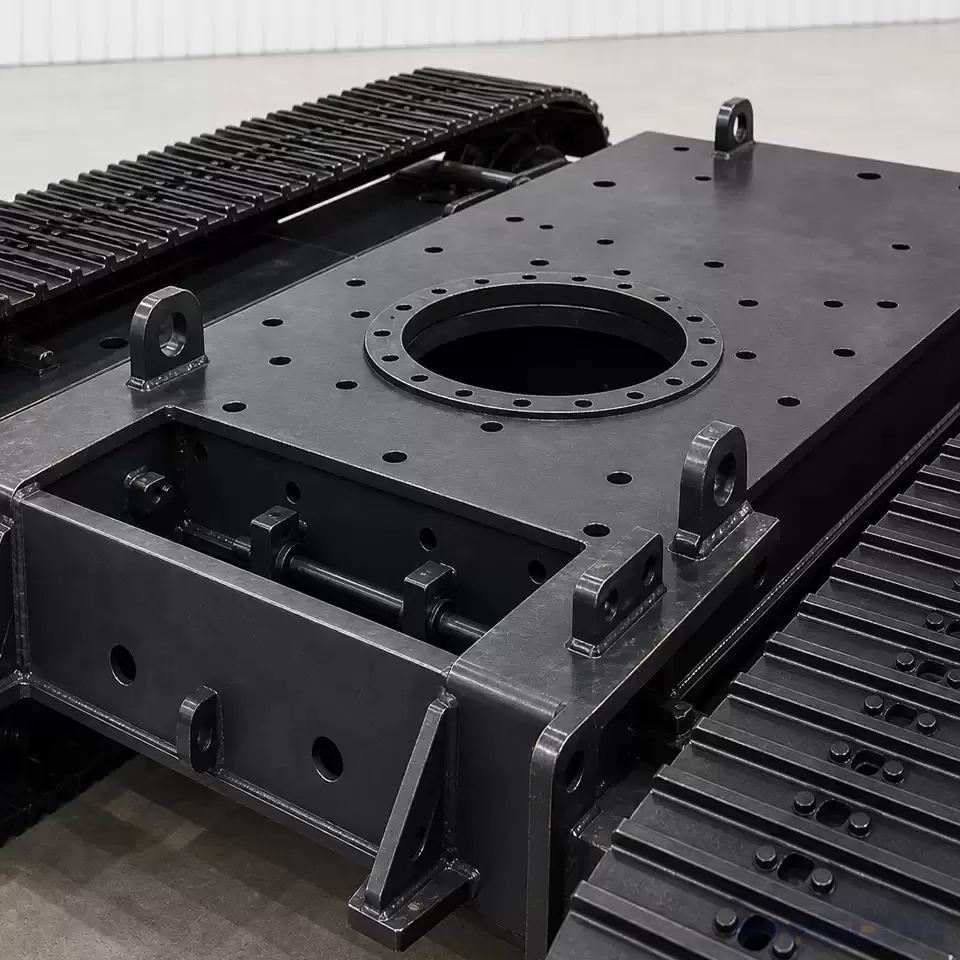
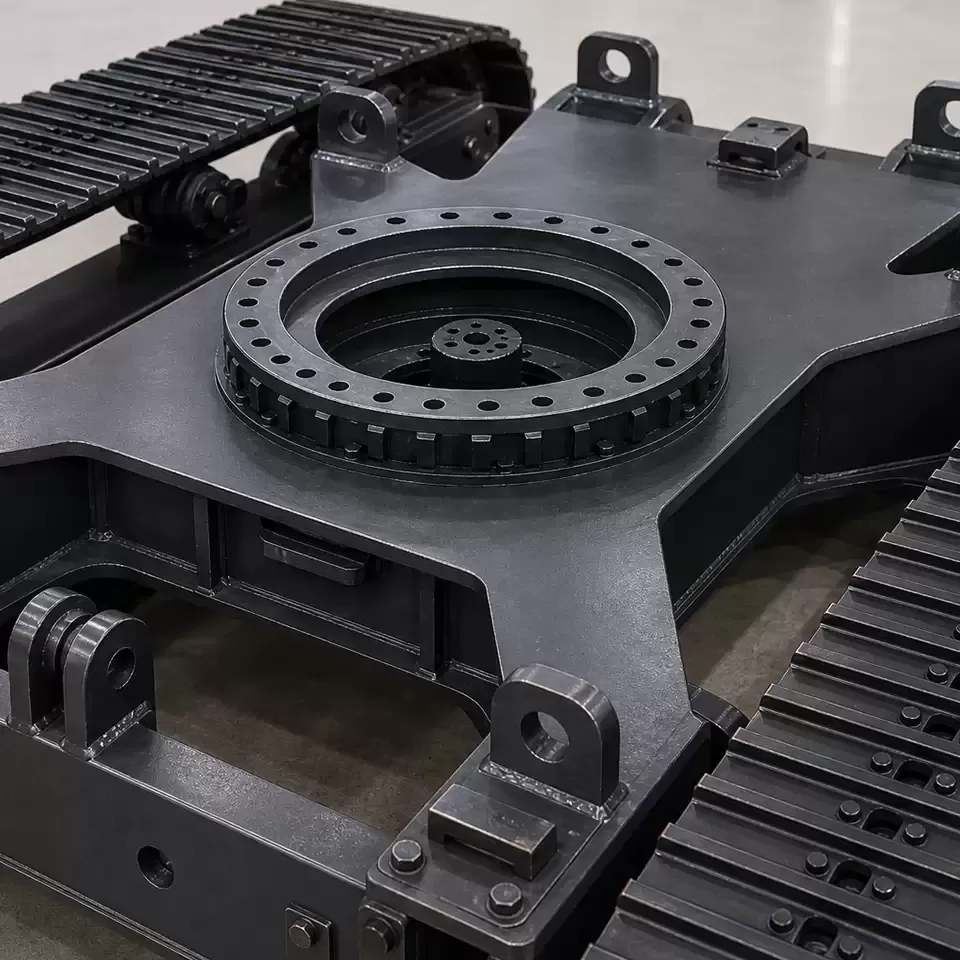
Once operating states and system boundaries are clear, assemble the information needed to review the undercarriage within the full equipment layout. The crawler undercarriage mounting dimensions should be reviewed with the upper-machine layout, not treated as an isolated drawing requirement. The layout should also identify attachment position, available packaging space, required service access, and the applicable drive or control interfaces.
A planned crawler undercarriage track gauge is also an integration input because it affects packaging and the space available around the full equipment layout. It should be reviewed alongside the controlled drawings and the operating conditions rather than chosen from a generic assumption about amphibious use.
The ground description remains important even when a project also contains water-related requirements. State the land or water-edge surface conditions, expected transitions, route constraints, and work cycle. Do not use this article to infer a ground-pressure result, travel speed, slope limit, or traction performance. Those conclusions require the actual machine and project evidence.
Plan the Project-Specific Verification Route
The verification route should reflect the claim that needs to be confirmed. An undercarriage integration review may examine the equipment layout, interfaces, operating mass cases, and expected duty conditions. A whole-machine amphibious verification may require different disciplines, system evidence, tests, or regulatory checks. One review should not be presented as completing the other.
ISO 20474-1 specifies general safety requirements for earth-moving machinery within its defined scope, including certain attachments and derivative machinery. Whether it applies to a particular project depends on the actual equipment definition and applicable requirements; it is not a pre-approved compliance statement for an amphibious construction machine. ISO 20474-1:2017 — Earth-moving machinery — Safety — Part 1: General requirements
For practical planning, name the decision, identify the responsible system, state the available evidence, and mark the remaining confirmation. This prevents preliminary inputs from being mistaken for test results or final approval.
Prepare a Technical Evaluation Package
Prepare one controlled package before a quotation or technical discussion. It should include the equipment function, operating states, mass cases, key dimensions, upper-machine layout, attachments, mounting and drive interfaces, land and water-edge condition descriptions, work cycle, and known whole-machine requirements.
Provide the equipment function, operating states, mass cases, key dimensions, layout, interfaces, ground description, and known whole-machine requirements for a technical evaluation. MAGEON is a custom crawler undercarriage manufacturer and supplier; the purpose of the evaluation is to clarify the undercarriage-related inputs that need project confirmation, not to promise complete amphibious capability.
When a project lacks decision-critical data, keep the recommendation at the framework stage. Do not replace missing information with a nominal load, a presumed water depth, a material claim, or an assertion of compliance.
Frequently Asked Questions
Does an amphibious crawler undercarriage make the whole machine amphibious?
No. The undercarriage is one part of the equipment. Whole-machine amphibious capability can involve flotation, sealing, propulsion, controls, safety, testing, and compliance responsibilities beyond the undercarriage.
What should be defined before discussing an undercarriage configuration?
Define the equipment function, operating states, operating mass cases, layout, attachments, land and water-edge conditions, work cycle, and relevant interfaces. Identify which values are preliminary and which are controlled project inputs.
Can a general machinery standard confirm project compliance?
No. A general standard has a defined scope. Project compliance depends on the actual equipment definition, applicable requirements, configuration, evidence, and the responsible approval process.
Should land conditions still be considered for an amphibious project?
Yes. Land travel, water-edge transitions, ground condition, route constraints, and work cycle can all affect the inputs needed for undercarriage integration review.
What is the purpose of a technical evaluation?
It organizes the equipment, load, dimensional, interface, and duty-condition information needed to discuss the undercarriage within the full machine. It does not replace whole-machine validation or make unsupported performance claims.
Please leave your customization requirements, and we will contact you as soon as possible!
Leave your requirements, we'll get back to you within 24 hours.