
What Should Be Measured and Documented Before Replacing or Retrofitting a Crawler Undercarriage?
Before replacing or retrofitting a crawler undercarriage, build a traceable baseline rather than relying on a few dimensions or photographs. The practical goal is to give the engineering team enough verified input to evaluate the project. It is not to declare that one undercarriage will fit another machine.
A useful submission separates four things: original machine information, field measurements, operating conditions, and questions that still need engineering confirmation. Keeping those categories distinct reduces the risk of treating an observation as a design decision.
Define the Replacement or Retrofit Scope
Start by recording what is changing. A same-configuration replacement, a change in machine function, an added attachment, and a revised layout are different evaluation cases. They may need different information and different checks.
Describe the intended outcome in plain language. For example, state whether the project keeps the current machine configuration, changes the equipment mounted above the undercarriage, alters operating conditions, or addresses a known issue. Do not assume that a similar-looking machine, component, or drawing revision is interchangeable.
Identify the machine and the current configuration as precisely as the available records allow. Note the machine category, current attachment arrangement, available drawing revisions, previous modifications, and any components that will remain in place. If a record conflicts with the physical machine, keep both records and flag the conflict for review.
Build a Traceable Baseline Record
Collect source material before measuring. The newest approved drawing, technical data sheet, and engineering confirmation take priority for project-specific dimensions, loads, interfaces, and structure. Field measurements are still valuable, but they should be recorded as field inputs until the engineering review confirms how they will be used.
| What to capture | Preferred source | Record status | |
|---|---|---|---|
| Original configuration | Machine identification, drawing revision, current arrangement | Approved drawing or technical data sheet | Verified when the source is current and traceable |
| Field condition | Visible modifications, damage, missing parts, and access constraints | Dated photos and inspection notes | Observed; requires review where it affects the project |
| Interface information | Existing connection areas and neighbouring-component relationships | Approved drawings plus controlled measurement record | Measured; not an automatic fit conclusion |
| Operating context | Equipment use, attachments, load changes, and duty conditions | OEM or operator-provided records |
Give every measurement sheet a date, a person or team responsible for the record, the reference points used, and linked photographs. This makes it easier to revisit an unexpected result without guessing how the figure was obtained.
For earth-moving machinery, ISO 9248:1992 defines basic units, symbols, and measurement-accuracy conventions for general machine dimensions, performance, and capacities. Its public scope can help establish consistent measurement language, but it does not prescribe the values or fit of a particular retrofit.
Measure Interfaces and Envelope Conditions
Measure against defined reference points, not against convenient edges that may have been altered, worn, or obscured. Record the reference system on the sheet so another person can understand the orientation and start point of every measurement.
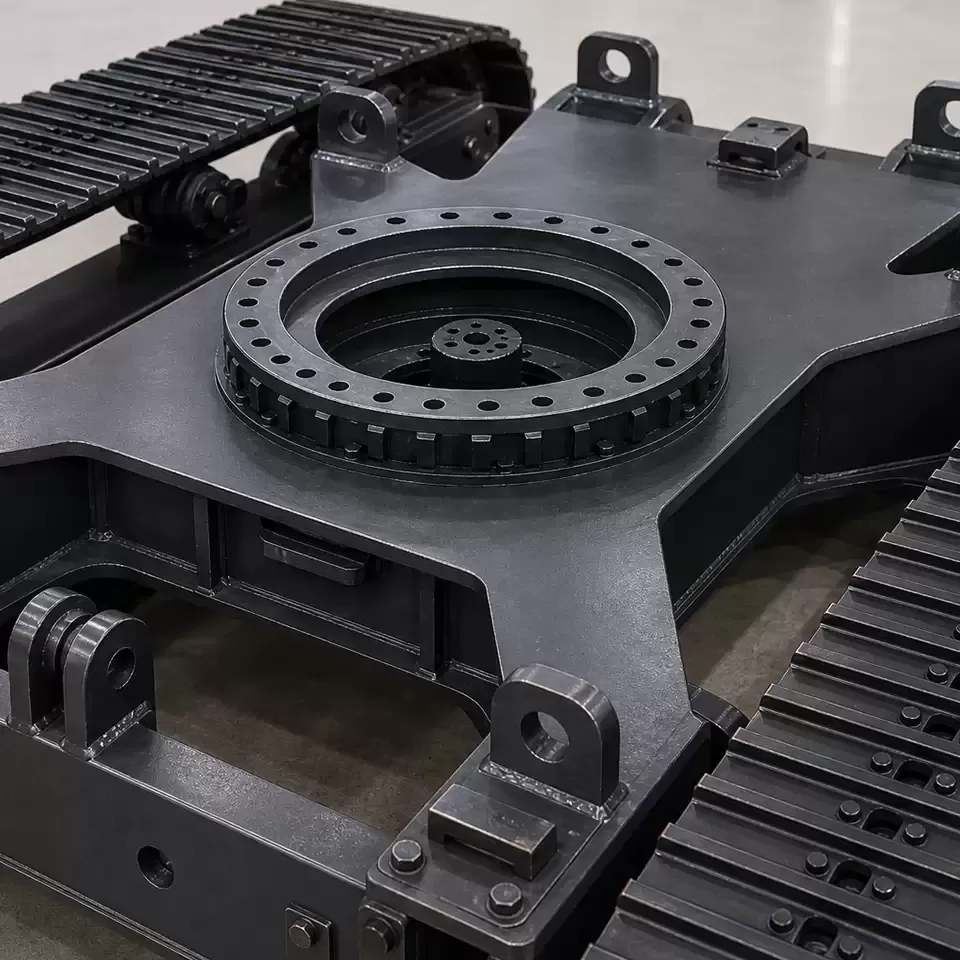
The task is broader than a list of bolt locations. The project may need a record of mounting and connection areas, the undercarriage envelope, clearance to nearby structures, routing constraints, and the space required for movement or service. A planned review of crawler undercarriage mounting dimensions should remain tied to the approved drawing and the actual project scope.
Use photographs to show context. A wide view can establish the relationship to the machine, while closer views can show the reference feature being measured. Mark ambiguity in the record instead of estimating it from a photograph.
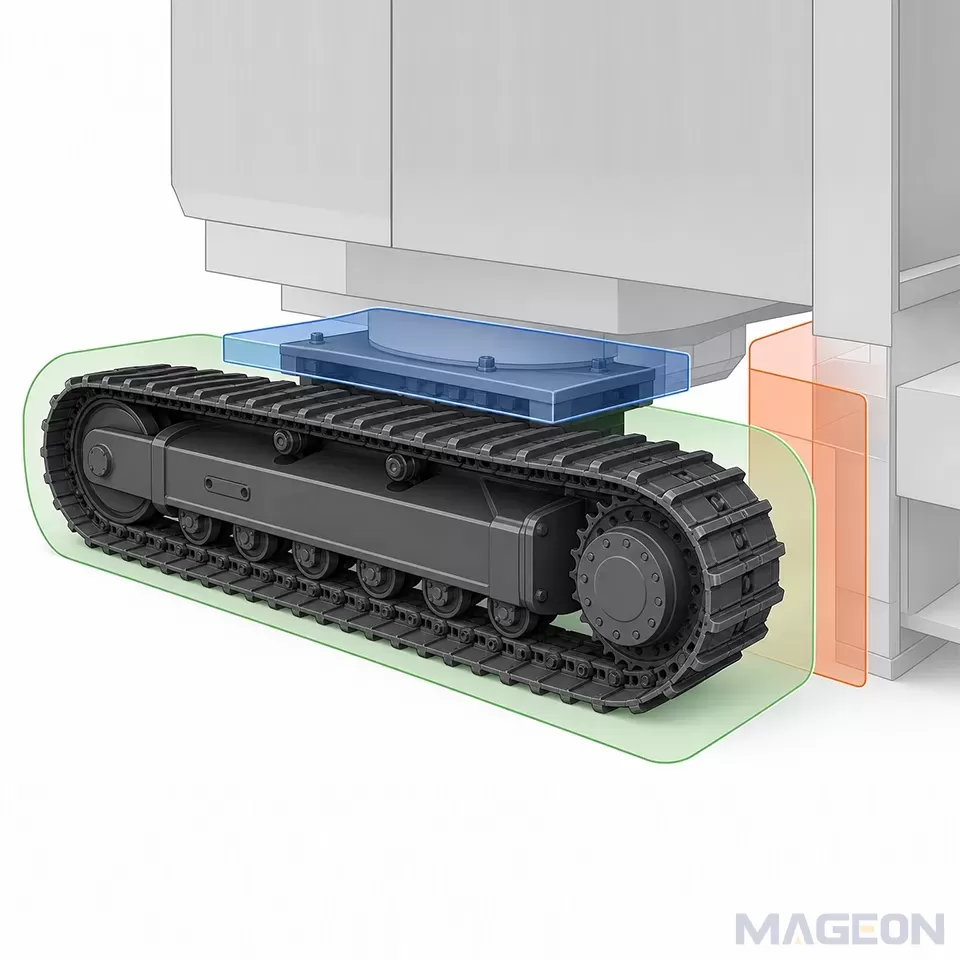
ISO 6746-1:2003 defines dimensions and codes for earth-moving base machines, and ISO 6746-2:2003 addresses equipment and attachment dimensions. Use those published scopes as terminology context where relevant; the approved project drawing remains the authority for the dimensions that matter to a replacement or retrofit.
Capture Operating Conditions and Change History
Document the equipment's present work, attachment arrangement, reported load changes, duty cycle, terrain or environmental exposure, and relevant operating constraints. The point is not to turn every observation into a design parameter. It is to give the evaluator enough context to decide which observations require further confirmation.
Pay particular attention to changes since the original configuration was documented. An attachment, counterweight, altered upper structure, or different operating task can change the questions that need review. If a change could affect the center-of-gravity location, record the change and ask for engineering confirmation rather than drawing a conclusion from visual inspection.
Record existing symptoms carefully. Uneven wear, contact marks, vibration reports, or access problems can be useful background when they are tied to dates, locations, and available evidence. They do not, by themselves, identify a cause or establish the design action to take.
Separate Measured Facts from Engineering Decisions
Use an explicit status for every important item. This keeps a project team from carrying an unverified assumption into purchasing or fabrication.
| Meaning | Suitable next action | |
|---|---|---|
| Documented | Present in a current, approved source | Include the source revision in the technical package |
| Measured | Captured in a controlled field record | Retain the method, reference points, and evidence for review |
| Reported | Supplied by an operator, customer, or project contact | Clarify the context and assess whether verification is needed |
| Engineering confirmation required | Affects fit, safety, function, or performance |
This distinction is especially useful when an item appears simple, such as track gauge or a clearance observation. A dimension can be correctly measured and still require a broader review of packaging, adjacent components, operating conditions, or the intended machine configuration.
Prepare a Technical Evaluation Package
Send one coherent package rather than separate messages with unconnected measurements. A practical package should include the latest available drawings or data sheets, a configuration summary, a measurement record with reference points, dated photographs, operating and change history, and a short list of unresolved questions.
| Why it matters | Supporting evidence | When engineering confirmation is needed | |
|---|---|---|---|
| Current machine configuration | Defines the starting point for evaluation | Drawing revision, identification details, photos | When records and the physical machine differ |
| Interface and envelope record | Shows the areas that may affect integration | Measurement sheet, reference points, photos | Before any fit or clearance conclusion |
| Operating and change history | Identifies project conditions that may change requirements | Attachment and duty-condition record | When changes may affect loads, layout, or function |
| Open issues list | Makes uncertainty visible and actionable | Questions linked to evidence gaps |
Do not fill gaps with estimated values or inferred compatibility. If the project needs a conclusion about dimensions, loads, interfaces, safety, or performance, request the approved technical source or an engineering decision.
MAGEON can evaluate a project when you provide the equipment information, load information, key dimensions, and duty conditions needed for a technical inquiry.
FAQ
Can photographs replace a measurement record?
No. Photographs provide context and can show where a reference feature is located, but they do not replace a controlled record of what was measured and from which reference points.
What if the original drawing is unavailable?
Submit the best available identification, field record, dated photographs, and change history. Mark the missing drawing as an open issue and do not treat the field record as proof of compatibility.
Should every visible dimension be measured?
No. Measure and document information relevant to the defined replacement or retrofit scope. The responsible engineering team should determine which project-specific dimensions and conditions require confirmation.
What if the machine has already been modified?
Record the modification, its apparent location, related records, and photographs. A modification may change which interfaces, loads, clearances, or operating conditions need engineering review.
When should the evaluation pause?
Pause when a decision depends on an unverified dimension, load, interface, safety condition, or performance requirement. Obtain the approved source or engineering confirmation before presenting a conclusion.
Please leave your customization requirements, and we will contact you as soon as possible!
Leave your requirements, we'll get back to you within 24 hours.