
How to Read a Crawler Undercarriage Specification Sheet: 12 Parameters Explained
A crawler undercarriage specification sheet is a compact description of how a machine will interact with the ground, the upper structure and the transport route. Twelve parameters carry most of that information. Reading them correctly matters because several are easy to confuse — track gauge is not overall width, ground pressure is not the same in every load case, and gradeability is not a single unconditional number. This guide explains each parameter, the units to expect, and the mistake most often made when comparing two suppliers' data sheets.
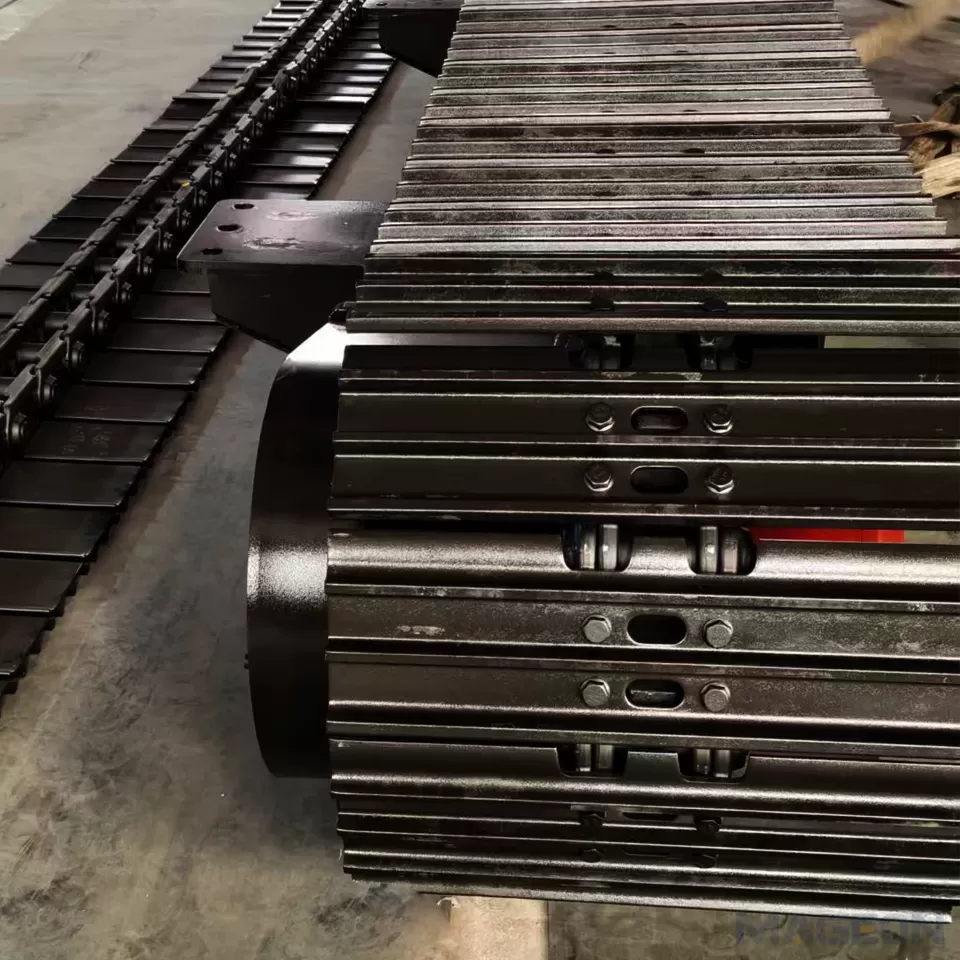
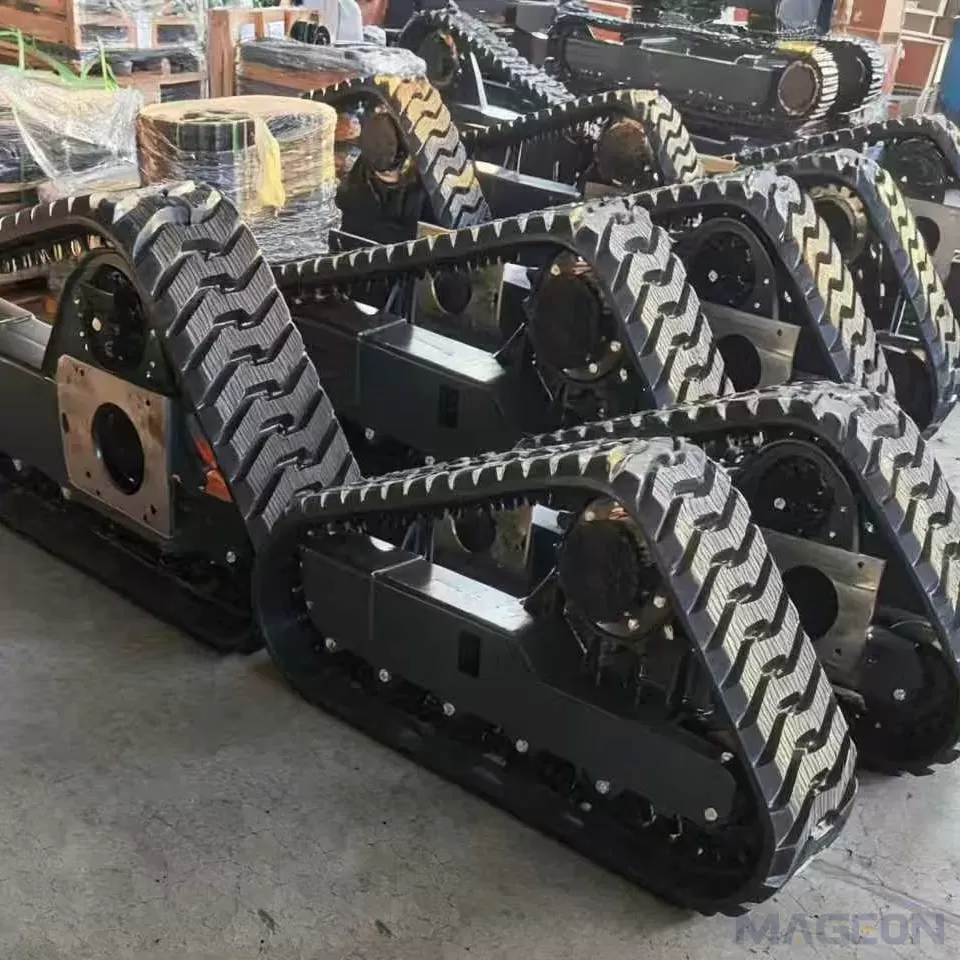
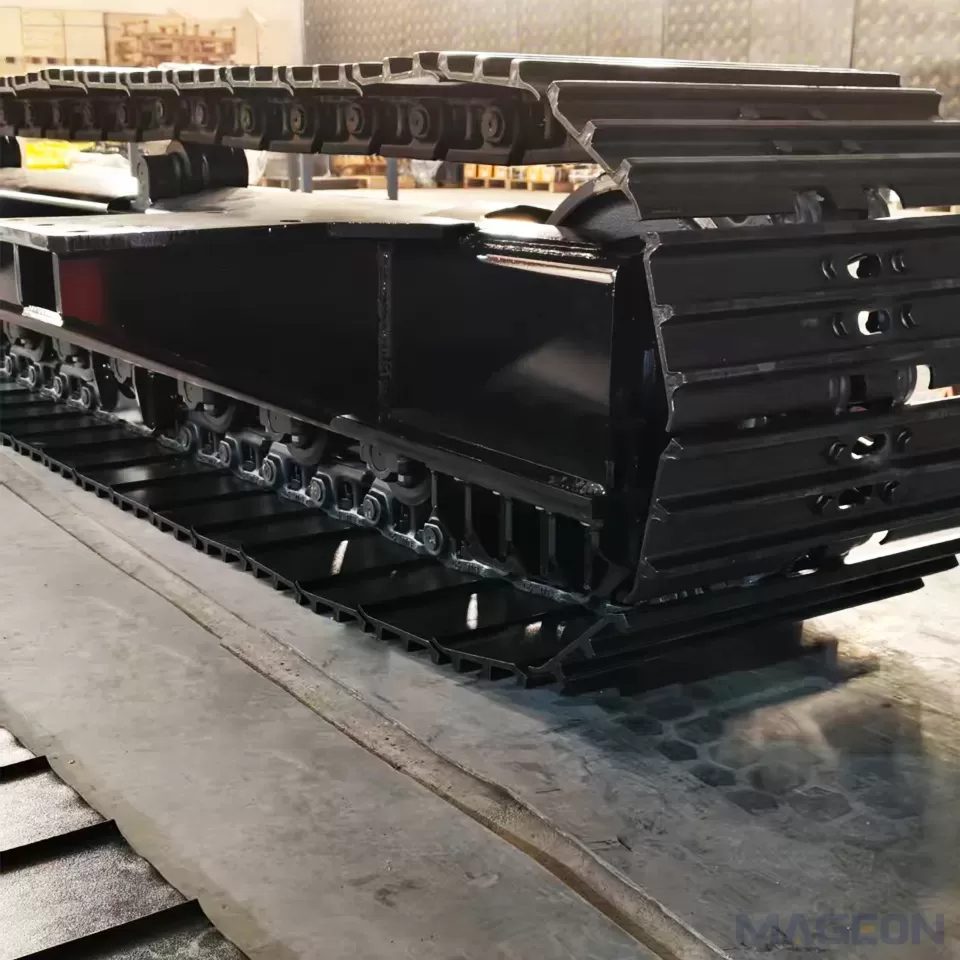
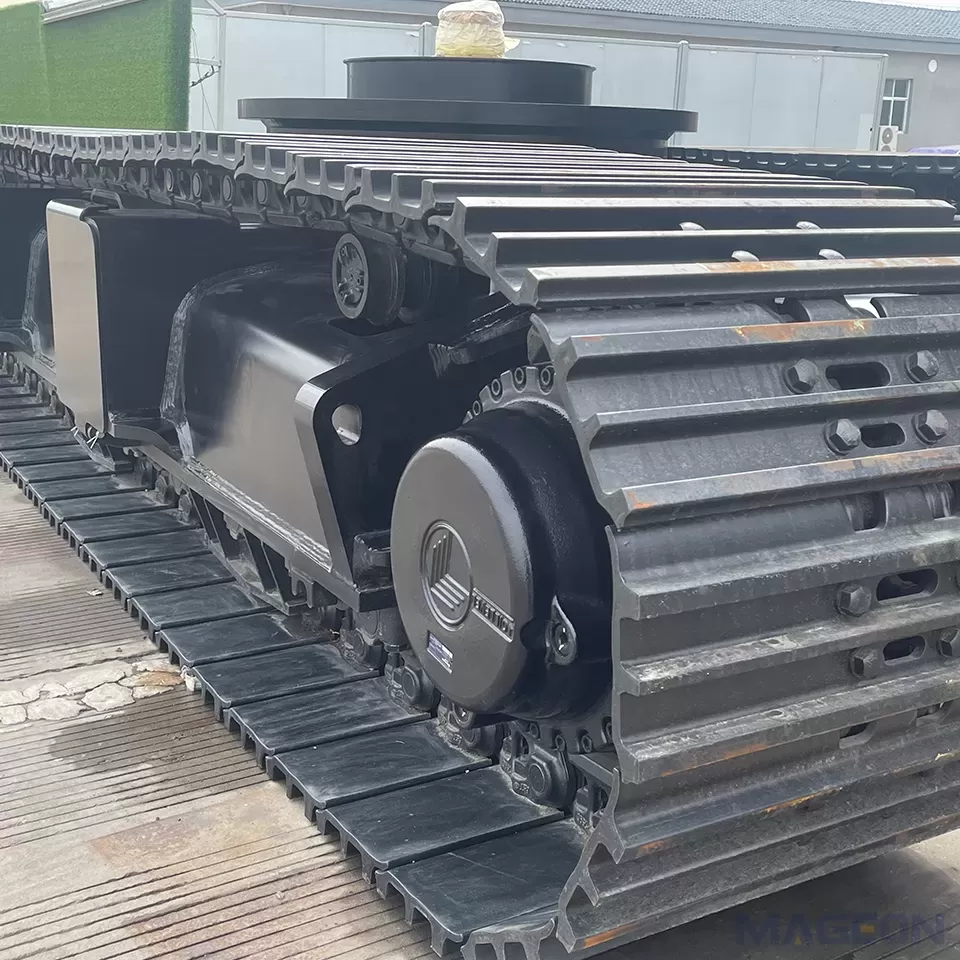
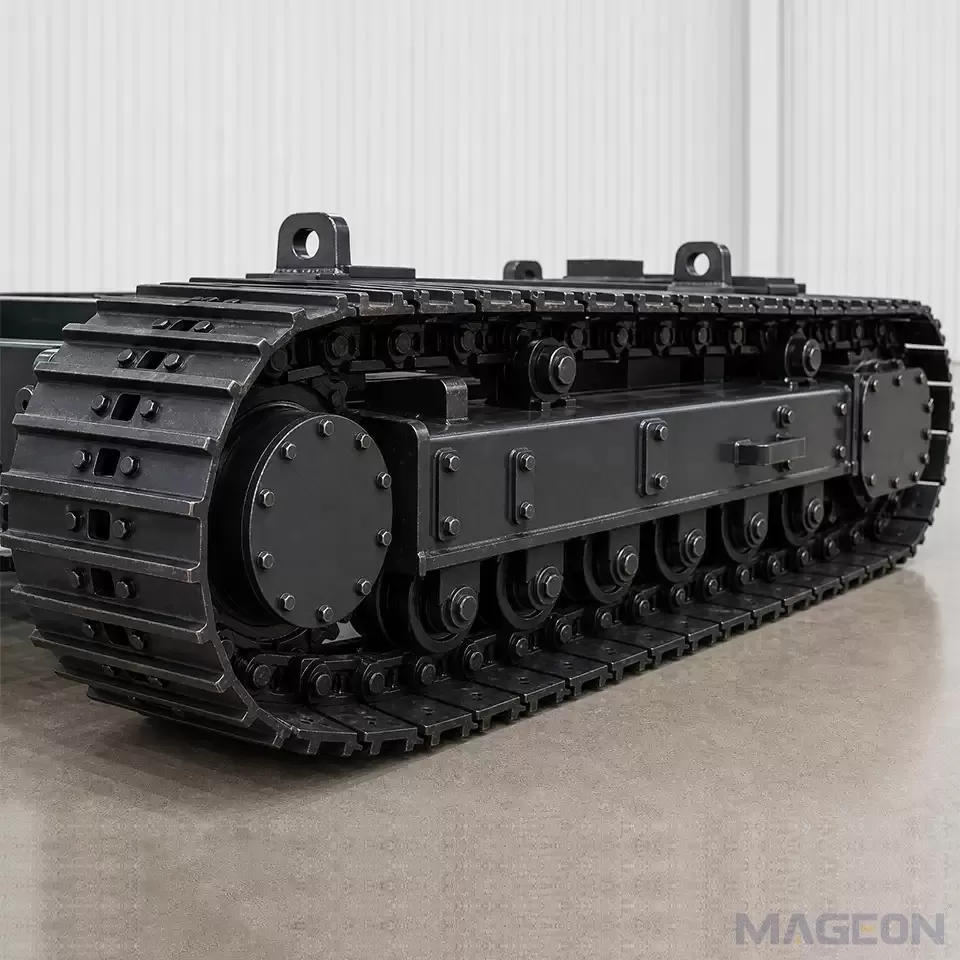
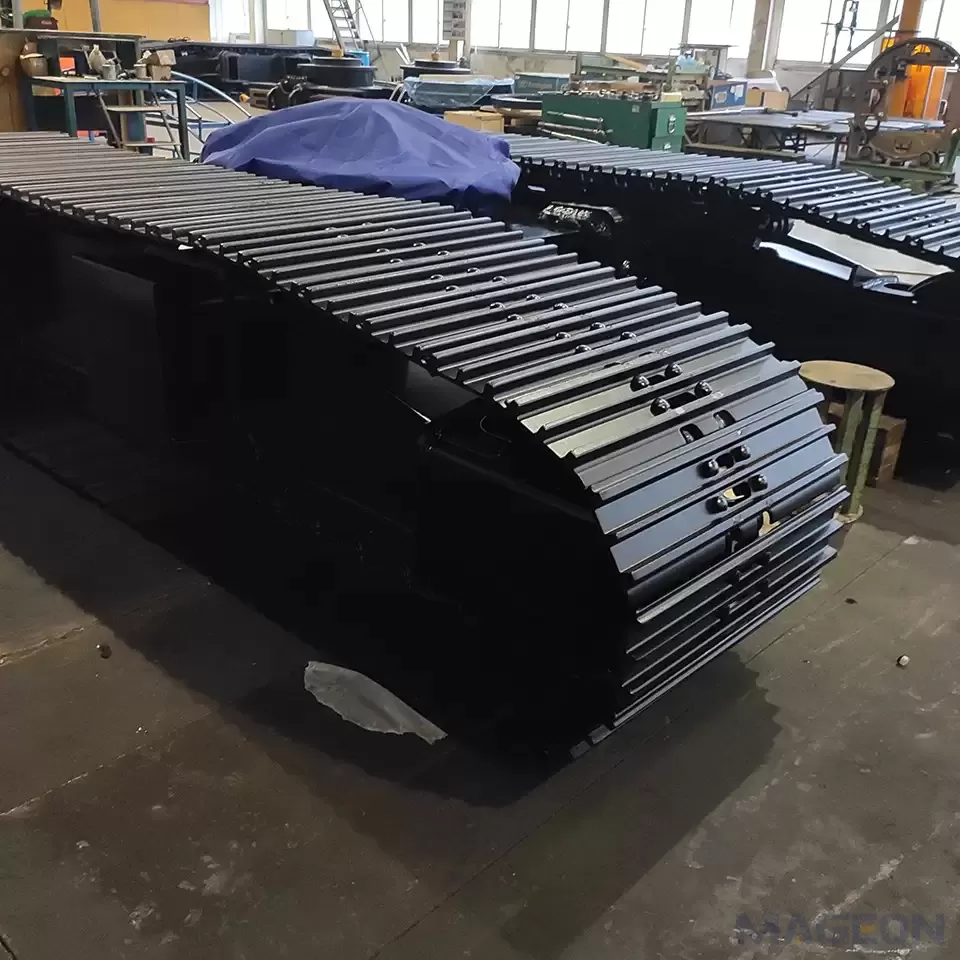
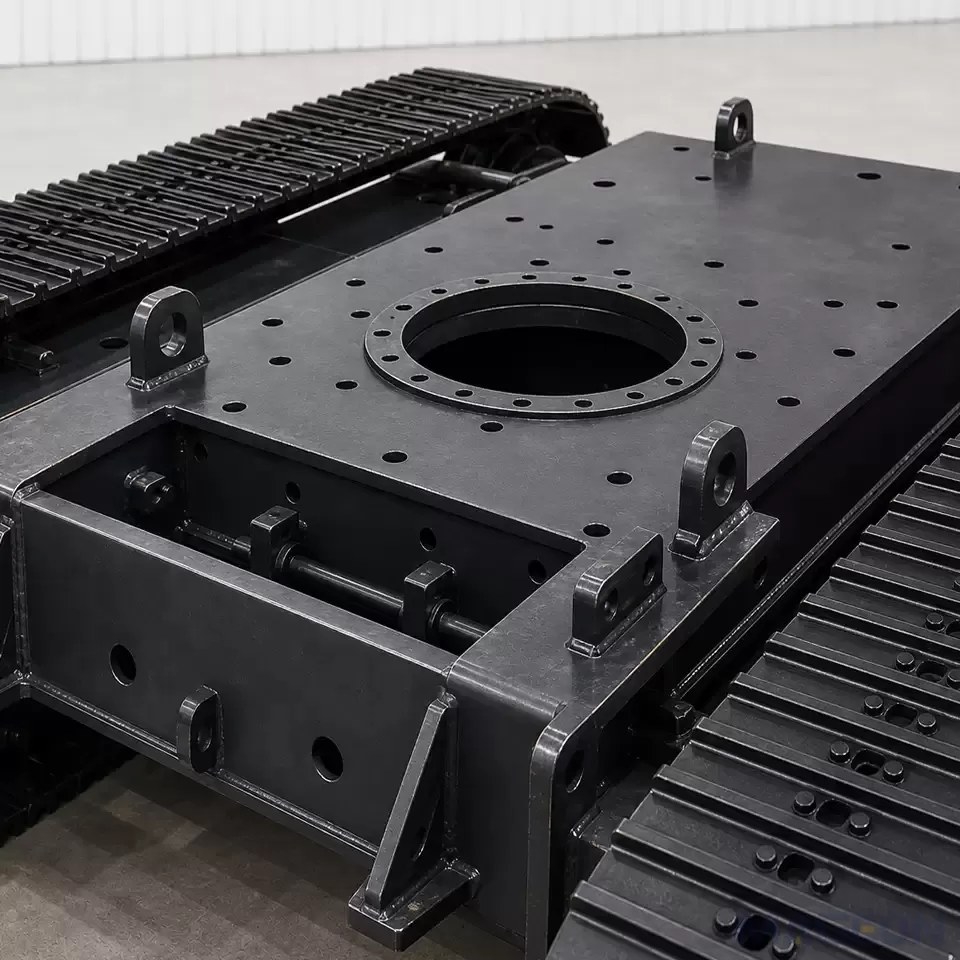
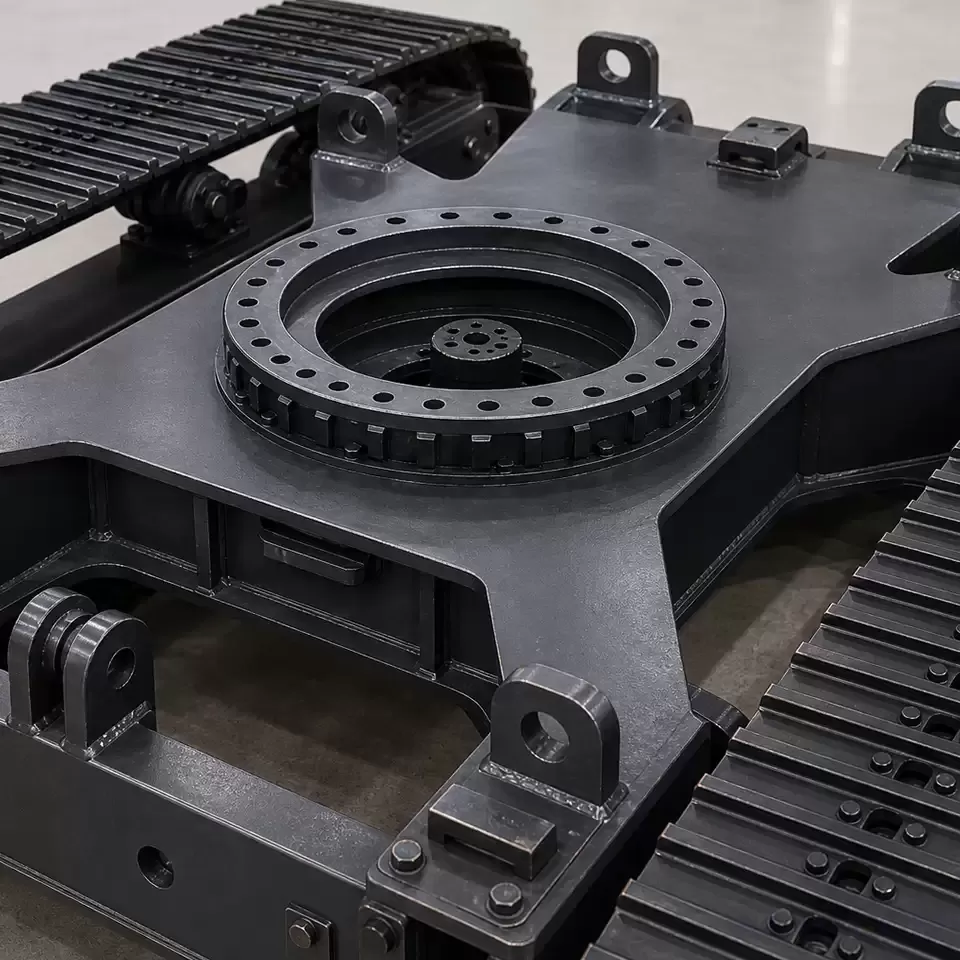
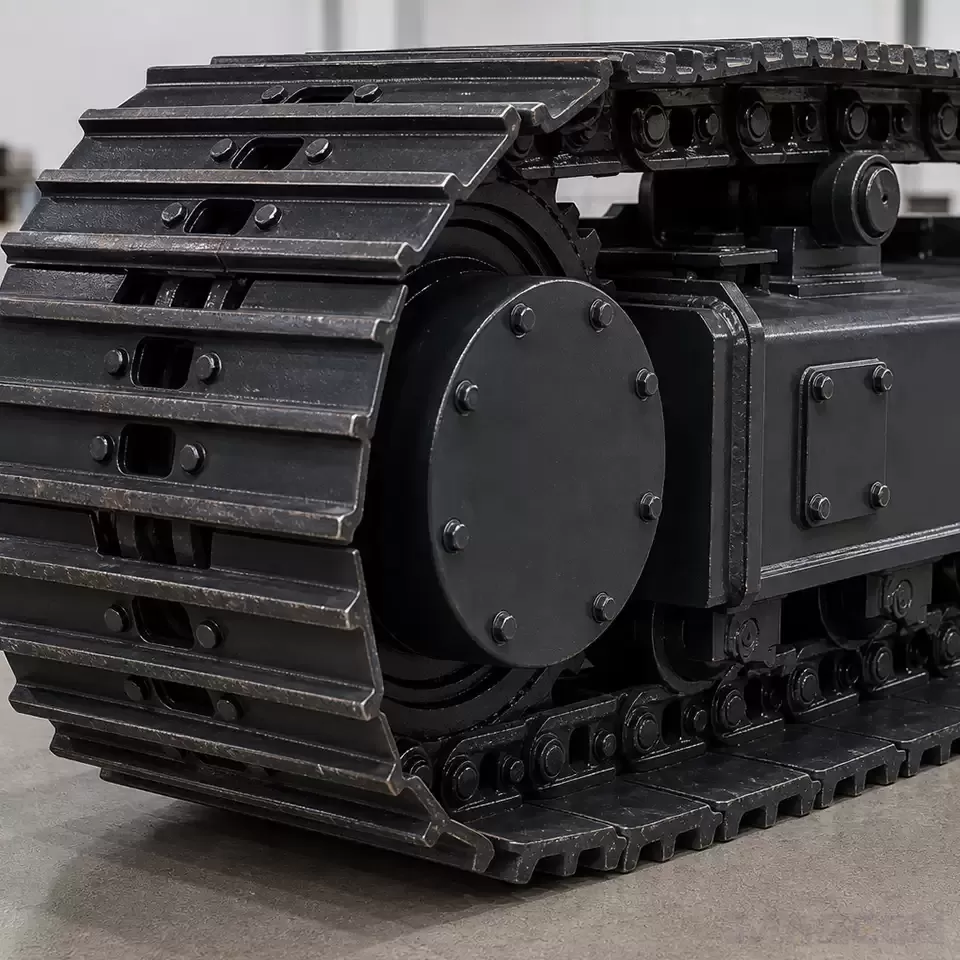
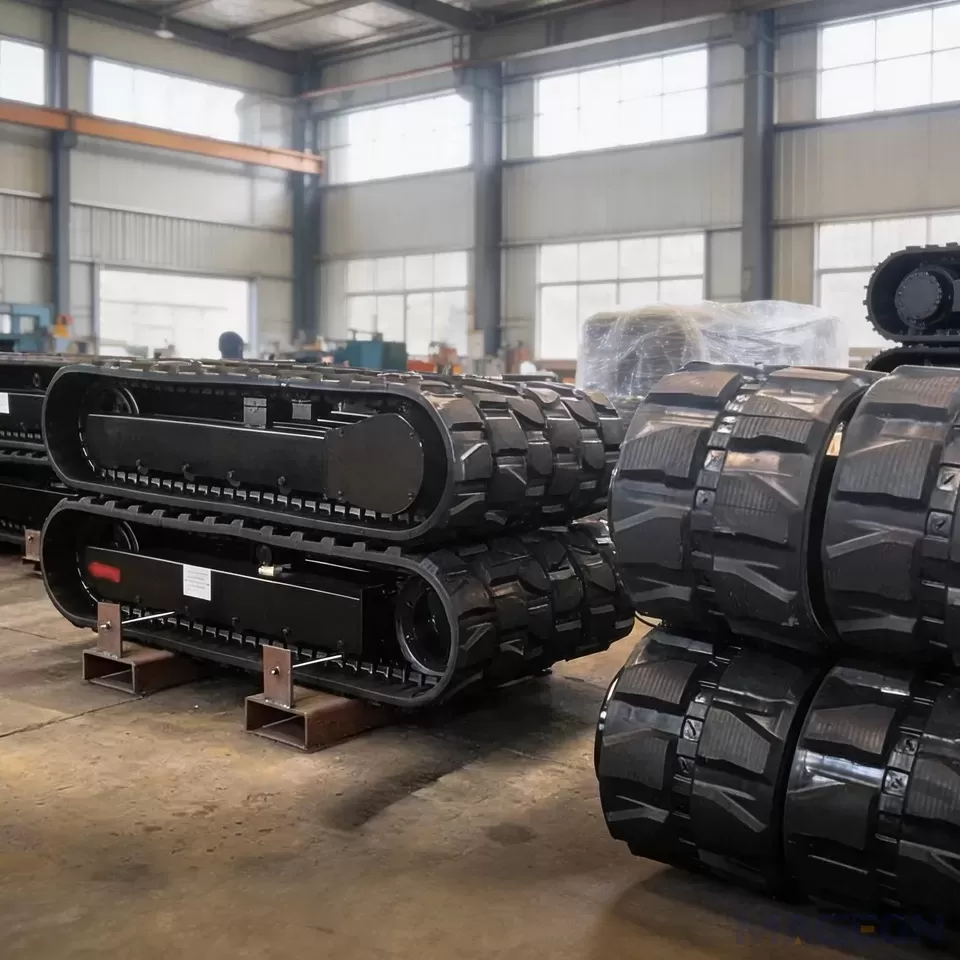
The terminology applies across steel crawler undercarriages, rubber track undercarriages and custom tracked chassis.
1. The Twelve Parameters at a Glance
| # | Parameter | Typical unit | What it really tells you |
|---|---|---|---|
| 1 | Working mass / rated load | kg or t | The mass basis for every load calculation |
| 2 | Track gauge | mm | Centre-to-centre distance between the two tracks; sets lateral stability |
| 3 | Track shoe width | mm | Width of one shoe; with contact length, sets contact area |
| 4 | Ground contact length | mm | Length of track actually touching level ground |
| 5 | Ground bearing pressure | kPa or kg/cm² | Nominal load divided by total contact area |
| 6 | Overall / transport width | mm | Gauge plus shoe width; what must fit a trailer or tunnel |
| 7 | Ground clearance | mm | Height of the belly plate above level ground, at a stated load |
| 8 | Drawbar pull / tractive effort | kN | Available pull at the tracks, at a stated pressure and adhesion |
| 9 | Travel speed | km/h | Usually low and high range, at stated flow and engine speed |
| 10 | Gradeability | degrees or % | Maximum sustainable gradient, limited by traction or stability |
| 11 | Final drive: motor displacement and ratio | cm³/rev and i | Determines torque, low-speed control and flow demand |
| 12 | Chain pitch and tensioning travel | mm | Replacement-part compatibility and remaining adjustment margin |
2. Mass, Gauge, Shoe Width and Contact Length
Working mass must be the machine in its worst operating configuration: fuel, attachments, counterweight, payload and the reaction from the working tool. A data sheet quoting a bare chassis mass is not a mistake, but it is not the number to use for ground pressure or stability.
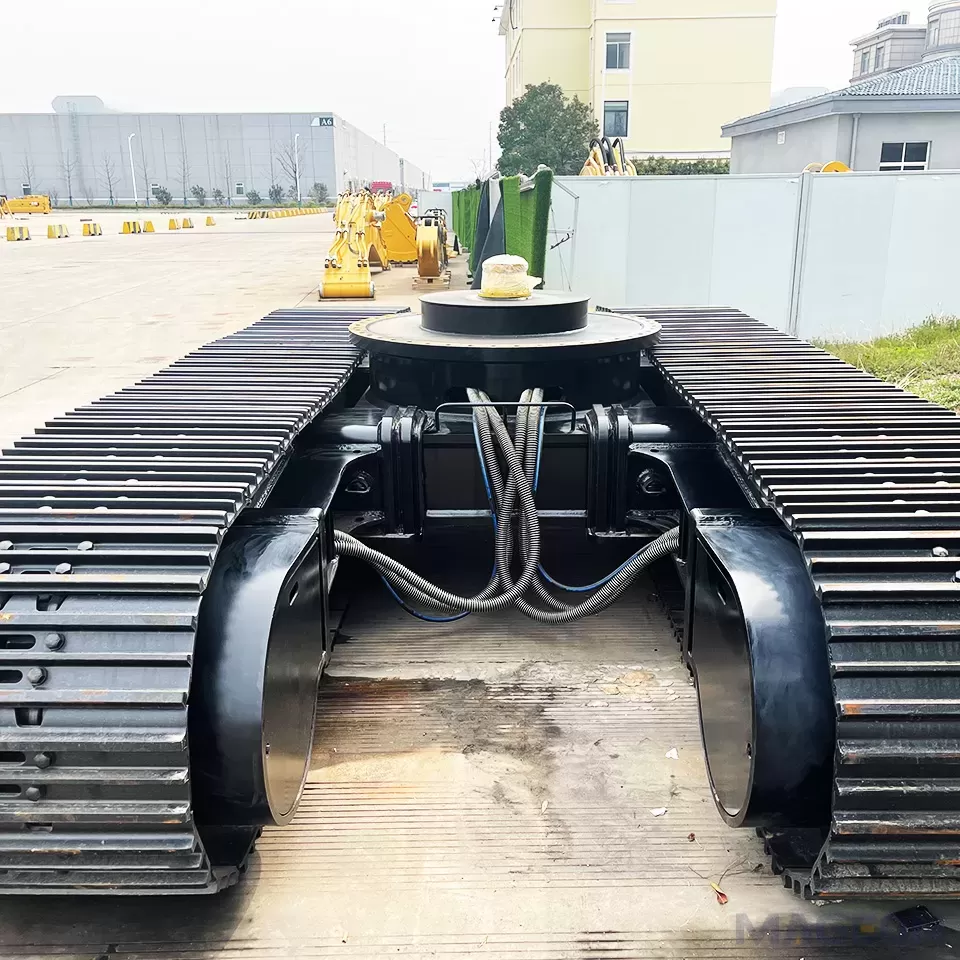
Track gauge is the distance between track centre lines. It governs cross-slope stability and the machine's ability to resist overturning moments from a raised mast or boom. A wider gauge improves stability without changing contact area — which is why a telescopic crawler undercarriage can be narrow for transport yet stable at work.
Shoe width and contact length together define the contact area in the ground pressure calculation. Wider shoes lower nominal pressure but increase bending stress in the shoe and link when crossing a hard ridge; longer contact length lowers pressure and improves longitudinal stability but increases turning resistance and frame length. Neither is a free improvement.
Overall width is approximately gauge plus one shoe width. It is the number that must fit the transport permit, the site gate and the tunnel cross-section. Confusing gauge with overall width is one of the most common causes of a machine arriving too wide for its route.
3. Ground Pressure, Clearance and the Load Case Question
Nominal ground bearing pressure is p = (m·g) / (2 × L × B). It assumes uniform contact on level ground. In reality, with a mast extended forward or a boom over the side, the pressure distribution becomes strongly non-uniform and the peak under the front or corner rollers can be two to three times the nominal value. Always ask which load case the published figure refers to, and check the peak separately against the site's soil bearing capacity.
Ground clearance should be measured at the specified working load, with track sag and any suspension deflection accounted for. A clearance figure taken on an unladen chassis is optimistic. Check break-over and ramp angles with the actual wheelbase too, since a long frame with apparently adequate clearance can still ground out on a ramp crest.
4. Pull, Speed, Gradeability and the Drive
Drawbar pull is only meaningful with its conditions: available pressure differential, adhesion coefficient and whether the figure is continuous or stall. A stall figure derived from relief pressure is not a continuous working rating. Compare pull figures at the same pressure and state which limit — motor torque or track adhesion — governs.
Travel speed is normally quoted in two ranges. Check the flow and motor speed assumed, because a speed quoted at maximum pump flow may not be achievable with the upper structure's actual hydraulic supply. For automated or precision positioning machines, the more useful figure is the minimum controllable creep speed, which rarely appears on a standard sheet.
Gradeability has three independent limits: engine or motor power, adhesion, and tip-over stability with the given CG height and track gauge. A single "30%" on a data sheet does not tell you which one binds, or whether the machine may park on that gradient. Ask for the travel-direction and cross-slope values separately, plus the parking brake holding rating.
Motor displacement and reduction ratio should be read as a pair. The same wheel torque can come from a large motor with a low ratio or a small motor with a high ratio; the first generally gives smoother low-speed control, the second a more compact package and potentially more backlash. Where a chassis controller is supplied, also check the sprocket and chain ratings against the same load case.
5. Chain Pitch, Tensioning Travel and the Items Often Missing
Chain pitch is the centre-to-centre distance between adjacent pins when new. Together with bushing diameter, link height, shoe bolt pattern and sprocket tooth count, it determines whether replacement wear parts will actually fit. Treat these as compatibility data, not trivia, and keep them in the maintenance file.
Tensioning travel is the remaining adjustment available as the chain elongates. A machine delivered with the adjuster near its limit will need a new chain sooner than the wear tables suggest. Ask for the initial sag setting and the replacement criterion based on pitch extension.
Three further items are worth requesting even when the standard sheet omits them: the minimum operating temperature and the fluid, seal and steel toughness specification for cold climates; the parking brake holding torque and towing release procedure; and the expected wear-part life in hours for a stated ground condition. These three have an outsized effect on real operating cost.
6. A Comparison Checklist for Two Quotations
- Normalise mass to the same configuration, including attachments and payload
- Compare ground pressure at the same load case; ask for the peak, not only the nominal value
- Confirm overall width, not gauge, against the transport route
- Compare drawbar pull at the same pressure, and identify the governing limit
- Check gradeability in both travel and cross-slope directions, plus parking brake rating
- Confirm the hydraulic supply assumptions behind the quoted travel speed
- Request wear-part dimensions and priced service intervals with stated ground conditions
Frequently Asked Questions
Is track gauge the same as overall width?
No. Gauge is the centre-to-centre distance between tracks; overall width is roughly the gauge plus one shoe width. Overall width is the figure that determines transport and access clearance.
Why do two suppliers quote different ground pressure for similar machines?
Because the mass configuration, contact length and load case differ. A bare-chassis figure on level ground will be much lower than a working-mass figure with the mast extended, even for the same hardware.
Which single parameter most affects low-speed positioning accuracy?
Minimum controllable creep speed, which depends on motor displacement, reduction ratio and valve resolution. It is rarely printed on a standard sheet, so ask for it explicitly on positioning applications.
Related Products and Next Step
MAGEON publishes full parameter sheets for steel crawler undercarriages, rubber track undercarriages, telescopic crawler undercarriages and custom tracked chassis, with matching wear parts. Send your working mass, ground condition, gradient and transport width; our OEM/ODM engineering team will return a completed specification sheet with the load cases stated.
Please leave your customization requirements, and we will contact you as soon as possible!
Leave your requirements, we'll get back to you within 24 hours.