Track Chain Pitch and Sprocket Compatibility: Verifying Replacement Part Interchangeability

Track chain interchangeability is determined by geometry, not by machine brand or a similar-looking part number. Five dimensions have to agree before a replacement chain will run correctly: chain pitch, bushing outside diameter, link height and rail width, shoe bolt pattern, and sprocket tooth count with its pitch-circle geometry. A chain that matches four of these and misses the fifth will climb the sprocket, wear rapidly, or fail to bolt to the existing shoes.
This guide explains how to measure each dimension, how to assess chain wear, and what data to send a undercarriage parts supplier so the replacement fits the first time.
1. Why a Part Number Alone Is Not Enough
Undercarriage assemblies are frequently rebuilt, re-shoed or adapted over a machine's life. A chassis that left the factory with one chain specification may now carry a different shoe width, a replacement sprocket from a second source, or a modified idler. Serial-number lookups assume the machine is unmodified, which is exactly the assumption to avoid on a used or converted unit.
Cross-reference catalogues are useful starting points, but they should be confirmed against measured dimensions. The measurement takes a few minutes and prevents the most expensive outcome in this category: fitting a chain that damages a good sprocket.
2. The Five Dimensions That Must Match
| Dimension | How to measure it | What happens if it is wrong |
|---|---|---|
| Chain pitch | Centre-to-centre distance between adjacent pin centres, measured over several links under tension and divided by the number of pitches | Chain climbs or binds on the sprocket; rapid tooth and bushing wear |
| Bushing outside diameter | Caliper across the bushing where it contacts the sprocket tooth | Poor seating in the tooth pocket, point loading and accelerated wear |
| Link height and rail width | Height from the shoe mounting face to the roller running surface; width across the link rails | Rollers do not track on the link rails; chain runs off-centre |
| Shoe bolt pattern | Bolt count per link, hole spacing, hole diameter, bolt grade and whether the shoe is bolted from above or below | Shoes cannot be fitted; field drilling ruins heat treatment and warranty |
| Sprocket tooth count and pitch circle | Count teeth; measure outside diameter and pitch-circle diameter; note whether the ring is segmented or one piece | Chain and sprocket advance at different rates even if pitch looks close |
Also record the idler and roller tread dimensions and the track frame centre distance. These are not chain dimensions, but they determine whether the whole group will track true once the new chain is installed.
3. Measuring Chain Pitch Extension Correctly
As pins and bushings wear, the chain lengthens. The standard assessment is pitch extension measured over several links, not a single pitch, because individual links vary and a single measurement is easily distorted by dirt or local damage.
Extension % = (Lmeasured − N × Pnominal) / (N × Pnominal) × 100, where N is the number of pitches measured and Pnominal is the new-chain pitch. For example, four pitches of a 175 mm chain measure 714 mm when tensioned: 714 − 700 = 14 mm, so extension = 14 / 700 = 2%.
Three rules make the measurement meaningful:
- Put the chain in tension before measuring, using the machine's tensioning system or the supplier's recommended procedure. A slack chain reads short.
- Clean the measurement points and measure between pin centres, not across mud-packed link faces.
- Measure in several places, particularly in the high-load zone. Short-cycle machines such as piling rigs wear a limited section of chain far more than the average.
The replacement threshold depends on the chain design and the manufacturer's limit; do not assume a universal percentage. Ask the supplier for the criterion that applies to your chain, and for the remaining tensioning travel at that extension, because a chain can be within its wear limit yet have no adjustment left.
4. Sprocket Wear and the Chain–Sprocket Pair
Chain and sprocket wear together. A worn sprocket tooth profile will no longer seat a new chain's bushings correctly, so fitting a new chain onto a badly worn sprocket shortens the new chain's life. Conversely, a new sprocket with a heavily elongated chain will be damaged quickly.
Inspect the tooth pockets for asymmetric wear, hooking and polished high spots, and compare the profile with a new-part drawing or a template where available. As a practical rule, decide whether to replace the pair together based on the measured condition of both, not on which part failed first. Also check for a segmented sprocket, where individual tooth segments can be rotated or replaced rather than changing the whole ring.
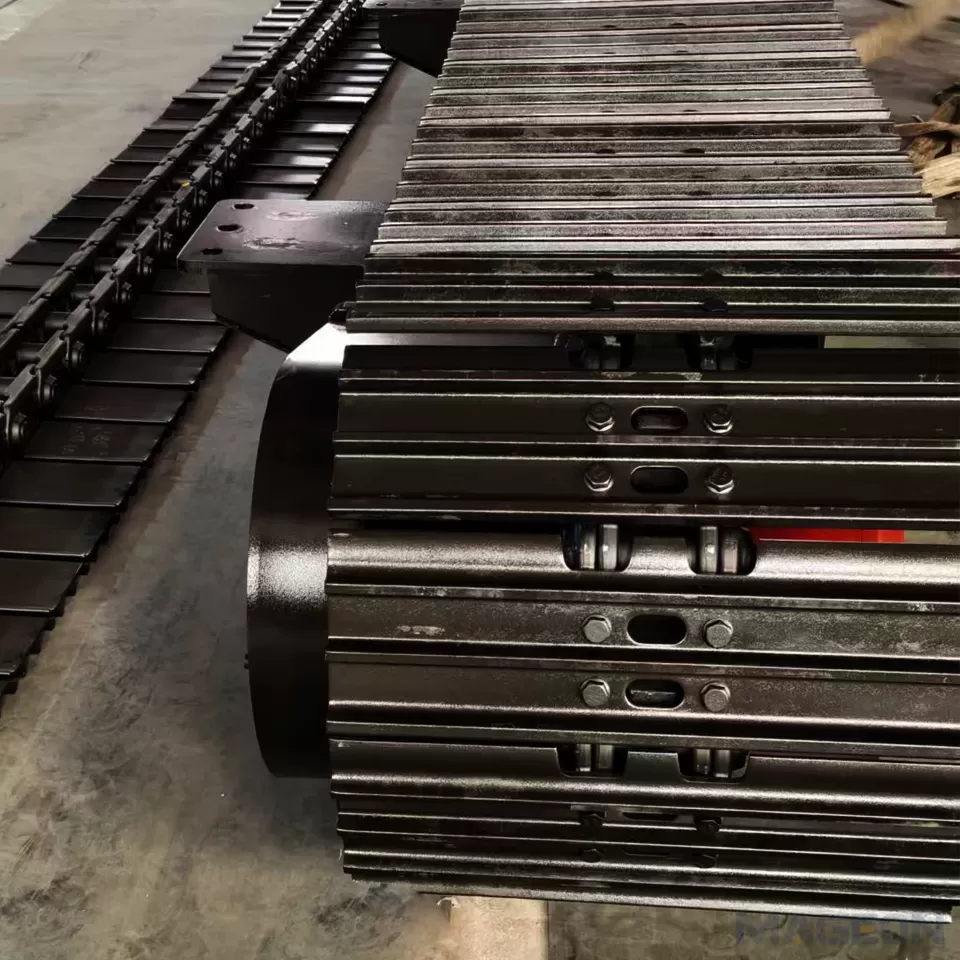
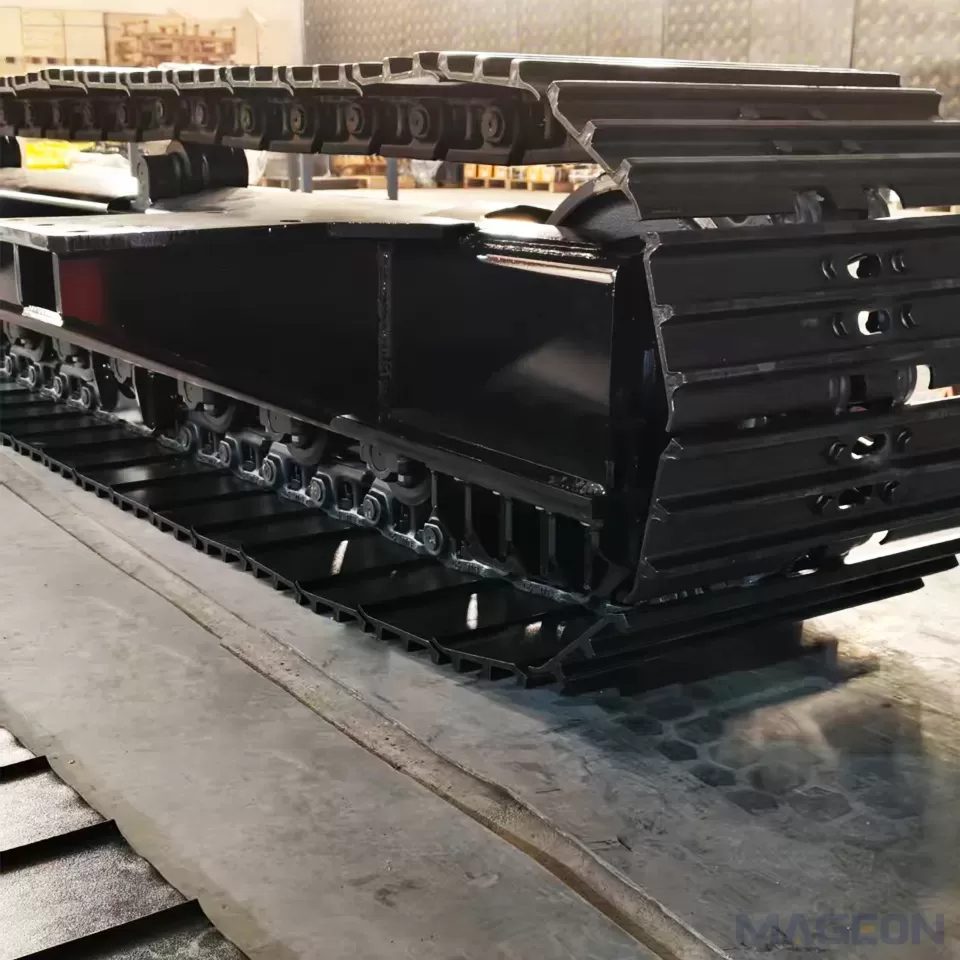
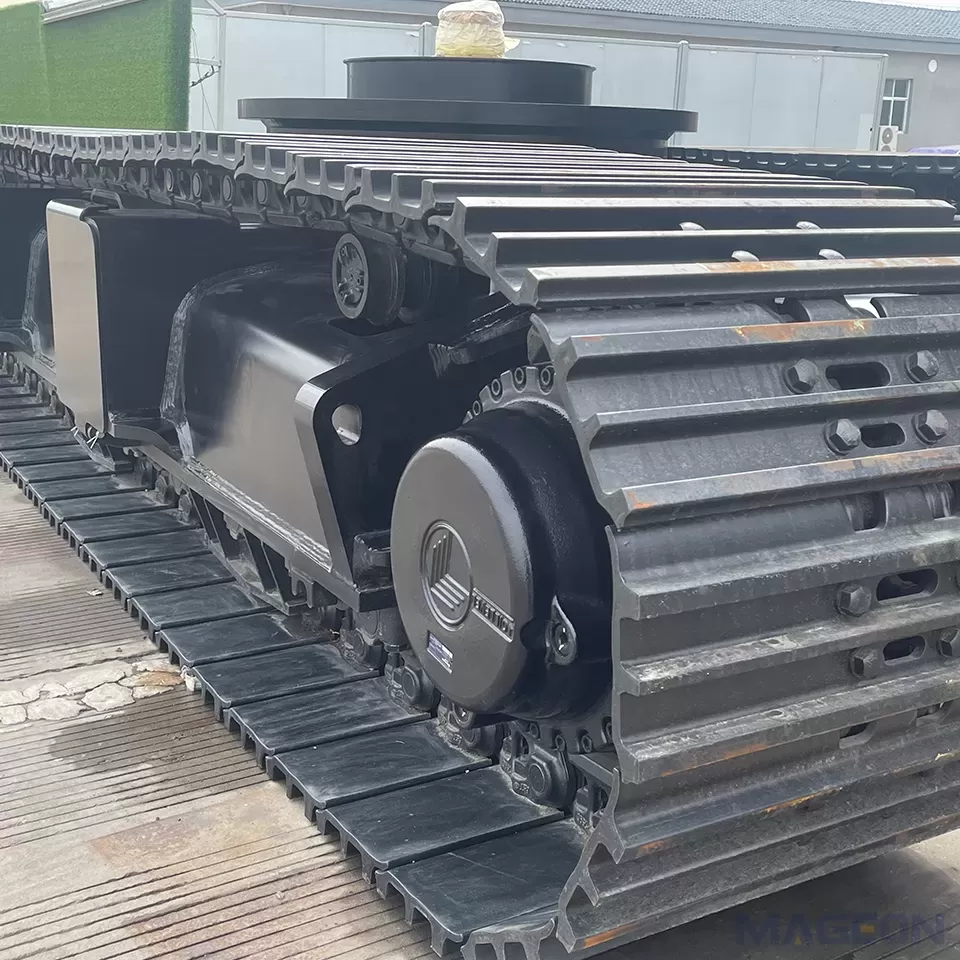
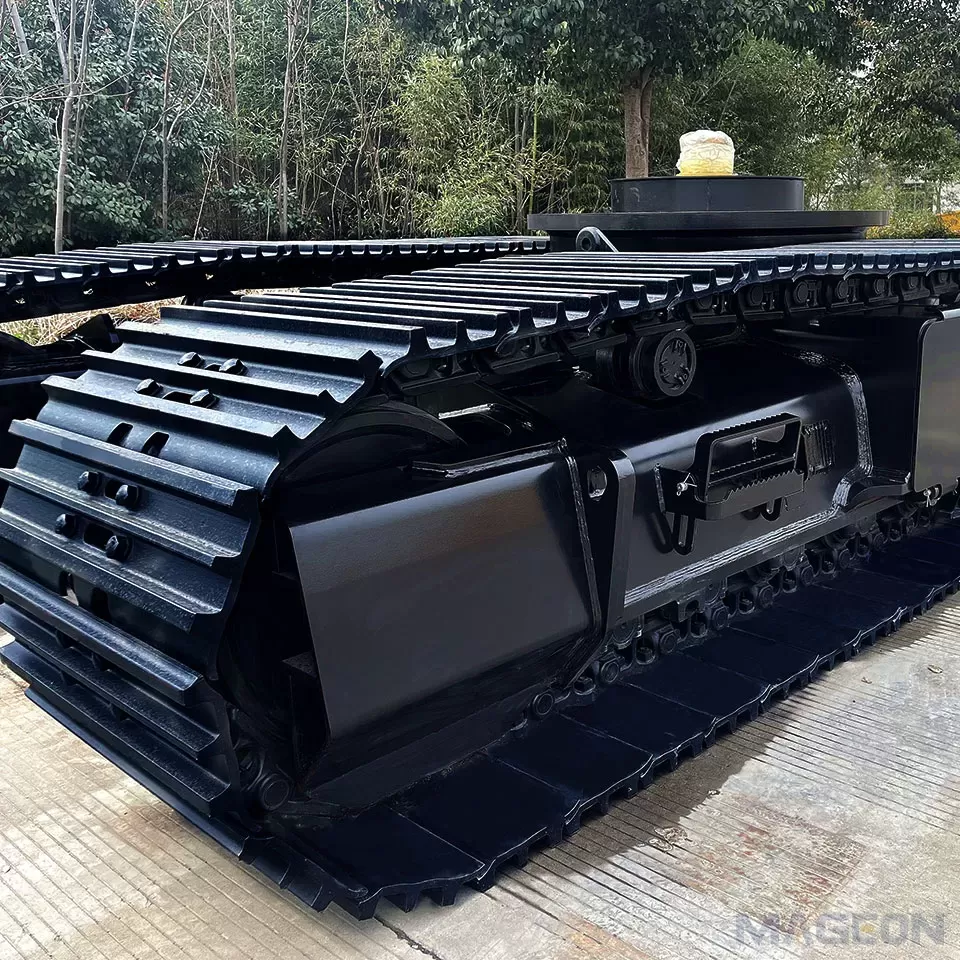
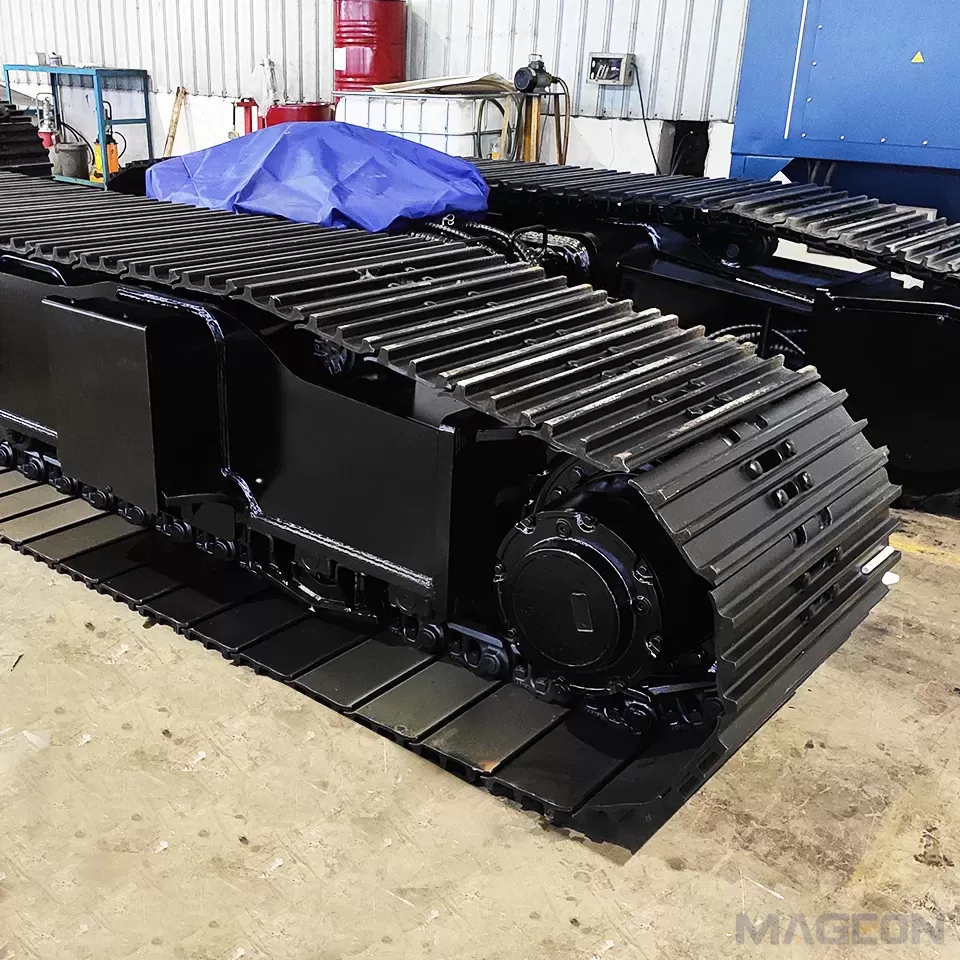
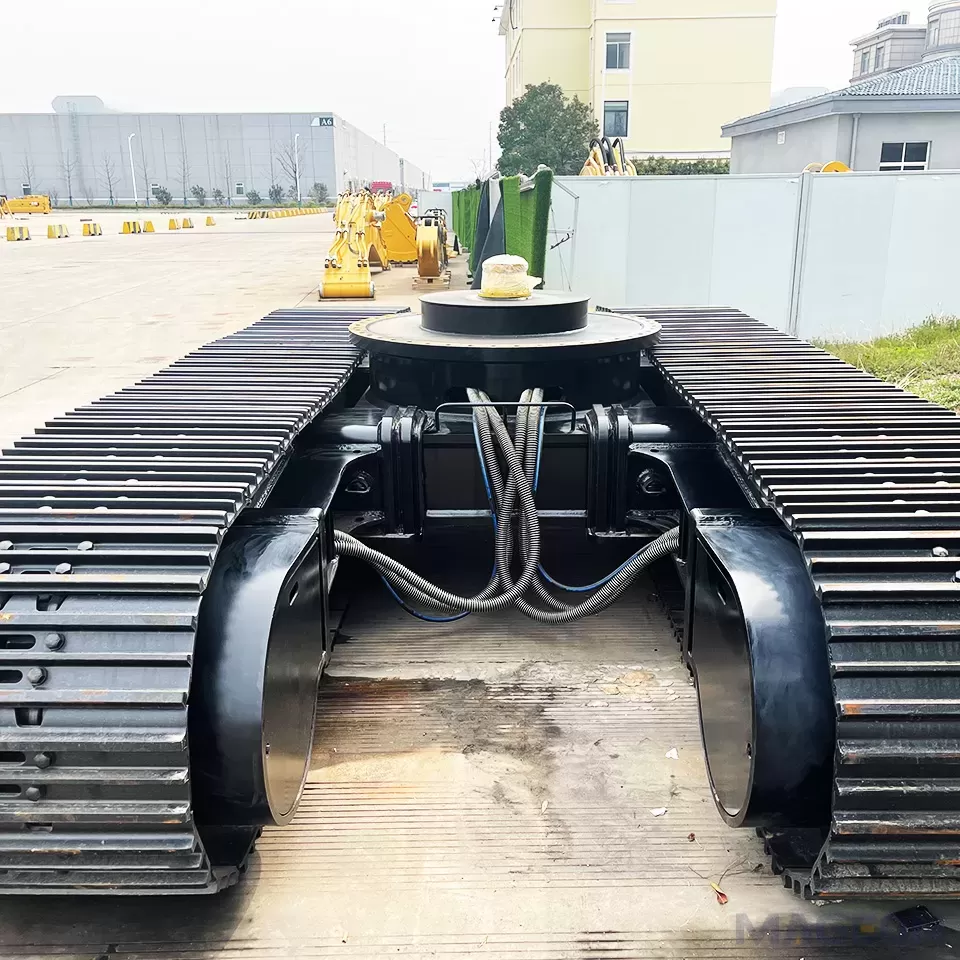
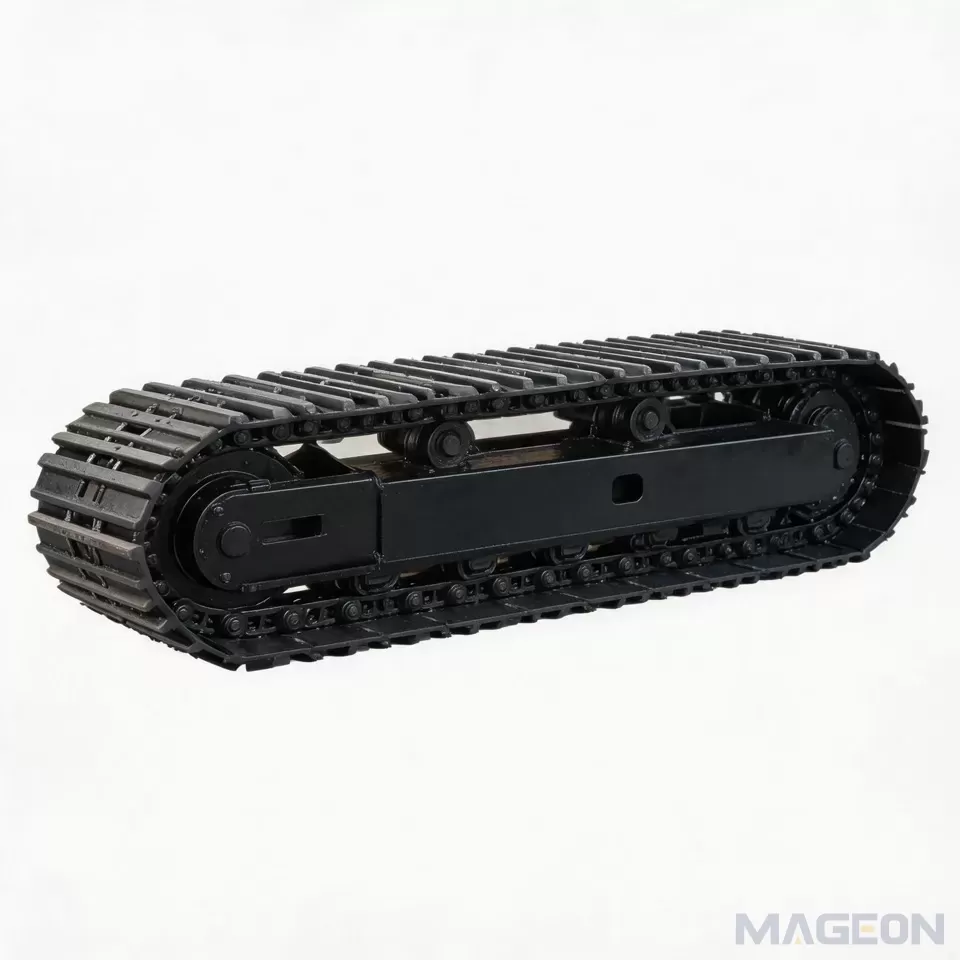
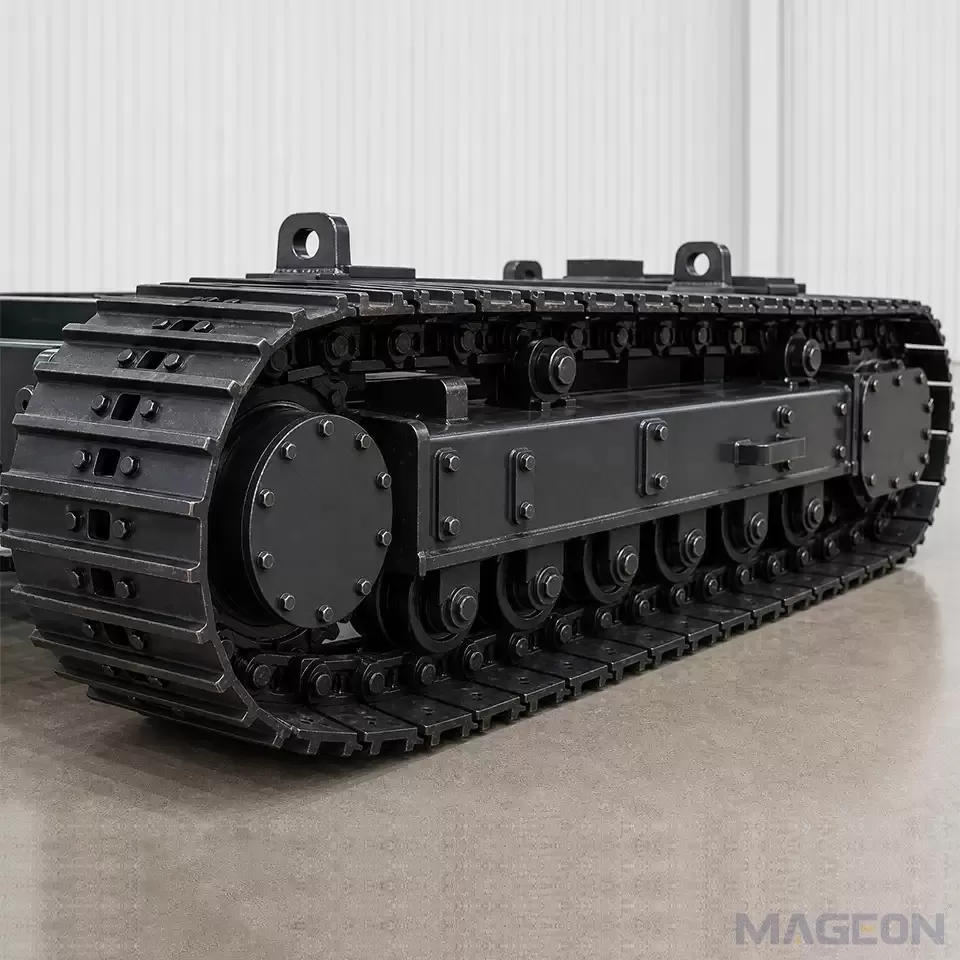
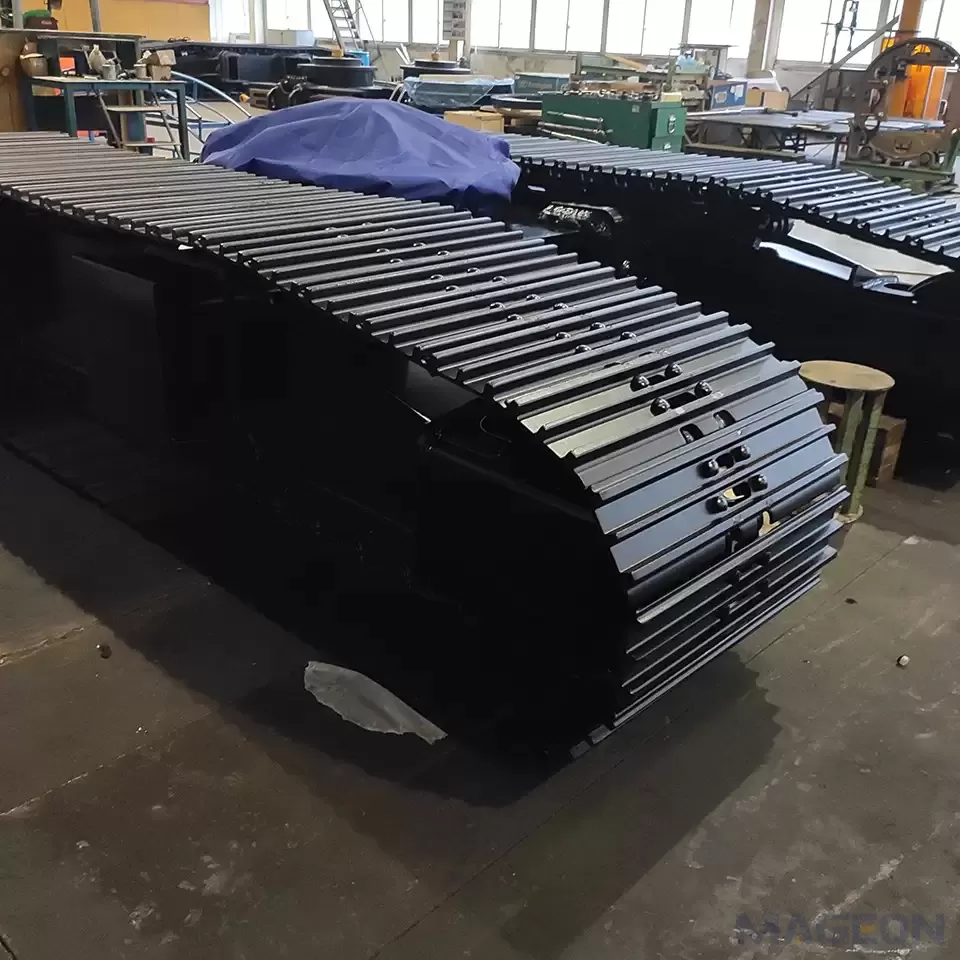
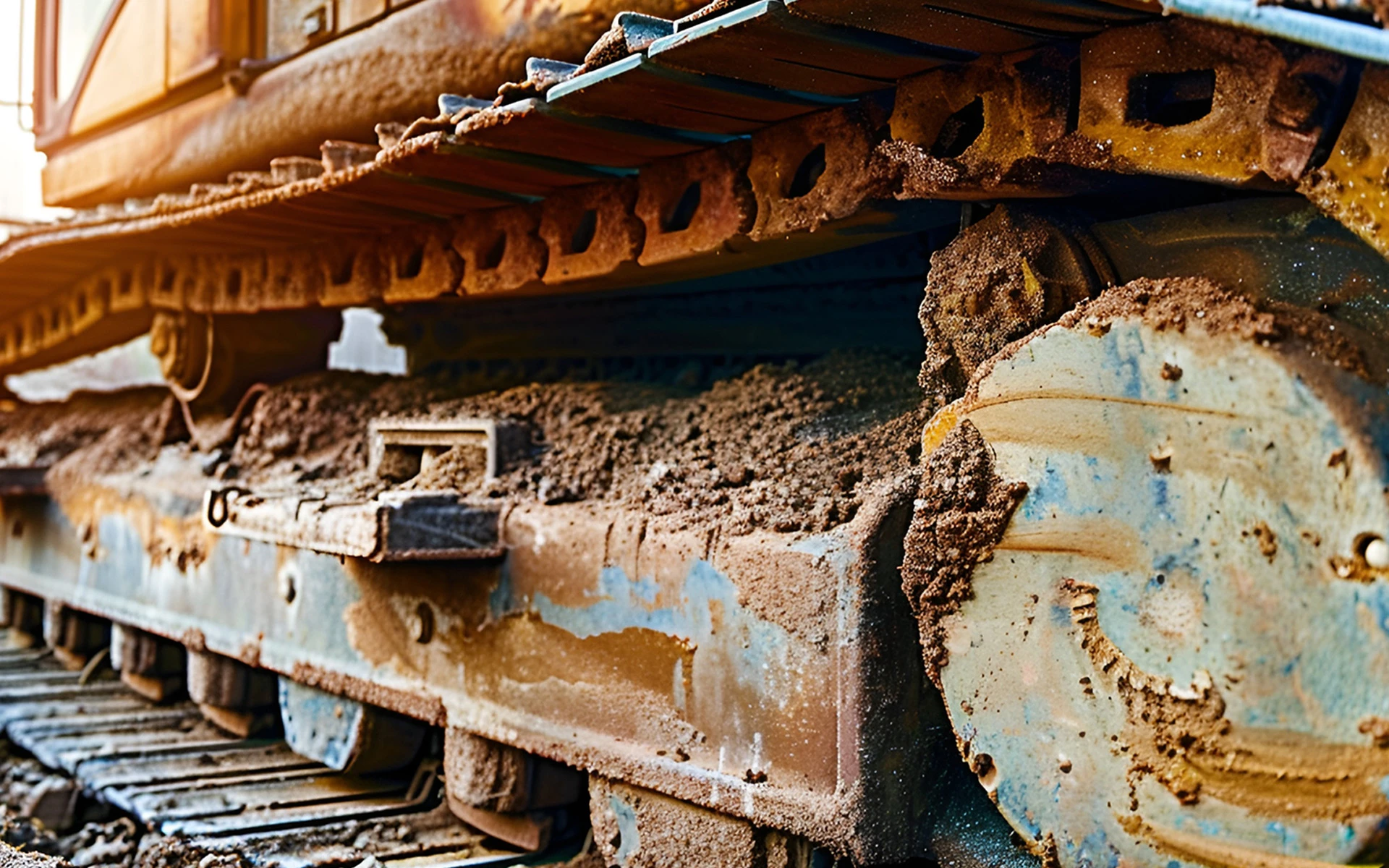
Where steel crawler undercarriages work in abrasive or packed material, debris clearance around the sprocket strongly affects this wear pair. Mud or ice packed into the tooth pockets effectively changes the pitch circle and drives the chain out of engagement.
5. Shoe, Roller and Idler Interfaces
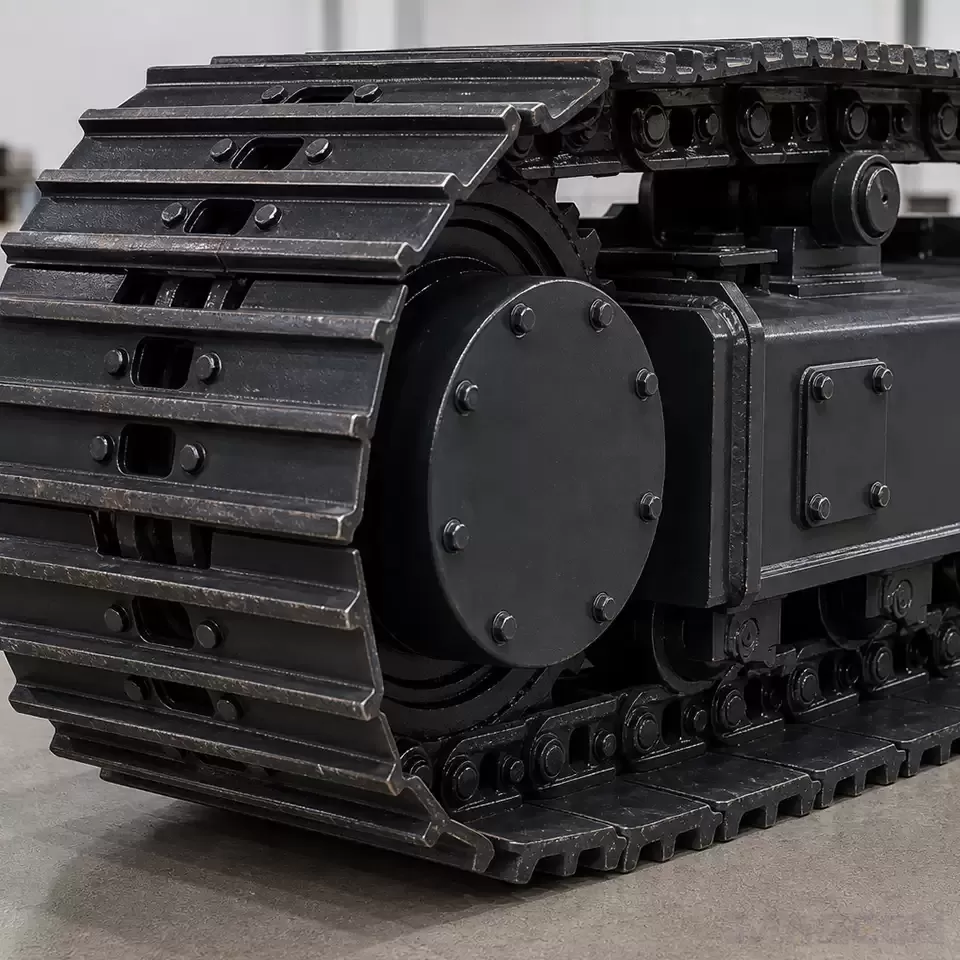
Shoe compatibility is more than bolt spacing. Confirm the shoe width and profile against the existing set, the grouser height, and whether rubber-pad or bolt-on pads are used, because pad thickness changes the effective contact geometry. Mixing new and worn shoes on the same chain creates uneven loading and can contribute to tracking problems.
Rollers and idlers should be checked at the same time: measure tread diameter against the wear limit, check for flat spots and seal leakage, and confirm the shaft and mounting dimensions. A chain that runs over a seized roller will wear in one localised band regardless of its own quality.
6. The Data to Send With an Enquiry
- Machine make, model and undercarriage serial number if available, plus a note of any known modifications
- Measured chain pitch (with N, measured length and nominal pitch), bushing outside diameter, link height and rail width
- Shoe bolt count per link, hole spacing and diameter, shoe width and profile
- Sprocket tooth count, outside and pitch-circle diameters, segment type
- Measured pitch extension, remaining tensioning travel and current sag setting
- Roller and idler tread diameters and any observed seal leakage
- Clear photos of the chain link, the sprocket teeth and the shoe bolt area, with a scale reference
Suppliers can usually confirm compatibility from this list in one exchange. Photographs with a ruler or calliper visible are especially valuable: they resolve ambiguity that a typed number cannot.
Frequently Asked Questions
Can I replace only the worn section of a track chain?
It is sometimes done, but mixing new and elongated links on the same chain creates uneven pitch and accelerates sprocket wear. Replacing the complete chain, or following the manufacturer's documented repair procedure, is the safer route.
Is a new chain enough, or should the sprocket be replaced too?
Assess both. If the sprocket tooth pockets are hooked or asymmetrically worn, a new chain will seat poorly and wear quickly; replacing the pair is usually cheaper than replacing the chain twice.
Why measure pitch extension over several links?
Because individual links vary and a slack or dirty single pitch gives a misleading reading. Measuring multiple pitches under tension averages out local variation and gives a repeatable number to compare with the wear limit.
Related Products and Next Step
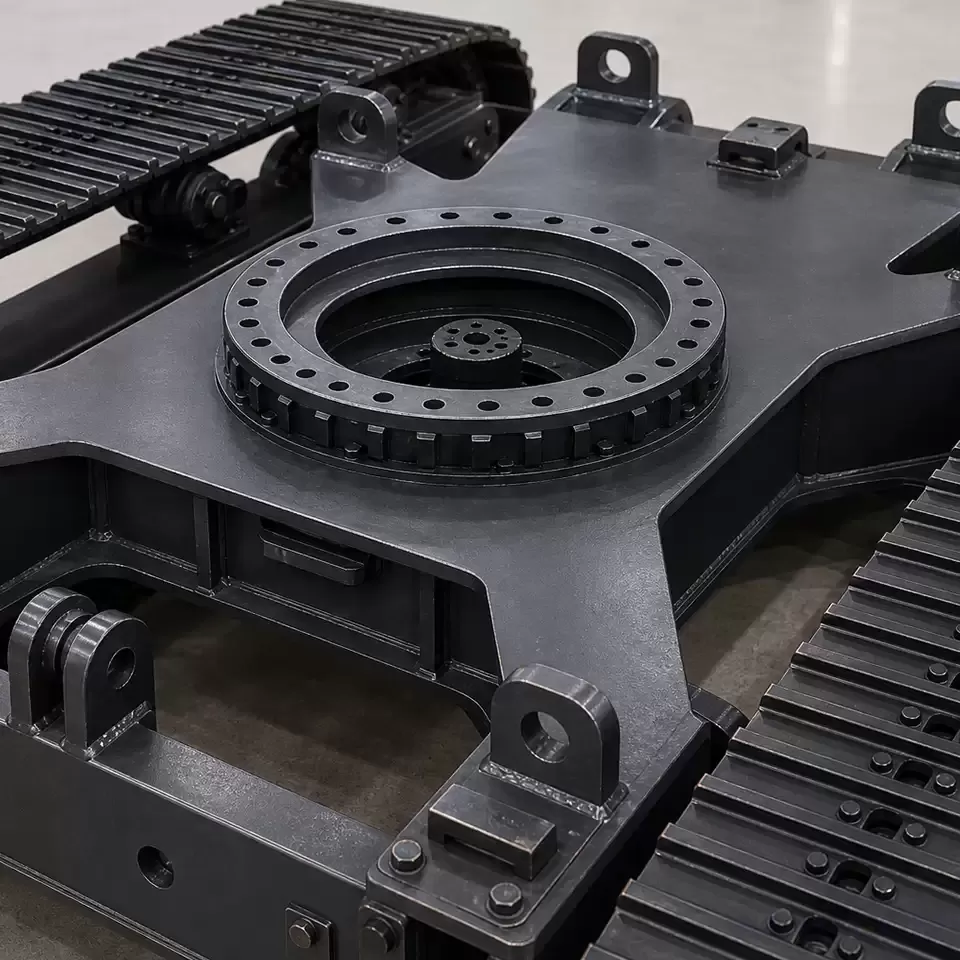
MAGEON supplies track chains, sprockets, rollers, idlers and track shoes for steel crawler undercarriages and custom tracked chassis. Send the measured dimensions above and photos of the chain and sprocket; our OEM/ODM parts team will confirm compatibility and quote the matched wear set rather than a single component.
Please leave your customization requirements, and we will contact you as soon as possible!
Leave your requirements, we'll get back to you within 24 hours.