Track Undercarriage Working Principle & Structure | Complete Guide | MAGEON
The Complete Guide to Track Undercarriage Working Principles & Structure: MAGEON Explains the "Walking Foundation" of Heavy Machinery
The track undercarriage is one of the most critical travel assemblies in heavy machinery, widely used in excavators, bulldozers, rotary drilling rigs, crawler cranes, and various other heavy equipment. As a globally leading manufacturer of Custom Tracked Chassis, MAGEON draws on deep technical expertise to provide a systematic analysis of track undercarriage working principles, core structures, and key technical specifications — helping industry users gain a comprehensive understanding of this "walking foundation," from basic principles to engineering practice.
1. What Is a Track Undercarriage?
A track undercarriage is a mobile device that uses a continuous track loop as its travel medium, converting power from the engine or hydraulic motor into tractive force through the engagement between the drive sprocket and the track chain. Compared with wheeled travel systems, the greatest advantages of a track undercarriage are extremely low ground pressure and superior off-road mobility — it can travel stably across complex terrains including mud, snow, sand, swamps, and rock, providing reliable mobile support for all types of engineering operations.
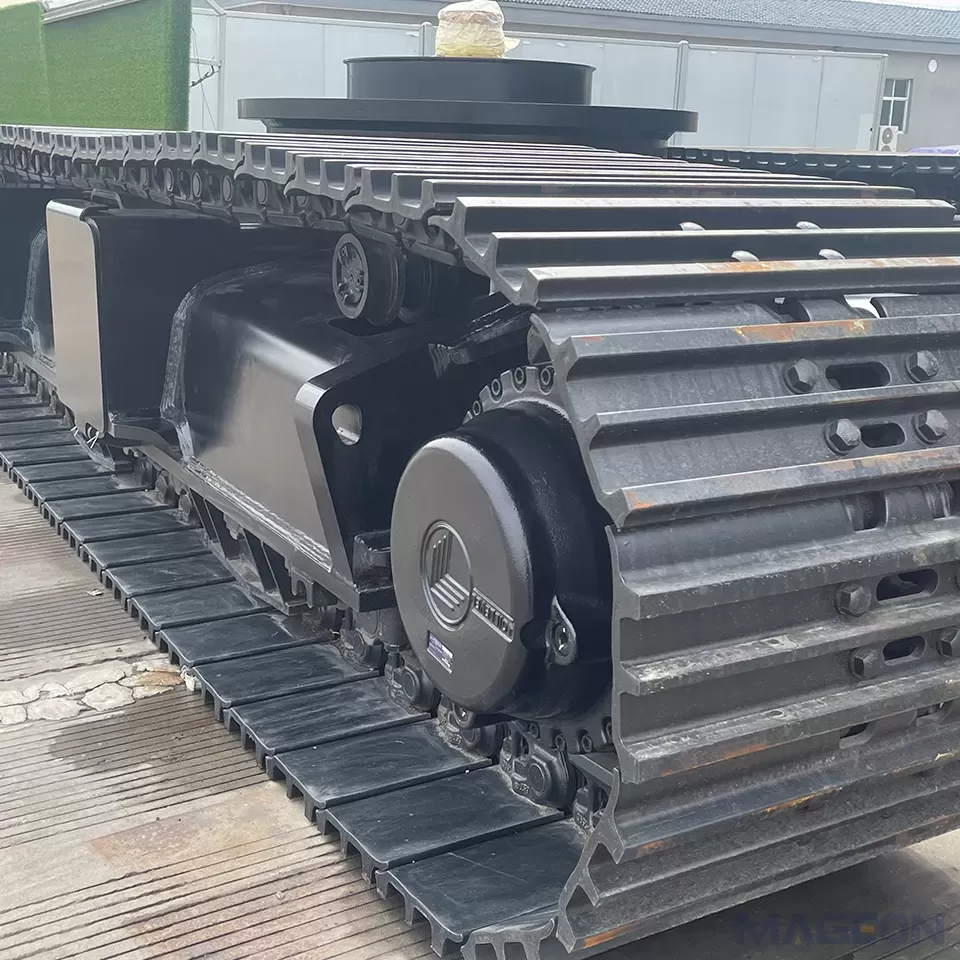
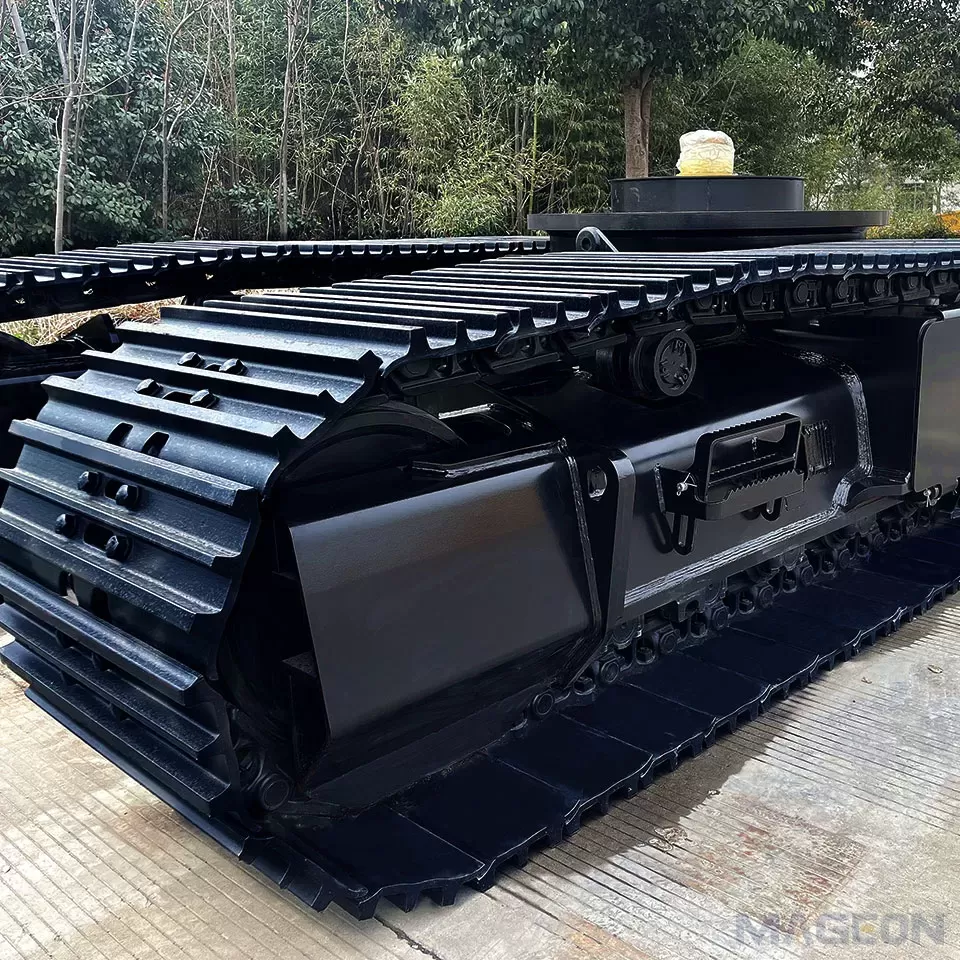
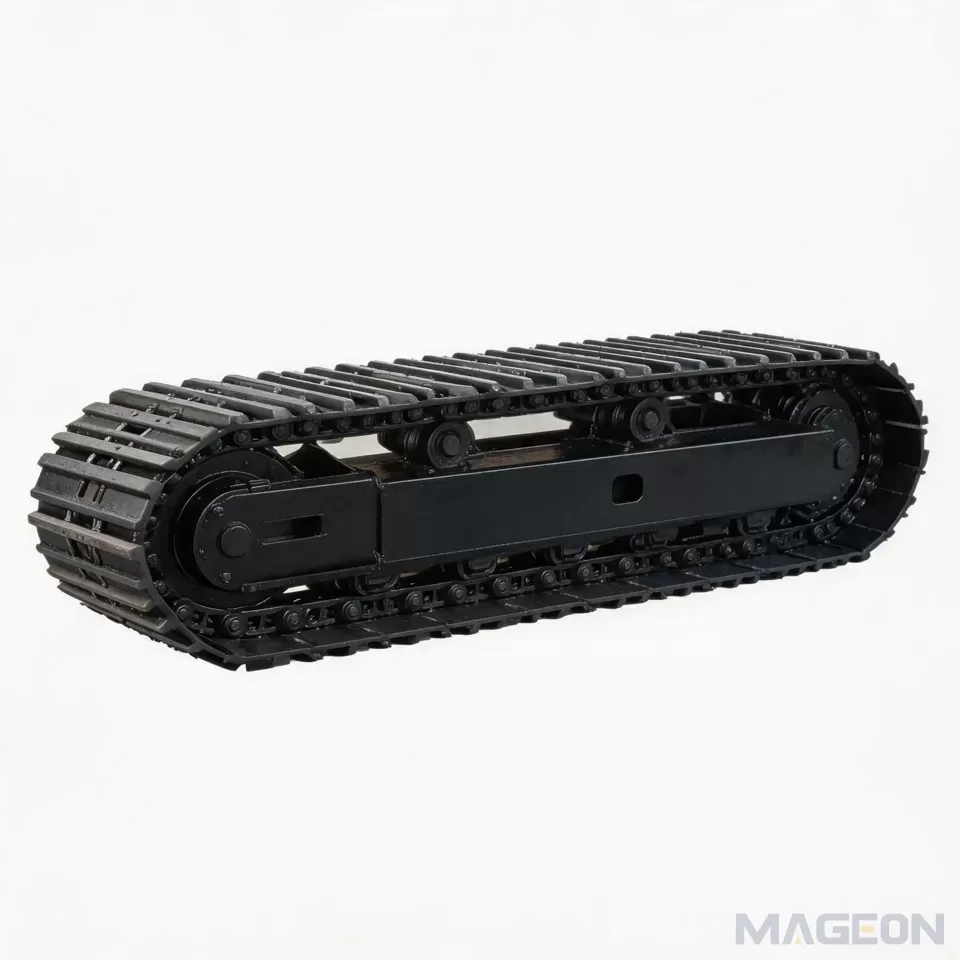
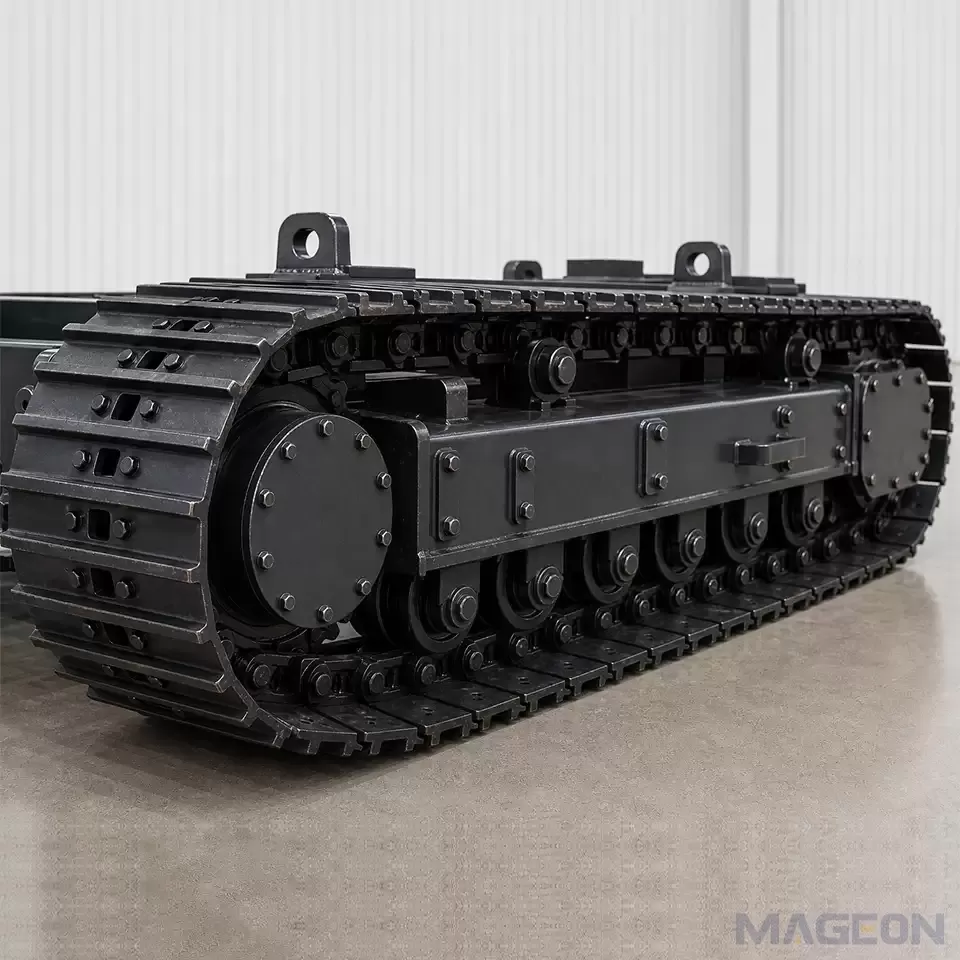
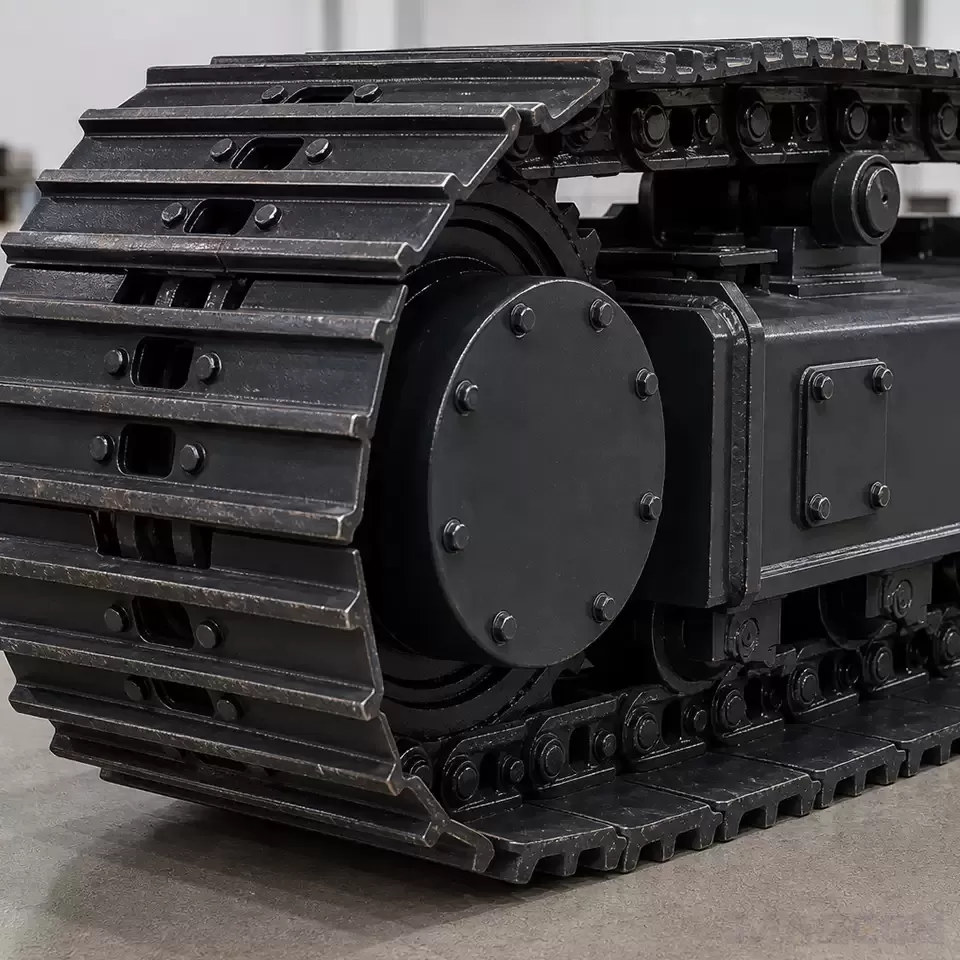
In the heavy machinery industry, the track undercarriage is classically described by the "four wheels and one track" configuration, consisting of five core components — drive sprocket, track rollers, idler, carrier rollers, and the track itself — working together with the tensioning system and track frame to form a complete travel system.
2. Core Components of a Track Undercarriage & Function of Each Component
A complete track undercarriage consists of multiple precision components working in coordination. Understanding the function and working principles of these Undercarriage Parts is essential for correct selection and effective maintenance.
2.1 Track — "The Footprint of Travel"
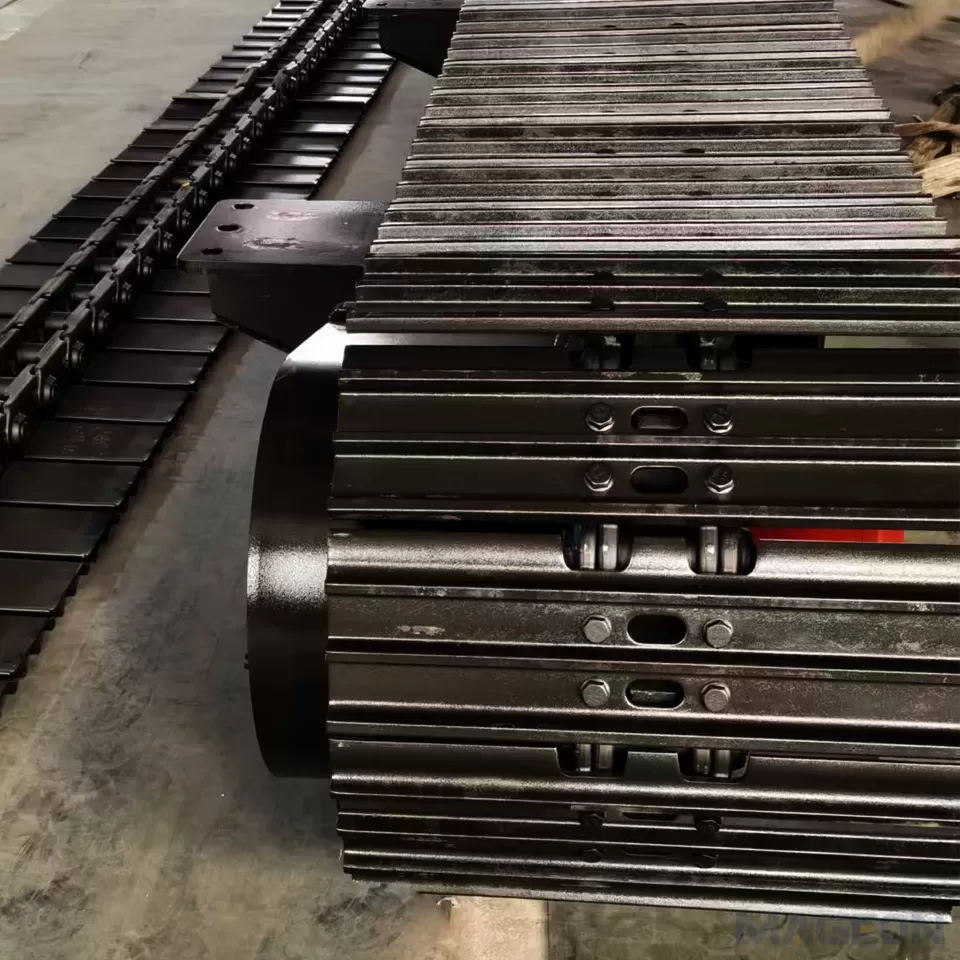
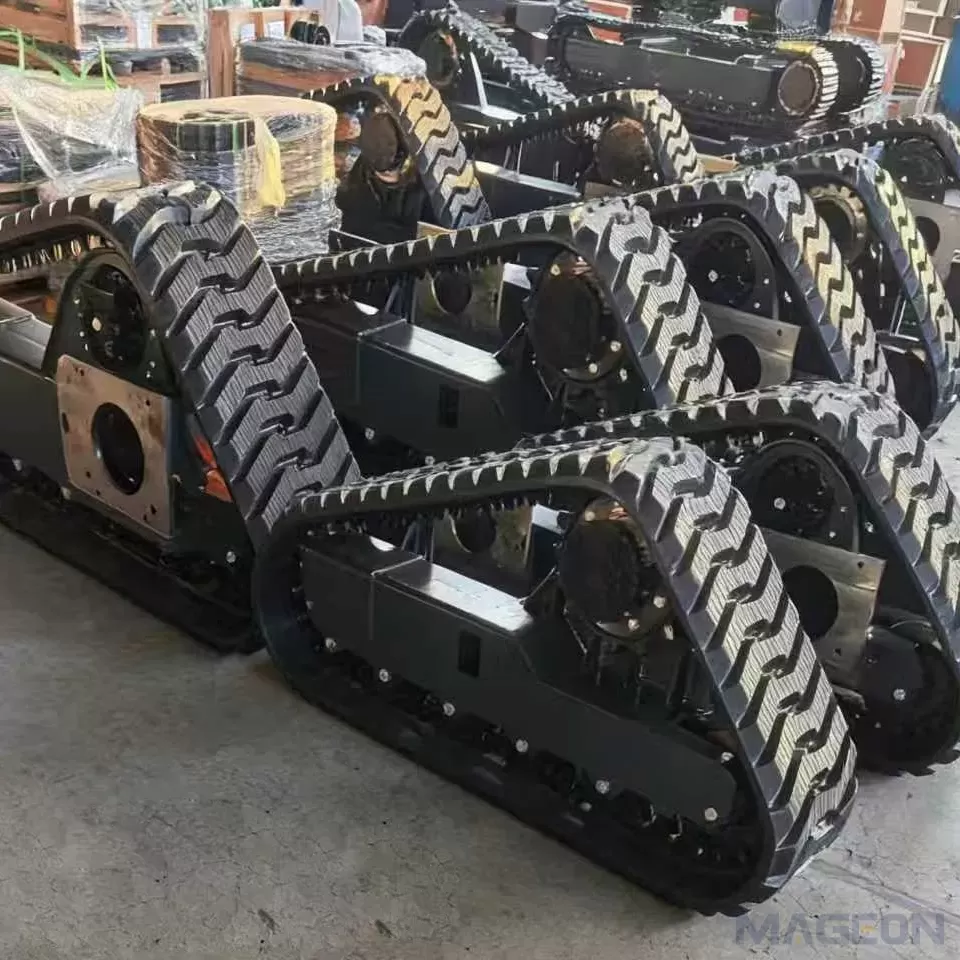
The track is the part of the undercarriage that directly contacts the ground and is the core consumable of the entire travel system. Tracks are divided into two main types:
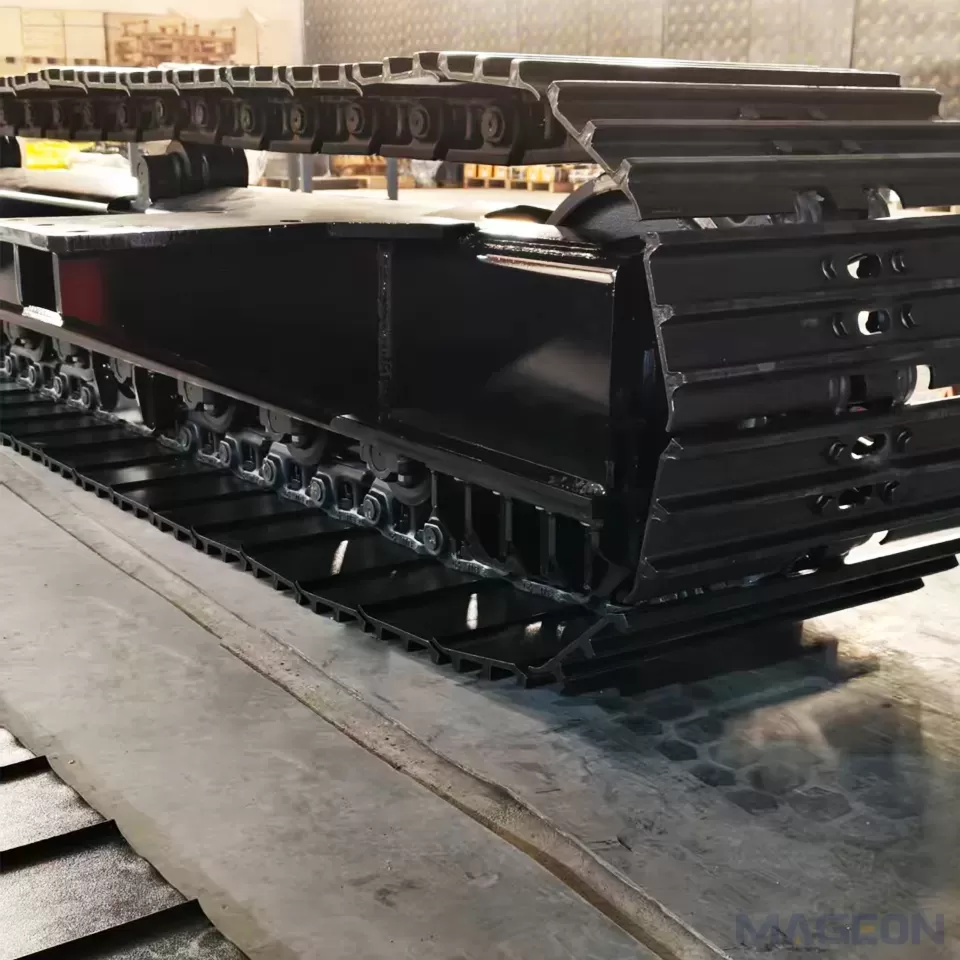
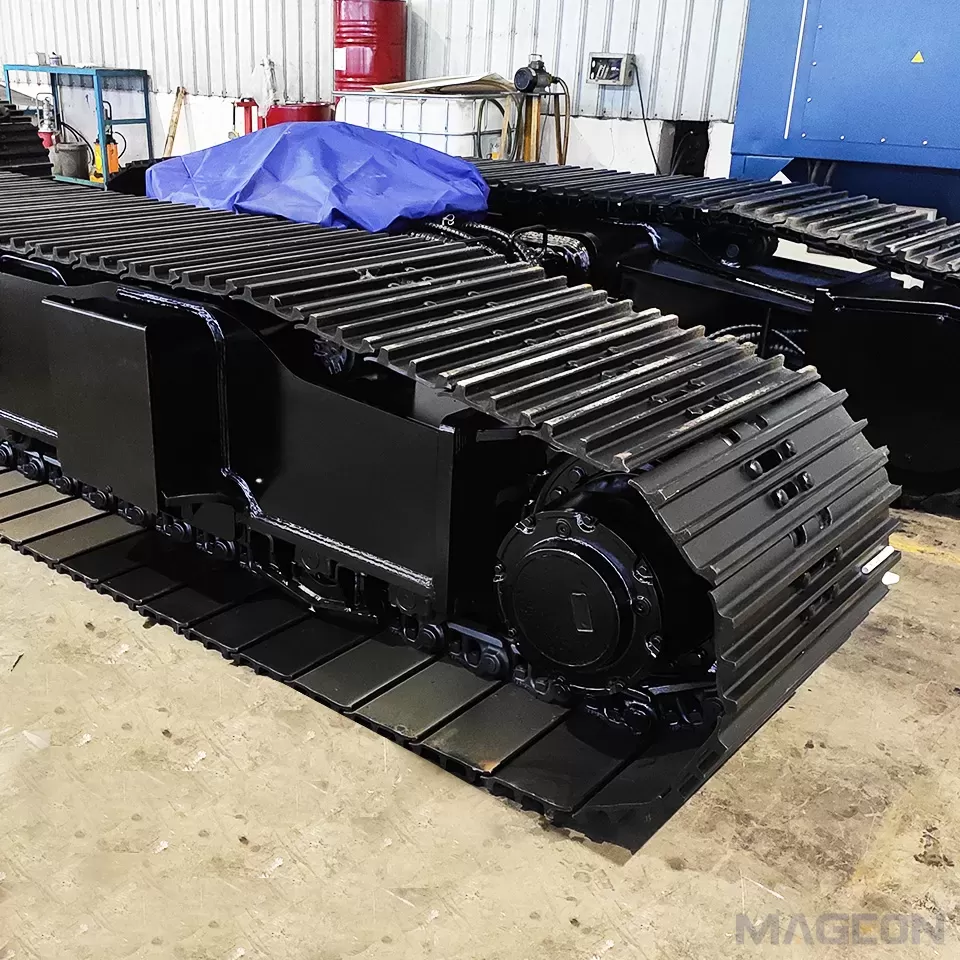
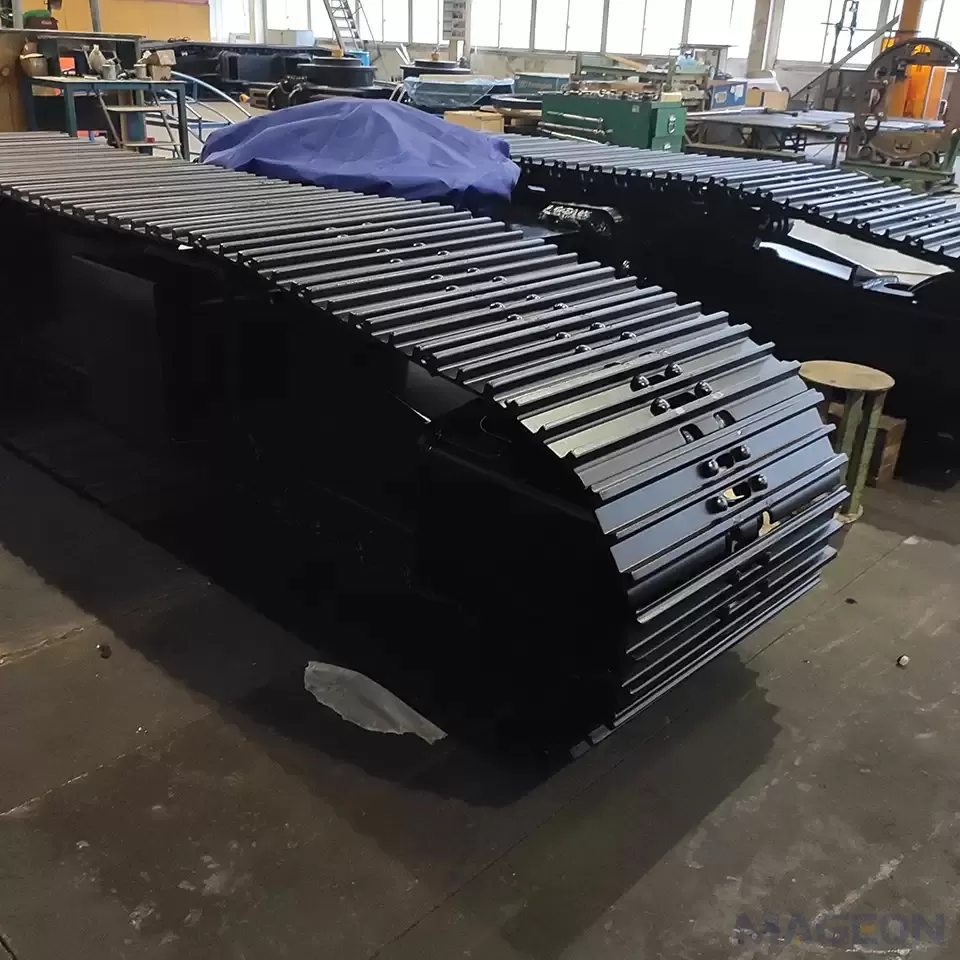
· Steel Crawler Undercarriage: Composed of high-strength alloy steel track links, pins, bushings, and track shoes, with extremely high load capacity (up to 100+ tons) and excellent wear resistance, suitable for highly abrasive environments such as mines, quarries, and rocky terrain
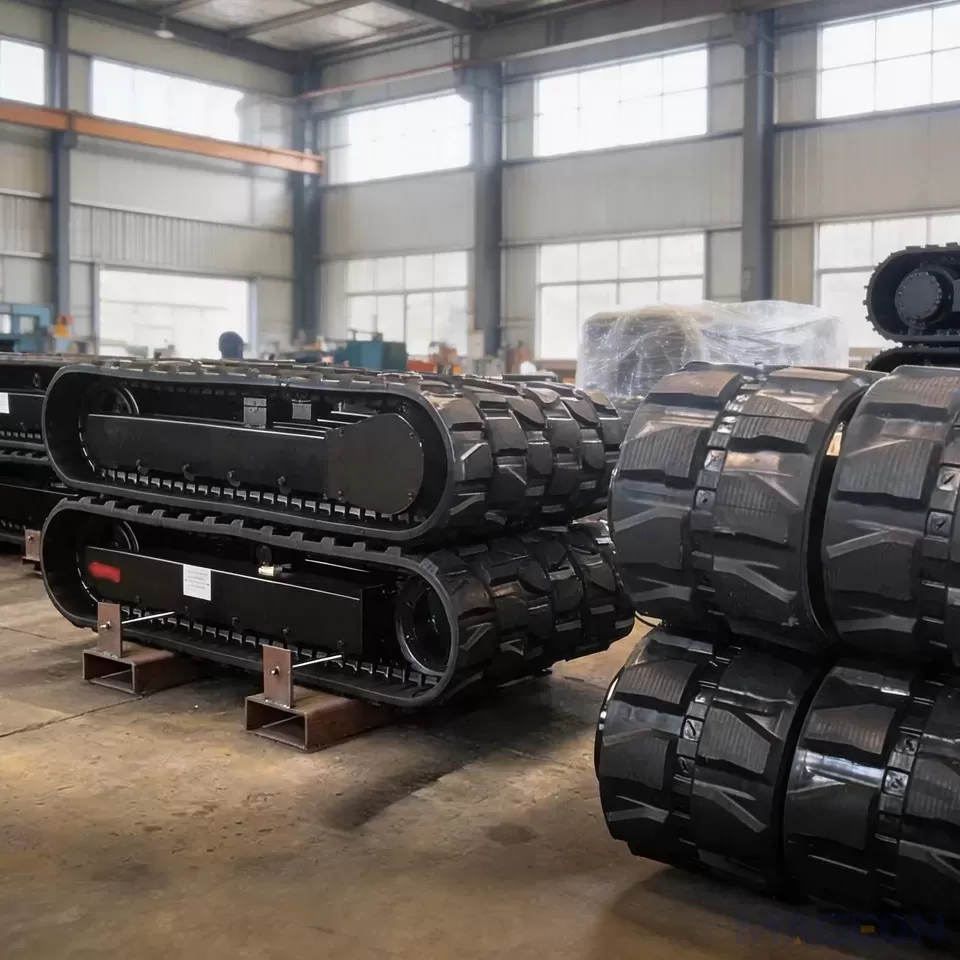
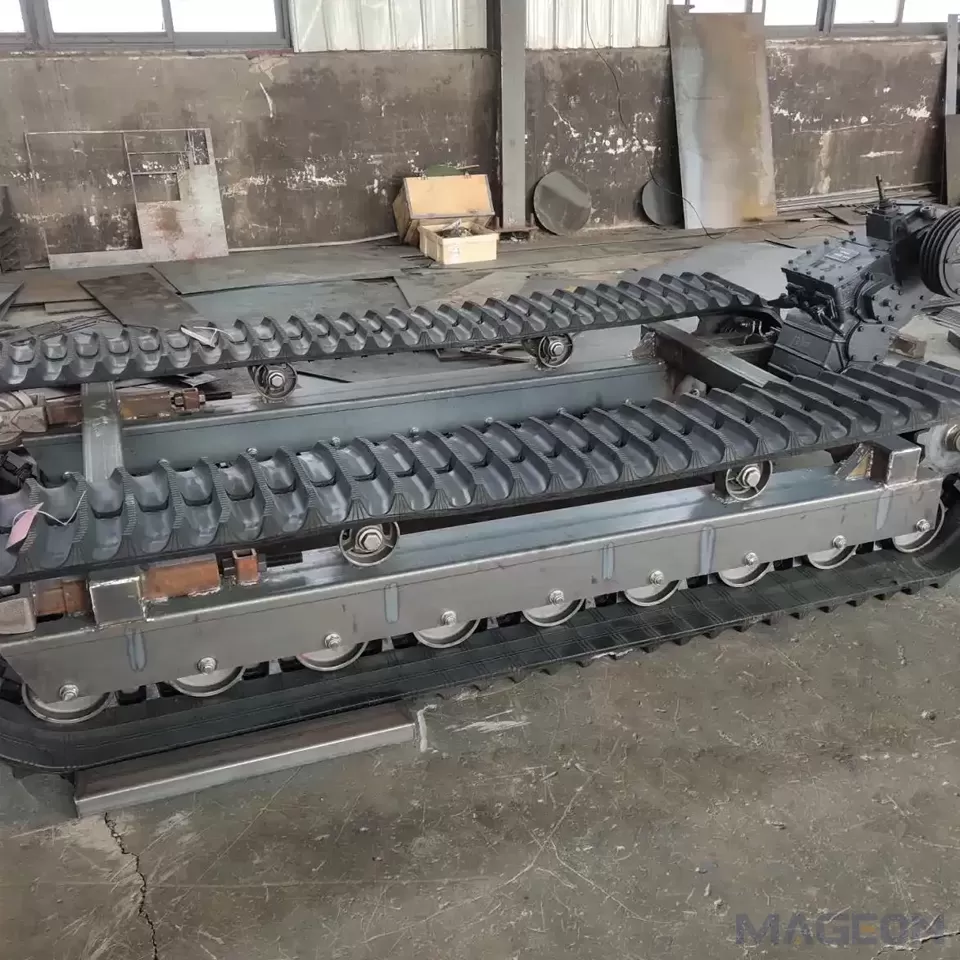
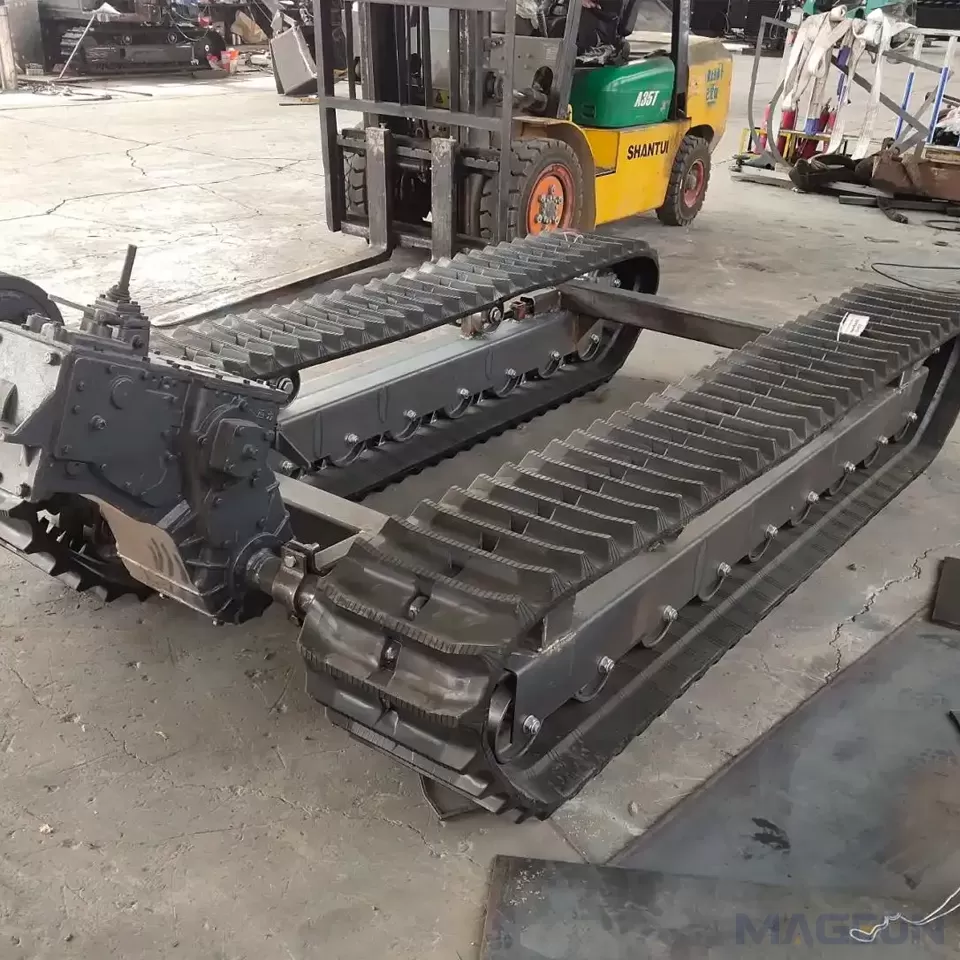
· Rubber Track Undercarriage: Made primarily of rubber with embedded steel cord or fabric reinforcement, offering low ground pressure, no surface damage, and low operating noise, suitable for urban construction, paved surfaces, and ecologically sensitive areas
Key Technical Specifications of Tracks:
| Parameter | Description | Typical Range |
|---|---|---|
| Pitch | Distance between centres of adjacent pin joints | 101mm – 260mm |
| Track Shoe Width | Contact width between track and ground | 300mm – 1,100mm |
| Link Material (Steel) | Alloy steels such as 35MnB, 40Mn2 | Heat-treated to HRC 50-58 |
| Track Shoe Type | Flat, serrated, triple-grouser, etc. | Selected based on application |
2.2 Drive Sprocket — "The Power Heart"
The drive sprocket is the power input component of the track undercarriage. Mounted at the rear (or front, depending on design) of the track frame, it transfers power from the hydraulic motor or mechanical transmission to the entire track through precise engagement with the track pin bushings. As the drive sprocket rotates, its teeth continuously roll the track from the rear, causing the ground-contacting portion of the track to exert a rearward force on the ground — generating a forward reaction force that drives the equipment forward or backward.
MAGEON Engineering Tip: Sprocket tooth wear is an important indicator of undercarriage health. When teeth show significant "hooking" or sharpening, replace immediately to prevent track skipping and derailment.
2.3 Track Roller / Bottom Roller — "The Load-Bearing Spine"
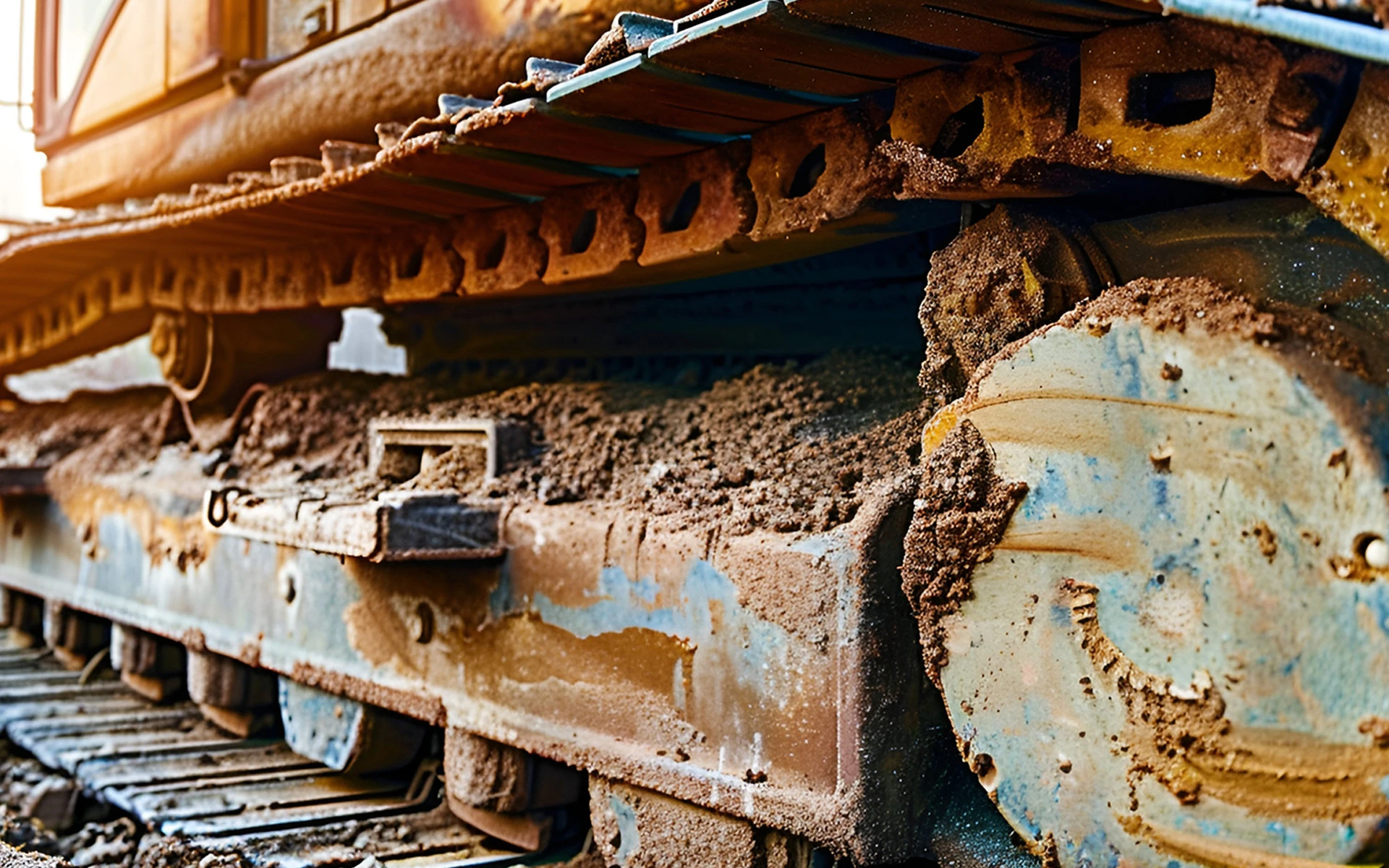
Track rollers are evenly distributed above the track (typically mounted on the bottom of the track frame), bearing the entire machine weight and distributing the load evenly across the track chain to maintain good ground contact. Track rollers are among the most wear-prone components in the undercarriage — they must not only withstand enormous vertical loads but also maintain rotational smoothness in harsh mud and water environments.
Maintenance Points: At the end of each shift, clean accumulated mud and debris from around the track rollers. Regularly check floating seals for leaks — seal failure will lead to rapid bearing damage.
2.4 Carrier Roller / Top Roller — "The Upper Support"
Carrier rollers are mounted on top of the track frame, supporting the upper run of the track to reduce sagging and minimise vertical vibration. Without proper carrier roller support, the excessively long upper track run will vibrate severely, accelerating pin and bushing wear.
2.5 Idler / Front Idler — "The Rudder"
The idler (also called the front idler) is mounted at the front of the track frame, guiding the track's running direction and working with the tensioning system to maintain proper track tension. The idler does not transmit power directly, but its alignment directly affects the running trajectory of the entire track.
2.6 Track Tensioning System — "The Tension Regulator"
The tensioning system is a seemingly simple but extremely critical component of the track undercarriage. Its core function is to maintain proper track tension and prevent the track from becoming too loose and derailing. The tensioning system typically consists of a tension spring, buffer spring, and tensioning screw.
MAGEON Golden Rule: Proper track tension is the key to extending the life of the entire undercarriage — too tight accelerates pin and bushing wear; too loose increases the risk of derailment.
2.7 Track Frame — "The Structural Backbone"
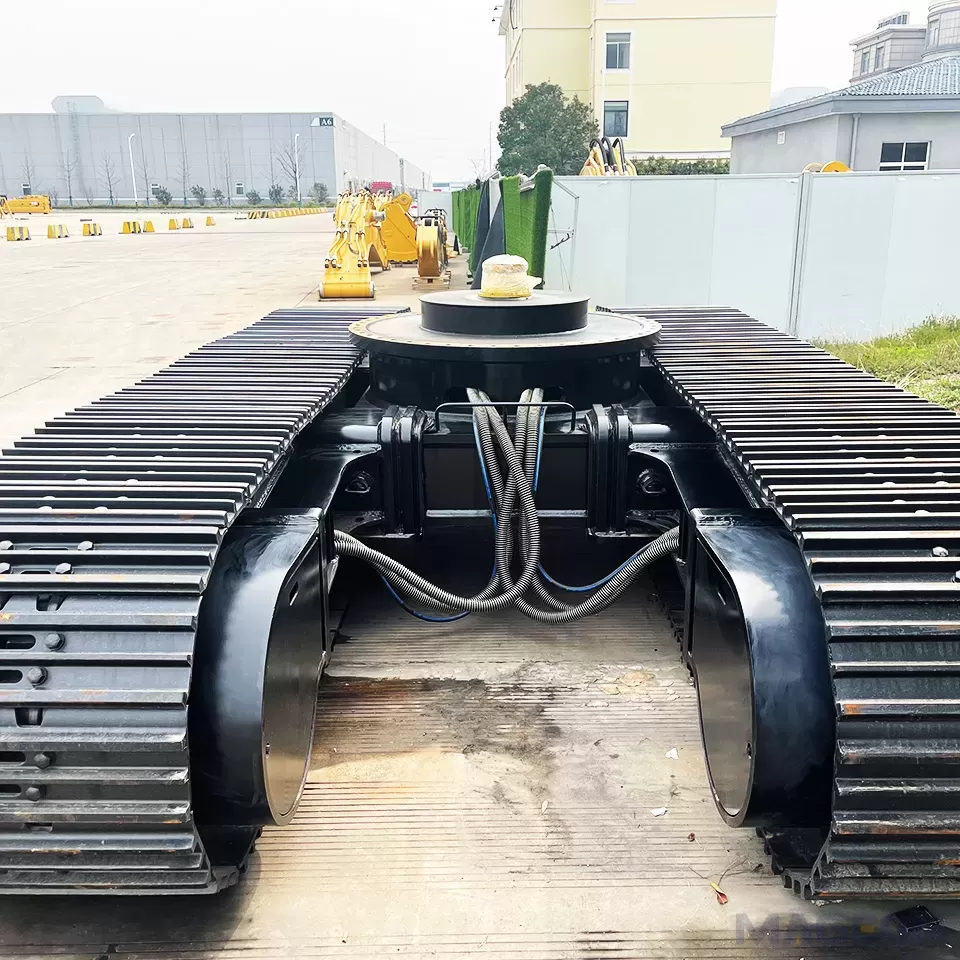
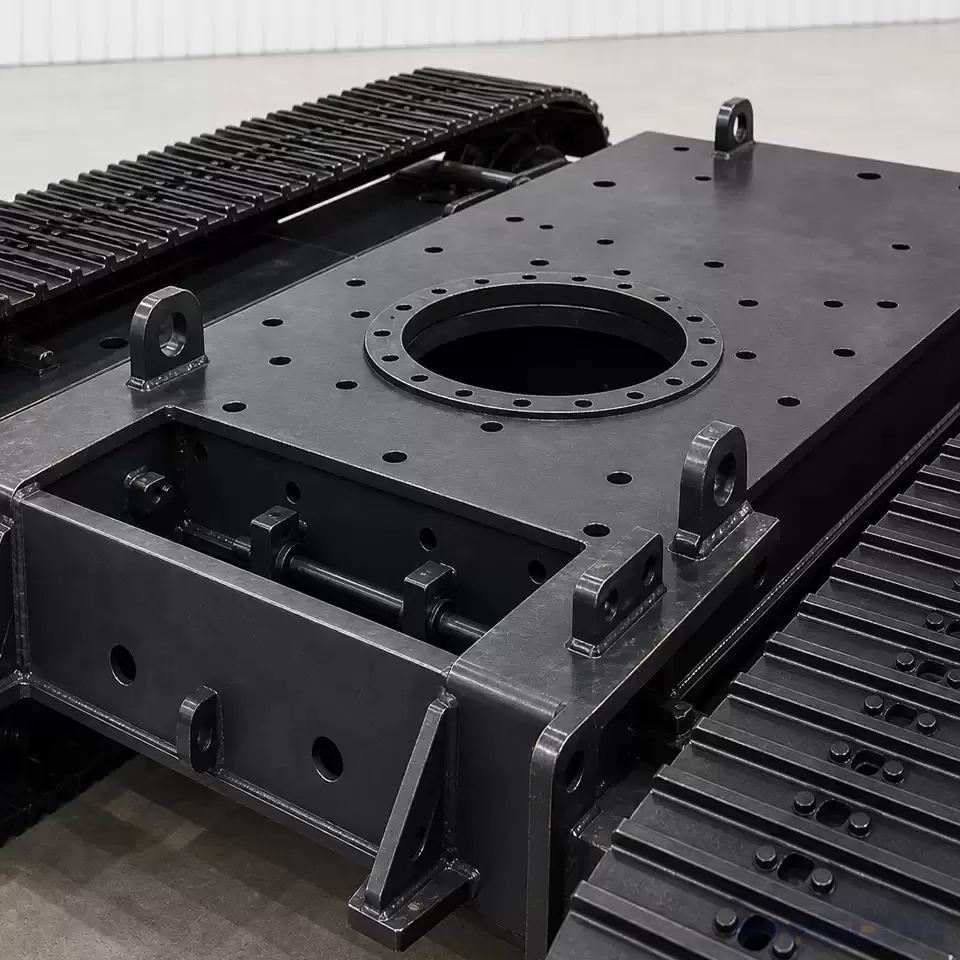
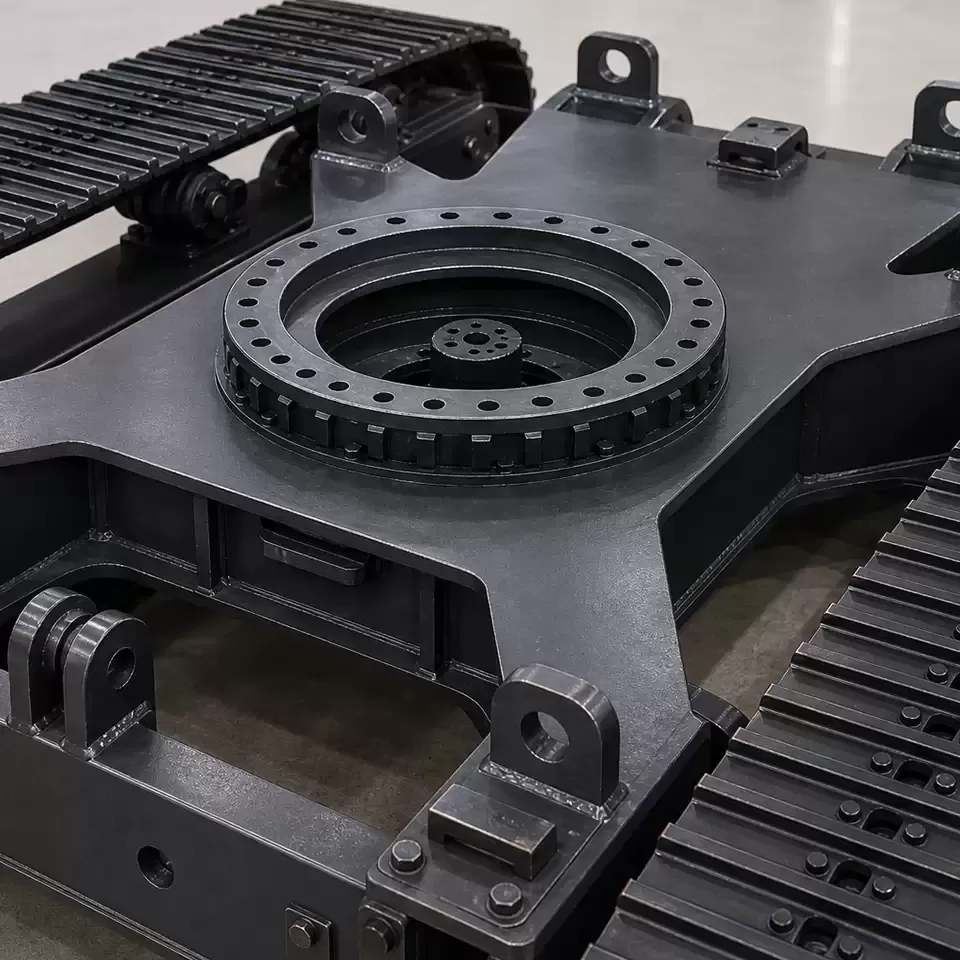
The track frame is the structural backbone connecting all undercarriage components, typically fabricated from high-strength steel plates into a "gate"-shaped reinforced structure. The track frame must possess extremely high rigidity and torsional strength to withstand the twisting forces and impacts generated during operation on complex terrain.
3. Working Principle of a Track Undercarriage: The Complete Power-to-Motion Chain
The working principle of a track undercarriage can be summarised in the following complete chain:
Step 1: Power Input → The engine or hydraulic motor generates rotational power, transmitted to the drive sprocket
Step 2: Engagement Transmission → The drive sprocket teeth engage precisely with the track pin bushings
Step 3: Track Rolling → The drive sprocket rotates, continuously rolling the track from the rear
Step 4: Ground Reaction → The ground-contacting portion of the track exerts a rearward force on the ground; the ground exerts a forward reaction force (tractive force) on the track
Step 5: Equipment Movement → Under the tractive force, the entire equipment moves forward, backward, or turns
Steering Principle: The track undercarriage achieves steering by controlling the speed difference between the left and right tracks — equal speeds for straight travel, one side faster than the other for turning toward the slower side, and opposite directions for zero-radius turning.
4. Steel Crawler Undercarriage vs. Rubber Track Undercarriage: Comprehensive Technical Comparison
When recommending or customising an undercarriage for clients, the MAGEON engineering team first assesses a core question: Does your equipment need a steel track or a rubber track?
| Comparison Dimension | Steel Crawler Undercarriage | Rubber Track Undercarriage |
|---|---|---|
| Maximum Load Capacity | Extremely high (up to 100+ tons) | Moderate (typically ≤ 30 tons) |
| Wear Resistance | Excellent (suitable for rock, gravel, concrete) | Fair (not suitable for highly abrasive environments) |
| Ground Pressure | Higher | Lower |
| Travel Speed | Slower (typically < 4 km/h) | Faster (up to 10 km/h) |
| Surface Protection | Poor (easily fractures asphalt, scars concrete) | Excellent (does not damage surfaces) |
| Noise & Vibration | High noise, high vibration | Low noise, smooth and comfortable |
| Service Life (Heavy Load) | 3,000 – 8,000 hours | 800 – 2,000 hours |
| Applicable Equipment | Bulldozers, large excavators, rotary drilling rigs, crushing equipment | Mini excavators, compact loaders, agricultural machinery |
| Recommended Scenarios | Mines, quarries, rocky terrain, heavy dozing, deep-hole drilling | Urban construction, ecologically sensitive areas, paved surfaces, soft farmlands |
MAGEON Selection Recommendations:
· Choose Steel Crawler Undercarriage: If your equipment primarily operates in mines, quarries, rocky terrain, or requires heavy dozing/drilling — steel tracks offer a lower total cost of ownership in highly abrasive environments
·Choose Rubber Track Undercarriage: If your equipment primarily operates on paved surfaces, urban construction sites, ecologically sensitive areas, or soft farmlands — rubber tracks protect surfaces, reduce noise, and improve ride comfort
5. Core Application Areas of Track Undercarriages
Track undercarriages play an irreplaceable role in the following sectors, thanks to their superior terrain mobility and load capacity:
5.1 Rotary Drilling Rig Chassis
Rotary drilling rigs represent one of the most important applications for track undercarriages. A Rotary Drilling Rig Chassis must withstand the high reactive torque and enormous vertical loads generated during deep-hole drilling. MAGEON provides dedicated heavy-duty undercarriages for rotary drilling rigs, equipped with large-diameter slewing bearings and high-strength track frames.
Typical Load Range: 10 – 100 tons
5.2 Drilling Rig Undercarriage
Whether for water well drills, core drills, or geothermal exploration rigs, a Drilling Rig Undercarriage must provide a stable working platform across diverse terrains. Steel crawler undercarriages, with their superior traction and impact resistance, are the preferred travel solution for drilling equipment.
Typical Load Range: 0.5 – 50 tons
5.3 Excavator Conversion Undercarriage
Converting older or wheeled excavators into tracked equipment is the core value proposition of an Excavator Conversion Undercarriage. MAGEON provides complete conversion undercarriage solutions, including custom mounting interfaces compatible with upper structures from different excavator brands.
Typical Load Range: 5 – 50 tons
5.4 Telescopic Crawler Undercarriage
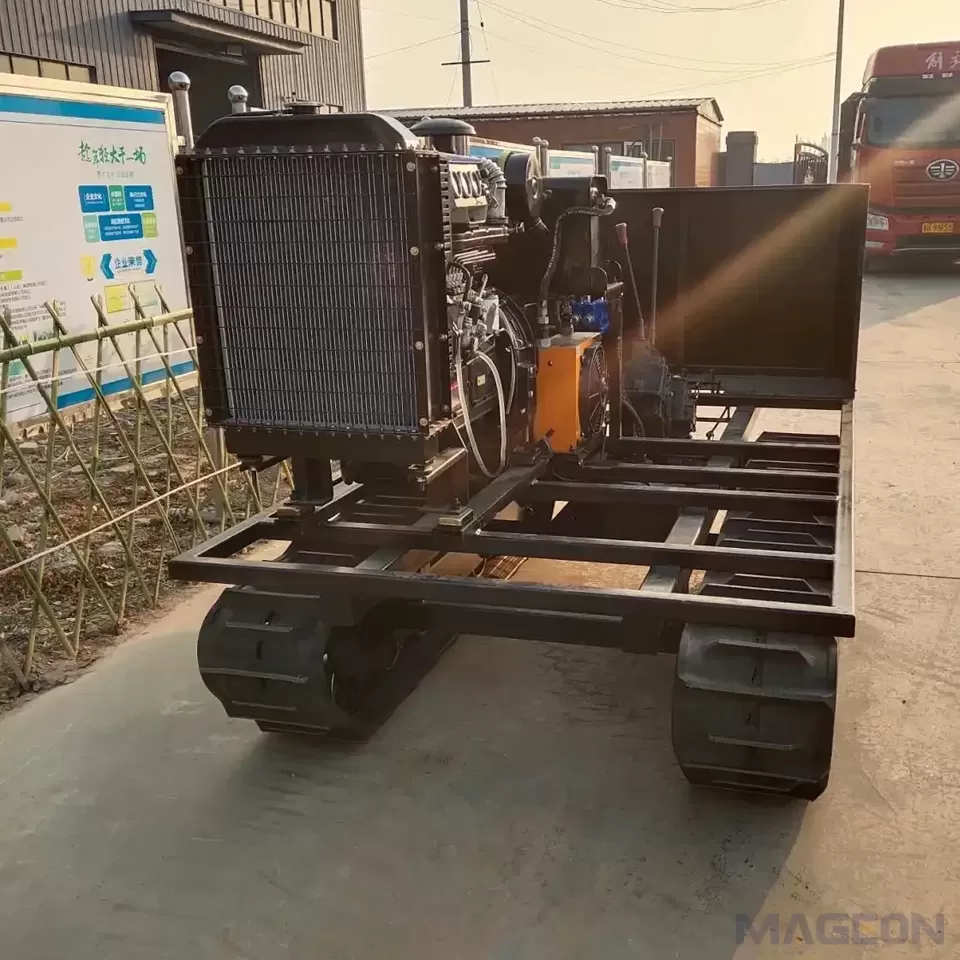
A Telescopic Crawler Undercarriage uses a hydraulic system to adjust the track frame width — narrowing for transport to comply with road width restrictions, and widening during operation to increase stability. This design is particularly suitable for large equipment that frequently transfers between multiple job sites.
Typical Load Range: 20 – 100 tons
5.5 Other Application Areas
· Bulldozers: Heavy dozing, site levelling
· Crushing & Screening Equipment: Mobile crushers, screeners
· Crawler Cranes: Heavy lifting operations
· Forestry Machinery: Operations on rugged forest terrain
· Agricultural Machinery: Large tracked tractors
5.6 Application Overview
| Application Area | Recommended Undercarriage Type | Typical Load Range | Key Performance Requirements |
|---|---|---|---|
| Rotary Drilling Rigs | Heavy Steel / Telescopic | 10 – 100 tons | High stability, high torque capacity, torsional rigidity |
| Exploration Drilling Rigs | Steel | 0.5 – 50 tons | Low ground pressure, off-road mobility |
| Excavator Conversions | Steel | 5 – 50 tons | Interface compatibility, structural strength |
| Telescopic Boom Cranes | Telescopic Steel | 20 – 100 tons | Variable width, operational stability |
| Bulldozers | Heavy Steel | 10 – 80 tons | Extreme traction, impact resistance |
| Crushing & Screening Equipment | Steel | 10 – 80 tons | Heavy load capacity, vibration resistance |
| Crawler Cranes | Steel | 20 – 100+ tons | Ultra-heavy load capacity, slewing stability |
6. Core Technical Advantages of MAGEON Custom Track Undercarriages
As a globally leading manufacturer of Custom Tracked Chassis, MAGEON has accumulated deep technical expertise in track undercarriages:
| Core Technology | Technical Advantage & Customer Value |
|---|---|
| Full Load Coverage | Customised solutions from 0.5 to 100 tons, covering everything from small exploration rigs to ultra-large rotary drilling rigs |
| Dual Technology Paths | Simultaneously offers both Steel Crawler Undercarriage and Rubber Track Undercarriage technologies, precisely recommended based on customer operating conditions |
| High-Strength Materials | Steel track chains use premium alloy steels such as 35MnB and 40Mn2, with overall quenching and tempering plus surface induction hardening — wear resistance improved by over 30% |
| Precision Machining | Core components such as drive sprockets and track rollers are produced using CNC machining centres and robotic welding, ensuring dimensional accuracy and assembly consistency |
| End-to-End Customisation | One-stop service from requirements analysis, solution design, manufacturing and delivery to after-sales support |
7. Maintenance & Lifecycle Management of Track Undercarriage Components
Proper maintenance is the key to extending the service life of Undercarriage Parts. The following maintenance guidelines are based on MAGEON's years of engineering practice:
| Component | Inspection Frequency | Maintenance Operation | Replacement Cycle (Reference) |
|---|---|---|---|
| Track | Daily | Check tension, shoe cracks, pin wear | Steel: 3,000-6,000 hrs; Rubber: 800-2,000 hrs |
| Drive Sprocket | Weekly | Check tooth wear, bolt torque | 2,000 – 4,000 hours |
| Track Roller | Daily | Clean debris, check floating seal leaks | 2,000 – 4,000 hours |
| Carrier Roller | Weekly | Check rotation smoothness, bearing noise | 3,000 – 5,000 hours |
| Idler | Weekly | Check seals, lubricant leakage, tensioner | 3,000 – 5,000 hours |
| Track Frame | Monthly | Check weld cracks, structural deformation | Based on inspection results |
MAGEON Golden Rules of Maintenance:
1、Maintain proper tension: Too tight accelerates wear; too loose causes derailment
2、Clean debris promptly: Remove mud and debris from tracks and rollers after each shift — spending 5 minutes a day can prevent 60% of undercarriage failures
3、Listen for unusual noises: Unusual sounds during travel often indicate impending component failure
4、Regularly inspect seals: Floating seal failure leads to rapid bearing damage
8. Frequently Asked Questions (FAQ)
Q1: What exactly does the "four wheels and one track" refer to in a track undercarriage?
A: "Four wheels and one track" is the industry term for the core components of a track undercarriage. The "four wheels" are the drive sprocket (power transmission), track rollers (load bearing), idler (guidance and tensioning), and carrier rollers (supporting the upper track run); the "one track" is the track itself (the ground-contacting travel component). These five components, together with the tensioning system and track frame, form the complete track travel system.
Q2: What is the difference between a steel crawler undercarriage and a rubber track undercarriage? How do I choose?
A: The Steel Crawler Undercarriage offers extremely high load capacity (up to 100+ tons) and excellent wear resistance, suitable for mines, quarries, rocky terrain, and other highly abrasive environments — but it damages paved surfaces and generates high noise. The Rubber Track Undercarriage offers low ground pressure, no surface damage, and low operating noise, suitable for urban construction, ecologically sensitive areas, and soft farmlands — but its load capacity is relatively limited (typically ≤ 30 tons). The choice depends on your specific operating conditions — MAGEON offers customisation services for both technologies.
Q3: What is the function of the track tensioning system?
A: The core function of the tensioning system is to adjust track tightness and prevent the track from becoming too loose and derailing. It typically consists of a tension spring, buffer spring, and tensioning screw. Proper tension is critical — too tight accelerates pin and bushing wear; too loose increases the risk of derailment.
Q4: Can MAGEON customise undercarriages for rotary drilling rigs?
A: Yes. The Rotary Drilling Rig Chassis is one of MAGEON's core businesses. Rotary drilling rigs generate enormous reactive torque and vertical loads during deep-hole drilling — only high-strength track undercarriages can provide the required stability and torsional rigidity. MAGEON provides 10-100 ton heavy-duty undercarriages specifically designed for rotary drilling rigs.
Q5: What is an excavator conversion undercarriage?
A: An Excavator Conversion Undercarriage is a complete undercarriage solution that converts older or wheeled excavators into tracked equipment. MAGEON provides custom mounting interfaces compatible with upper structures from different excavator brands, helping customers upgrade equipment at lower cost and extend service life.
Q6: What are the advantages of a telescopic crawler undercarriage?
A: A Telescopic Crawler Undercarriage uses a hydraulic system to adjust the track frame width — narrowing for transport to comply with road width restrictions, and widening during operation to increase stability. This design is particularly suitable for large equipment that frequently transfers between multiple job sites, such as telescopic boom cranes and large drilling rigs.
Q7: What undercarriage parts does MAGEON supply?
A: MAGEON supplies a complete range of Undercarriage Parts, including: drive sprockets, idlers, track rollers, carrier rollers, tracks (both steel track chains and rubber tracks), track frames, and tensioning systems. All components are manufactured from premium materials and processed with precision heat treatment.
Q8: How can I extend the service life of my track undercarriage?
A: Follow these maintenance golden rules:
① Maintain proper track tension;
② Clean mud and debris from tracks and rollers after each shift — spending 5 minutes a day can prevent 60% of undercarriage failures;
③ Listen for unusual noises during travel to detect early signs of component failure;
④ Regularly inspect floating seals to prevent bearing damage. Regular maintenance can extend undercarriage life by over 30%.
Q9: What is the load capacity range for MAGEON custom undercarriages?
A: MAGEON provides Custom Tracked Chassis solutions from 0.5 to 100 tons, covering the full load range from small exploration drilling rigs to ultra-large rotary drilling rigs and crawler cranes.
Q10: What is the MAGEON custom undercarriage service process?
A: MAGEON provides a full-process customisation service:
① Requirements analysis and operating condition assessment →
② Solution design and technical validation →
③ Detailed engineering design and hydraulic system matching →
④ Manufacturing and quality control →
⑤ Delivery and after-sales support. From start to finish, MAGEON ensures every undercarriage precisely matches your equipment specifications and operational needs.
9. About MAGEON
MAGEON is dedicated to delivering high-quality Steel Crawler Undercarriage and Rubber Track Undercarriage custom solutions to the global heavy machinery industry. With deep technical expertise and extensive engineering experience, we tailor travel-drive solutions that excel in the most extreme working conditions.
Our Core Capabilities:
· Load Capacity: Customised solutions from 0.5 to 100 tons
· Undercarriage Types: Steel track undercarriage, rubber track undercarriage, telescopic track undercarriage
· Application Areas: Rotary drilling rigs, exploration drilling rigs, excavator conversions, bulldozers, crawler cranes, crushing and screening equipment, forestry machinery, agricultural machinery, and more
· Parts Supply: Complete range of Undercarriage Parts including drive sprockets, idlers, track rollers, carrier rollers, and tracks
From design to delivery, MAGEON stands for exceptional quality and dependable service, helping your equipment perform efficiently on the most challenging terrains.
Please leave your customization requirements, and we will contact you as soon as possible!
Leave your requirements, we'll get back to you within 24 hours.