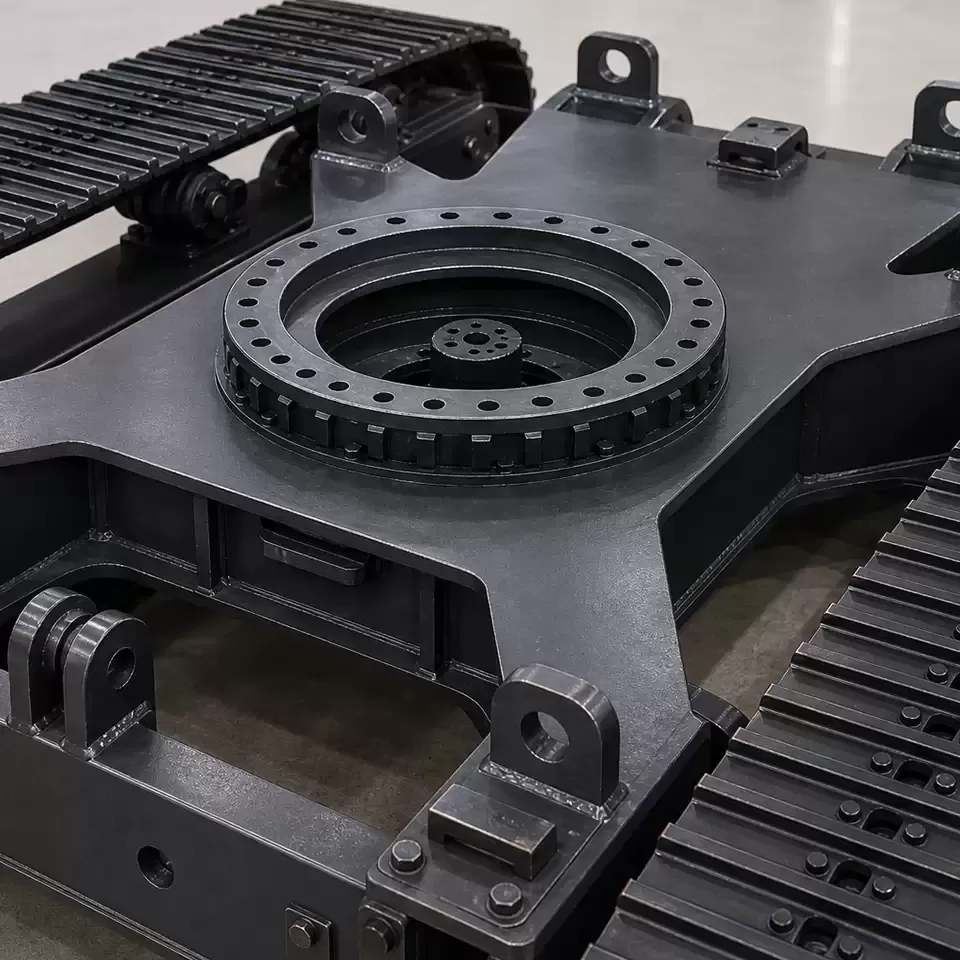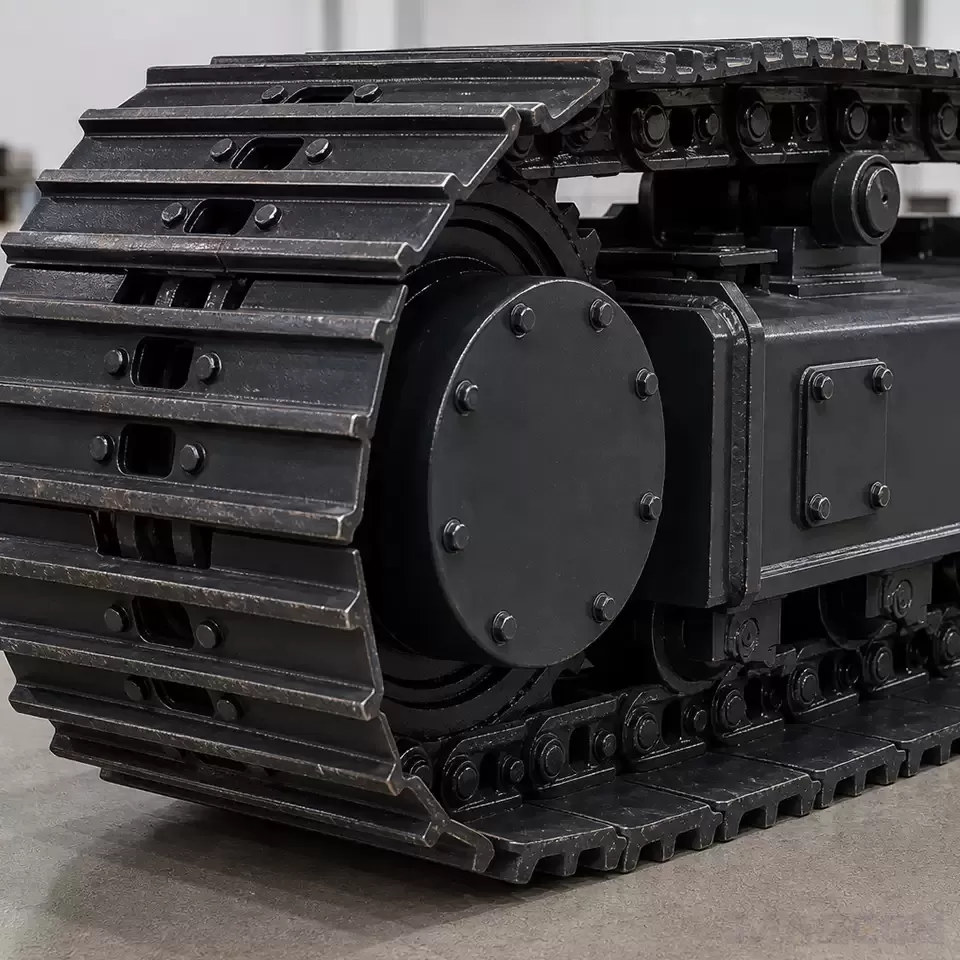

What Should OEMs Confirm Before Selecting a Crawler Undercarriage for Material-Handling Equipment?
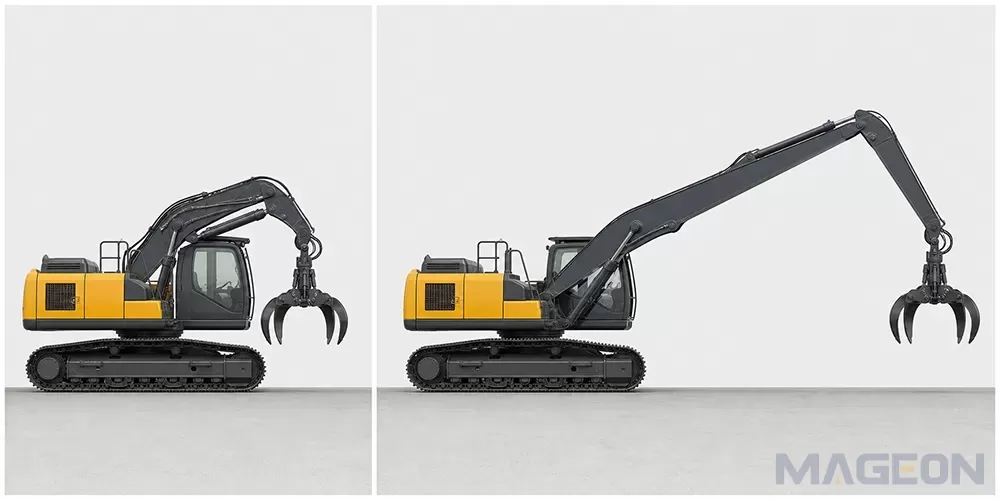
Start with the handler’s postures, not with a catalogue-style lower assembly choice. A material-handling unit can look very different while travelling with its boom tucked in and while handling with the boom and grapple away from the house. Those visible changes are a useful reminder that the lower assembly must be discussed in relation to the complete unit, the intended work cycle, and the documents available for review.
This article is a preparation guide. It does not calculate reach, load, ground pressure, or stability. Its purpose is to help an OEM assemble a clear basis for a technical conversation and to separate known design material from items that still need specialist review.
Why Material-Handling Equipment Needs a Whole-Machine Selection Context
Material handlers combine a tracked base with an upper house, boom system, attachment, operator area, service zones, and a planned task. None of those elements should be treated as background detail. The position of the boom, the attachment chosen, the way the unit moves between work points, and the space needed for access can all change the questions placed before an undercarriage supplier.
For that reason, the opening discussion should describe the entire arrangement in plain, traceable terms. The phrase crawler undercarriage center of gravity is useful here as a pointer to the relationship between upper-machine layout and lower-assembly planning. It is not a shortcut to a stability result, and it does not remove the need to review the actual unit.
Identify Relevant Machine States Before Comparing Options
Separate the postures that the handler is expected to use. One record may cover a compact travel posture. Another may show the boom extended for handling. A third may describe a parked, service, or transport arrangement. The task is not to rank those postures in the article; it is to state which ones belong in the OEM’s brief and which are outside the current review.
| Details to record | Why it belongs in the brief | Boundary to keep visible | |
|---|---|---|---|
| Travel posture | Folded boom arrangement, attachments carried, and planned movement route | Shows the unit as arranged for relocation | Does not demonstrate travel speed, grade ability, or clearance |
| Handling posture | Boom and grapple position, attachment condition, and task description | Places the upper structure in its intended work arrangement | Does not demonstrate allowable load, reach, or stability |
| Service posture | Access panels, safe service areas, and parts of the unit needing attention | Keeps service access from becoming an afterthought | Final service clearances still need reviewed layout material |
| Transport posture | Stowed arrangement and stated transport constraints | Separates movement between sites from on-site work |
Write down each posture using the same unit identity and document revision. If the boom, grapple, cab, counterweight, or installed accessories may change, make that change visible. A technically useful brief distinguishes “known,” “planned,” and “not yet supplied” instead of treating them as one category.
Confirm the Upper-Machine Layout and Information Ownership
The upper-machine package should identify the information that exists and who controls it. Arrangement drawings, attachment descriptions, interface sketches, revision notes, and available mass-distribution data can all have different owners and different levels of maturity. A preliminary model can support an early conversation, but it should not quietly become the controlling reference for a final configuration.
| Preferred source | How it is used | Item that may remain open | |
|---|---|---|---|
| Upper house and boom layout | Current OEM arrangement material | Describes the physical envelope above the tracks | Later design revisions and optional attachments |
| Grapple or other tool | OEM attachment description | Identifies the intended upper-machine condition | Included tool variants and operating posture |
| Mass-distribution material | Controlled OEM technical record | Shows what data is available for specialist review | Revision validity and treatment in final engineering work |
| Configuration changes | OEM change record | Prevents old and new arrangements from being mixed |
Ownership matters because a review can only use the material supplied. The supplier can identify missing details or ask whether a changed attachment is in scope. It should not infer an omitted tool, a future modification, or a value that the OEM has not released.
Define Ground, Access, and Service Conditions
Describe the places where the unit will move, work, stop, and receive service. Useful notes may cover surface type, internal route restrictions, transitions, obstacle context, available room around the machine, and the access needed for planned maintenance. These descriptions set the scene for evaluation; they are not claims about what the finished unit can cross, carry, or withstand.
Keep separate records for a normal operating area and an exceptional access issue. For example, an infrequent transition or restricted approach may deserve a note even if it is not the primary work environment. This approach is different from crawler crane undercarriage selection, where lifting and soft-ground questions may control the discussion. A material handler needs its own duty description rather than borrowed assumptions from another machine category.
Clarify Mounting Interfaces and Project Boundaries
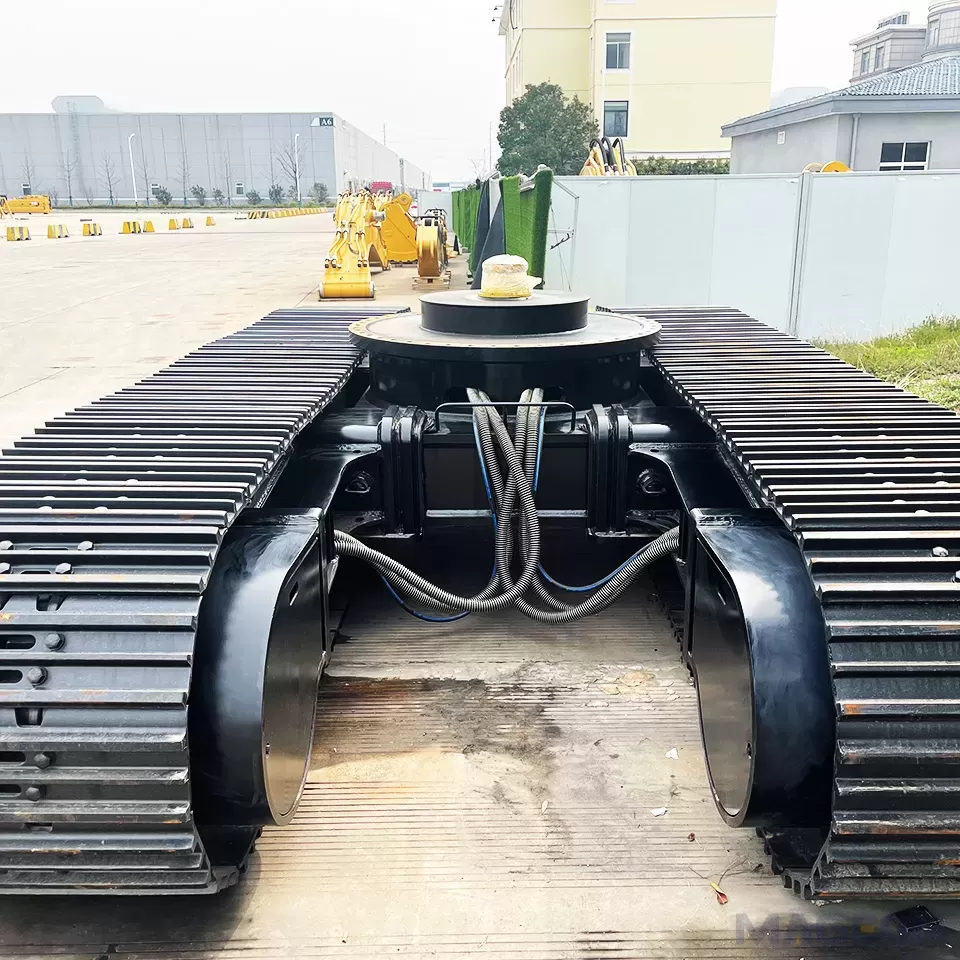
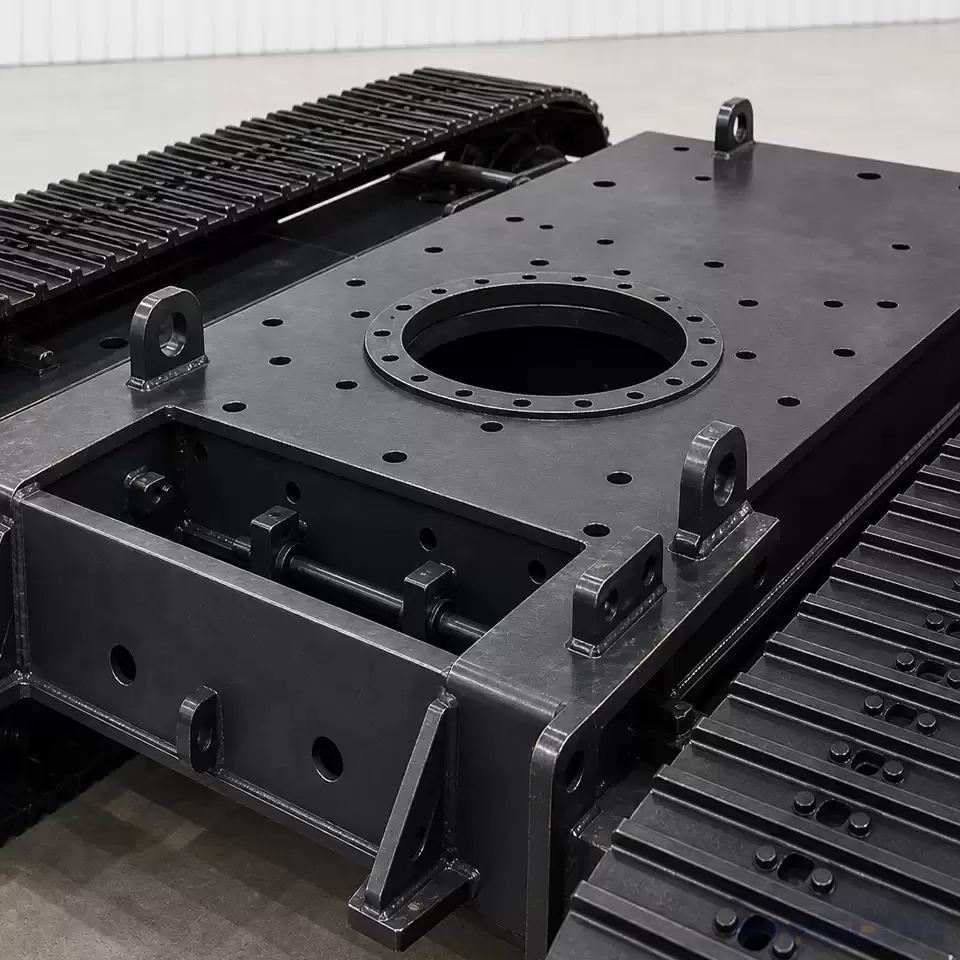
The interface between the upper machine and the tracked base needs a defined source, a revision, and an owner. At an early stage, the OEM may provide an arrangement sketch, reference surfaces, envelope restrictions, or a preliminary connection concept. Those materials are valuable when their status is clear. They are not the same as a released connection design.
| Useful record | Question it supports | What it does not establish | |
|---|---|---|---|
| Connection area | Available drawing reference and revision | Which physical boundary is under discussion | Final fastening, structure, or fit |
| Envelope around the base | Packaging and access restrictions | Where clashes or access questions may arise | Final clearance after all revisions |
| Drive and utility edge | Known whole-unit interface description | What systems are included in the conversation | Hydraulic, electrical, or controls compatibility |
| Crawler undercarriage mounting dimensions | Controlled layout reference when available | A common language for interface discussion |
Use crawler undercarriage mounting dimensions as a controlled reference phrase, not as an assumption that every required interface detail is already available. It directs the team to the drawing set, version, and responsible engineering contact needed for the next step.
Build a Review-Ready Selection Package
The final package should allow a reviewer to understand the handler without reconstructing it from emails or disconnected sketches. It can contain open questions. In fact, keeping open questions explicit is safer than disguising them as typical values.
| Reader benefit | Check before release | Follow-up owner | |
|---|---|---|---|
| Unit identity and revision | Keeps all material tied to one arrangement | Current name, revision, and included equipment | OEM project lead |
| Posture register | Shows which travel, handling, service, and transport situations matter | Included and excluded situations | OEM engineering team |
| Layout and interface references | Gives reviewers usable physical context | Source, maturity, and revision | OEM design owner |
| Site and access notes | Places the unit in its expected environment | Known conditions versus assumptions | OEM project team |
| Open-question list | Makes unresolved matters traceable | Decision affected and needed evidence |
Before release, check that the documents refer to the same equipment version and that no attachment or layout change has been omitted. Then state the desired outcome: an exploratory conversation, a scoped technical evaluation, or a quotation preparation step. That distinction keeps commercial preparation separate from final engineering release.
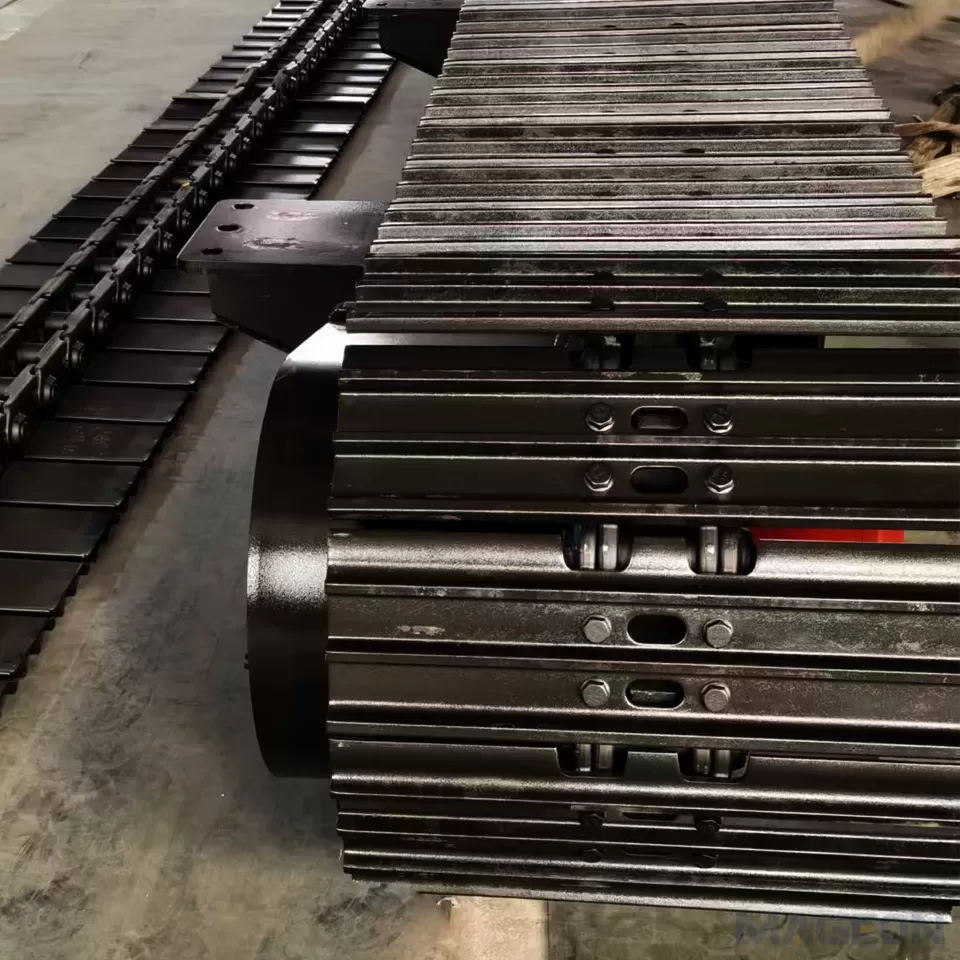
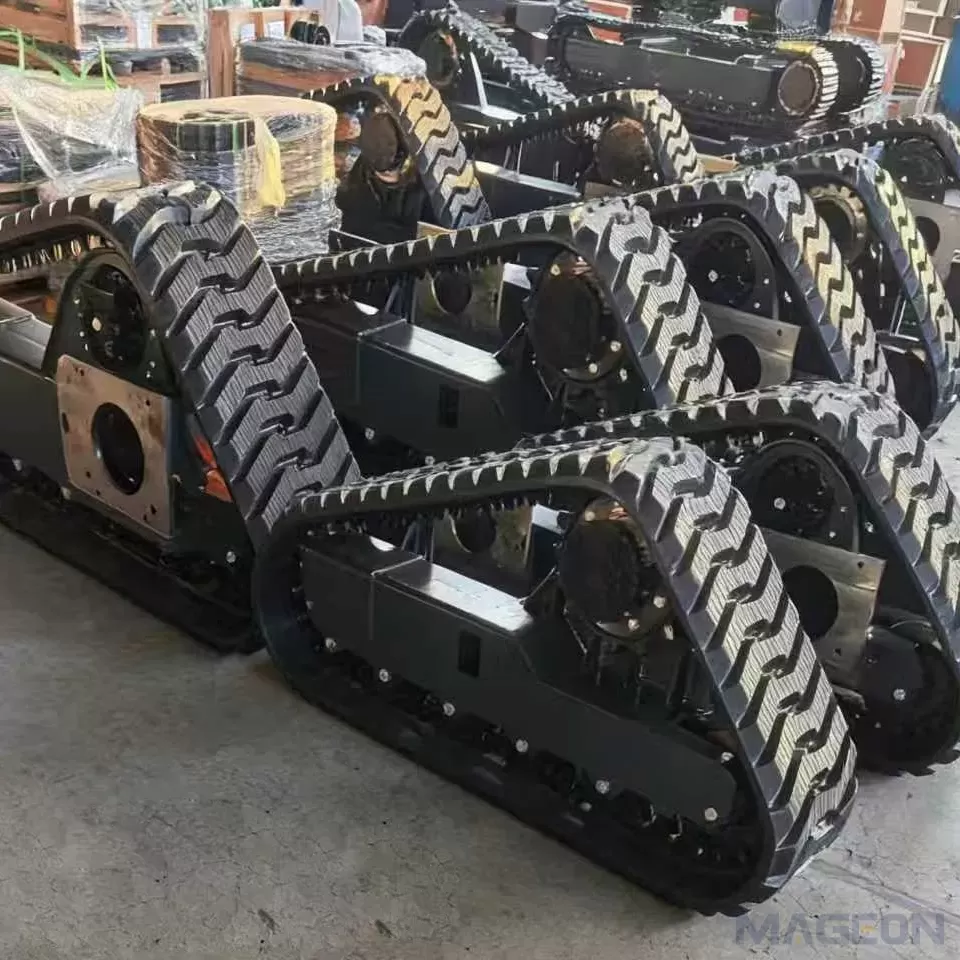
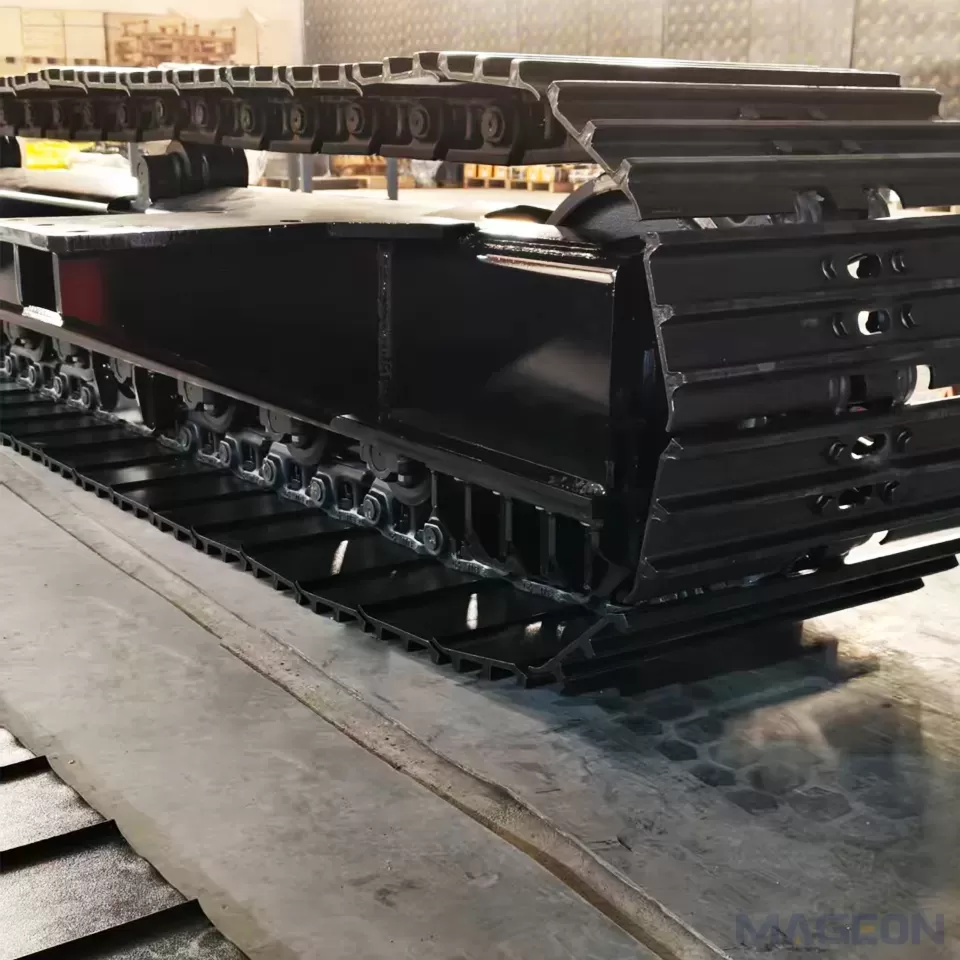
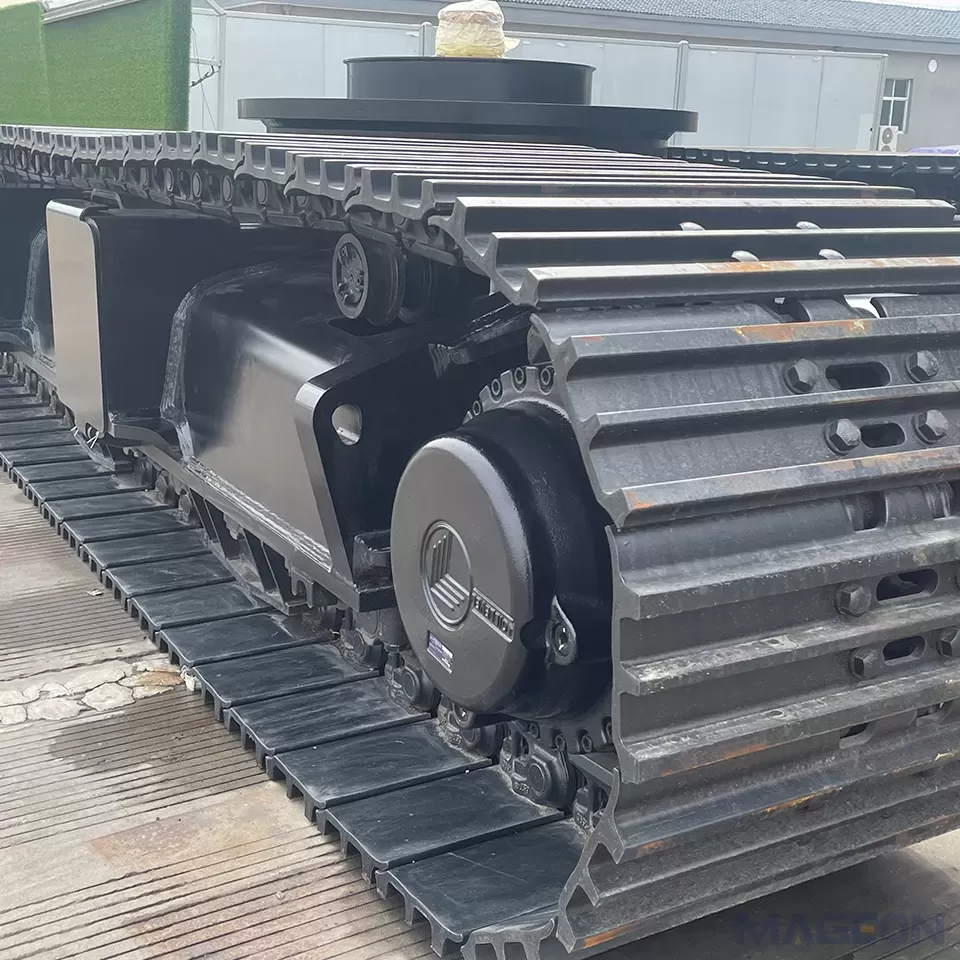
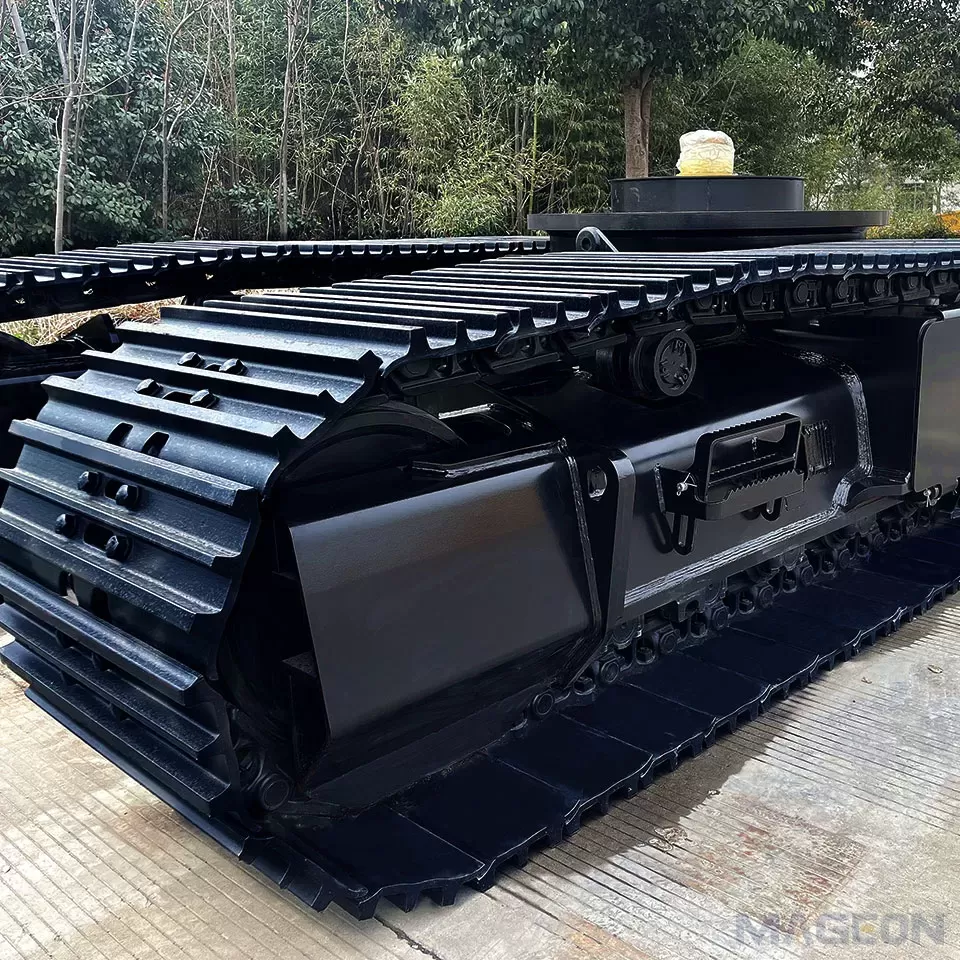
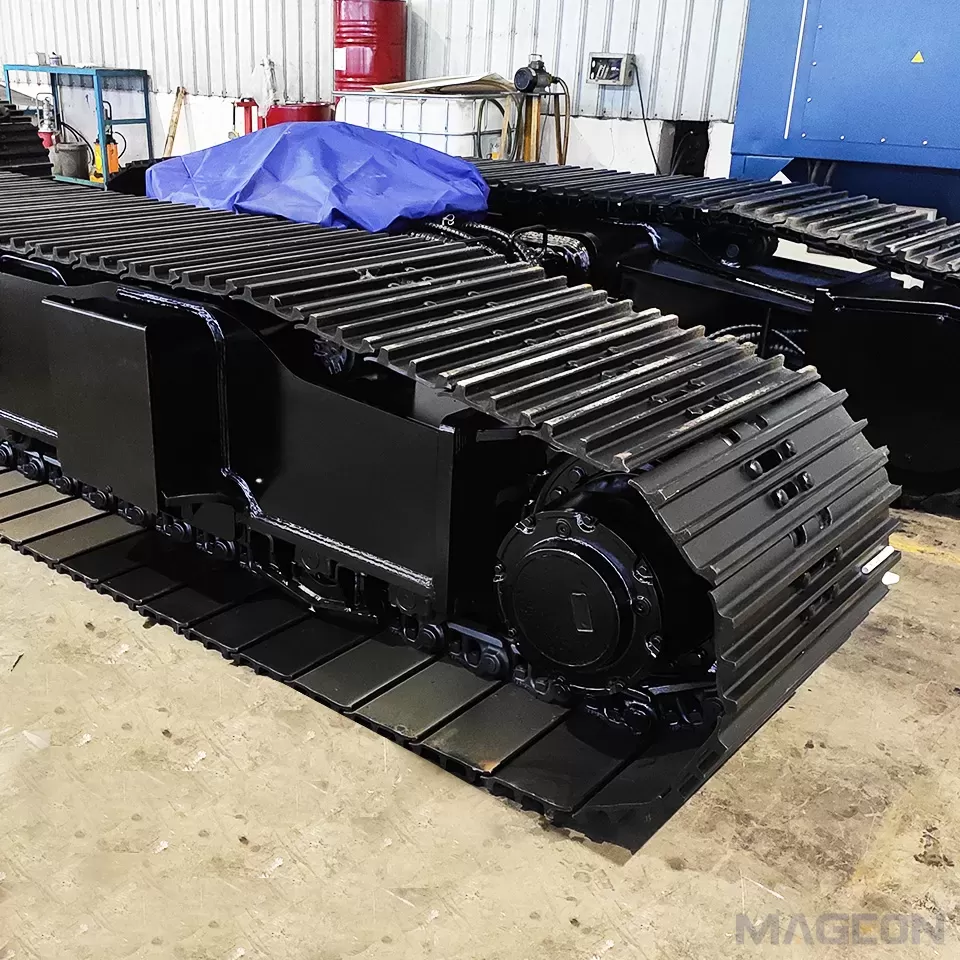
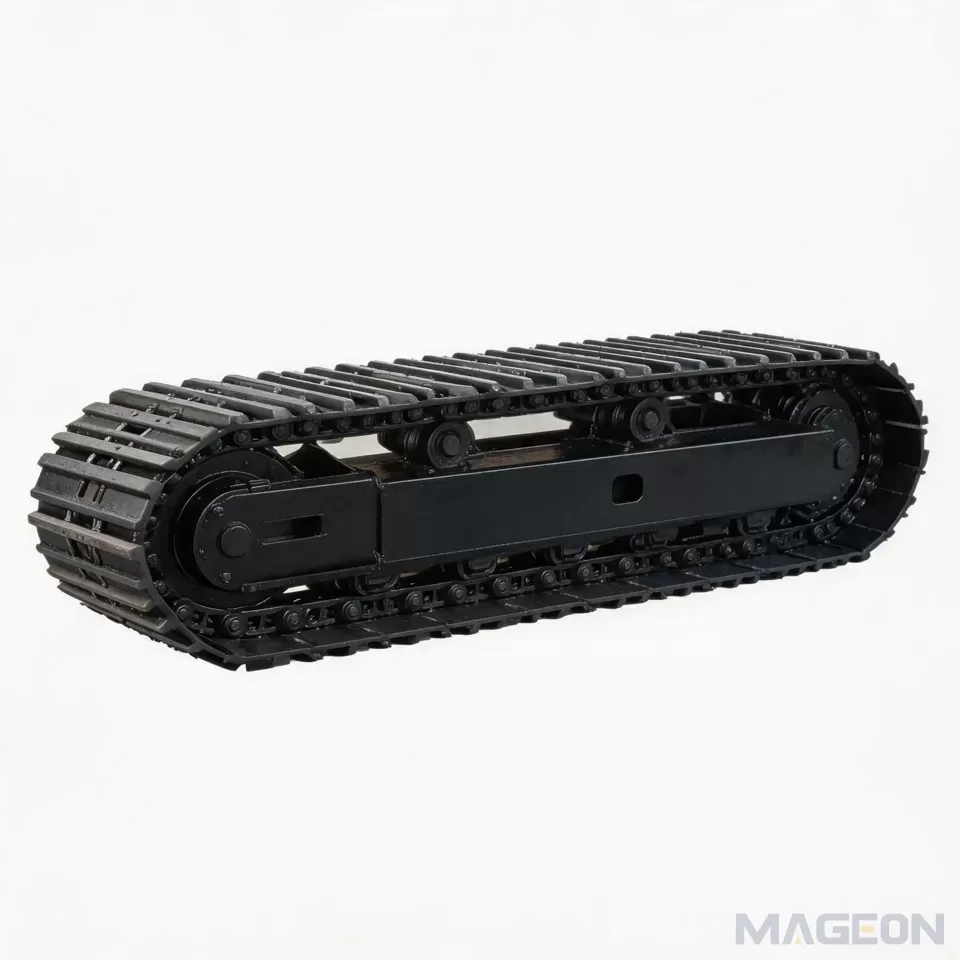
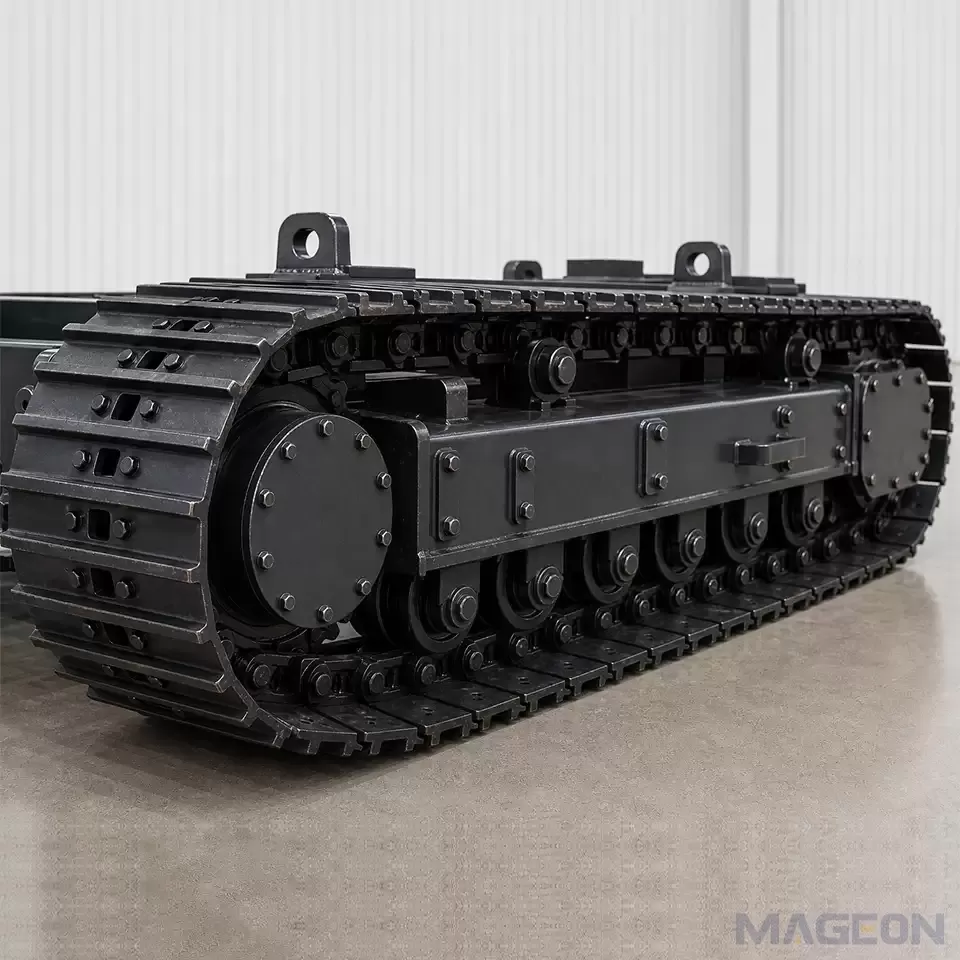
For a crawler-undercarriage technical evaluation or project inquiry, provide the material-handler type, relevant boom and attachment postures, controlled layout references, available mass-distribution material, interface information, site and access notes, service expectations, and open questions. A complete crawler undercarriage assembly can then be considered against a documented unit rather than a generic machine label.
Frequently Asked Questions
Does a folded travel boom define the handling condition?
No. A folded boom describes one posture only. Record the handling posture separately when it is part of the intended duty. The article does not assign technical significance to either posture without the actual design material.
Can a grapple be omitted from the first discussion?
Only if it is genuinely outside the stated scope. If the attachment is planned, optional, or unresolved, record that status. Do not leave it out merely because its final detail is still being developed.
Are preliminary drawings useful?
Yes, provided their status and revision are explicit. They can help frame early questions, but they do not replace controlled layout records for a final configuration decision.
Who controls the interface record?
The OEM should identify the source and revision of the available interface material. The final connection remains subject to the appropriate engineering process and cannot be assumed from an initial review.
Why include service access in an undercarriage discussion?
Service access affects the complete-machine package and may expose layout questions early. It should be recorded as an intended requirement, not presented as proof that a final clearance or maintenance result has already been achieved.
Please leave your customization requirements, and we will contact you as soon as possible!
Leave your requirements, we'll get back to you within 24 hours.