What Can Abnormal Crawler Undercarriage Wear Patterns Reveal?
Abnormal crawler undercarriage wear patterns can reveal where contact, side loading, contamination, or operating stress may be concentrated. They can help an OEM decide what to inspect and measure next. They cannot, by themselves, prove a root cause, establish remaining service life, or show that one component or supplier is responsible.
The useful question is therefore not “What does this mark diagnose?” It is “What observation should be verified, what related evidence is missing, and who should review it?”
What Can a Wear Pattern Tell You—and What Can It Not Prove?
A wear pattern is an observation. It becomes useful when it is recorded with location, direction, severity, operating time, and comparison points. A polished surface on one roller flange, for example, means something different when it appears on both sides of a machine than when it is limited to one position on one side.
The same visible condition may also have more than one contributor. Track adjustment, alignment, a roller that is not rotating freely, packed material, side-slope operation, repeated turning, load distribution, and the underfoot surface can interact. A single photograph usually cannot separate these factors.
Use three evidence levels:
Observed: what is visible or measured, without interpretation.
Possible contributor: a condition that could be associated with the observation.
Confirmed cause: a conclusion supported by measurements, machine specifications, maintenance history, and qualified engineering or service review.
Keeping these levels separate prevents a reasonable inspection clue from becoming an unsupported diagnosis.
Which Undercarriage Areas Should Be Inspected?
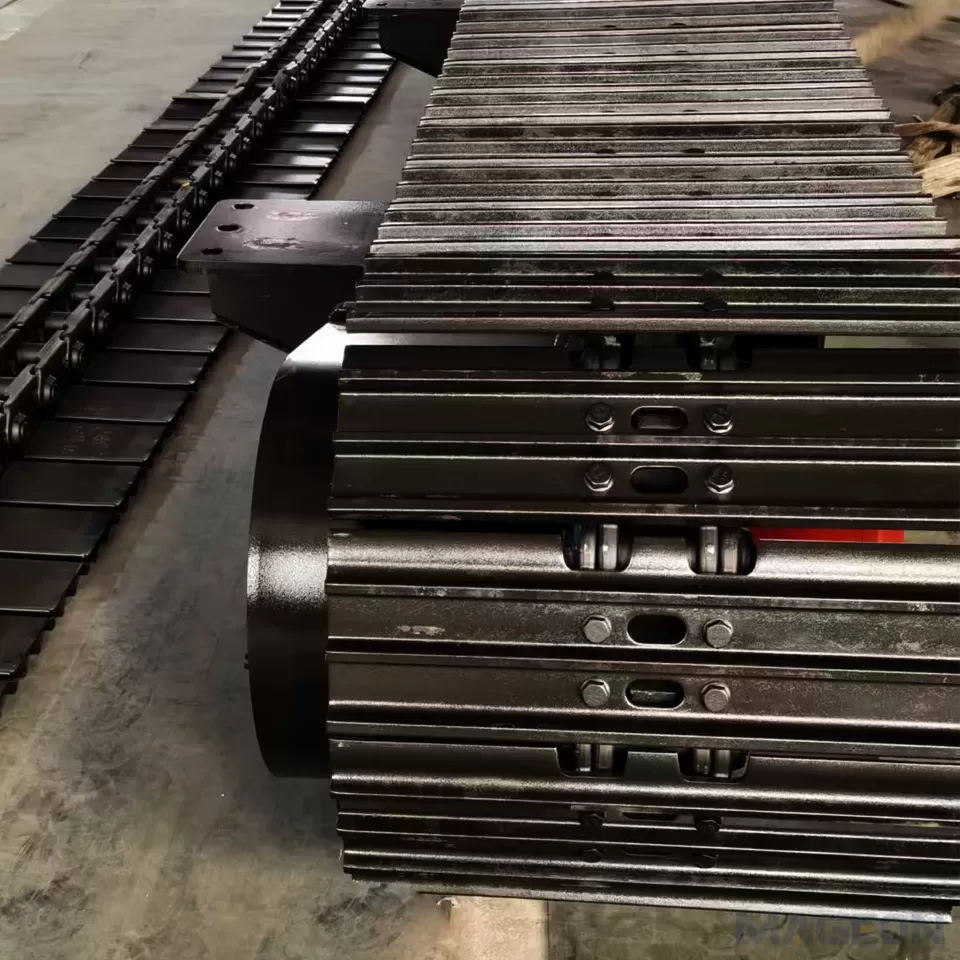
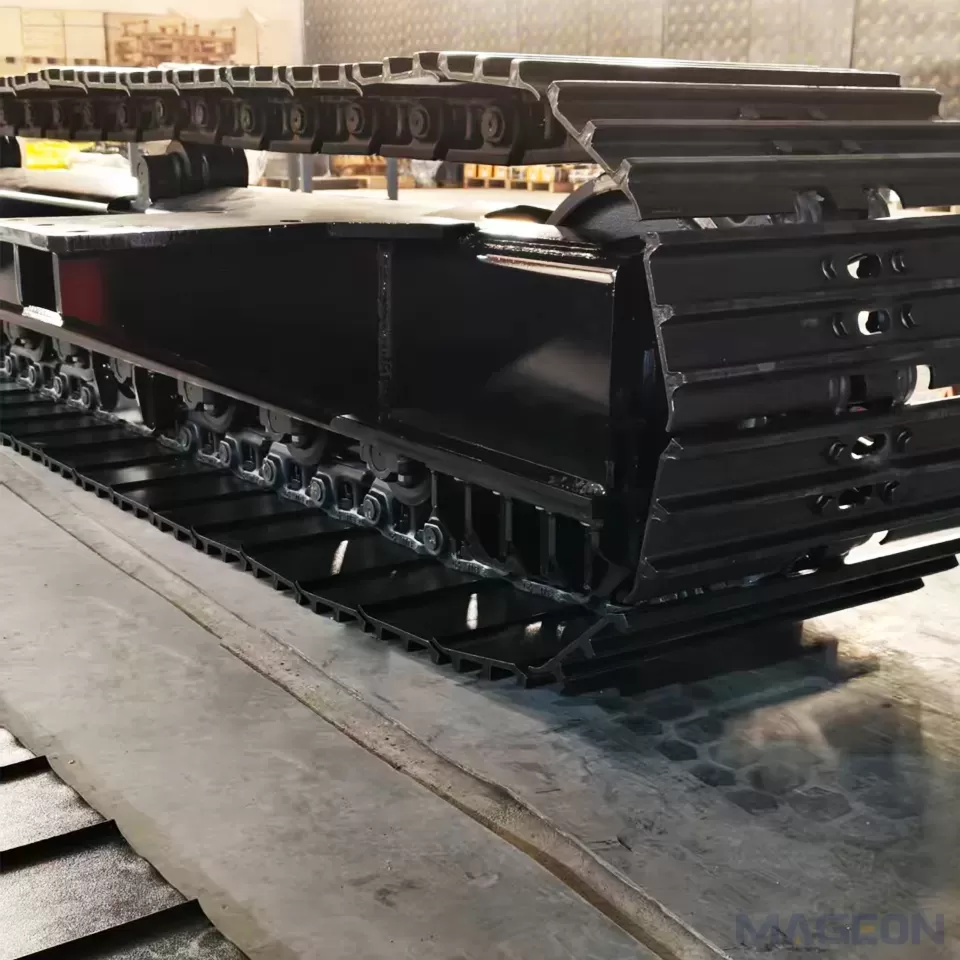
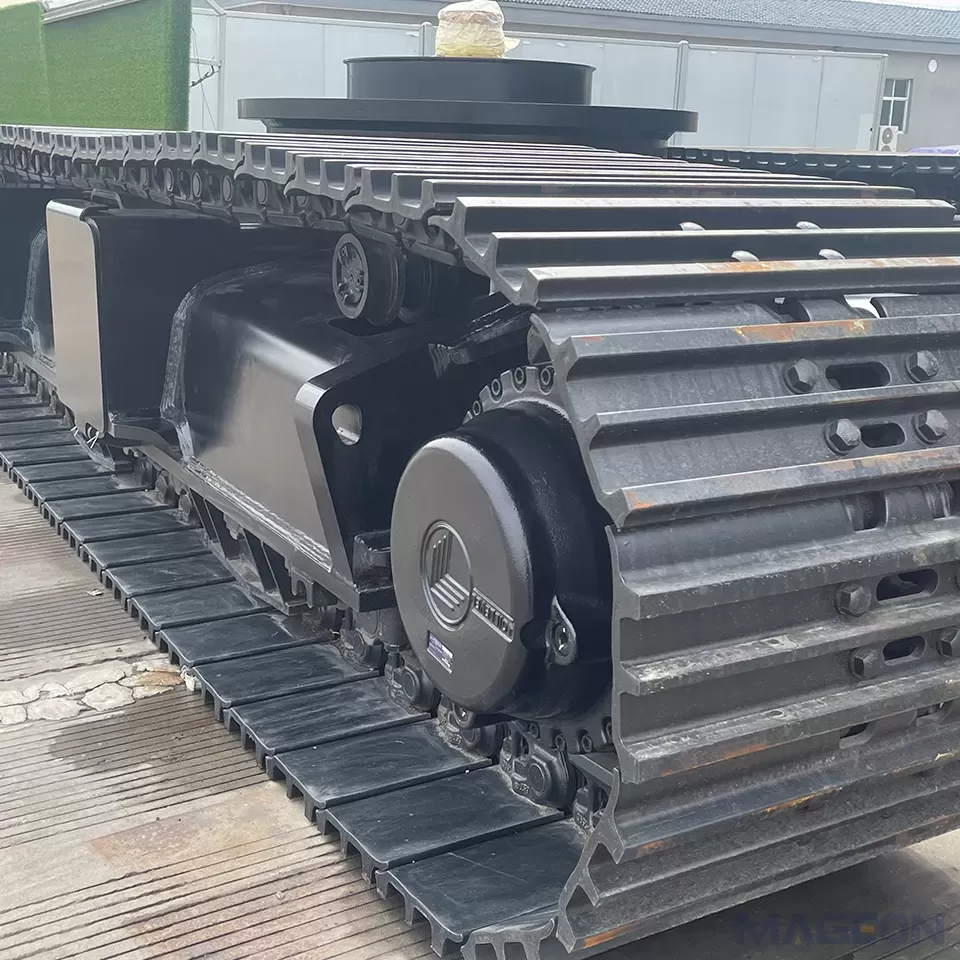
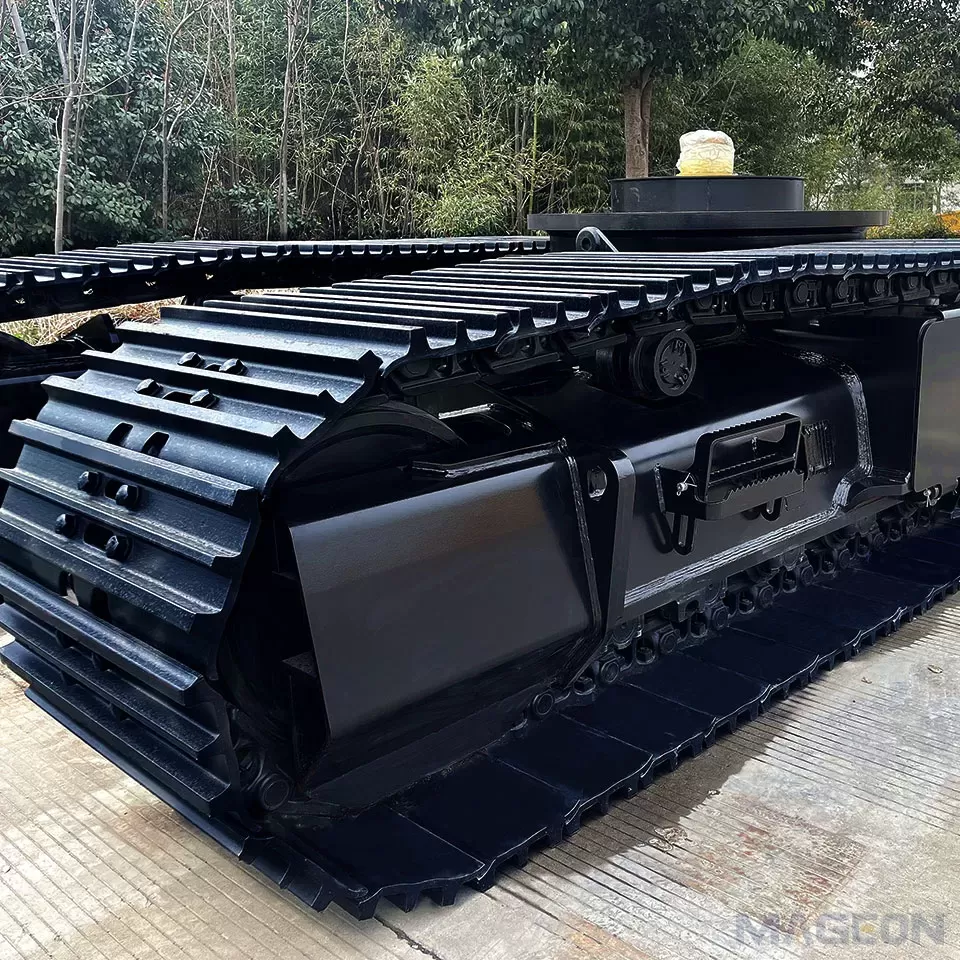
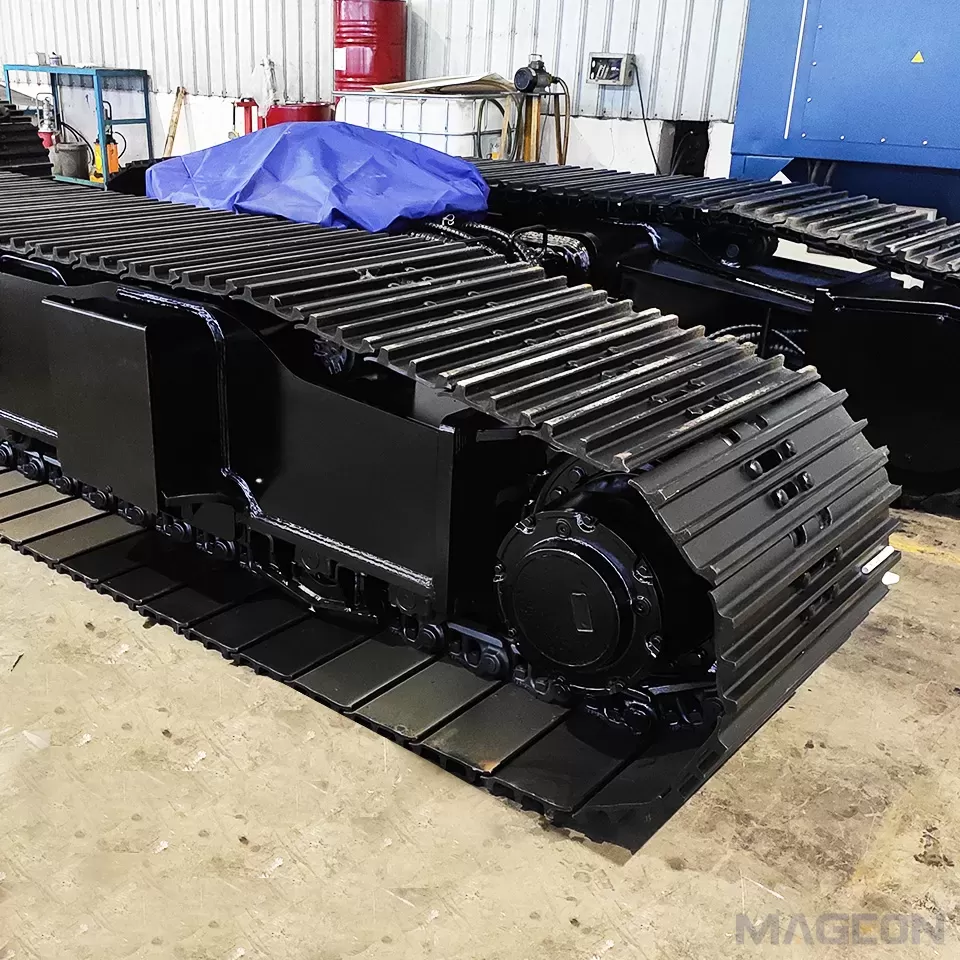
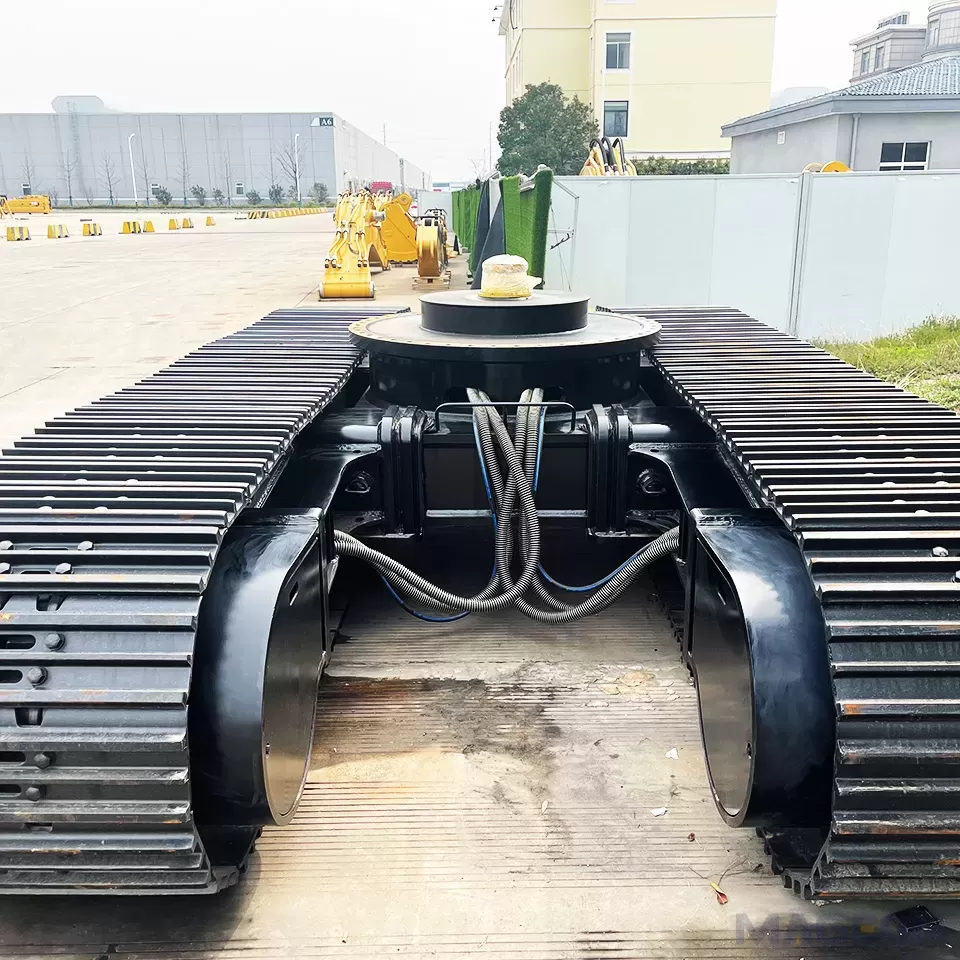
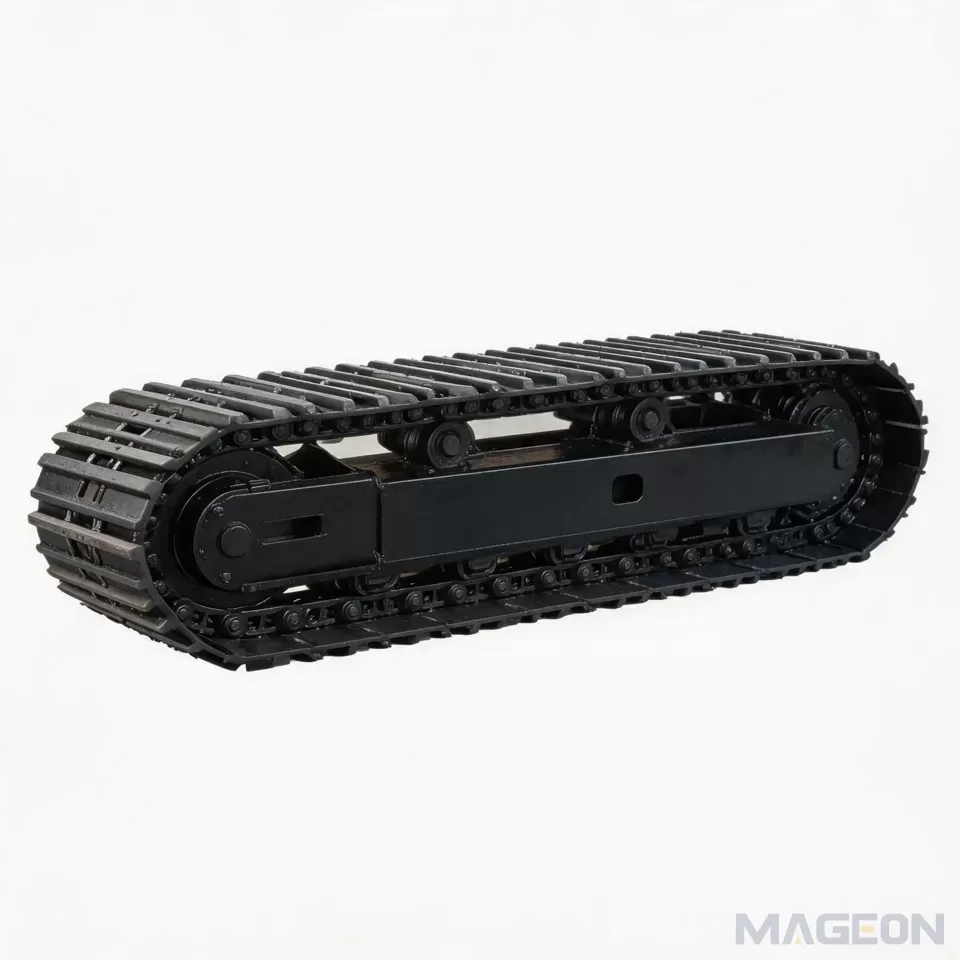
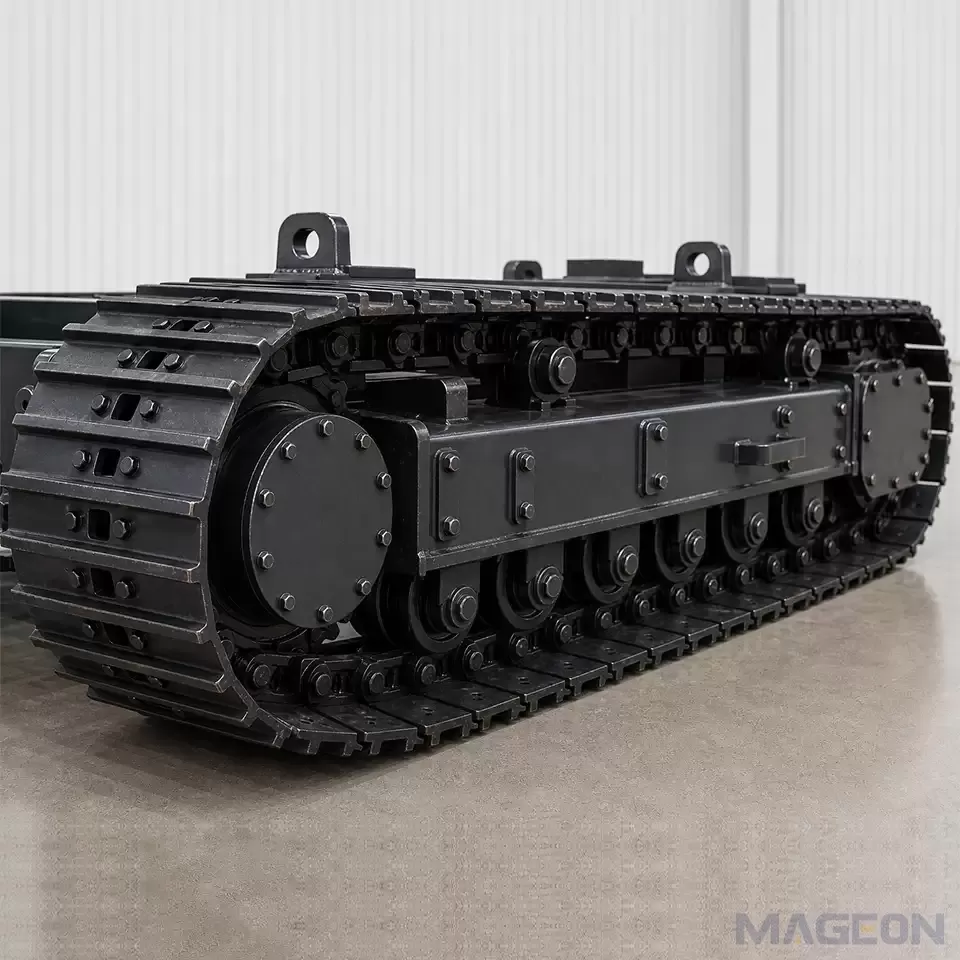
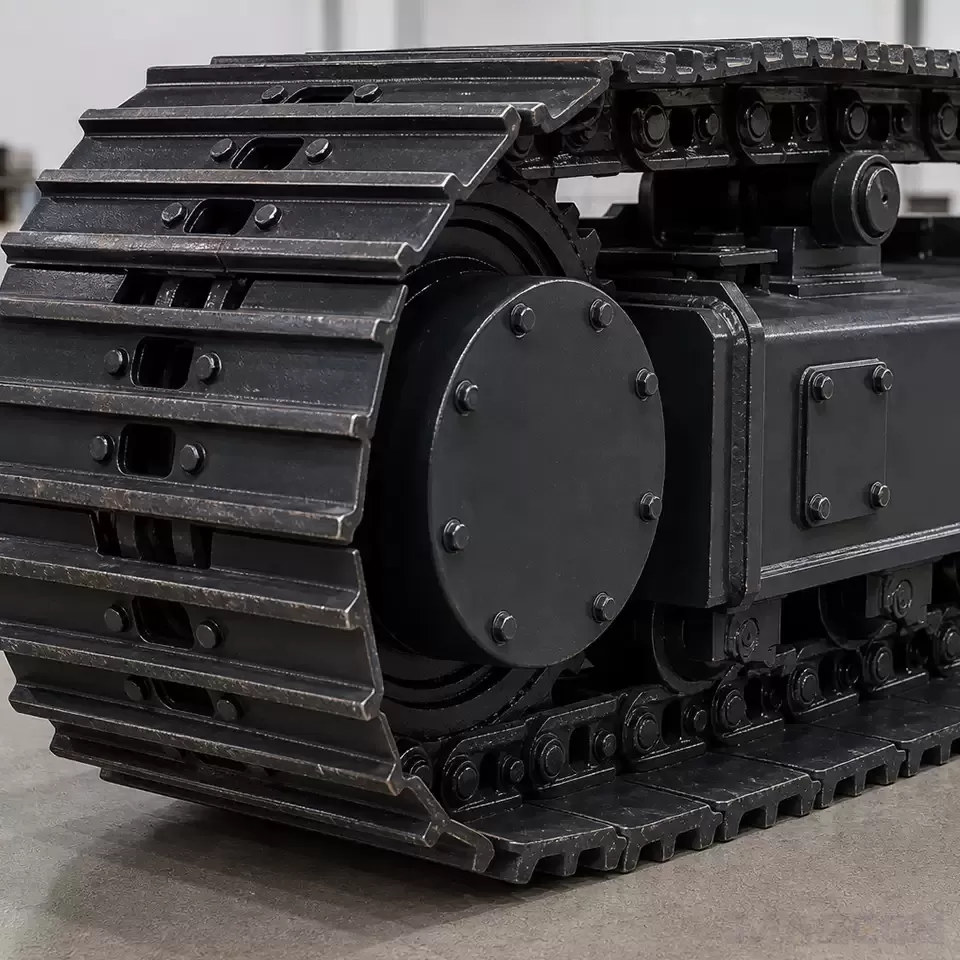
Inspect the system as a connected assembly, not as a collection of isolated parts. Compare the visible roller contact pattern with the intended track roller layout, but do not infer load distribution from wear alone.
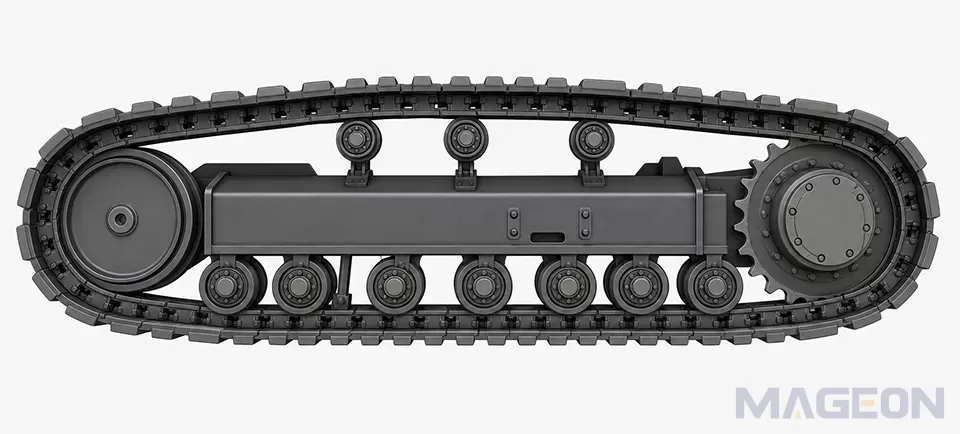
For its own dozers, Caterpillar's maintenance guidance tells operators to inspect track hardware, links and bushings, sprockets, idlers, rollers, carrier rollers, debris accumulation, and track adjustment. The listed observations include loose hardware, unusual surface damage, sprocket-pocket deformation, idler irregularities, and rollers that may not rotate freely. These are useful inspection categories, but the applicable machine manual and component specifications remain controlling for any particular machine. See Caterpillar's dozer undercarriage maintenance guidance.
| What to record | Possible contributing factors | What must be confirmed | |
|---|---|---|---|
| Track links, pins, and bushings | Surface location, side, extent, pitting or scalloping, and change over time | Adjustment, contamination, travel direction, engagement, or operating load | Approved wear limits, measured dimensions, lubrication design, and alignment |
| Sprocket teeth or pockets | Loaded face, side-to-side difference, tooth profile, and matching chain condition | Chain elongation, engagement, reversing, packing, or incompatible wear states | Track-chain and sprocket compatibility, pitch, measured wear, and replacement criteria |
| Idlers, track rollers, and carrier rollers | Flange contact, tread condition, free rotation, leakage, debris, and position-specific differences | Side loading, alignment, restricted rotation, packing, or uneven support | Roller condition, frame geometry, clearances, and machine-specific service limits |
| Track shoes and hardware | Loose fasteners, bending, cracks, missing parts, and localized surface damage | Impact, surface abrasiveness, loose hardware, turning, or unsupported transitions |
Do not transfer a branded inspection threshold or visual example to a different undercarriage. Use the table to organize evidence, then apply the correct drawing, service manual, or engineering instruction.
Why Does Wear Distribution Matter More Than One Isolated Mark?
Distribution gives context. Record whether the condition is:
similar on both tracks or concentrated on one side;
repeated across several components or isolated to one position;
stronger toward the front, center, or rear of the contact path;
present on a loaded face, flange, tread, or adjacent mating component;
stable across inspections or progressing between measurements.
A left-right difference may justify checking alignment, side loading, operating routes, and component rotation. A front-rear concentration may justify reviewing load distribution, terrain transitions, and which rollers are carrying contact in the relevant duty condition. These are investigation paths, not automatic conclusions.
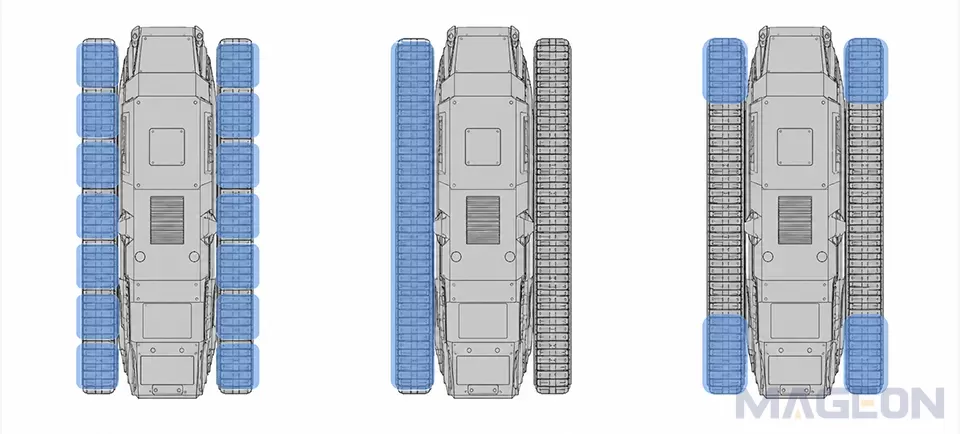
Compare like with like. Photographs should use similar viewpoints and include both sides. Measurements should use the same locations, method, and reference specification. If one side was recently serviced or replaced, record that history before comparing it with the other side.
Trend data is especially valuable. A Komatsu track-pad publication describes recording track elongation and pad wear and photographing both drive sprockets over time. That process is specific to Komatsu equipment, but it illustrates a broadly useful evidence principle: repeatable measurements and matched photographs are more informative than an isolated visual impression. See the Komatsu track-pad publication.
What Factors May Contribute to Abnormal Wear?
Start with factors that can be checked without inventing a diagnosis.
Adjustment and engagement. Verify crawler track tension against the applicable machine manual. Komatsu states in its maintenance guidance that both excessively loose and excessively tight conditions can increase wear, while Caterpillar also cautions against taut tracks on its dozers. The correct setting remains machine-specific. See Komatsu's undercarriage maintenance guidance.
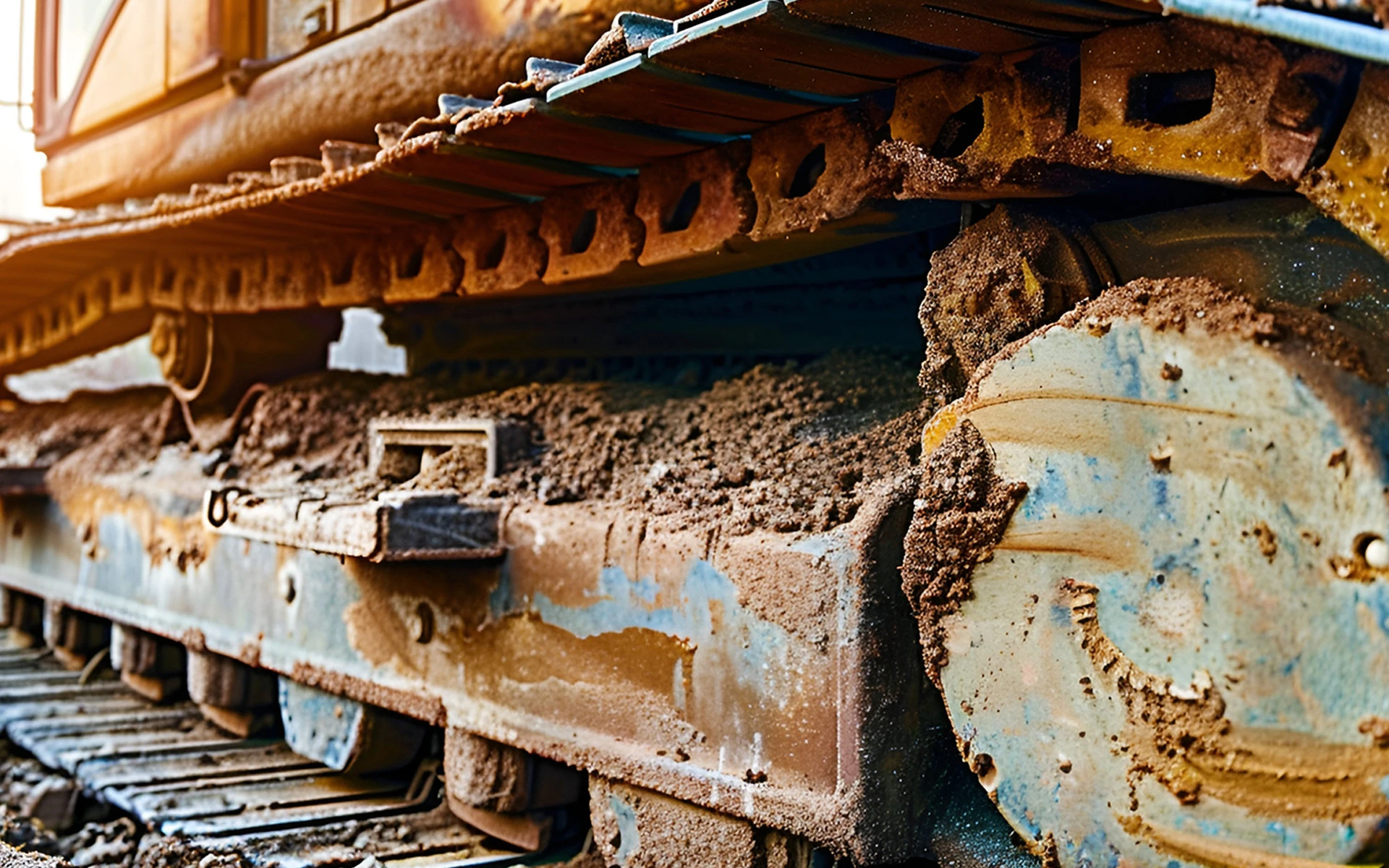
Restricted component movement. Packed material can prevent rollers or other components from moving as intended. Record where material accumulates, whether the affected roller rotates freely, and whether the condition returns after cleaning. Do not assume that cleaning alone resolves any resulting damage.
Operating technique. Repeated reversing, sharp turns, counter-rotation, travel across slopes, and transitions with uneven support can change contact and side loading. Caterpillar discusses these effects for compact track loaders in its operating and maintenance guidance. Treat this as equipment-specific guidance and compare it with the operating manual for the machine being inspected.
Terrain and duty conditions. Abrasive particles, moisture, packed cohesive material, rock impact, travel distance, speed, turning frequency, and load cycle can change the wear environment. A 2018 field study of steel-track machines found statistically different wear rates across the geographic areas in its dataset, supporting the need to record operating environment rather than assume one universal rate. The result is limited to the study population and does not provide a general service-life prediction. See Rich and Kluse's study.
Machine integration and load distribution. Center-of-gravity location, equipment layout, mounting geometry, and the actual duty cycle may change how the undercarriage is loaded. These relationships require project data and engineering analysis; a wear photograph cannot validate them.
What Evidence Should Be Recorded Before Engineering Review?
Collect evidence before parts are cleaned, adjusted, removed, or replaced when this can be done safely and within the applicable service procedure. Then add post-cleaning or post-service records without deleting the original condition.
| What to provide | Why it matters | Boundary | |
|---|---|---|---|
| Matched photographs | Both sides, full side views, affected component, mating component, and a scale reference where permitted | Shows location, symmetry, and surrounding condition | Photos do not establish dimensions or internal condition |
| Repeatable measurements | Same points, same method, date, operating hours, and applicable reference limit | Shows progression and supports comparison | Use only approved tools and machine-specific procedures |
| Operating record | Surface, moisture, slope, turning, reversing, travel distance, speed range, and load cycle | Connects the observation to actual duty conditions | Correlation does not prove one cause |
| Machine and service data | Equipment model, mass and load state, undercarriage configuration, component history, adjustments, replacements, and incidents | Identifies configuration changes and comparison limits |
If a measurement cannot be obtained reliably, record that limitation. A clear gap is safer than a precise-looking value taken with the wrong method.
When Should an OEM Stop Interpreting and Request Technical Evaluation?
Stop using a general article as the basis for a service decision when:
wear changes quickly between inspections;
several mating components show related damage;
one side differs substantially without a documented operating explanation;
a roller does not rotate freely, hardware is loose or missing, or a component is visibly cracked, bent, leaking, or displaced;
the track has derailed or repeatedly approaches derailment;
the applicable wear limit, adjustment procedure, or component specification is unavailable;
the decision concerns safe operation, structural integrity, remaining life, or continued use.
Follow the equipment manufacturer's safety and service instructions. Preserve the observations and request review from the responsible engineering or qualified service team. Do not convert a visual pattern into a safe-to-run decision.
What Information Should You Send for Technical Evaluation?
For a new project, a custom crawler undercarriage specification should identify the equipment, operating mass and load cases, key dimensions, mounting interfaces, travel requirements, terrain, gradients, duty cycle, and environmental conditions.
For an existing machine, add:
the undercarriage configuration and component identification;
matched photographs of both sides and the affected areas;
measured wear and adjustment data with methods and dates;
component installation, replacement, and maintenance history;
the operating pattern before the condition appeared;
any recent impact, derailment, adjustment, or configuration change.
MAGEON is a custom crawler undercarriage manufacturer and supplier whose primary offering is complete crawler undercarriage assemblies. For a technical evaluation or project inquiry, provide the equipment type, load information, key dimensions, duty conditions, and the available wear evidence. Final conclusions depend on the project data and engineering review.
Frequently Asked Questions
Can one-sided wear prove that the undercarriage is misaligned?
No. One-sided wear can justify checking alignment, but operating routes, slopes, component condition, unequal service history, contamination, and load distribution may also matter. Confirm alignment with the approved geometry and measurement procedure.
Does pitting or scalloping prove a material defect?
No. Surface appearance alone does not establish material, heat-treatment, lubrication, contamination, or loading history. Record the location and progression, then review the component specification and service evidence.
How often should undercarriage wear be inspected?
Use the equipment manufacturer's inspection and maintenance schedule, then consider whether severe or high-utilization duty requires additional monitoring. Keep the method and measurement locations consistent so that records can be compared.
Are photographs enough for an engineering review?
Photographs are useful for location, symmetry, and visible condition, but they do not replace dimensions, adjustment data, operating history, or internal inspection. Provide matched views and measurements whenever the approved procedure allows them.
Can an incorrect track adjustment contribute to wear?
Yes, both loose and tight conditions may contribute to wear, but the correct adjustment and its effects are machine-specific. Check the applicable manual and measure before changing the setting.
Should both sides be measured if only one side looks abnormal?
Yes. The opposite side provides a comparison, provided its component age, service history, and operating exposure are recorded. Differences should guide further checks rather than become a diagnosis on their own.
Please leave your customization requirements, and we will contact you as soon as possible!
Leave your requirements, we'll get back to you within 24 hours.