A Total Cost of Ownership Model for Crawler Undercarriages: Price, Wear Parts, Downtime and Residual Value
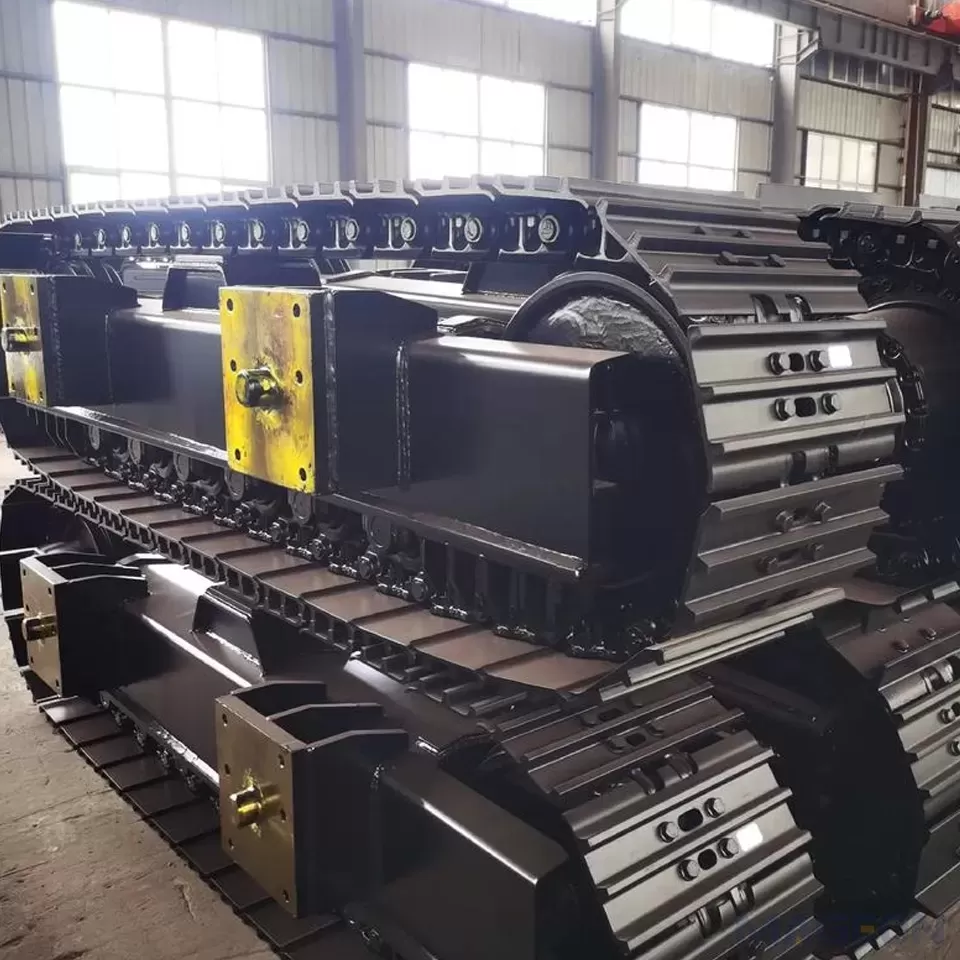
Total cost of ownership (TCO) for a crawler undercarriage is the sum of purchase price, wear parts, maintenance labour, downtime, energy effects and residual value, divided by productive operating hours. Purchase price is typically the smallest of these for a machine working high hours in abrasive conditions. A model that only compares quotations will systematically favour the cheaper chassis and then pay for it in chain replacements and lost shifts.
The model below uses normalised cost units rather than currency amounts, so it can be applied to any steel crawler undercarriage, rubber track undercarriage or custom tracked chassis without implying a specific price.
1. The Cost Structure
TCO = P + W + L + D + E − R, and cost per operating hour = TCO / H, where H is the productive hours over the analysis period.
| Term | What drives it | Common modelling error |
|---|---|---|
| P — purchase price | Configuration, load rating, drive system, documentation scope | Treating it as the decision criterion rather than one term |
| W — wear parts | Track chain, shoes, sprockets, rollers, idlers; strongly affected by soil abrasivity | Using supplier-predicted life without adjusting for actual ground conditions |
| L — maintenance labour | Number of interventions, accessibility of tensioners and grease points, workshop rate | Ignoring access: a poorly placed adjuster can double the labour time |
| D — downtime | Hours lost per intervention × contribution per machine hour | Omitting it entirely; often the largest single term on high-utilisation fleets |
| E — energy / efficiency effect | Rolling resistance, drivetrain losses, mass, cooling demand | Assuming all configurations consume the same fuel or battery energy |
| R — residual value | Frame condition, standardisation, availability of spare parts, brand support | Counting scrap value only, or assuming a resale market that does not exist |
2. Worked Comparison: Cheaper Chassis vs Longer-Life Chassis
Both options perform the same job. Figures are illustrative, normalised to 100 cost units (CU) for the lower-priced option, over an 8,000-hour analysis horizon.
| Cost term | Option A: lower price | Option B: longer-life specification |
|---|---|---|
| Purchase price (P) | 100 CU | 125 CU |
| Productive hours (H) | 8,000 h | 12,000 h (normalised to 8,000 h below) |
| Wear parts (W) | 46 CU (two chain/roller sets) | 27 CU (one set, sealed chain) |
| Maintenance labour (L) | 12 CU | 7 CU |
| Downtime (D) | 48 CU (2 × 16 h × 1.5 CU/h) | 18 CU (1 × 12 h × 1.5 CU/h) |
| Energy effect (E) | 5 CU | 3 CU |
| Residual value (R) | −8 CU | −13 CU |
| TCO | 203 CU | 167 CU |
| Cost per 1,000 h | 25.4 CU | 13.9 CU (167 / 12,000 × 1,000) |
Option B costs 25% more to buy but roughly 45% less per operating hour, because the wear and downtime terms dominate. The result is not an argument for always buying the more expensive chassis — it is an argument for making the comparison over the same number of productive hours, using the site's real downtime cost.
3. Sensitivity: Which Input Actually Decides the Answer
In most fleets the result is most sensitive to three inputs, in this order:
- Downtime cost per hour — on a machine earning high contribution or holding up a crew, a single unplanned chain replacement can outweigh the entire price difference. Model it with your own figure, not a generic one.
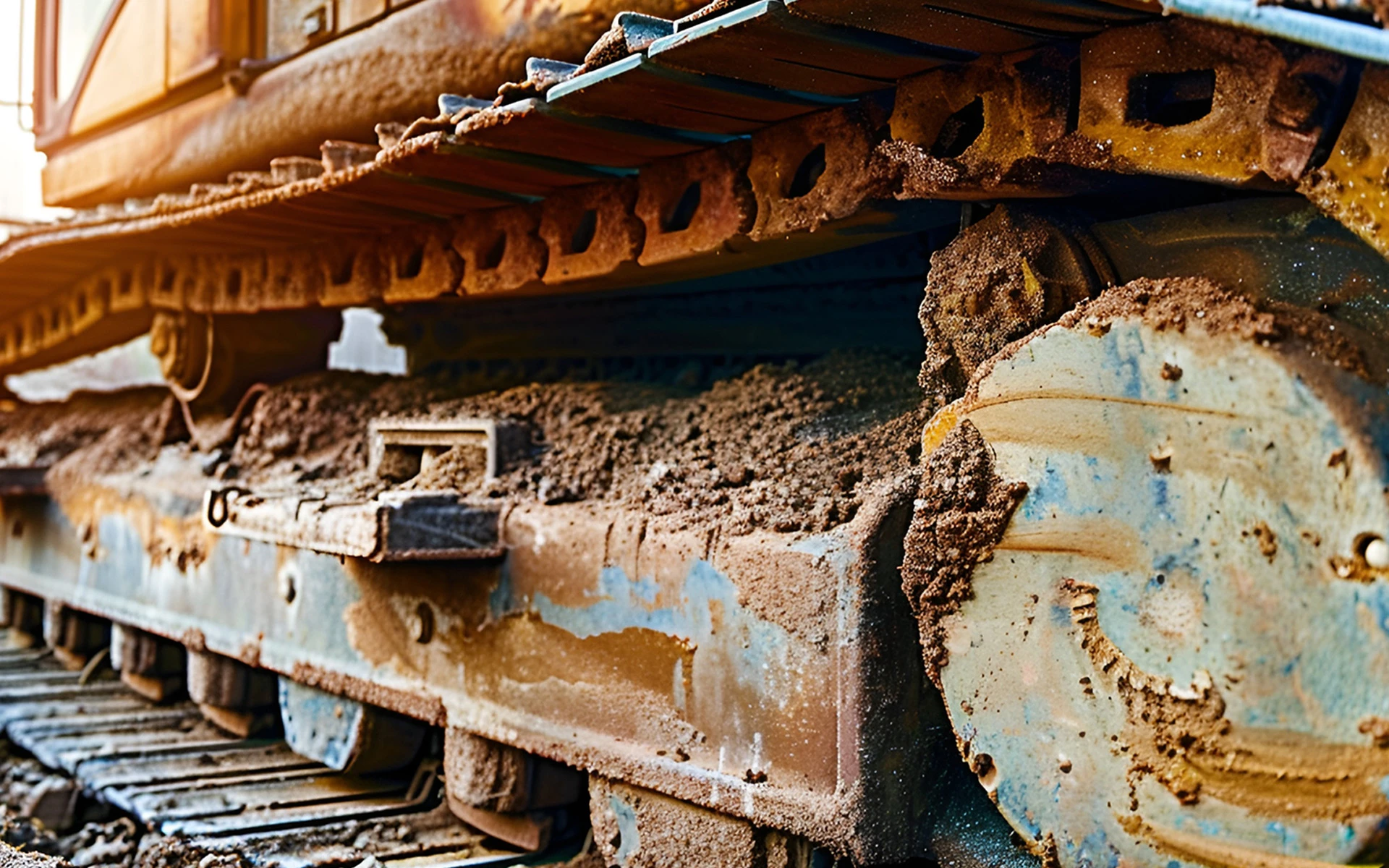
- Soil abrasivity — abrasive quarry or sandy ground can halve chain life compared with firm prepared ground. A sealed and lubricated chain, correct shoe width and effective debris clearance change this term directly.
- Utilisation — a low-hour machine never recovers a premium specification through wear savings. TCO comparisons are only meaningful at a stated annual hour figure.
Run the model at three utilisation levels (for example 800, 1,500 and 2,500 hours per year) and at two abrasivity assumptions. If the preferred option changes, the decision genuinely depends on the operating plan and should be made with the fleet manager, not only with procurement.
4. Data to Request From the Supplier
A TCO model is only as good as its inputs. Ask for these as line items in the quotation:
- Expected wear-part life in operating hours for a stated ground condition, with the assumption written down
- A priced wear-part list covering chain, shoes, sprockets, rollers and idlers
- Expected labour hours for each planned intervention and the accessibility of tensioners and grease points
- Recommended inspection intervals and the measurements that trigger replacement (for example chain pitch extension or roller diameter)
- Mass, rolling resistance assumptions and drivetrain efficiency used in the sizing calculation
- Spare-part availability window and interchangeability with standard components
Suppliers who can give numbers with stated assumptions are also the ones most likely to have a controlled manufacturing and inspection process. Vague durability claims are a signal that the W and D terms in your model will be guesses.
5. Beyond the Numbers
Some benefits are real but hard to monetise: a standardised interface across a fleet reduces spare-part variety; a well-documented inspection record supports resale; and a chassis that is straightforward to service is more likely to be serviced on time. Record these as qualitative notes alongside the model rather than forcing them into a fabricated figure.
Conversely, be cautious about adding a residual value you cannot support. If there is no established second-hand market for a highly customised chassis, use a conservative figure or zero.
Frequently Asked Questions
What is the most common TCO modelling mistake?
Comparing purchase prices without normalising for productive hours, and omitting downtime. Both errors bias the result toward the cheaper, shorter-life chassis.
Should residual value be included for a custom chassis?
Only conservatively. Highly customised undercarriages have a limited resale market; their residual value is often better represented by the value of reusable standard components than by a hypothetical resale price.
How do I estimate wear-part life before I have operating data?
Start with the supplier's figure for a stated ground condition, adjust for your own soil abrasivity and utilisation, and replace the estimate with measured chain pitch extension and roller wear after the first season.
Related Products and Next Step
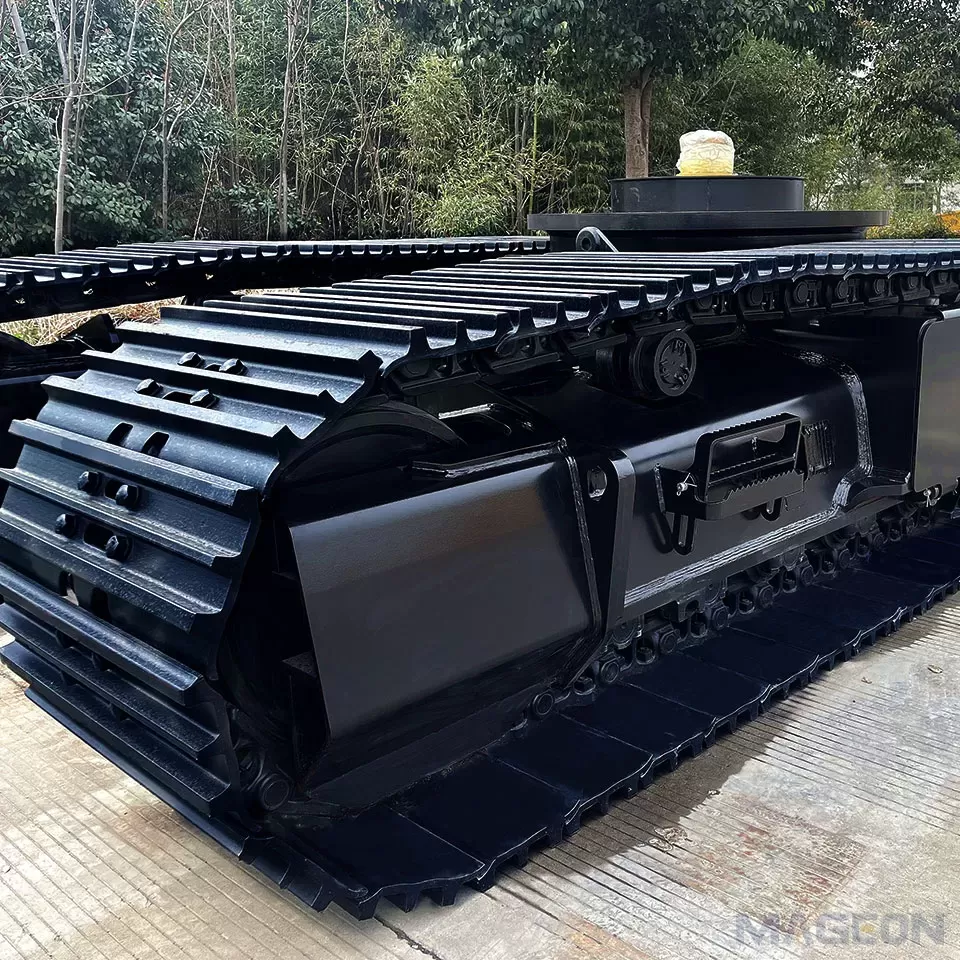
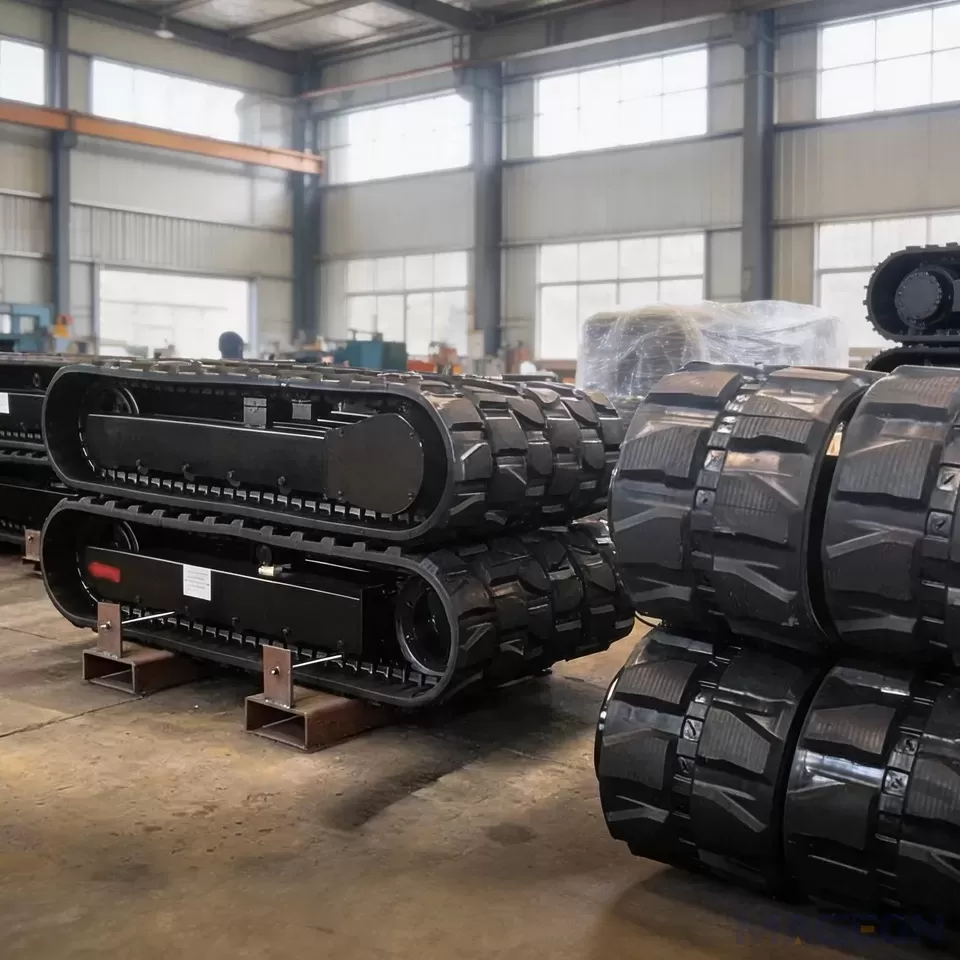
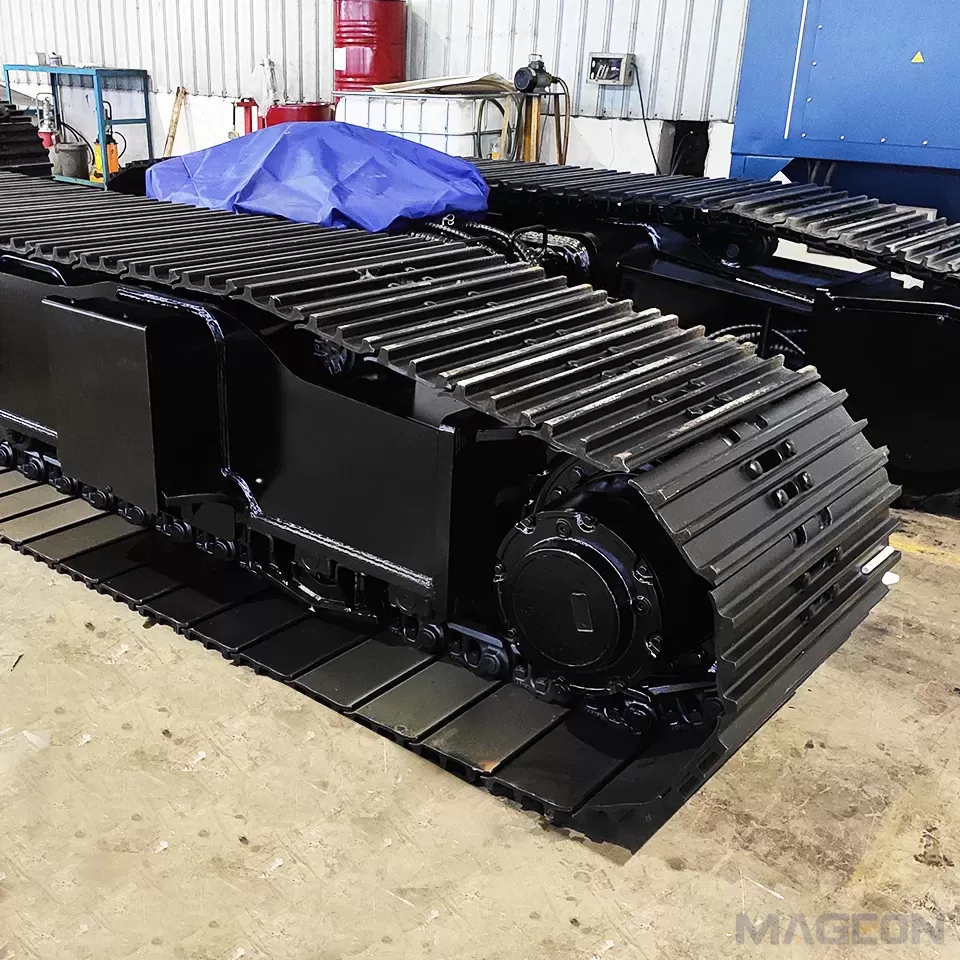
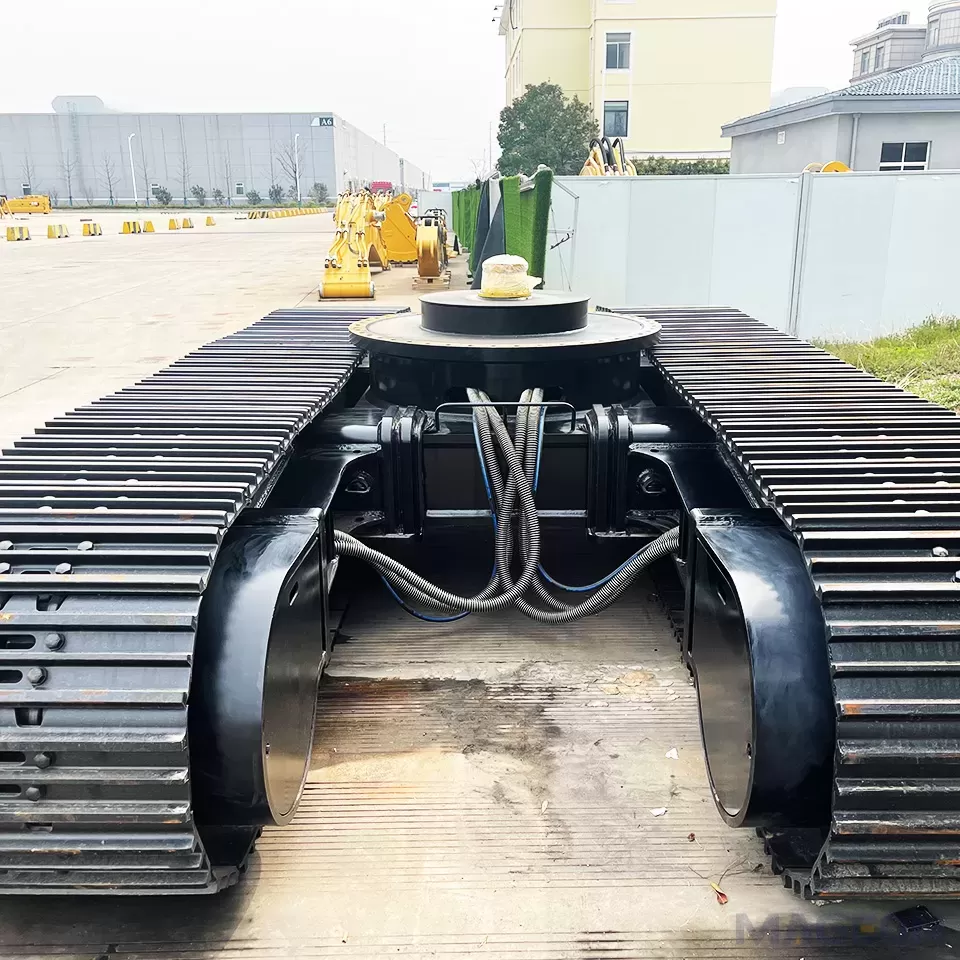
MAGEON supplies steel crawler undercarriages, rubber track undercarriages and undercarriage wear parts, and can provide a priced wear-part list and expected service intervals for a stated operating condition. Send the annual hours, ground condition and your downtime cost per hour; our OEM/ODM engineering team will return a configuration comparison on a cost-per-hour basis.
Please leave your customization requirements, and we will contact you as soon as possible!
Leave your requirements, we'll get back to you within 24 hours.