Steel vs Rubber Tracks for Crawler Equipment: Which One Should You Choose?
For an OEM developing a new crawler machine or refreshing an existing model, the choice between steel and rubber tracks shapes undercarriage architecture, component selection, operating envelope, and total cost of ownership. Neither track type is universally superior — each solves a different set of engineering and commercial constraints. This article compares steel and rubber crawler tracks across the dimensions that matter most to equipment manufacturers and provides a structured framework for making the choice.
How Do Steel and Rubber Tracks Differ Structurally?
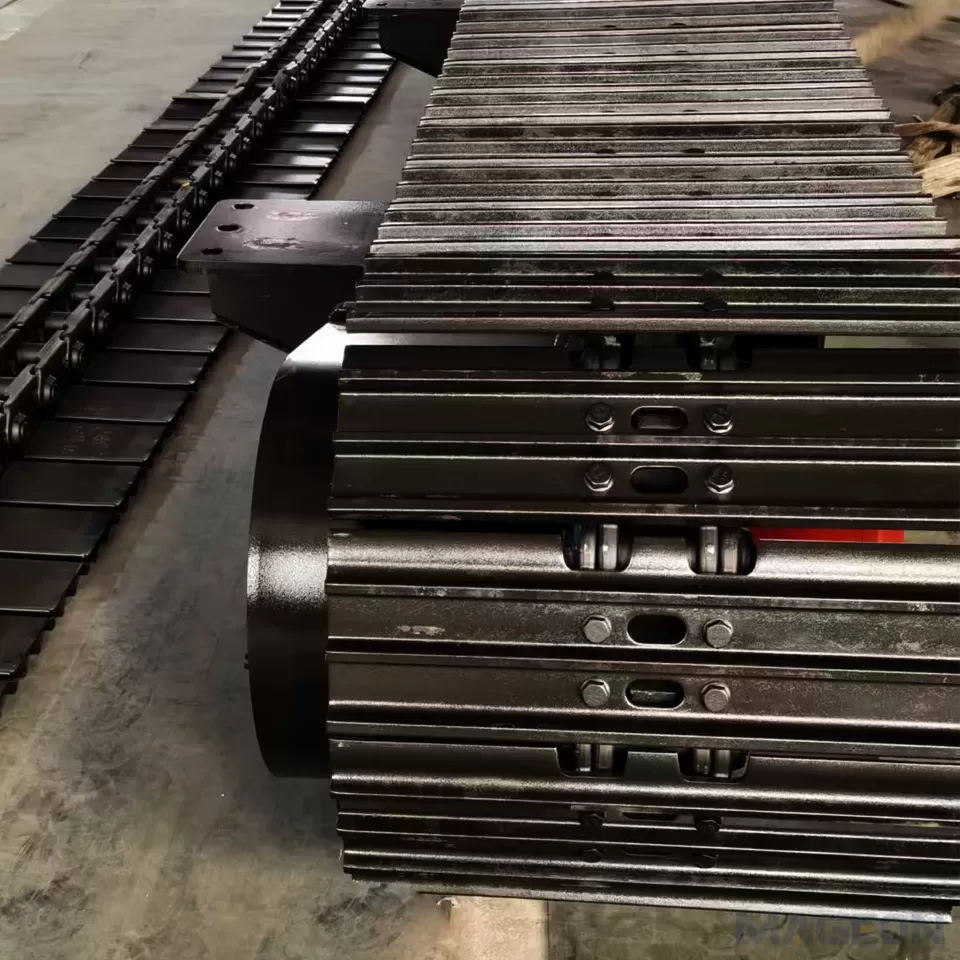
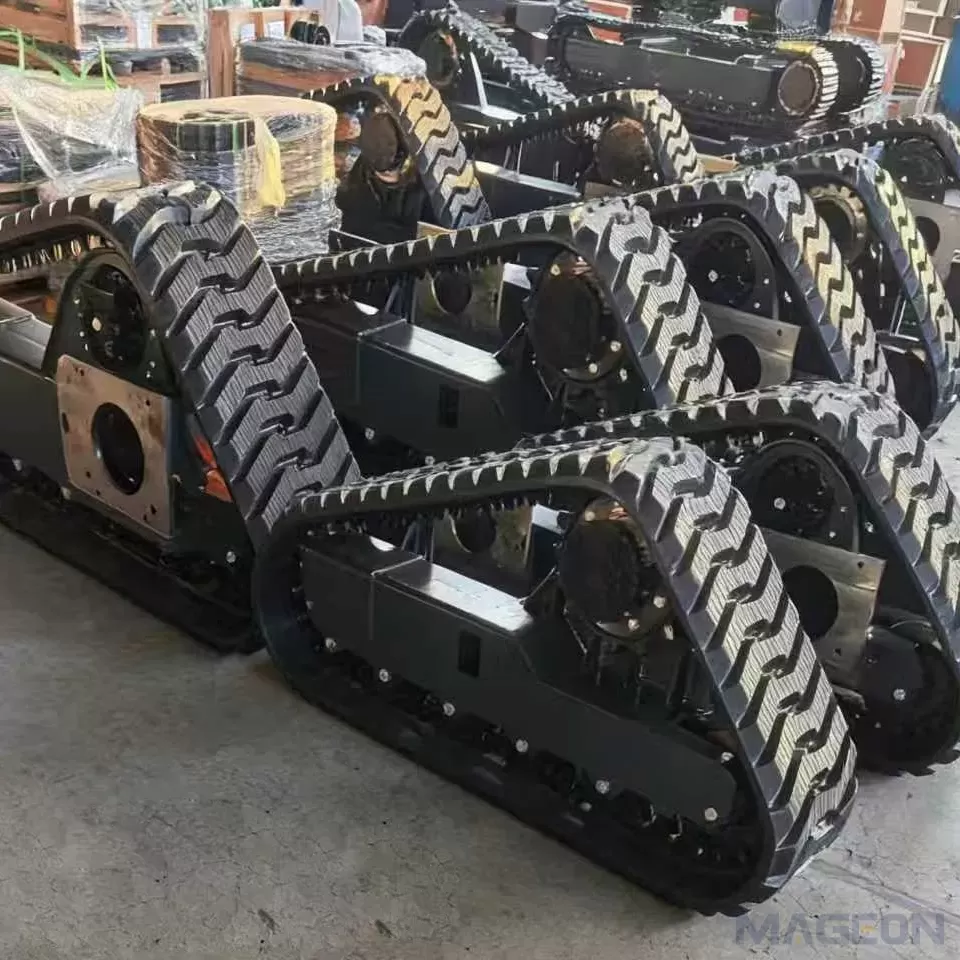
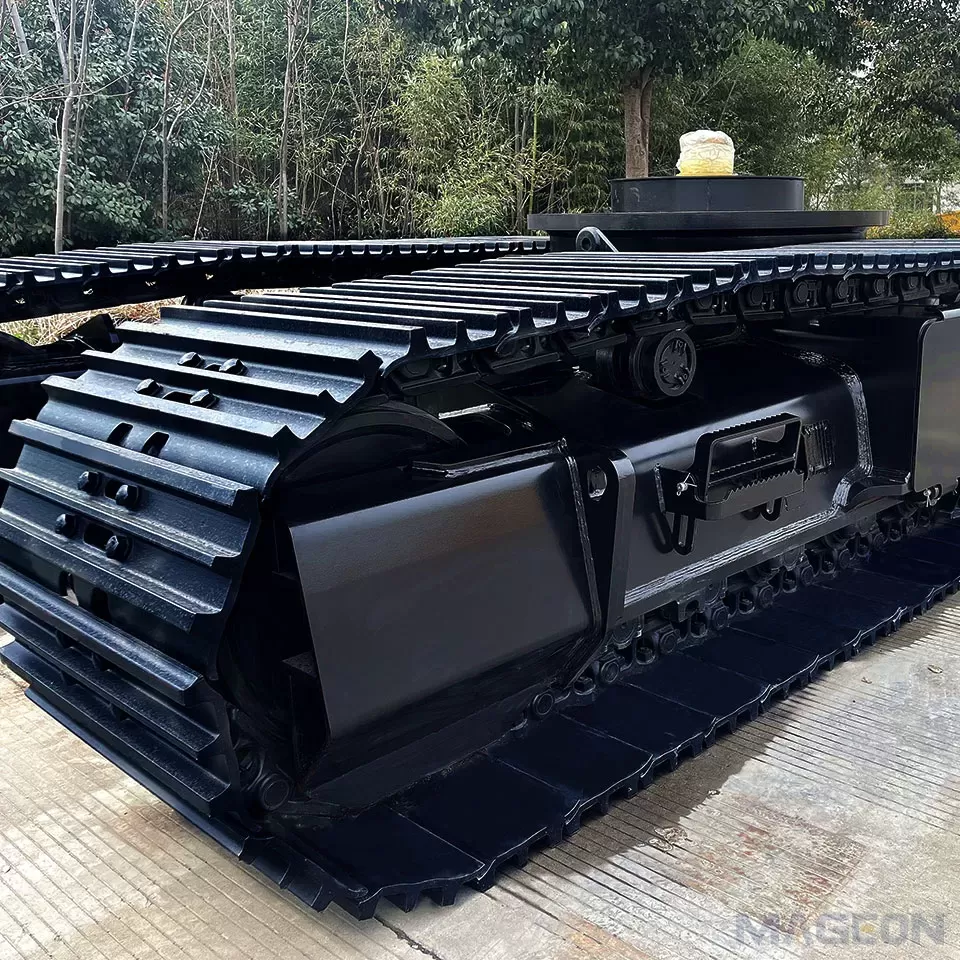
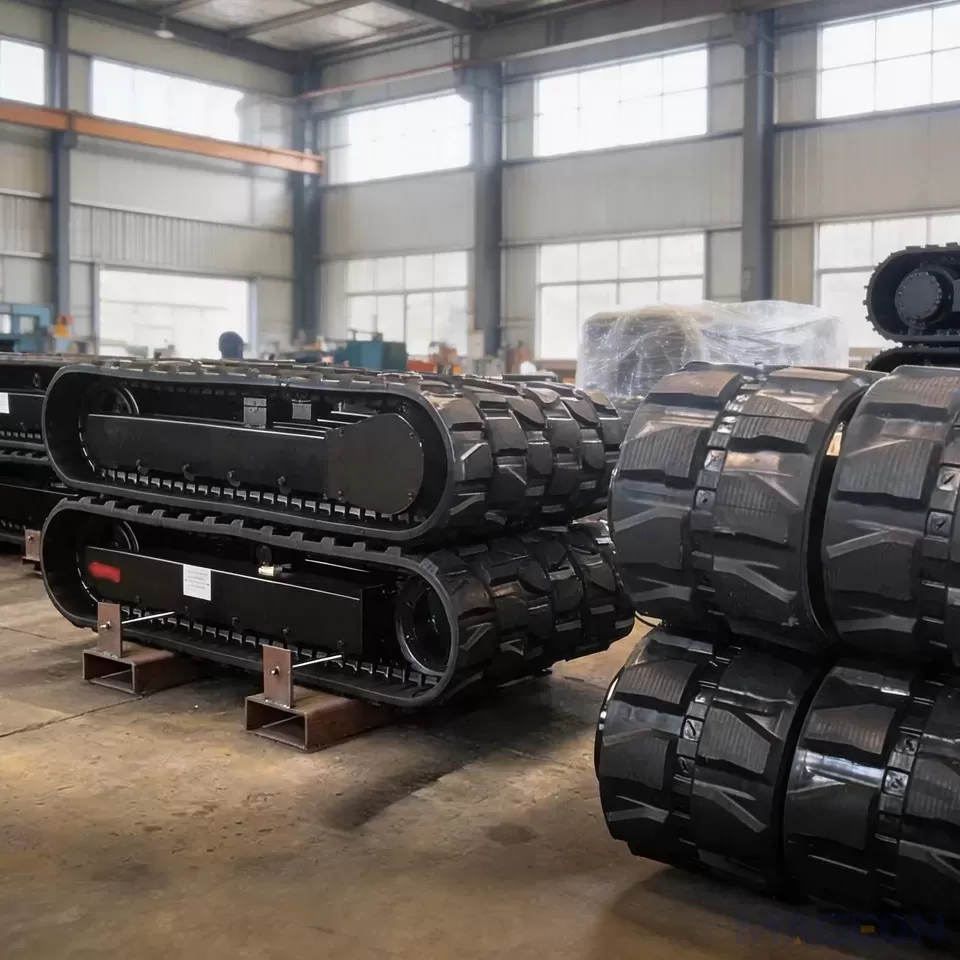
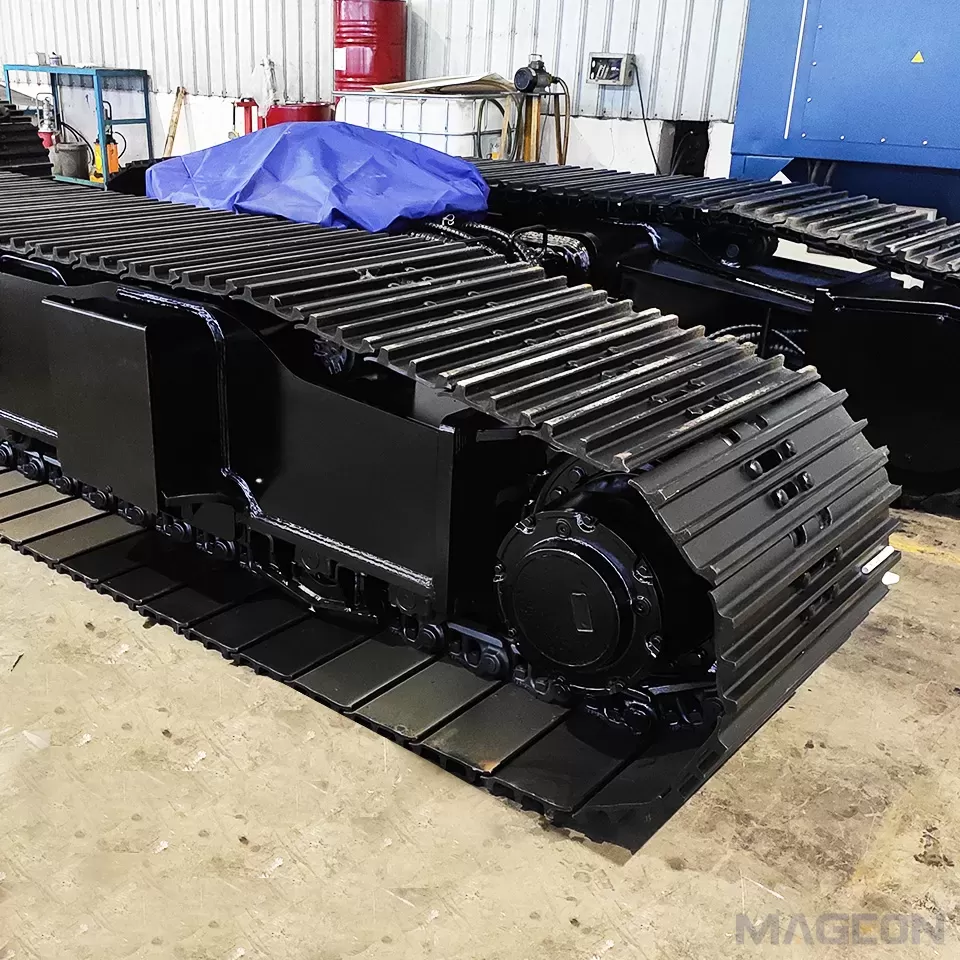
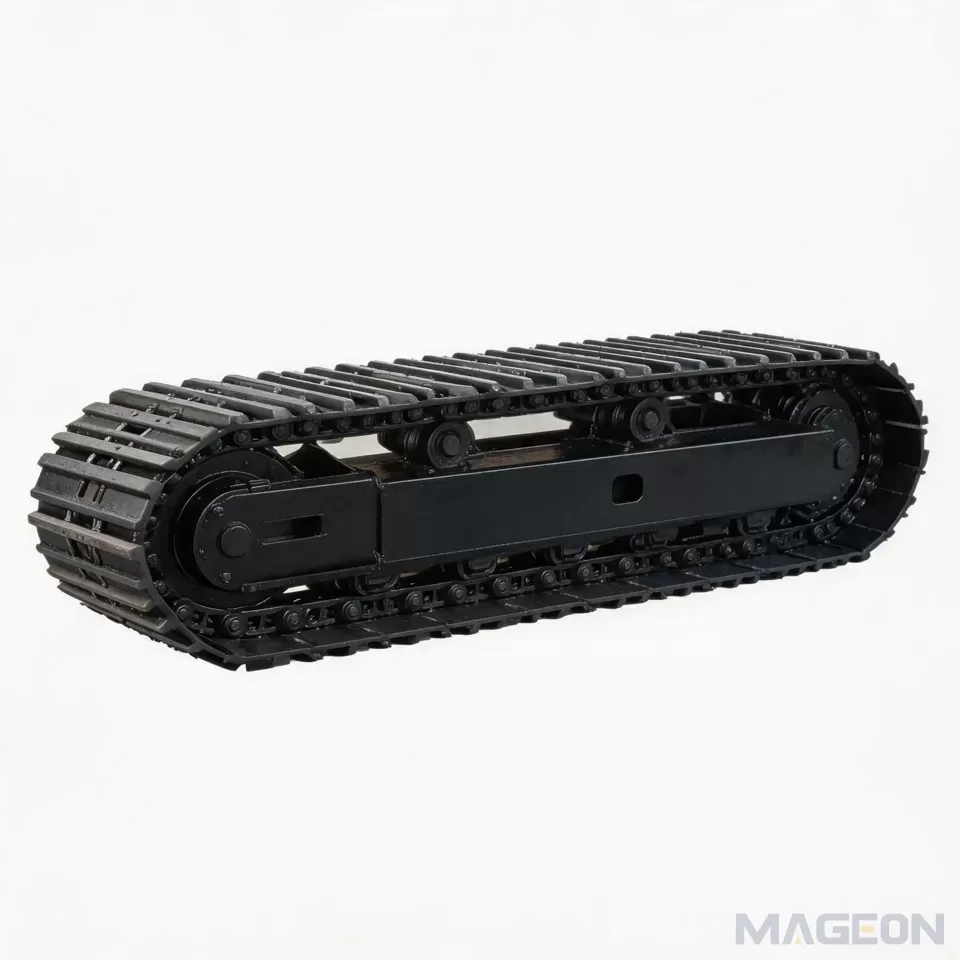
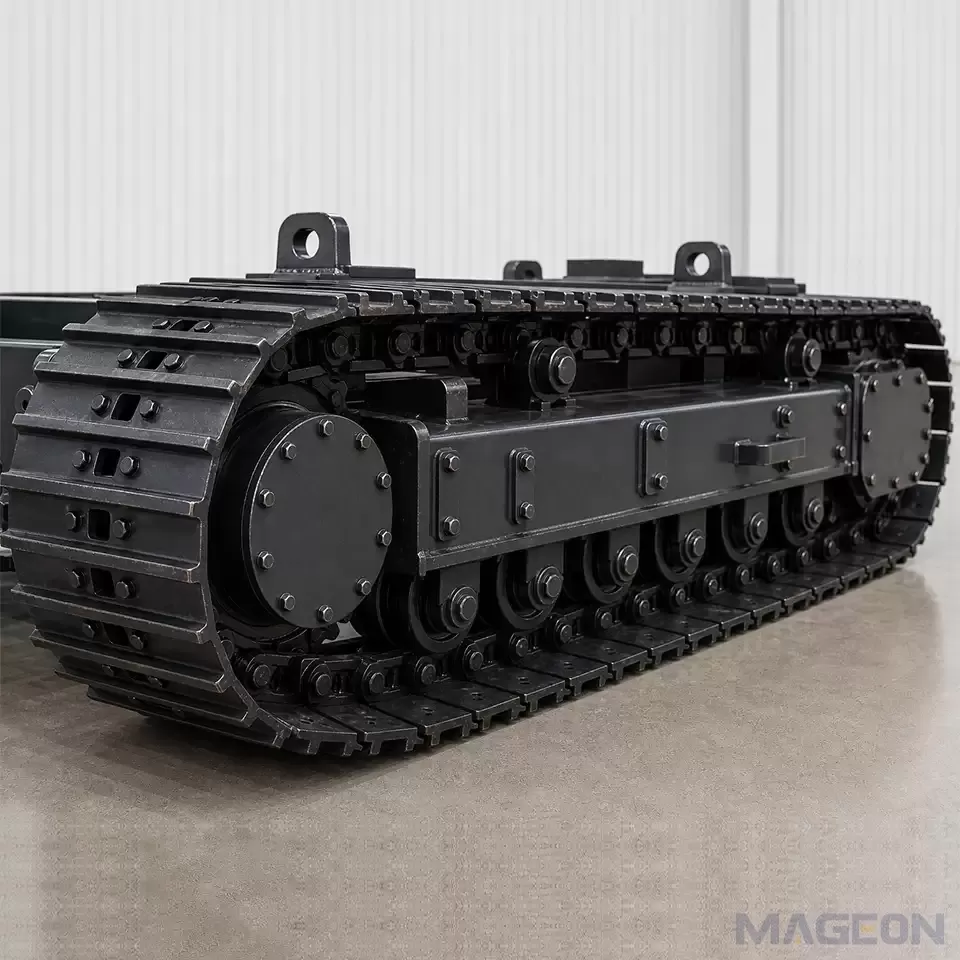
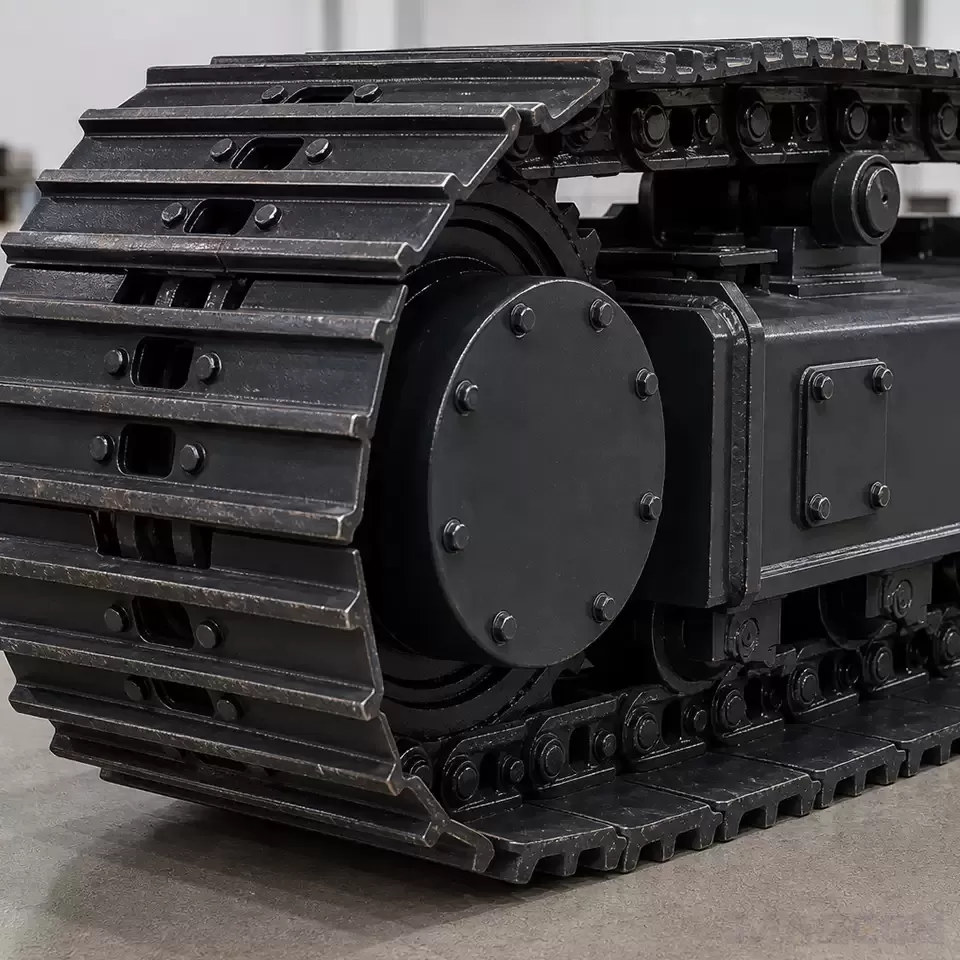
The fundamental difference is mechanical: steel tracks consist of individual cast or forged link segments connected by pins and bushings to form an articulated chain, while rubber tracks are continuous belts in which steel cords and embedded reinforcement layers are encased within a molded rubber body.
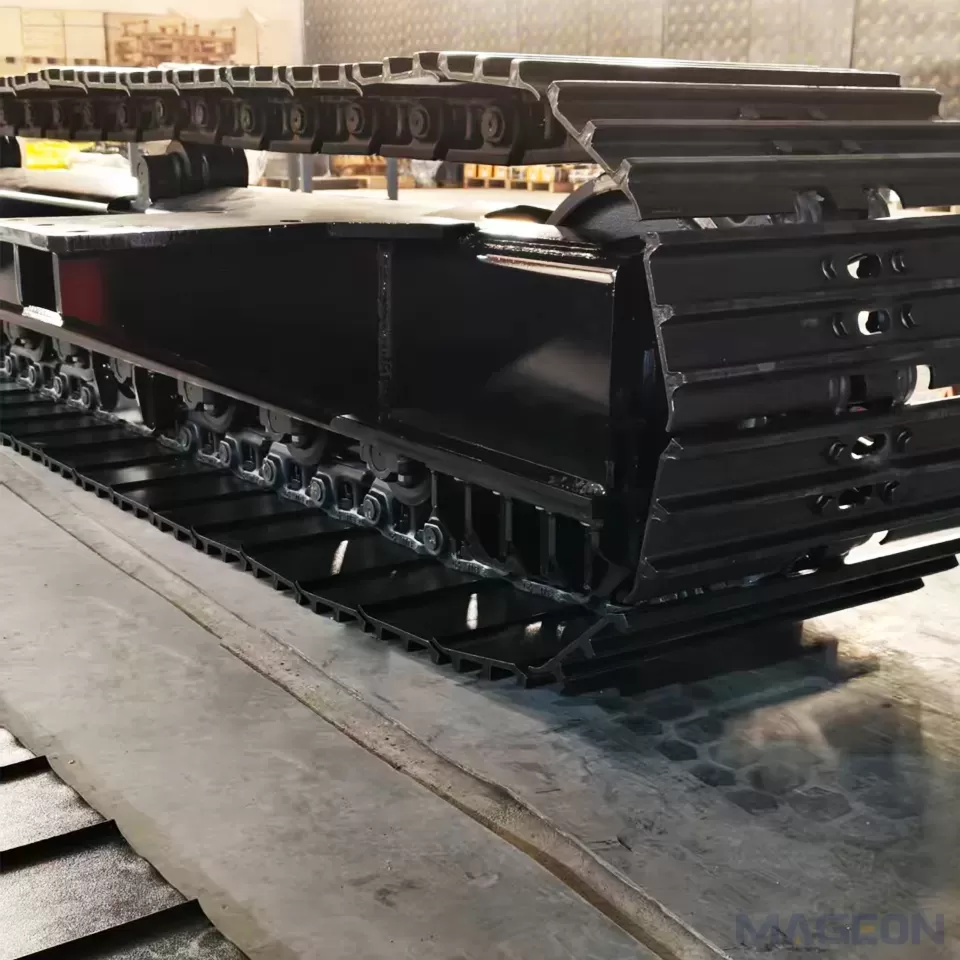
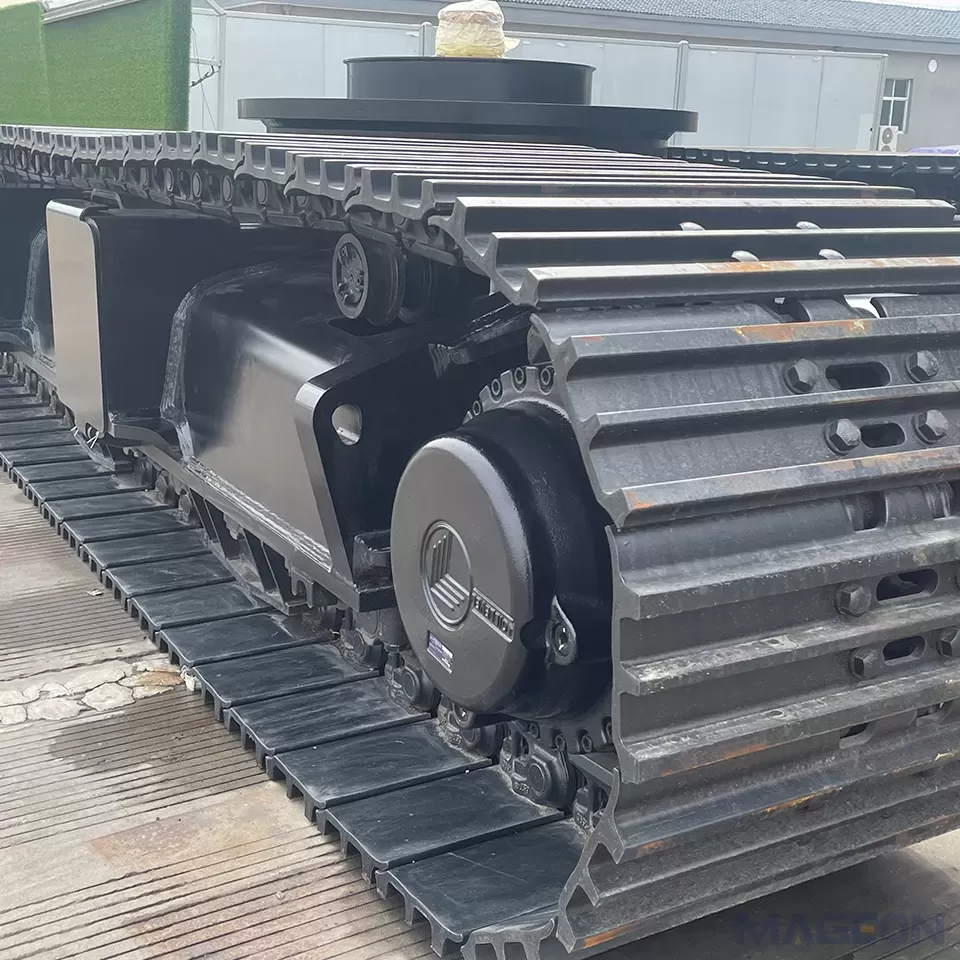
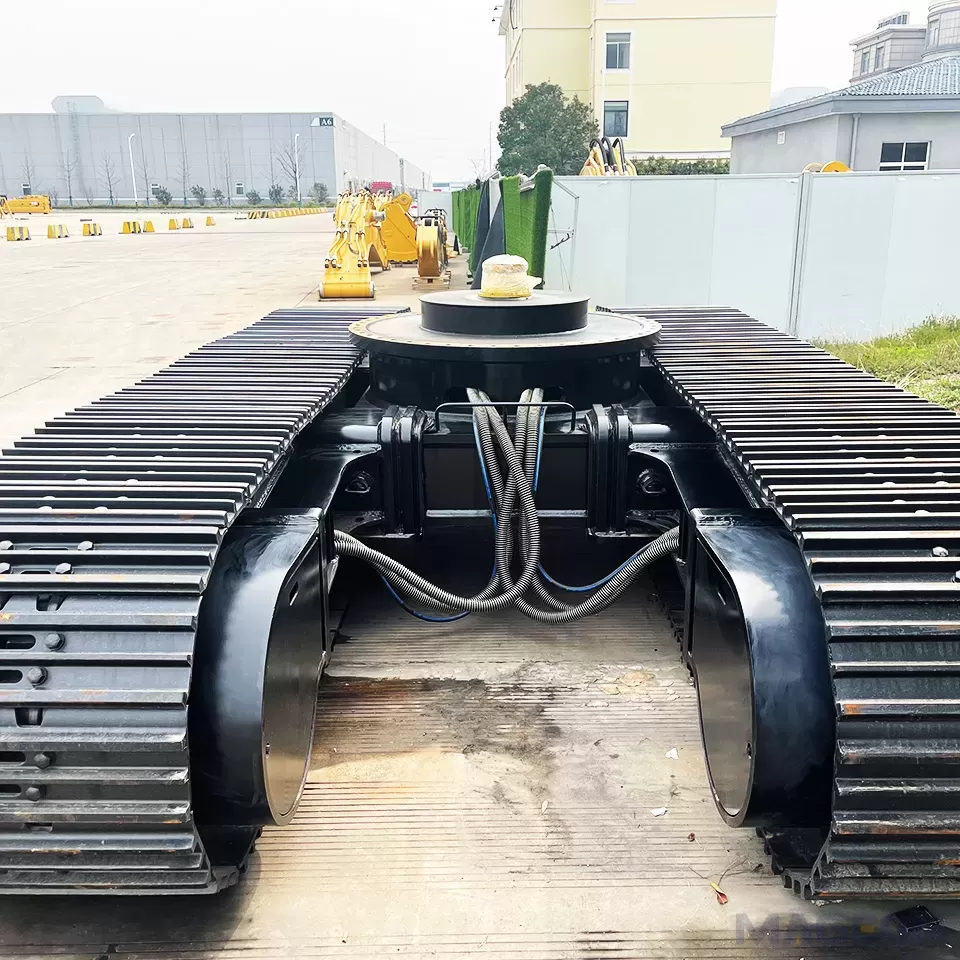
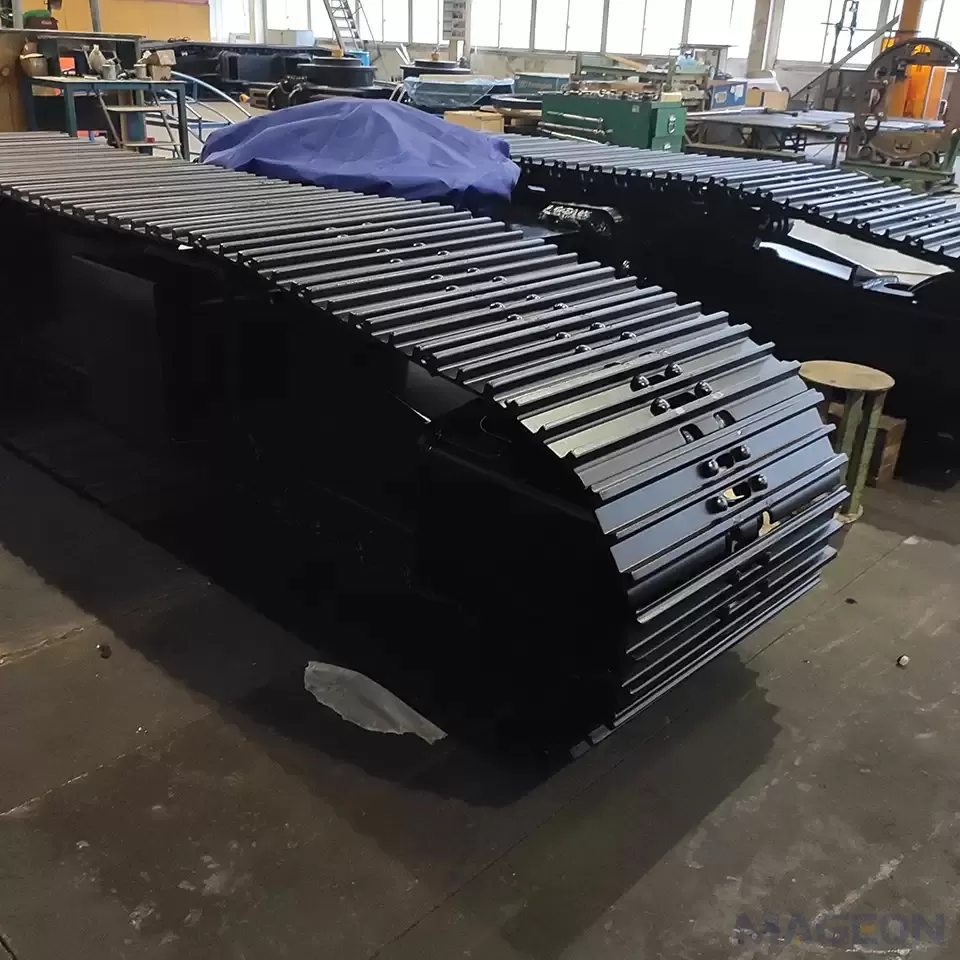
A steel track assembly wraps around the drive sprocket, idler, track rollers, and carrier rollers. Each link interlocks with its neighbors through a hardened pin that passes through a heat-treated bushing. This pinned-joint architecture gives steel tracks their characteristic strength and the ability to transmit high drive torque without slippage. Wear occurs primarily at the pin-bushing interface and on the link running surfaces that contact the rollers. Damaged links can be individually replaced, or the entire chain can be rebuilt — a maintenance path that is well established in heavy equipment operations.
A rubber track is a single endless band. Steel cords run longitudinally through the carcass to carry tensile load, while transverse steel or composite members embedded in the inner surface form drive lugs that engage the sprocket. The outer tread pattern is molded into the rubber compound. The track flexes continuously as it travels around the drive wheel and idler, with no pinned joints to wear or lubricate. When a rubber track wears past its service limit or sustains structural damage to the steel cord layer, replacement is the standard remedy — field repairs are rarely practical.
This structural divide drives nearly every downstream comparison: load capacity, ground contact behavior, vibration transmission, service life, and replacement logistics.
Where Does Each Track Type Perform Best?
Track selection starts with the operating environment. The table below summarizes suitability across the conditions that most commonly drive the decision.
| Steel Track Suitability | Rubber Track Suitability | Key Considerations | |
|---|---|---|---|
High-impact loading (rock, demolition, quarry faces) | Excellent — pin-and-bushing joints absorb shock and resist fracture | Limited — cord-layer damage risk under sharp or repeated impact | Track shoe design and link metallurgy determine impact tolerance |
| Abrasive surfaces (sand, gravel, blasted rock) | Good — hardened running surfaces resist abrasive wear | Moderate to poor — rubber tread compounds abrade faster than hardened steel | Compound formulation can improve wear resistance but may narrow the operating temperature range |
| Soft and low-bearing-capacity ground (peat, mud, turf) | Requires wide shoes and careful ground-pressure management | Good — continuous contact patch distributes load more evenly; lower risk of sinking | Wide steel shoes add weight and cost; rubber tracks naturally provide a larger contact area for a given machine width |
| Paved or finished surfaces | Poor — steel grousers damage asphalt and concrete | Good — rubber tread is generally non-marking on finished surfaces | Bolt-on road pads are available for steel shoes but add cost, weight, and maintenance |
| High-speed travel (above 10 km/h) | Limited — vibration and noise increase with speed; component heat builds up in pins and bushings | Good — continuous belt reduces vibration; quieter operation at travel speed | Steel-tracked machines at higher speeds require additional operator-comfort measures and more frequent undercarriage inspection |
| Extreme ambient temperatures (below −30 °C or above 45 °C) | Good — steel metallurgy is stable across a wide temperature range | Conditional — rubber compounds stiffen in extreme cold and soften in extreme heat; specialized compounds exist but narrow the application window | Temperature limits should be verified with the track manufacturer for the specific compound |
| Chemical exposure (fertilizers, solvents, saltwater) | Conditional — corrosion-resistant steels or coatings available at additional cost | Moderate — rubber compounds vary widely in chemical resistance; compound selection is critical |
Beyond these general patterns, application-specific demands narrow the choice further. Heavy-lift excavators on demolition sites, crawler dozers on rock ripping, and drill rigs operating on uneven blasted surfaces almost universally specify steel tracks for their combination of impact resistance, tensile strength, and field-rebuild capability. Compact excavators on urban construction, agricultural tractors working across paved roads and fields, and turf-care equipment lean heavily toward rubber for ground protection, operator comfort, and transport convenience.
An OEM should evaluate the full duty cycle, not just the most severe condition. A machine that spends 80% of its hours on soft agricultural soil but 20% crossing paved farm roads may tilt toward rubber; a machine that spends most hours on abrasive mineral soil with occasional road travel may be better served by steel tracks with bolt-on rubber pads for the road segments. Forestry and soft-ground operations present a related but distinct set of selection criteria — machines working on low-bearing-capacity forest floors and peatland face ground-pressure and traction challenges that interact with track type in ways that merit separate analysis.
How Does Track Type Affect Machine Design and Component Selection?
The track type decision propagates through the undercarriage and into the broader machine architecture. Treating it as a late-stage component swap leads to costly rework.
Drive system. Steel tracks use a toothed drive sprocket that engages link bushings or track shoe drive lugs. The sprocket must be hardened to match the expected wear rate against the bushing material. Rubber tracks typically use a different sprocket profile — often a multi-sided drum with positive-engagement lugs that register with the track's inner drive projections. Sprocket diameter, tooth profile, and material specification differ materially between the two systems. Retrofitting between track types usually requires sprocket replacement and may require drive-motor ratio changes.
Suspension and tensioning. Steel track systems rely on a grease- or screw-adjusted idler to maintain correct track sag. Tension is set within a defined range and requires periodic adjustment as pin-and-bushing wear accumulates. Rubber tracks use a similar idler-based tensioning principle but operate within a narrower sag window — over-tensioning accelerates internal cord fatigue, while under-tensioning risks de-tracking during turning or on side slopes. The tensioning mechanism may need different force and stroke characteristics for each track type. For a deeper treatment of how track tension affects undercarriage operation, including sag measurement and adjustment procedures, see the separate discussion of track tension principles.
Roller and idler configuration. Steel tracks run on flanged rollers that guide the track laterally. Rubber tracks require rollers with specific rim profiles that engage the track's inner guide lugs without excessive side loading. The number, diameter, and spacing of rollers affect track life for both types, but rubber tracks are more sensitive to roller configuration because uneven load distribution accelerates internal cord separation at the roller edges.
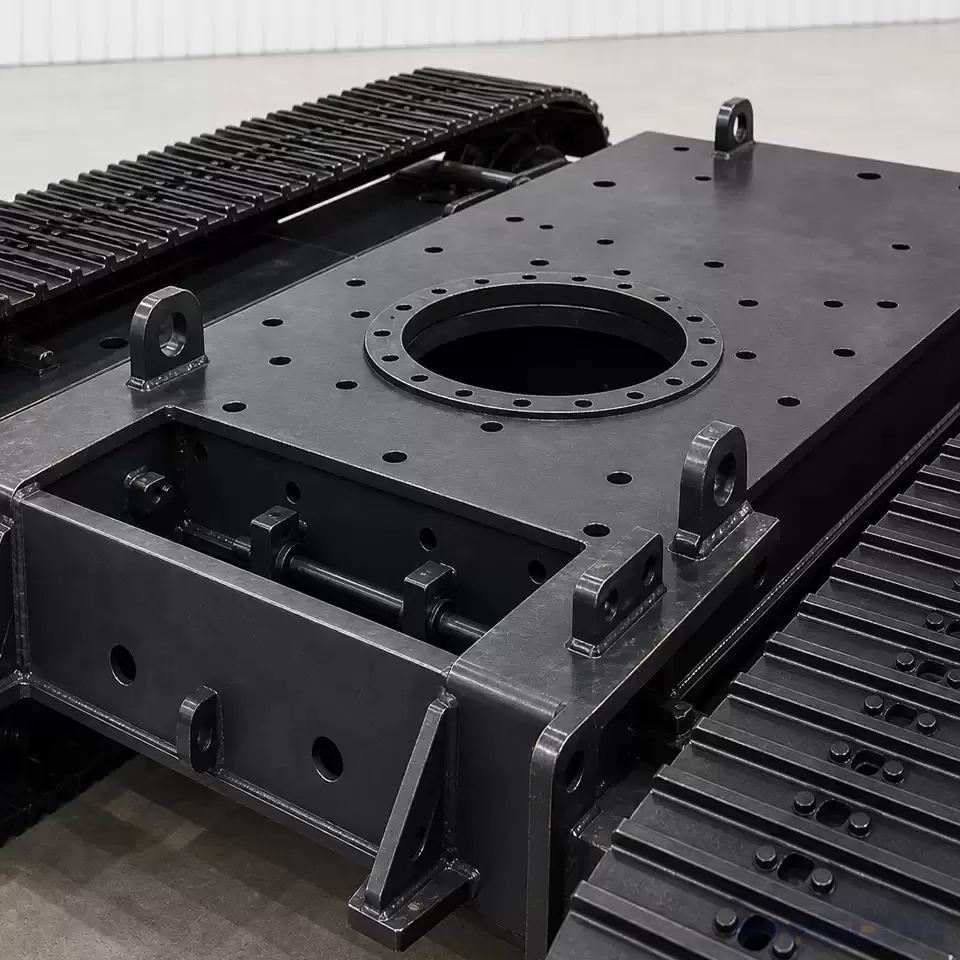
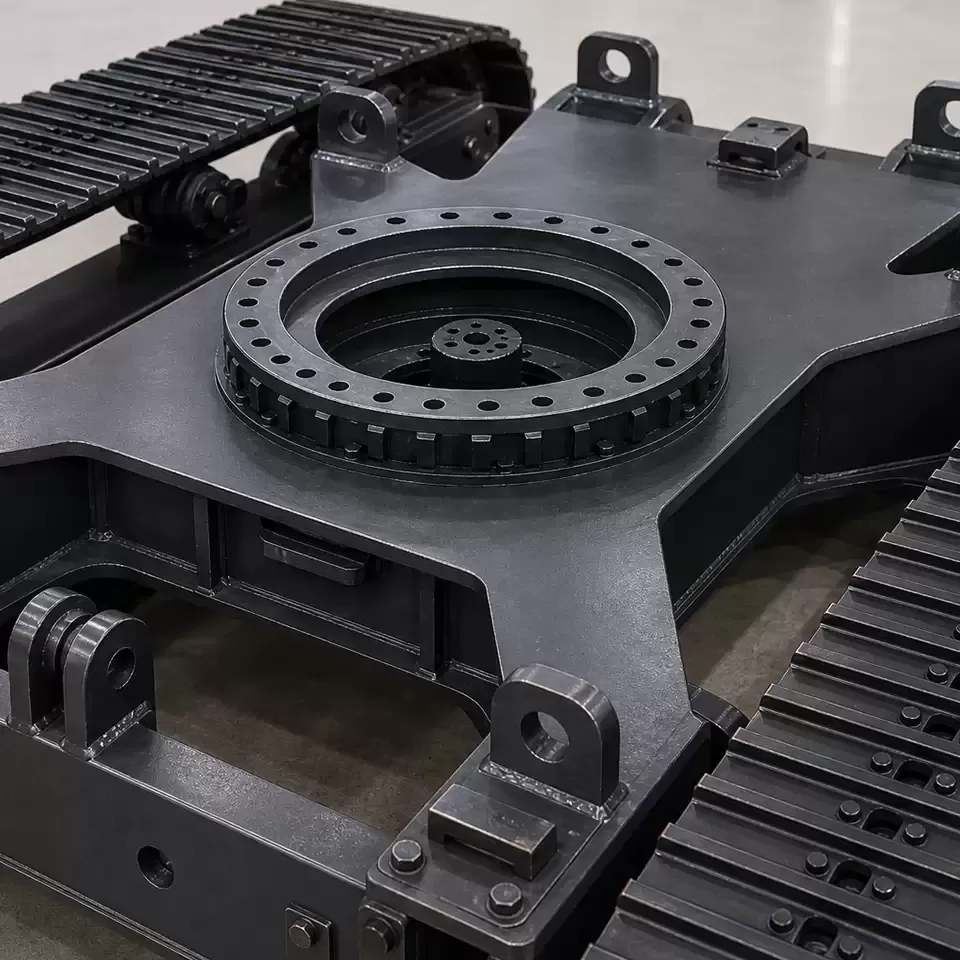
Frame and weight distribution. Steel track systems are heavier, and that weight is distributed through discrete roller contact points. Rubber track undercarriages are typically lighter, which can allow a lighter frame — but the continuous track band changes how ground reaction forces enter the structure. An OEM switching from steel to rubber on an existing platform should verify frame stress, roller loading, and undercarriage mounting dimensions against the new load path.
Machine width and transport. Rubber-tracked machines can often be built narrower for a given ground-pressure target because of the continuous contact patch. Steel-tracked machines may need wider shoes to achieve comparable flotation, which affects overall transport width and regulatory compliance for road travel.
How Do Initial Cost and Lifecycle Cost Compare?
Cost comparisons between steel and rubber tracks must account for the full lifecycle, not just the component purchase price. The table below outlines the main cost dimensions.
| Steel Tracks | Rubber Tracks | Decision Implication | |
|---|---|---|---|
| Initial component cost | Generally higher for comparable load-class chains, sprockets, and mounting hardware | Generally lower initial purchase price for the track band assembly | Lower upfront cost favors rubber for price-sensitive machine segments, but initial cost is only one part of the total picture |
| Typical service life | Longer in abrasive and high-impact conditions; life is extended through pin-and-bushing turns and link rebuilds | Shorter in abrasive conditions; life ends when tread wears through or internal cord damage occurs | Steel tracks typically deliver more operating hours before major component replacement in heavy-duty cycles |
| Maintenance during life | Requires periodic pin-and-bushing inspection, tension adjustment, and roller/idler replacement; individual link repair is possible | Requires tension monitoring and roller/idler inspection; track band is not field-repairable | Steel tracks have more frequent maintenance events but lower per-event component cost; rubber track maintenance events are fewer but the replacement event involves the complete track band |
| Replacement event | Individual links or the complete chain can be replaced; rebuild programs are standard industry practice | Full track band replacement; worn track becomes scrap | Steel tracks offer partial-replacement economics that rubber tracks do not |
| Downtime impact | Link repair or partial replacement can be completed in shorter shop visits; full chain replacement is a larger planned job | Track band replacement is relatively fast, but the complete band must be in inventory | Fleet operators with multiple identical machines may stock spare rubber track sets; steel-track operators may stock common link types for faster turnaround |
| End-of-life value | Used steel track components have scrap metal value; serviceable used links and rollers have a modest resale market | Worn rubber tracks have minimal residual value; recycling options are limited |
A common mistake is comparing only the purchase price of a steel track chain against a rubber track band. The full analysis should include expected hours to replacement, the cost of each maintenance event, the labor and downtime associated with each path, and sprocket and roller replacement intervals — which differ between the two systems. For machines that operate in conditions favorable to steel tracks, the higher initial cost is frequently recovered through longer service life and partial-rebuild capability. For machines in rubber-favorable conditions, the lower upfront investment, reduced operator-fatigue measures, and simpler maintenance cadence often produce a lower total cost of ownership.
OEMs should model the cost comparison against the expected duty cycle of the specific machine model, not against a generic "steel vs. rubber" industry average. A compact excavator working urban utility jobs and a crawler dozer working mine-site reclamation share almost no cost variables.
How Are Regional and Segment Preferences Shifting?
Market preferences for track type are not static — they shift with equipment electrification, urbanization, emissions regulation, and labor availability.
Compact equipment: rubber-dominant and growing. The global compact construction equipment segment — mini and midi excavators, compact track loaders, and small crawler carriers — is predominantly rubber-tracked. This reflects the segment's operating profile: mixed-surface job sites, frequent road travel or trailer transport, and operator-comfort expectations. As urban construction and utility work continue to grow, particularly in Asia-Pacific and European markets, rubber track demand in this segment is expected to remain strong. Equipment electrification reinforces this tendency: electric compact machines benefit from the lower vibration and noise of rubber tracks, and battery-weight management favors lighter undercarriage systems.
Heavy construction and mining: steel remains standard. In production-class excavators above approximately 20 metric tons, crawler dozers, and mining equipment, steel tracks are the established default. The impact loads, abrasive conditions, and production-hour expectations in these applications make rubber tracks impractical for the primary running surface. Steel track technology continues to evolve — sealed-and-lubricated links, improved metallurgy, and automated tension-monitoring systems — but the fundamental material choice is stable in these segments.
Agriculture: mixed adoption with a rubber trend. Agricultural crawler tractors and harvesters have shifted substantially toward rubber tracks over the past two decades. The primary driver is flotation and reduced soil compaction rather than operator comfort alone. Steel tracks remain common on older machines and in regions with rocky soils where rubber wear rates are unacceptable. The trend line favors rubber for new agricultural crawler models, but the pace varies by region: North American row-crop operations adopted rubber tracks earlier; parts of Eastern Europe, South America, and Asia continue to operate large steel-tracked tractor fleets.
Regional variation. North American and Western European markets show the highest rubber track adoption across equipment categories, driven by paved-surface travel requirements, emissions and noise regulation, and operator-comfort standards. Markets with a higher share of mining and heavy civil infrastructure — including parts of Asia-Pacific, Africa, and Latin America — maintain stronger steel track demand. These are broad patterns, and significant variation exists within each region by equipment type and application. An OEM should consult current regional market data for the specific equipment category rather than relying on cross-category generalizations.
How Should an OEM Evaluate Track Type for a New Equipment Model?
The preceding sections describe what differs between steel and rubber tracks. This section proposes a structured sequence for applying that information to a specific equipment program.
1. Define the primary duty cycle honestly. List the top three operating conditions by hours, not by severity. A machine that sees rock 10% of the time but must survive it without damage may still need steel tracks — but recognize that choice as impact-protection-driven, not duty-cycle-driven.
2. Identify the non-negotiable constraints. These often include transport width, ground pressure on the weakest expected surface, noise limits in target markets, and operator-comfort standards. If any constraint rules out one track type, the decision is made — but verify the constraint with field data rather than assumptions inherited from a previous model.
3. Map the design implications before committing. Changing track type after the undercarriage architecture is fixed creates rework across the drive system, suspension, frame, and mounting interfaces. Run the track-type decision through the design-impact areas discussed above — drive configuration, tensioning, roller layout, frame loading, and transport width — before locking the undercarriage concept.
4. Build a lifecycle cost model for the expected duty cycle. Use operating hours per year, expected track life in the primary condition, maintenance labor cost, downtime cost per hour, and replacement-part cost. Run the model for both track types. The result usually points clearly in one direction once duty-cycle-specific inputs replace generic assumptions.
5. Test the decision against the target market. If the machine will be sold into regions or segments where the chosen track type is uncommon, identify the specific reason the application justifies it and prepare customer-education material. An unusual track choice can be a selling point when it is grounded in a real duty-cycle advantage; it becomes an objection when it appears driven by cost-cutting or engineering convenience.
6. Verify the supply base. Confirm that suppliers can deliver the chosen track type in the required volumes, load class, and quality standard for the target markets. For rubber tracks, also confirm compound availability for any extreme-temperature or chemical-resistance requirements.
This sequence does not produce an automatic answer — it produces a documented engineering rationale. That rationale is itself valuable: it supports warranty decisions, customer inquiries, and future model planning.
Frequently Asked Questions
Can the same machine use both steel and rubber tracks?
In most cases, no — at least not without significant modification. The sprocket profile, tensioning stroke, roller rim geometry, and frame clearances differ between steel and rubber track systems. Some manufacturers offer steel-to-rubber conversion kits for specific models, but these are model-specific engineering packages, not universal adapters. An OEM considering a dual-track platform should design for both track types from the outset.
Which track type lasts longer?
The answer depends entirely on the operating environment. In abrasive, high-impact conditions, steel tracks deliver substantially longer service life and offer partial-rebuild options that extend it further. In moderate conditions with good underfoot surfaces, rubber tracks can achieve competitive service life measured in operating hours. The more useful question is: which track type lasts longer in this machine's specific duty cycle?
Are rubber tracks quieter than steel tracks?
Yes. The continuous rubber belt damps vibration and reduces the metal-on-metal noise associated with steel track joints contacting sprockets and rollers. The noise difference is most pronounced at higher travel speeds and on hard surfaces. This is one reason rubber tracks are preferred on compact equipment operating in noise-sensitive urban environments.
Does track type affect fuel consumption or energy efficiency?
Rubber track systems are generally lighter and have lower internal rolling resistance than steel track systems of comparable load capacity, which can contribute to modest fuel or energy savings. However, in heavy production applications where steel tracks are required for durability, the efficiency difference is small relative to the total energy budget and should not override the durability requirement.
What information should an OEM prepare before discussing track type with an undercarriage supplier?
Prepare the machine's operating weight, target ground pressure, maximum travel speed, primary ground-surface types, expected annual operating hours, any transport-width constraints, and the most severe single condition the machine must survive. This set of inputs allows a supplier to recommend track type, link pitch, shoe width, roller configuration, and tensioning specification as a coherent system rather than a collection of individual components.
Can rubber tracks be used on heavy excavators above 20 metric tons?
Rubber tracks are not the industry standard for production-class excavators in this weight range. The combination of high ground pressure under the rollers, impact loading during digging and lifting, and the abrasive conditions typical of heavy excavation work pushes rubber track life to uneconomically short intervals. Specialized rubber track options exist for some mid-size machines used in specific low-impact applications, but they represent exceptions evaluated case by case rather than a general recommendation.
How does track type affect resale value?
The effect varies by equipment category and region. In compact equipment segments where rubber tracks are the market norm, rubber-tracked machines have standard resale value and steel-tracked variants may face a narrower buyer pool. In heavy construction and mining, steel tracks are expected and their condition is a routine part of machine inspection. A machine with an uncommon track type for its class may see longer listing times in the secondary market regardless of the underlying engineering rationale.
Get a Technical Evaluation for Your Equipment
Choosing between steel and rubber tracks is not a catalog-selection exercise — it is an engineering decision that interacts with machine architecture, operating conditions, and total cost of ownership.
If you are developing a new crawler machine or evaluating a track-type change for an existing model, we invite you to provide your equipment specifications, load conditions, dimensional constraints, and duty-cycle information. Our engineering team will prepare a technical evaluation of the undercarriage configuration that best fits your requirements.
Please leave your customization requirements, and we will contact you as soon as possible!
Leave your requirements, we'll get back to you within 24 hours.