
How Should OEMs Select a Crawler Undercarriage for Compact Drilling Rigs?
Project Overview:
Start with the drilling rig's real operating states, not with a standard undercarriage size. A compact rig may need to travel, transport, level, drill, handle tooling, or operate with supporting equipment in different configurations. Each state can change the information that must be checked. The practical task is therefore to define the machine, its duty cycle, its layout, and its interfaces clearly enough for a project-specific engineering evaluation.
This article provides that framework. It does not prescribe a final track width, gauge, ground-contact length, load rating, hydraulic arrangement, or mounting design. Those decisions require current project drawings, technical data, and engineering confirmation.
Start With the Drill-Rig Duty Cycle, Not a Standard Undercarriage
“Compact drilling rig” is an equipment category, not a complete design input. Before selecting an undercarriage, define what the rig must do between arrival at site and completion of its work. Separate transport, tramming, positioning, drilling, and any supported or tooling-handling states. Also identify whether the duty cycle is mainly short-distance positioning, repeated travel between work points, or a mix of both.
Published drill-rig specifications illustrate why one generic platform value is not enough: OEM documents can distinguish transport and deployed configurations, crawler arrangements, and optional support equipment. See the Epiroc Boyles C8C brochure and the Geoprobe 8140LS specification. These are examples of equipment documentation, not compatibility evidence or design data for another rig.
The resulting specification should describe the project conditions that govern selection. It should not convert an illustrative third-party configuration into a requirement for every compact drill.
What a Compact Drilling-Rig Project Must Define
Collect the input set before comparing configuration options. A useful request describes the machine as a system: the upper structure, drilling equipment, materials carried during work, travel route, ground conditions, and the connection between the rig and the undercarriage.
| What it affects | What still requires engineering confirmation | |
|---|---|---|
| Machine mass and mass distribution in each relevant state | Layout review, stability assessment, component loading | The applicable design masses, their positions, and allowable operating states |
| Mast, tooling, and accessory arrangement | Working envelope, packaging, service clearance | The configuration that applies during transport, travel, and drilling |
| Travel route and duty cycle | Track type discussion, travel-system requirements, access planning | Surface condition, gradients, obstacles, travel frequency, and operating limits |
| Drilling-site conditions | Required project inputs and interface constraints | Ground support, leveling approach, environmental constraints, and site-specific risks |
| Mounting and service interfaces | Frame integration, installation sequence, maintenance access |
The point is not to turn a compact rig into a generic custom crawler undercarriage request; it is to define the rig states that govern the request. A concise but complete project dossier is more useful than a list of assumed component sizes.
How Rig Layout Changes Undercarriage Selection
Rig layout matters because the upper structure is not a fixed, featureless load. The relevant arrangement can change when a mast is raised or lowered, when tooling is stored or handled, when an operator station or power unit is positioned differently, or when optional equipment is installed. The review should therefore identify the configurations that matter, then ask whether each one changes clearance, packaging, loading, or the conditions that need stability verification.
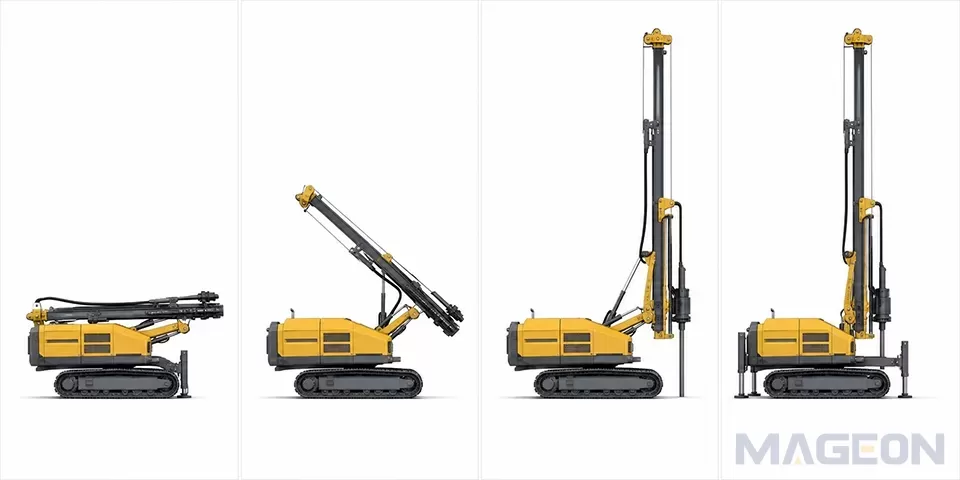
Track gauge should be treated as a packaging and stability input to be checked with the actual rig layout, not as a stand-alone rule. It interacts with the available machine envelope, intended turning conditions, and the position of the working equipment. A wider or narrower value is not automatically preferable without those constraints.
The center of gravity must be checked for each relevant transport, travel, drilling, and any supported working state. That is a project verification task, not a claim that a particular configuration is suitable. If the rig uses supports, leveling equipment, or other devices during work, define whether they are part of the relevant engineering state and how they change the load path or working envelope.
Use the same discipline for ground-contact length and track width. They are selection inputs that must be considered with the machine mass, expected surface, travel behavior, and packaging limits. An article can identify the questions; it cannot substitute for a verified configuration.
Track Type, Travel System, and Mounting Interfaces
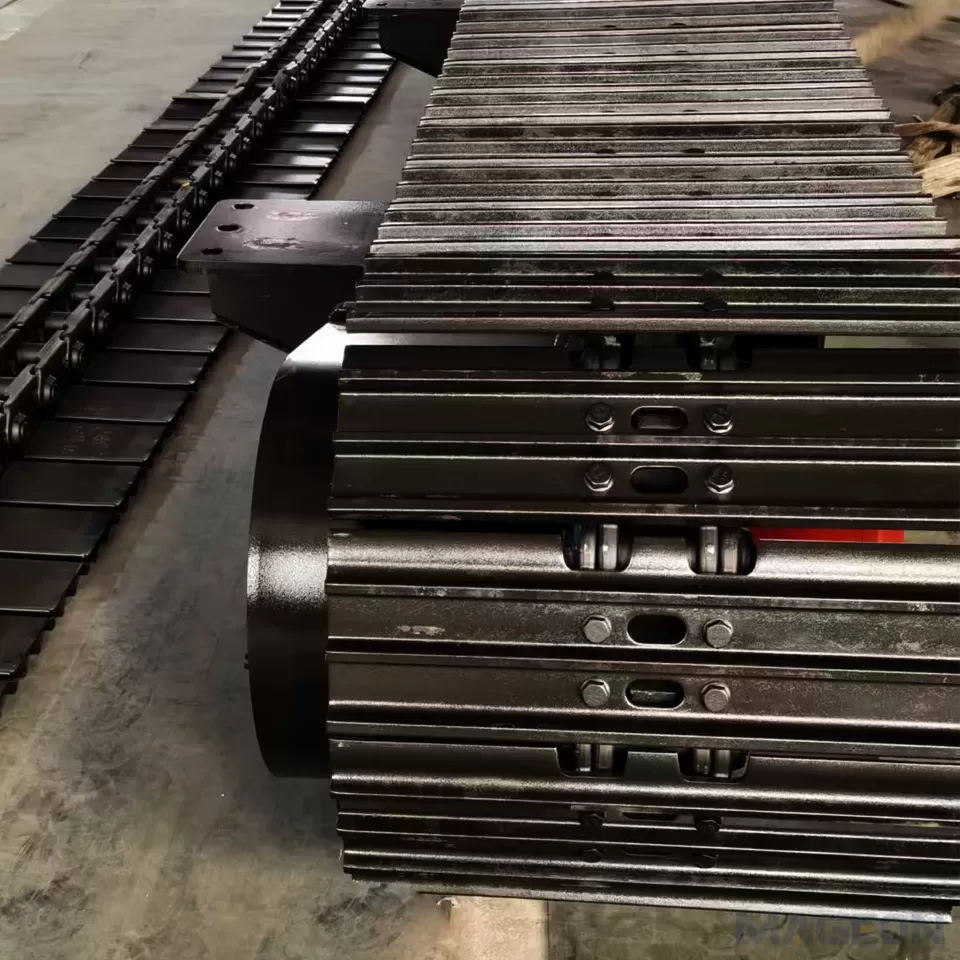
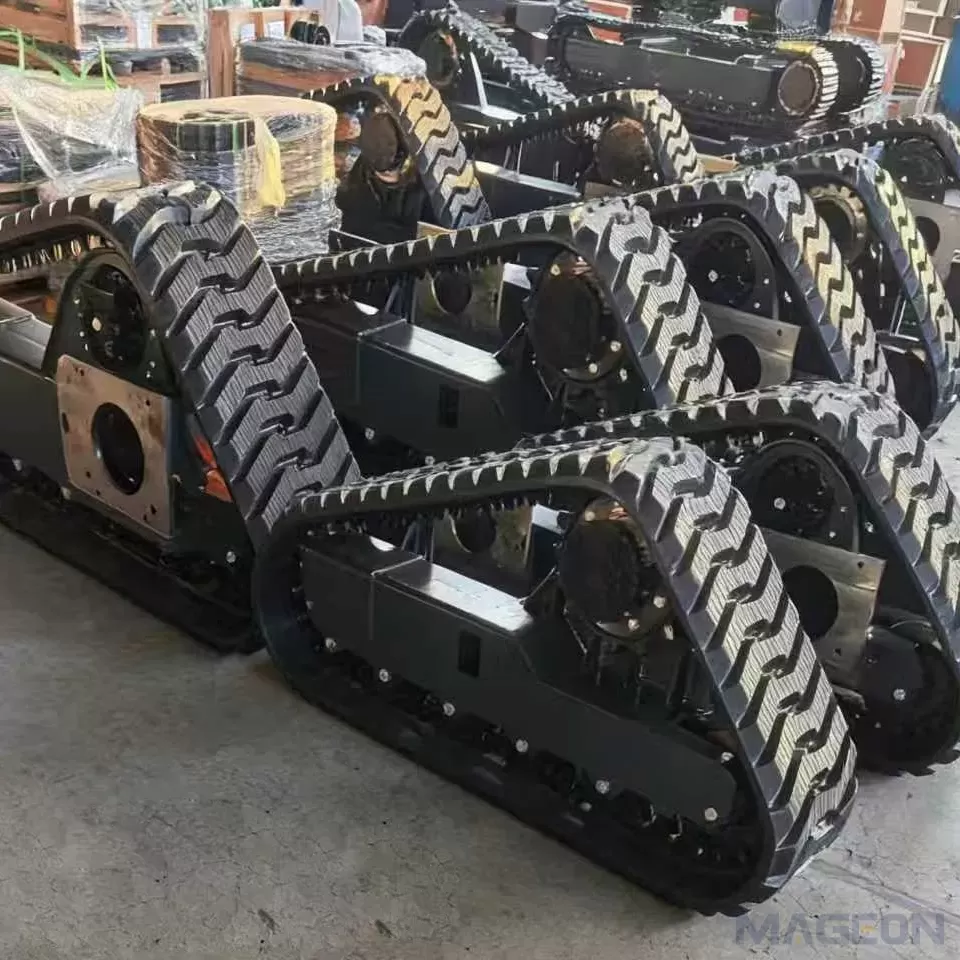
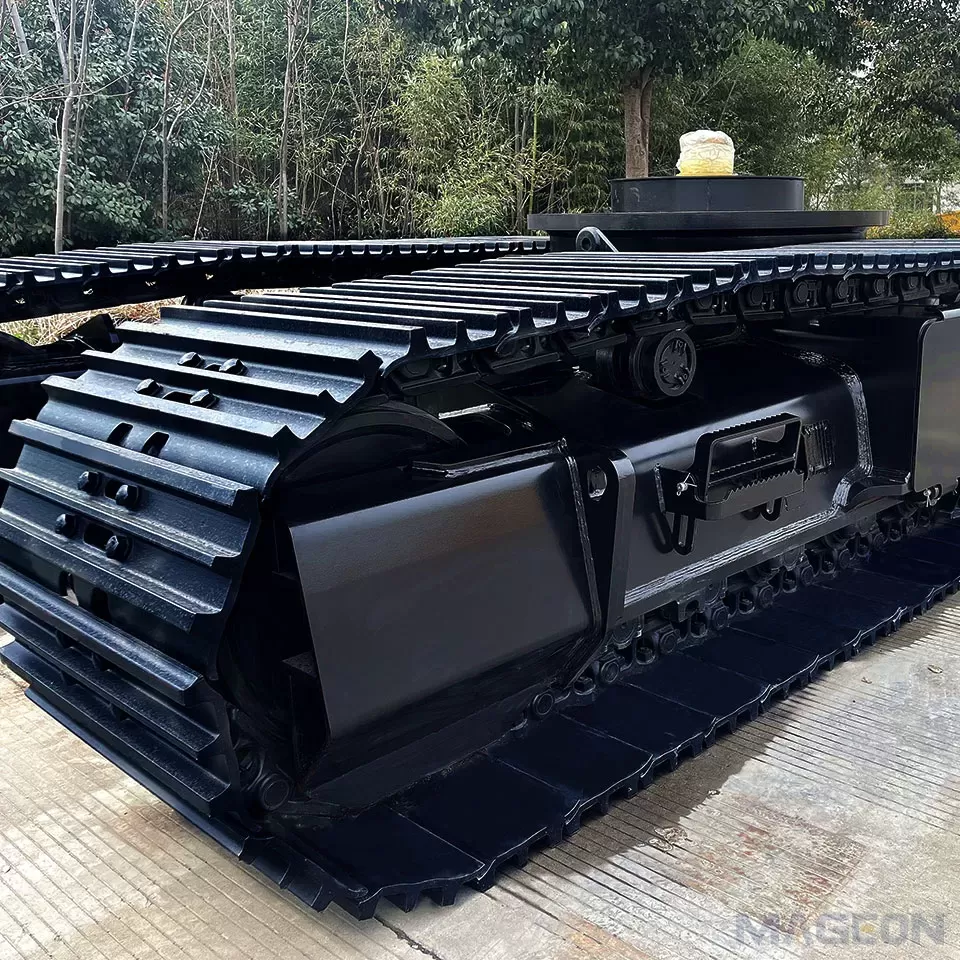
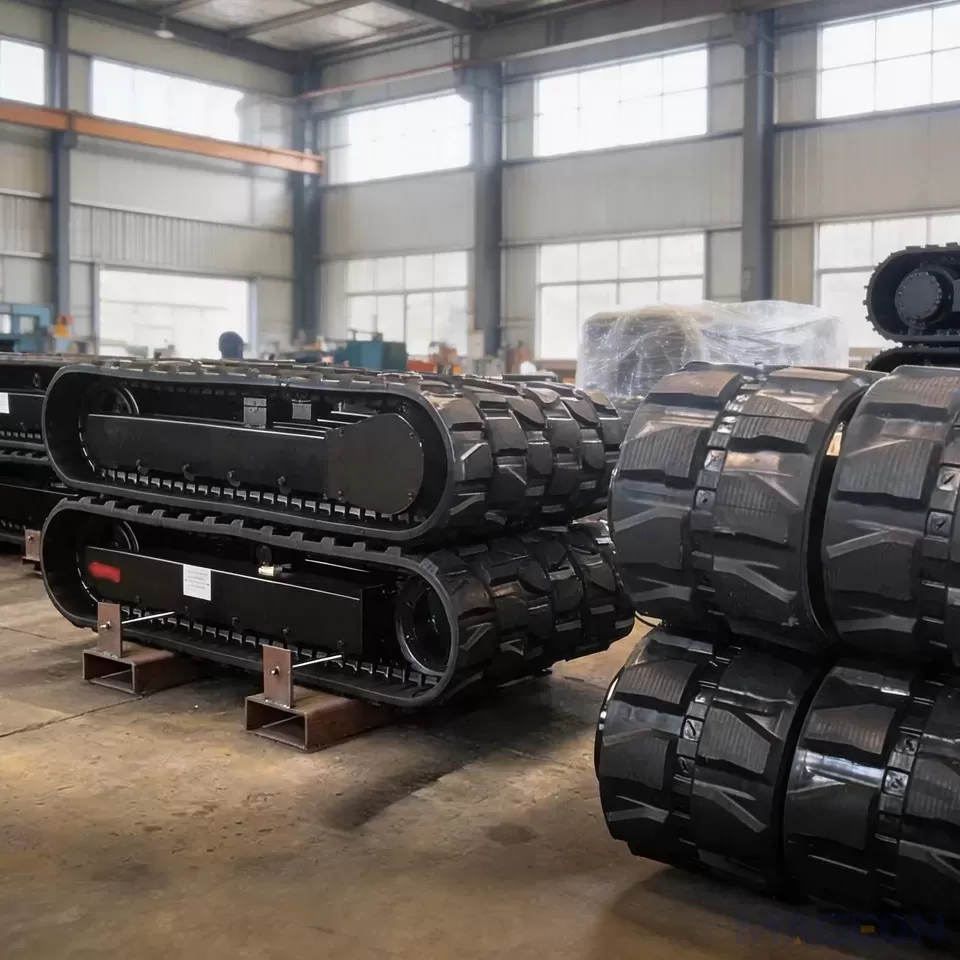
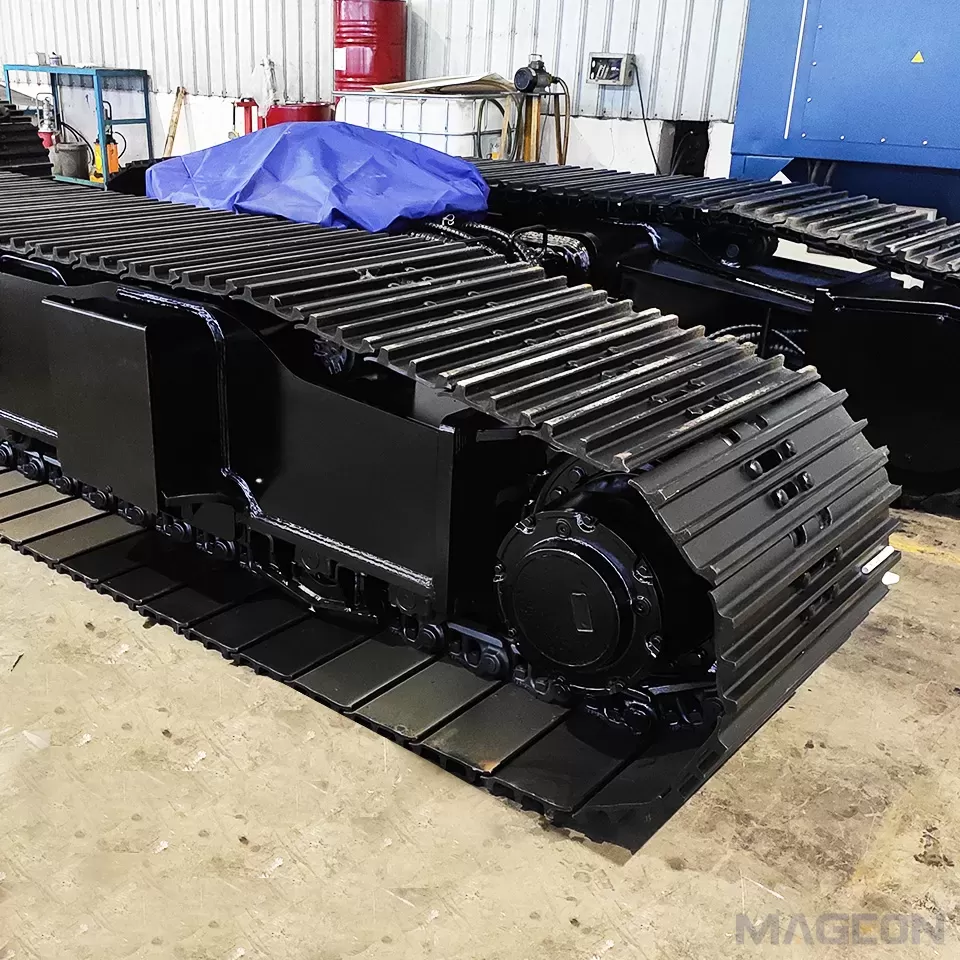
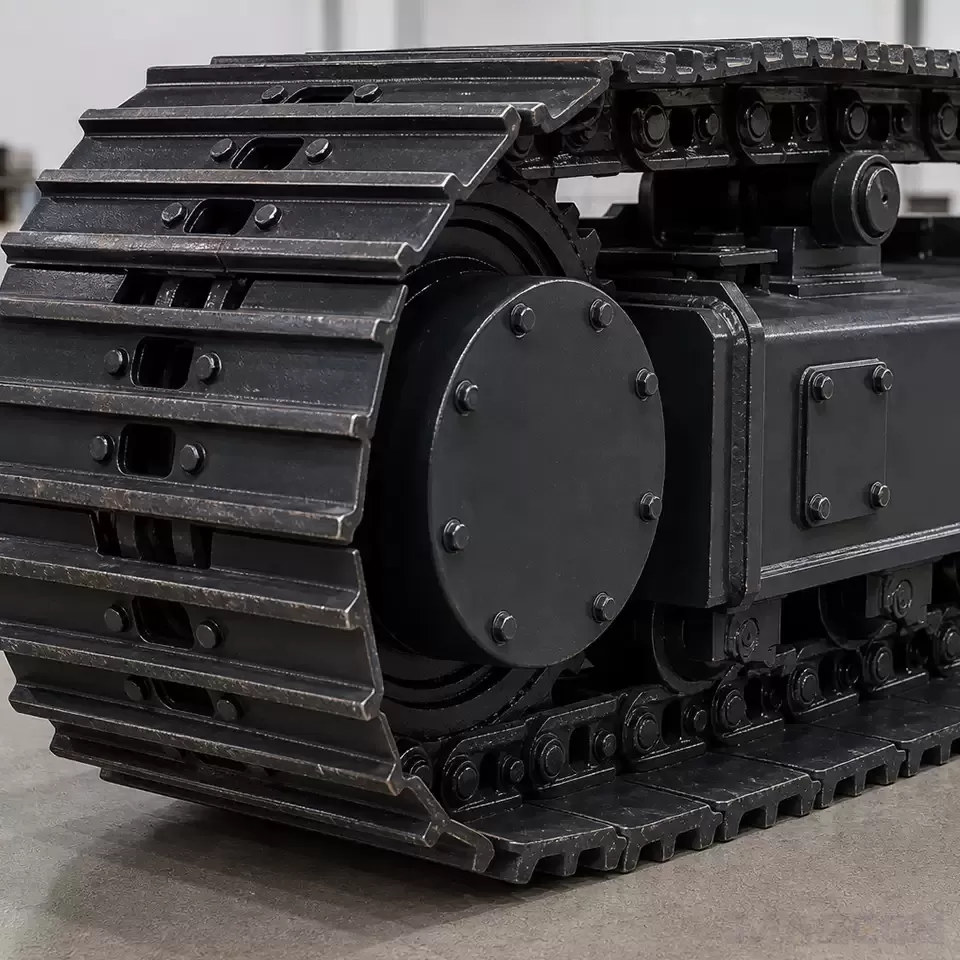
Track type should be evaluated from the operating environment, travel surface, duty cycle, machine integration, and service priorities. Do not treat the equipment category alone as a rule for choosing steel or rubber tracks. The project team should identify the surfaces encountered, the likely sources of wear or damage, transport constraints, and any requirement that changes the acceptable travel arrangement.
The travel system also needs an integration review. Confirm the intended travel behavior, drive and control interfaces, routing constraints, access for service, and the relationship between the undercarriage and the drilling equipment. Avoid requesting a hydraulic specification from a marketing description; the final requirement depends on approved project information and the complete machine system.
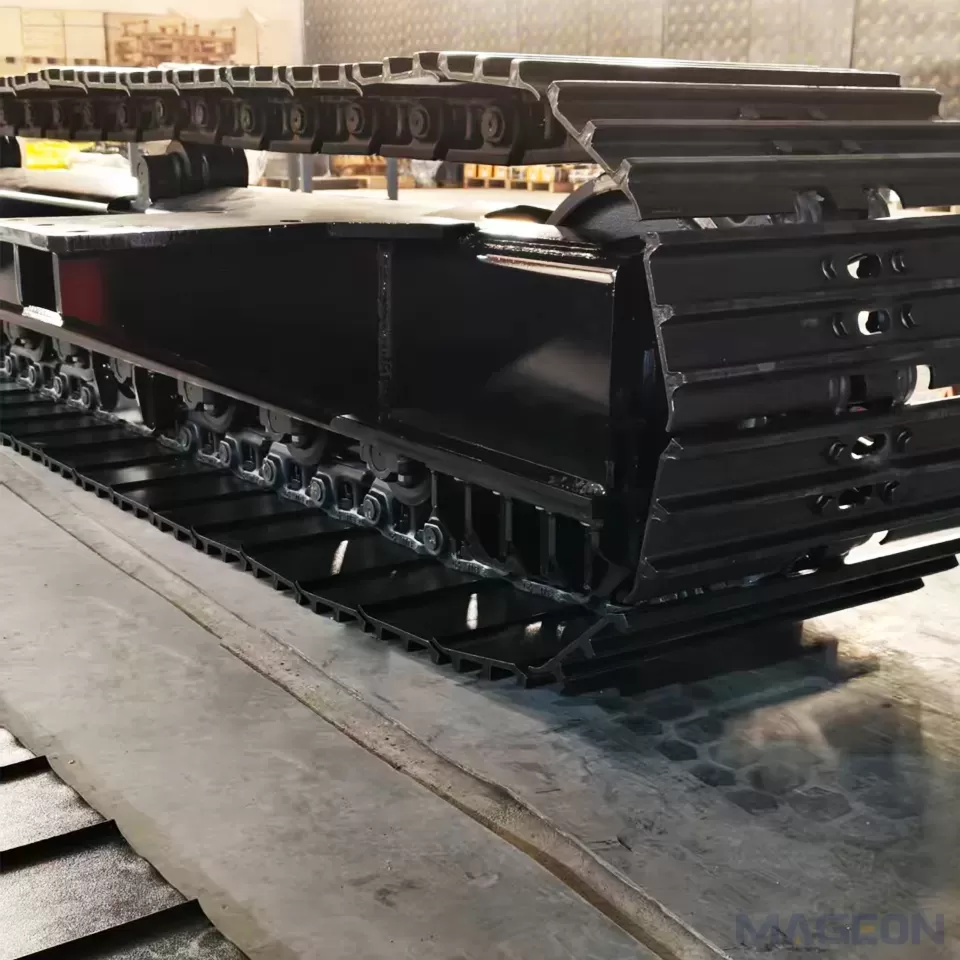
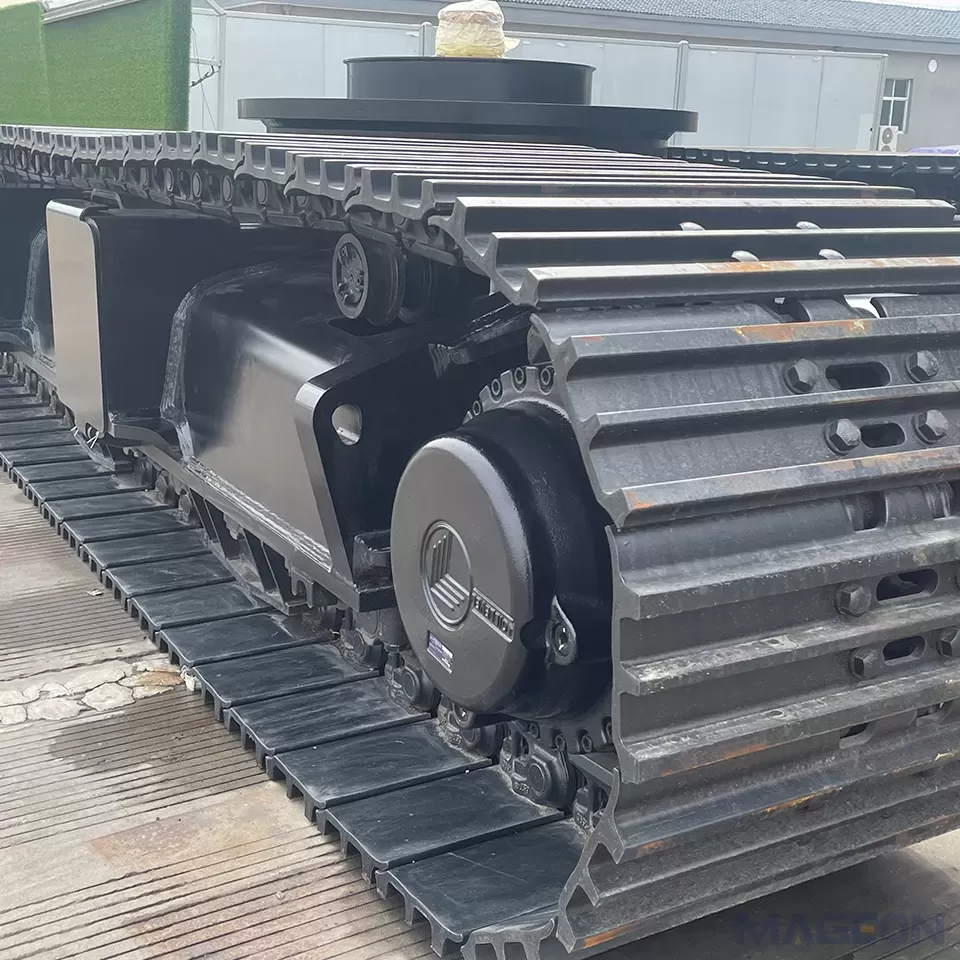
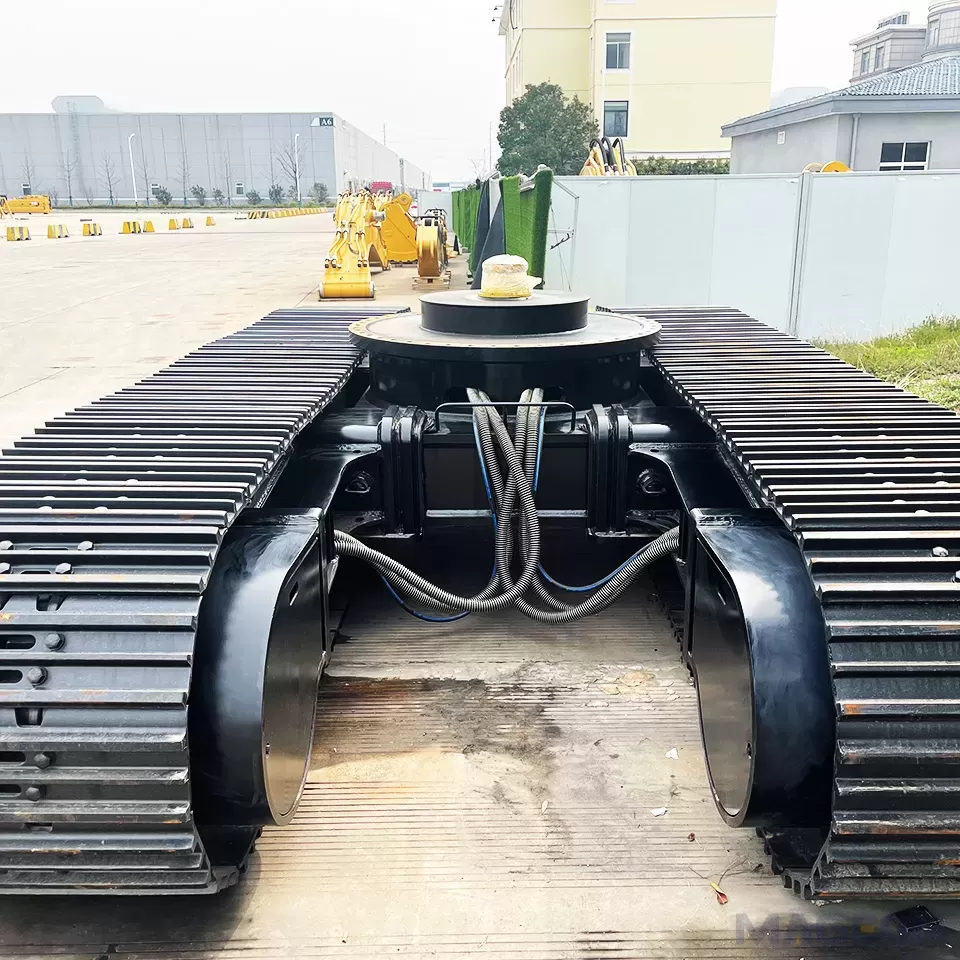
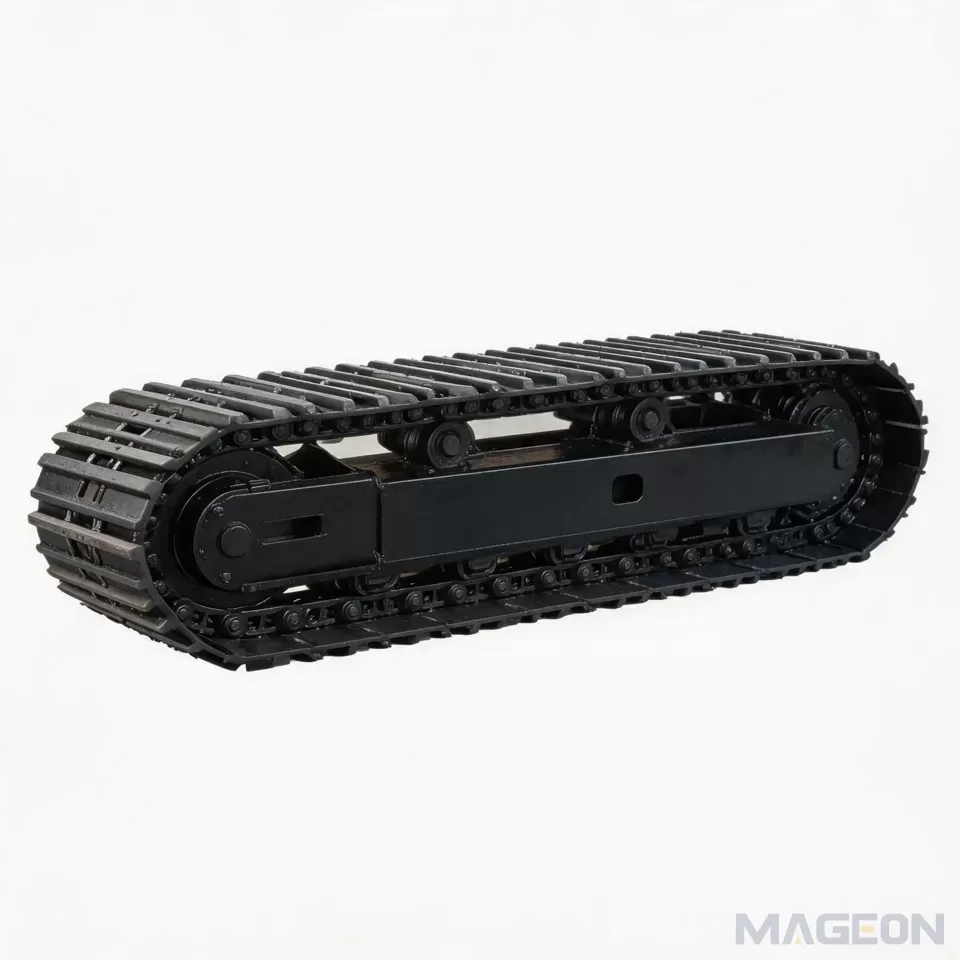
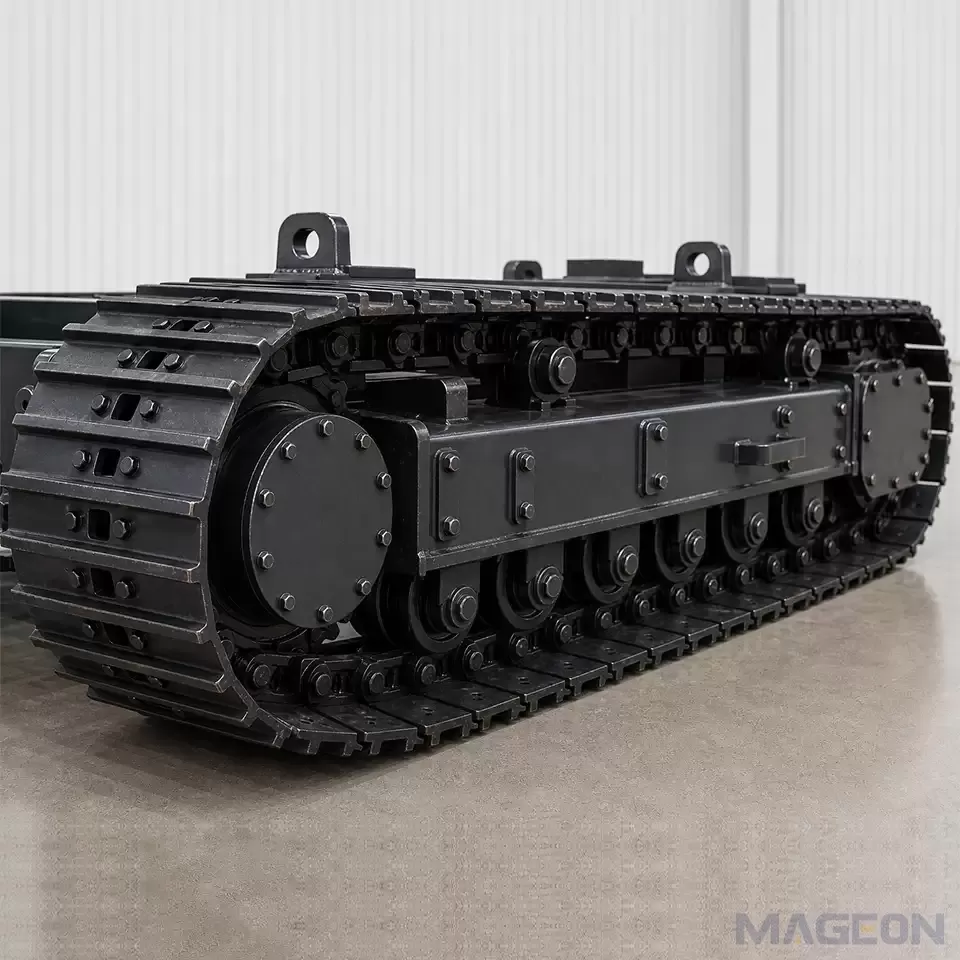
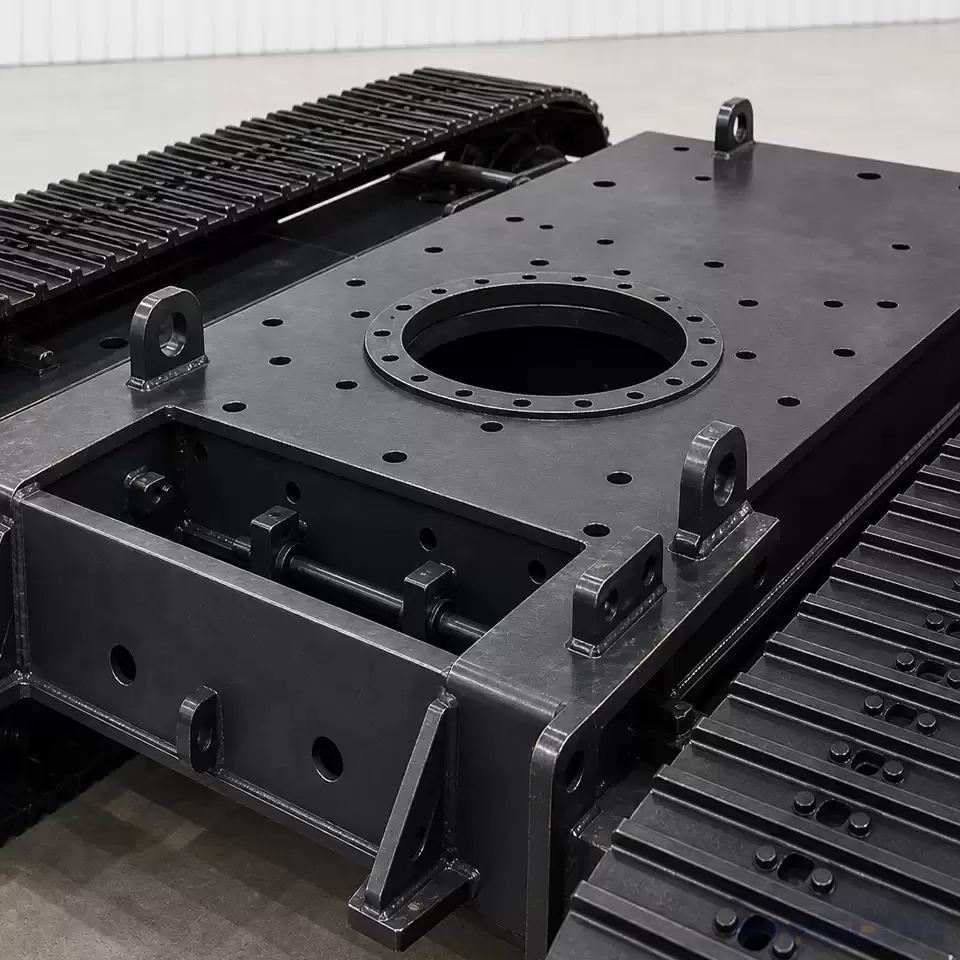
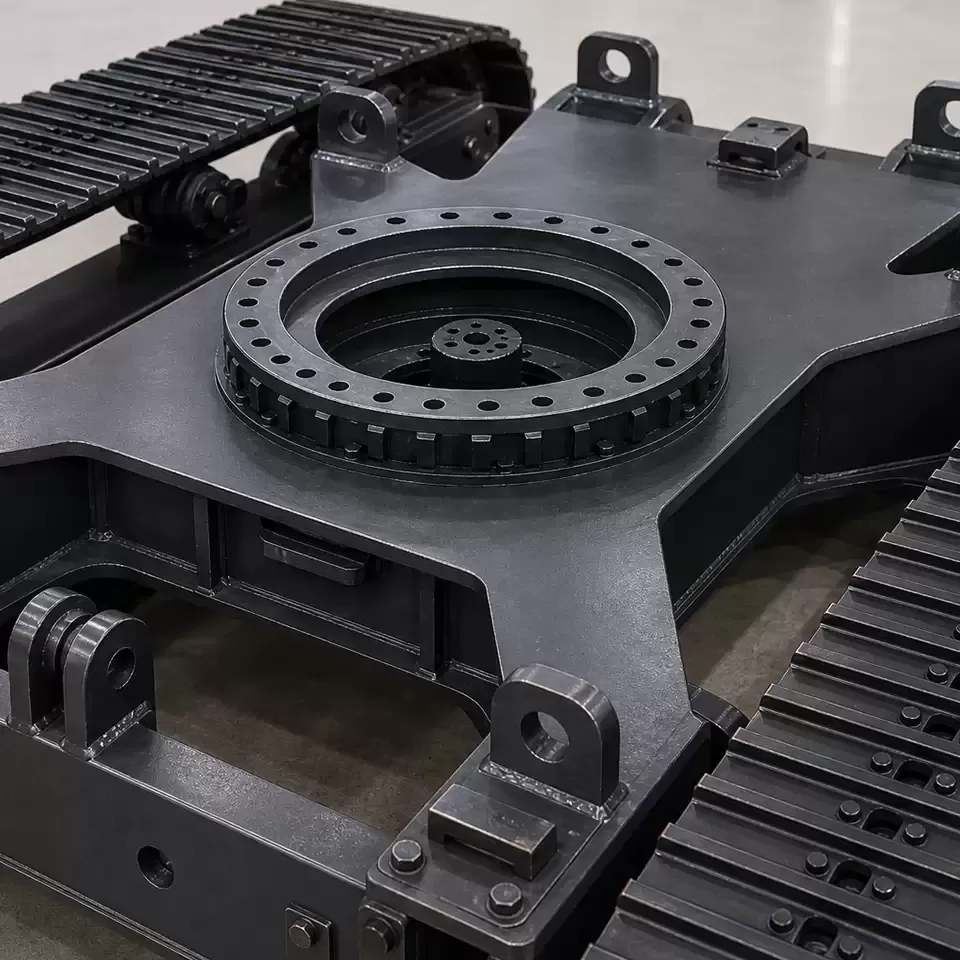
A separate crawler undercarriage mounting dimensions review should confirm the available envelope, attachment points, load paths, service access, and installation sequence. This keeps the discussion focused on real interfaces rather than an assumed bolt pattern or frame geometry.
Information to Prepare for a Technical Evaluation
Frequently Asked Questions
Can an OEM choose an undercarriage from drilling depth alone?
No. Drilling depth by itself does not define the complete machine layout, travel duty, interfaces, or relevant operating states. Use it as part of the equipment description, then collect the system-level inputs.
Should transport dimensions and working dimensions be treated as the same input?
Not necessarily. A rig can have different arrangements in transport and during work. Record each relevant configuration so packaging and working-state checks are not confused.
Is a general undercarriage drawing enough to begin a review?
It is a useful starting point, but it should be paired with the rig layout, mass information, duty conditions, and interface requirements. Missing inputs should be identified rather than filled with assumptions.
Can this article determine the required hydraulic system?
No. It identifies the need to review the travel and control interfaces. A hydraulic requirement must be confirmed from the approved project information and the complete machine design.
When should the OEM involve the undercarriage supplier?
Involve the supplier once the core equipment and operating states can be described clearly. Early technical evaluation is useful when it is based on real project inputs rather than a request for universal dimensions or ratings.
Applicable products:
What Requires Project-Specific Engineering Confirmation
The following issues should remain explicitly project-specific:
final machine mass, mass distribution, and relevant operating states;
track width, track gauge, ground-contact length, and overall dimensions;
stability, loading, slope, obstacle, clearance, and ground-support assessments;
drive, hydraulic, electrical, control, and mounting-interface requirements;
target-market safety, regulatory, and standards applicability.
This boundary is important for both engineering and procurement. It prevents an early technical conversation from being mistaken for a completed machine design or a performance guarantee.
Please leave your customization requirements, and we will contact you as soon as possible!
Leave your requirements, we'll get back to you within 24 hours.