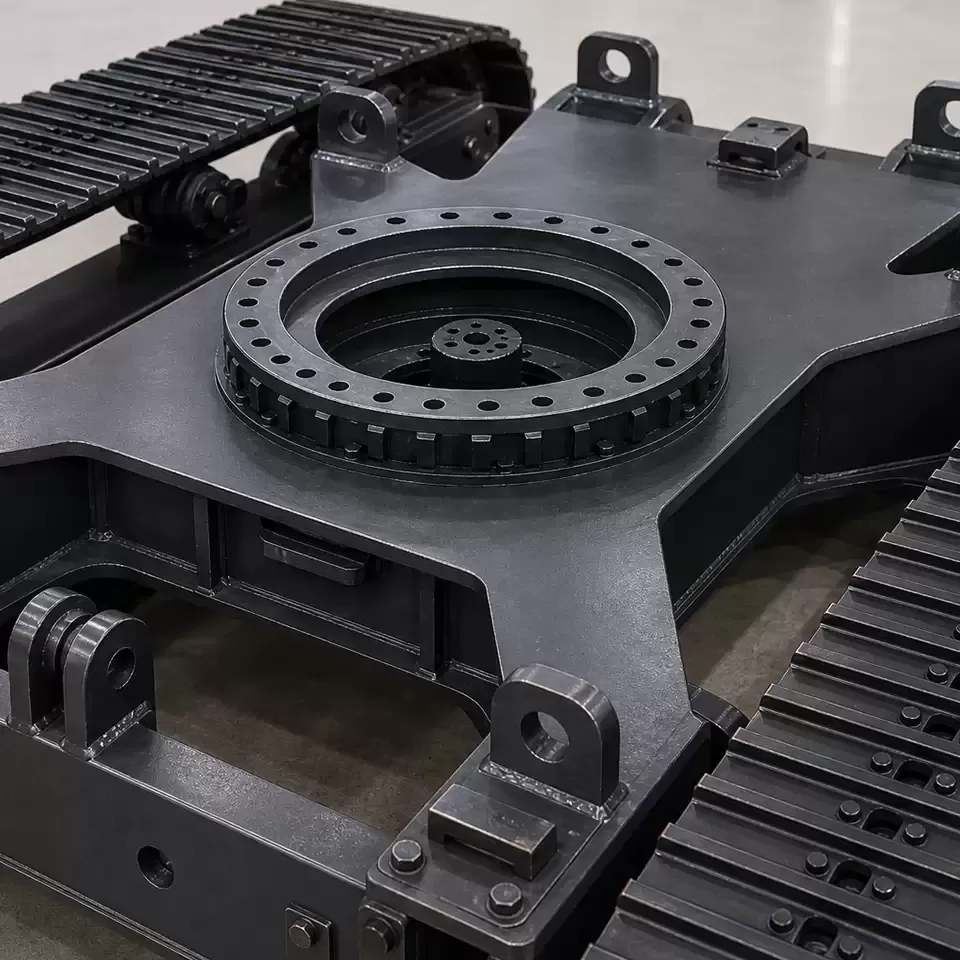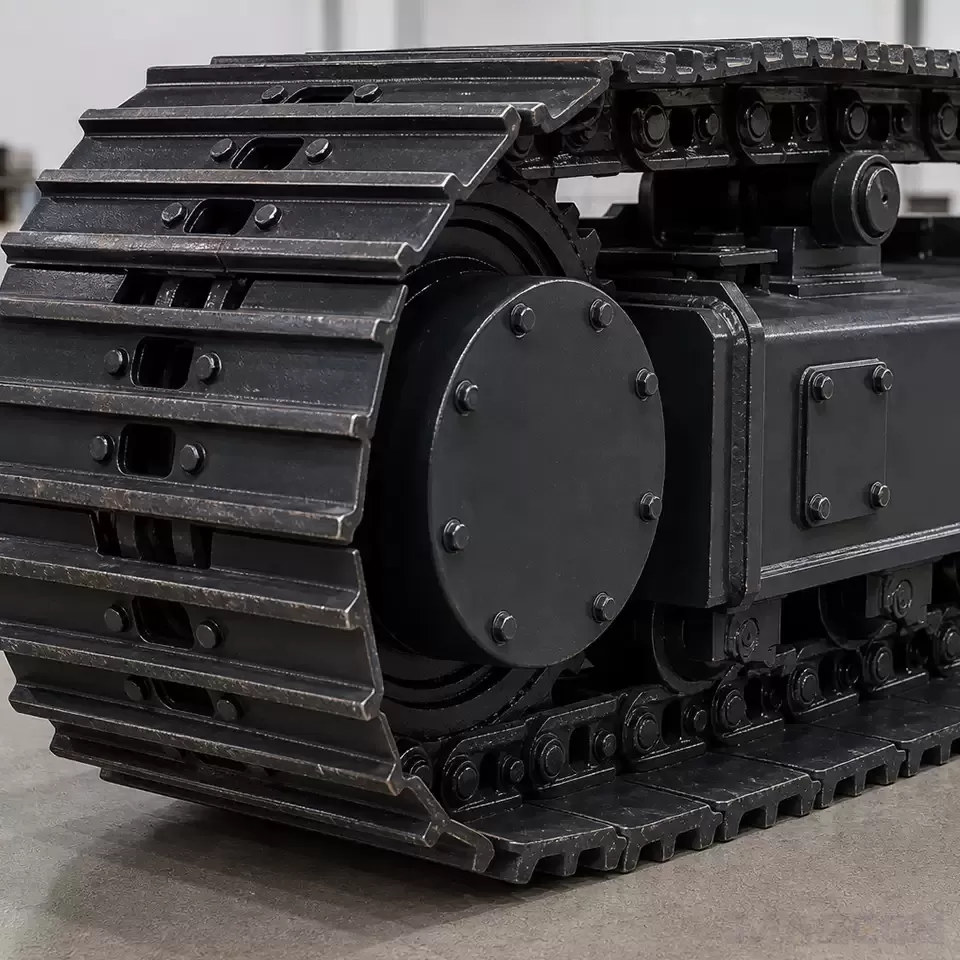

How Should OEMs Select a Crawler Crane Undercarriage for Soft-Ground Lifting?
For soft-ground lifting, a crawler crane undercarriage should be selected from the combined lifting and ground condition, not from one track-frame feature in isolation. The first decision is to identify what constrains the project most: the lift state, the available ground support, the crane layout, or a missing piece of information that prevents a conclusion.
This creates a useful selection direction before final engineering. It does not establish a rated lift, a permissible ground pressure, a final track width, or a safe operating condition. Those outcomes remain dependent on current manufacturer information, project drawings, site data, and engineering confirmation.
Define the Lifting and Ground Boundary First
Start with the working configuration that the crane must support. A general description such as “soft ground” is not enough. The review needs the relevant lift state, the intended operating area, the available site information, and the fixed boundaries of the crane's upper structure and mounting concept.
The objective is to separate confirmed inputs from assumptions. A lift state can change the load path through the crane, while a site condition can change what must be reviewed about support, level, access, and preparation. If either condition is still uncertain, the result should remain a preliminary direction rather than a final undercarriage configuration.
| Why it changes the review | Evidence to use | What cannot be concluded yet | |
|---|---|---|---|
| Relevant lift states and working configurations | Defines the crane condition that must be evaluated with the undercarriage | Current lift planning information and approved equipment data | A final lift rating or undercarriage size |
| Ground profile and available site information | Identifies support, slope, drainage, and known below-ground questions | Current site drawings, soil information, and ground-preparation records when available | That the site can support the crane without further confirmation |
| Upper-structure layout and fixed zones | Shows where the undercarriage must integrate with the whole crane | General arrangement and interface information | Fitment, clearance, or structural compatibility |
| Intended operating pattern | Distinguishes stationary lifting, repositioning, and changing ground areas | Project duty description and access plan |
Make Ground Conditions the First Gate
Ground conditions are not a background detail in soft-ground lifting. They are part of the operating boundary that must be checked together with the crane configuration. For example, OSHA's U.S. construction rule defines ground conditions in terms that include slope, compaction, and firmness, and requires adequate support and level in accordance with the equipment manufacturer's specifications when that rule applies. It also recognizes supporting materials such as mats, blocking, and cribbing as relevant site measures. [OSHA 29 CFR 1926.1402]
This is a regulatory reference, not a global legal conclusion or a substitute for a project's applicable requirements. Its practical lesson is broadly useful: the crane, the ground, and any planned support arrangement must be assessed as a system. A soft area, a changing slope, poor drainage, or a known below-ground hazard can change the evaluation priority even when the crane itself has not changed.
Ground information should also be treated as current project information. OSHA's construction guidance notes that site conditions can change and describes continuing attention to ground support during setup, use, and movement.The article's selection framework therefore does not assume that one early site description remains sufficient throughout a project.
Use the Ground and Lift Combination to Set the Review Priority
The key question is not whether a crawler crane has tracks. It is which combination of lifting condition and ground condition should lead the next review. A comparatively straightforward lift on a well-defined, prepared area may first require confirmation of the overall crane layout and duty boundary. A changing lift state or uncertain ground area can move ground support, load distribution, interface, or site-data review to the front.
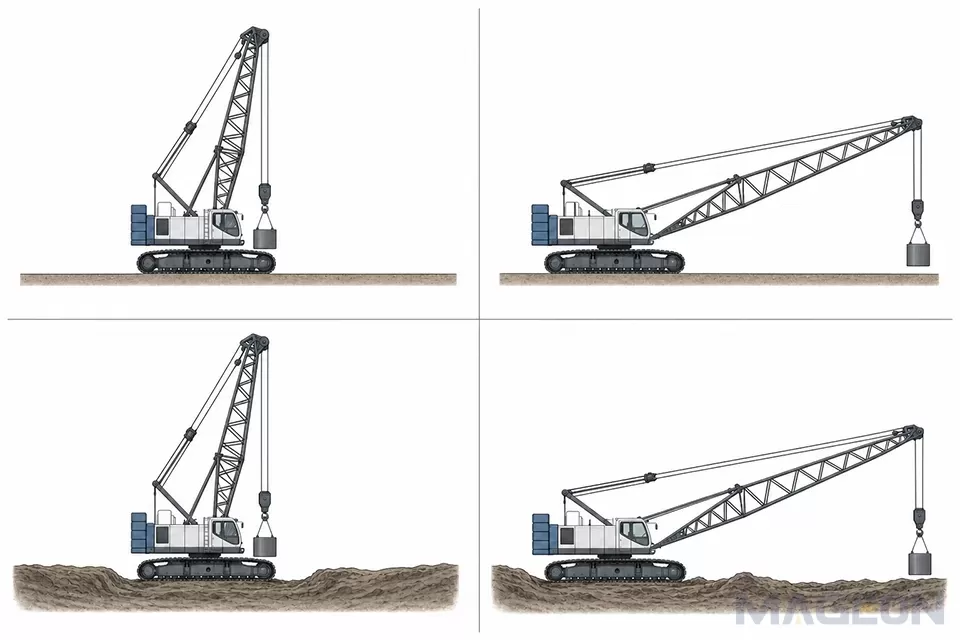
Read the comparison as a review guide, not as a performance chart:
| First review priority | Why it comes first | Project-specific confirmation needed | |
|---|---|---|---|
| Defined lift state on a prepared, level work area | Crane layout and duty boundary | Establishes the baseline configuration to assess | Current equipment and site information |
| Lift condition changes the upper-structure loading relationship | Load distribution and whole-crane layout | The working configuration may change the relevant structural and mounting questions | Approved configuration and engineering data |
| Ground is soft, uneven, wet, or not fully characterized | Ground support, level, drainage, and site preparation | The site condition becomes a gating input before final selection | Current ground and support information under the applicable project process |
| Both lift state and ground condition change | Combined lift, ground, and interface review | Neither input can safely be reduced to a single generic recommendation |
The image compares the same generic crane across four non-numeric conditions. It does not show safe and unsafe cases, nor does it establish a rated result. Its purpose is to make the selection sequence visible: first identify the changing condition, then request the evidence needed to evaluate it.
Check the Crawler Undercarriage as Part of the Whole Crane
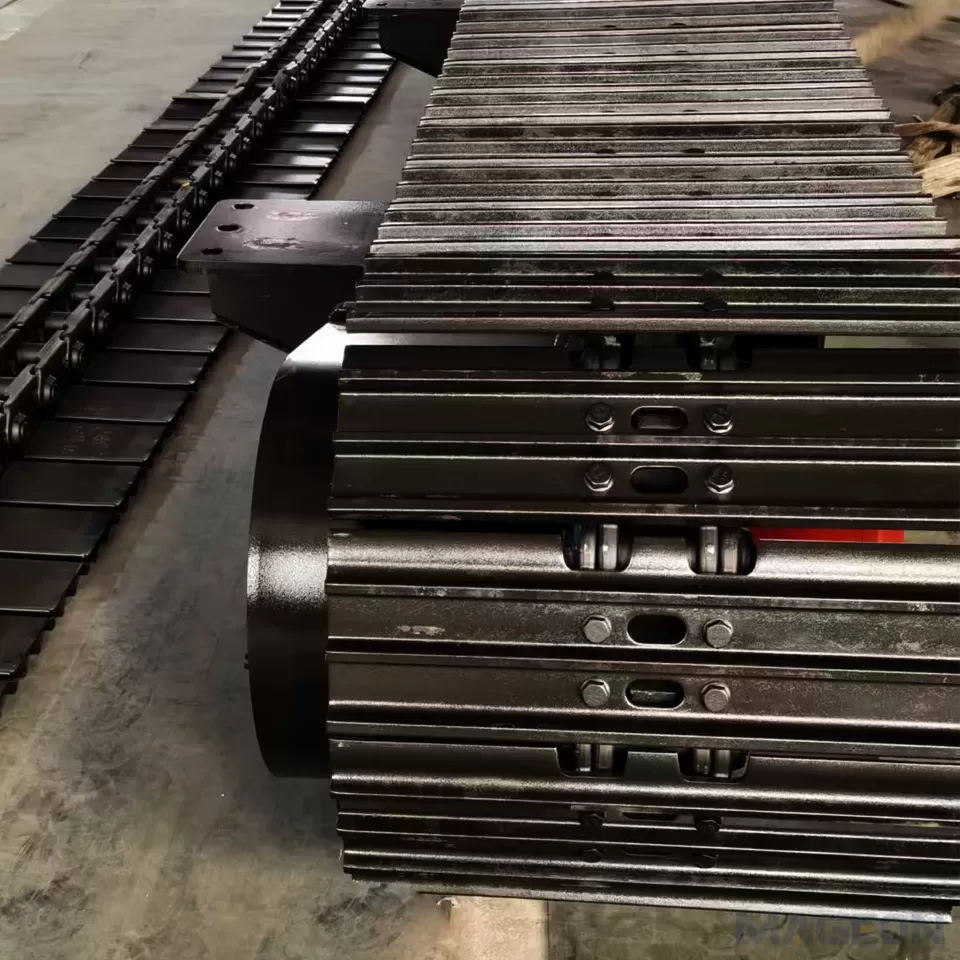
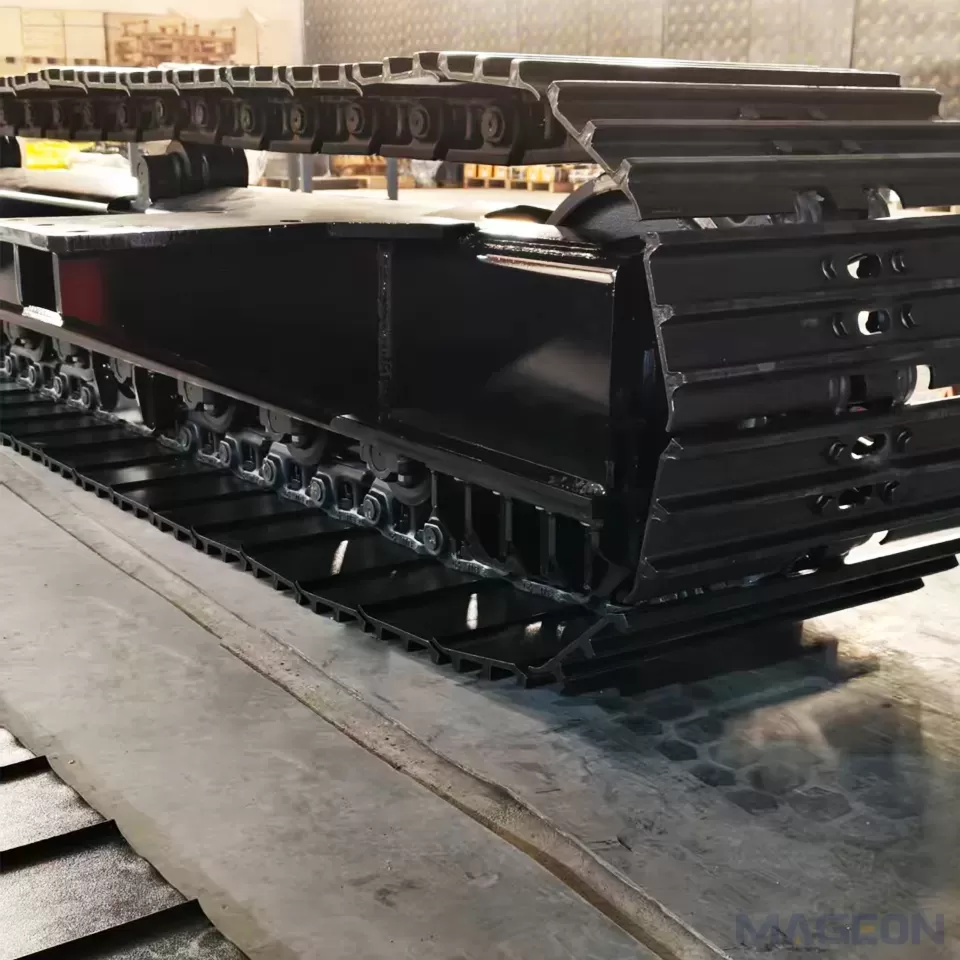
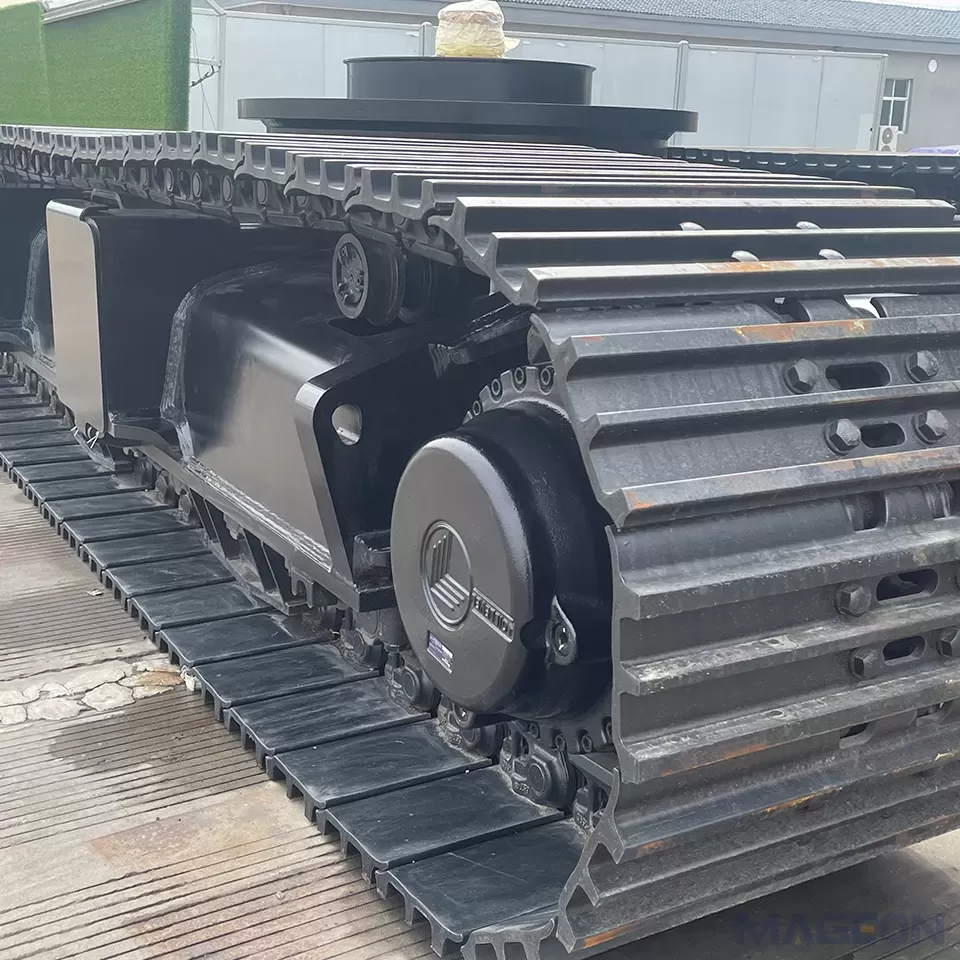
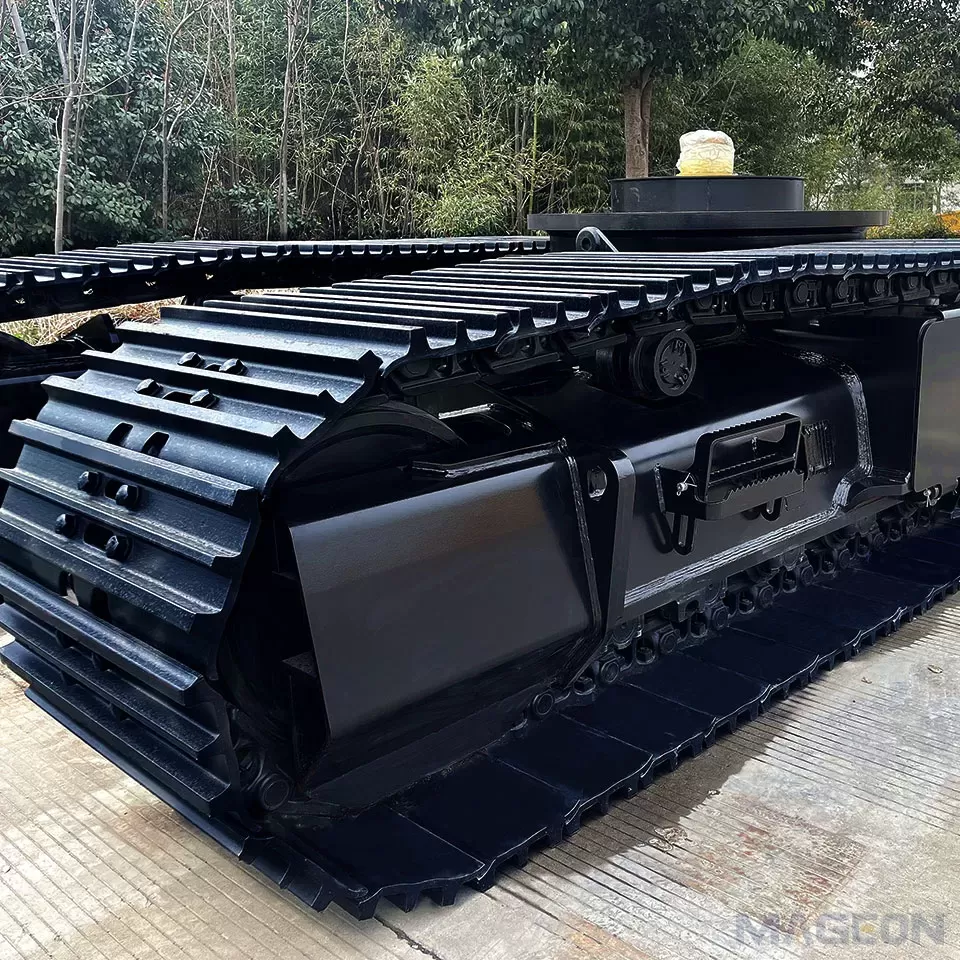
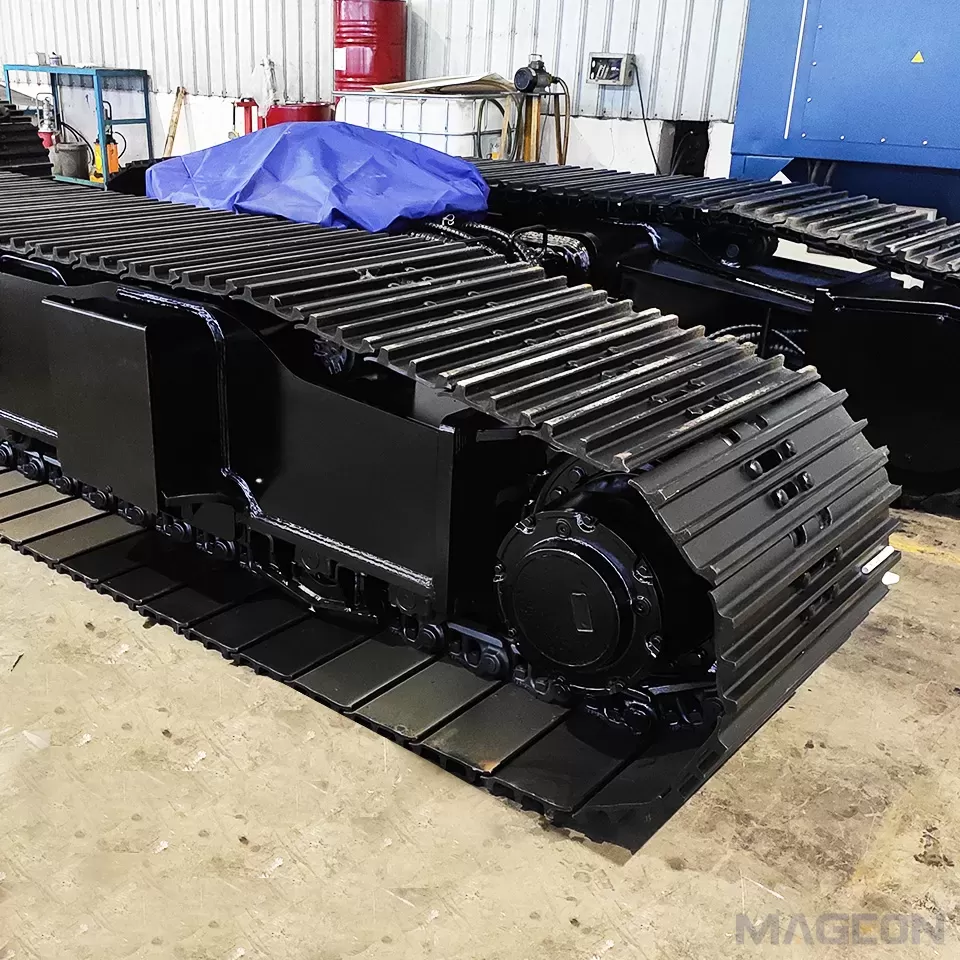
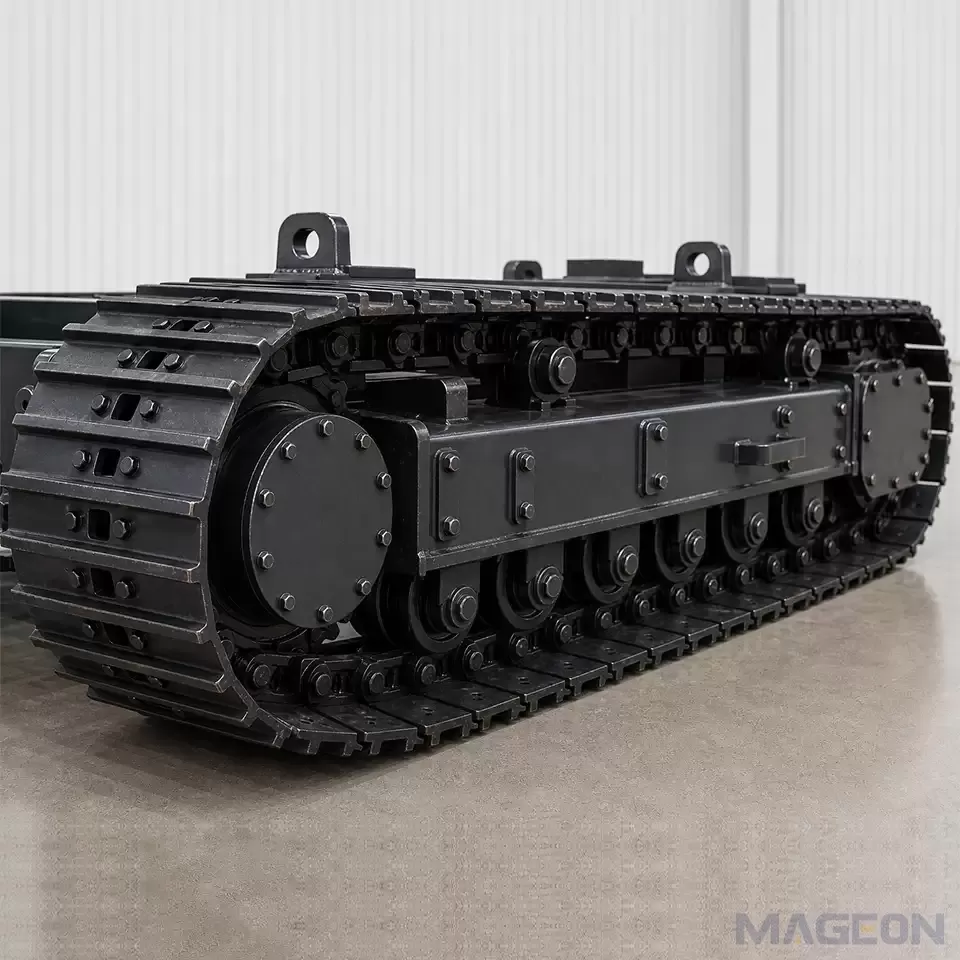
Once the lift and ground boundary is clear, review the crawler undercarriage as part of the complete crane. Track width, track gauge, ground contact length, the upper-structure layout, and the mounting interfaces can all affect the information required for a technical evaluation. None of them alone determines the final selection.
Track gauge should be reviewed with the whole crane envelope and the intended working configuration, rather than treated as a stand-alone answer. The same applies to the centre of gravity: it is an input that helps define which crane condition must be checked, not a substitute for an approved lifting or stability conclusion.
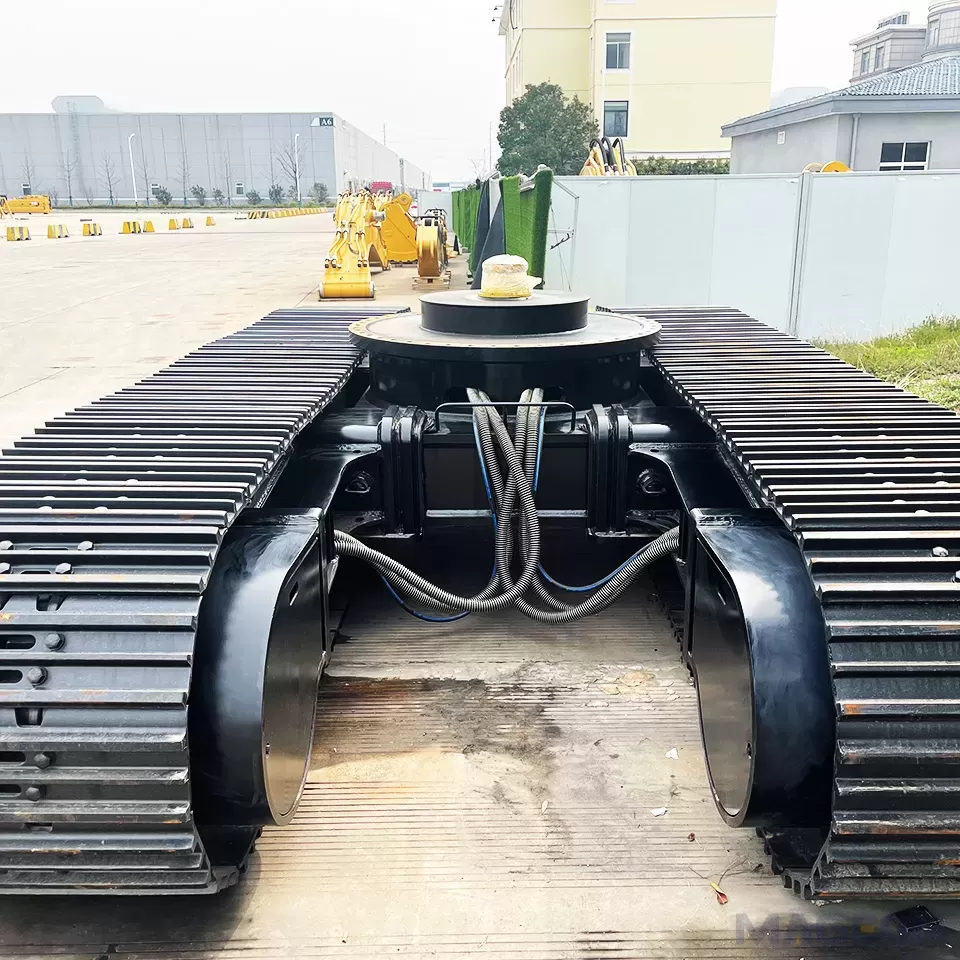
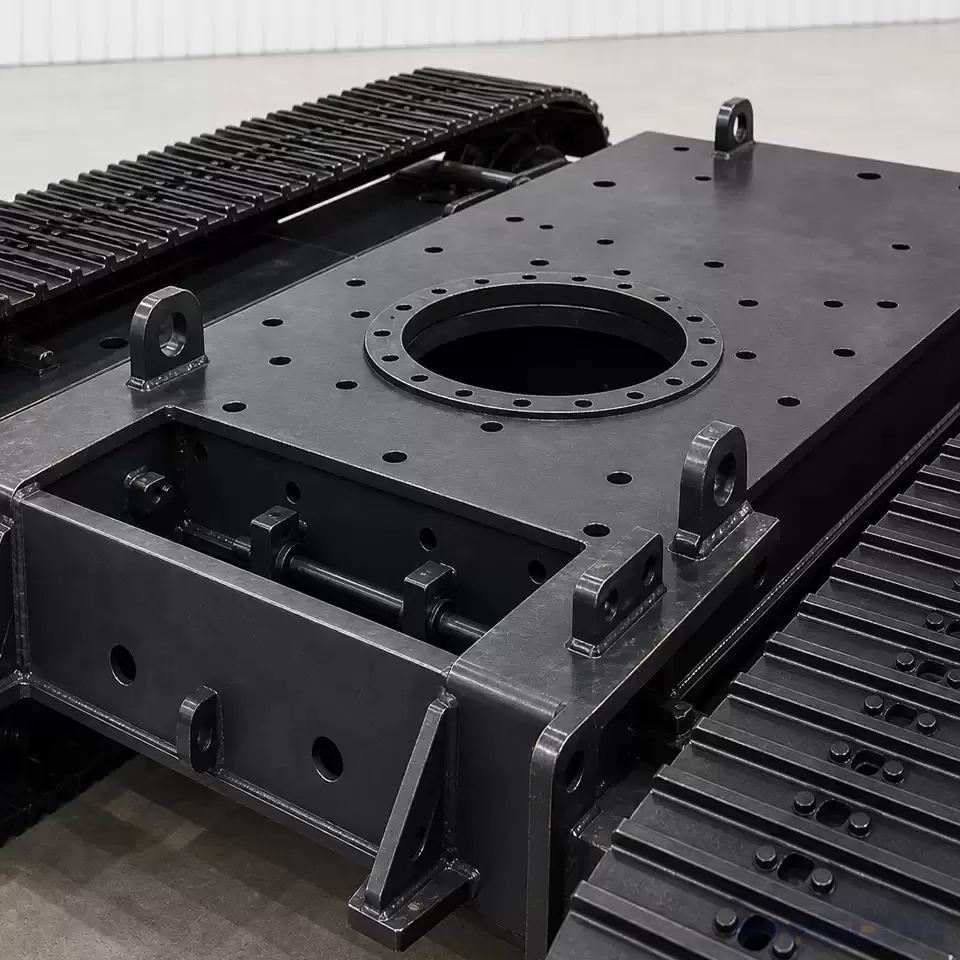
Mounting interfaces also require drawing-based coordination. Their position, geometry, structural load path, and related access boundaries must be checked against the actual crane layout. A generic crawler crane image can explain why the inputs are connected, but it cannot prove fitment or replace an approved drawing.
As an industry planning example, Liebherr's public crane-planning reference brings together load-chart information, centre-of-gravity information, and crawler ground-pressure distribution for its covered machines. This illustrates the need to coordinate those inputs; it does not establish an equivalent calculation, capability, or specification for another manufacturer or project. Liebherr CP mobile
Prepare the Technical Evaluation Package
The next step is to prepare a concise technical evaluation package. The package should show the confirmed lifting and site conditions, identify open points, and make preliminary information visible as preliminary. This lets the undercarriage review focus on the real decision instead of filling gaps with assumed dimensions or operating conditions.
| What to provide | Used for | If incomplete | |
|---|---|---|---|
| Crane application and duty | Intended lifting task, operating pattern, and work-area boundary | Defining the application context | Keep the result at a preliminary selection direction |
| Lift information | Relevant working configurations and available approved lifting information | Identifying the conditions that need review | Do not infer a rating or final configuration |
| Ground and site information | Ground profile, site drawings, drainage, known hazards, and planned support information when available | Framing the ground-support and preparation review | Request current project information before a conclusion |
| Crane layout and interfaces | General arrangement, fixed upper-structure zones, drive arrangement, and mounting regions | Checking integration needs |
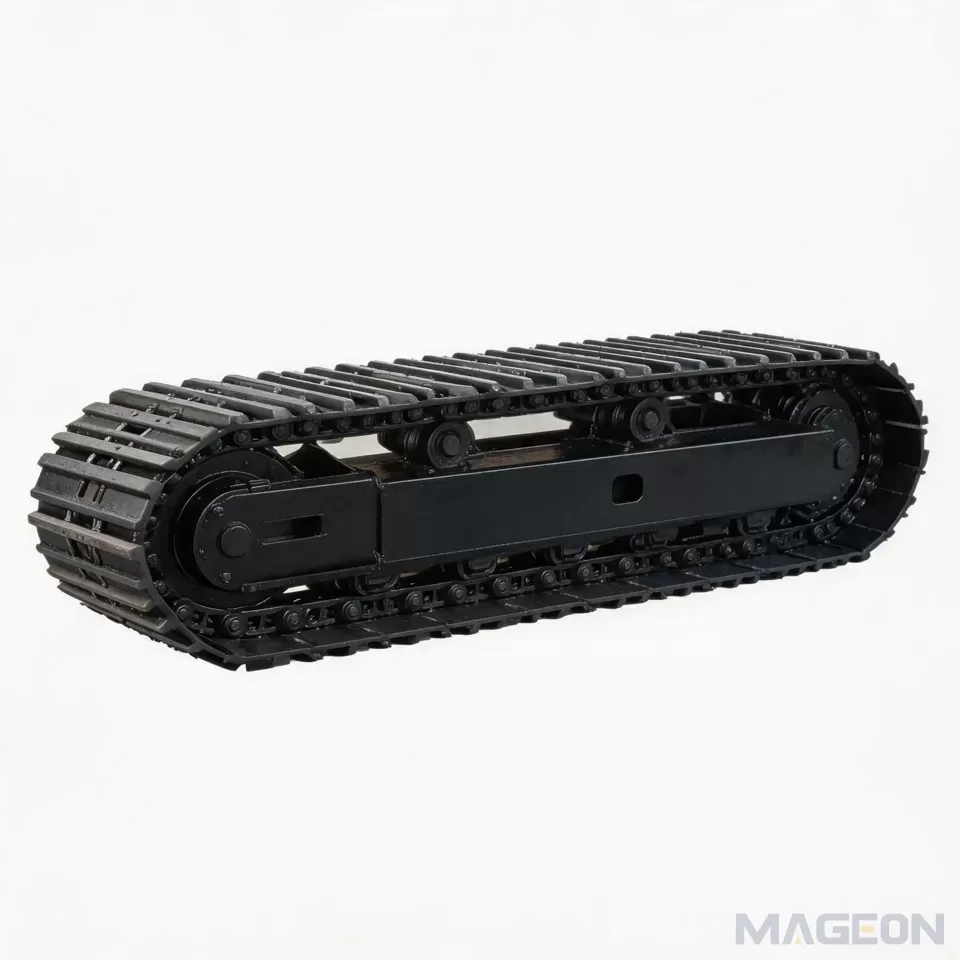
MAGEON supplies complete crawler undercarriage assemblies. Equipment layout, lift condition, dimensional, duty, and site information can be used to begin a technical evaluation. Final configuration, dimensions, and performance-related conclusions must remain subject to current approved drawings, specifications, and engineering confirmation.
Frequently Asked Questions
Does soft ground automatically mean a wider crawler undercarriage is the answer?
No. Soft ground changes the review priority, but a final direction depends on the lifting condition, ground information, site preparation, whole-crane layout, and approved engineering inputs. A single feature should not be presented as a universal solution.
Can mats or other supporting materials replace technical confirmation?
No. Supporting materials may be part of the site-support approach, but they do not replace the applicable project process, manufacturer requirements, site information, or engineering confirmation.
Is one early ground report enough for the whole project?
Not necessarily. The relevant site condition can change with location, weather, preparation, and crane movement. Use current project information and the applicable inspection process rather than assuming the original condition remains unchanged.
When do track gauge and centre of gravity matter most?
They matter when the crane layout and working configuration must be reviewed as a system. They help define the undercarriage and integration questions, but they do not independently prove a lifting or stability result.
What is the minimum useful input for an initial evaluation?
Provide the crane application, relevant lift states, available site and ground information, general arrangement, dimensional constraints, and known mounting or drive boundaries. Clearly mark information that is preliminary or unavailable.
Next Step
For a crawler crane project involving soft-ground lifting, provide the available crane layout, lift condition, load, dimensions, duty, ground, and interface information. MAGEON can use that input to begin a technical evaluation for a complete crawler undercarriage assembly.
Please leave your customization requirements, and we will contact you as soon as possible!
Leave your requirements, we'll get back to you within 24 hours.