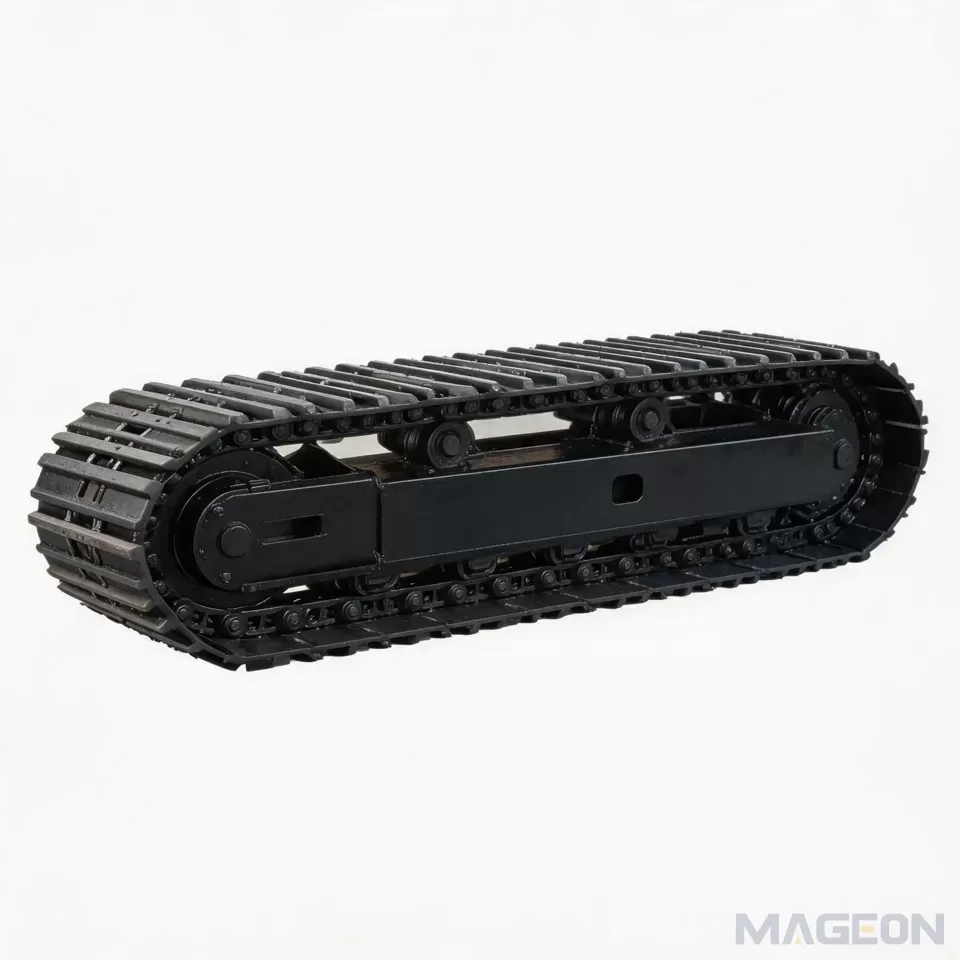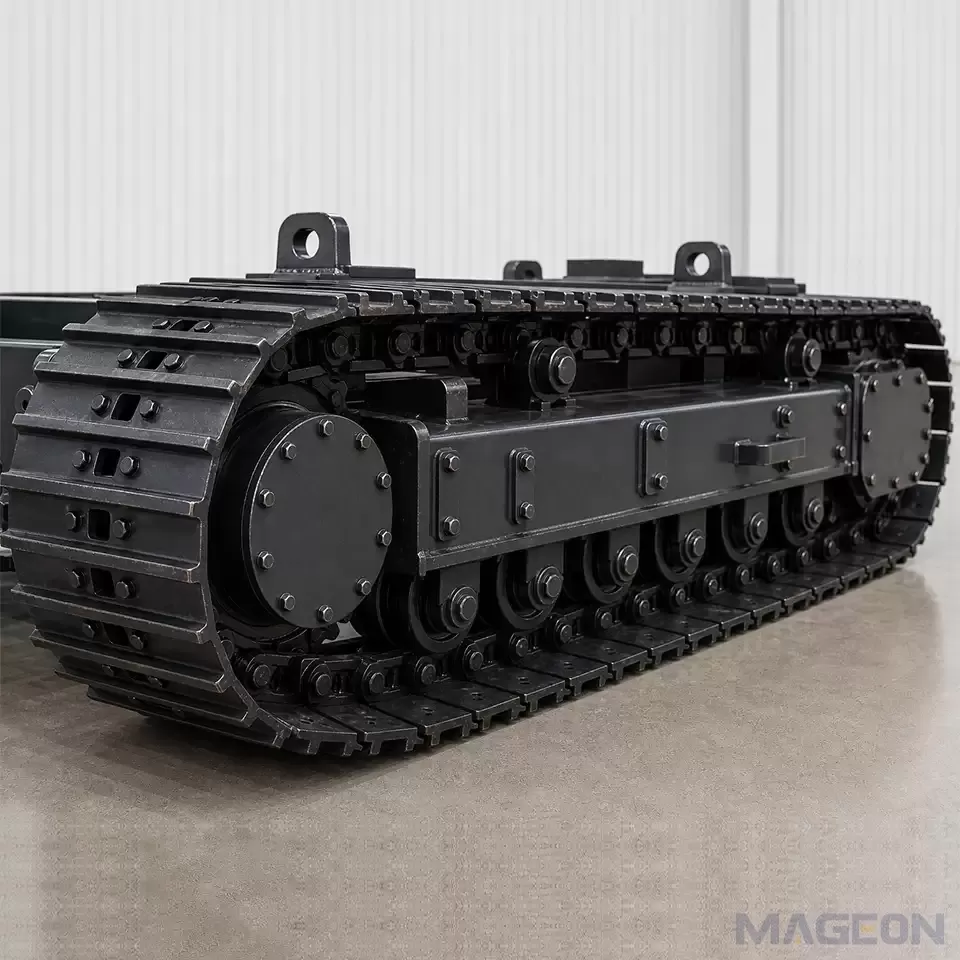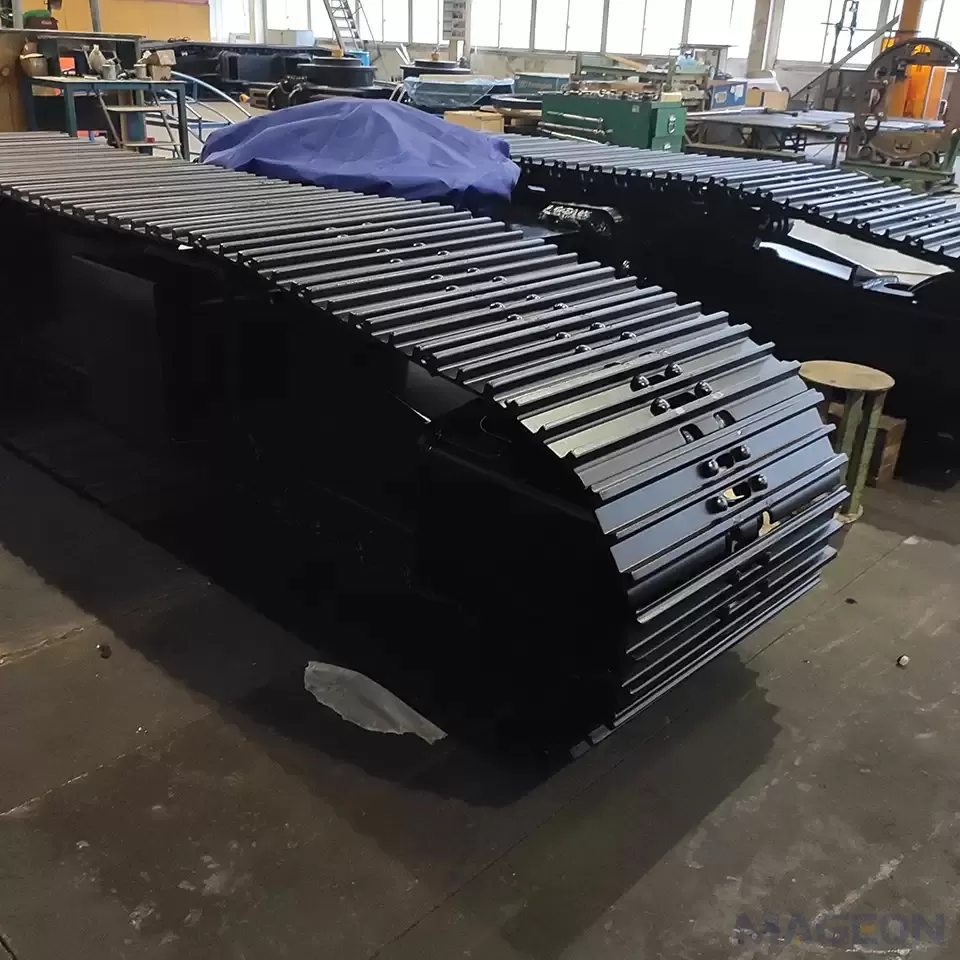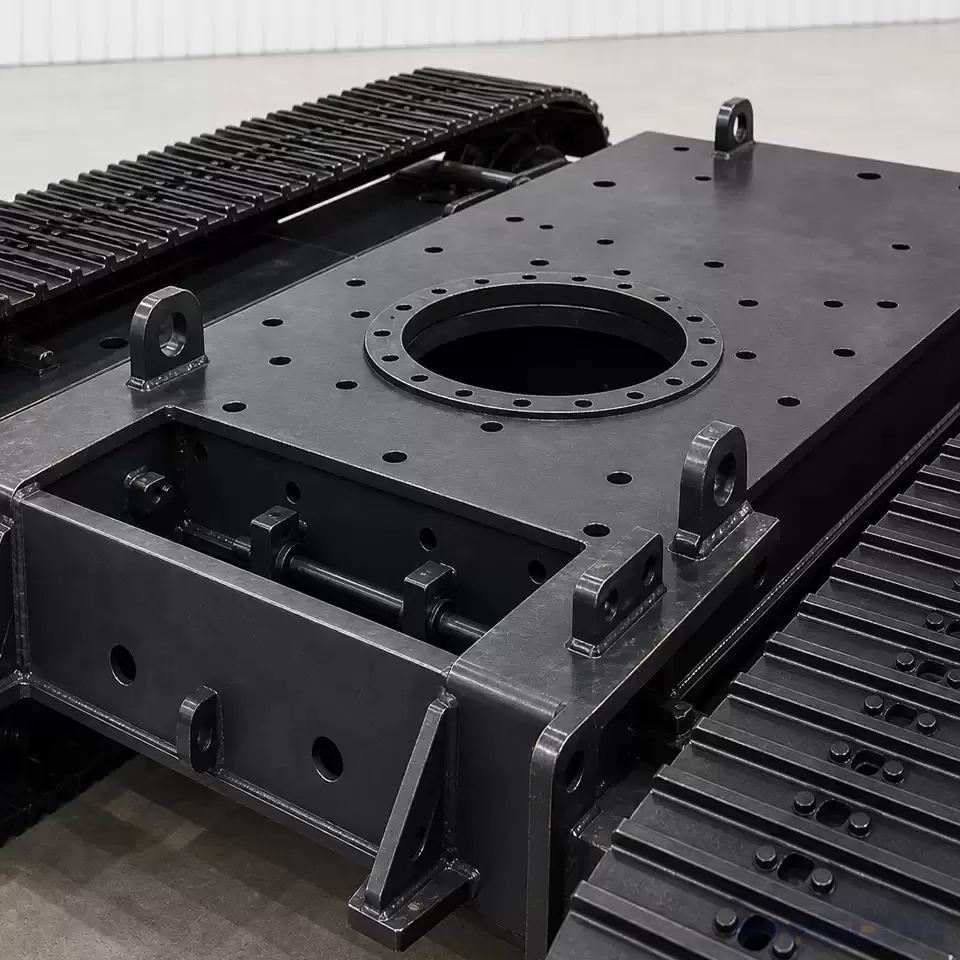
What precautions should be paid to, how to procure and how to maintain and repair the steel crawler chassis for mining?
Project Overview:
This article systematically introduces the complete technical framework of mining steel track undercarriage[植入关键词:track undercarriage], covering structural composition, working principle, core performance characteristics, application fields, daily maintenance specifications and procurement selection criteria. The product adopts Q690D high-strength steel box-section track frame, 42CrMo quenched track rollers and wear-resistant surfacing track shoes, with a single roller load capacity of 5–8 tons and a service life of up to 12,000 hours. Targeted at open-pit mining, tunnel engineering and extreme cold region operations, it provides reliable heavy-duty walking solutions for mining equipment. The guide helps procurement teams select matching products and maintenance teams establish standardized management systems.
Mining Steel Crawler Undercarriage: Key Points, Procurement Guide and Maintenance Tips
The mining steel crawler undercarriage serves as the "legs" of heavy mining equipment, and its performance directly determines equipment reliability and availability under harsh working conditions. Experienced mining engineers know that undercarriage failure is often the primary cause of equipment downtime. As a professional heavy-duty undercarriage manufacturer, MAGEON provides a comprehensive guide covering structural principles, procurement criteria and maintenance methods to help mining teams maximize equipment uptime.
Core Technical Specifications
MAGEON heavy-duty mining crawler chassis adopts strict material and process standards, with core technical parameters as follows:
| Technical Category | Key Indicators | Parameter Range / Standard |
|---|---|---|
| Frame Structure | Material | Q690D high-strength steel, box section with internal stiffeners |
| Track Rollers | Quantity per side | 7 – 9 units |
| Track Rollers | Single wheel load capacity | 5 – 8 tons |
| Track Rollers | Material & Process | 42CrMo quenched, labyrinth seal |
| Track Rollers | Service Life | ~ 12,000 hours |
| Track Shoes | Thickness | 40 / 50 / 60 mm (three grades) |
| Track Shoes | Surface Hardness | HB 450 – 550 (wear-resistant surfacing layer) |
| Drive Sprocket | Tooth Count | 23 – 25 teeth (standard) |
| Ground Pressure | 200-ton class excavator | ~ 100 kPa |
| Track Tension | Standard sag | 40 – 70 mm |
| Lubrication | Grease Type | Extreme pressure lithium-based grease |
| Turning Radius | Minimum | 1/2 of equipment length |
1. Structure and Working Principle
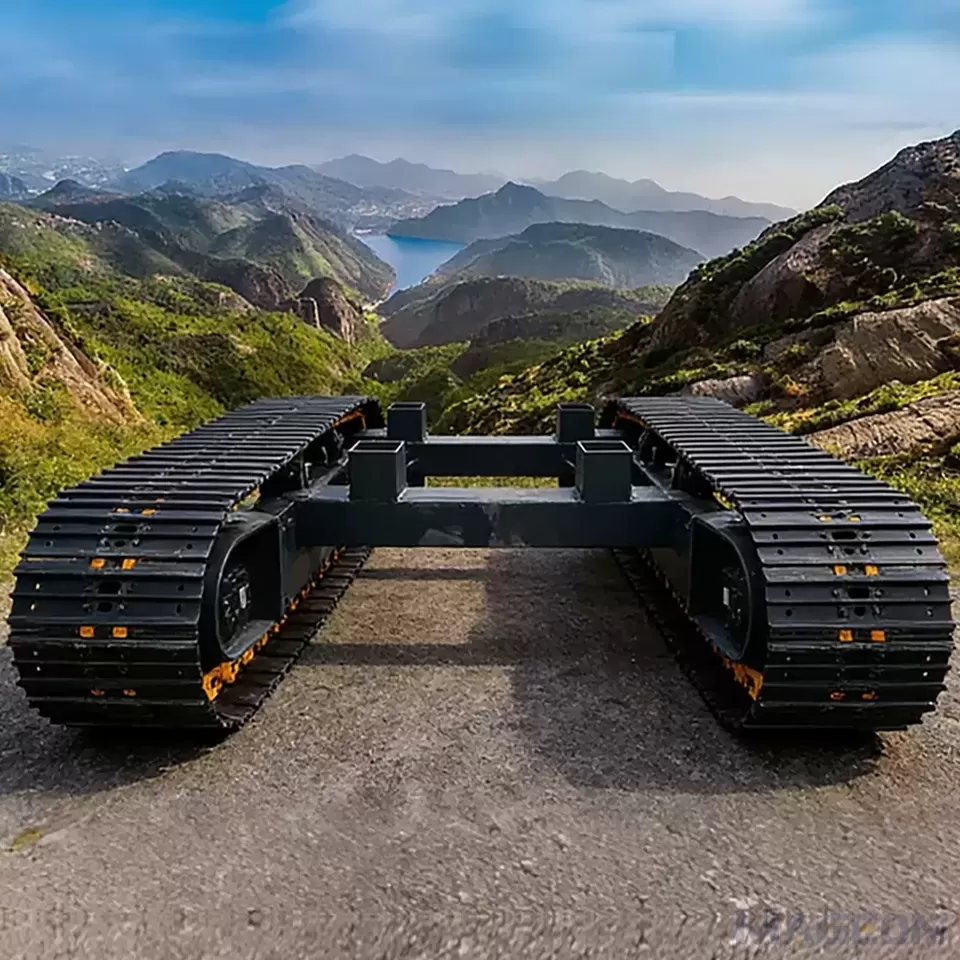
(1) Load-Bearing Frame
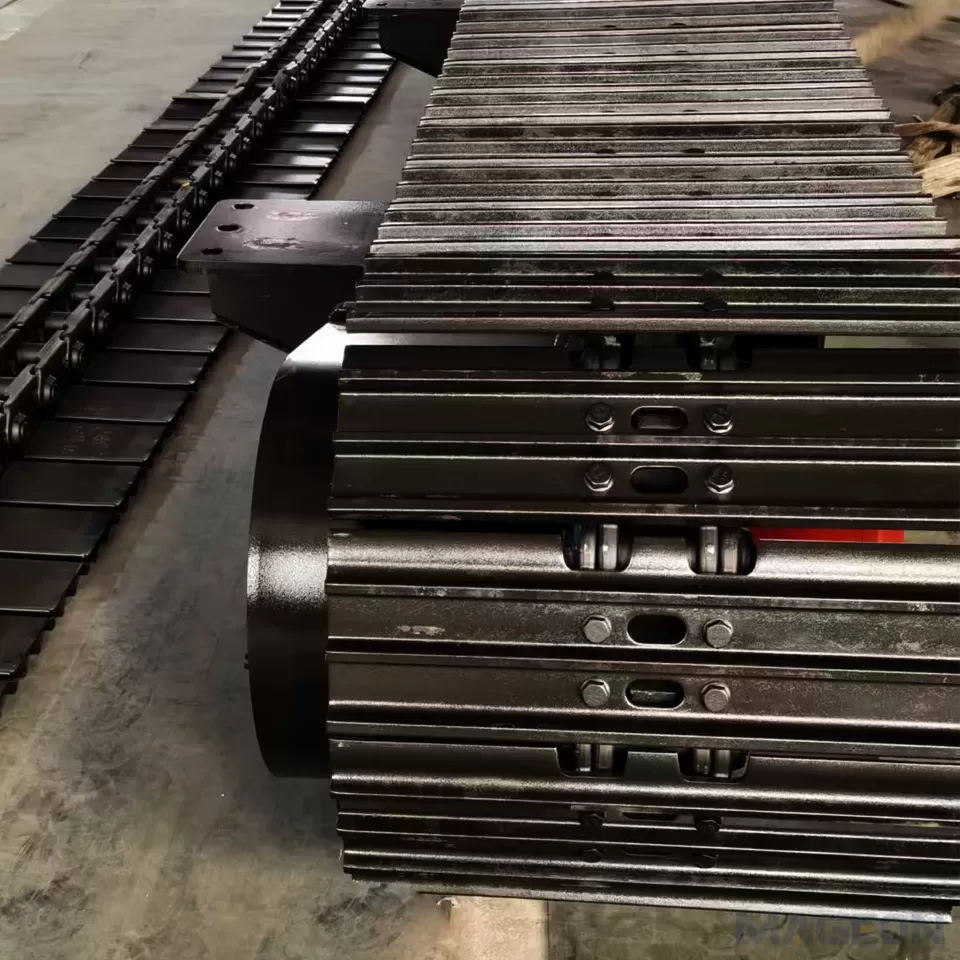
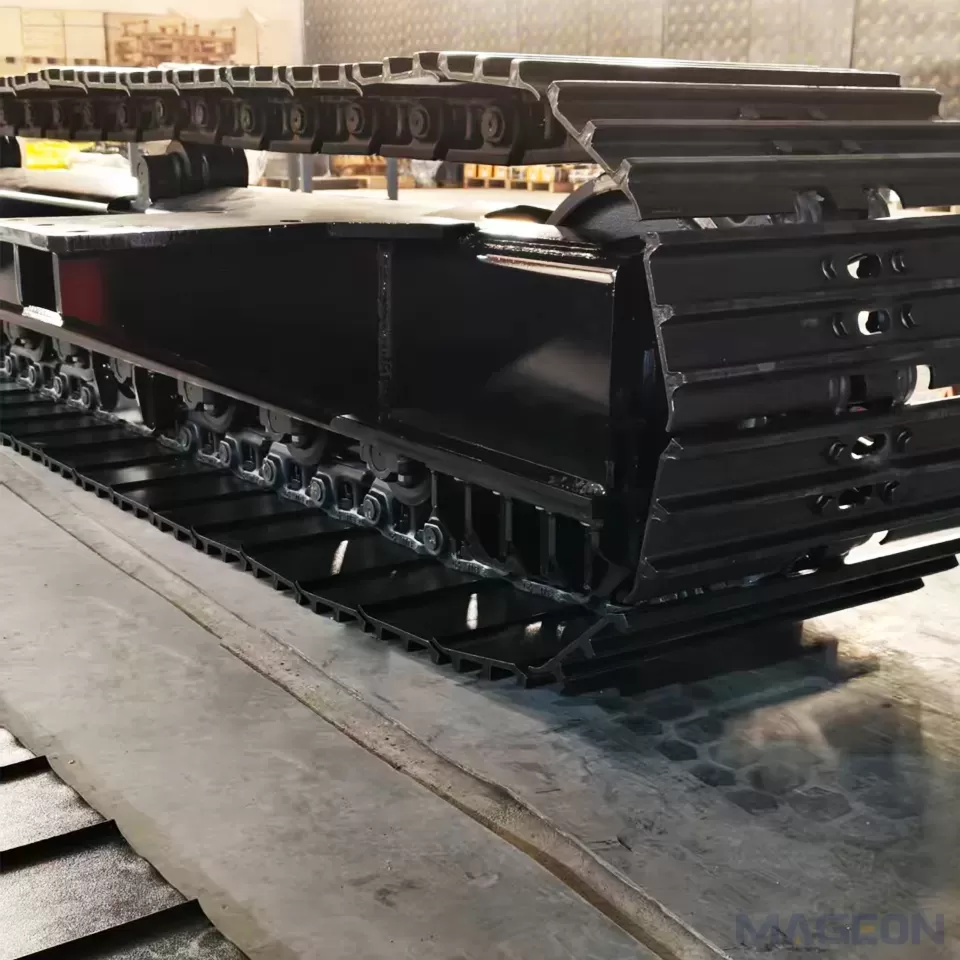
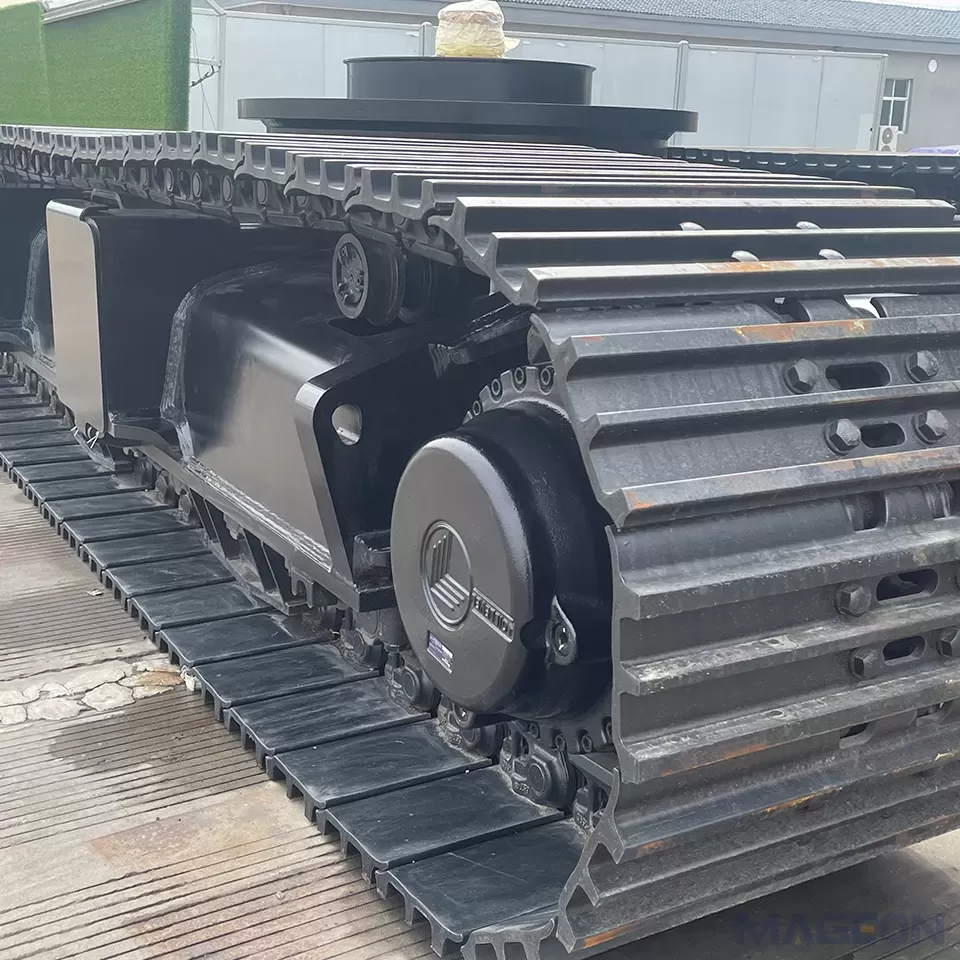
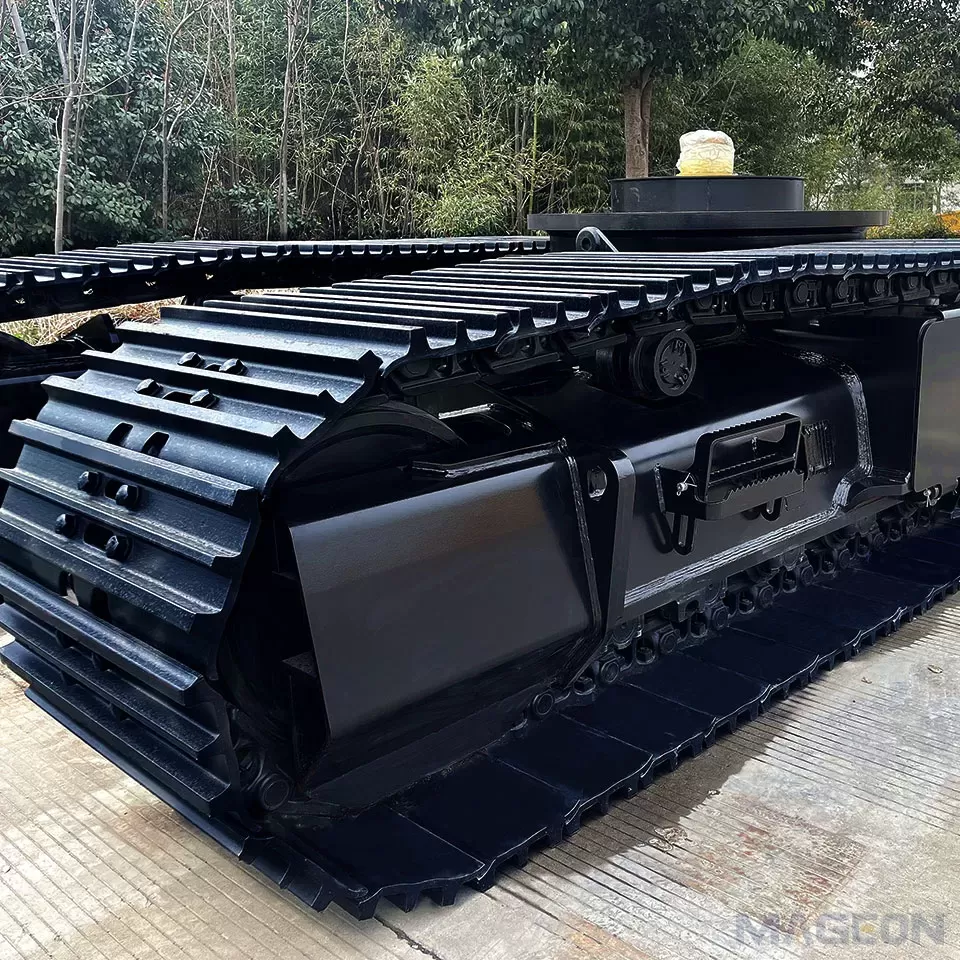
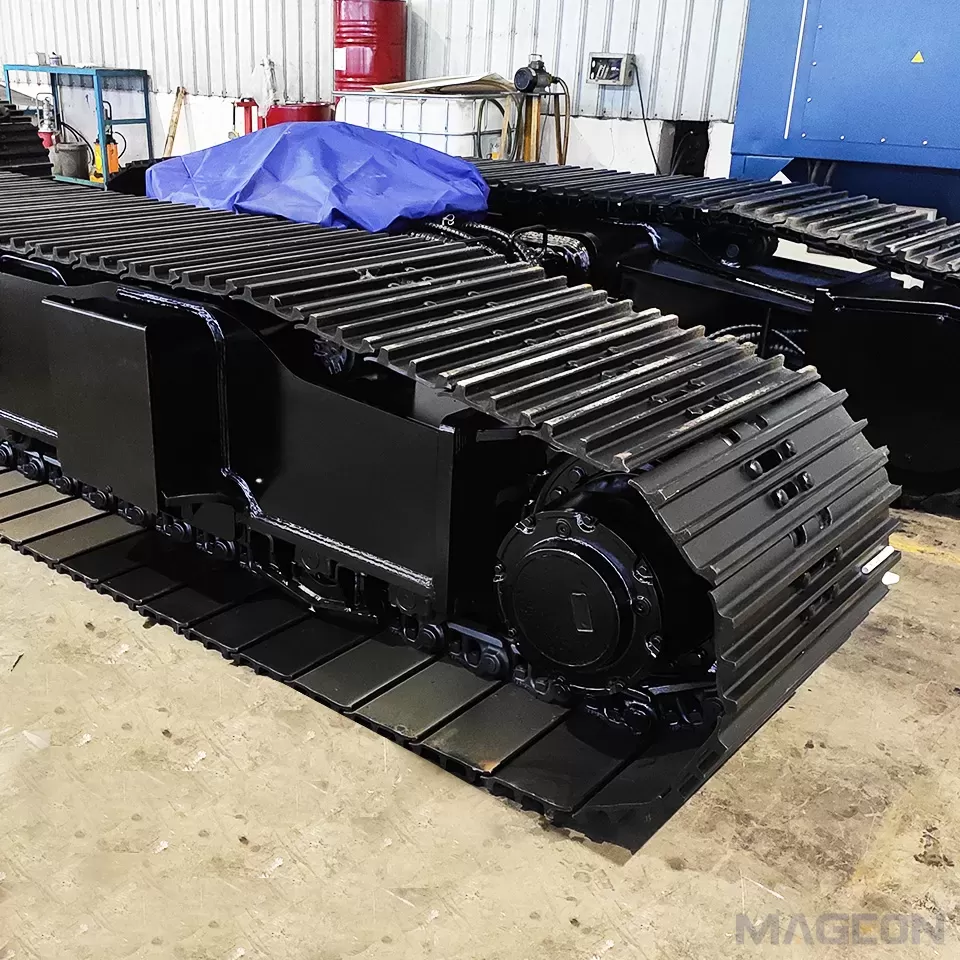
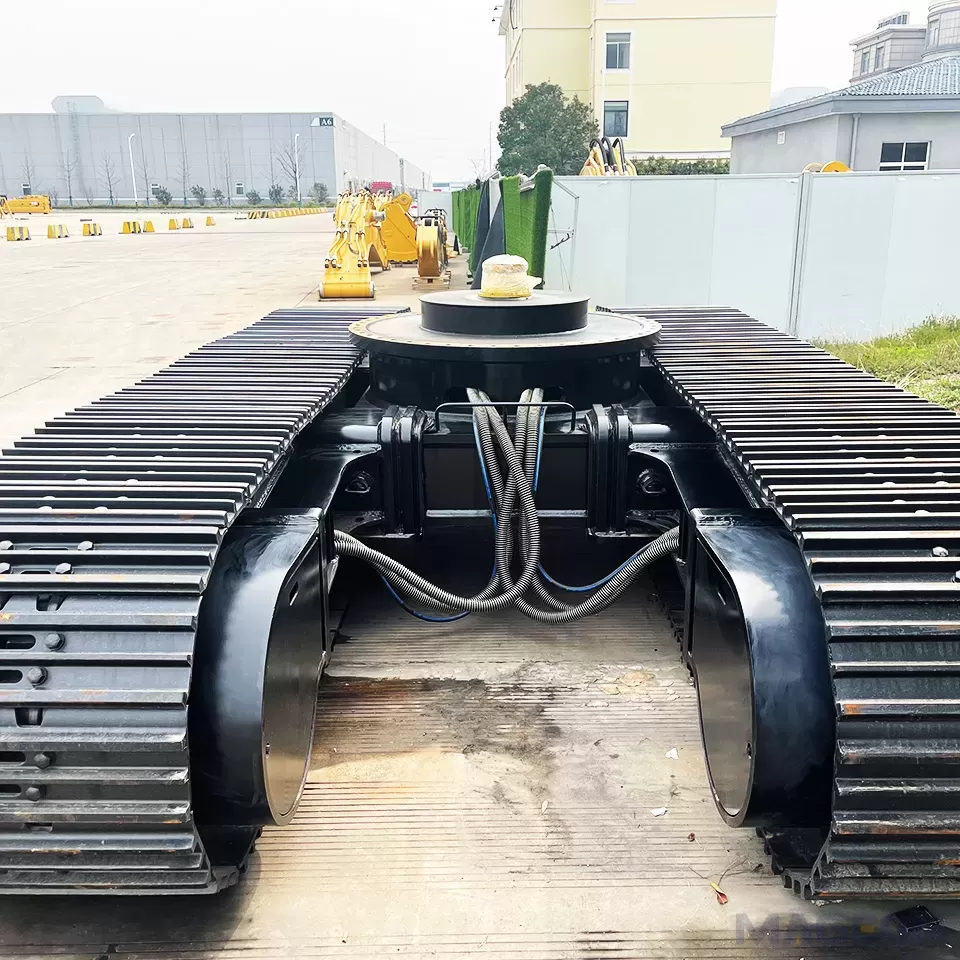
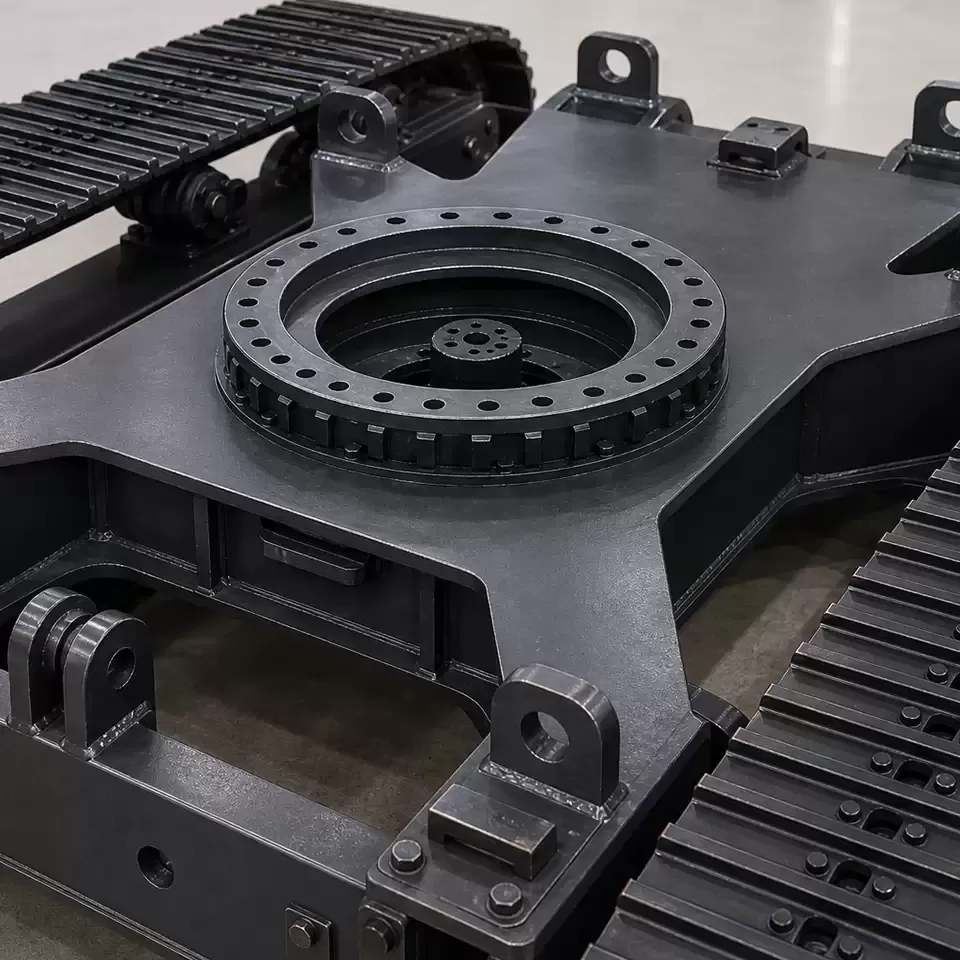
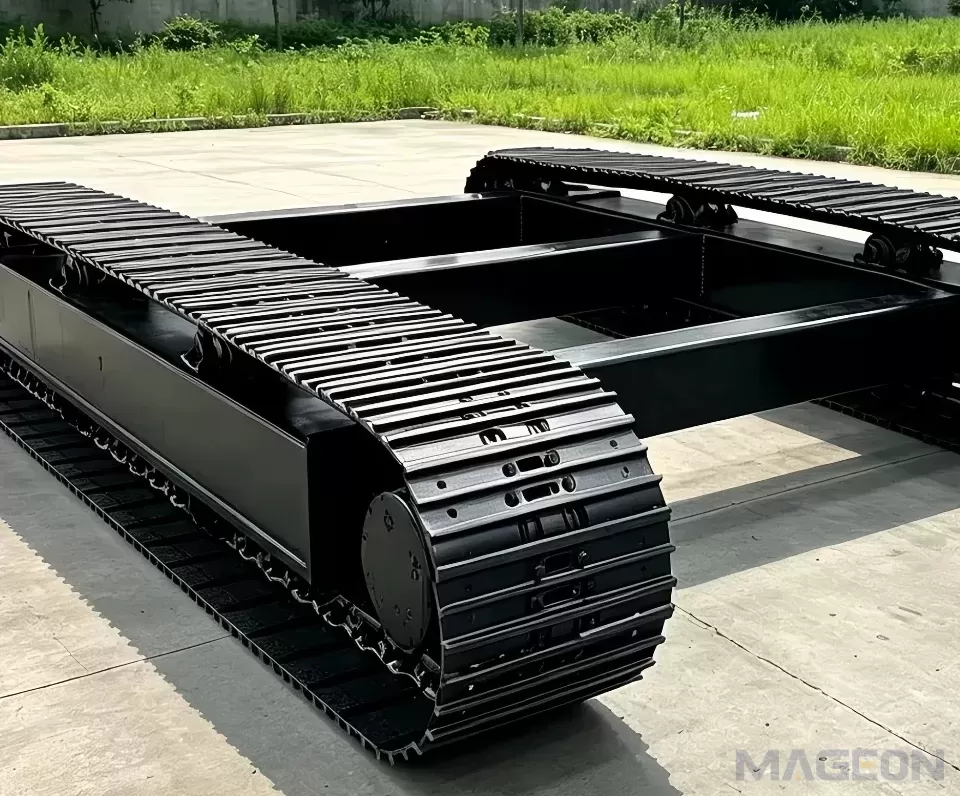
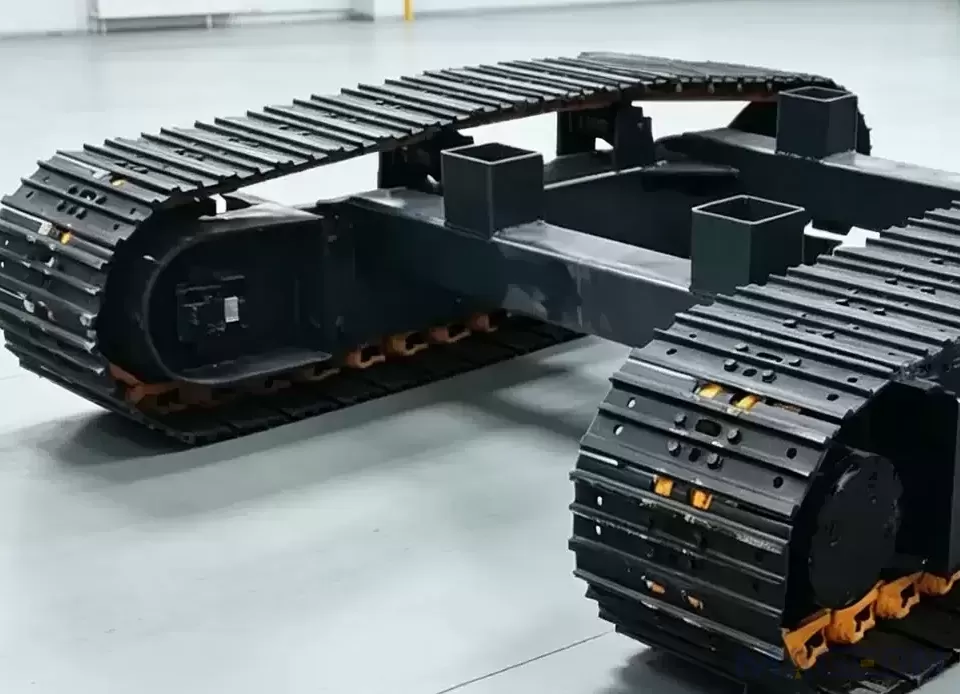
The core load-bearing structure is the box-section track frame, welded from high-strength steel such as Q690D, with internal stiffener plates. This design delivers excellent bending and torsional rigidity, capable of withstanding long-term heavy loads and impact loads in mining environments.
(2) Roller System
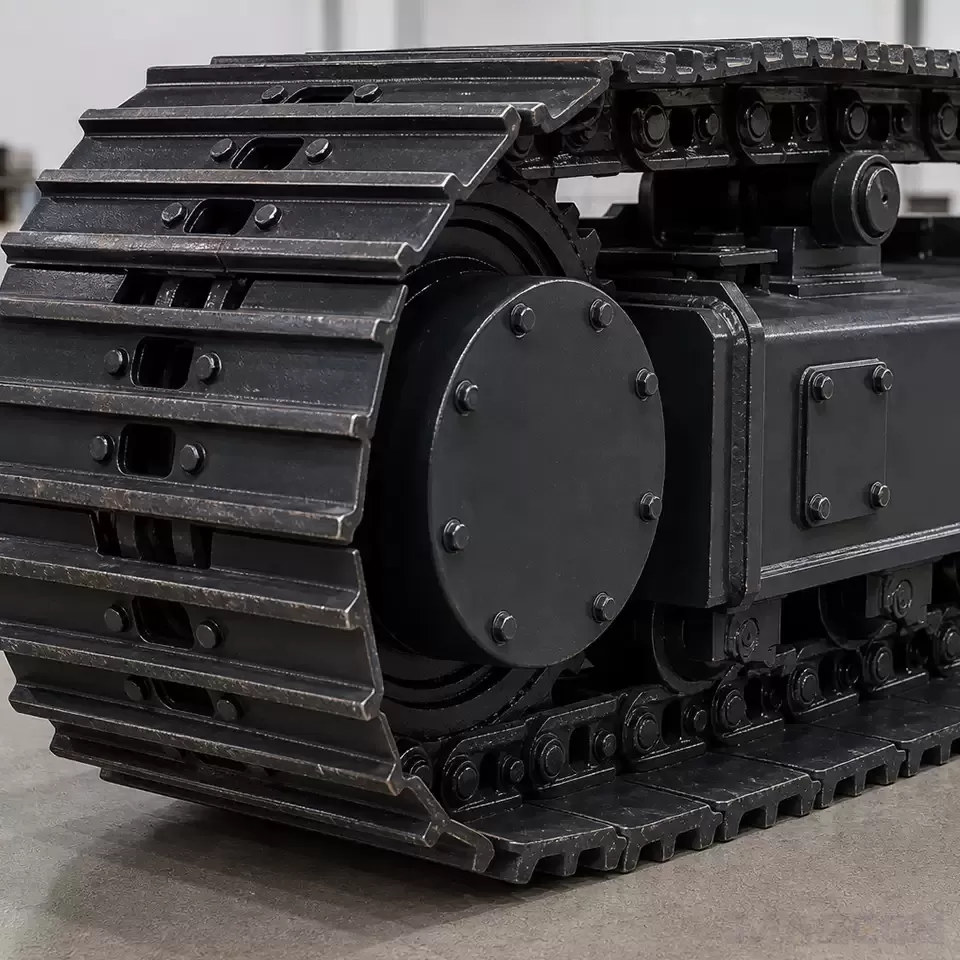
Track rollers are arranged in multiple rows (usually 7–9 units per side), with each single wheel body bearing 5–8 tons of load. The bearings adopt labyrinth seals to prevent dust intrusion, effectively adapting to the high-dust environment of mining sites.
(3) Track Assembly
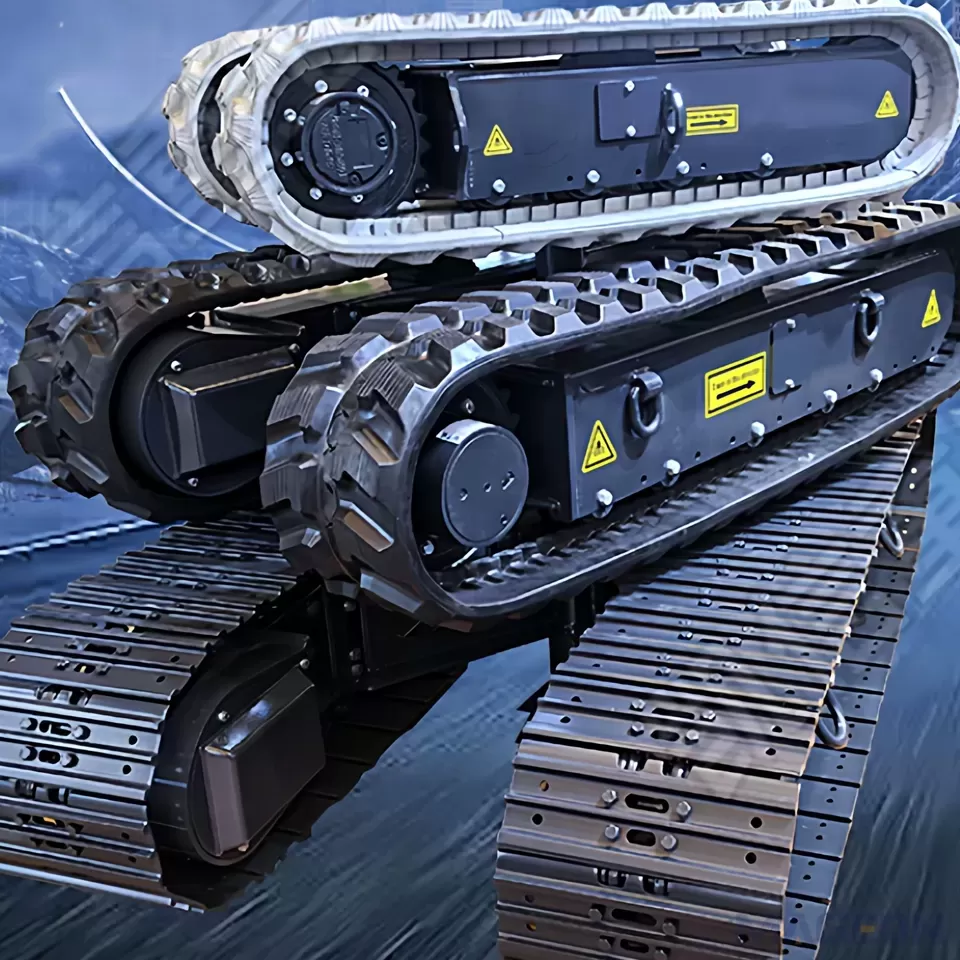
Track shoes are wearing parts, with a mainstream thickness of 40–60mm, and raised patterns on the surface to increase traction. The drive system drives the sprocket teeth to mesh with the track shoes through a hydraulic motor or mechanical transmission to realize equipment movement. Steering is achieved by controlling the differential speed of the tracks on both sides, with a minimum turning radius reaching 1/2 of the equipment length.
2. Core Performance Characteristics
(1) Ultra-Strong Load-Bearing Capacity
This is the most prominent feature. The undercarriage for a 200-ton class excavator can control the ground pressure at approximately 100 kPa, equivalent to the pressure of an adult's sole on the ground, ensuring stable operation on soft mining ground.
(2) Excellent Wear Resistance
The track shoe surface is overlaid with a wear-resistant layer with a hardness of HB 450–550. The Lubricated Track system reduces wear by more than 30% compared with dry tracks, although it requires higher maintenance standards. The overall design considers impact protection, with armor-style protective plates on key components.
(3) Long Service Life
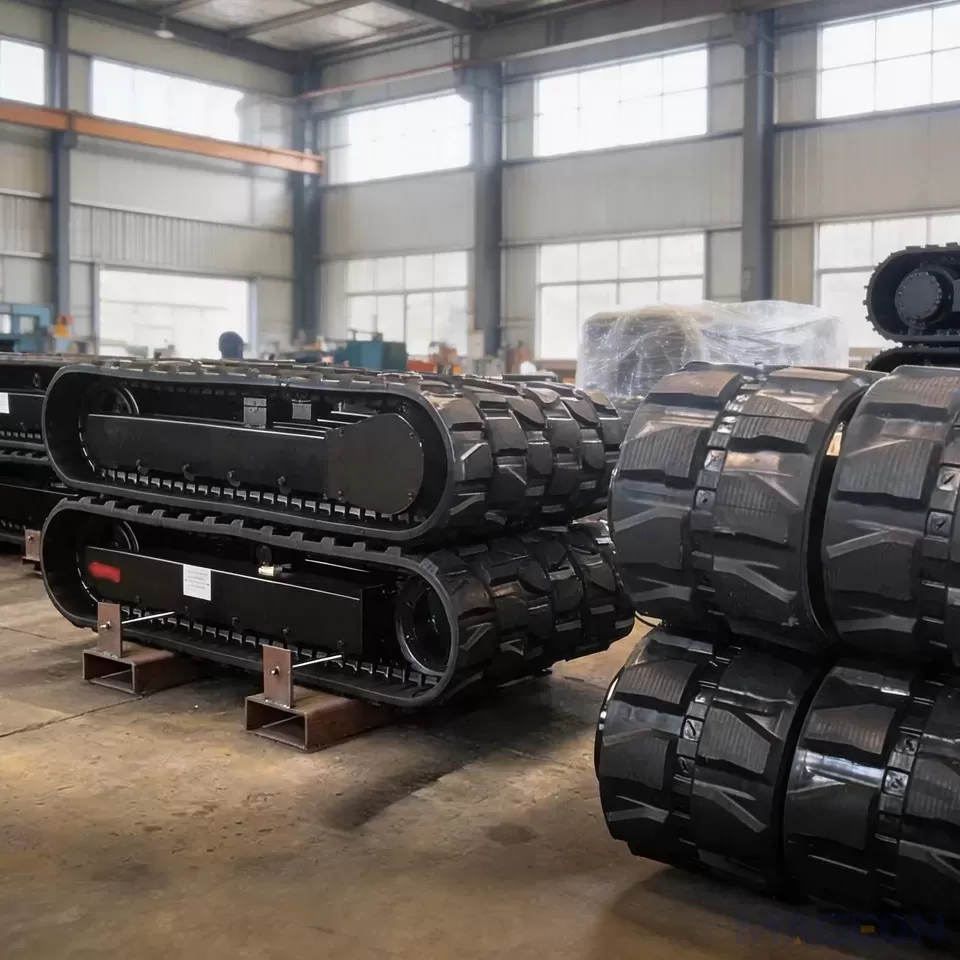
Track rollers made of 42CrMo material and quenched can reach a service life of approximately 12,000 hours. Compared with rubber tracks, steel tracks can increase service life by 3–5 times in mining environments, making them especially suitable for working faces with sharp rocks.
3. Application Fields
Open-pit mining: The main application scenario, including stripping and loading operations in large open-pit mines such as coal mines, iron mines and copper mines. Ultra-large excavators all adopt this type of undercarriage.
Tunnel tunneling equipment: The backup systems of TBM hard rock tunnel boring machines also rely on heavy-duty crawler chassis.
Extreme cold regions: For operations in extremely cold areas, customized models with low-temperature steel and cold-resistant grease are specially required.
4. Maintenance and Key Precautions
(1) Daily Inspection
Check the track tension every day (the sag is usually controlled at 40–70mm). Excessive slack will cause tooth jumping and abnormal wear of track rollers.
(2) Regular Lubrication
Oil each lubrication point every 500 hours, using extreme pressure lithium-based grease to ensure sufficient lubrication of all rotating parts.
(3) Wear Part Replacement
When a groove of about 5mm or more appears on the track roller, it should be replaced in time, otherwise it will accelerate the wear of the track shoes.
(4) Mud Cleaning
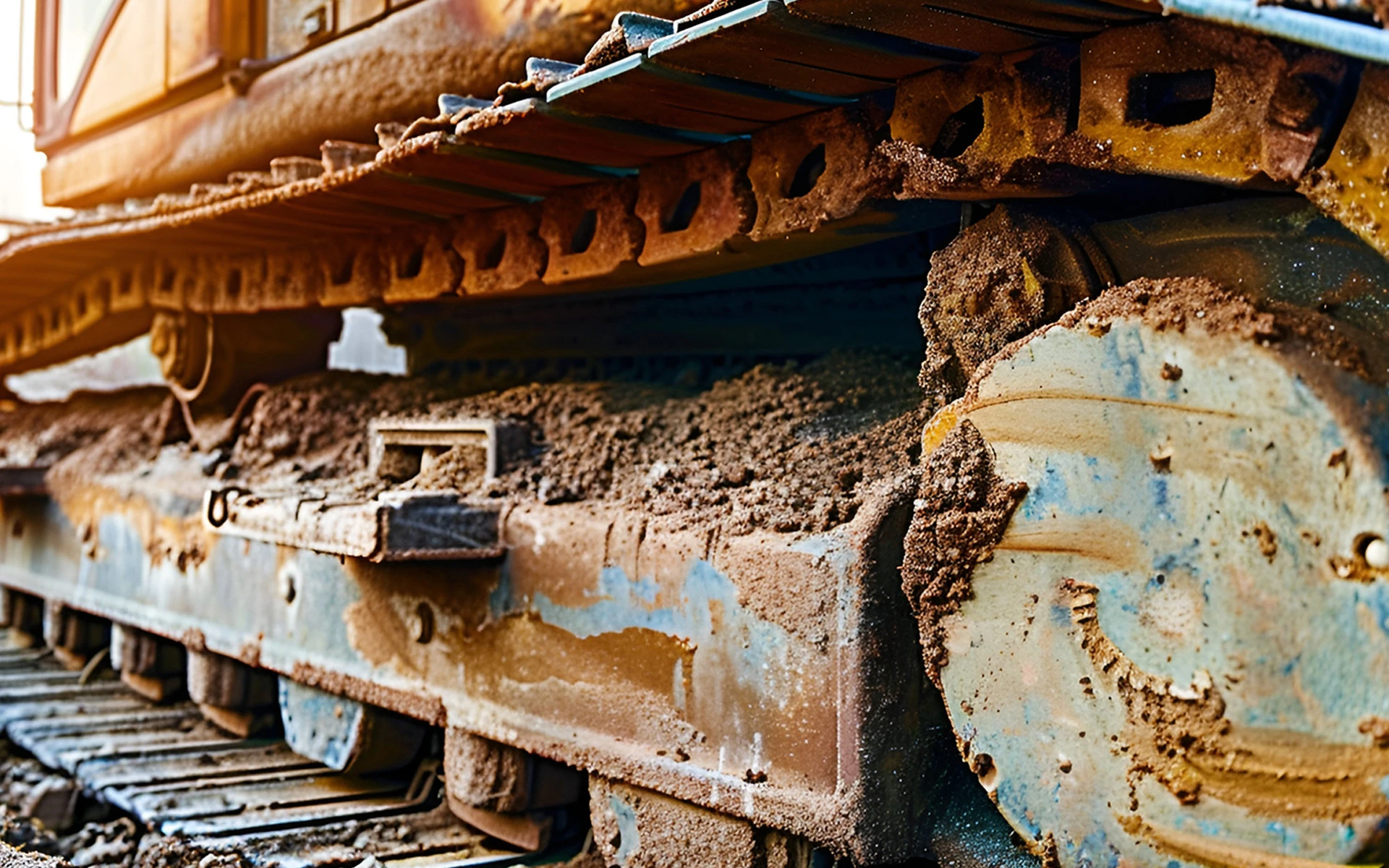
After working in muddy conditions, clean the accumulated mud in the track cavity in time to prevent damage to dynamic balance after solidification.
(5) Long-Term Storage
For long-term storage, lift the chassis off the ground to avoid rusting of the ground contact parts.
5. Procurement Guide
(1) Primary Matching Parameter
The primary parameter is to match the working weight of the equipment. The self-weight of a 200-ton class excavator undercarriage is approximately 45–60 tons.
(2) Core Indicators
Track shoe thickness: three grades of 40 / 50 / 60mm
Number of track rollers: 7 / 8 / 9 units per side
Number of drive sprocket teeth: usually 23–25 teeth
(3) Procurement Recommendations
It is recommended to require material reports (compliant with GB/T 3077 standard) and bench test data during procurement to verify product quality.
Prepare sufficient inventory of wearing parts (track shoes, roller seals, etc.) to reduce downtime caused by waiting for spare parts.
MAGEON provides cost-effective customized heavy-duty mining crawler chassis solutions with complete quality certification documents and full technical support services.
Summary
The heavy-duty mining crawler track undercarriage is the core foundation for reliable operation of mining equipment. Scientific selection and standardized maintenance can significantly extend service life, reduce downtime and improve mining efficiency. MAGEON provides professional heavy-duty mining undercarriage products and full-cycle technical services, supporting customized configurations for different tonnages and working conditions, and is a reliable partner for global mining equipment supporting needs.
Frequently Asked Questions
Q: What material is the mining crawler undercarriage frame made of?
A: The track frame is usually welded from Q690D high-strength steel, adopting a box-section structure with internal stiffener plates. This design delivers high bending and torsional rigidity, capable of withstanding long-term heavy loads and impact loads in harsh mining environments.
Q: How long is the service life of mining track rollers?
A: Track rollers made of 42CrMo material and quenched can reach a service life of approximately 12,000 hours under normal working conditions. The actual service life is affected by factors such as rock hardness, dust concentration and maintenance quality. Standardized maintenance can further extend the service life.
Q: What are the grades of mining track shoe thickness?
A: There are three mainstream grades: 40mm, 50mm and 60mm. Selection is based on working conditions: 40mm for light-load earthwork scenarios, 50mm for conventional mining, and 60mm for heavy-load hard rock working faces with severe wear. The surface is usually overlaid with a wear-resistant layer with hardness of HB 450–550.
Q: What is the appropriate track tension for mining equipment?
A: The standard track sag is controlled at 40–70mm. Excessive slack will cause tooth jumping, derailment and abnormal wear of rollers; too tight will accelerate the wear of pins, bushings and sprockets. It should be adjusted appropriately according to different working conditions.
Q: What is the function of the labyrinth seal of track rollers?
A: The labyrinth seal forms a multi-layer barrier structure, which can effectively prevent dust and mud from intruding into the bearing cavity. It is especially suitable for high-dust mining environments, ensuring long-term stable operation of bearings and extending the service life of rollers.
Q: How to judge whether the track roller needs to be replaced?
A: It can be judged by measuring the wear groove depth on the roller tread. When the groove depth reaches about 5mm or more, it should be replaced in time, otherwise it will accelerate the wear of track shoes and other rollers, and may even cause track derailment.
Q: What should be paid attention to when the chassis is stored for a long time?
A: For long-term storage, the chassis should be lifted off the ground to avoid rusting of the track ground contact parts; clean all mud and sundries, and apply anti-rust oil on metal surfaces; adjust the track to appropriate tension; check the status regularly to avoid seal aging and corrosion.
Q: What core parameters should be focused on when purchasing a mining undercarriage?
A: The primary parameter is matching the equipment working weight; the core indicators include track shoe thickness grade, number of track rollers per side, number of drive sprocket teeth, frame material standard, etc. It is recommended to require material test reports and bench test data during procurement to verify product quality.
Q: Can mining undercarriage be used in extremely cold regions?
A: Standard models are not recommended for extremely cold regions. Customized models with low-temperature resistant steel and cold-resistant grease are required to ensure that the material strength, sealing performance and lubrication effect can still meet the requirements in low-temperature environments.
Q: What is the difference between lubricated track and dry track?
A: Lubricated track (LT) has oil injected between pins and bushings to form an oil film lubrication, which can reduce wear by more than 30% and extend service life, but requires higher maintenance standards; dry track has no internal lubrication, has lower cost and simpler maintenance, but has faster wear speed. Selection should be based on working conditions and maintenance capacity.
Applicable products:
Compatible Equipment & Product Applications
This heavy-duty mining steel track chassis is suitable for various large mining and engineering equipment. Main compatible models include:
Large and ultra-large hydraulic mining excavators
Open-pit mine drilling rigs and stripping equipment
TBM hard rock tunnel boring machine backup systems
Heavy crawler cranes for mining sites
Mining transport vehicles and special operation equipment
Please leave your customization requirements, and we will contact you as soon as possible!
Leave your requirements, we'll get back to you within 24 hours.