How to Select and Maintain a Mini Excavator Undercarriage
Project Overview:
This article explains how a mini excavator undercarriage supports machine weight, transfers travel power, and maintains traction across urban, residential, landscaping, construction, forestry, and soft-ground projects. It helps equipment buyers, dealers, OEM teams, contractors, and fleet managers compare rubber and steel tracks, evaluate track width, recognize common wear conditions, and prepare the technical information required for product matching. It also provides an inspection and maintenance framework covering track tension, rollers, idlers, sprockets, cleaning, replacement, and storage without assuming unverified load ratings or dimensions.
Introduction
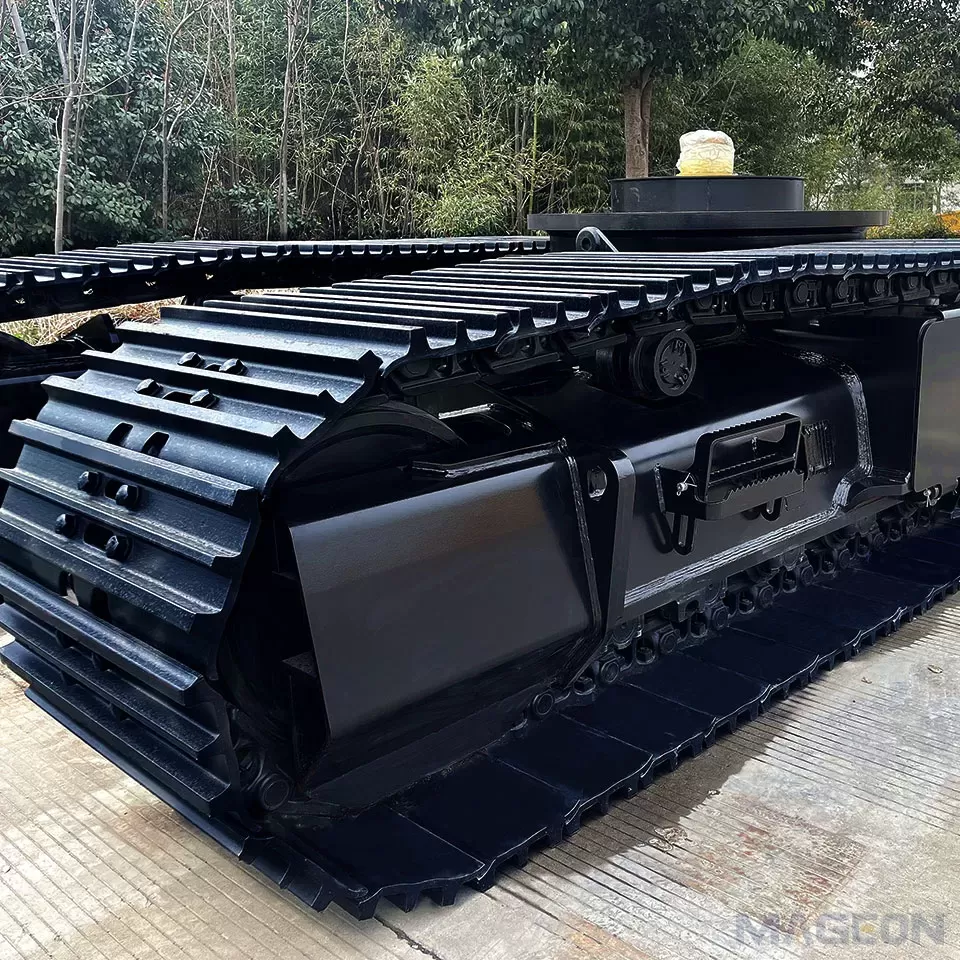
A mini excavator undercarriage is the complete lower structure that carries the machine, transfers travel power to the tracks, and keeps the excavator stable while working. Its condition directly affects traction, maneuverability, travel resistance, component wear, and the machine’s ability to operate on uneven or restricted sites.
The topic matters to more than maintenance technicians. Equipment buyers must choose a track system that matches the operating surface. OEM teams need compatible dimensions and interfaces. Contractors and rental fleet managers need to control wear and unplanned downtime. Dealers must also distinguish between a machine suited to paved urban work and one intended for loose soil, forestry, or rough construction sites.
Selecting an undercarriage therefore requires more than choosing between rubber and steel tracks. Machine weight, ground conditions, track width, component compatibility, access limitations, and maintenance requirements must be evaluated together.
Product and System Overview
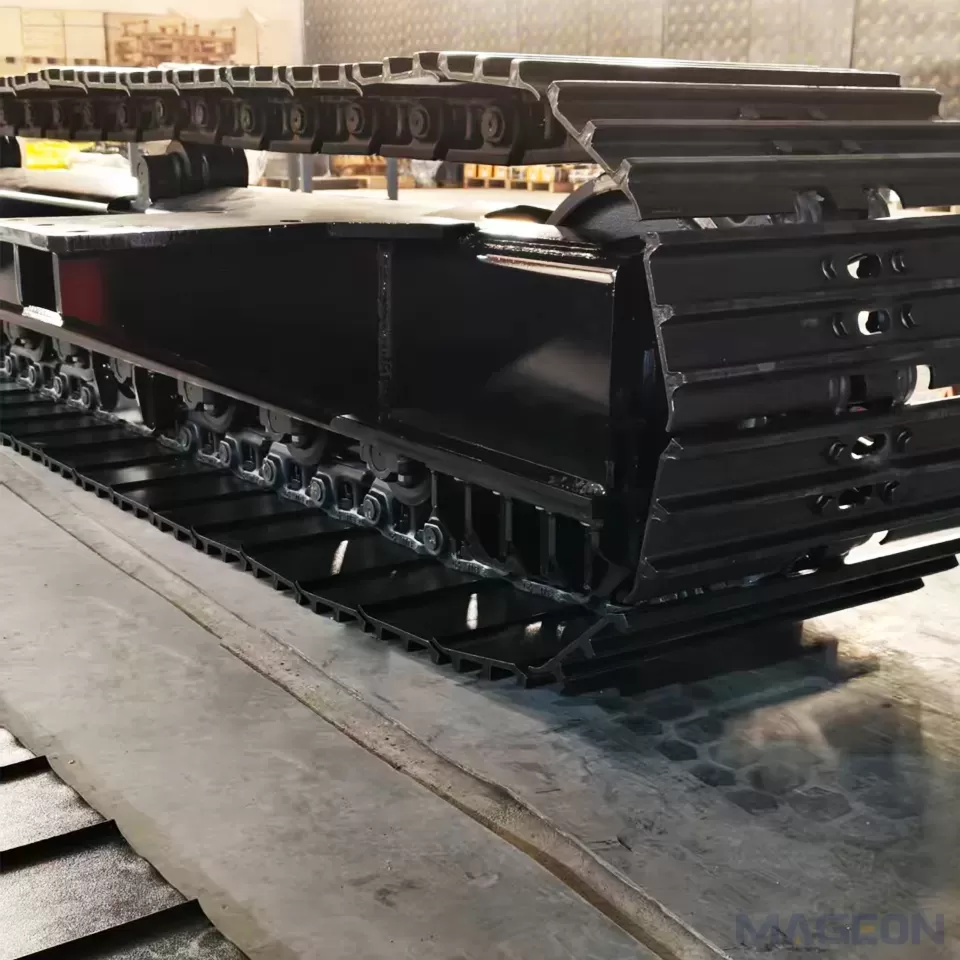
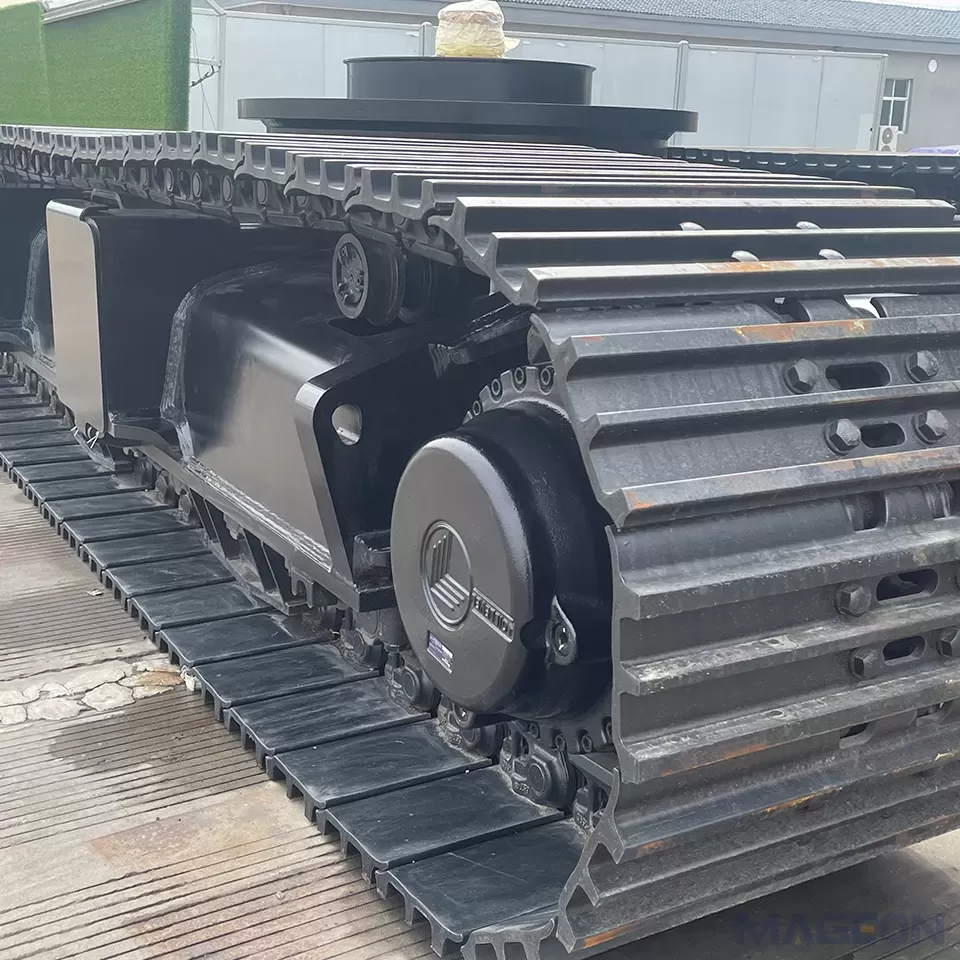
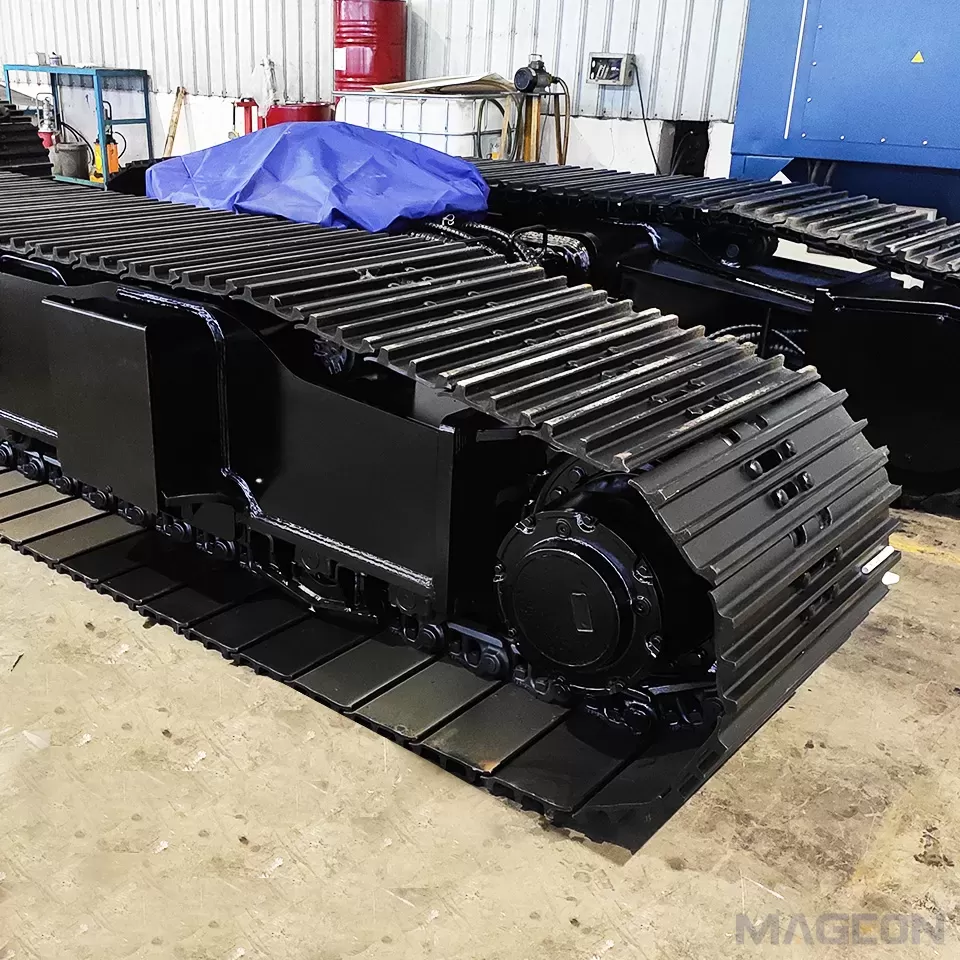
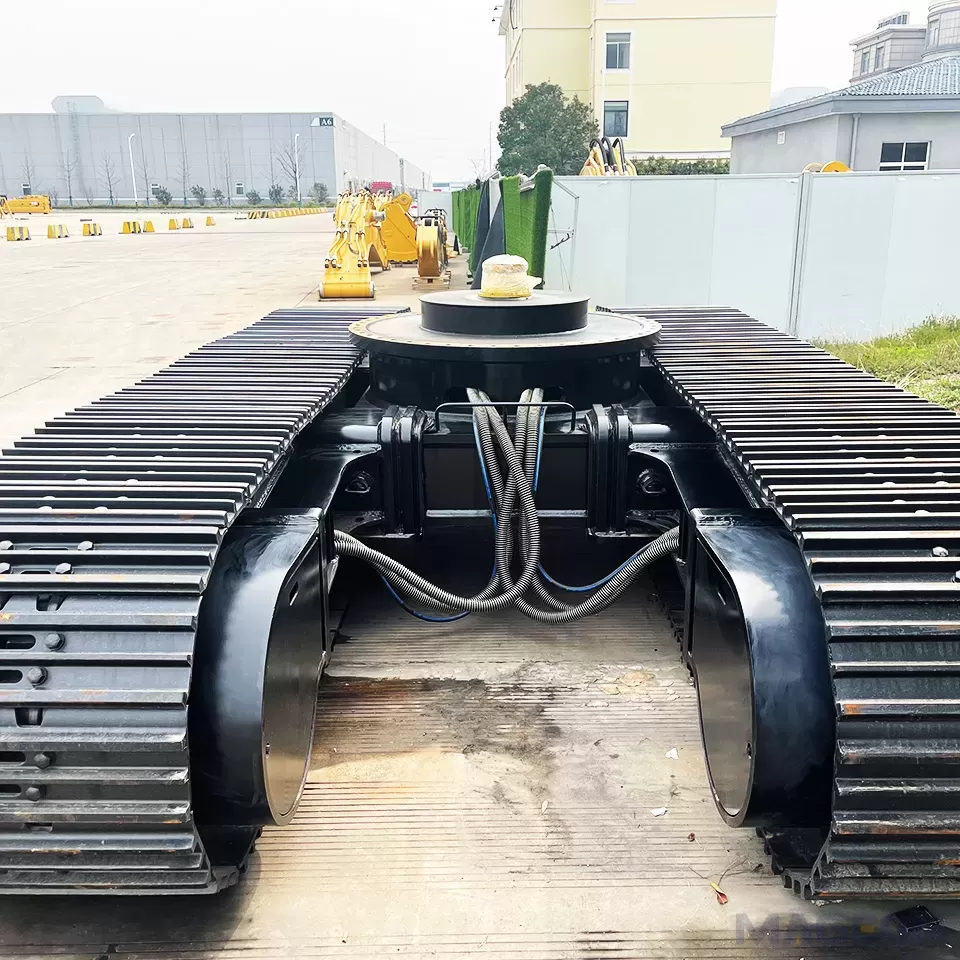
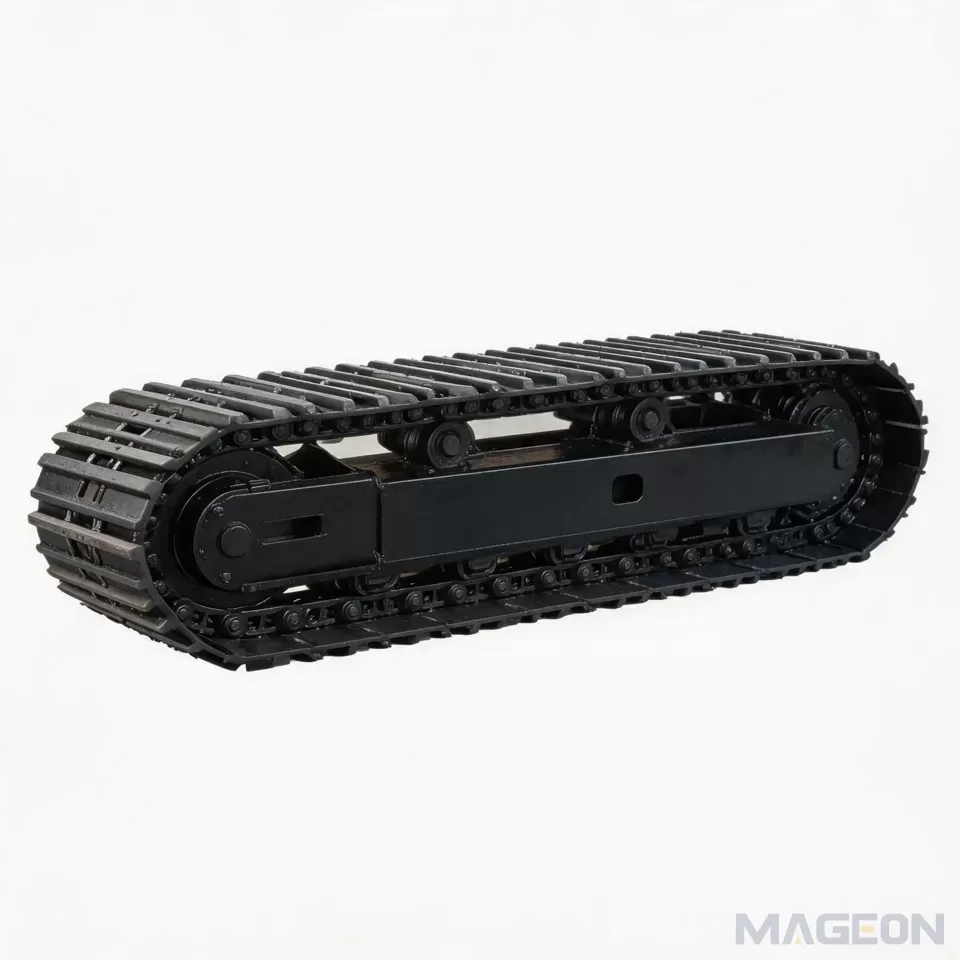
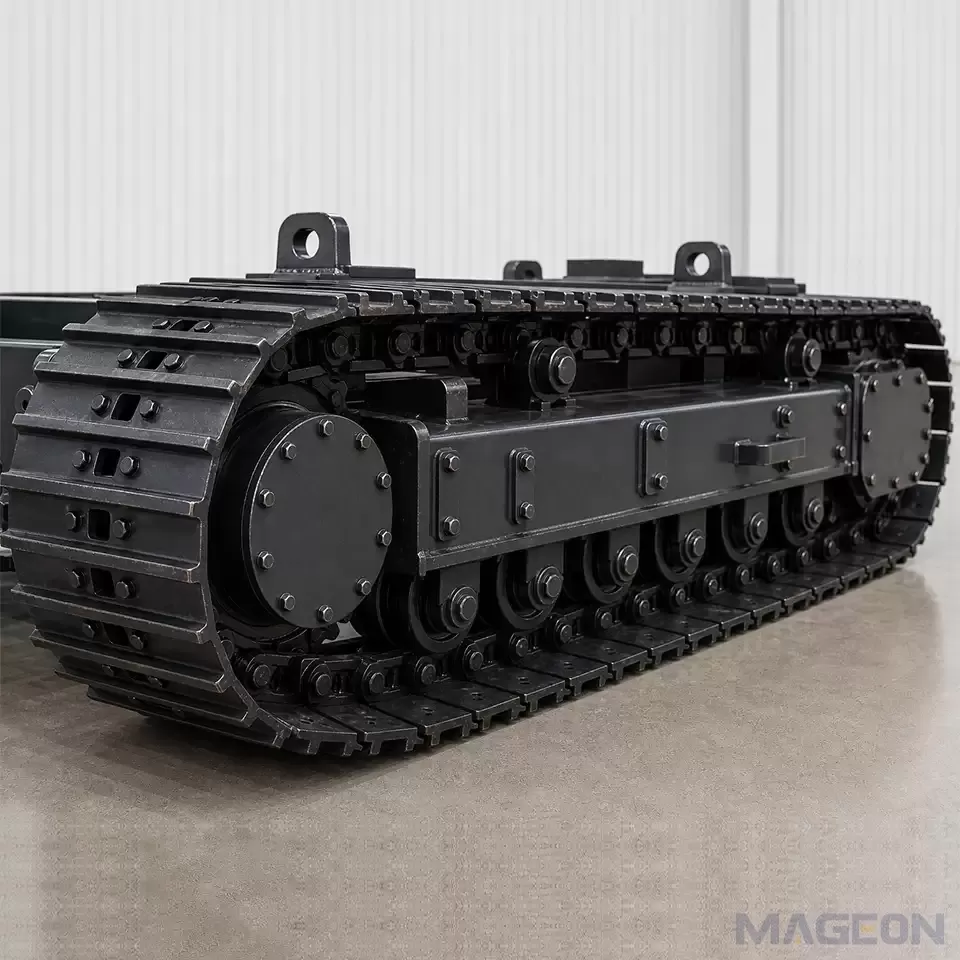
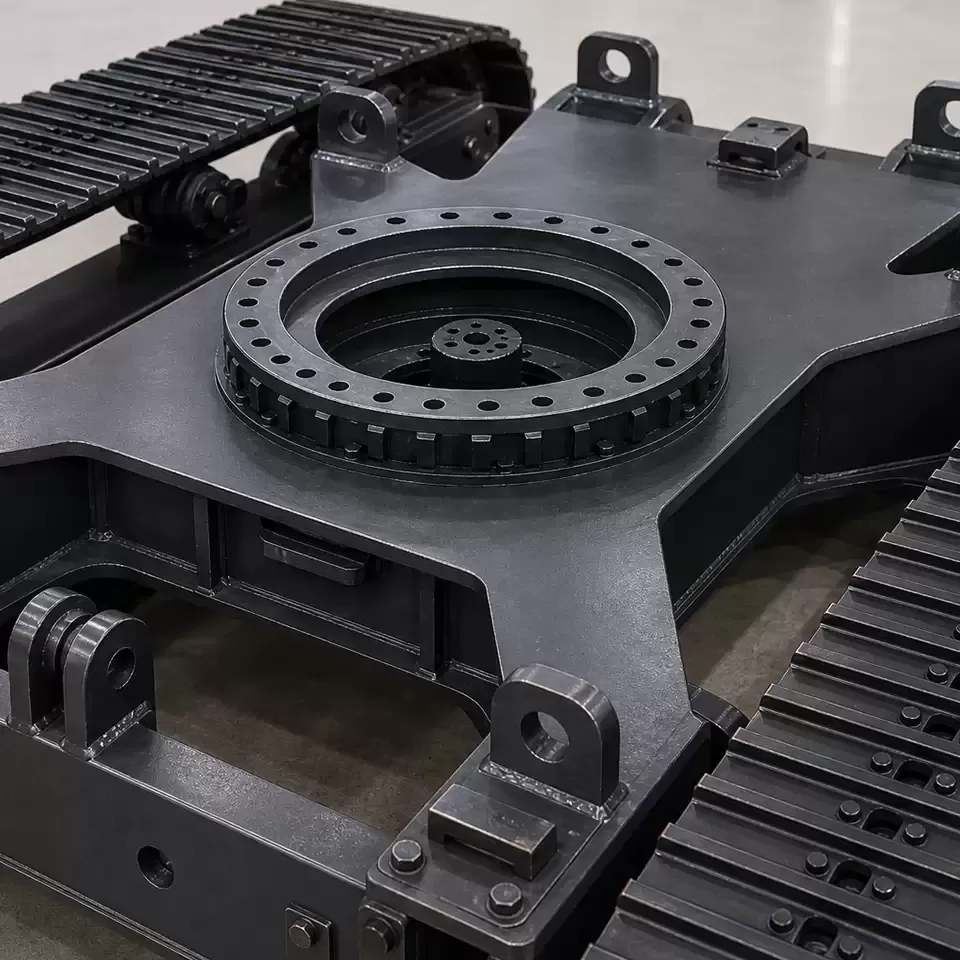
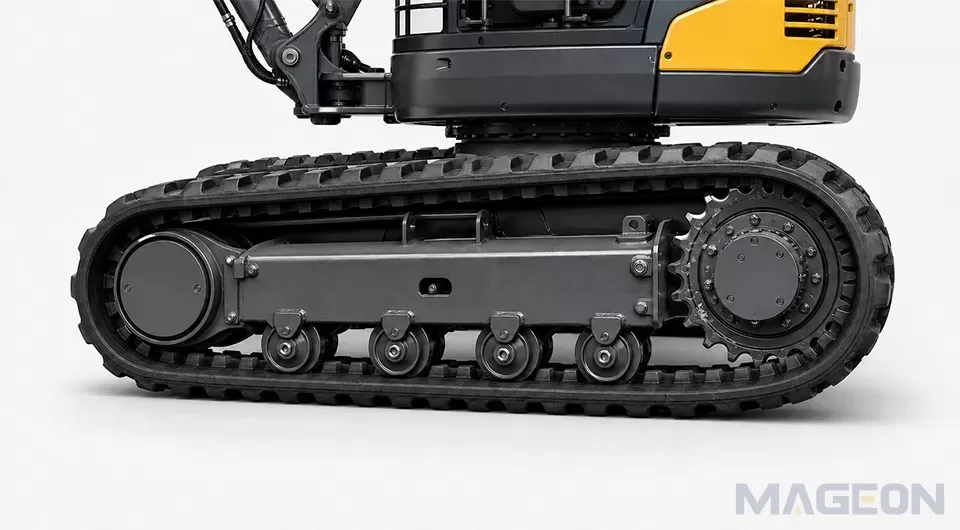
A tracked mini excavator undercarriage normally consists of a load-bearing frame and several moving or wear components.
| Main Function | Procurement Relevance | |
|---|---|---|
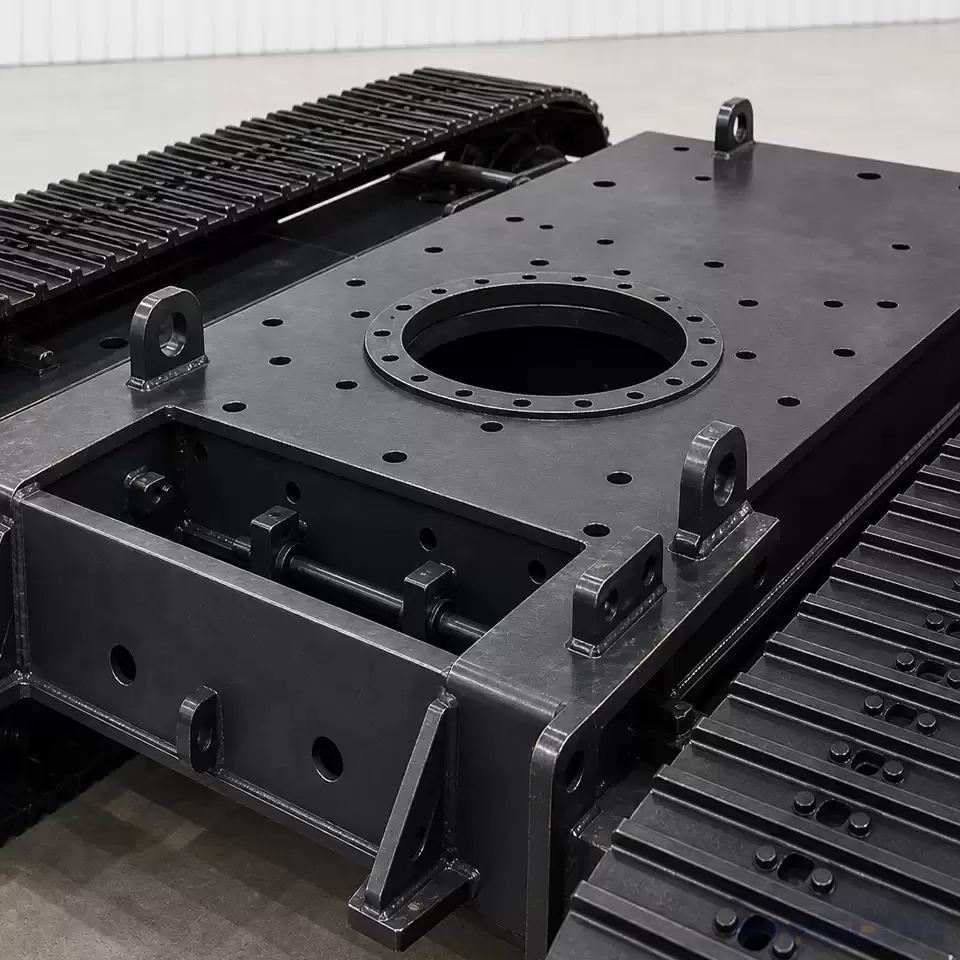
| Track frame | Connects the upper machine to the track system and distributes machine weight | Must match machine structure, weight, and mounting arrangement |
| Track rollers | Support the machine and guide the track along the lower frame | Wear affects alignment, stability, and track movement |
| Idlers | Guide the track and support the tensioning system | Poor condition can contribute to incorrect tension or alignment |
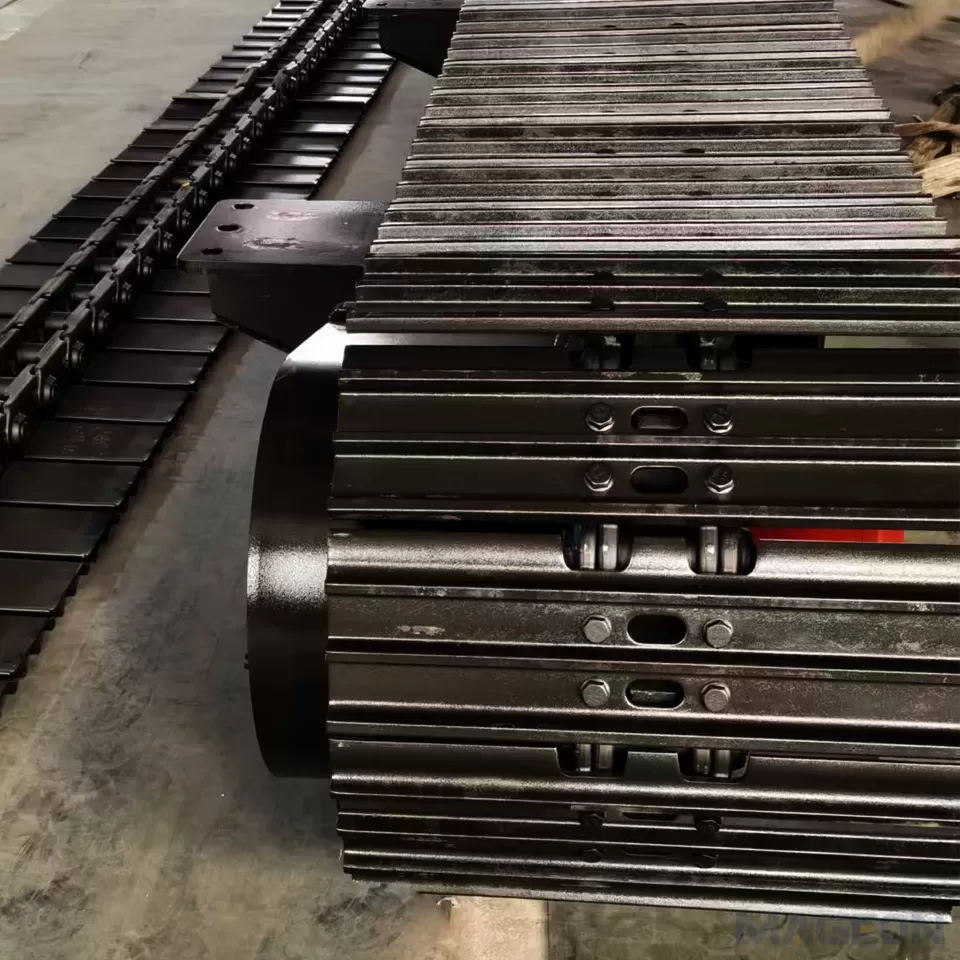
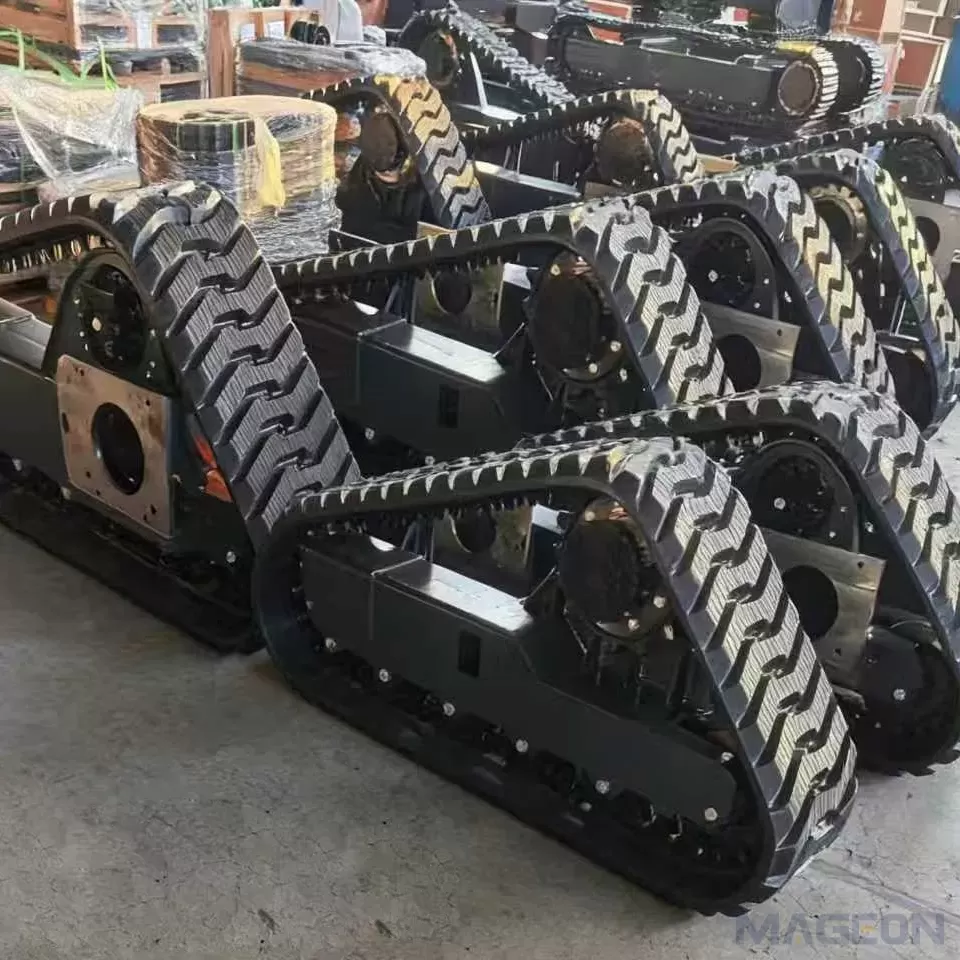
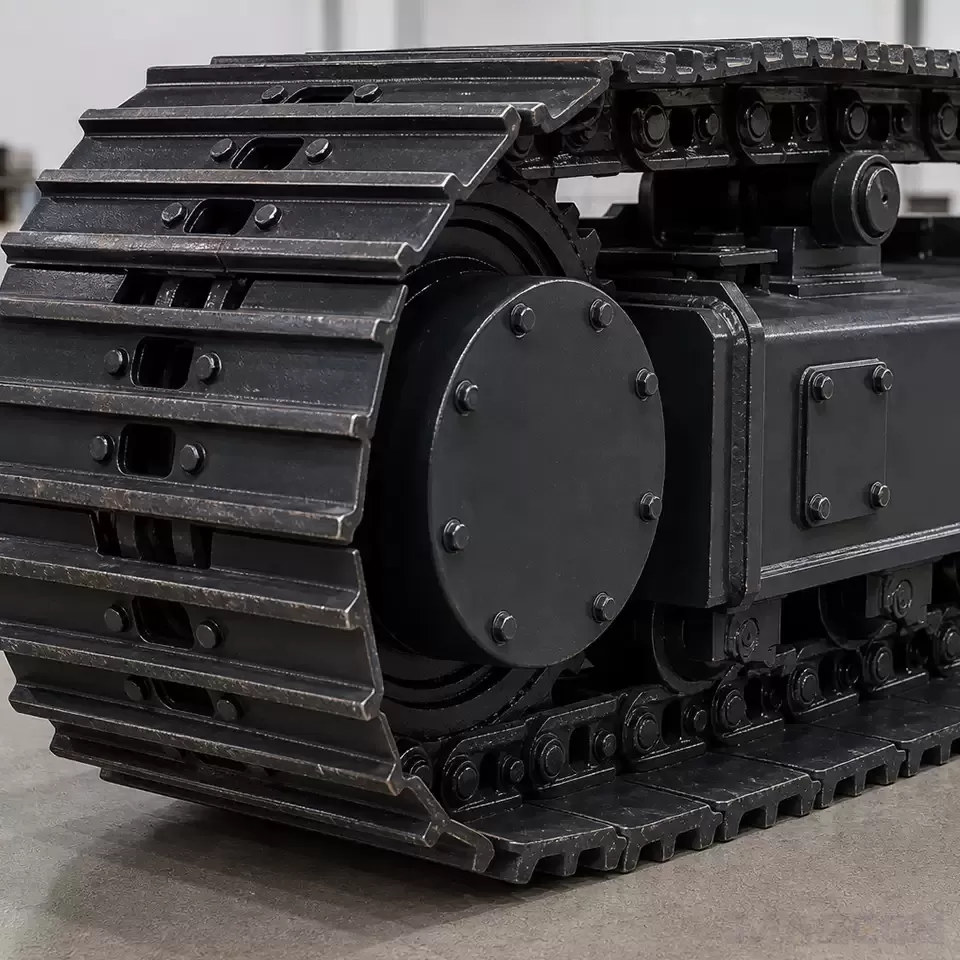
| Tracks | Provide ground contact and traction | Material and width must match the surface and application |
| Sprockets | Engage the track links and transmit travel force | Tooth profile and track compatibility are critical |
| Travel drive system | Delivers power to the sprockets | Motor and drive requirements are model-specific |
| Track shoes | Form the ground-contact surface on applicable track designs |
Travel power reaches the sprocket through the drive system. The sprocket engages the track, while the rollers and idlers guide its movement around the frame. The track then converts drive force into movement and distributes the machine’s weight over the ground.
Rubber Tracks and Steel Tracks
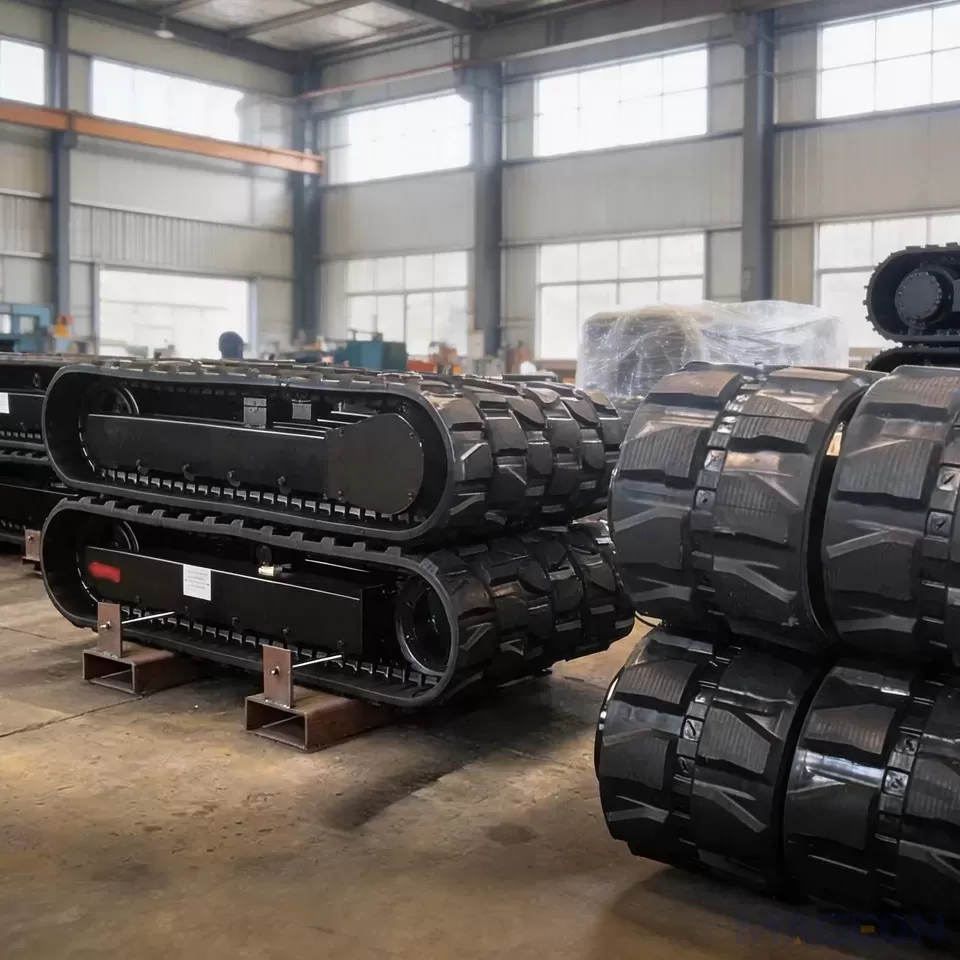
Rubber tracks are generally quieter and less likely to damage asphalt, concrete, and other finished surfaces. They are commonly selected for urban maintenance, residential projects, landscaping, and work where surface protection matters.
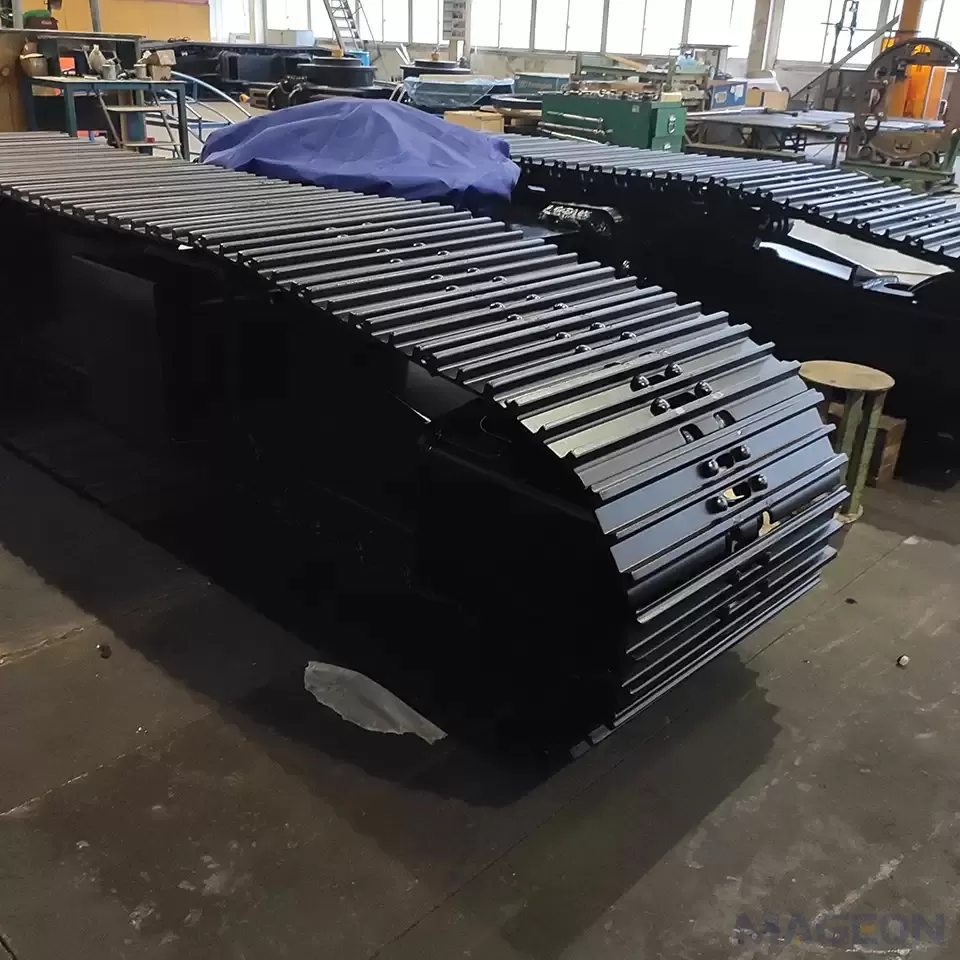
Steel tracks provide greater resistance to harsh ground conditions and are more suitable for rough construction sites, forestry, loose soil, and off-road operation. However, they may damage paved surfaces and can be less appropriate where noise and surface marking are concerns.
The undercarriage should not be selected by track material alone. Track width and machine configuration must also match the operating environment.
Key Features and Their Practical Value
1. Load Distribution and Stability
The track frame, rollers, and tracks distribute the excavator’s weight over the ground. Correct distribution improves stability on uneven or soft terrain and reduces the risk of excessive loading on individual undercarriage components.
For buyers, the practical requirement is to match the undercarriage to the machine’s actual operating weight and expected working conditions. A system intended for a lighter machine should not be assumed suitable for a heavier model.
2. Application-Specific Traction
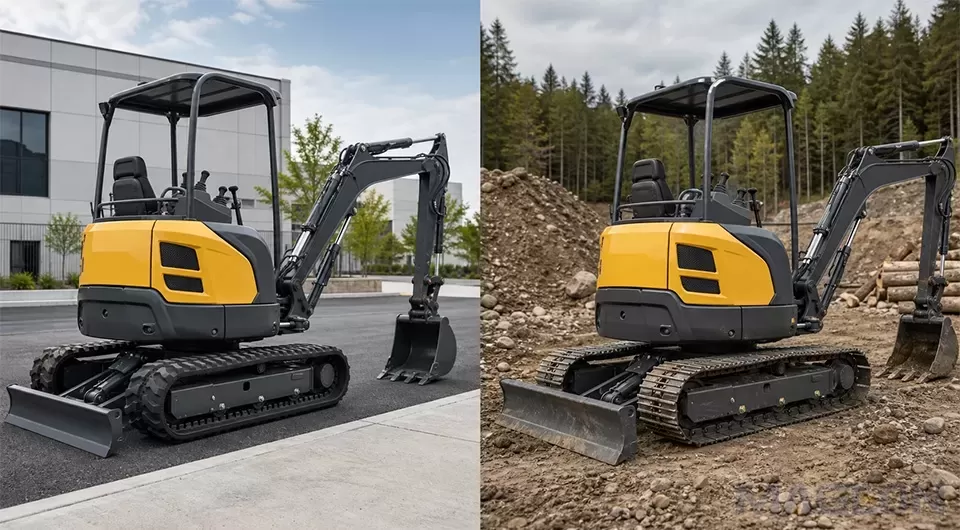
Tracks provide the contact surface between the machine and the ground. Steel tracks are suited to demanding terrain, while rubber tracks support smoother travel and help protect finished surfaces.
This distinction affects project suitability. A municipal contractor operating on roads has different requirements from a forestry contractor working on irregular, loose ground.
3. Track-Width Options
Wider tracks distribute weight over a larger contact area and are generally better suited to soft or muddy ground. Narrower tracks can be more appropriate on firm, compacted surfaces and where machine width must be limited.
The widest available track is not automatically the correct choice. Buyers must consider transport width, gate or doorway access, turning space, ground pressure, and machine stability.
4. Serviceable Wear Components
Tracks, rollers, idlers, and sprockets are exposed to continuous friction, contamination, and impact. Their serviceable design allows worn components to be inspected and replaced without replacing the complete machine.
For fleet managers, compatible replacement parts and supplier documentation are important procurement considerations. Part availability should be confirmed before equipment is placed into long-term service.
5. Adjustable Undercarriage on Relevant Models
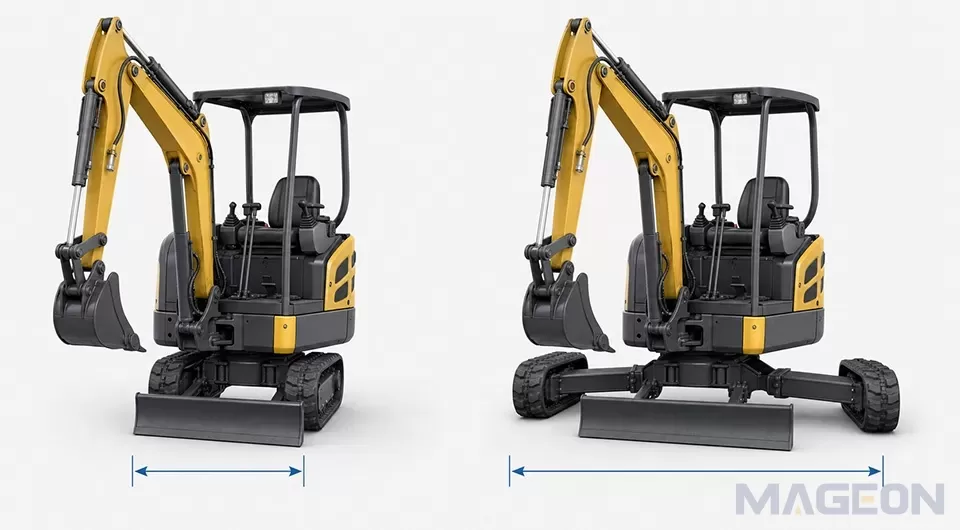
An adjustable undercarriage can reduce machine width for access and expand it for greater working stability. For MAGEON equipment, confirm feature availability and both the retracted and expanded widths on the current model specification.
Technical Information
General Selection Considerations
| Specification | Notes | |
|---|---|---|
| Track material | Rubber or steel | Select according to surface protection, terrain, noise, and wear requirements |
| Track width | Wide or narrow configuration | Wide tracks suit softer ground; narrow tracks suit firm ground and restricted access |
| Track tension | Manufacturer-defined | Excessively loose tracks may slip; excessive tension increases component stress |
| Inspection interval | Daily or at the end of each work shift |
Applications
| Typical Equipment | Customer Requirement | Recommended Solution | |
|---|---|---|---|
| Urban road maintenance | 1.2T–3.5T mini excavator | Low surface damage, lower noise, compact access | Rubber tracks; verify overall machine width |
| Residential construction | Compact or zero-tail-swing excavator | Access through narrow spaces and protection of finished surfaces | Rubber tracks; adjustable undercarriage where available |
| Landscaping | Mini excavator with bucket or grading attachment | Reduced lawn or paving damage and flexible movement | Rubber tracks; consider wider tracks on soft ground |
| General construction | 2.0T–6.0T mini excavator | Traction, wear resistance, and stability | Rubber or steel tracks according to site conditions |
| Forestry work | Tracked compact excavator | Durability and traction on irregular terrain | Steel tracks where surface damage is not a concern |
| Muddy or loose ground | Mini excavator with suitable undercarriage | Lower ground pressure and reduced sinking | Wider tracks, subject to machine compatibility |
| Hard, compacted ground | Compact excavator | Maneuverability and controlled machine width | Narrower tracks where permitted by the manufacturer |
| Trenching and demolition | Mini excavator with matched attachments | Stable travel and predictable positioning |
Product Selection Guide
1. Confirm the Machine Configuration
Start with the exact model, operating weight, upper-structure configuration, attachments, and any optional equipment. Do not select an undercarriage from nominal tonnage alone because machines in the same weight class may use different dimensions and interfaces.
2. Define the Ground Conditions
Identify whether the machine will primarily work on asphalt, concrete, lawns, compacted soil, mud, loose soil, rock, or mixed terrain. Surface protection favors rubber tracks, while severe off-road conditions may justify steel tracks.
3. Select Track Material
Choose rubber tracks when noise, vibration, and surface marking are important. Choose steel tracks when resistance to harsh terrain and traction take priority. If the machine moves between paved and rough sites, discuss compatible alternatives with the manufacturer.
4. Evaluate Track Width
Wider tracks can improve flotation on soft ground but may increase overall machine width. Narrower tracks support restricted access but may produce greater ground pressure. Confirm transport, gate, doorway, and job-site width limits before selection.
5. Verify the Drive and Wear-Part Interfaces
For replacement or OEM projects, confirm track pitch, link count, sprocket profile, roller dimensions, idler dimensions, frame mounting points, and travel-drive interface. These details require technical drawings or manufacturer data.
6. Review Maintenance and Parts Support
Request the recommended tension range, lubrication points, inspection criteria, replacement limits, spare-parts list, and parts lead time. A suitable undercarriage must be maintainable throughout the intended service period.
Maintenance and Common Wear Conditions
Undercarriage maintenance should focus on cleanliness, correct tension, alignment, and early detection of wear.
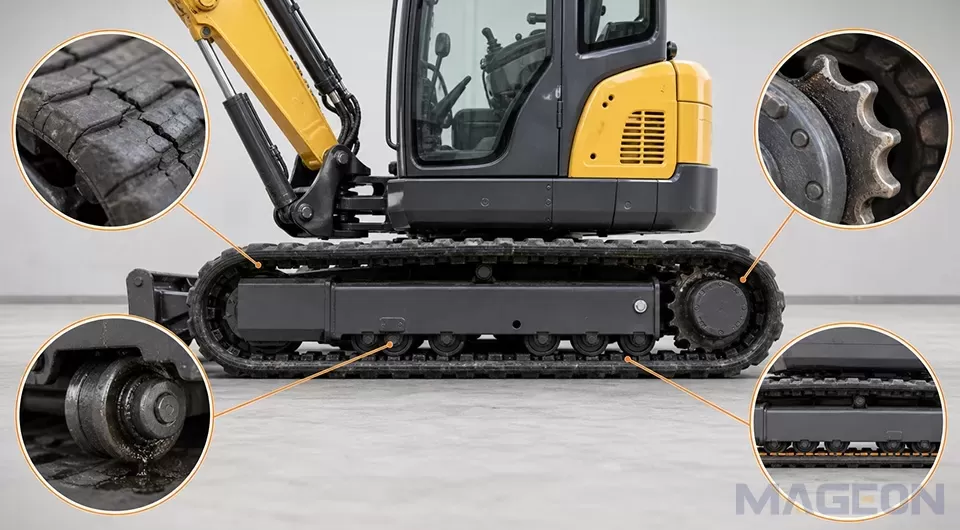
1、Inspect daily or after each shift. Check tracks, rollers, idlers, and sprockets for cracks, damage, uneven wear, or abnormal movement.
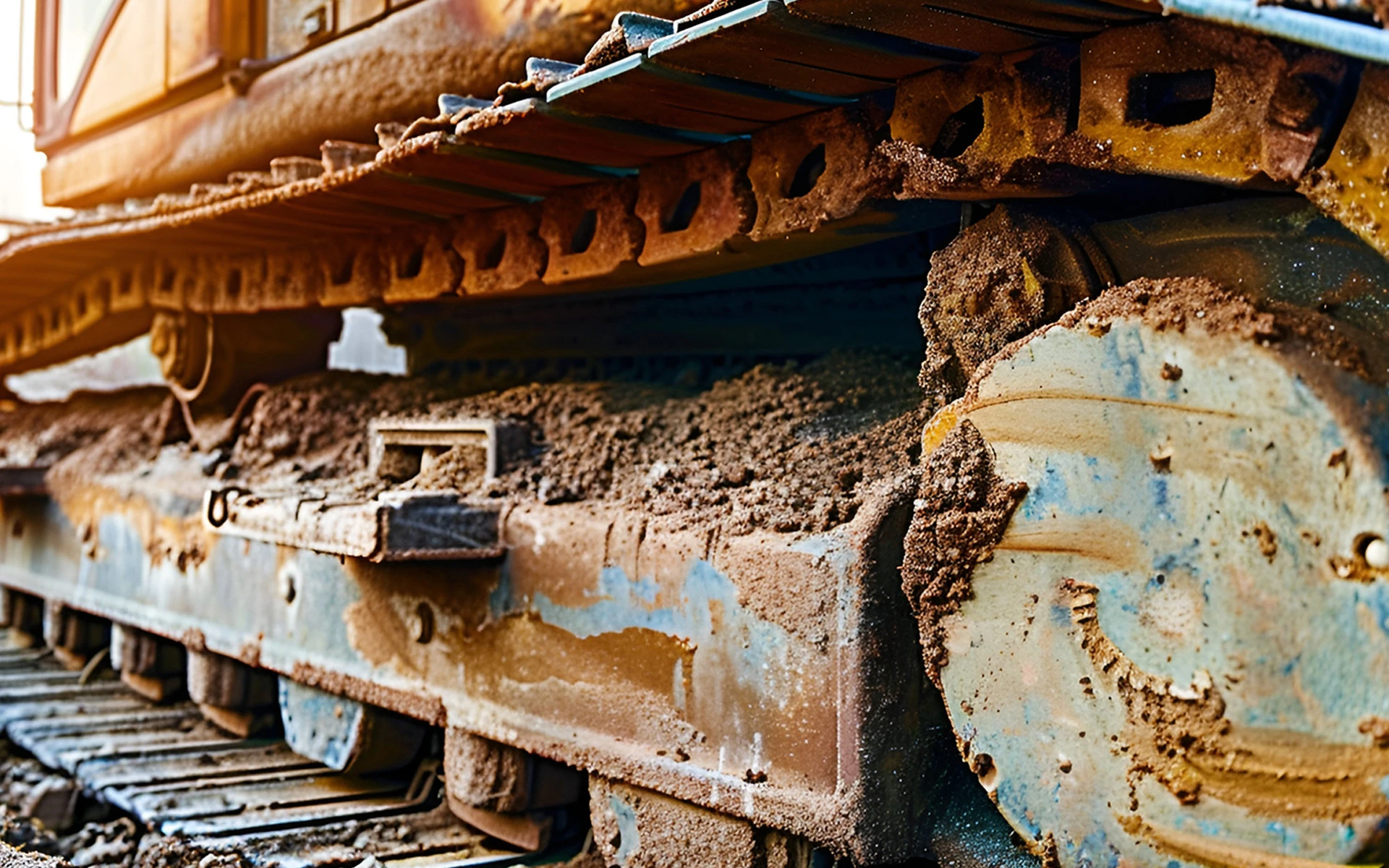
2、Remove mud and debris. Accumulated soil and stones can increase resistance and accelerate wear.
3、Check track tension. A loose track may slip or derail. Excessive tension can overload rollers, idlers, sprockets, and track components.
4、Lubricate specified points. Follow the manufacturer’s maintenance manual rather than applying a general lubrication schedule.
5、Replace damaged tracks promptly. Severe wear, visible cracks, damaged links, uneven wear, or repeated slipping indicate that inspection and possible replacement are required.
6、Store the machine in a dry location. Long outdoor exposure can contribute to corrosion and deterioration.
| Possible Effect | Required Action | |
|---|---|---|
| Loose track | Slipping, derailment, and accelerated wear | Measure and adjust according to the manual |
| Over-tensioned track | Excessive load on undercarriage components | Release tension to the specified range |
| Worn rollers or idlers | Poor alignment and unstable track movement | Inspect related parts and replace as required |
| Damaged sprocket teeth | Poor track engagement and further track wear | Confirm sprocket and track condition together |
| Uneven track wear | Possible misalignment or component damage | Inspect frame alignment, rollers, idlers, and tension |
| Heavy mud buildup | Increased resistance and abrasive wear |
Conclusion
A mini excavator undercarriage should be selected according to machine configuration, ground conditions, track material, track width, access restrictions, and component compatibility. Rubber tracks generally suit paved, urban, residential, and landscaping work, while steel tracks are more appropriate for harsh off-road conditions.
For a MAGEON equipment enquiry, provide the exact model, operating weight, track dimensions, interface drawings, working environment, and required quantity. These details are more reliable than selecting only by excavator tonnage.
Frequently Asked Questions
1. What does a mini excavator undercarriage do?
The undercarriage supports the excavator’s weight, transfers travel force to the tracks, and provides ground contact, traction, and stability. Its main parts include the track frame, rollers, idlers, sprockets, tracks, and travel-drive components. Undercarriage condition affects maneuverability, track alignment, travel resistance, and wear. Buyers should treat it as a complete system rather than selecting individual tracks without checking component compatibility.
2. Should I choose rubber or steel tracks for a mini excavator?
Choose rubber tracks for asphalt, concrete, residential areas, landscaping, and other surfaces that should not be heavily marked. They also generally produce less noise. Steel tracks are more suitable for rough construction sites, forestry, loose soil, and demanding off-road terrain. The final choice depends on surface conditions, required traction, machine compatibility, transport requirements, and acceptable ground damage.
3. Are wider tracks always better on a mini excavator?
No. Wider tracks distribute machine weight across a larger contact area and can improve flotation on soft or muddy ground. However, they also increase machine width and may create access or transport problems. Narrower tracks can be more practical on firm, compacted ground and restricted sites. Confirm machine weight, ground pressure, overall width, stability requirements, and manufacturer-approved track options before selecting.
4. How often should a mini excavator undercarriage be inspected?
Inspect the undercarriage daily or at the end of each work shift. Check track condition, tension, rollers, idlers, sprocket teeth, alignment, and accumulated debris. Inspection frequency may need to increase in mud, abrasive soil, demolition debris, or other severe conditions. Use the machine manufacturer’s maintenance manual for model-specific inspection points, limits, and tension procedures.
5. How can I tell whether the track tension is incorrect?
A loose track may slip, derail, or move inconsistently around the rollers and sprocket. An over-tensioned track places excessive stress on the track, rollers, idler, sprocket, and drive components. A slight sag may be expected when the track is raised, but the correct measurement and test position are model-specific. Always obtain the manufacturer’s specified tension range and adjustment procedure.
6. What information is needed to order replacement tracks?
Provide the exact excavator brand and model, track material, track width, pitch, and link count. Photographs of the existing track markings and sprocket can support identification but should not replace dimensional confirmation. For uncertain applications, also provide sprocket information, roller-center dimensions, machine operating weight, and the working environment. Compatibility cannot be confirmed reliably from the excavator’s nominal tonnage alone.
7. What are the common signs of undercarriage wear?
Typical signs include cracked or severely worn rubber tracks, damaged steel links, uneven wear, frequent slipping, abnormal noise, worn sprocket teeth, leaking or seized rollers, and poor alignment. Reduced traction or increased travel resistance can also indicate a problem. Because several components wear together, inspect the tracks, sprockets, rollers, idlers, and tension system as one assembly before replacing a single part.
8. Can steel tracks be used in urban construction?
They can operate in urban environments, but they may damage asphalt, concrete, paving, or other finished surfaces. They may also be less suitable where noise and surface marking are restricted. Rubber tracks are generally the more practical choice for urban road maintenance and residential projects. If steel-track durability is required, confirm whether surface-protection measures or compatible track pads are available.
9. How is a mini excavator undercarriage installed or replaced?
Undercarriage installation is model-specific and should follow the manufacturer’s service procedure. Before installation, confirm the frame mounting points, track gauge, sprocket and roller alignment, travel-drive interface, hydraulic connections, and specified fastener torque. After assembly, check track tension, alignment, travel direction, leakage, and abnormal noise. Use the current technical manual for installation dimensions and torque values.
10. What should be confirmed before purchasing a mini excavator?
Confirm the operating weight, undercarriage width, track type and width, access dimensions, travel speed, ground clearance, working environment, attachments, replacement-parts availability, and maintenance requirements. If an adjustable undercarriage is required, confirm both its retracted and expanded widths. Request the current technical sheet because final factory-delivered configurations can differ by engine, cabin, attachments, or destination market.
Applicable products:
Project Matching Information
For product matching or an OEM enquiry, prepare:
- Equipment model and operating weight
- Expected working load and attachments
- Overall machine and undercarriage dimensions
- Required minimum and maximum track width
- Track material, pitch, width, and link count
- Roller, idler, and sprocket dimensions
- Travel speed and drive-system requirements
- Ground and climate conditions
- Mounting or installation drawings
- Required quantity and destination market
Providing this information allows the supplier to evaluate compatibility without relying only on machine tonnage or photographs.
Please leave your customization requirements, and we will contact you as soon as possible!
Leave your requirements, we'll get back to you within 24 hours.