How to choose the track chassis for heavy equipment? How to maintain the chassis?
Project Overview:
This article explains how a heavy equipment undercarriage transfers travel force, supports machine weight, and maintains traction on construction, mining, quarry, demolition, wetland, and infrastructure projects. It helps fleet managers, contractors, equipment dealers, maintenance teams, and OEM buyers understand the main components, identify wear drivers, compare track-shoe configurations, and prepare accurate information for parts matching. The guide also covers component compatibility, installation controls, daily inspection, cleaning, track tension, wear measurement, and replacement planning without relying on unverified service-life or cost-saving claims.
Heavy Equipment Undercarriage: Component Selection and Maintenance Guide
Introduction
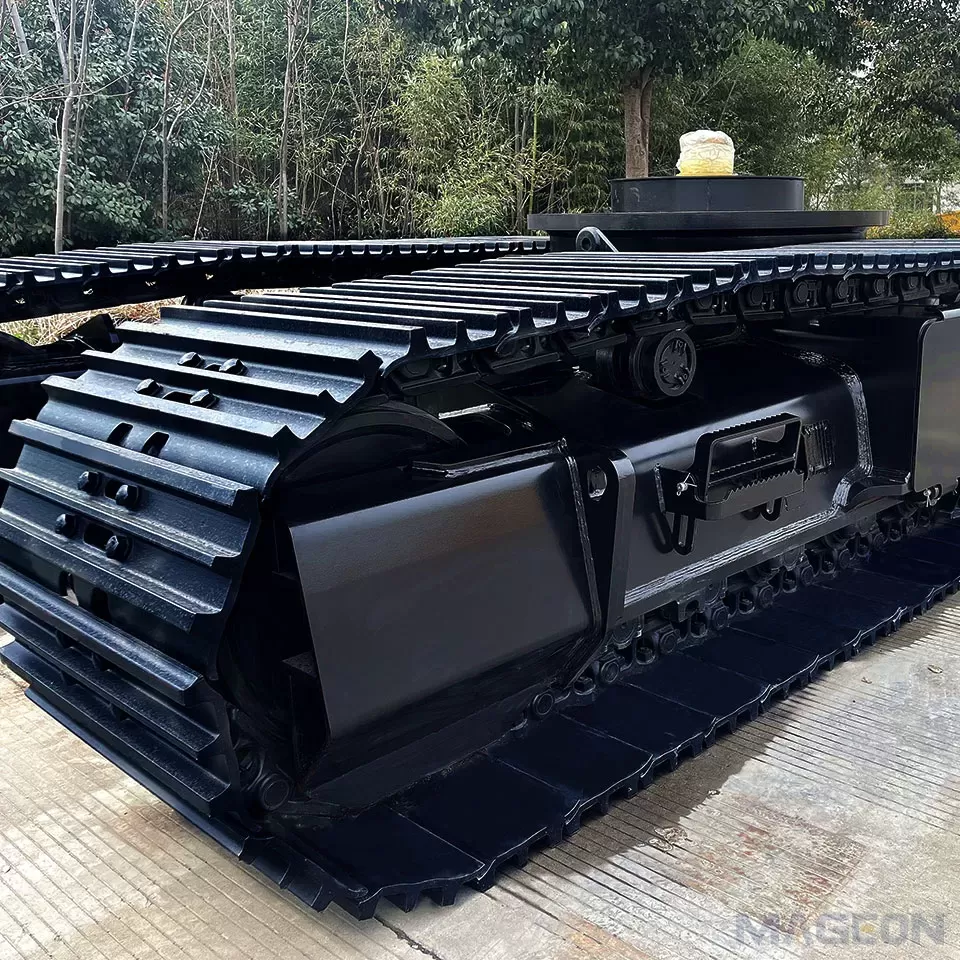
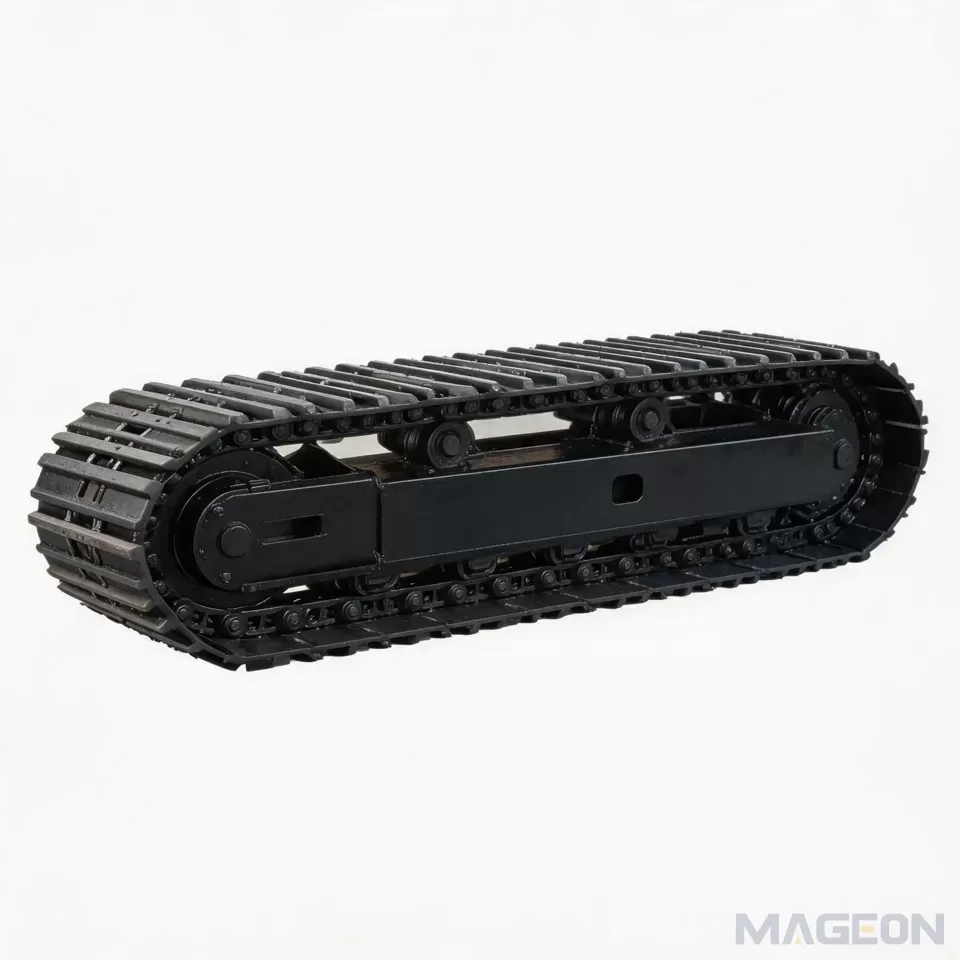
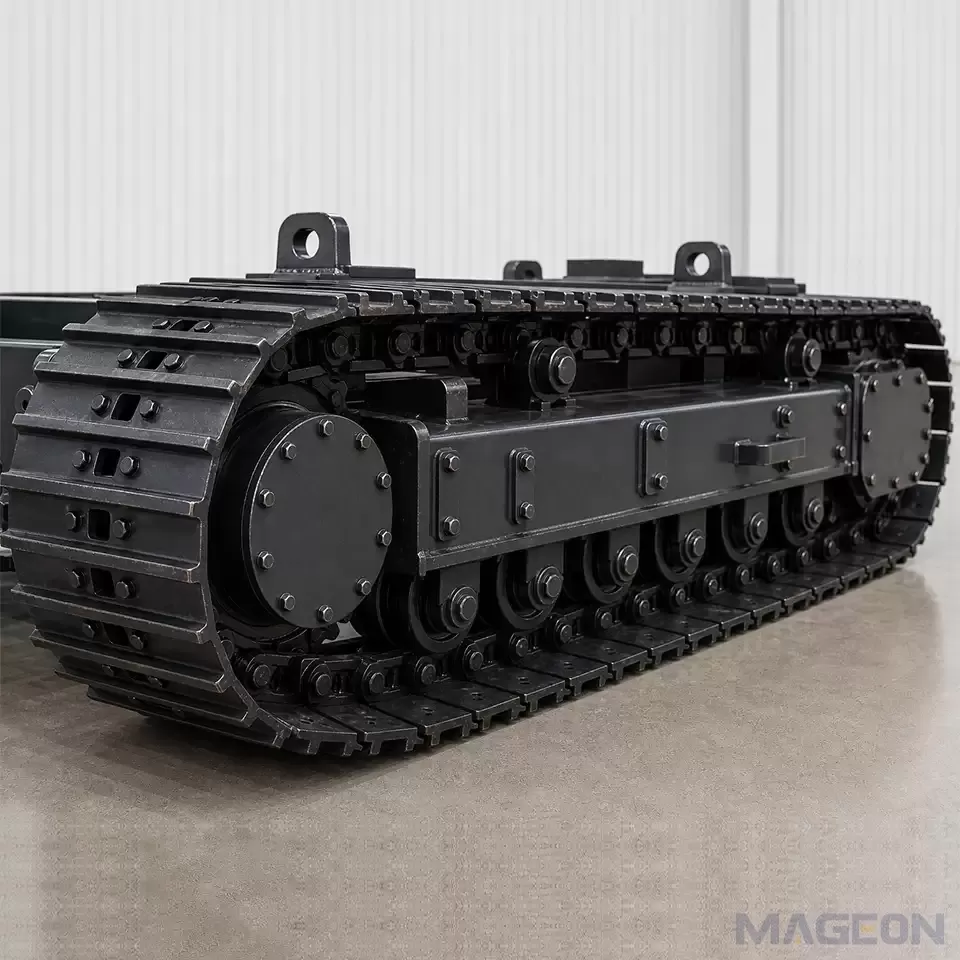
The undercarriage is the complete lower system that carries a tracked machine, transfers drive force to the ground, and allows it to move while maintaining stability. On excavators, bulldozers, crawler loaders, drilling equipment, and other tracked machines, the undercarriage operates continuously in contact with soil, rock, mud, demolition debris, and abrasive material.
This exposure makes undercarriage condition a direct operational concern. Worn or incompatible components can reduce traction, disturb track alignment, increase travel resistance, and contribute to unplanned downtime. For equipment buyers and fleet managers, the objective is not simply to choose the strongest-looking component. The complete system must match the machine, track geometry, working surface, operating pattern, and maintenance capability.
This guide focuses on the information required to select compatible parts, control avoidable wear, and plan maintenance before a single component causes damage elsewhere in the system.
Heavy Equipment Undercarriage Components
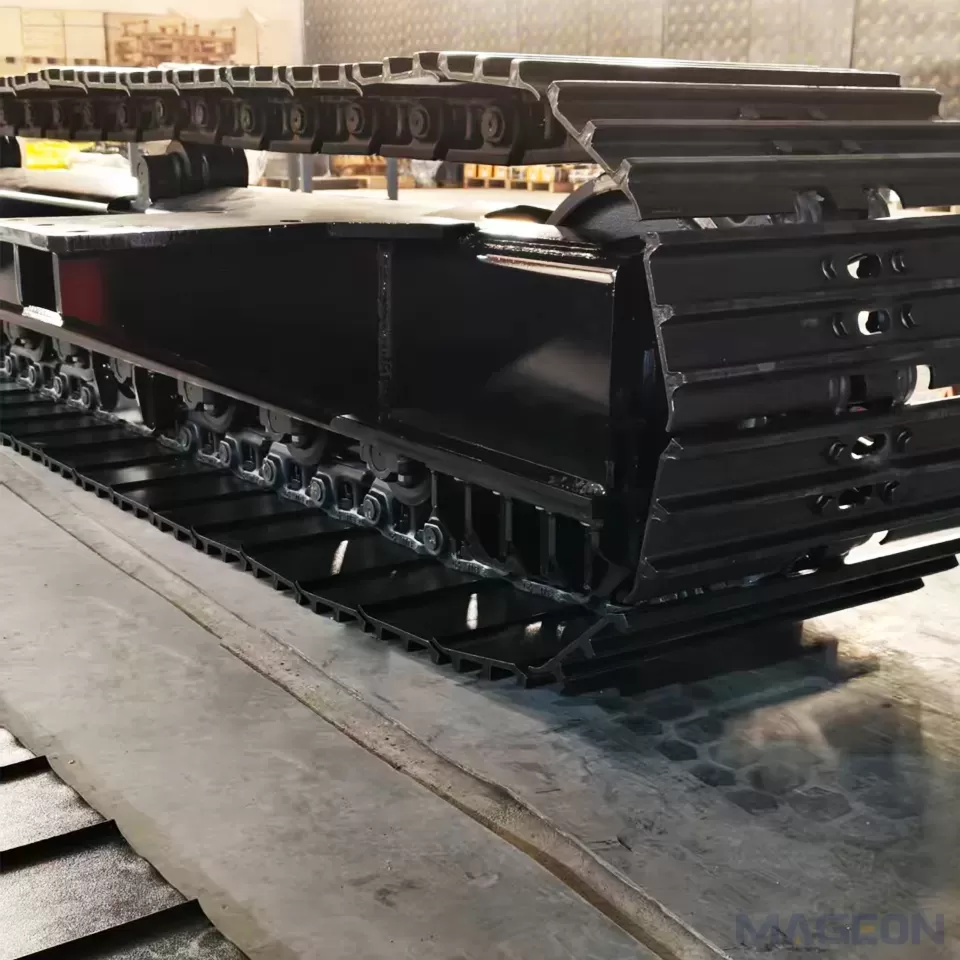
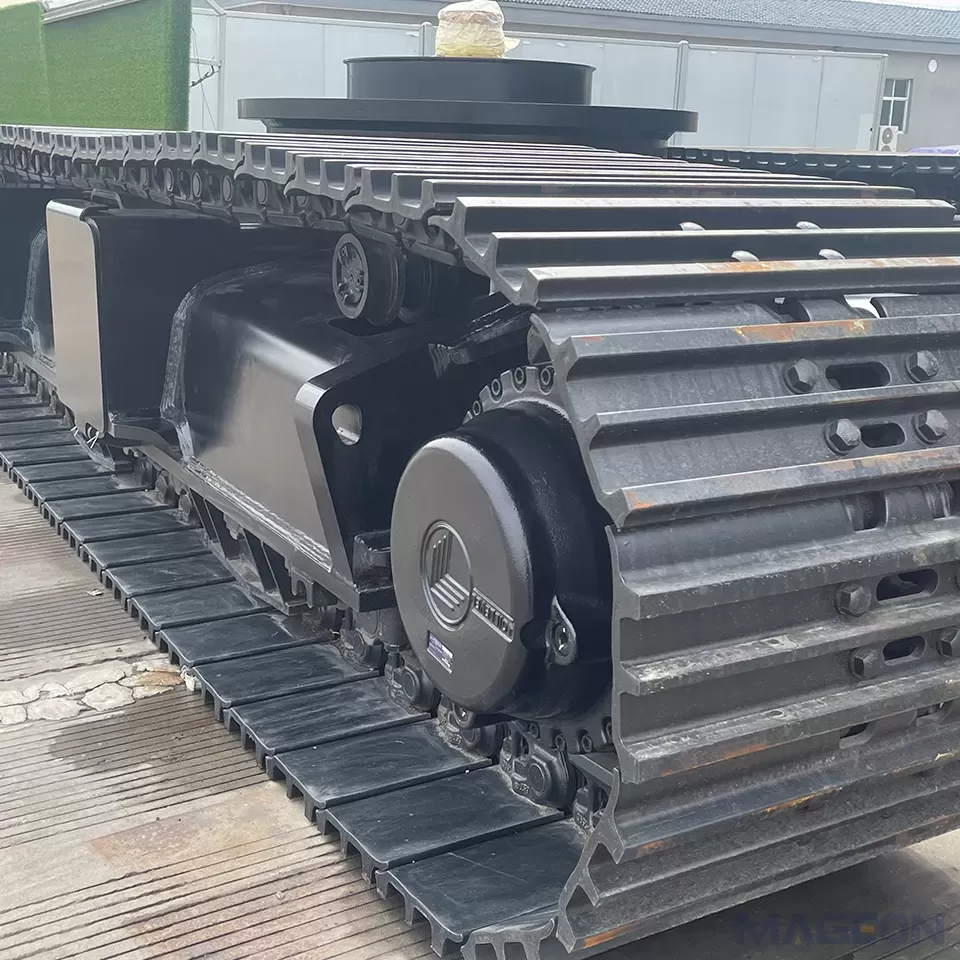
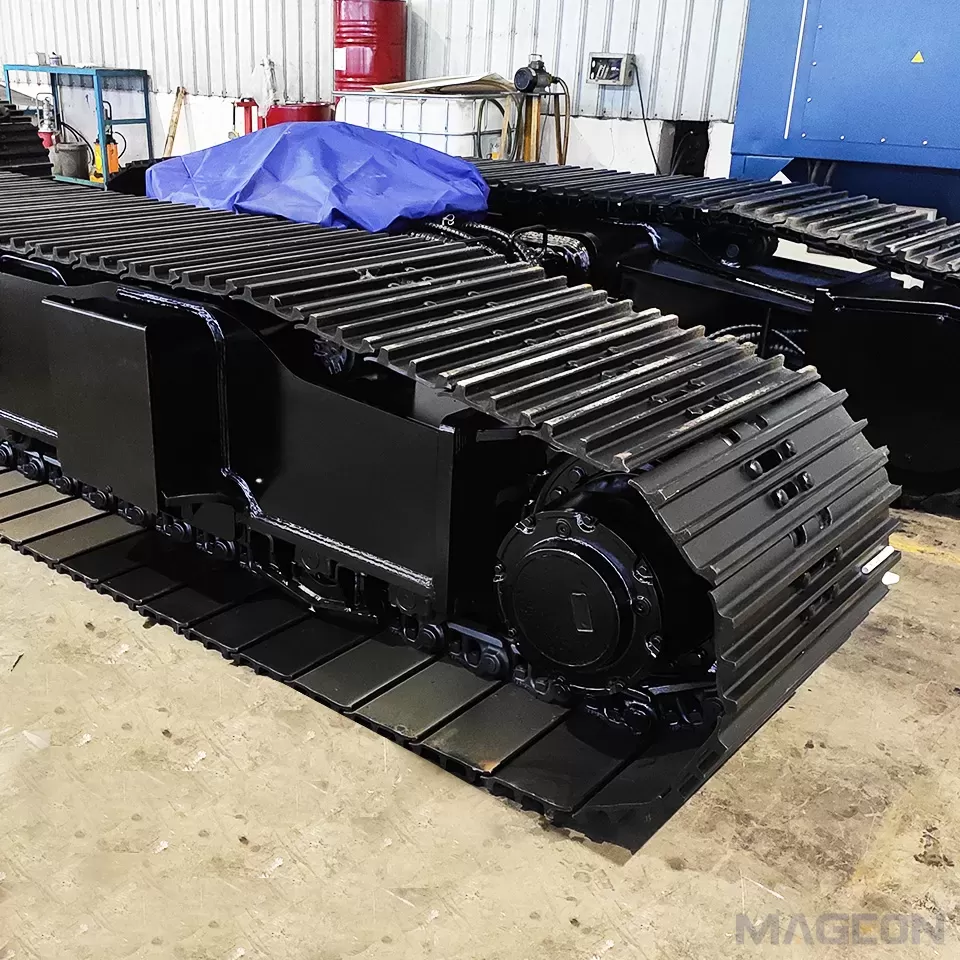
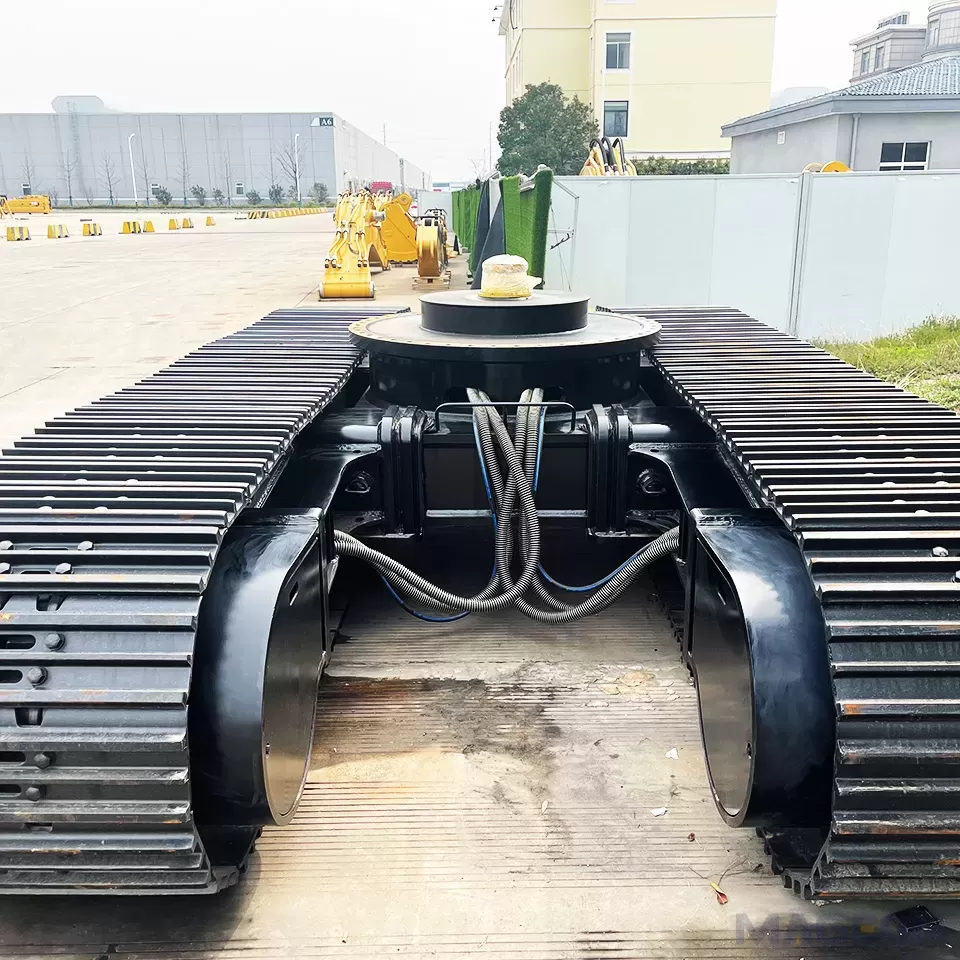
A steel-track undercarriage operates as an interconnected system. Replacing one part without checking adjacent wear can create poor engagement or uneven loading.
| Main Function | What Buyers Should Confirm | |
|---|---|---|
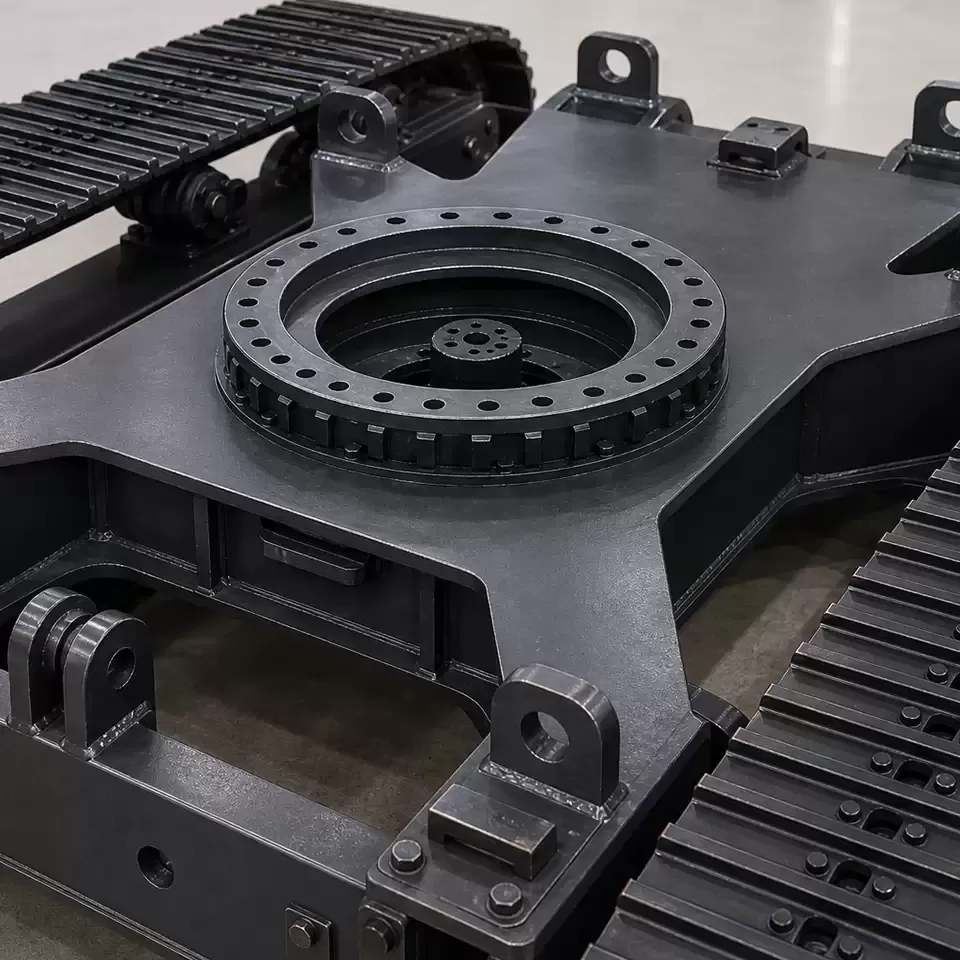
| Track frame | Supports and aligns the undercarriage assembly | Machine model, mounting points, frame configuration, and overall dimensions |
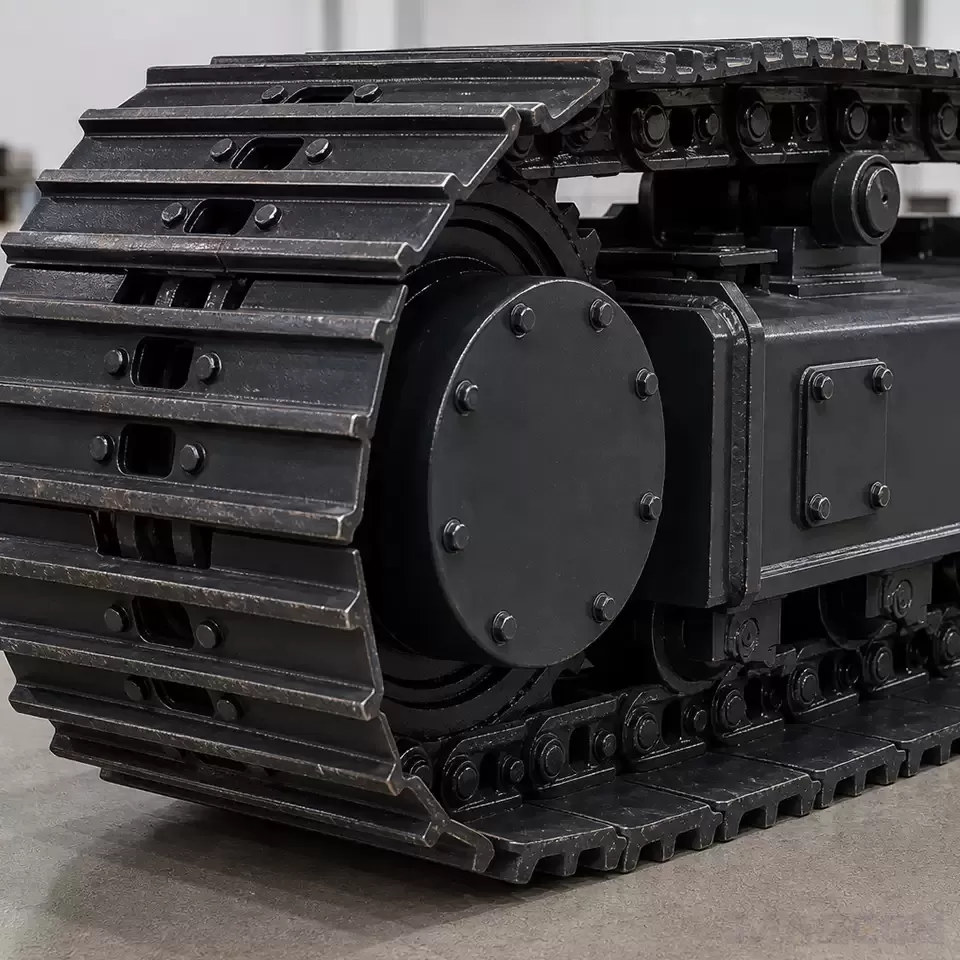
| Track chain | Transfers travel force through links, pins, and bushings | Pitch, link count, chain width, pin and bushing design, and master-link type |
| Lower track rollers | Carry machine weight and guide the lower chain path | Flange arrangement, tread diameter, mounting pattern, and lubrication type |
| Carrier rollers | Support the return section of the chain where used | Diameter, flange design, mounting position, and machine compatibility |
| Front idler | Guides the chain and works with the recoil and tensioning system | Tread profile, shaft arrangement, mounting dimensions, and adjuster compatibility |
| Drive sprocket | Engages the bushings and transfers travel torque to the chain | Pitch, tooth profile, tooth count, mounting interface, and segment or rim design |
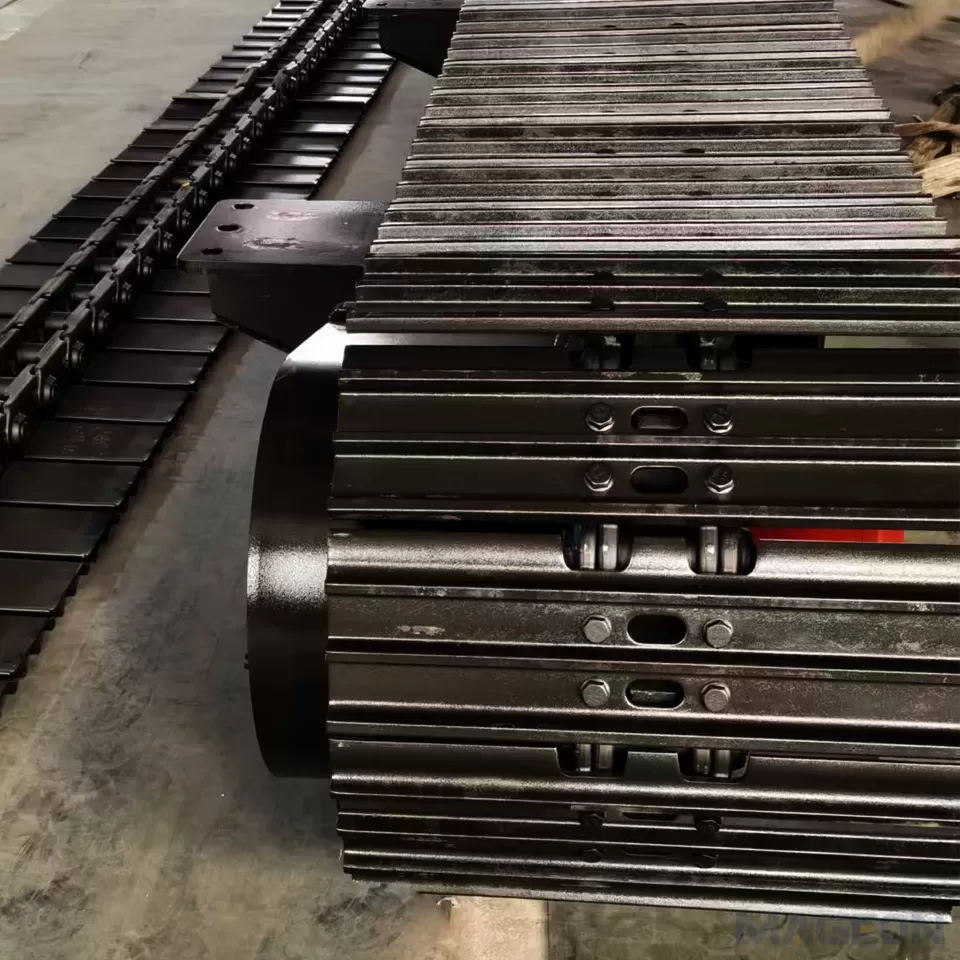
| Track shoes | Provide traction and distribute load over the ground | Shoe width, grouser design, bolt pattern, material conditions, and application |
| Recoil and tensioning system | Maintains controlled track tension and absorbs impact |
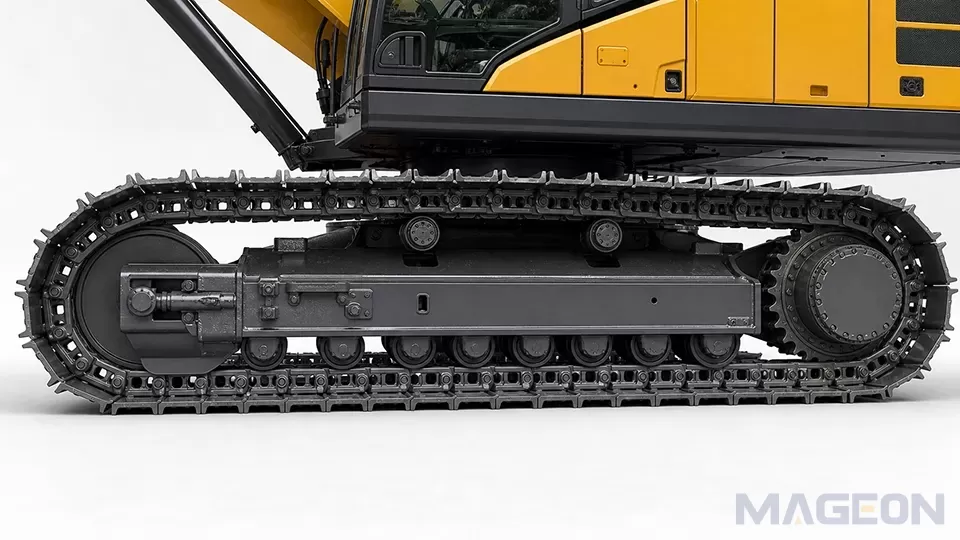
How the System Works
The travel drive rotates the sprocket, whose teeth engage the track-chain bushings. The moving chain travels around the sprocket and idler while the rollers guide and support it. Track shoes fixed to the chain contact the ground, producing traction and distributing machine weight.
Because these components share the same chain path, their geometry must be compatible. An incorrect sprocket pitch, mismatched roller profile, distorted shoe, or misaligned idler can change load distribution and accelerate wear across the complete undercarriage.
What Causes Undercarriage Wear?
Undercarriage wear is influenced by material conditions, machine operation, component selection, and maintenance quality. Identifying the dominant cause is more useful than replacing parts repeatedly without correcting the operating condition.
Abrasive Material
Sand, gravel, concrete fragments, and fine mineral particles can enter the contact areas between chains, rollers, idlers, and sprockets. These materials act as abrasives and may remove material from working surfaces. Frequent cleaning and condition-appropriate component selection are important in quarry, mining, roadbuilding, and demolition work.
High-Impact Operation
Rock, uneven floors, demolition debris, and sudden loading can place impact stress on shoes, links, pins, rollers, and frames. Operators should avoid unnecessary high-speed travel over severe ground and should inspect for cracks, loose fasteners, and deformation after demanding work.
Mud and Material Packing
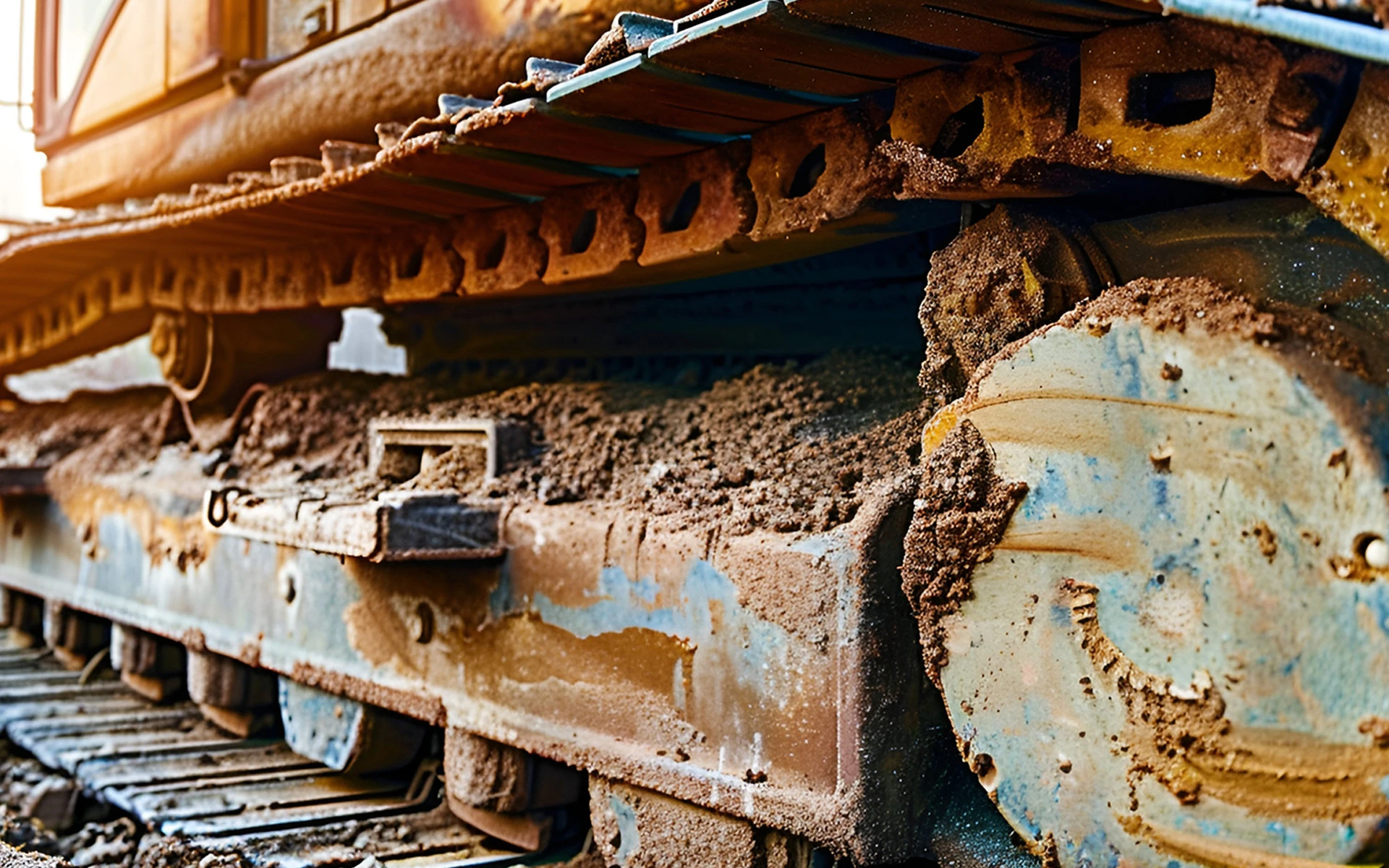
Mud, clay, frozen material, and compacted debris can pack between the chain, shoes, rollers, and frame. Packed material restricts movement and changes track tension. Cleaning frequency should increase whenever the machine works in sticky or freezing conditions.
Operating Technique
Repeated tight turns, unnecessary reverse travel, track spinning, side loading, and traveling long distances at high speed can concentrate wear. Operating practices should be adapted to the machine type and worksite rather than relying on component replacement alone.
Incorrect Track Tension
Excessive tension increases load and friction across chains, rollers, idlers, sprockets, and travel drives. Insufficient tension can allow poor engagement, side movement, or derailment. The correct setting depends on the machine and ground conditions and must follow the manufacturer’s measurement procedure.
Incompatible or Unevenly Worn Components
Track-chain pitch, sprocket profile, roller tread, idler profile, and shoe mounting pattern must work together. Installing a new component against severely worn or incompatible parts can create abnormal contact. Inspect the full chain path before deciding which parts to replace.
Key Selection Considerations
1. Start With the Exact Machine
Use the complete machine model and serial number where available. Nominal machine class or operating weight alone is not sufficient because different production series may use different track pitch, roller arrangements, frames, or sprocket interfaces.
2. Match the Chain and Sprocket
Confirm track pitch, link count, bushing dimensions, sprocket tooth profile, tooth count, and mounting type. Chain and sprocket wear should be evaluated together because poor engagement can damage both components.
3. Select the Correct Roller and Idler Configuration
Verify the number and type of lower and carrier rollers, flange arrangement, tread diameter, shaft dimensions, bolt spacing, and installation position. Do not assume that visually similar rollers are interchangeable.
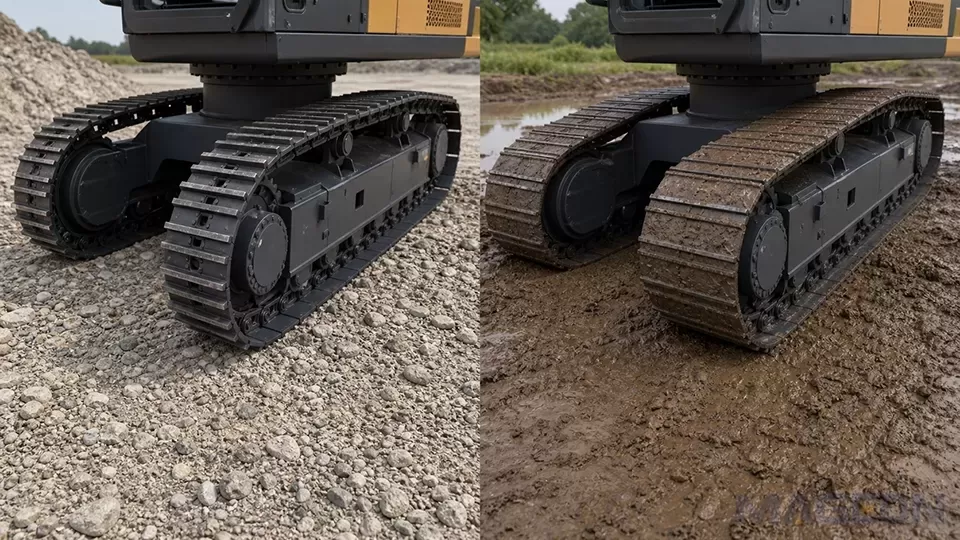
4. Choose Track-Shoe Width for the Ground
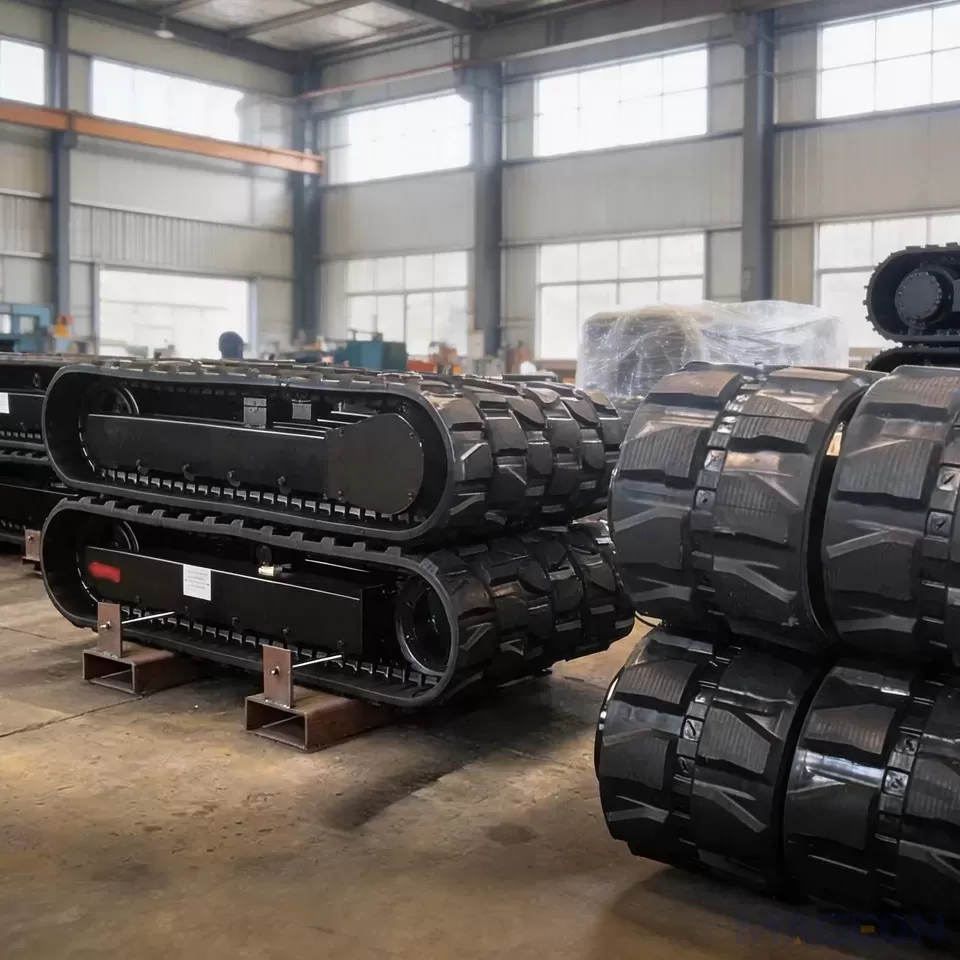
Track shoes must provide sufficient flotation without being wider than the application requires. Wider shoes distribute load over a larger area and can support operation on soft ground. However, added width also increases leverage on shoes, bolts, links, and pins during turning or work on uneven rock.
Narrower shoes are generally better suited to firm or rocky ground when adequate flotation is maintained. Mud-relief configurations may be useful where cohesive material packs around the chain and sprocket, but availability must be confirmed for the specific machine.
5. Define the Working Environment
Provide the supplier with the dominant ground type, impact level, moisture, temperature, daily travel pattern, turning frequency, and typical material. The correct component configuration for a quarry may differ from one used in wetland construction or urban demolition.
Application Guide
| Main Wear Risk | Selection Priority | Maintenance Focus | |
|---|---|---|---|
| General earthmoving | Mixed soil and routine travel wear | Balanced standard configuration | Cleaning, tension, and regular measurement |
| Quarry and mining | Abrasion, rock impact, and heavy loading | Impact-resistant shoes and matched heavy-duty components | Crack inspection and frequent wear measurement |
| Demolition | Concrete fragments, steel debris, and side loading | Protected, compatible components suited to debris | Cleaning and checks for damage or loose fasteners |
| Wetland and soft ground | Sinking, mud packing, and seal contamination | Adequate flotation and suitable shoe configuration | Remove packed material and monitor tension |
| Landfill work | Mixed debris, packing, and impact | Application-specific shoes and guarded components where available | Daily cleaning and damage inspection |
| Road and infrastructure | Abrasive aggregate and repeated travel | Correct shoe width and wear-resistant matched components |
Inspection and Maintenance Plan
Daily Inspection
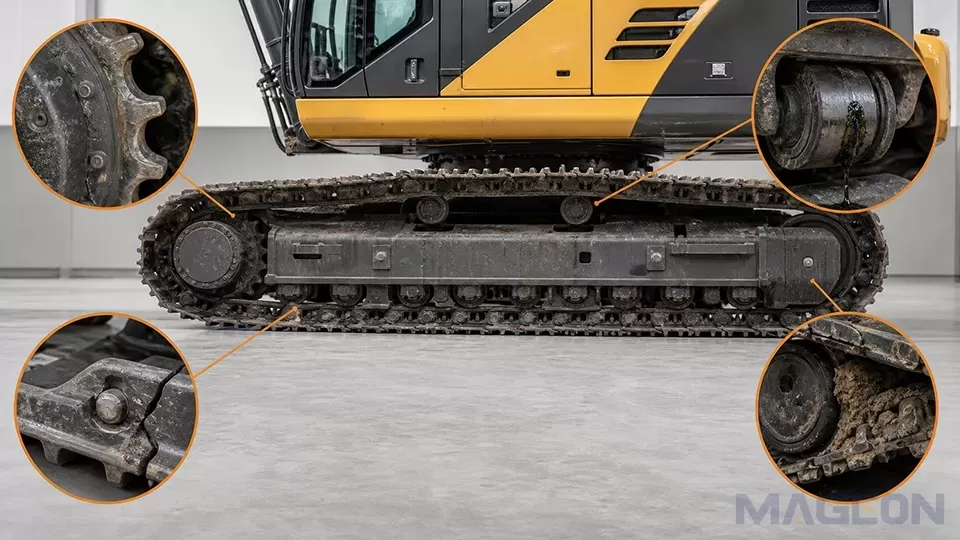
Before operation, check for loose or missing fasteners, cracked shoes, damaged links, leaking rollers, abnormal track sag, packed material, and visible misalignment. During operation, investigate unusual noise, vibration, pulling to one side, poor engagement, or repeated track movement.
Cleaning
Remove mud, clay, stones, wire, and demolition debris from the chain path. Cleaning is particularly important before material dries, freezes, or compacts around the rollers and sprocket.
Track-Tension Control
Measure tension on level ground using the procedure for the specific machine. Ground conditions can affect the required setting, so a value used on one model or site should not be transferred to another machine without verification.
Wear Measurement
Record chain pitch or extension, pin and bushing wear, roller and idler tread diameter, sprocket-tooth condition, shoe thickness, grouser height, and oil leakage. Compare results with the current service limits rather than judging only by appearance.
System-Based Replacement
When one component reaches its replacement limit, inspect all contacting parts. A new sprocket operating with an incompatible or severely worn chain—or a new chain operating over damaged rollers—may not deliver the expected service life.
| Warning Sign | Required Response | |
|---|---|---|
| Track chain | Excessive pitch growth, stiff links, damaged seals, or side wear | Measure against the service limit and inspect mating parts |
| Sprocket | Hooked, sharp, chipped, or uneven teeth | Check engagement with the chain and replace as specified |
| Rollers | Leakage, seizure, flange wear, or uneven tread | Measure, check alignment, and replace where required |
| Idler and adjuster | Leakage, poor travel, misalignment, or unstable tension | Inspect the idler, recoil system, and adjustment mechanism |
| Track shoes | Cracks, bending, loose bolts, or severe grouser wear | Tighten or replace using the approved procedure |
| Track frame | Cracks, deformation, damaged mounts, or packed material |
Conclusion
Heavy equipment undercarriage performance depends on the compatibility and condition of the complete system. Machine identification, chain and sprocket geometry, roller and idler configuration, track-shoe width, ground conditions, and correct tension all influence the result.
For a MAGEON undercarriage parts enquiry, provide the exact machine model, serial number, available part numbers, dimensions, photographs, working environment, and required quantity. Accurate project information is more reliable than selecting components by appearance or machine tonnage alone.
Frequently Asked Questions
1. What parts are included in a heavy equipment undercarriage?
A typical tracked undercarriage includes the track frame, track chains, lower rollers, carrier rollers where used, front idlers, drive sprockets, track shoes, and recoil or tensioning components. The exact arrangement depends on the equipment type and model. Because the parts share the same chain path, buyers should verify compatibility across the complete system rather than selecting each component independently.
2. What information is needed to identify the correct undercarriage parts?
Start with the machine manufacturer, full model, serial number, and readable part numbers. If these are unavailable, provide track pitch, link count, shoe width, bolt pattern, sprocket tooth count, roller and idler dimensions, mounting details, and clear photographs. Also describe the equipment type and working conditions. Nominal operating weight or visual similarity alone is not enough to confirm compatibility.
3. Should I choose narrow or wide track shoes?
Choose the narrowest shoe that provides adequate flotation and stability for the working surface. Wider shoes can reduce ground pressure on soft terrain, but they also increase leverage on shoes, bolts, links, and pins during turns or work on uneven rock. Narrower shoes are generally more suitable for firm ground when flotation remains adequate. Always use a shoe width approved for the machine configuration.
4. How often should undercarriage components be inspected?
Operators should perform a visual inspection before each work shift and remove packed material as operating conditions require. Dimensional wear measurements should follow a planned interval based on machine hours, ground conditions, travel, and previous wear trends. Abrasive, muddy, demolition, or high-impact work may require more frequent checks. Use the machine service manual for measurement points and replacement limits.
5. How do I know whether track tension is correct?
Correct track tension must be measured using the procedure and reference points specified for the machine. A track that is too tight increases load and friction; a track that is too loose can move laterally, engage poorly, or derail. Check tension on the required ground condition and machine position. Do not copy a measurement from another model or adjust only by visual appearance.
6. Can a new sprocket be installed with a worn track chain?
It may be physically possible, but compatibility and wear should be evaluated first. A worn chain has changed pitch and contact geometry, which can prevent correct engagement with a new sprocket. This may produce noise, jumping, or accelerated wear. Measure the chain and inspect the sprocket together, then follow the manufacturer’s service limits when deciding whether one or both components require replacement.
7. Can undercarriage parts from different suppliers be mixed?
Parts should only be mixed when their dimensions, materials, pitch, profiles, mounting interfaces, and application ratings are confirmed compatible. Similar appearance does not prove interchangeability. Particular attention is required for track chains, sprockets, rollers, idlers, and shoe bolt patterns. Unverified combinations can create uneven contact and load distribution. Request dimensional drawings or written compatibility confirmation before installation.
8. Why does packed mud or debris damage an undercarriage?
Packed material occupies space within the chain path and can restrict the normal movement of links, rollers, idlers, and sprockets. It may also change effective track tension and hold abrasive or corrosive material against working surfaces. Remove buildup before it dries, freezes, or compacts. Cleaning frequency should increase in clay, wet soil, landfill debris, demolition material, and freezing conditions.
9. What should be checked after undercarriage installation?
After installation, verify fastener torque, mating-surface contact, component alignment, sprocket and chain engagement, roller movement, idler travel, track tension, lubrication, and leakage. Operate the machine slowly in a controlled area and check for abnormal noise, vibration, pulling, or heating. Final installation values and test procedures must come from the current service information for the specific machine.
10. What should I send when requesting a quotation?
Send the machine model and serial number, required part names, readable part numbers, quantities, and destination. Include photographs of the machine identification plate, complete undercarriage, existing parts, and wear areas. If part numbers are missing, provide measured dimensions such as pitch, link count, shoe width, bolt pattern, sprocket tooth count, and mounting spacing. Describe the ground conditions and application as well.
Applicable products:
Installation and Project Matching Information
Correct installation is as important as component selection. Mating surfaces should be clean, mounting holes undamaged, and fasteners tightened using the machine manufacturer’s sequence and torque specification. After installation, verify alignment, chain engagement, track tension, free movement, and leakage before returning the machine to production.
For an undercarriage parts enquiry, prepare:
- Machine manufacturer, model, and serial number
- Equipment type and operating configuration
- Existing part numbers, if readable
- Track pitch, link count, chain width, and shoe width
- Shoe bolt pattern and grouser design
- Sprocket type, tooth count, and mounting dimensions
- Roller and idler dimensions and mounting pattern
- Photographs of the complete undercarriage and worn areas
- Working environment and dominant ground condition
- Required quantity and destination market
This information reduces the risk of selecting parts from appearance or nominal machine size alone.
Please leave your customization requirements, and we will contact you as soon as possible!
Leave your requirements, we'll get back to you within 24 hours.