What are the maintenance knowledge of excavator chassis? You have to do these five!
Project Overview:
This article introduces systematic maintenance methods for the "four wheels and one track" (track rollers, carrier rollers, idlers, drive sprockets and track chains) of excavator track undercarriage, covering daily operation precautions, seasonal maintenance key points and fault impact analysis. It is intended for equipment operators, maintenance personnel and project management teams. Standardized implementation of these maintenance points can significantly reduce the failure rate of undercarriage components, avoid early wear of parts, extend the overall service life of the undercarriage by more than 30%, and reduce the long-term operation cost of equipment.
5 Essential Maintenance Tips for Excavator Crawler Undercarriage Track Components
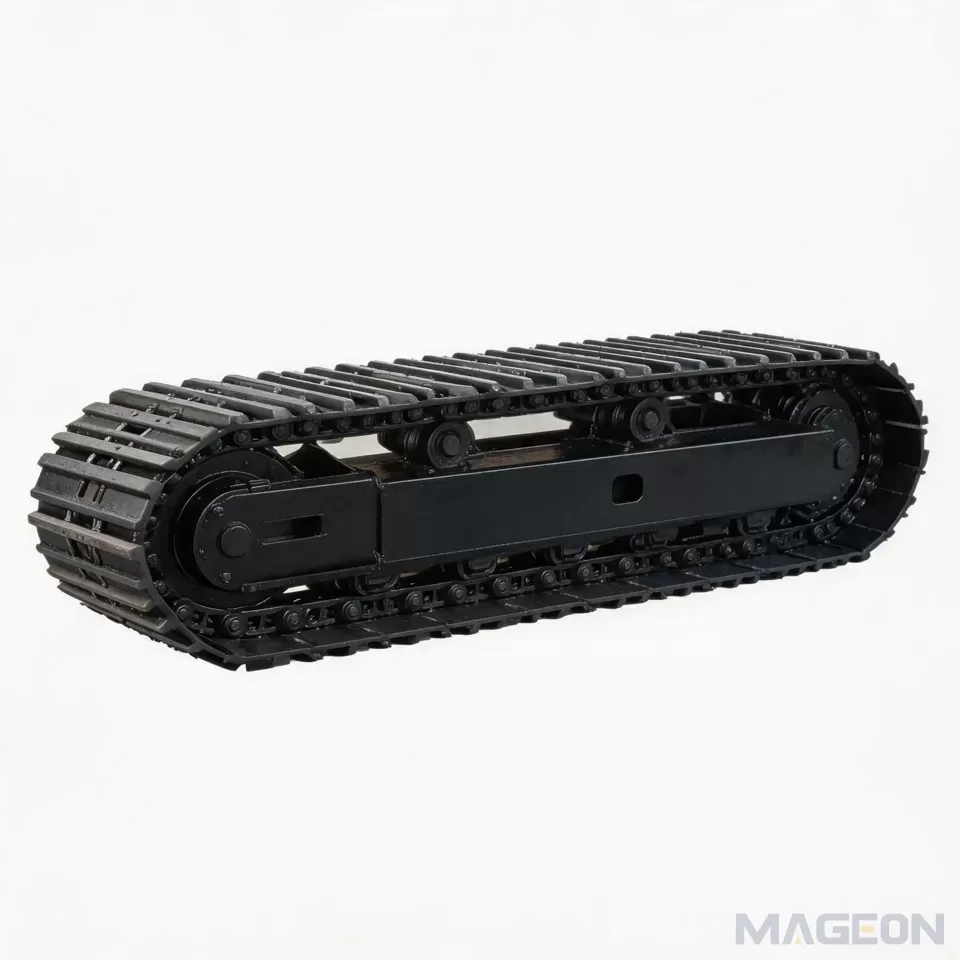
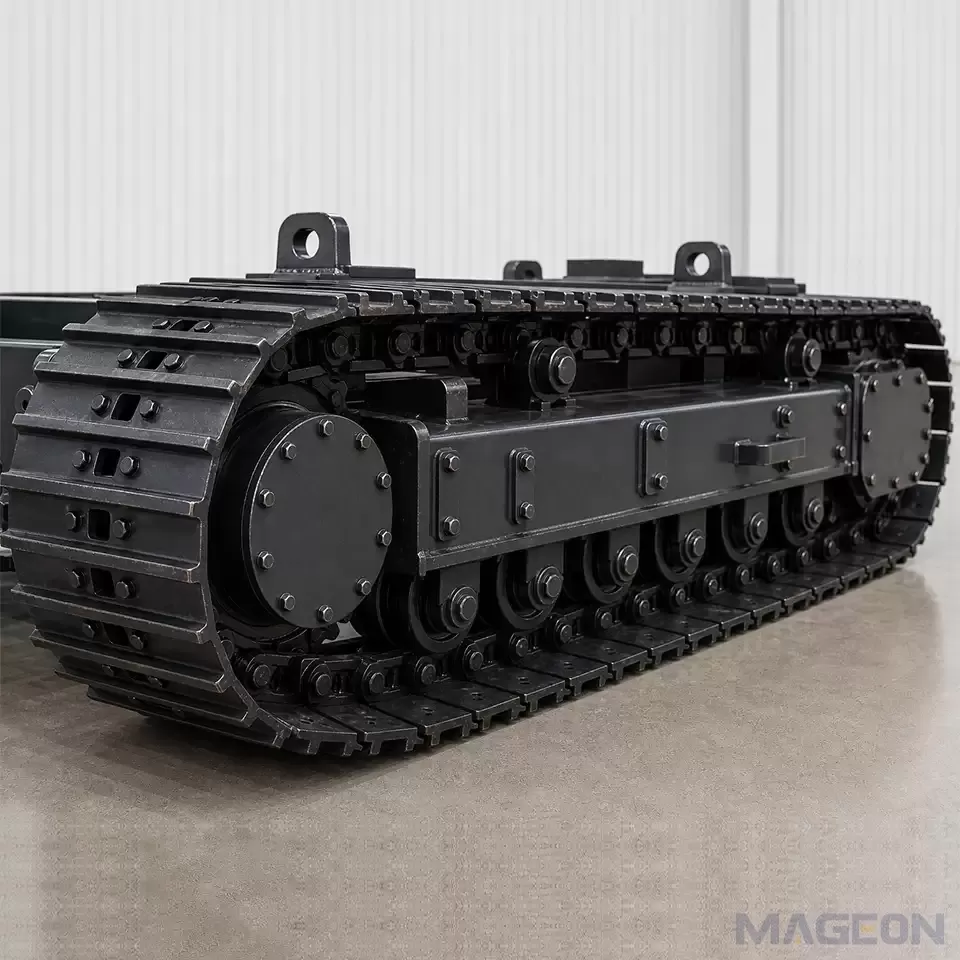
Track components directly determine the working performance and travel performance of crawler equipment. Common faults such as track roller oil leakage, carrier roller damage, weak travel and inconsistent track tension are all related to the "four wheels and one track" system. Proper maintenance of the crawler undercarriage is the most effective way to extend service life, reduce unplanned downtime and control operation costs. As a professional undercarriage manufacturer, MAGEON summarizes standardized maintenance methods for each core component to help equipment teams improve maintenance efficiency.
Core Component Failure Impact Overview
The "four wheels and one track" system is the core of the chassis travel system, and damage to any component will trigger a chain reaction. The impact of common faults is as follows:
| Component | Common Faults | Consequences of Damage |
|---|---|---|
| Track Roller | Oil leakage, bearing wear, shell rupture | Travel deviation, weak travel, abnormal track wear |
| Carrier Roller | Oil leakage, bearing seizure | Track chain deviation, increased vibration, accelerated wear |
| Idler | Excessive wear, guide surface damage | Abnormal track wear, increased derailment risk |
| Drive Sprocket | Tooth surface wear, tooth fracture | Accelerated chain wear, abnormal noise, reduced transmission efficiency |
| Track Chain | Pin wear, shoe deformation, bolt fracture | Track derailment, reduced traction, structural damage |
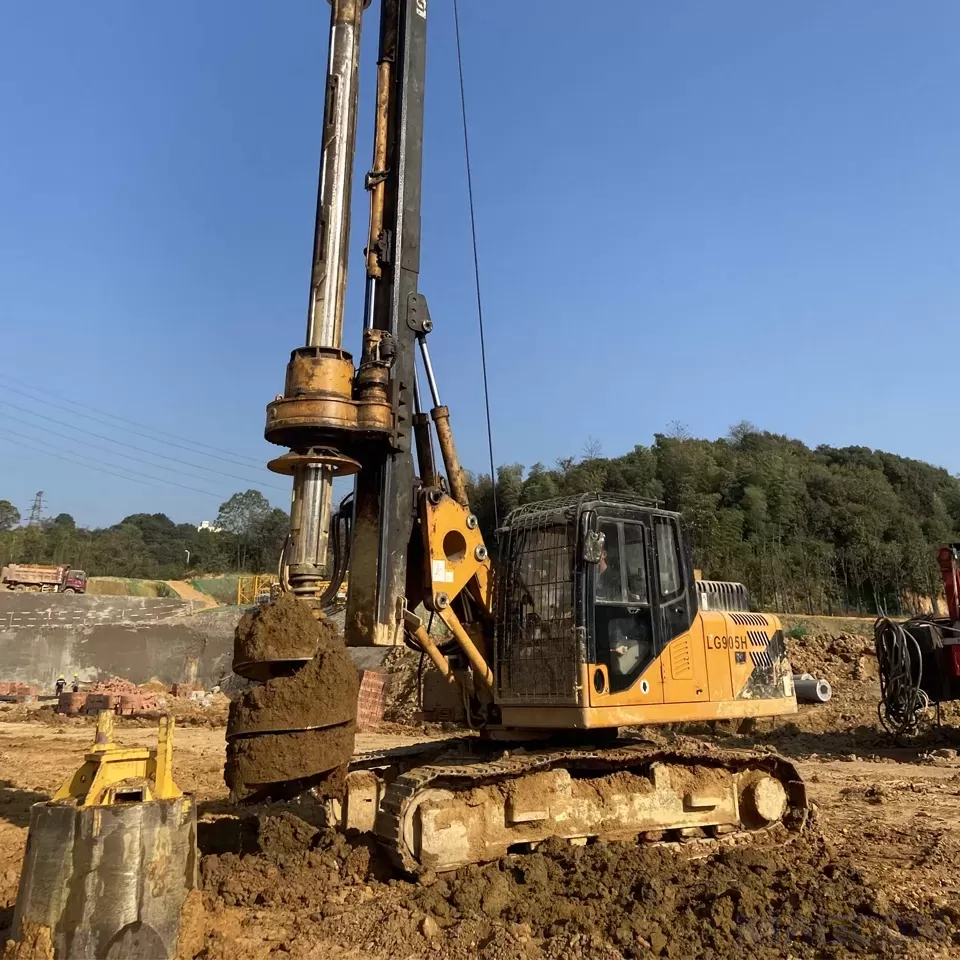
1. Track Roller Maintenance
Track rollers are the main load-bearing rotating components, and their sealing condition directly affects service life.
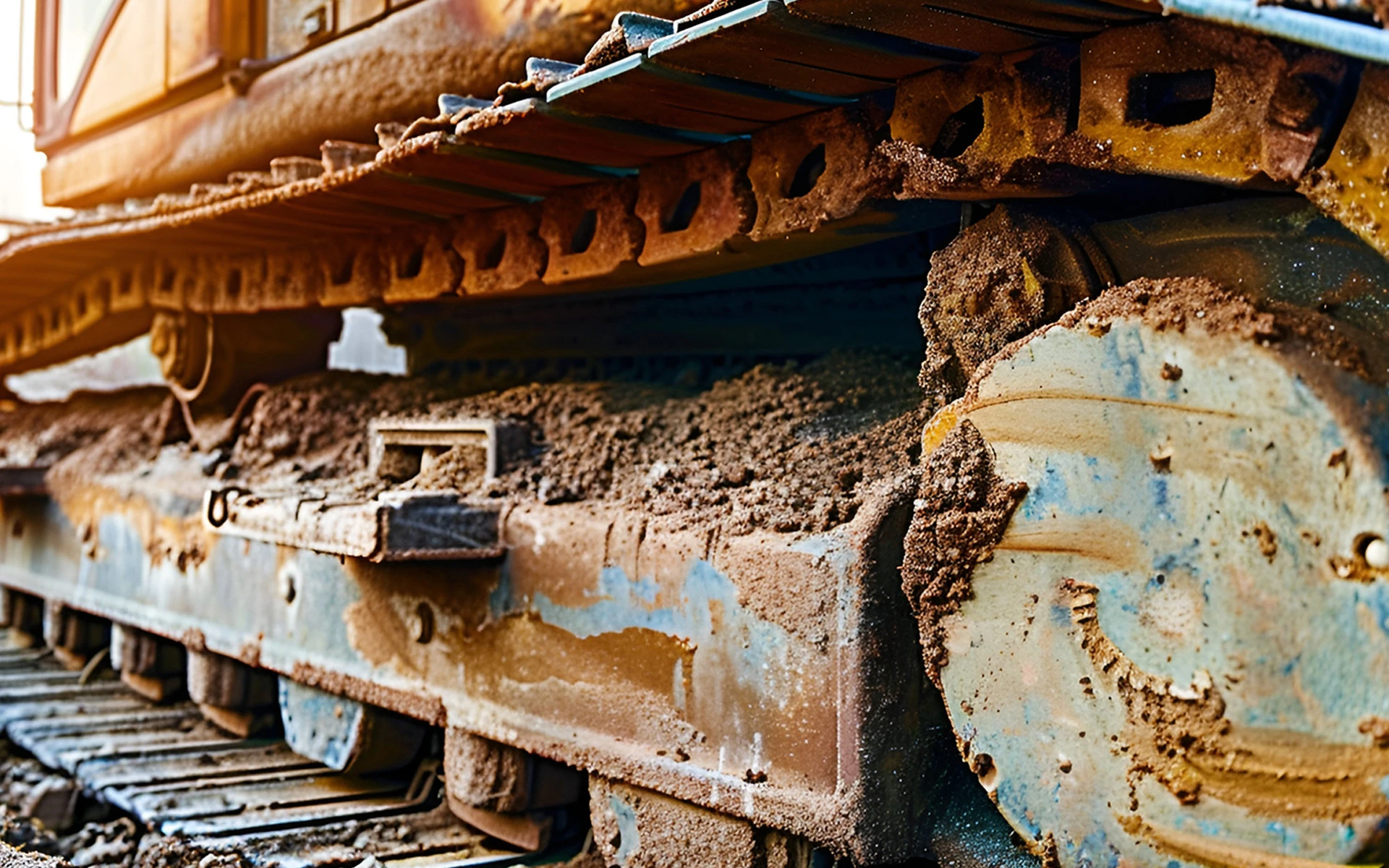
Avoid long-term immersion: During operation, try to avoid track rollers being soaked in muddy water for a long time. After daily work, lift one side of the track and drive the travel motor to shake off mud, gravel and other debris attached to the track.
Winter dryness maintenance: Keep the track rollers dry during winter construction. There is a floating seal between the outer wheel and the shaft of the track roller. If water enters and freezes at night, the seal will be scratched by ice during the next day's movement, resulting in oil leakage.
Fault impact: Damaged track rollers will cause various faults, such as travel deviation and weak travel, and will also accelerate the abnormal wear of the track chain.
2. Carrier Roller Maintenance
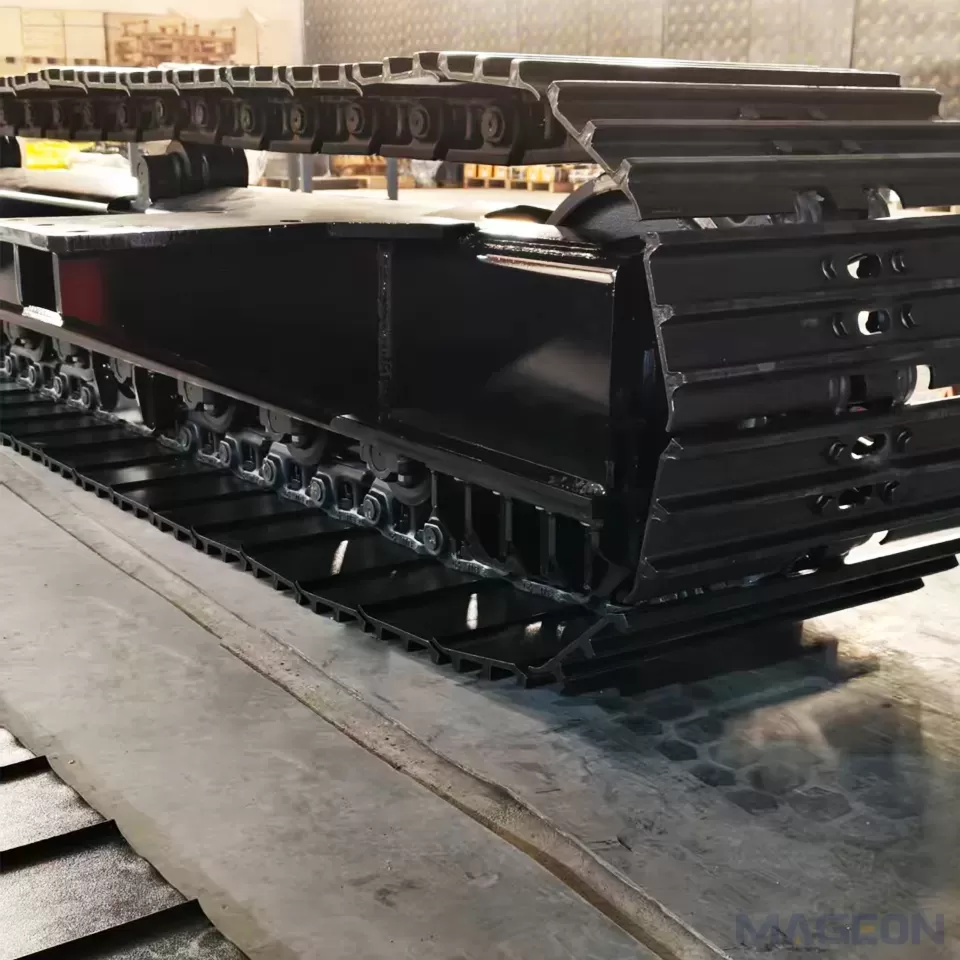
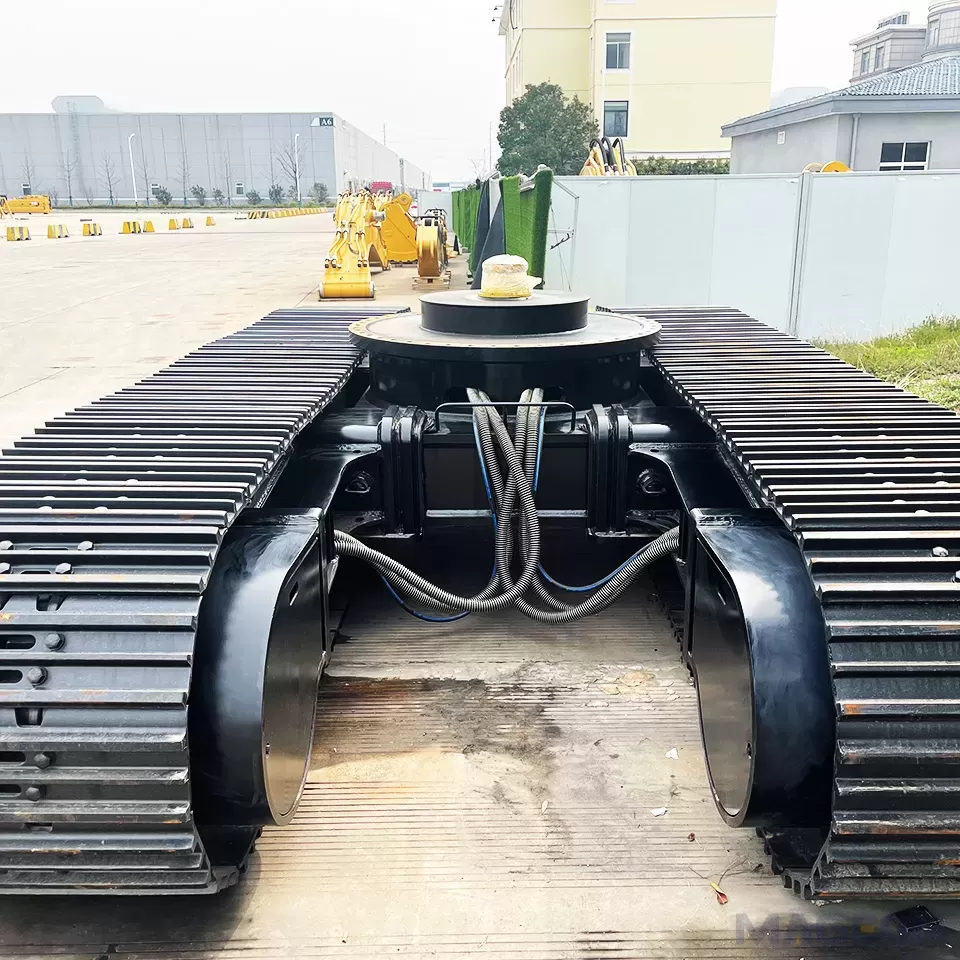
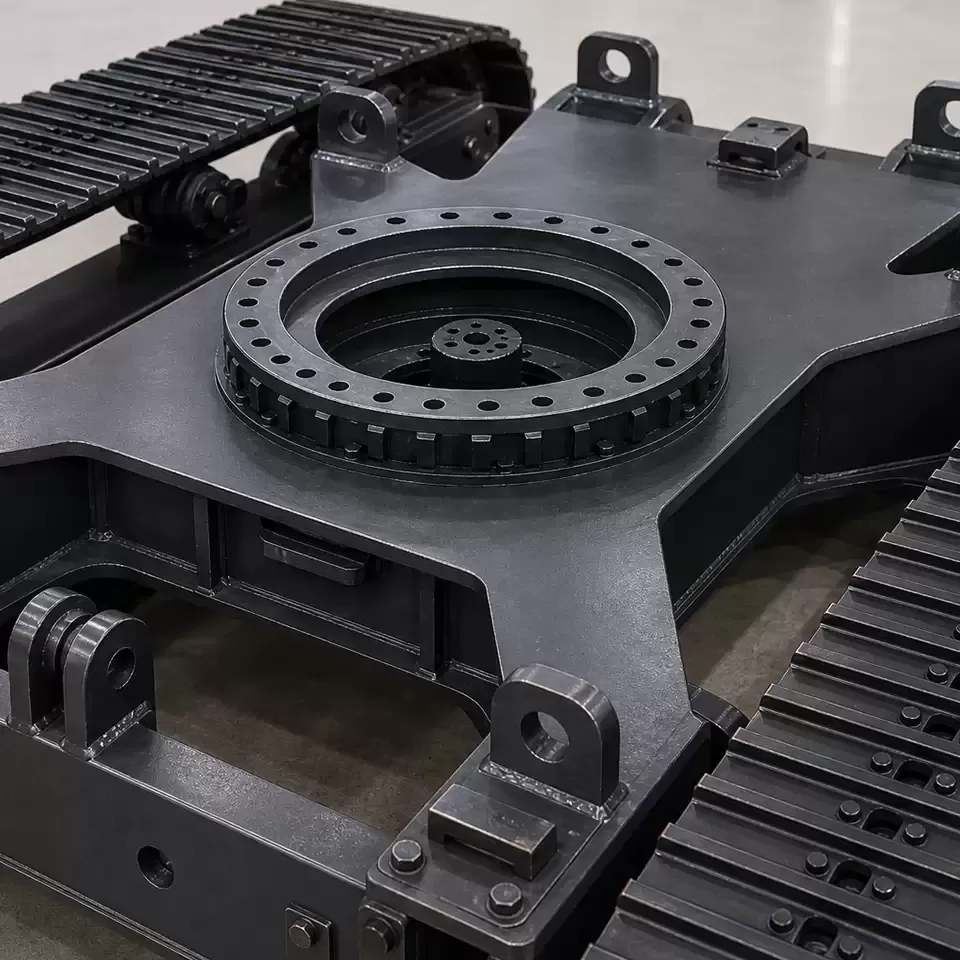
The carrier roller is located above the X-frame, and its function is to keep the track chain running in a straight line. A damaged carrier roller will cause the track chain to fail to maintain straight-line operation.
Sealing characteristics: The carrier roller is filled with lubricating oil at one time. If oil leakage occurs, it can only be replaced with a new one, and secondary oil replenishment cannot restore the sealing performance.
Daily cleaning: Try to avoid long-term immersion in muddy water during work. Always keep the inclined platform of the X-frame clean, and do not allow too much mud and gravel to accumulate and hinder the rotation of the carrier roller.
3. Idler Maintenance
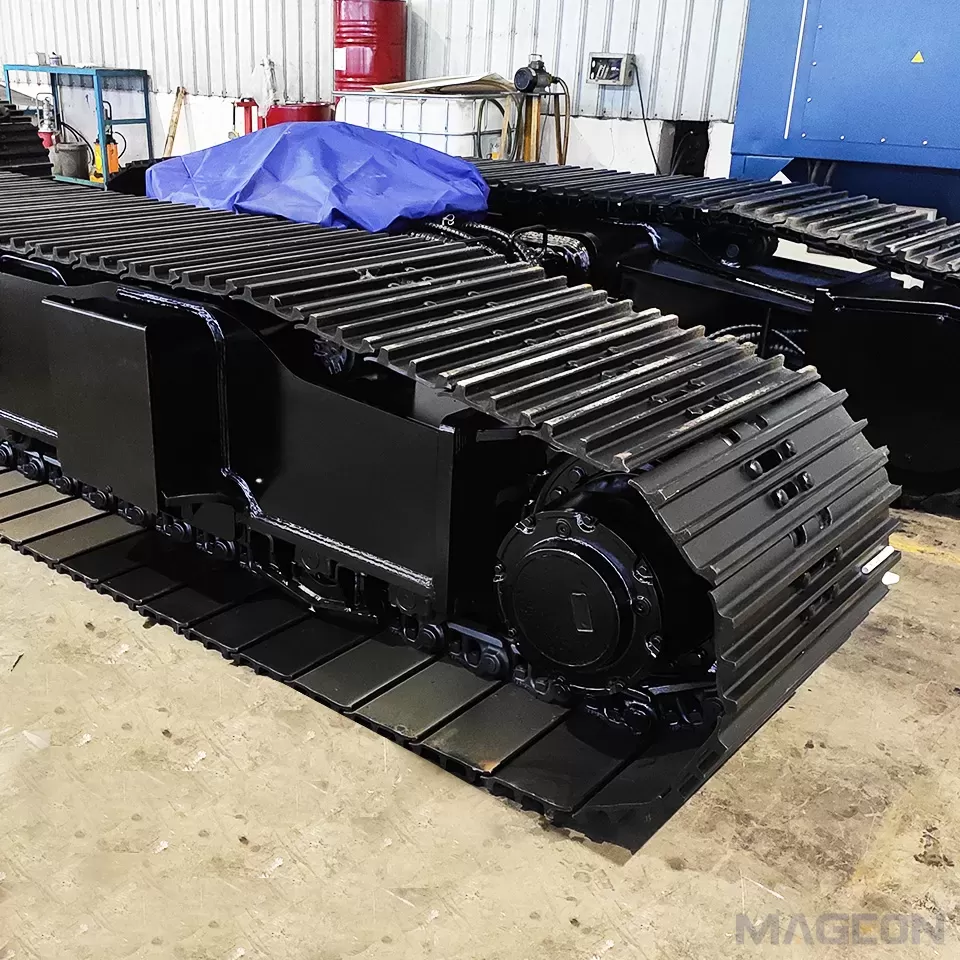
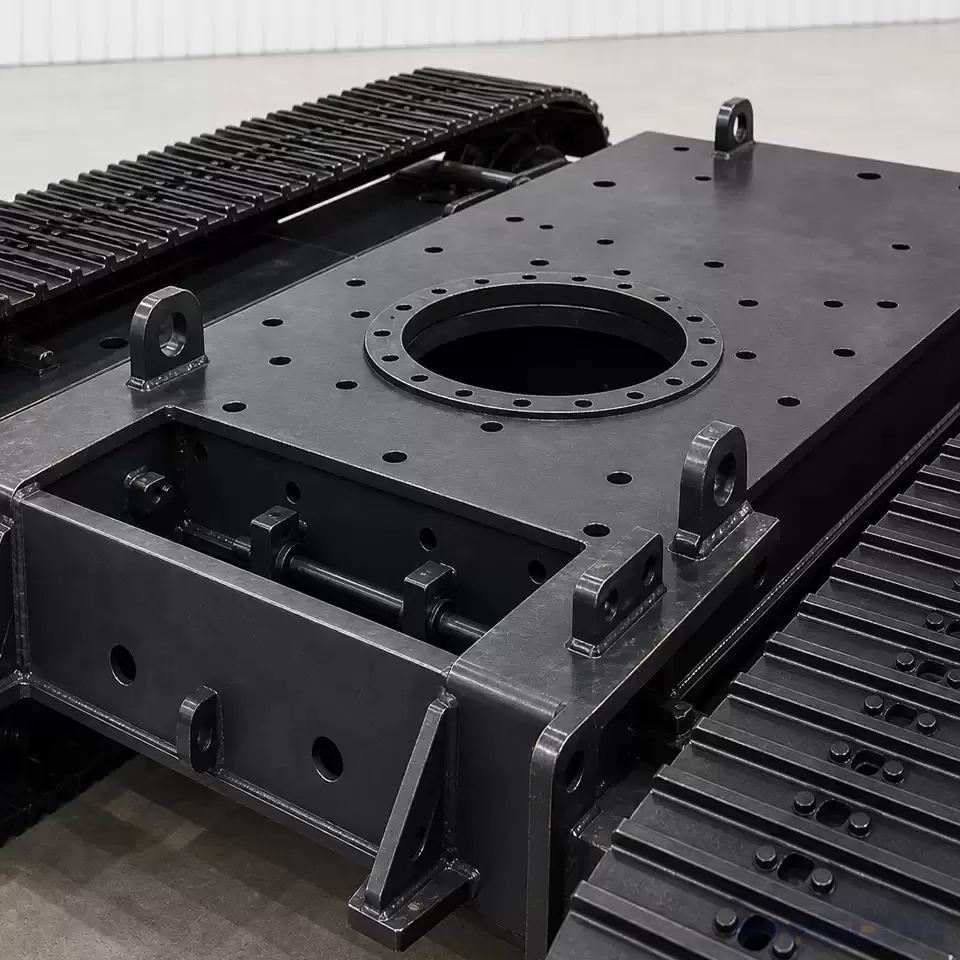
The idler is located at the front of the X-frame, composed of the idler wheel itself and a tensioning spring installed inside the X-frame.
Correct orientation: Keep the idler at the front during operation and travel, which can avoid abnormal wear of the track chain. The tensioning spring can also absorb the impact from the road surface during work and reduce wear.
Regular inspection: Regularly check the wear condition of the idler guide surface. Excessive wear will affect the centering effect of the track and increase the risk of derailment.
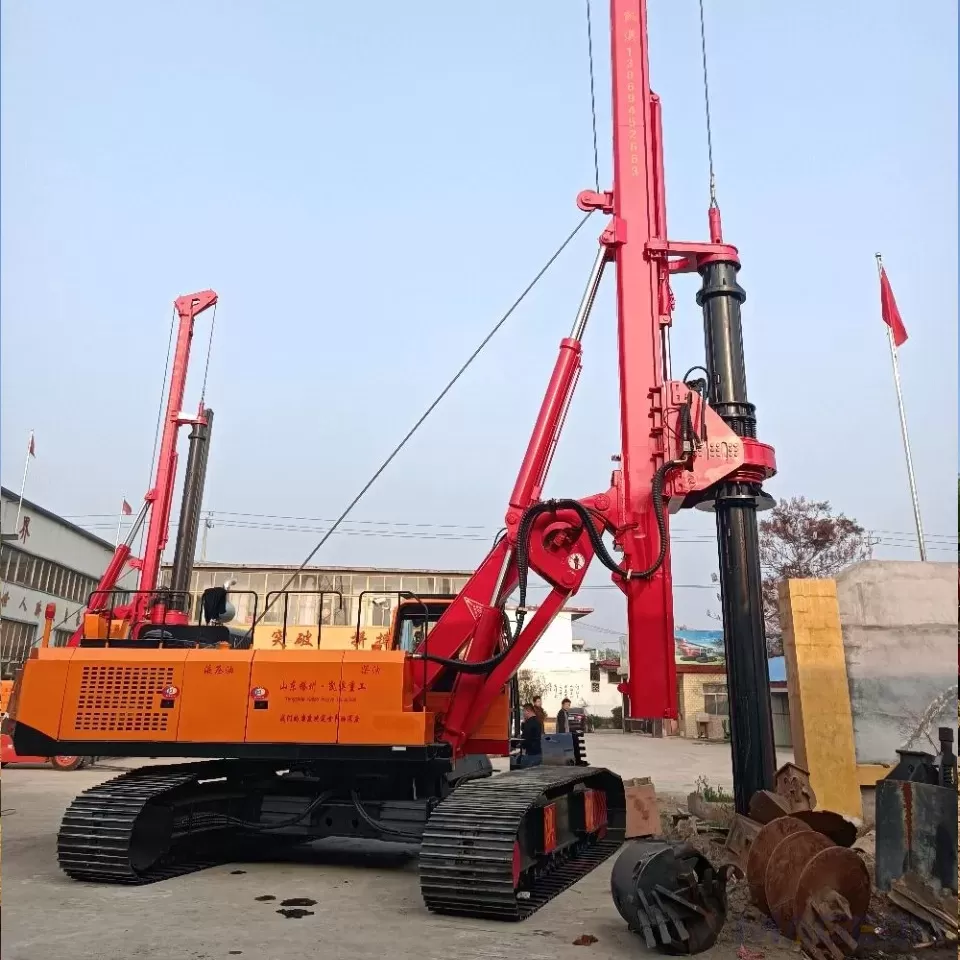
4. Drive Sprocket Maintenance
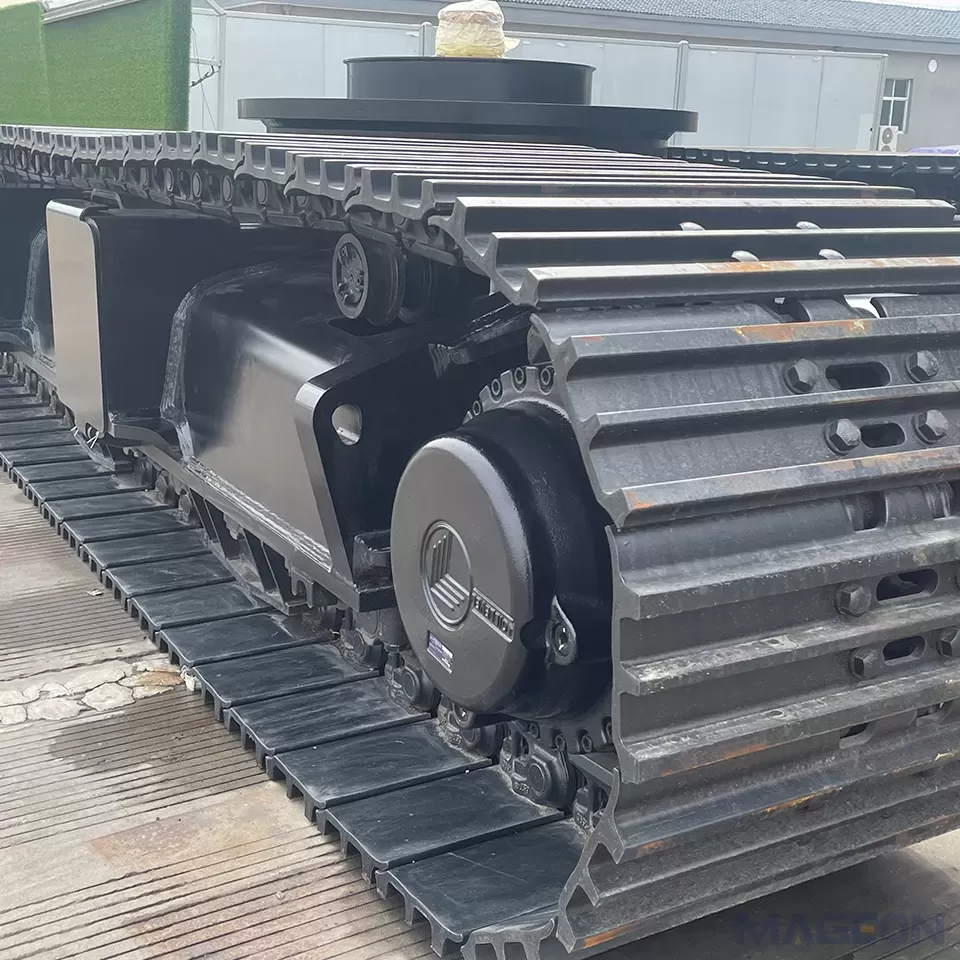
The drive sprocket is located at the rear of the X-frame. Since it is directly fixed and installed on the X-frame, it has no shock absorption function.
Travel orientation requirement: If the equipment travels with the drive sprocket at the front, it will not only cause abnormal wear to the drive ring gear and track chain, but also have adverse effects on the X-frame, which may lead to early cracking of the X-frame. Always keep the drive sprocket at the rear during travel.
Travel motor guard plate maintenance: The travel motor guard plate protects the motor, but mud and gravel can also enter the internal space, which will wear the oil pipes of the travel motor, and moisture in the mud will corrode the pipe joints. Regularly open the guard plate to clean the dirt inside.
5. Track Maintenance
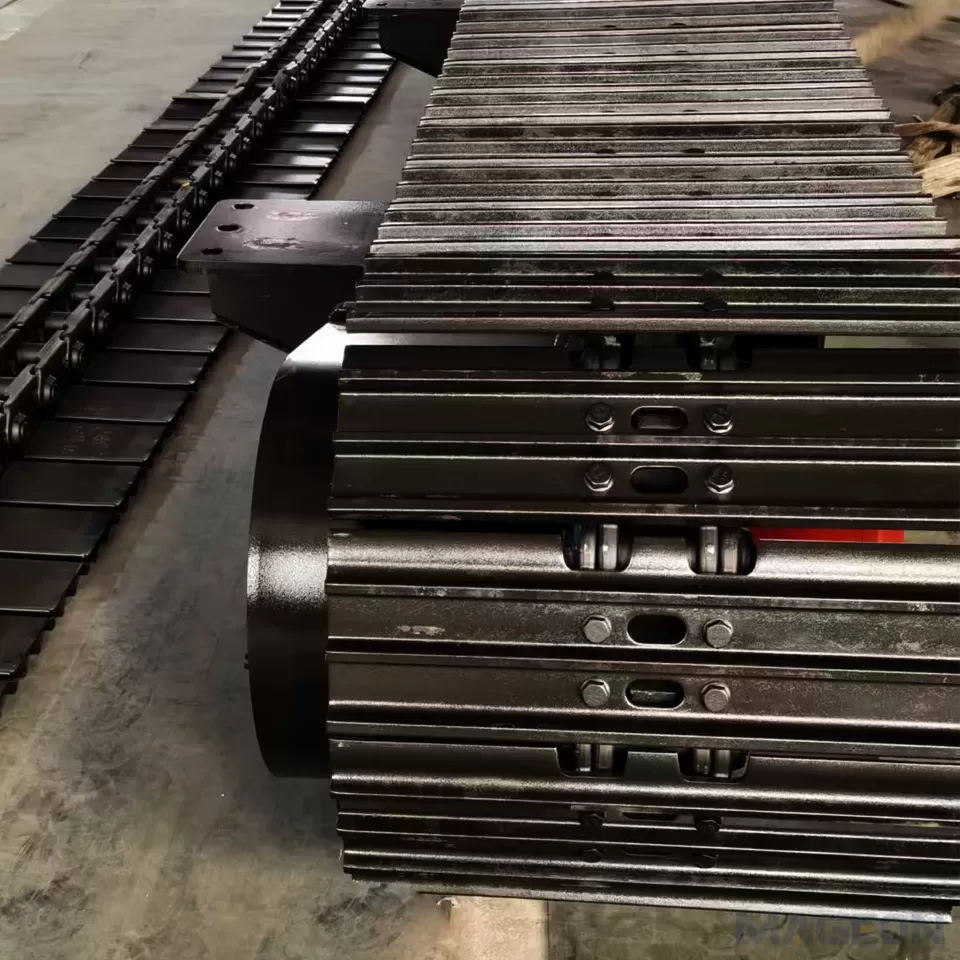
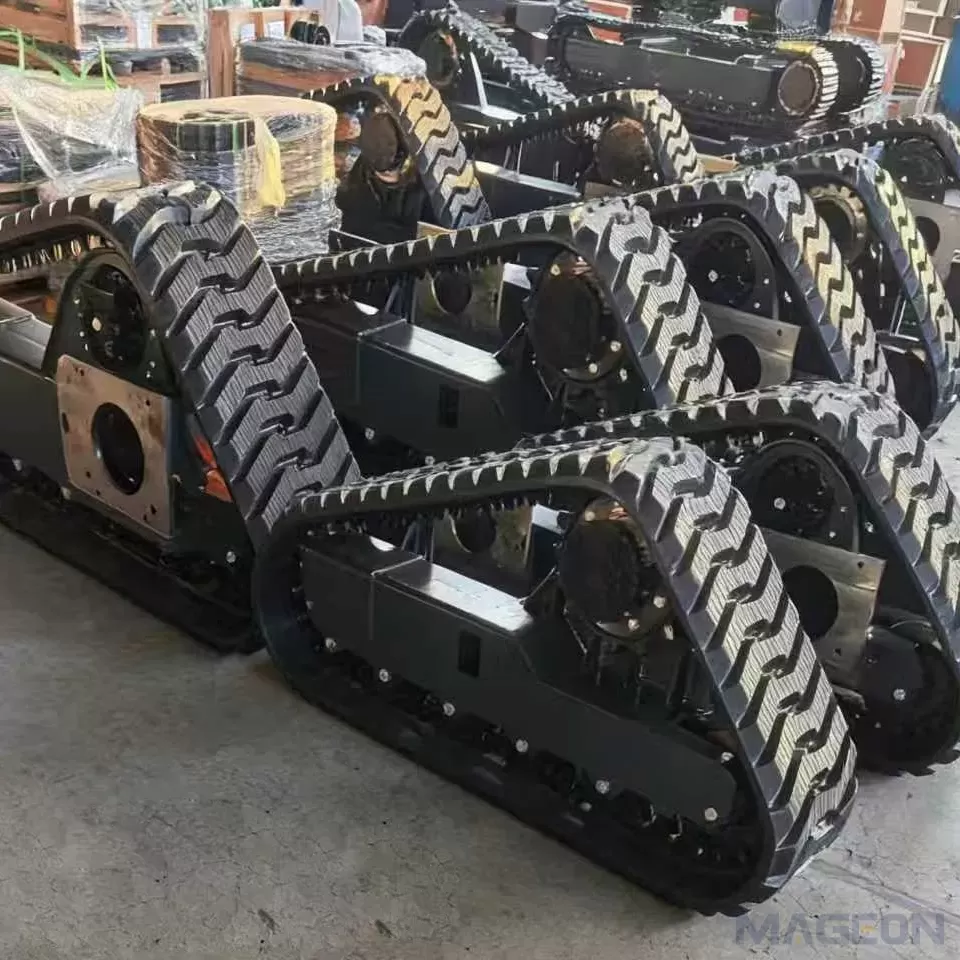
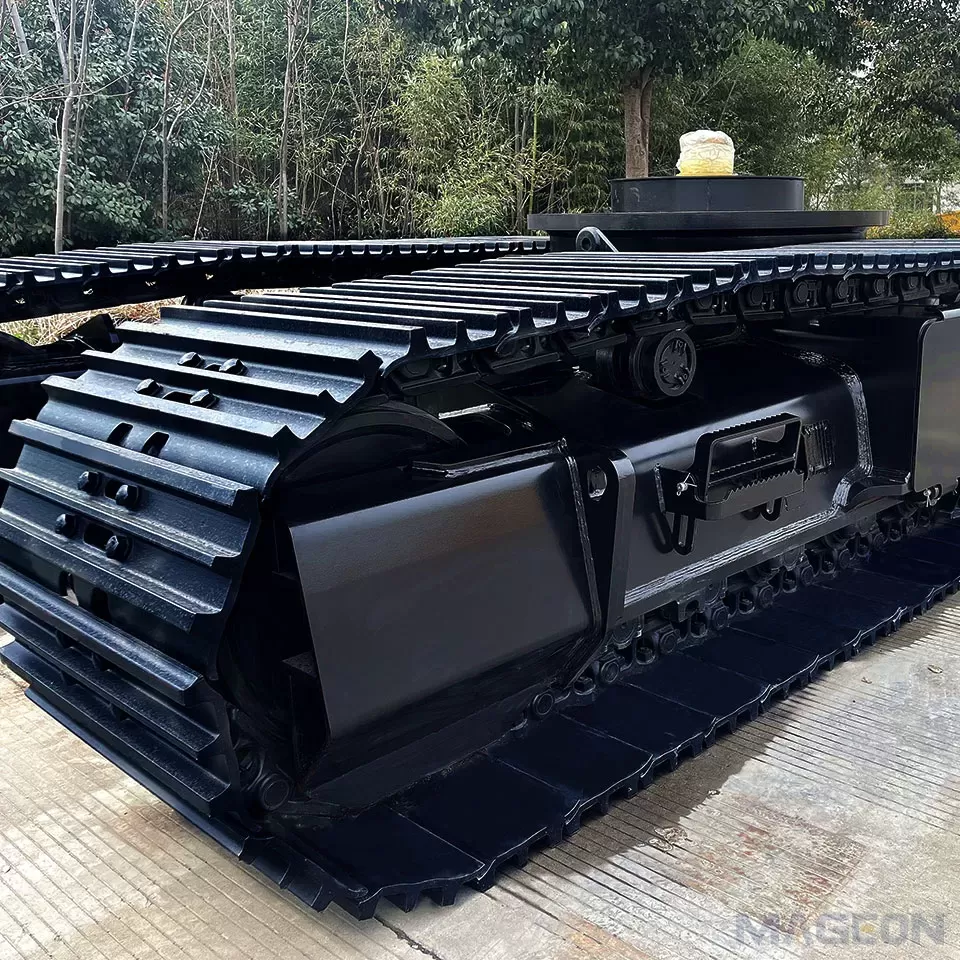
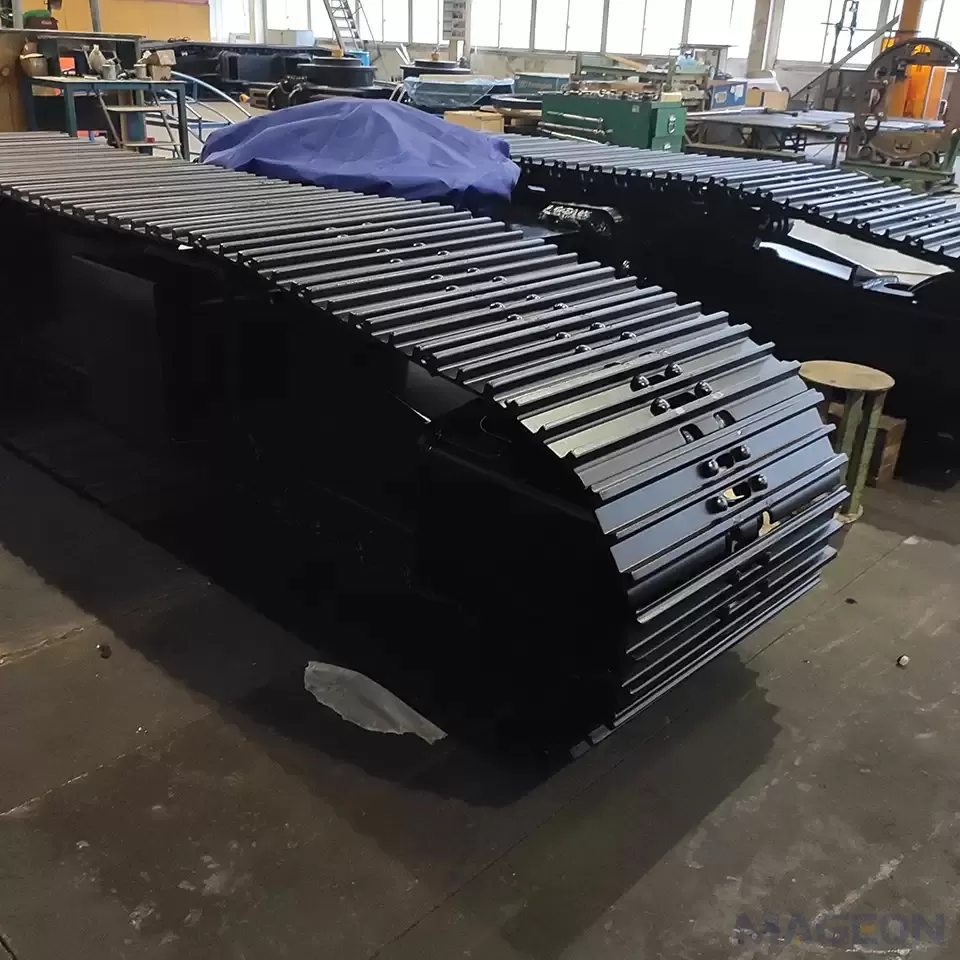
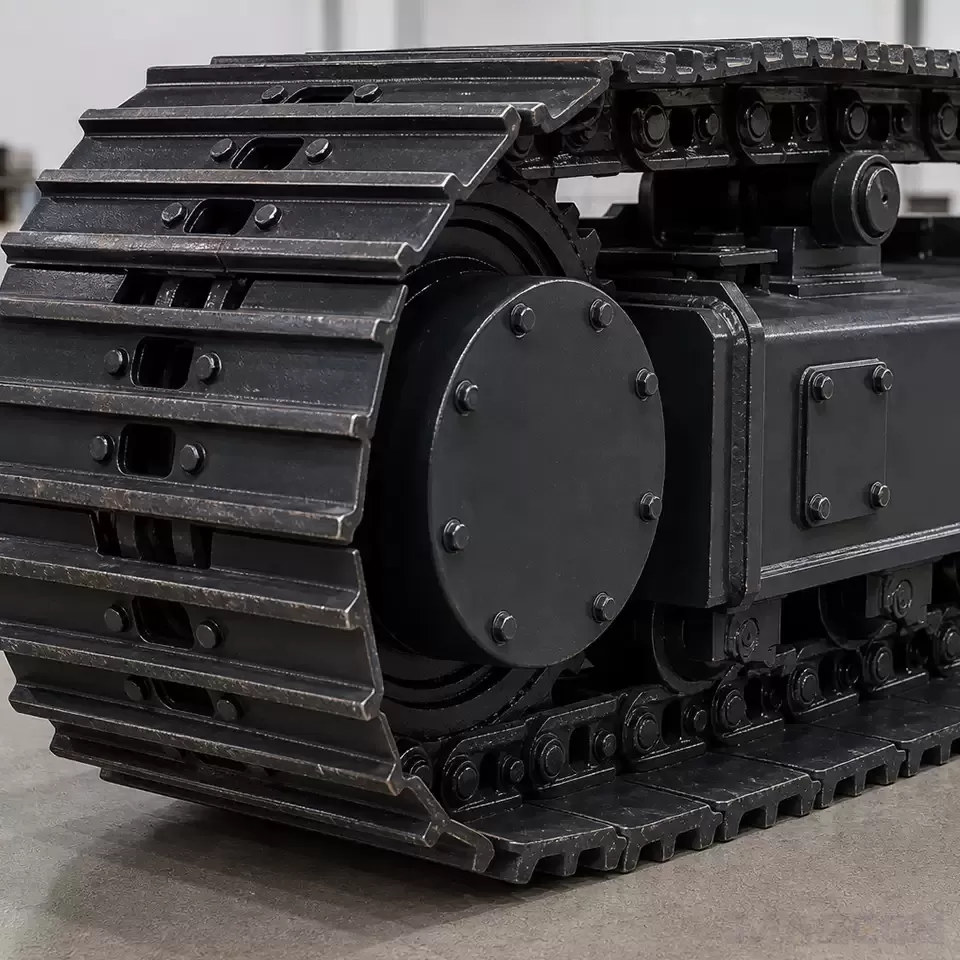
The track is mainly composed of track shoes and track links. Track shoes are divided into standard shoes and extended shoes. Standard shoes are used for earthwork conditions, and extended shoes are used for wetland conditions.
Track shoe protection: Gravel sometimes gets stuck in the gap between two shoes during travel. When it turns to contact the ground, it will squeeze the two shoes, and the track shoes are prone to bending and deformation. Long-term travel will also cause cracking at the bolt fixing positions of the track shoes.
Track chain wear: The track links contact with the drive ring gear and are driven by it to rotate. If the track tension is too tight, it will cause early wear of the track links, ring gear and idler.
Tension adjustment: It is necessary to adjust the track tension according to different construction road conditions. Proper tension can not only ensure traction, but also avoid premature wear of components.
Summary
Scientific maintenance of crawler chassis components is a low-input and high-return management measure. Standardized implementation of the above five maintenance points can effectively reduce the failure rate of the "four wheels and one track" system, extend the overall service life of the crawler track undercarriage, and significantly reduce the full-life-cycle operation cost of equipment. MAGEON provides not only high-quality undercarriage products and spare parts, but also professional maintenance technical guidance to help customers build a complete equipment management system.
Frequently Asked Questions
Q: What does "four wheels and one track" refer to in an excavator undercarriage?
A: "Four wheels and one track" is a collective term for the core traveling components of crawler chassis, including track rollers (supporting wheels), carrier rollers (upper rollers), idlers (guide wheels), drive sprockets, and the track chain assembly. These components cooperate to complete load bearing, guidance, power transmission and walking functions.
Q: Why do track rollers often leak oil?
A: Track roller oil leakage is usually caused by seal damage. Long-term immersion in muddy water will accelerate seal aging; in winter, water entering the seal freezes and scratches the sealing surface during movement; severe wear of the bearing will also cause seal failure. Regular cleaning and avoiding long-term water immersion can effectively extend the sealing life.
Q: Can oil-leaking carrier rollers be repaired by refilling oil?
A: No. Carrier rollers adopt a one-time oil injection sealing structure. Once oil leakage occurs, it means the sealing structure has been damaged. Simply refilling oil cannot restore the sealing performance, and it will still leak quickly. It is recommended to replace the entire carrier roller in time.
Q: Why should the idler be kept at the front during travel?
A: Keeping the idler at the front makes the track enter the meshing state from the guide end, which can reduce abnormal wear of the track chain. At the same time, the tensioning spring behind the idler can better absorb road impact and reduce the impact load on components. If the direction is reversed, it will accelerate chain wear and increase the risk of derailment.
Q: What harm will traveling with the drive sprocket at the front cause?
A: The drive sprocket is directly fixed on the X-frame without shock absorption function. Traveling with the sprocket at the front will cause abnormal wear of the gear ring and track chain, and the impact force will be directly transmitted to the X-frame, which may lead to early cracking of the X-frame structure in the long term.
Q: How to judge whether the track tension is appropriate?
A: The common judgment method is: lift the middle position of the upper track, and the natural sag distance of 20–30mm is appropriate. Too loose will increase the risk of derailment, and too tight will accelerate the wear of pins, bushings, rollers and sprockets. It should be adjusted according to different working conditions.
Q: Why should the travel motor guard plate be cleaned regularly?
A: Although the guard plate protects the motor, mud and gravel will enter the internal space during operation. The gravel will wear the outer wall of the oil pipe, and the moisture in the mud will corrode the pipe joints. Regular cleaning can avoid premature damage to the hydraulic pipeline.
Q: How to prevent track shoe bending and deformation?
A: Main measures include: avoiding long-term travel on gravel roads where stones are easily caught between shoes; regularly cleaning gravel embedded in the track gaps; checking the tightness of track shoe bolts regularly to avoid loosening; and replacing severely deformed shoes in time to avoid affecting adjacent components.
Q: How often should undercarriage components be inspected?
A: It is recommended to carry out basic appearance inspection and cleaning every day after work; check the sealing condition of rollers and idlers and track tension every week; carry out comprehensive wear measurement and bolt re-tightening every 500 working hours. Winter construction shall increase the frequency of inspection for dryness and sealing.
Q: What are the benefits of standardizing undercarriage maintenance?
A: Standardized maintenance can extend the overall service life of the undercarriage by more than 30%, significantly reduce the frequency of unplanned downtime and spare parts replacement, and effectively reduce the full-life-cycle operation cost of equipment. It is a low-input and high-return equipment management measure.
Applicable products:
Compatible Equipment & Product Applications
This maintenance guide applies to all types of crawler construction machinery. Main compatible models include:
All tonnage hydraulic crawler excavators
Rotary drilling rigs and piling machinery
Bulldozers and crawler loaders
Crawler cranes and heavy lifting equipment
Special crawler engineering vehicles
Please leave your customization requirements, and we will contact you as soon as possible!
Leave your requirements, we'll get back to you within 24 hours.