Why Is Balanced System Wear More Important Than Maximizing the Life of One Undercarriage Component?
Balanced system wear matters because a crawler undercarriage is a set of contacting and load-carrying components, not a collection of independent wear parts. Extending the life of one component can be useful, but it does not by itself improve the service life, maintenance timing, or operating cost of the complete undercarriage. The other components, their contact relationships, the machine duty profile, and the inspection strategy must still be compatible.
Public OEM materials available in 2026 provide examples of this approach, not a universal design or wear ratio. This article separates brand-specific evidence, project interpretation, and conclusions requiring engineering confirmation.
What Does Balanced System Wear Mean in a Crawler Undercarriage?
Balanced wear does not mean that the track chain, sprocket, idler, track rollers, carrier rollers, and track shoes must reach the same wear percentage at the same time. It means that their expected wear lives, contact conditions, inspection points, and replacement plans are coordinated for the intended machine and duty cycle.
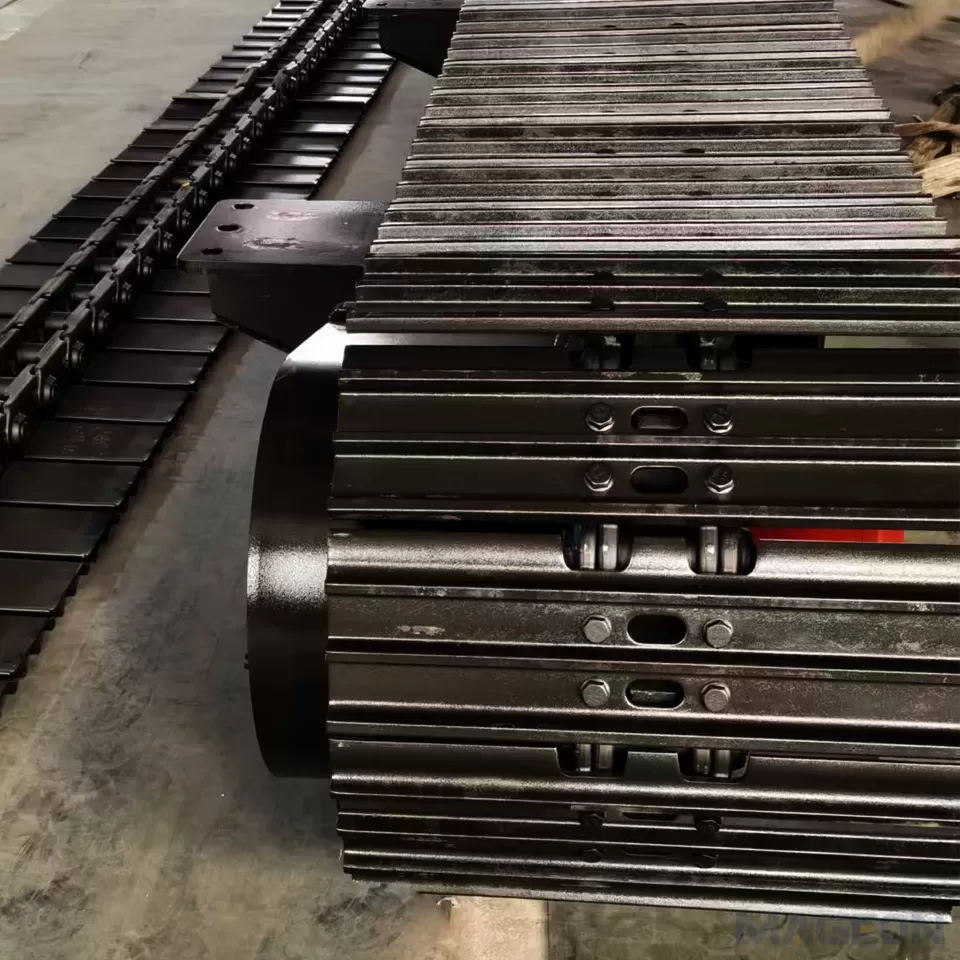
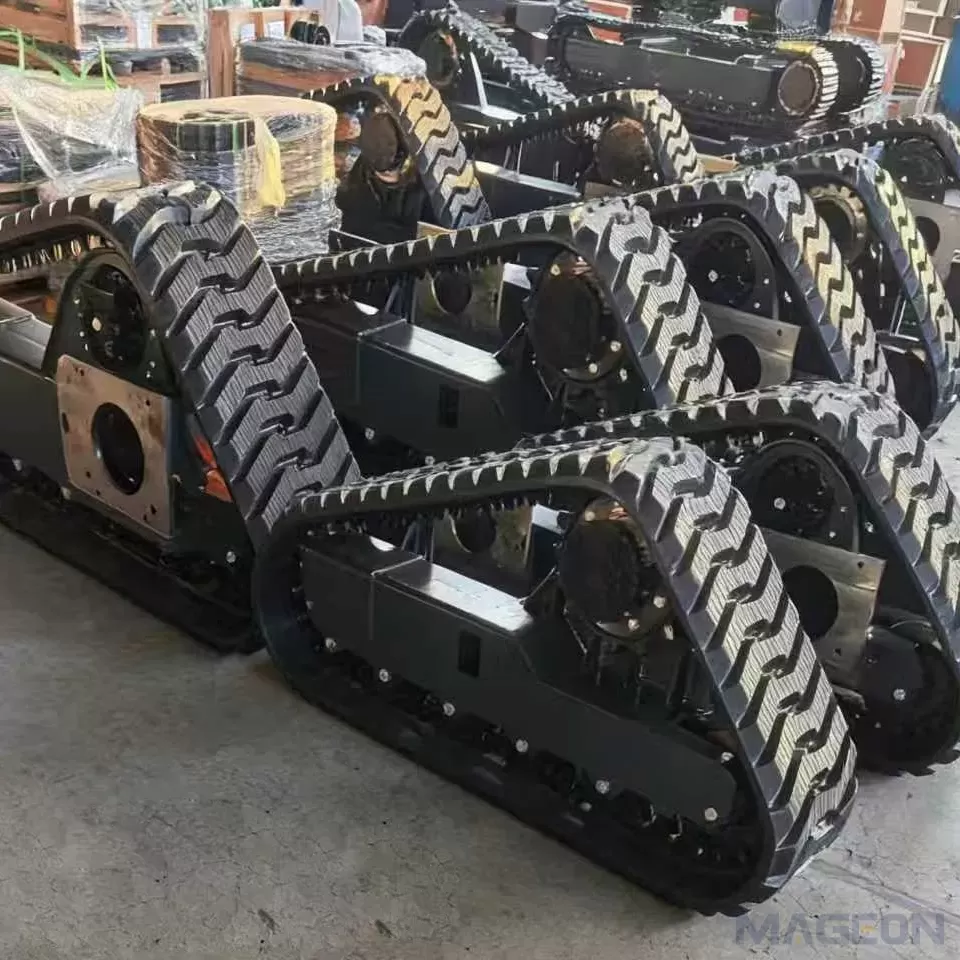
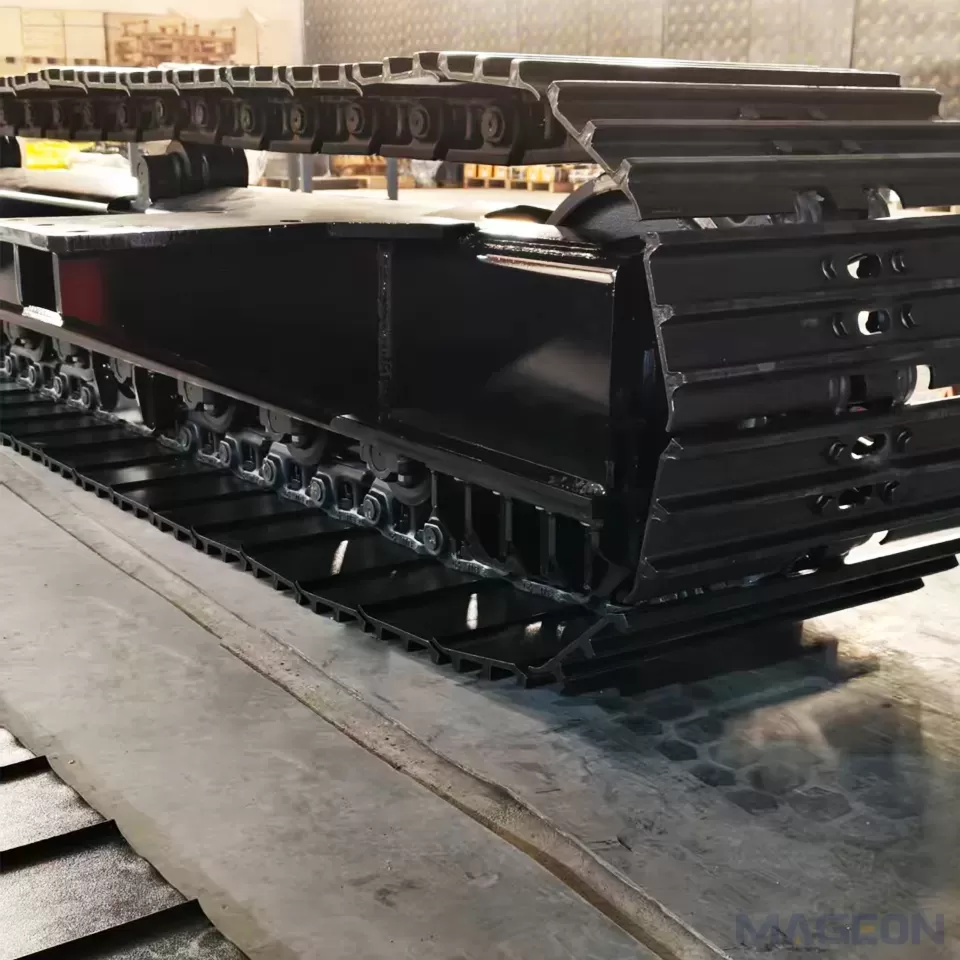
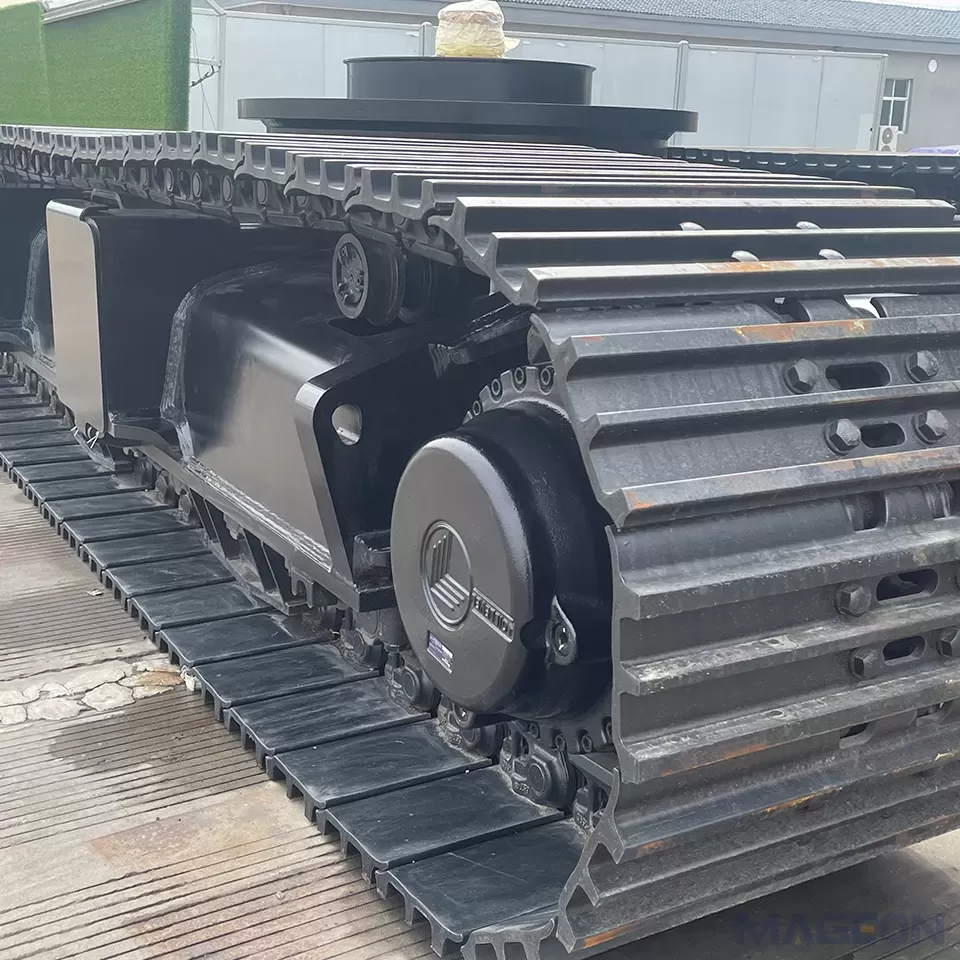
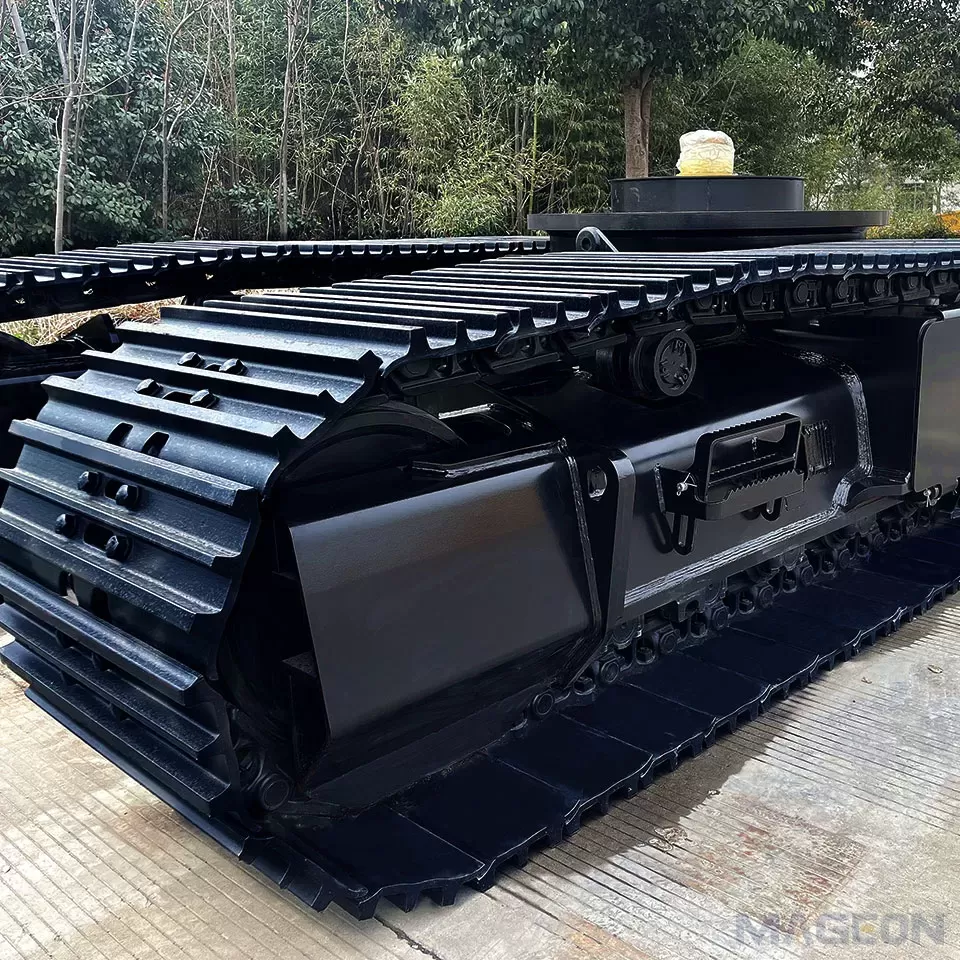
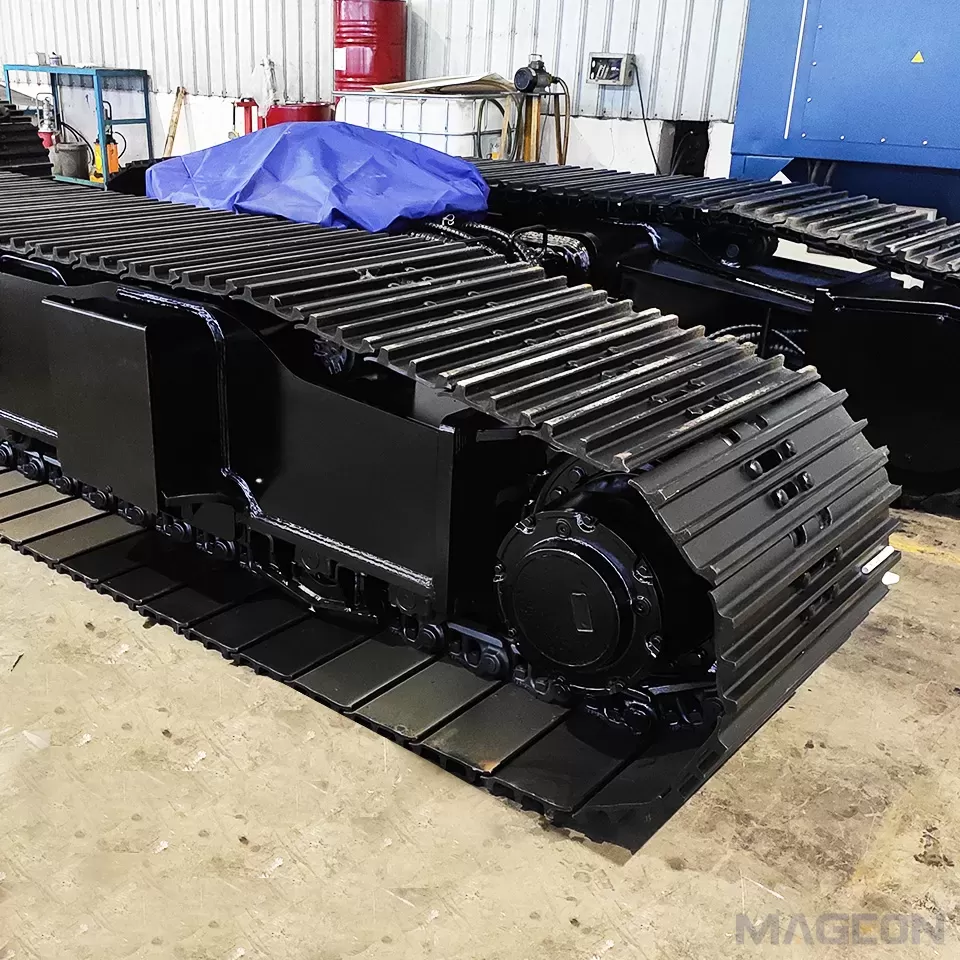
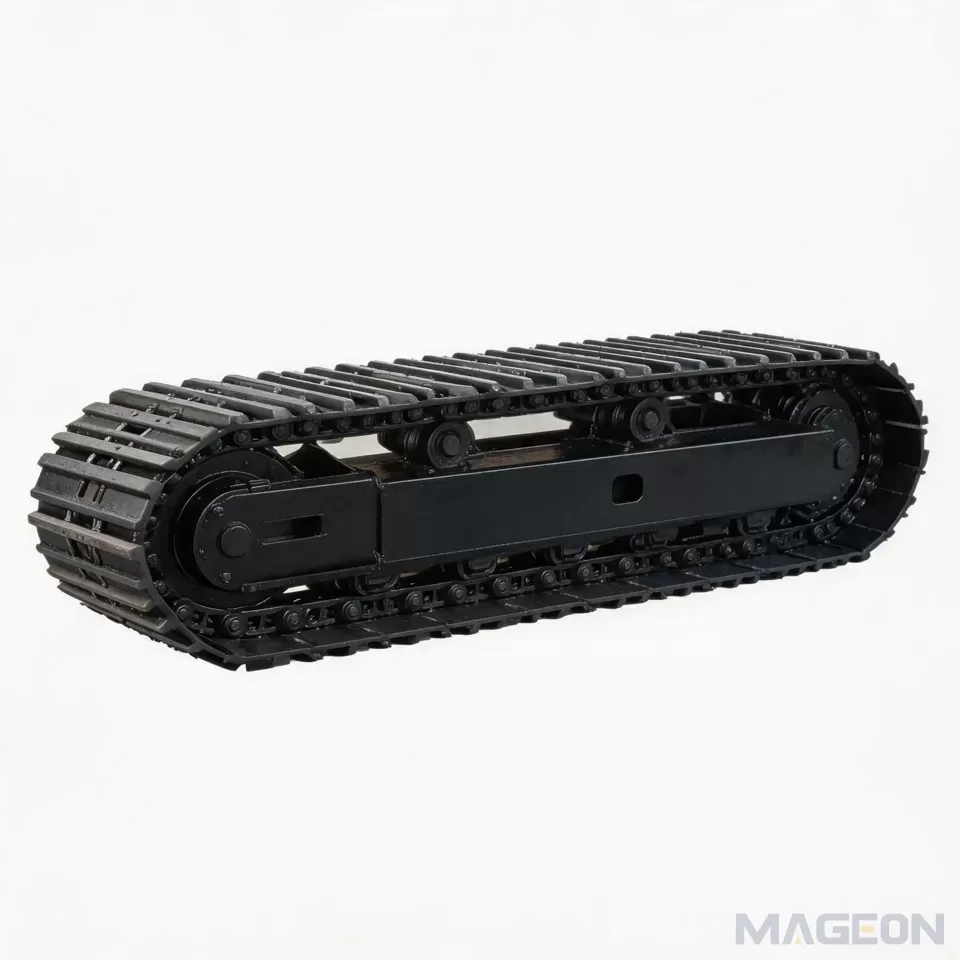
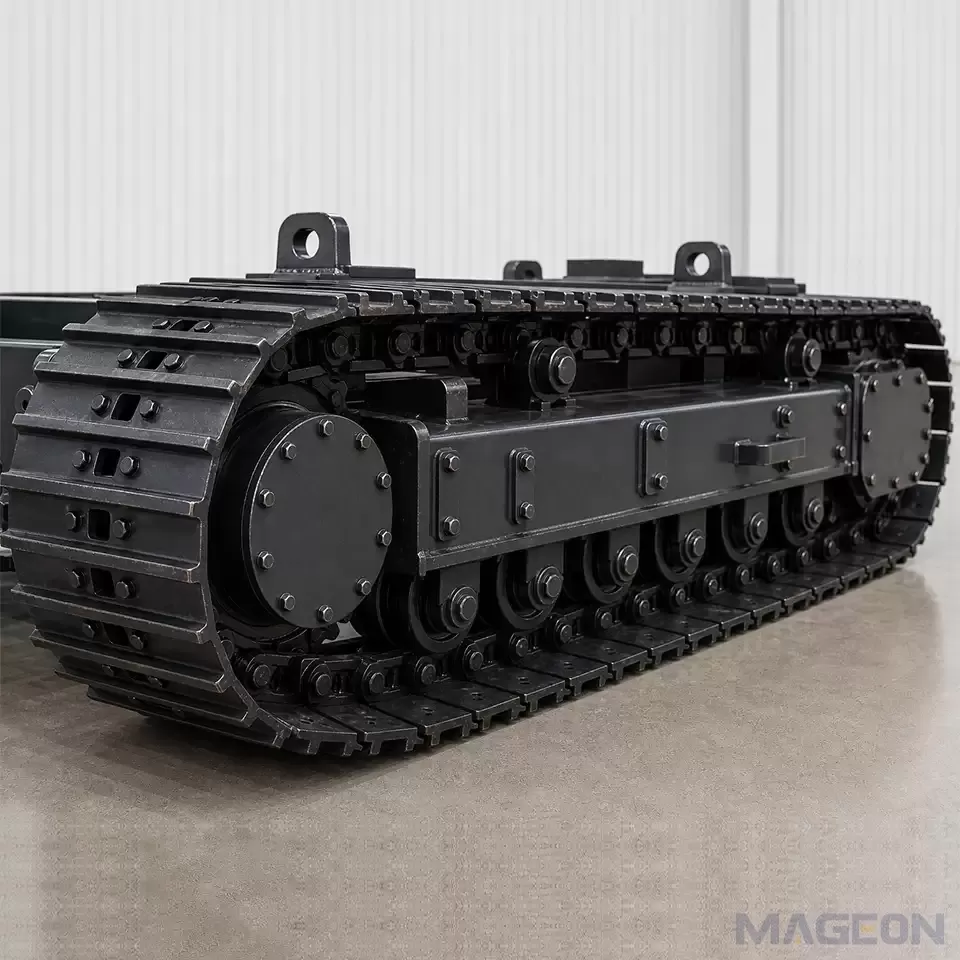
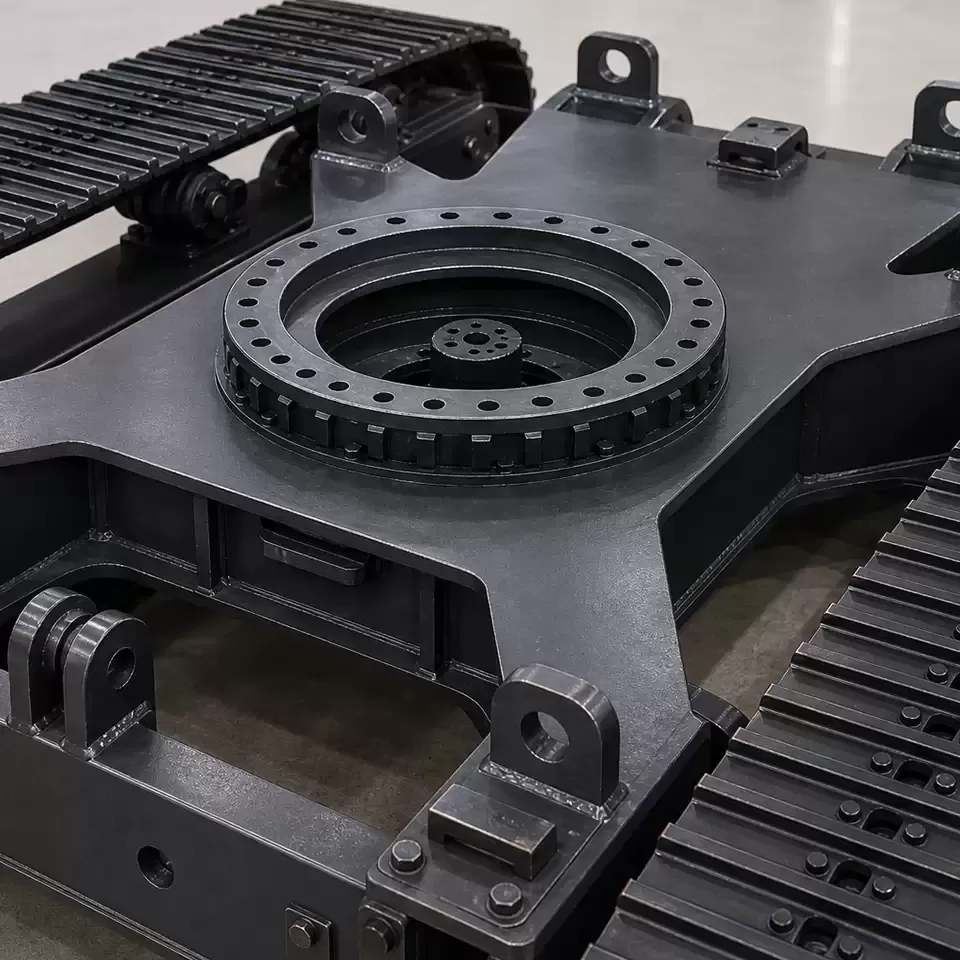
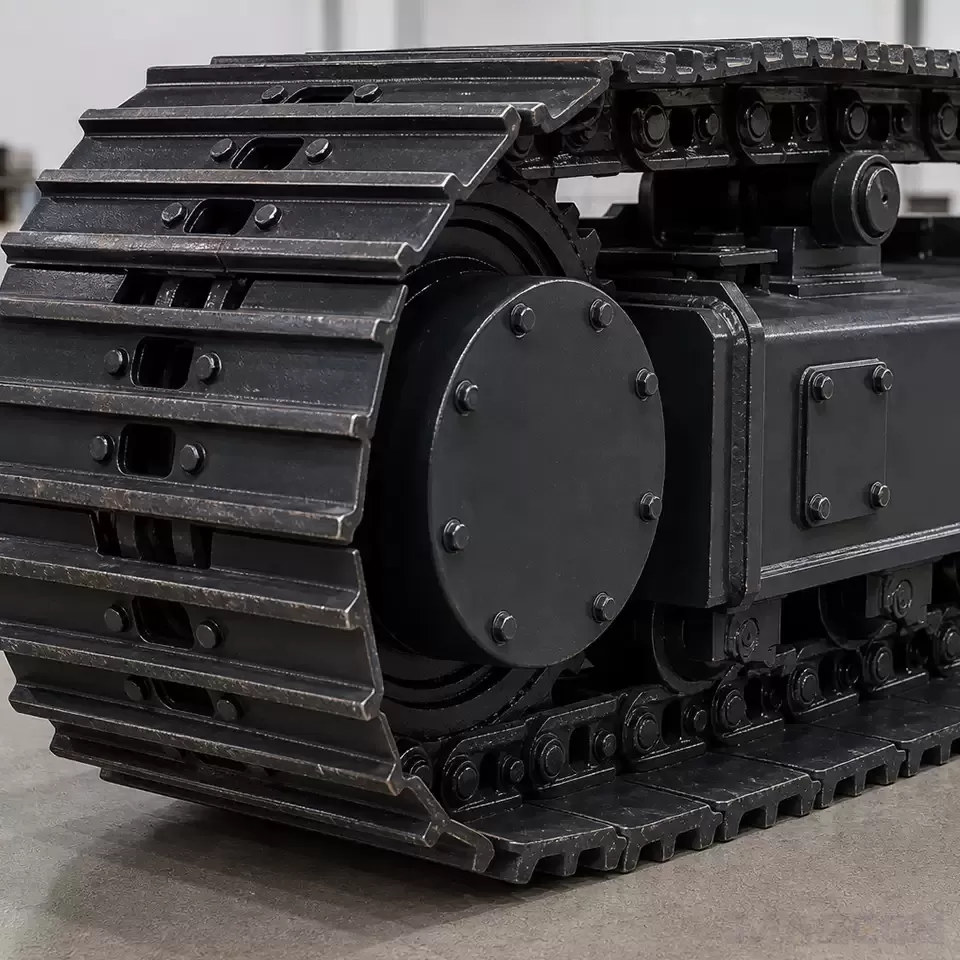
This coordination matters because the track loop transfers load and motion through several interfaces. The chain runs over the rollers and idler, engages the sprocket, and supports the shoes that contact the ground. A change in one part can affect the loads, clearances, alignment, or maintenance decisions associated with another part. The objective is not mathematical equality; it is a predictable system in which no avoidable mismatch becomes the dominant constraint.
For an OEM, crawler undercarriage wear balance is therefore a design and lifecycle question. It should be addressed during equipment definition, supplier evaluation, commissioning, inspection, and replacement planning.
Why Can Maximizing One Component's Life Create a System-Level Mismatch?
A longer-life component can shift the limiting point elsewhere in the system. If one contact surface, bushing arrangement, roller, or seal system is changed, the expected maintenance window for related parts may also change. The result may still be positive, but the decision cannot be evaluated from the modified part alone.
Likewise, sprocket-to-track-chain engagement links pitch, contact, alignment, wear state, and replacement compatibility. Improving one member of that contact pair does not remove the need to verify the other member. A crawler track roller layout should be reviewed as part of the load-path and contact assessment, not as an isolated packaging choice.
The table below shows the difference between a component-only question and a system-level decision. It is an evaluation framework, not a source of universal wear limits.
| Single-component question | System-level question | Confirmation boundary | |
|---|---|---|---|
| Wear life | How long can this part remain in service? | Which component is expected to become limiting, and what happens to the related contacts? | Requires project duty and inspection evidence |
| Maintenance | Can this part reduce one service task? | Does the change alter inspection, adjustment, or replacement timing elsewhere? | Follow approved service procedures |
| Compatibility | Does the part fit dimensionally? | Are geometry, contact, load path, and wear state compatible across the assembly? | Requires controlled drawings and engineering confirmation |
| Cost | Is the individual part more durable? | What is the effect on planned downtime, usable component life, and replacement scope? |
This distinction also prevents a common purchasing error: treating a higher component specification as automatically better. Extra wear material, a different bushing concept, or a longer nominal life may be valuable only when it supports the actual operating conditions and the rest of the undercarriage.
What Do Current OEM Undercarriage Designs Reveal?
Current public OEM examples show that system-level wear is an explicit design and product-planning concern.
Caterpillar states that its excavator undercarriage is designed to work and wear as a system. Its OEM Solutions material also says application demands are used to design the undercarriage as a system, with machine weight, application, operating speed, environment, and job function among the selection considerations. These statements are specific to Caterpillar's products and methods, but they demonstrate that component life is evaluated within an application context.
John Deere's current 450 P-Tier and 550 P-Tier product materials describe several undercarriage options intended to balance component wear. The same material links extended bushing life with the ability to use more of the wear life available in other undercarriage parts. This is a brand-specific product example, not evidence that one configuration suits every crawler machine.
Komatsu's D85 product brochure provides an especially direct example. In its PLUS description, Komatsu explains that after extending rotating-bushing life, the wear limits of the link and carrier roller were also increased to maintain balance with that change. The brochure's performance claims apply only to the stated Komatsu models and conditions; the transferable lesson is the need to recheck connected components when one life-limiting element changes.
Taken together, these sources support a restrained observation: several major OEMs publicly describe undercarriage life at the system or balanced-component level. They do not prove a single industry-wide architecture, common wear target, or guaranteed economic result.
Which Variables Control Wear Balance Across the System?
Wear balance is project-specific because the dominant mechanisms change with the equipment and its work. An OEM should organize the variables into four groups.
First, define the duty profile: abrasiveness, impact, packing, moisture, slopes, turning, travel, and speed. A component combination intended for one duty profile may not remain balanced in another.
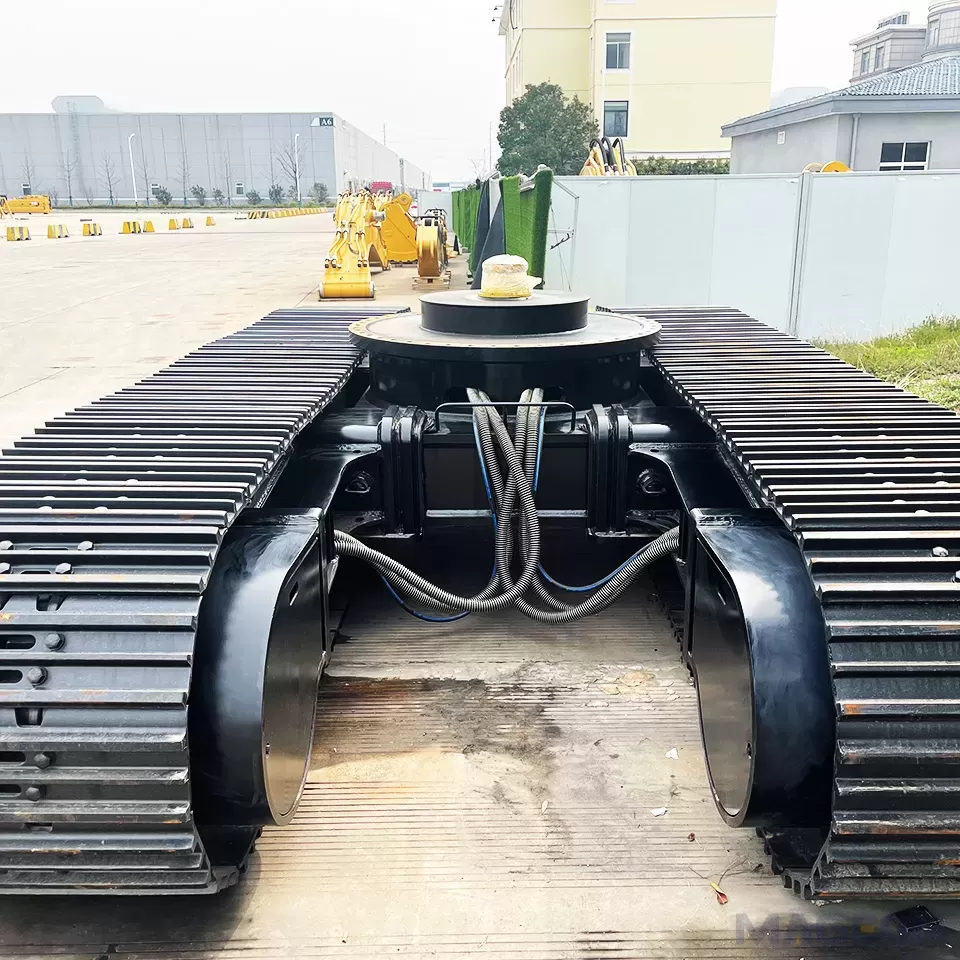
Second, verify component relationships. These include the chain and sprocket contact, the roller and link paths, the idler and tensioning arrangement, track alignment, shoe configuration, and the structural load path into the track frames. Geometry that merely assembles is not necessarily geometry that will wear predictably under load.
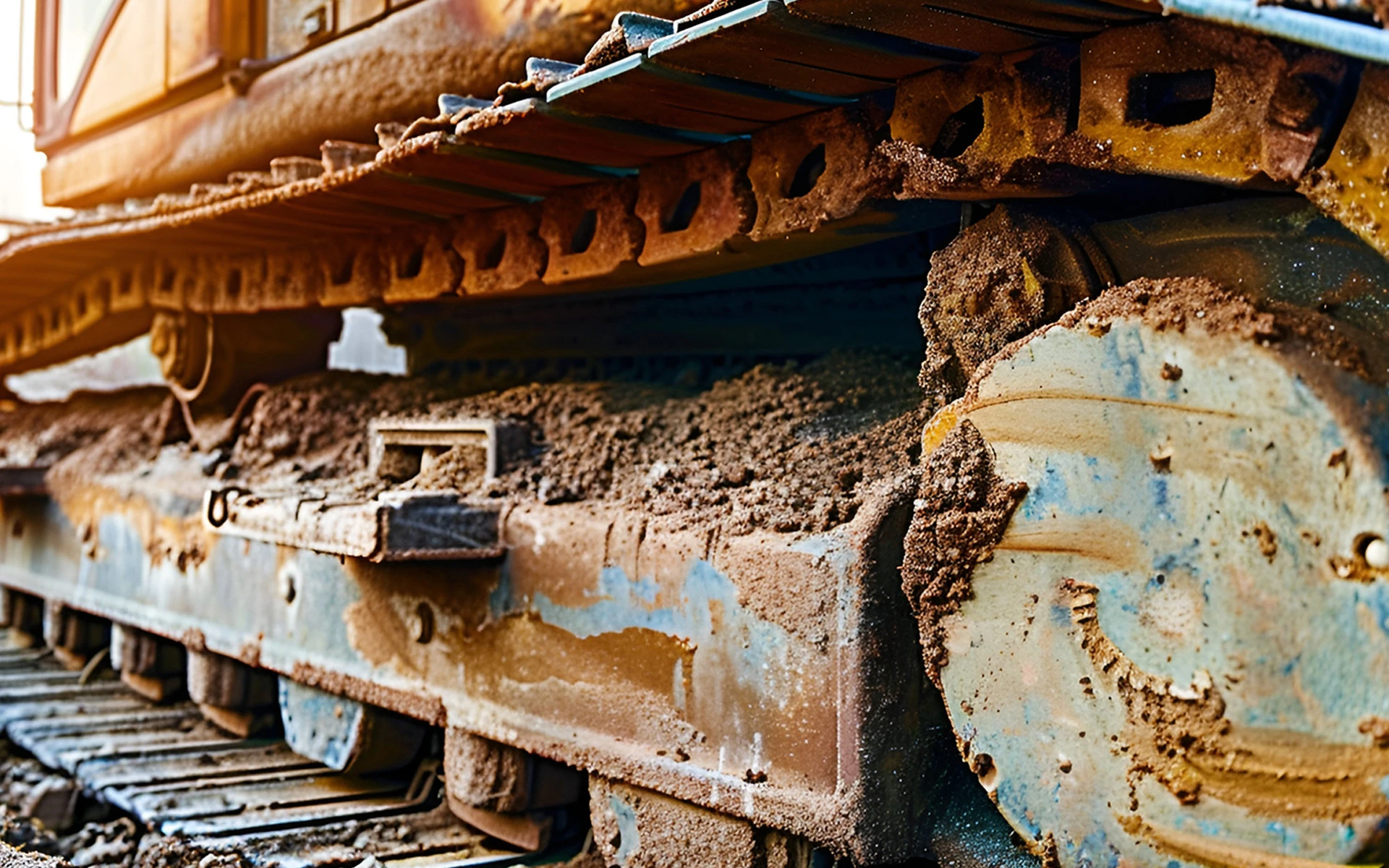
Third, control operation and maintenance. Track tension, cleaning, inspection method, adjustment practice, and operator behaviour can alter the observed wear pattern. Records of abnormal crawler undercarriage wear patterns can show when the original life-matching assumptions no longer fit actual use, but the pattern still needs technical interpretation.
Fourth, define the lifecycle objective. A short project may justify a different replacement strategy from several planned service cycles. Balanced wear should serve the ownership and availability plan.
How Should OEMs Evaluate Wear Balance During Design and Sourcing?
When sourcing complete crawler undercarriage assemblies, OEMs should request the reasoning that connects component selection to the machine duty profile. A useful evaluation asks who owns each input, what evidence will be supplied, and which decision that evidence supports.
| What to verify | Evidence owner | Decision supported | |
|---|---|---|---|
| Machine definition | Mass, load distribution, layout, interfaces, travel task, and operating states | OEM engineering | Undercarriage class and integration basis |
| Duty conditions | Terrain, material, impact, packing, slopes, turning, travel, and maintenance access | OEM and equipment operator | Wear mechanism and service assumptions |
| Component matching | Relevant geometry, contact relationships, adjustment provisions, and planned replacement scope | Undercarriage supplier and OEM | System compatibility and review points |
| Verification plan | Controlled drawings, approved technical data, inspection method, and change control | OEM, supplier, and quality teams | Evidence needed before release |
| Service feedback | Consistent measurements, observed patterns, replaced parts, and operating changes | Operator, service team, and OEM |
The table does not complete an engineering review. Dimensions, materials, hardness, loads, wear limits, and inspection criteria must come from approved drawings, technical data, service documents, or engineering confirmation for the specific project.
Procurement should also distinguish a component warranty or product claim from a system-level result. A supplier can document what a part is designed to do, but the OEM still controls the machine layout, duty definition, integration requirements, and acceptance criteria. Clear responsibility boundaries are as important as the selected parts.
How Should Inspection and Replacement Planning Support Balanced Wear?
Balanced-wear planning needs consistent field evidence. Inspection records should identify the machine, configuration, operating context, measurement method, measured locations, service actions, and any change in duty. Comparing measurements taken with different methods or under poorly recorded conditions can create a false trend.
Replacement decisions should consider the condition of related contact parts, not only the failed or most visibly worn item. That does not mean every component must always be replaced together. It means the retained parts should be assessed for compatibility with the replacement parts and the next planned service interval.
The inspection frequency and removal limits must come from the applicable manufacturer instructions, approved maintenance plan, or engineering decision. A general article cannot define them safely. When wear develops faster than expected, the correct response is to review the evidence and assumptions rather than force the original replacement plan to remain unchanged.
What Are the Limits of a Balanced-Wear Strategy?
Balanced wear is a planning objective, not a guarantee. Unexpected impact, contamination, misalignment, inadequate maintenance, changed attachments, a revised duty cycle, or a damaged component can make one part deteriorate much faster than the rest. Safety, structural damage, leakage, or loss of function may also require action before the planned wear window.
Nor should balance be interpreted as a reason to keep a questionable part in service. The applicable service criteria take priority. The system approach simply ensures that a decision about one component includes the surrounding contacts, operating conditions, and remaining service plan.
The current public OEM evidence supports system-level thinking, but it does not establish a universal formula. Each crawler equipment project still needs controlled inputs, application-specific review, and feedback from actual service conditions.
Frequently Asked Questions
Does balanced wear mean all undercarriage components should be replaced together?
No. It means the condition and compatibility of related parts should be evaluated together. The final replacement scope depends on approved service criteria, measurements, contact conditions, and the next intended service period.
Can an extended-life component be added without changing anything else?
Not safely as a general rule. The OEM should verify dimensions, interfaces, contact relationships, loads, maintenance requirements, and the condition of mating parts before accepting the change.
Which components should be considered in a wear-balance review?
The relevant set normally includes the track chain, sprocket, idler, track rollers, carrier rollers, shoes, tensioning arrangement, and track frame interfaces. The exact review scope depends on the undercarriage architecture and the proposed change.
Does balanced system wear automatically reduce operating cost?
No. It may improve the use of available component life and make maintenance more predictable, but the economic result depends on duty, downtime, parts, labour, inspection quality, and ownership period. Project records are required for a defensible cost conclusion.
What information should an OEM provide for a wear-balance evaluation?
Provide the equipment type, machine mass and load distribution, layout and interfaces, travel task, terrain, abrasion and impact conditions, operating cycle, maintenance plan, and available wear records. Controlled drawings and approved technical data should be used wherever a design or acceptance decision depends on a specific value.
MAGEON is a custom crawler undercarriage manufacturer and supplier whose primary offering is complete crawler undercarriage assemblies. OEMs can provide equipment, load, dimensional, layout, and duty-condition information for technical evaluation or a project inquiry.
Please leave your customization requirements, and we will contact you as soon as possible!
Leave your requirements, we'll get back to you within 24 hours.