What Is a Crawler Undercarriage System?
Project Overview:
This guide provides a systematic introduction to the crawler undercarriage system, covering its basic definition, structural composition, core functions and typical application scenarios. It clarifies the conceptual differences between related industry terms, and details the role of each core component. Intended for construction machinery B2B buyers and engineering practitioners, this guide serves as a practical reference for equipment procurement, daily maintenance and model selection. MAGEON offers both standard and custom configurations to match excavators, drilling rigs, crawler cranes and other heavy equipment.
What Is a Crawler Undercarriage System? Definition, Components & Complete Guide
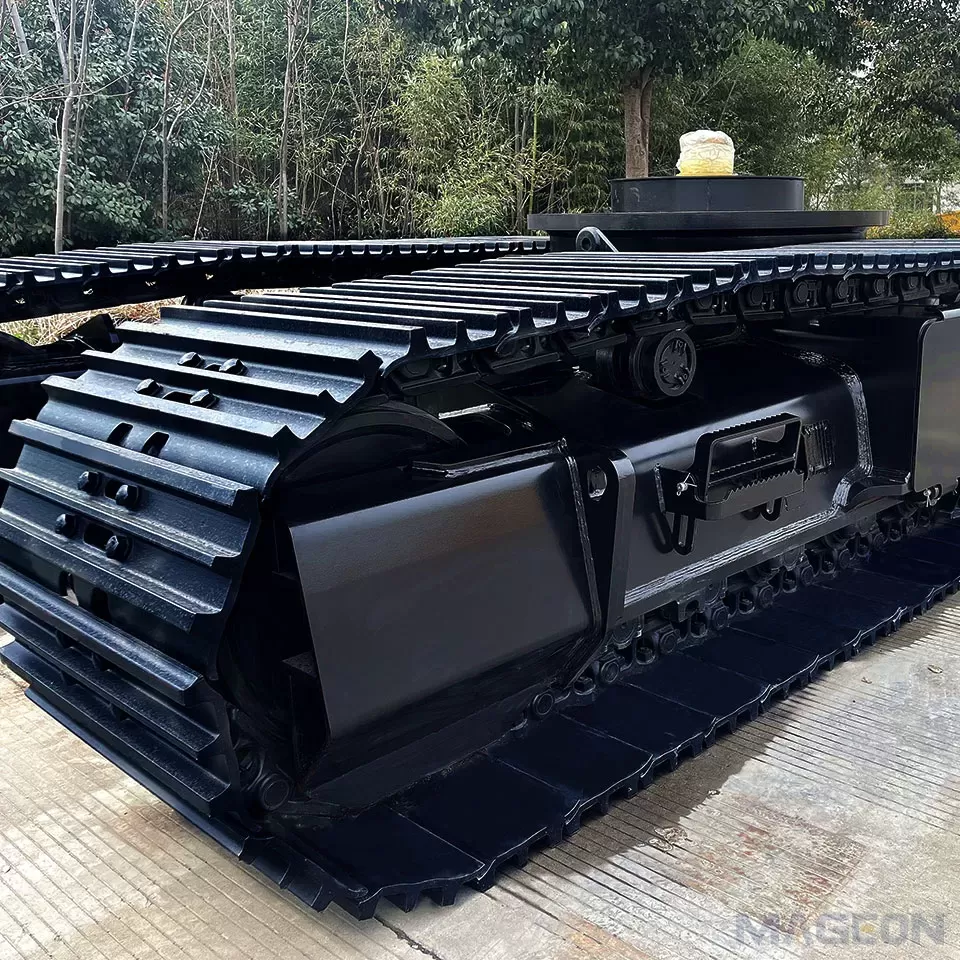
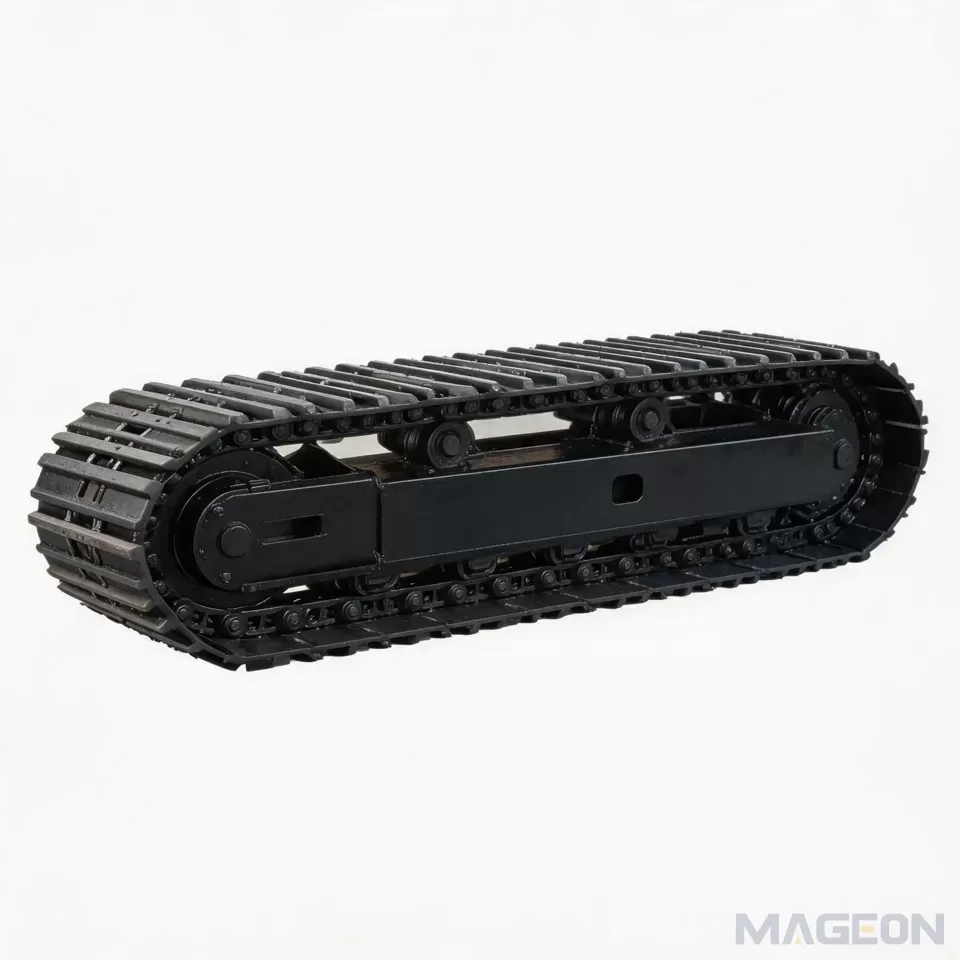
A crawler undercarriage system is the tracked lower structure that supports, moves, and stabilizes heavy machinery. The crawler undercarriage carries machine weight, transfers drive power to the ground, and provides traction on soft, uneven, or low-bearing terrain. It is commonly used on excavators, drilling rigs, crawler cranes, crushers, dozers, piling machines, and other construction machinery.
Unlike a wheeled chassis, a tracked base spreads load across a longer ground contact area. This reduces ground pressure and improves stability during digging, drilling, lifting, or travel on mud, clay, gravel, debris, or slopes.
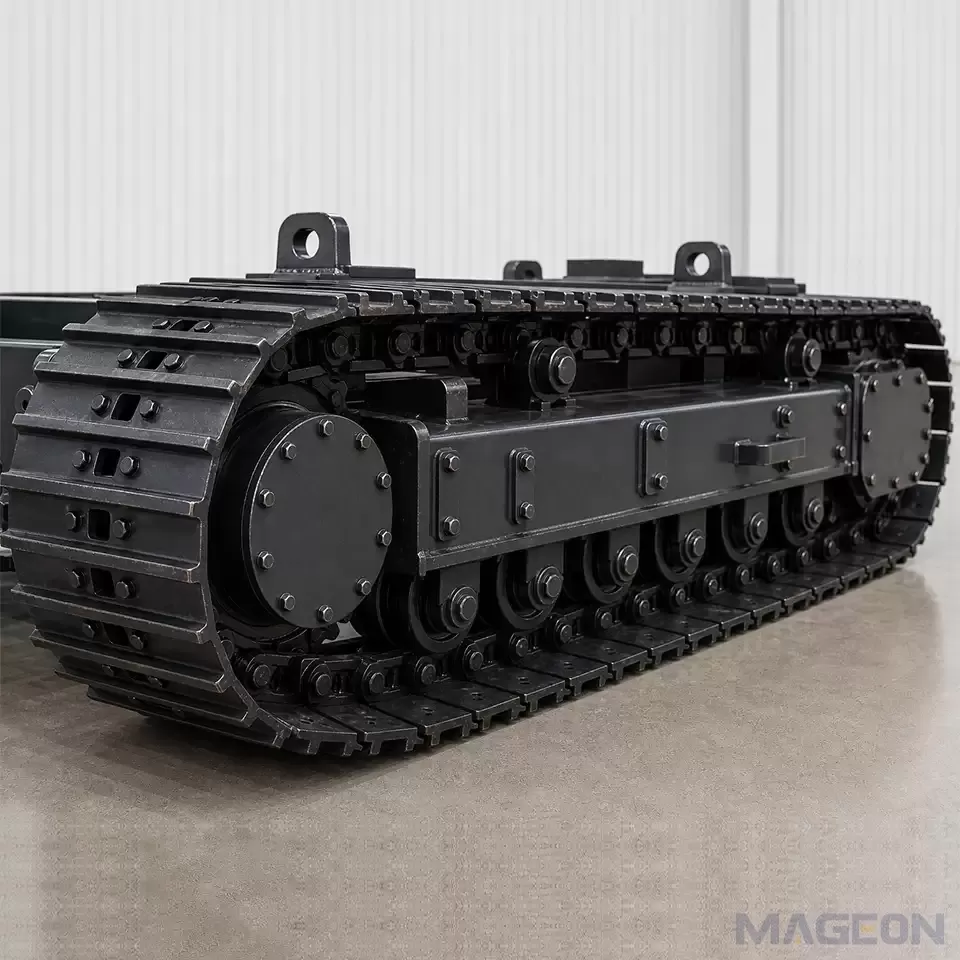
Related terms are often used together. A track chassis usually refers to the lower frame and travel base. A steel track system refers to the moving track group, including chains, shoes, rollers, idlers, and sprockets. The complete system includes the frame, drive parts, and undercarriage components required for reliable movement.
Core Components & Technical Specifications
The complete crawler chassis system consists of a structural frame, track assembly, drive unit and tensioning system. Key components and their functions are outlined below:
| Component Category | Core Parts | Primary Function | Key Performance Indicators |
|---|---|---|---|
| Structural Frame | Welded steel track frame | Load-bearing skeleton; supports all upper components and host equipment | High structural rigidity, torsion resistance, load-bearing capacity |
| Track Assembly | Track chain, track shoes, pins & bushes | Ground-contacting loop; delivers traction and load distribution | Wear resistance, traction force, ground pressure level |
| Roller & Guide Assembly | Track rollers, carrier rollers, front idler | Supports machine weight, guides track alignment, maintains running path | Load capacity, wear resistance, sealing performance |
| Drive Unit | Sprocket, final drive (hydraulic/mechanical) | Converts power into travel motion, transmits torque to track | Torque output, transmission efficiency, durability |
| Tensioning System | Tensioning device, recoil spring, grease adjuster | Maintains optimal track tension; reduces component wear | Self-adjustment capability, shock absorption performance |
Main Components
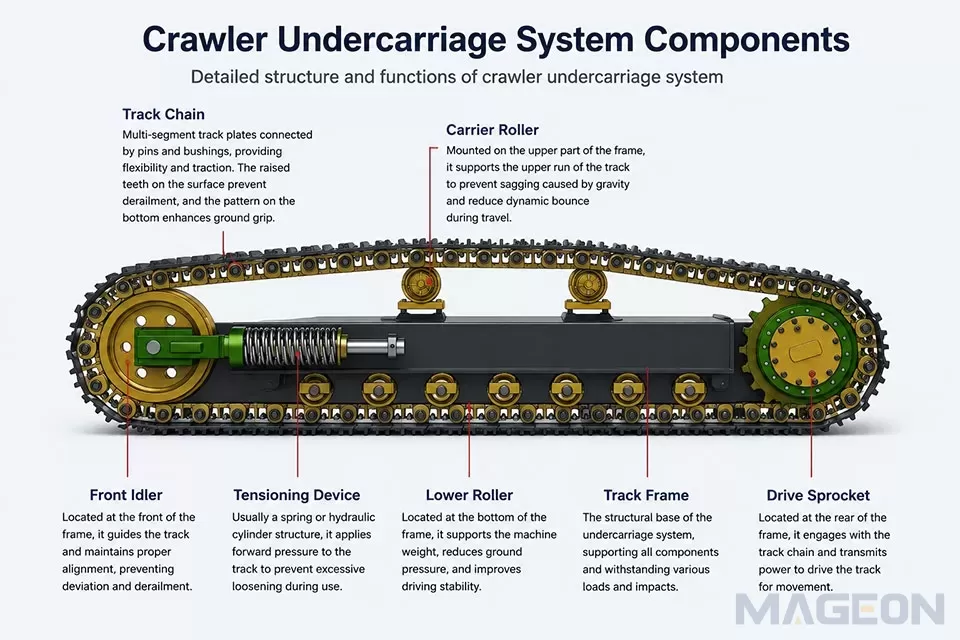
Crawler Undercarriage Components
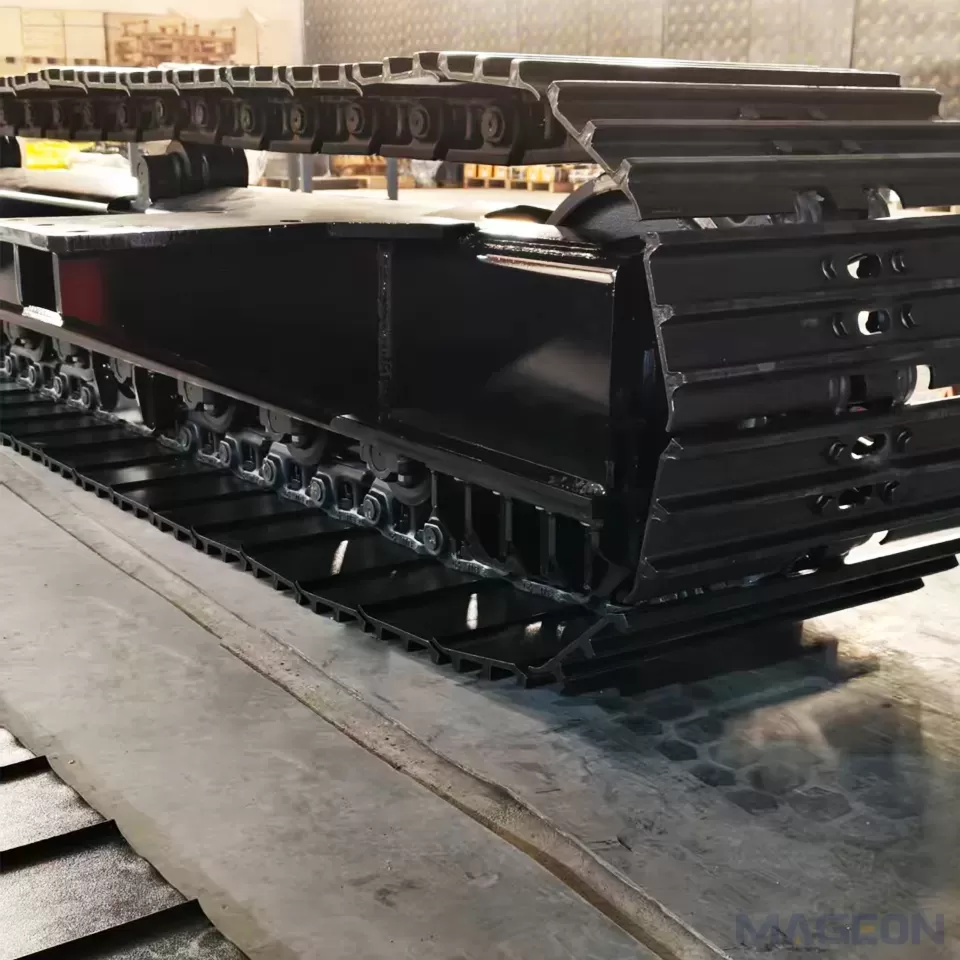
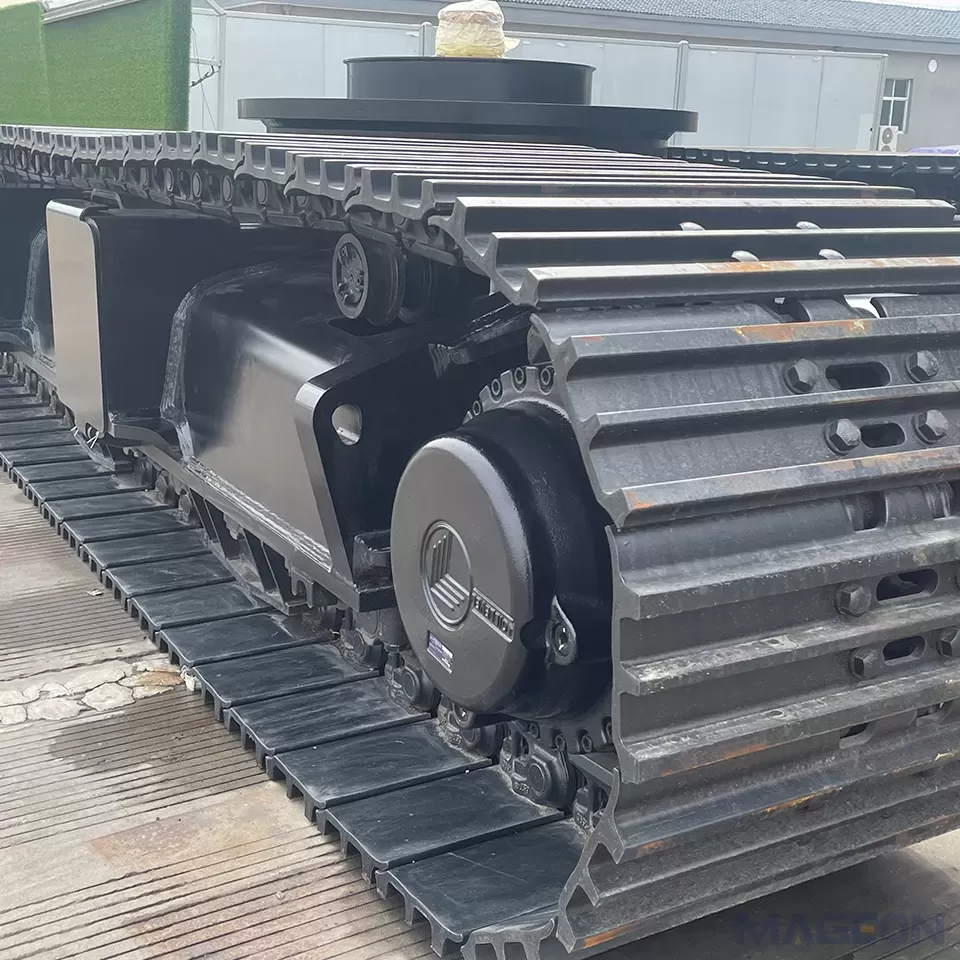
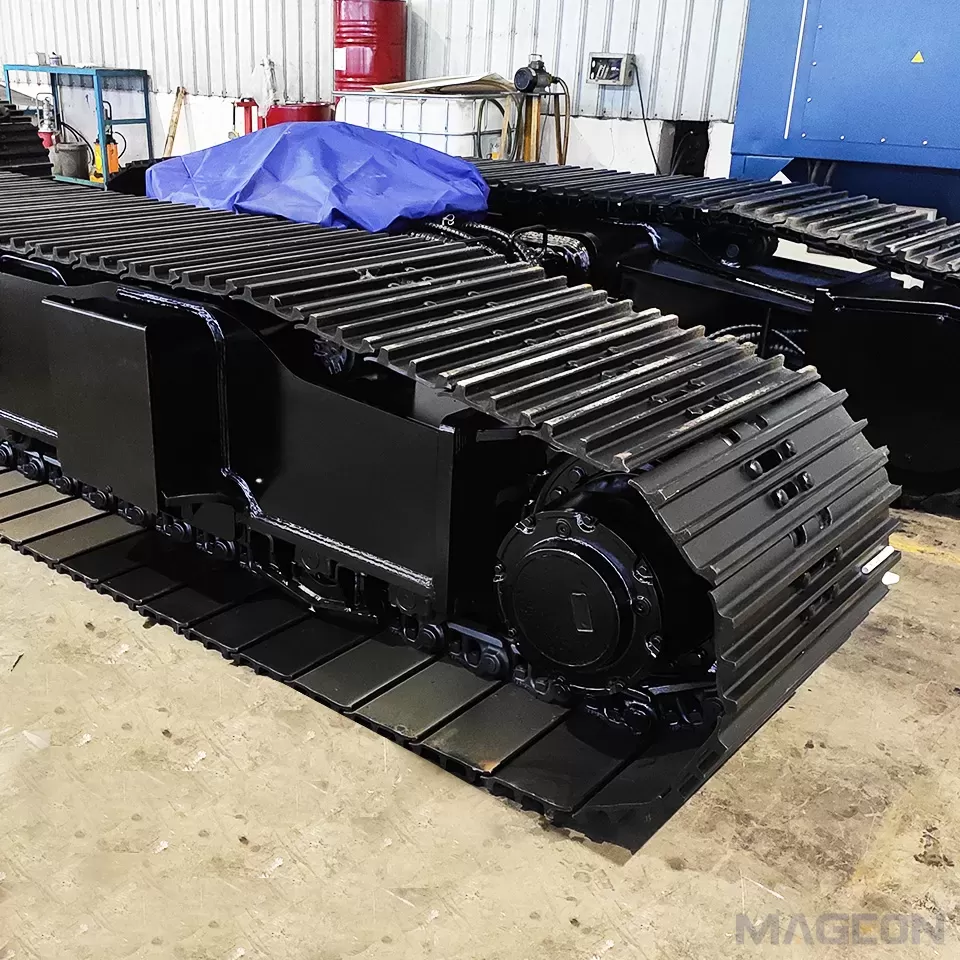
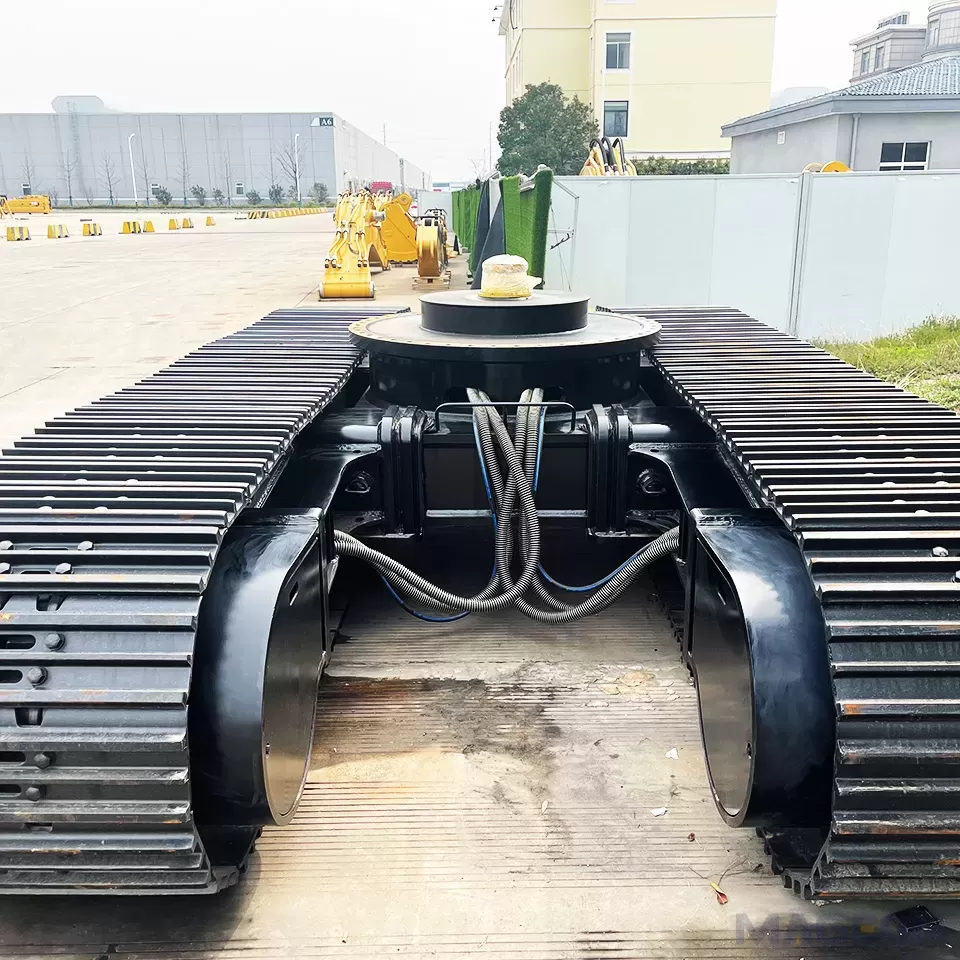
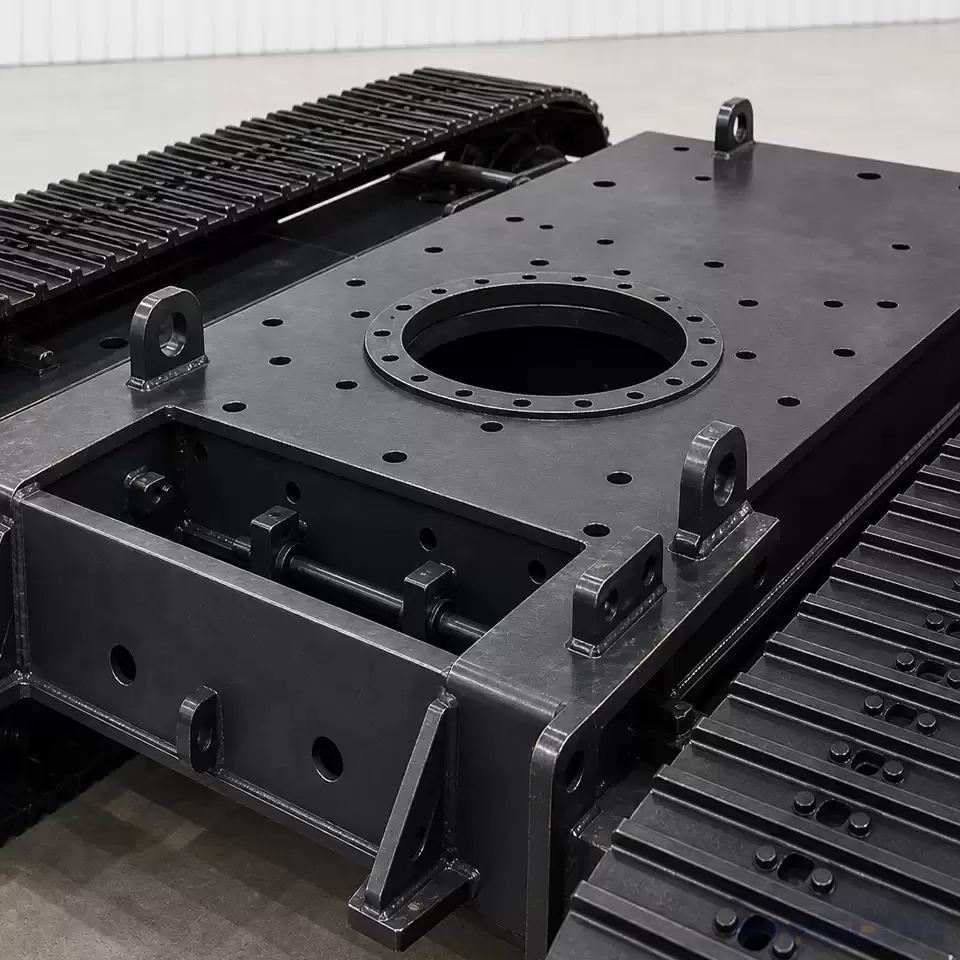
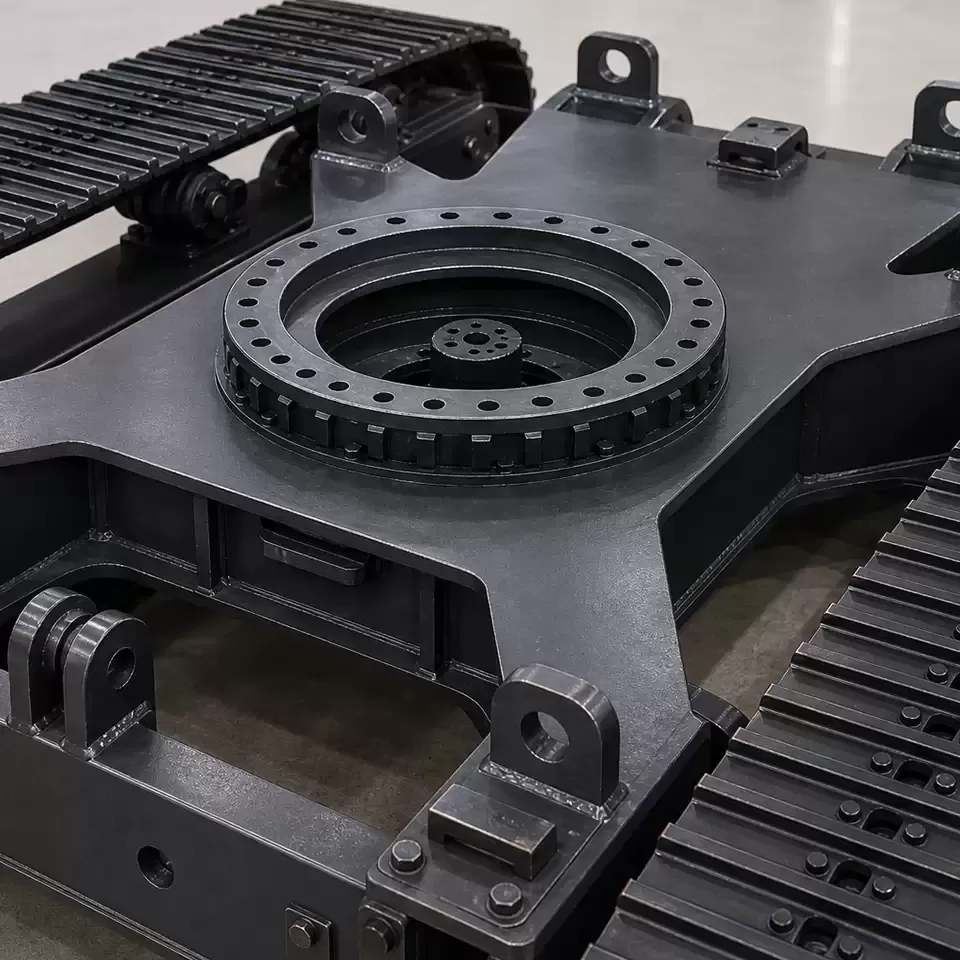
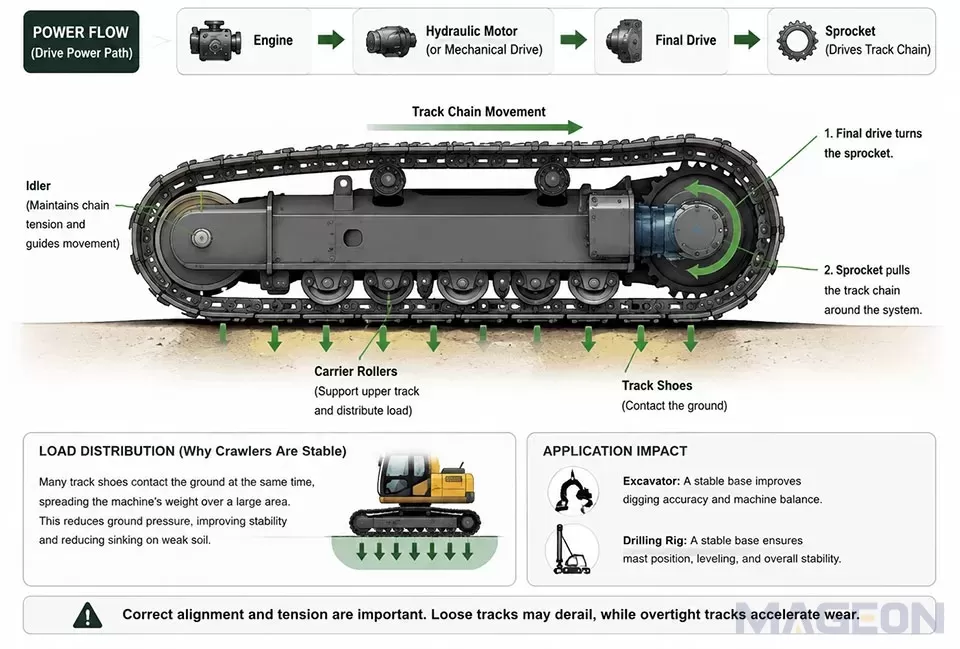
The track frame is the welded structure that supports the machine body and holds the roller, idler, sprocket, final drive, and tensioning assemblies.
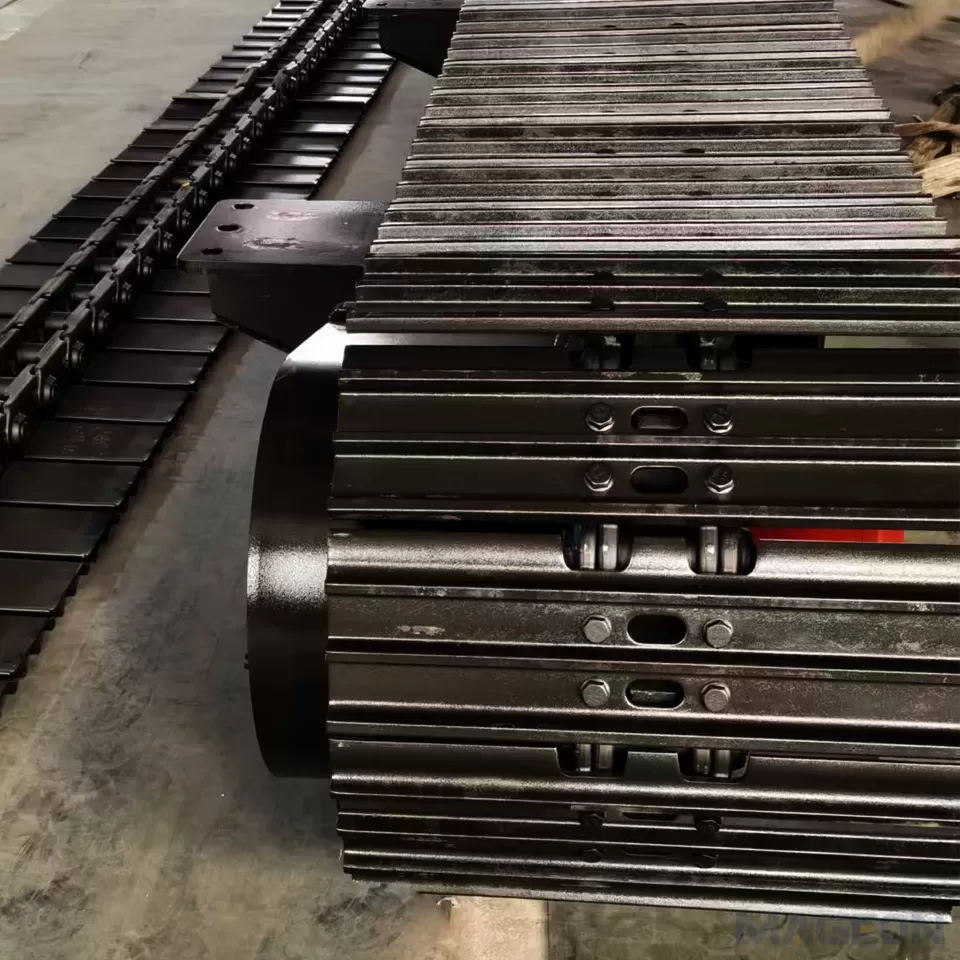
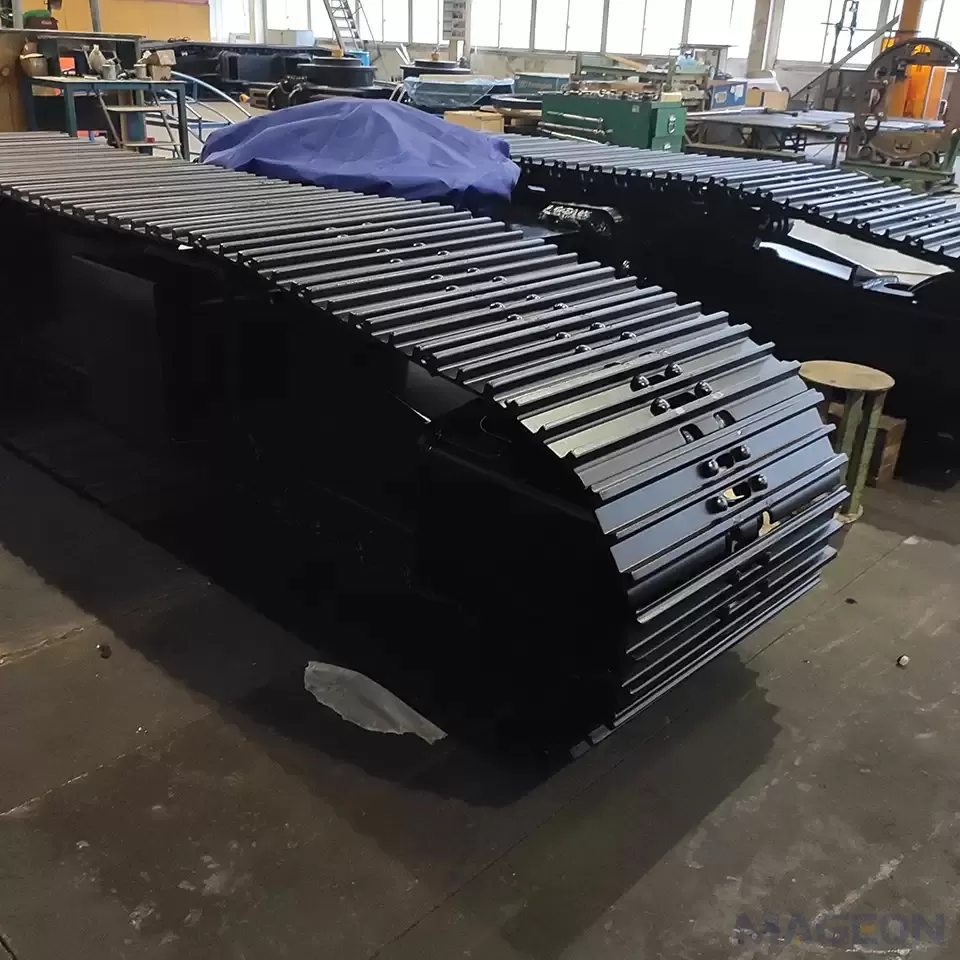
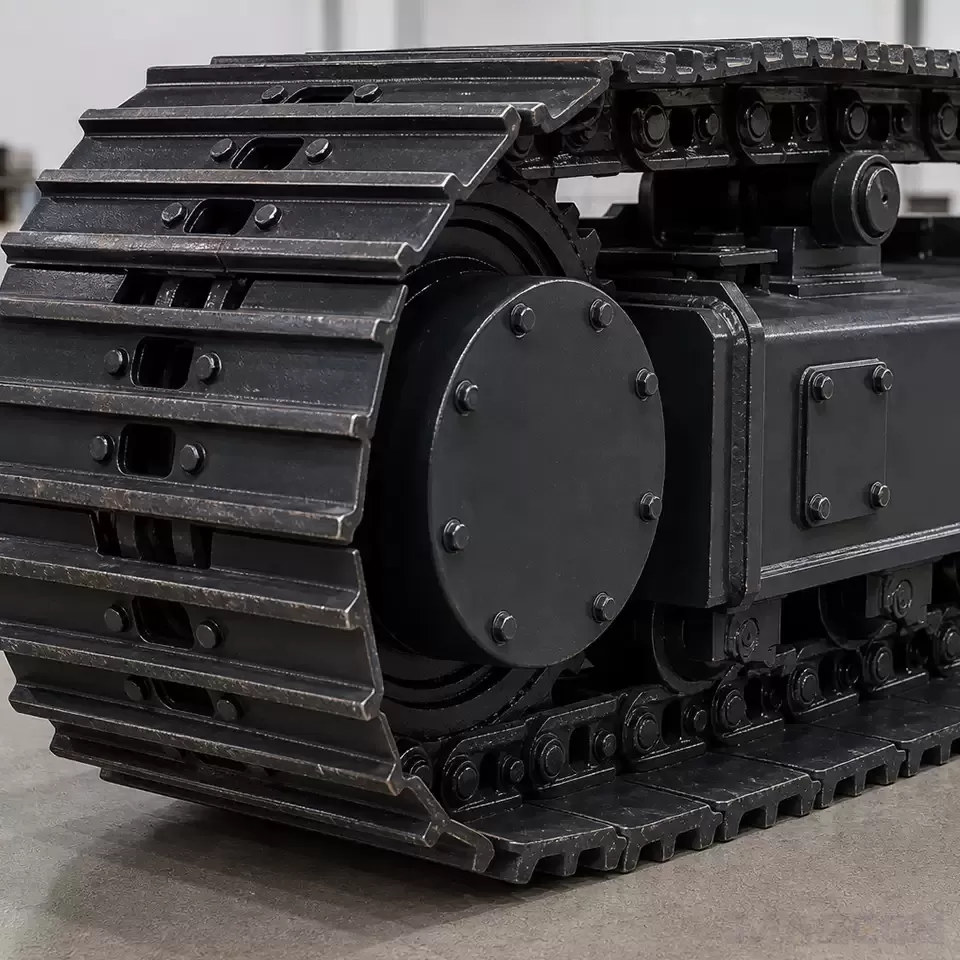
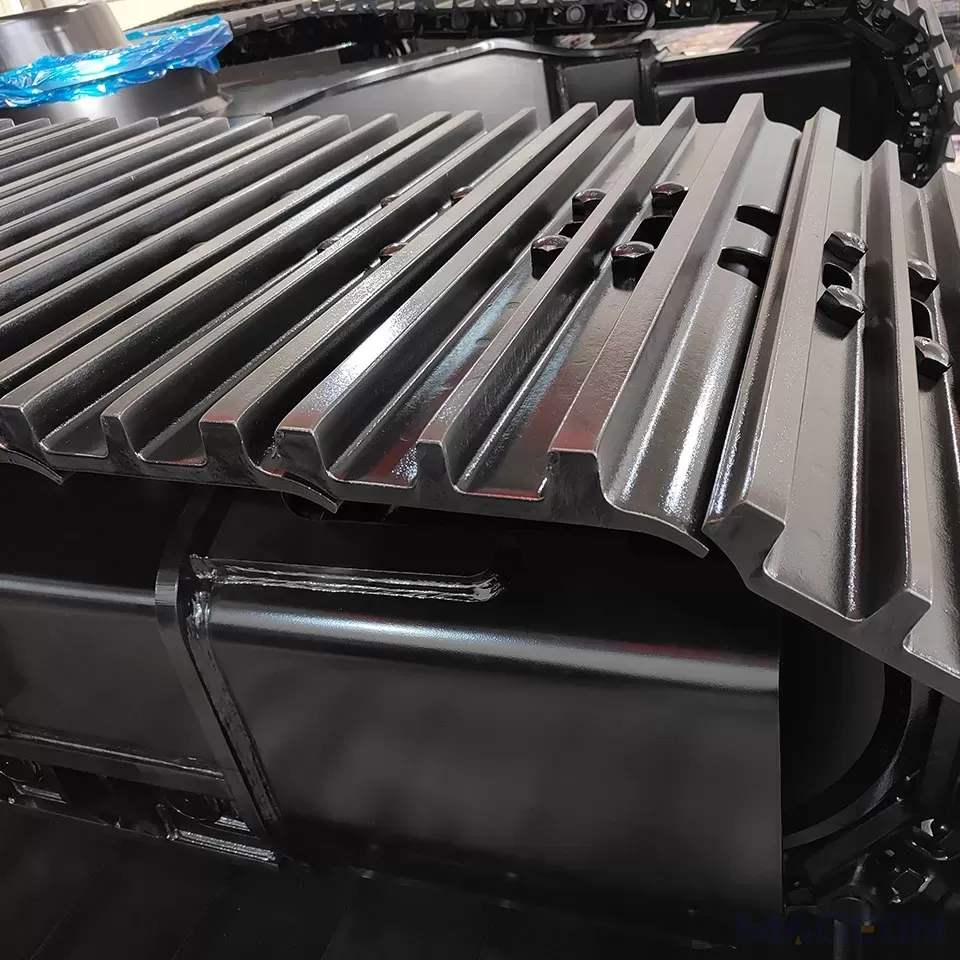
The track chain forms a continuous loop around the frame. Track shoes are bolted to the chain and contact the ground directly. Shoe width, grouser shape, and material hardness affect traction, flotation, and wear resistance.
Lower rollers carry machine weight and guide the track along the ground. Carrier rollers support the upper return section of the chain. The front idler controls alignment and helps maintain track tension. The sprocket engages the chain and converts torque into travel movement.
The final drive transfers hydraulic or mechanical power to the sprocket. The tensioning device, often supported by a recoil spring or grease adjuster, keeps the track chain tight enough for stable travel without overloading pins, bushings, rollers, and sprockets.
Working Principle
The working principle starts with power transmission. A hydraulic motor or mechanical drive sends torque to the final drive. The final drive turns the sprocket, and the sprocket pulls the track chain around the rollers and idler. As the chain moves, the shoes are laid onto the ground and lifted again as the machine advances.
Because many shoes contact the ground at the same time, the load is distributed over a larger area than a wheel contact patch. This improves stability and reduces sinking on weak soil.
On an excavator, this stable base affects digging accuracy and balance. On a drilling rig, it affects mast position, leveling, and stability. Correct alignment and tension are important because loose tracks may derail, while overtight tracks accelerate wear.
Types
Fixed Track Chassis
A fixed track chassis has a set track gauge and rigid frame. It is common on standard excavators, dozers, crushers, and other machines where working width does not need to change.
Retractable Track Chassis
A retractable track chassis can narrow for transport or site access and widen during operation. This design is often used on compact drilling rigs, mini excavators, and specialized machines that need both access flexibility and operating stability.
Steel Track System
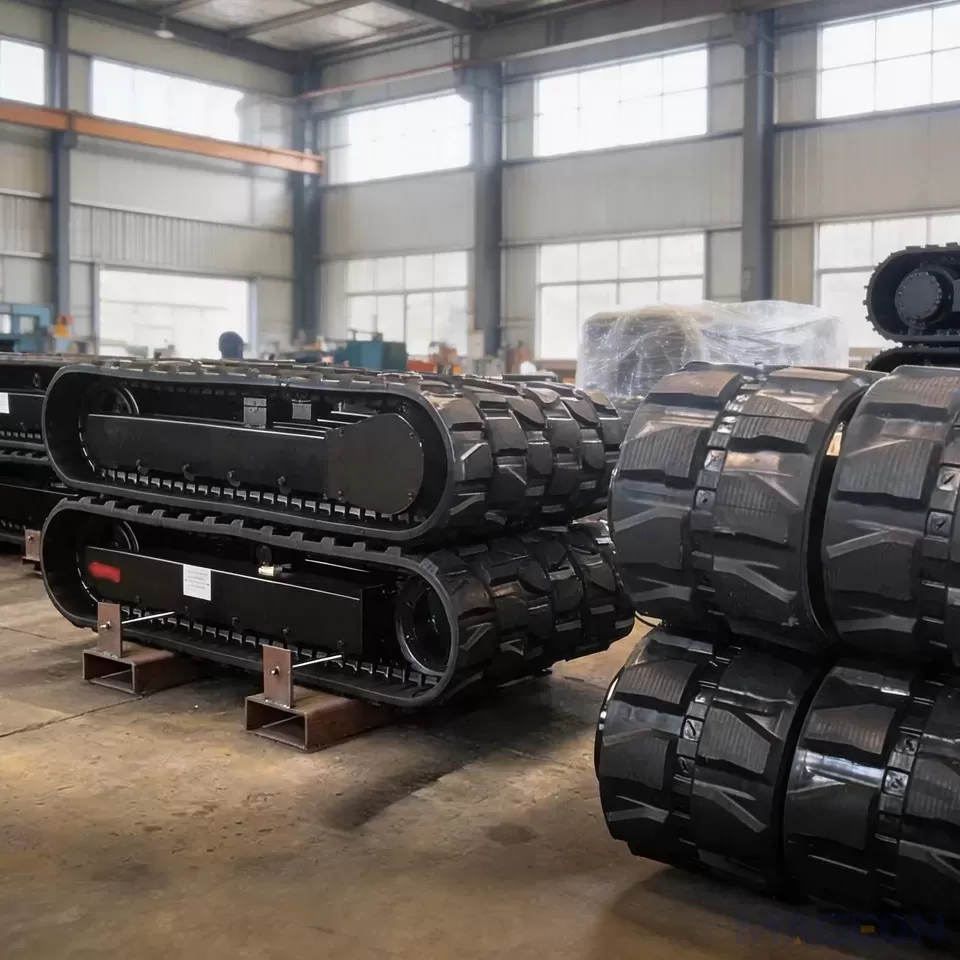
A steel track system is used for heavy-duty work involving rock, mud, demolition debris, foundation sites, and abrasive ground. Steel tracks provide high load capacity and wear resistance, but they may damage paved surfaces and create more noise than rubber tracks.
Rubber Track System
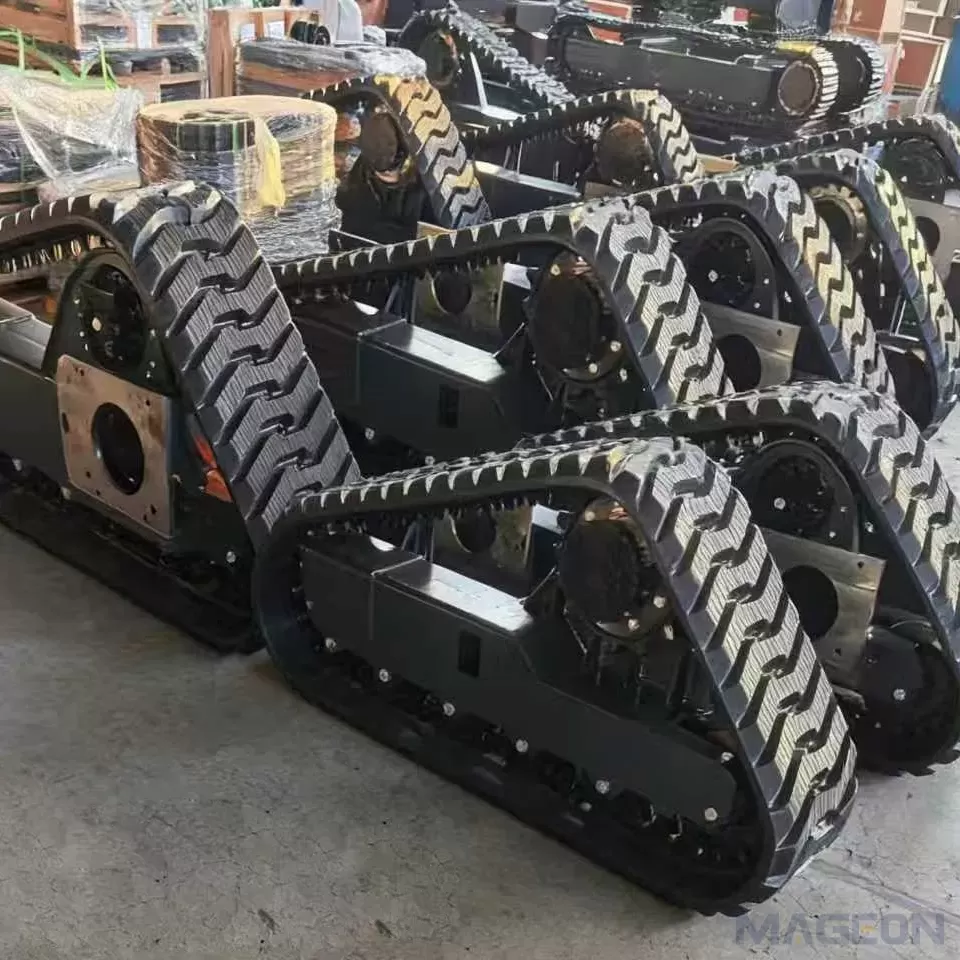
Rubber tracks are used on compact machines or equipment working on finished surfaces. They reduce vibration and surface damage, but they are less suitable for sharp rock, scrap metal, high heat, and severe impact.
Custom Undercarriage Design
Custom designs are used when standard dimensions do not match the machine structure or jobsite requirements. OEM buyers may need specific load capacity, frame width, mounting interface, travel speed, ground pressure, or hydraulic motor configuration.
Applications
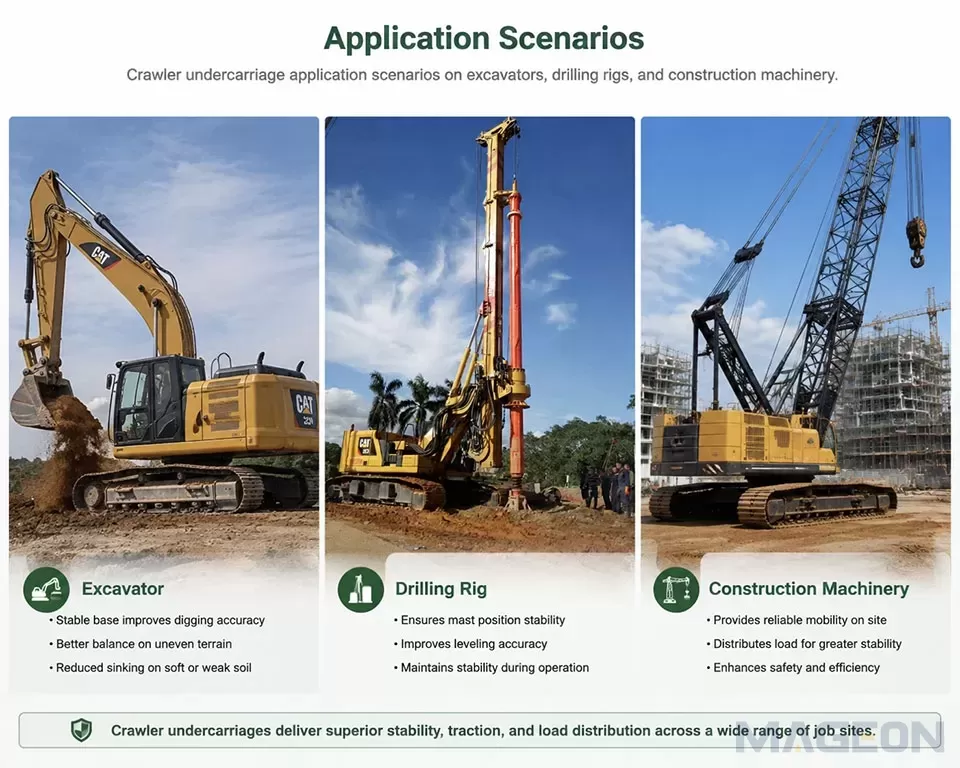
Tracked undercarriage systems are selected when traction, stability, and low ground pressure are required. In excavators, the system supports digging, trenching, grading, demolition, and material handling. It carries the upper structure, boom, arm, bucket, counterweight, and dynamic digging forces while allowing controlled movement on rough jobsites.
In drilling rigs, the track chassis provides mobility between drilling points and a stable base during operation. Foundation drilling, anchor drilling, water well drilling, and geotechnical drilling require reliable machine leveling because mast position and ground contact can affect drilling accuracy.
In construction machinery, tracked systems are used on crawler cranes, piling rigs, mobile crushers, screeners, trenchers, and dozers. A steel track system is often preferred where the site includes mud, rock, debris, repeated travel, or high load concentration.
Other applications include mining, forestry, agriculture, pipeline construction, marine engineering, and swamp working platforms.
Selection Guide
Selection starts with machine weight, including attachments, counterweights, tools, and expected working loads. The frame, rollers, chain, shoes, and final drive must support both static and dynamic forces.
Ground pressure is the next key factor. Wider shoes and longer ground contact length can improve flotation on soft soil, but they may increase turning resistance. Excavators require a balance between stability, transport width, and digging conditions. Drilling rigs often prioritize low ground pressure and stable leveling.
Drive performance should match the required travel speed, climbing ability, and traction. Heavy drilling equipment may need high torque at low speed, while general construction machinery may need a balance between mobility and load capacity.
The mounting interface should be checked early. OEM buyers should confirm frame width, bolt positions, hydraulic motor requirements, hose routing, slew bearing connection, and center of gravity.
Maintenance access affects lifecycle cost. Rollers, idlers, sprockets, track chains, shoes, pins, bushings, and tensioning devices are wear items. A practical design should allow inspection, cleaning, adjustment, and replacement without unnecessary downtime.
Frequently Asked Questions
Q: What is a crawler undercarriage system?
A: A crawler undercarriage system is the tracked lower structure of heavy machinery, responsible for supporting the whole machine, providing travel power and maintaining operational stability. It is the core travel component of construction equipment such as excavators and drilling rigs.
Q: What is the main difference between crawler undercarriage and wheeled chassis?
A: The crawler undercarriage has a larger ground contact area and lower ground pressure, with better passability on soft and uneven terrain and higher operational stability; the wheeled chassis has faster driving speed and higher road mobility, suitable for flat hard ground scenarios.
Q: What are the core components of a complete crawler undercarriage system?
A: A complete system mainly includes five major parts: track frame (load-bearing structure), track assembly (ground contact part), roller & idler assembly (guide support), drive unit (power output), and tensioning system (tension adjustment).
Q: What factors affect the wear resistance of track shoes?
A: The wear resistance of track shoes is mainly affected by three factors: material hardness, grouser structure design and heat treatment process. High-strength alloy steel with proper heat treatment can significantly extend service life.
Q: What is the function of the track tensioning device?
A: The tensioning device maintains the track chain at an optimal tightness state, prevents the track from derailing during operation, reduces excessive wear of pins, bushings and rollers, and also absorbs part of the impact force during travel.
Q: What equipment is the crawler undercarriage suitable for?
A: It is widely suitable for excavators, drilling rigs, crawler cranes, bulldozers, crushers, piling machines, roadheaders and other heavy engineering equipment, as well as special operation vehicles and robot platforms.
Q: What is the difference between track chassis and crawler undercarriage?
A: Track chassis usually refers to the lower frame and base structure, focusing on the load-bearing frame part; crawler undercarriage refers to the complete system including frame, track, drive and tensioning components, with a wider scope.
Q: How to extend the service life of crawler undercarriage?
A: Regular maintenance measures include: checking and adjusting track tension periodically, cleaning attachments on tracks and rollers in time, lubricating rotating parts on schedule, and avoiding long-term overload operation.
Q: Can crawler undercarriage be customized for special equipment?
A: Yes. MAGEON provides customized undercarriage solutions, which can adjust load capacity, frame size, track width and mounting interface according to the parameters of customers' host equipment to meet special working condition requirements.
Q: How to choose the right crawler undercarriage model?
A: Selection should be based on the host equipment's tonnage, working terrain, load requirements and installation interface parameters. Key indicators include rated load capacity, ground pressure, track width and overall structural dimensions.
Applicable products:
The crawler undercarriage system serves as the standard travel base for various heavy engineering equipment. Main compatible models include:
🔹 Hydraulic excavators of all tonnages
🔹 Core drilling rigs, water well drilling rigs and piling machines
🔹 Crawler cranes and heavy lifting equipment
🔹 Bulldozers, roadheaders and crushing equipment
🔹 Special engineering vehicles and crawler operation platforms
Please leave your customization requirements, and we will contact you as soon as possible!
Leave your requirements, we'll get back to you within 24 hours.