Steel vs Rubber Crawler Undercarriage: How to Guide Your Customers to the Right Choice — A European B2B Selection Framework
This is one of the most common — and most consequential — questions facing equipment dealers, distributors, and fleet managers across Europe: should this machine run on a steel crawler undercarriage or a rubber track undercarriage? The answer is never about which is "better" in absolute terms. It is about which system aligns precisely with the customer's operating conditions, total cost expectations, and site constraints. At MAGEON, we have developed a structured diagnostic framework that takes the guesswork out of this decision — and we are sharing it here for European B2B professionals who need to make confident, data-backed recommendations to their end customers.
Part 1: Five Diagnostic Questions — Quickly Identify Customer Needs
When engaging with a customer about their crawler undercarriage requirements, the fastest path to an accurate recommendation runs through five targeted questions. These are the questions MAGEON's technical sales team uses in every initial consultation with European equipment buyers:
Question 1: What is the unladen weight and maximum operating weight of your equipment?
→ Determines load-bearing requirements. The weight envelope immediately narrows the viable options. As a general rule, equipment exceeding 20 tons almost always requires a steel track undercarriage for safe, stable operation. Below 8 tons, rubber becomes a strong contender — though steel remains viable for harsh ground conditions regardless of weight class.
Question 2: On what type of ground or surface does the equipment primarily operate?
→ Determines wear characteristics and surface protection needs. A customer operating on asphalt in central Munich has fundamentally different requirements from one working in a quarry in northern Sweden. The ground surface dictates whether surface protection (rubber) or puncture resistance (steel) is the priority.
Question 3: Which performance attributes matter most — ground protection, travel speed, low noise, or absolute durability?
→ Establishes the priority hierarchy. No crawler undercarriage excels at everything. Understanding what the customer cannot compromise on — and what they can trade off — is the key to a recommendation they will be satisfied with three years later.
Question 4: What is the typical travel speed requirement? Does the equipment need to self-relocate between sites or travel on public roads?
→ Determines mobility requirements. European regulations on road travel for tracked equipment vary by country. A rubber track undercarriage capable of 8-10 km/h enables practical self-relocation between adjacent job sites, whereas steel tracks at 2-4 km/h generally require trailer transport.
Question 5: What is the initial procurement budget, and how does the customer weigh upfront cost against long-term maintenance expenditure?
→ Determines the total cost of ownership (TCO) perspective. European fleet operators increasingly evaluate equipment on a 5-to-10-year TCO basis rather than purchase price alone. This question reveals whether the customer thinks like an owner-operator or a short-term project contractor.
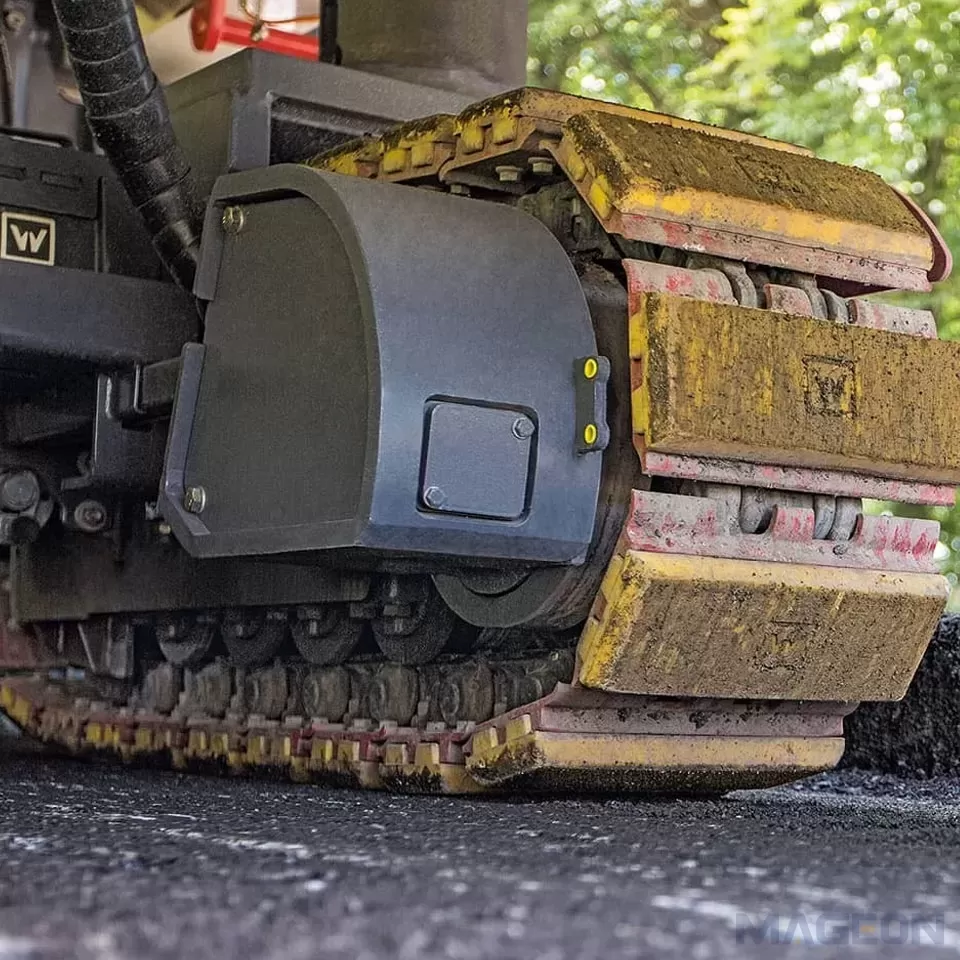
Part 2: Complete Comparison Matrix — Steel vs Rubber Undercarriage
Once the diagnostic questions have mapped the customer's profile, the following comparison matrix provides the evidence base for your recommendation. This is the reference framework MAGEON uses to train distribution partners across Europe.
| Dimension | Steel Crawler Undercarriage | Rubber Track Undercarriage | Recommendation Principle |
|---|---|---|---|
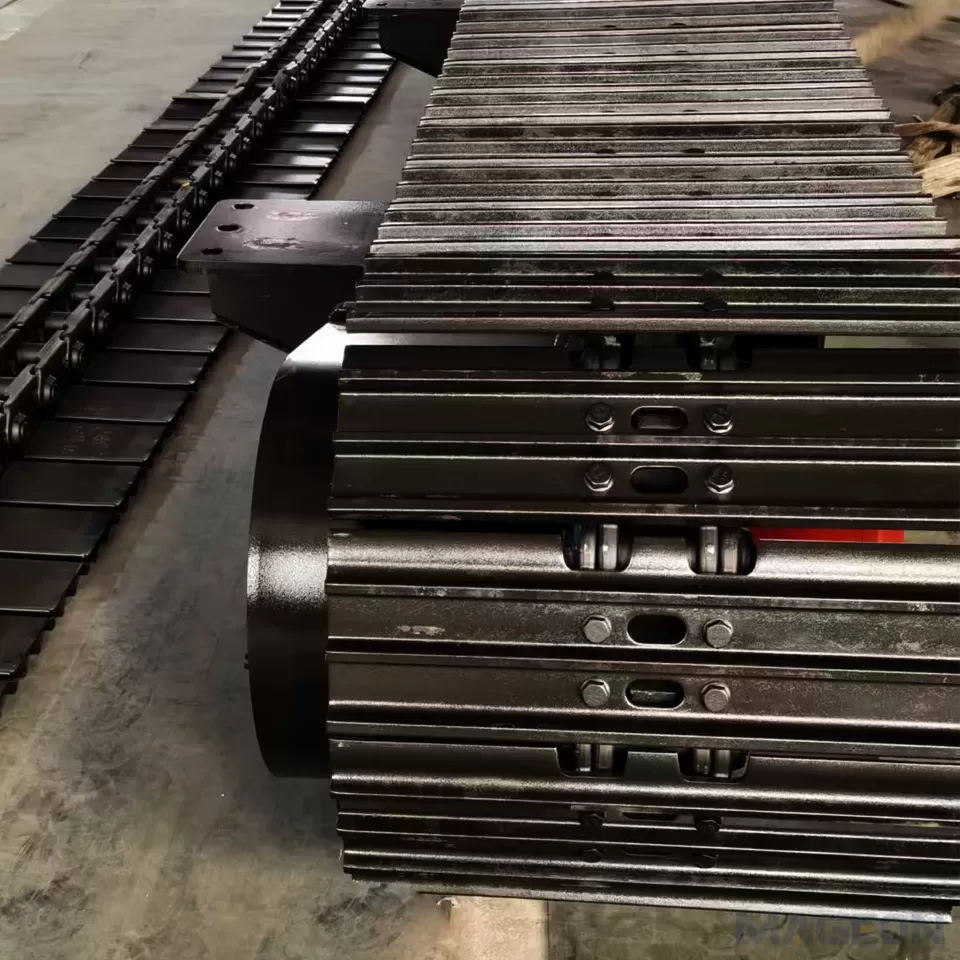
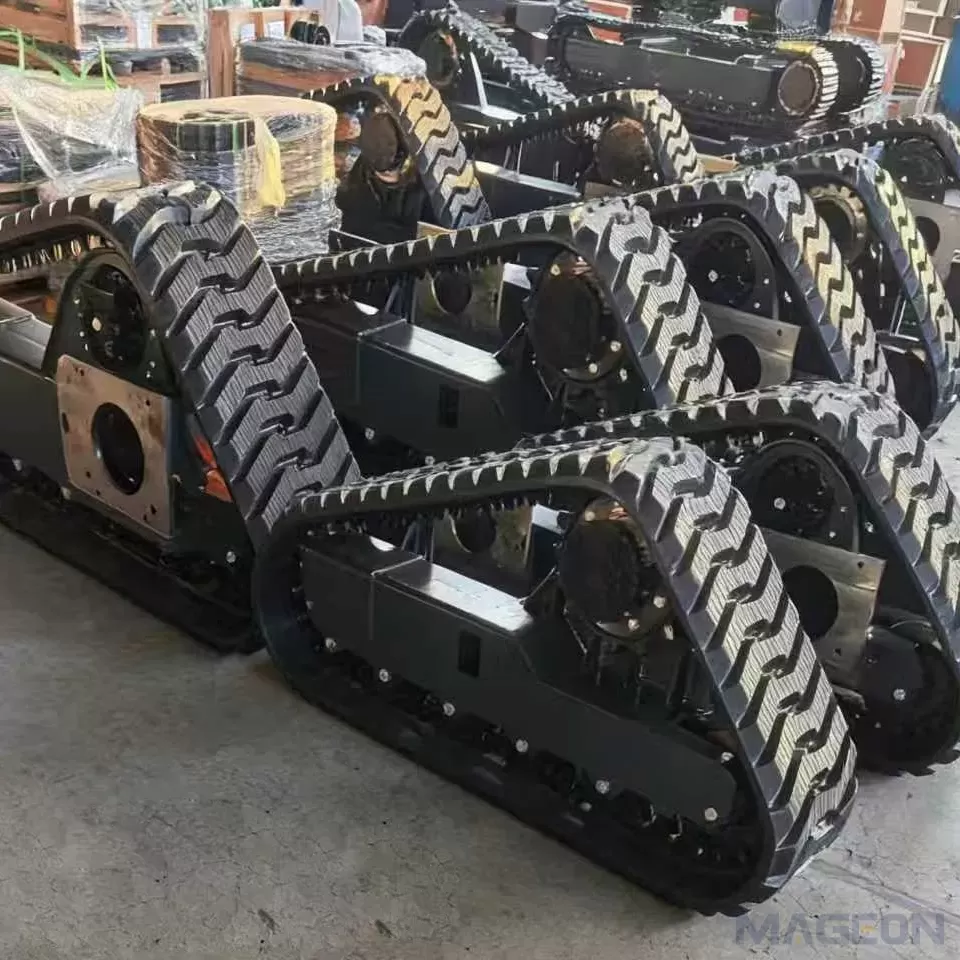
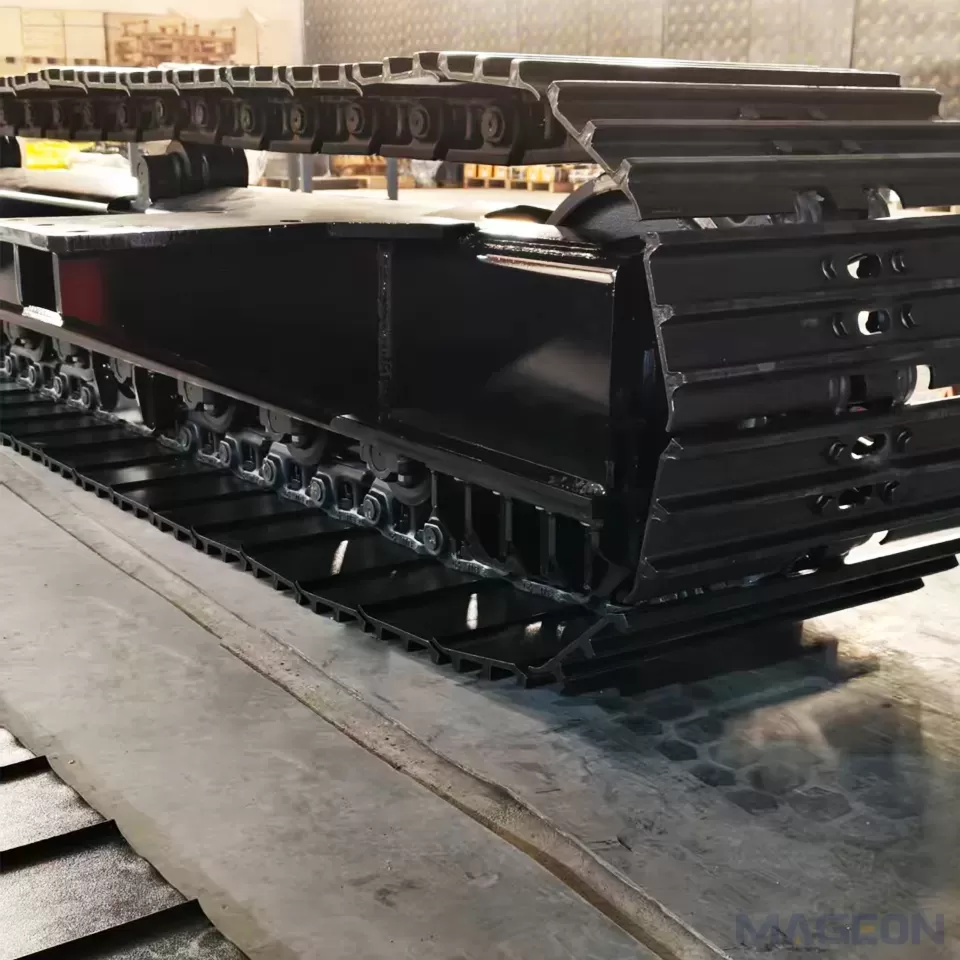
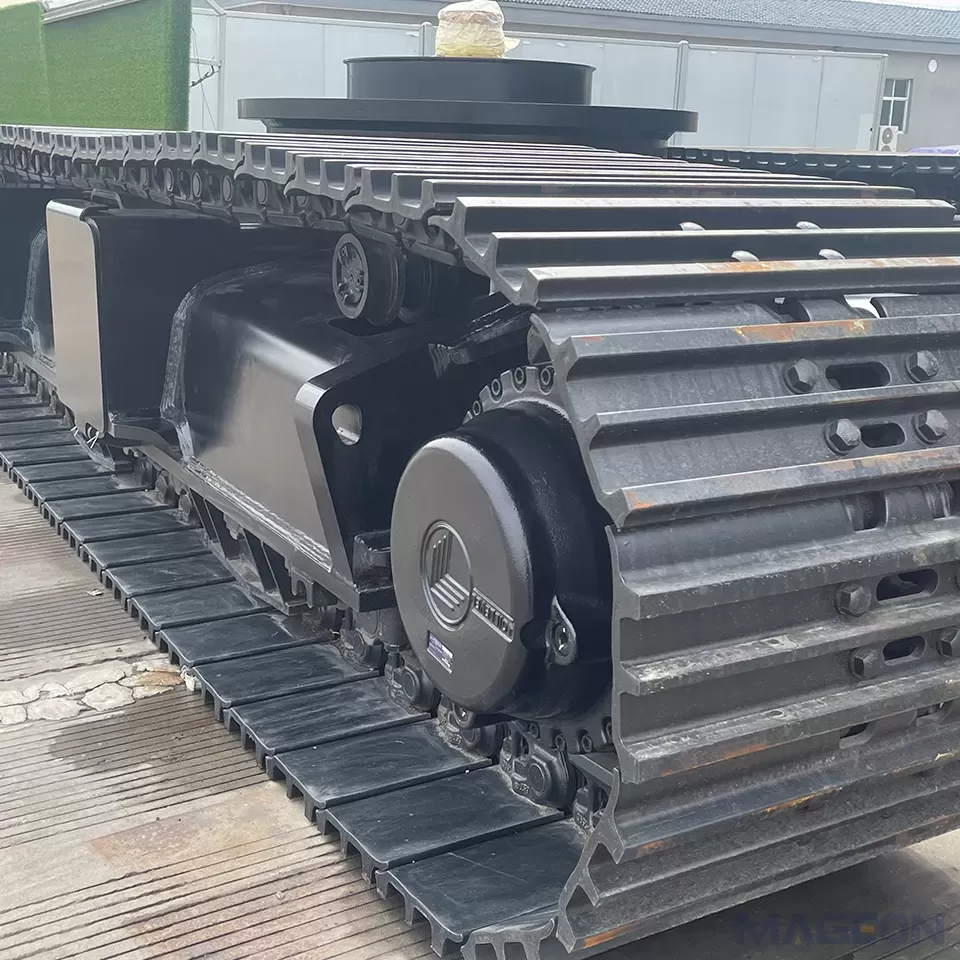
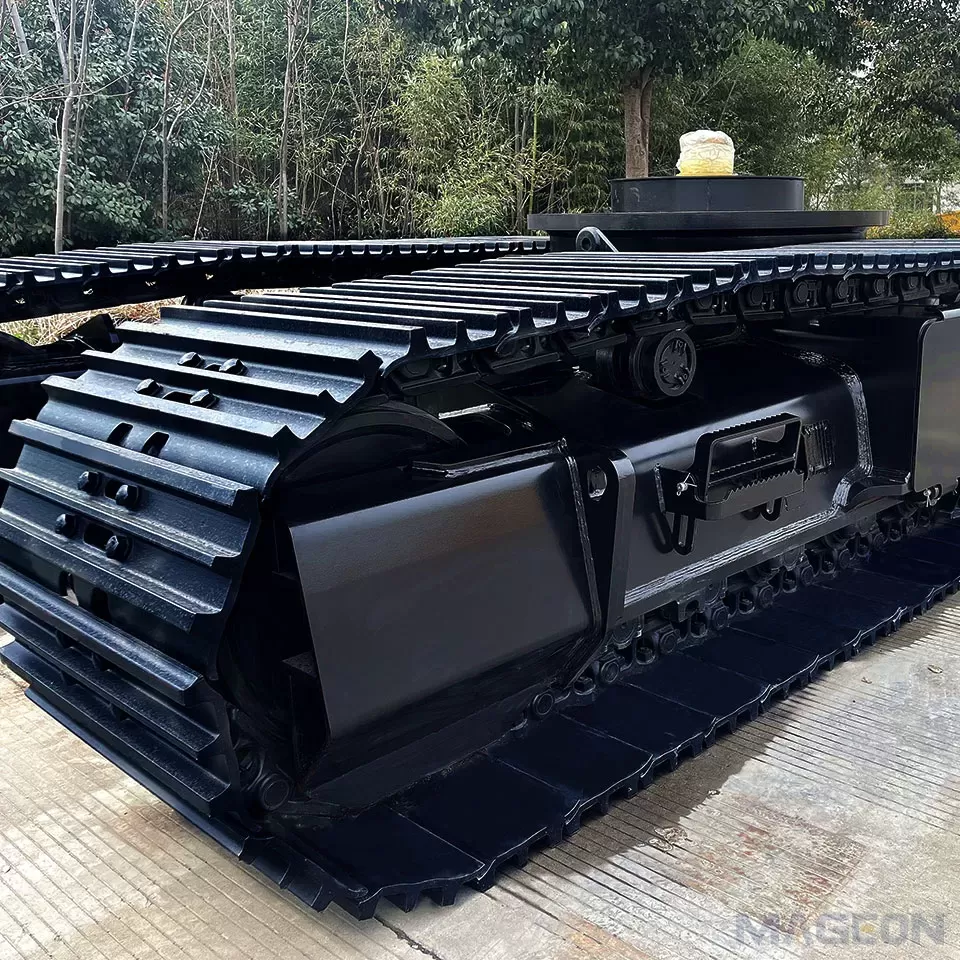
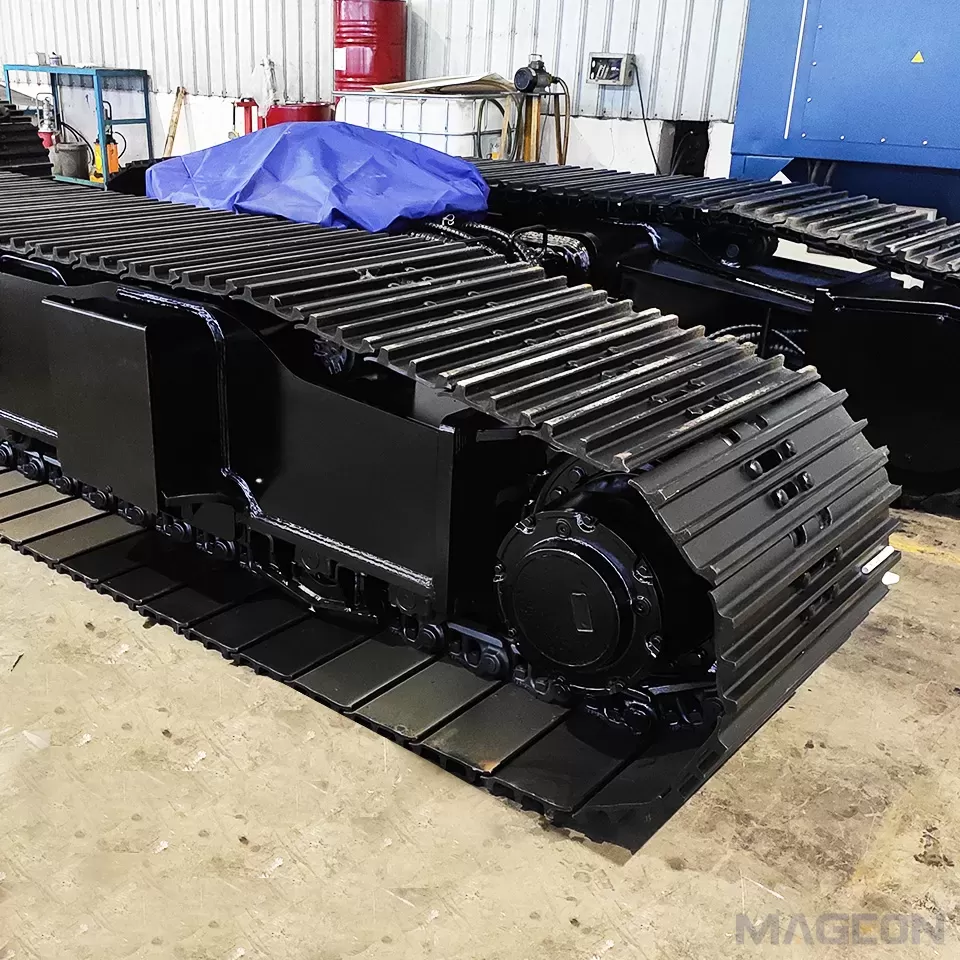
| Load Capacity | Extremely strong. Suitable for heavy and ultra-heavy equipment: large excavators (20-120+ tons), drilling rigs, crawler cranes, tunnel trestle cars. | Moderate to good. Ideal for small-to-medium equipment: mini excavators (1-8 tons), harvesters, compact track loaders, aerial work platforms. | Equipment over 20 tons or requiring an exceptionally stable platform → steel is the only safe, reliable choice. |
| Ground Surface Impact | High. Will damage asphalt, leave marks on finished concrete, and tear up sensitive surfaces including turf, paved plazas, and indoor flooring. | Very low. Rubber tracks make soft, distributed contact with the ground, providing excellent protection for asphalt, concrete, indoor floors, sports surfaces, and agricultural land. | Municipal projects, urban redevelopment, indoor demolition, agricultural operations, or any site with ground damage liability → rubber is mandatory to avoid costly surface restoration. |
| Terrain Adaptability | Exceptional. Engineered for extreme conditions: quarries, rock faces, demolition sites, dense vegetation, scrap yards. Highly resistant to puncture, cutting, and abrasive wear from sharp materials. | Selective. Performs well on relatively uniform soft ground: mud, sand, snow, topsoil. Vulnerable to sharp rocks, exposed rebar, broken glass, and metal debris — any of which can cause sudden track failure. | Sites with exposed rock, construction rubble, or unknown buried debris → steel tracks minimise the risk of unplanned downtime from track damage. |
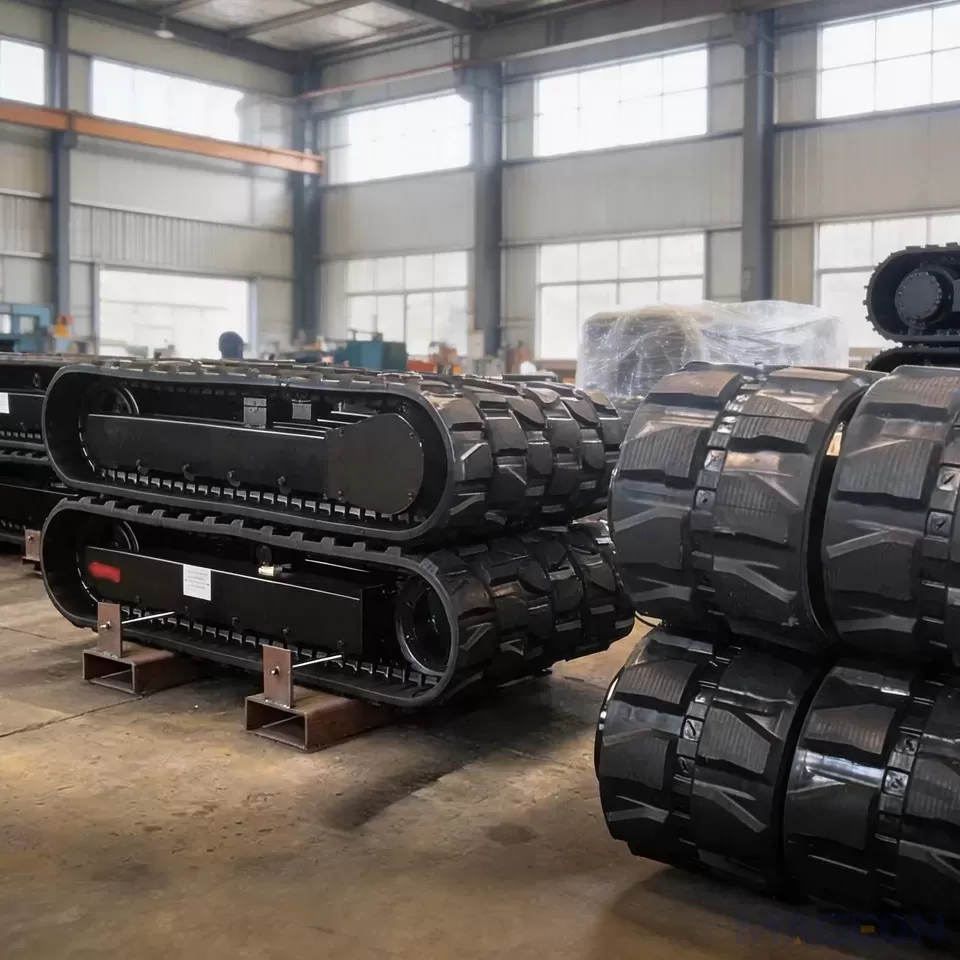
| Travel Performance | Slow speed (typically 2-4 km/h). High noise and vibration levels. Extremely high traction — essential for slope work and heavy pulling. | Faster speed (up to 8-10 km/h). Significantly lower noise and vibration. Good traction for its weight class. Smooth ride quality improves operator comfort and reduces fatigue. | Frequent self-relocation between sites, road travel requirements, or operator comfort as a priority (e.g., long-shift cab operation) → rubber tracks offer clear advantages. |
| Service Life & Maintenance | Extremely long structural life (years to decades). Individual track shoes, pins, and bushings are replaceable. Rollers, idlers, and sprockets are wear items with predictable replacement intervals. | Rubber track belt is a consumable item: typical service life 800-2,000 hours depending on ground conditions and operating discipline. Once internal steel cords break or the rubber carcass tears, the entire track must be replaced. | Full-lifecycle analysis: on harsh sites, steel delivers lower cost per operating hour; on benign surfaces, rubber's ground protection and travel efficiency offset the track replacement cost. |
| Noise & Vibration (EU Workplace Regulations) | High. May require hearing protection for operators and can exceed noise limits near residential areas — relevant under EU Directive 2003/10/EC (noise at work) and local municipal noise ordinances. | Low. Compliant with stricter noise regulations. Suitable for operation near residential zones, hospitals, schools, and in urban night-work scenarios. | Projects in noise-sensitive European urban environments or near protected areas → rubber is often the only compliant option. |
| Cold Climate Performance (Nordic/ Alpine) | Steel performs consistently in extreme cold. No material property degradation at sub-zero temperatures. Ice accumulation between moving parts requires attention but does not affect structural integrity. | Rubber compounds stiffen in extreme cold, reducing flexibility and grip. Specialised low-temperature rubber formulations are available but come at a premium. Track tension must be monitored more frequently in freeze-thaw cycles. | Scandinavian, Alpine, and Eastern European winter operations → steel is inherently more reliable; if rubber is required, specify cold-climate compounds and increase inspection frequency. |
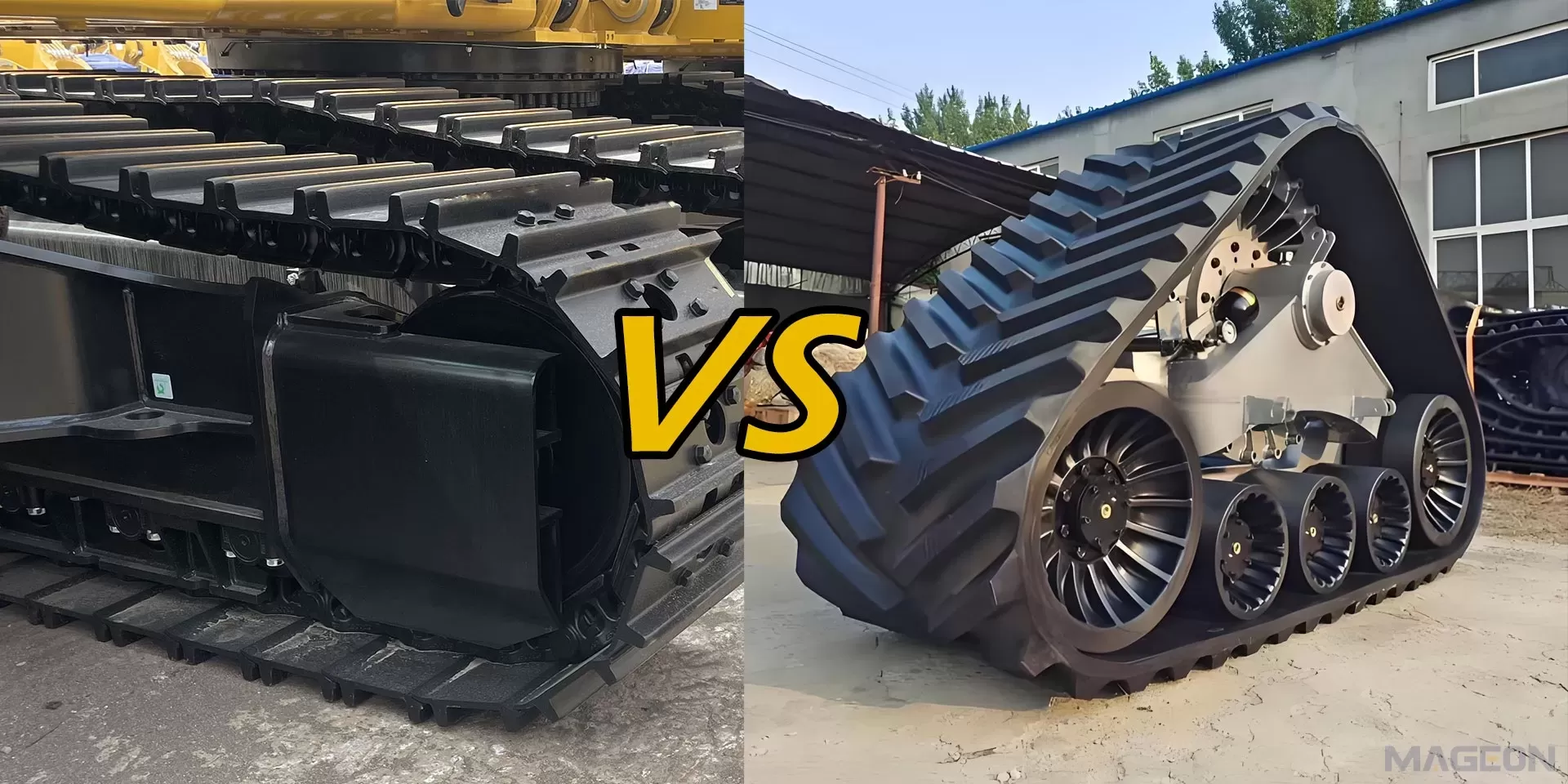
Part 3: Application-Based Recommendation Framework
When to Confidently Recommend a Steel Crawler Undercarriage
A steel crawler undercarriage is the correct recommendation when the customer's profile matches any of the following:
Extreme working conditions: Mining and quarrying, rock excavation, building demolition, scrap metal processing, and forestry operations in unmanaged terrain. These environments subject the track undercarriage to continuous impact, abrasion, and puncture risk that rubber tracks cannot survive.
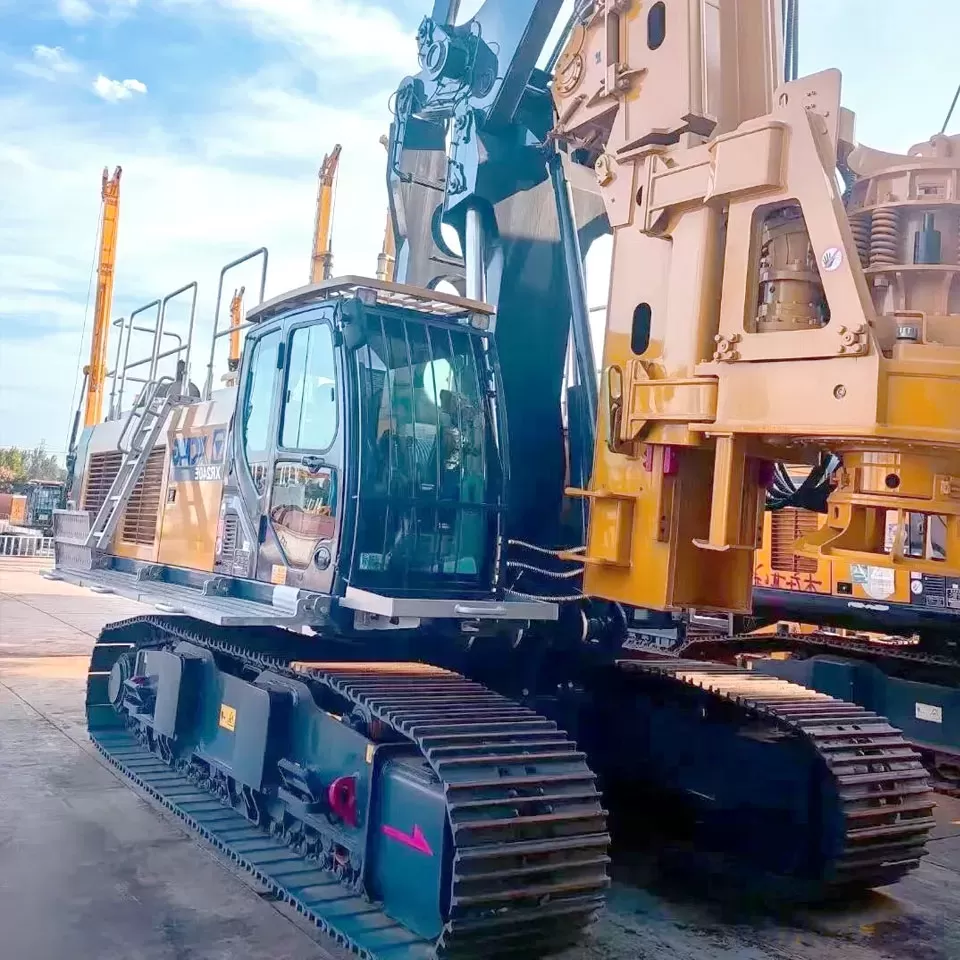
Heavy and ultra-heavy equipment: Large excavators (30+ tons), hydraulic drilling rigs, crawler cranes, tunnel support vehicles, and any machine where the crawler undercarriage must support substantial dead weight plus dynamic loading.
Unknown or uncontrollable ground conditions: Construction sites where the ground composition is uncertain, or where buried debris, scrap metal, or rock outcrops cannot be ruled out. A steel track undercarriage provides insurance against the unknown.
"Absolute durability" is the non-negotiable priority: When the customer's primary fear is unplanned downtime caused by track damage — common in production-critical mining, quarrying, and large-scale infrastructure projects — steel is the only answer that aligns with this risk tolerance.
When to Confidently Recommend a Rubber Track Undercarriage
A rubber track undercarriage is the correct recommendation when:
Ground protection is paramount: Municipal engineering on asphalt or paved roads, agricultural operations on cultivated soil or grassland, indoor demolition or renovation, sports venue and landscape maintenance. The cost of ground restoration after steel track damage frequently exceeds the entire track undercarriage budget.
Self-relocation and road travel are required: Equipment that moves between adjacent sites under its own power, or that must travel short distances on public roads. Rubber tracks at 8-10 km/h make this practical; steel tracks at 2-4 km/h generally do not.
Noise and vibration compliance is mandatory: Operation near residential areas, hospitals, schools, or in night-work urban zones subject to strict municipal noise ordinances. A rubber crawler undercarriage is often the only configuration that satisfies local regulatory requirements — particularly relevant in Germany, the Netherlands, and Scandinavia.
Standard earthmoving on controlled sites: Excavation, material handling, and grading on construction sites with uniform soil conditions, verified absence of sharp debris, and established access routes. In these predictable environments, the speed, comfort, and ground protection of a rubber track undercarriage deliver the best overall value.
Part 4: European Market-Specific Considerations
The steel-versus-rubber decision in Europe is not purely technical — it is shaped by regulatory, commercial, and operational factors specific to the European market:
EU Machinery Regulation (EU 2023/1230): Effective from January 2027, this replaces the Machinery Directive 2006/42/EC. Both steel and rubber crawler undercarriage systems supplied into the EU must comply with updated essential health and safety requirements. MAGEON's engineering documentation package includes compliance mapping for both track types.
CE Certification Requirements: Regardless of whether you specify a steel or rubber track undercarriage, CE marking is mandatory for EU market access. MAGEON provides complete CE technical file documentation — including risk assessments per EN ISO 12100 — for every undercarriage shipped to European destinations.
Country-Specific Road Travel Regulations: Germany (StVZO), France (Code de la route), the Netherlands, and Nordic countries each have distinct rules governing tracked vehicles on public roads. Rubber tracks with appropriate road pads may satisfy these requirements; steel tracks almost never do.
Insurance and Liability: European construction insurance policies increasingly include ground damage provisions. Recommending a steel crawler undercarriage for a project with surface protection requirements can create liability exposure for the dealer or distributor who made the recommendation. The diagnostic framework in this guide is designed to document the decision rationale.
Sustainability Reporting (CSRD): European fleet operators subject to the Corporate Sustainability Reporting Directive may factor equipment energy efficiency into procurement decisions. Rubber track undercarriage systems generally offer lower rolling resistance and reduced fuel consumption — a data point increasingly relevant in tender evaluations.
Conclusion
There is no universally superior crawler undercarriage — only the right track undercarriage for the specific application, site conditions, and operational priorities of your customer. The steel-versus-rubber decision is a structured engineering and commercial analysis, not a matter of brand preference or price comparison alone. By applying the five diagnostic questions, referencing the complete comparison matrix, and factoring in European regulatory requirements, equipment dealers and distributors can make recommendations that their customers will stand behind for the full lifecycle of the machine.
At MAGEON, we manufacture both steel and rubber crawler undercarriage systems — not because one is better, but because different customers face different realities. Our role is to help European B2B partners match the right track undercarriage to the right job, every time.
Contact MAGEON's technical team to discuss your customers' undercarriage requirements, request a personalised selection consultation, or access our complete dealer training materials.
Applicable products:
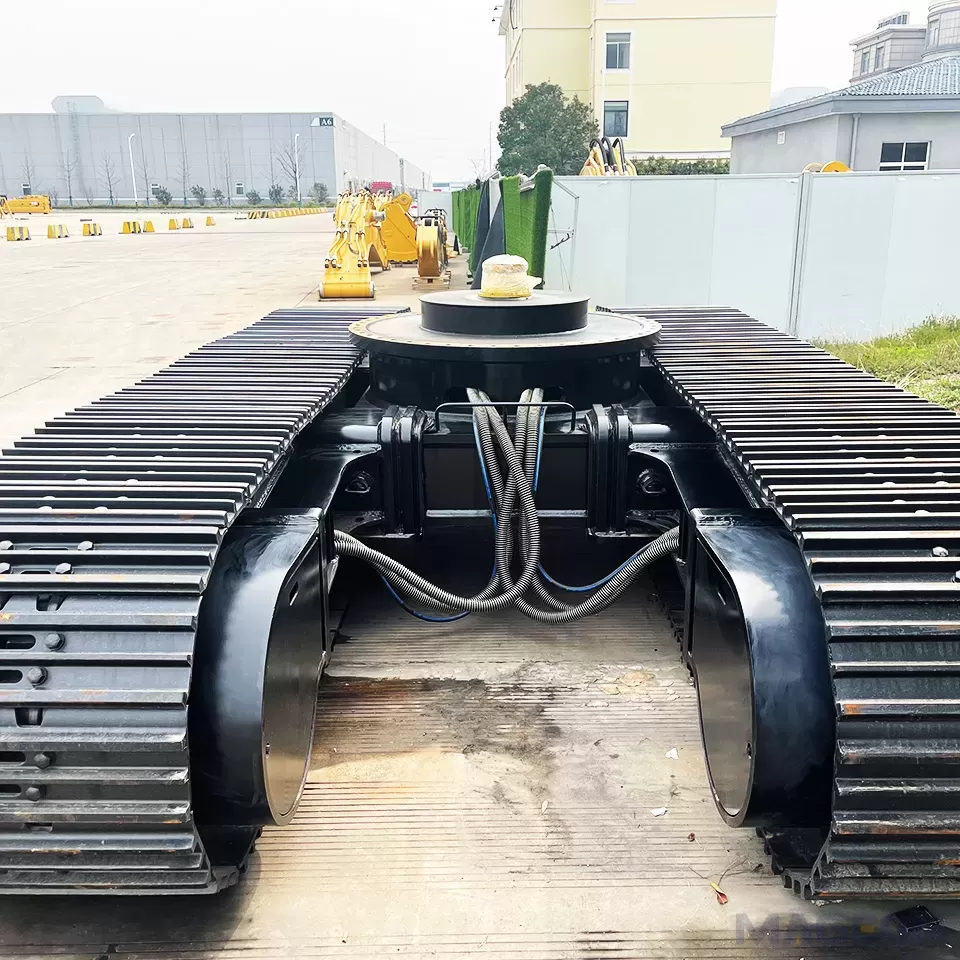
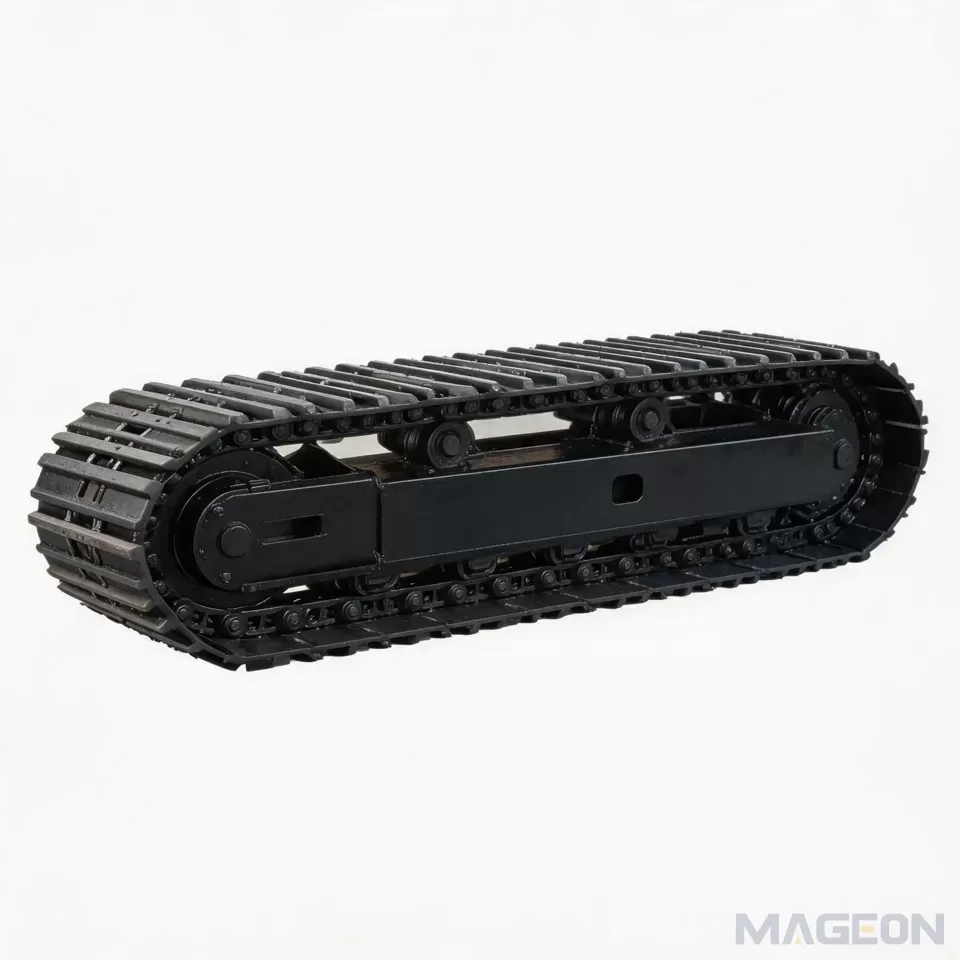
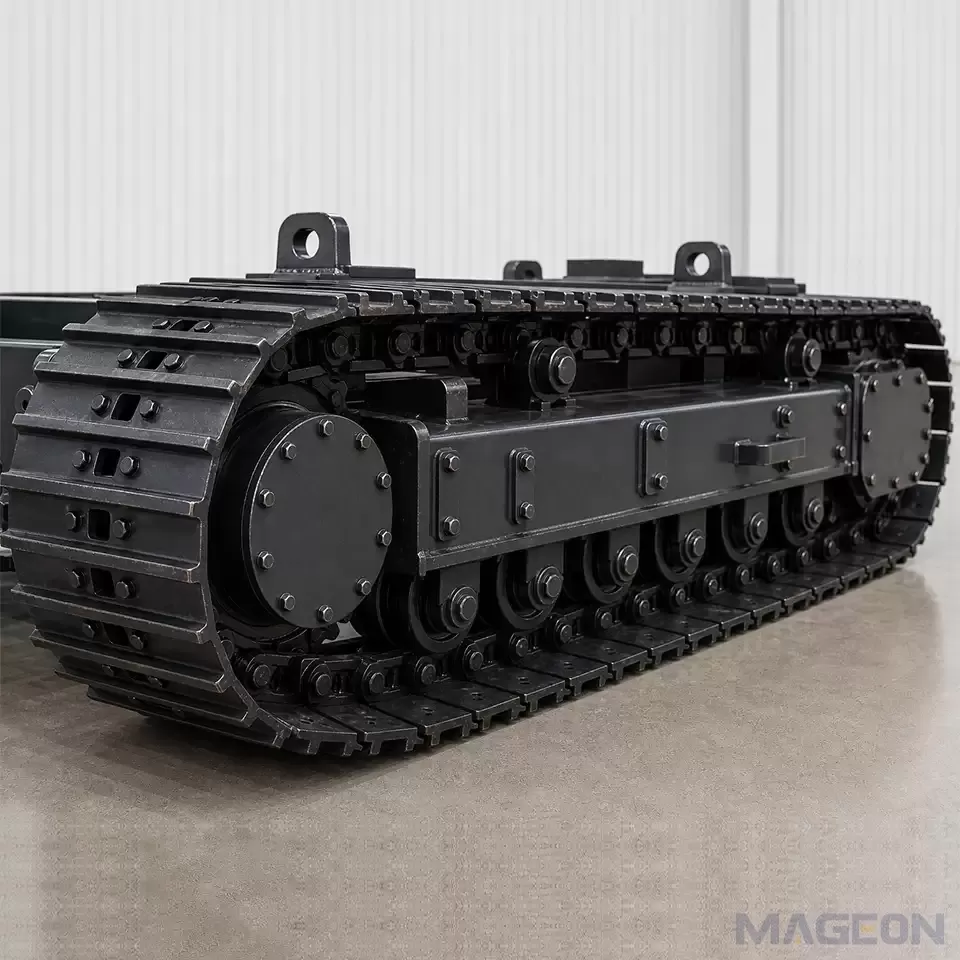
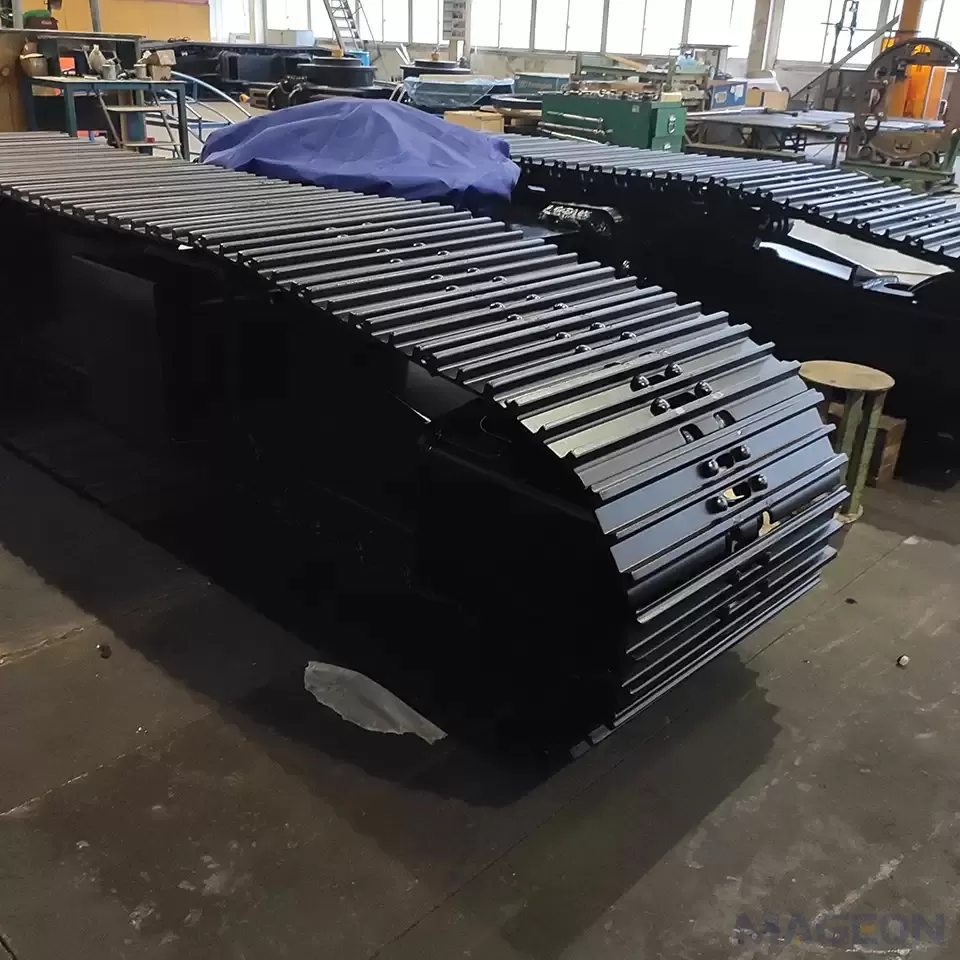
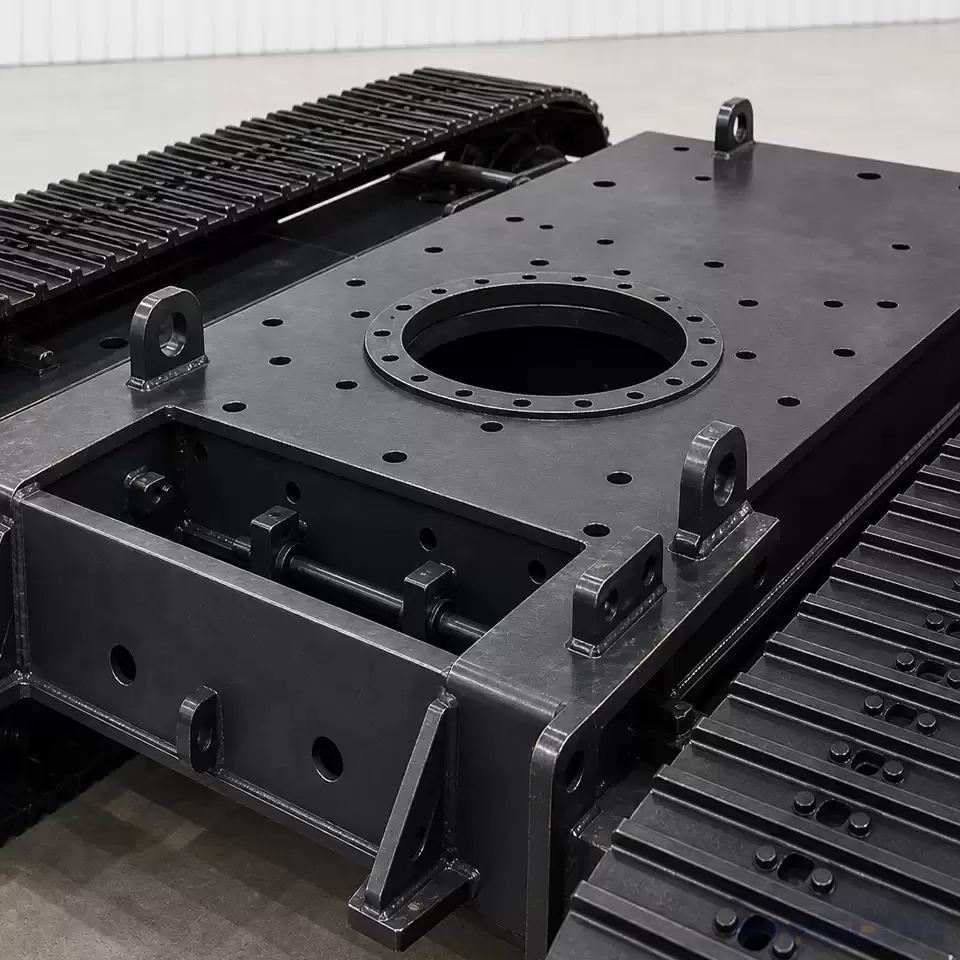
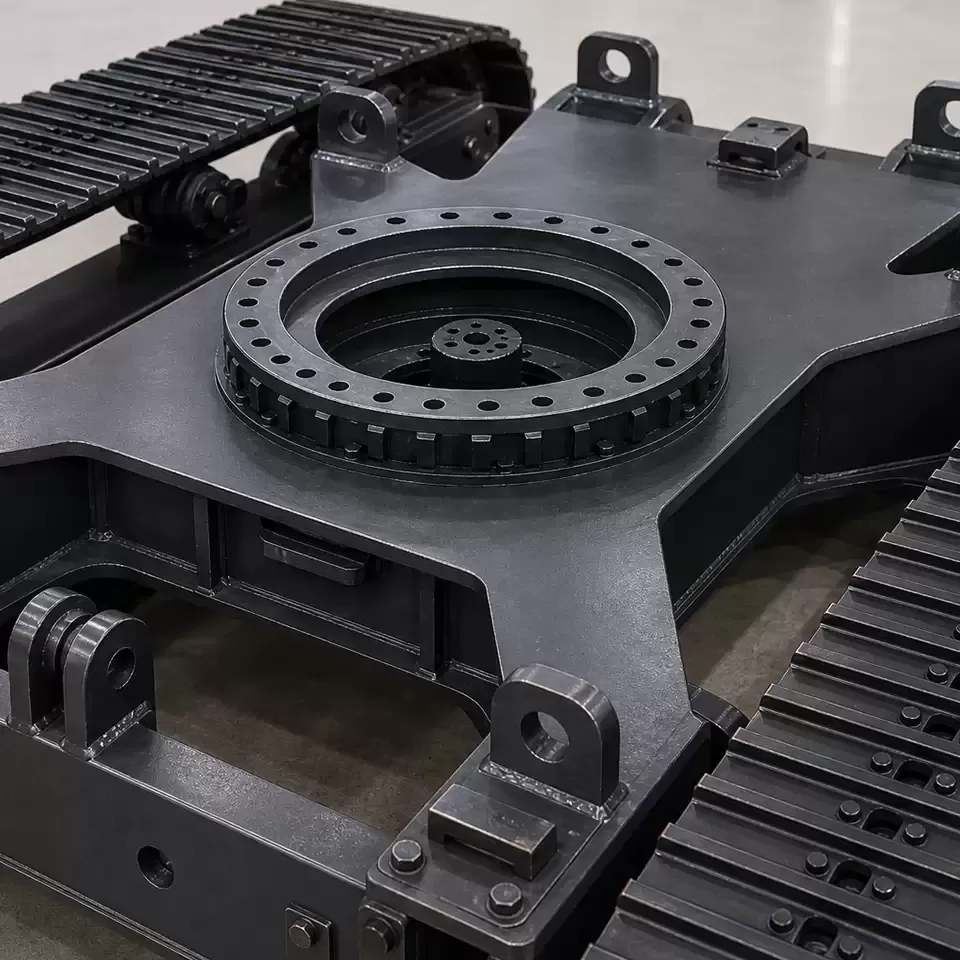
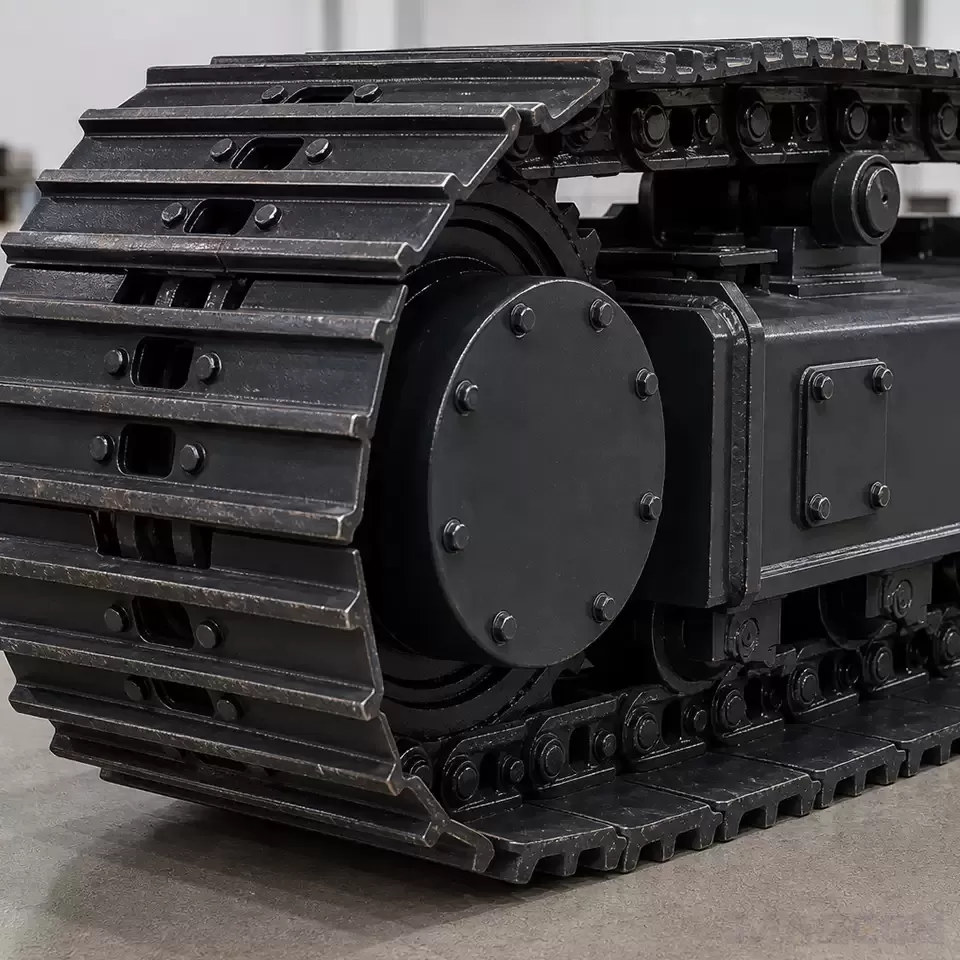
Steel track chassis (5-120 tons) Four wheels and one belt (supporting wheels/driving wheels/guide wheels/track shoes/chain rail joints)
Please leave your customization requirements, and we will contact you as soon as possible!
Leave your requirements, we'll get back to you within 24 hours.