Full Guide to Custom Steel Track Undercarriage: Process & Key Considerations from Demand to Delivery
Project Overview:
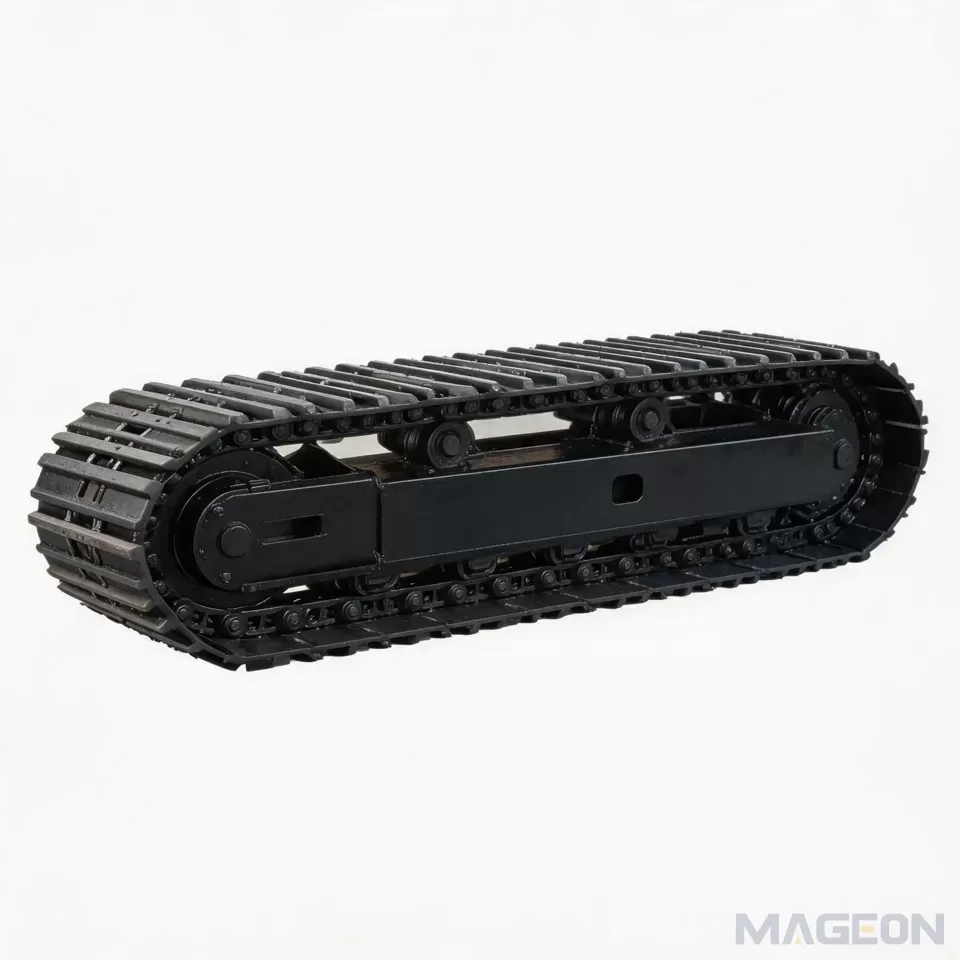
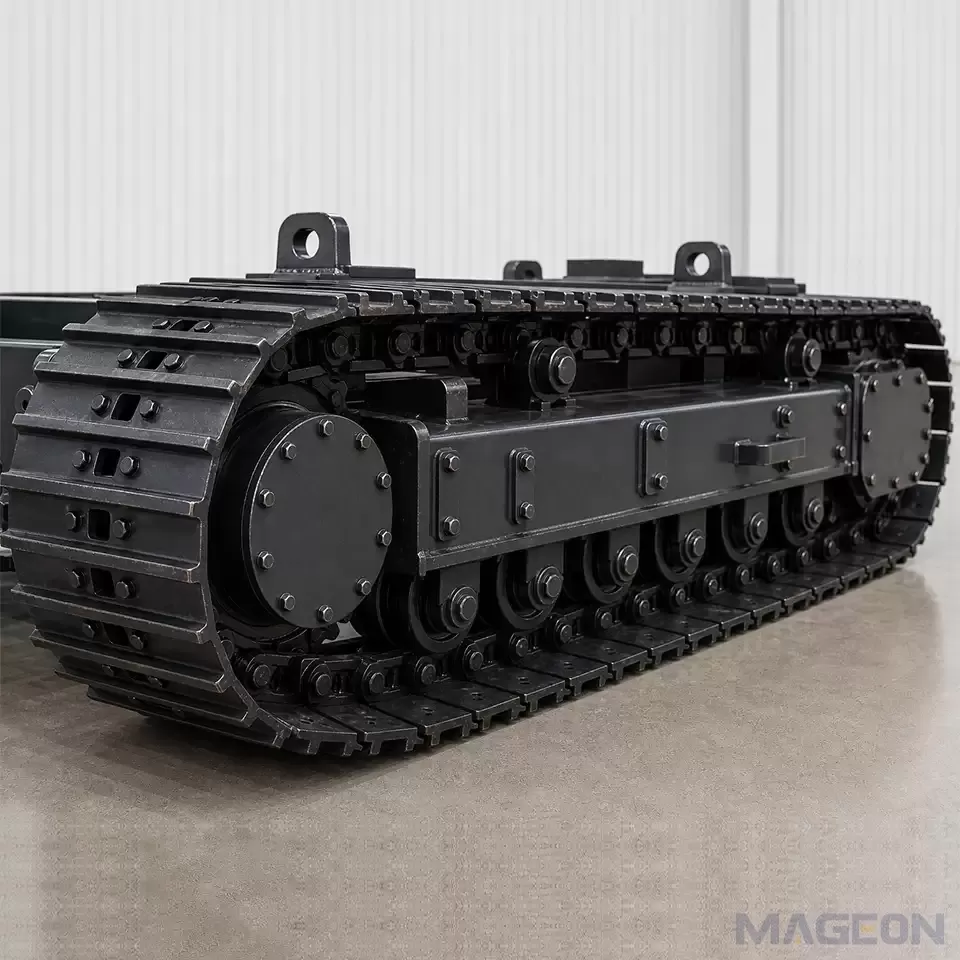
This article systematically introduces the full customization process of steel track undercarriage, including five core stages: demand confirmation, scheme design, material selection, manufacturing and processing, and quality acceptance & after-sales service. It explains the key control points of each link in detail, and provides practical reference for customers in the procurement of custom undercarriage. MAGEON follows strict quality control standards in the whole process, with machining accuracy controlled within 0.5mm, and provides complete warranty and after-sales support to ensure that each custom chassis can perfectly match the host equipment and effectively improve operation efficiency.
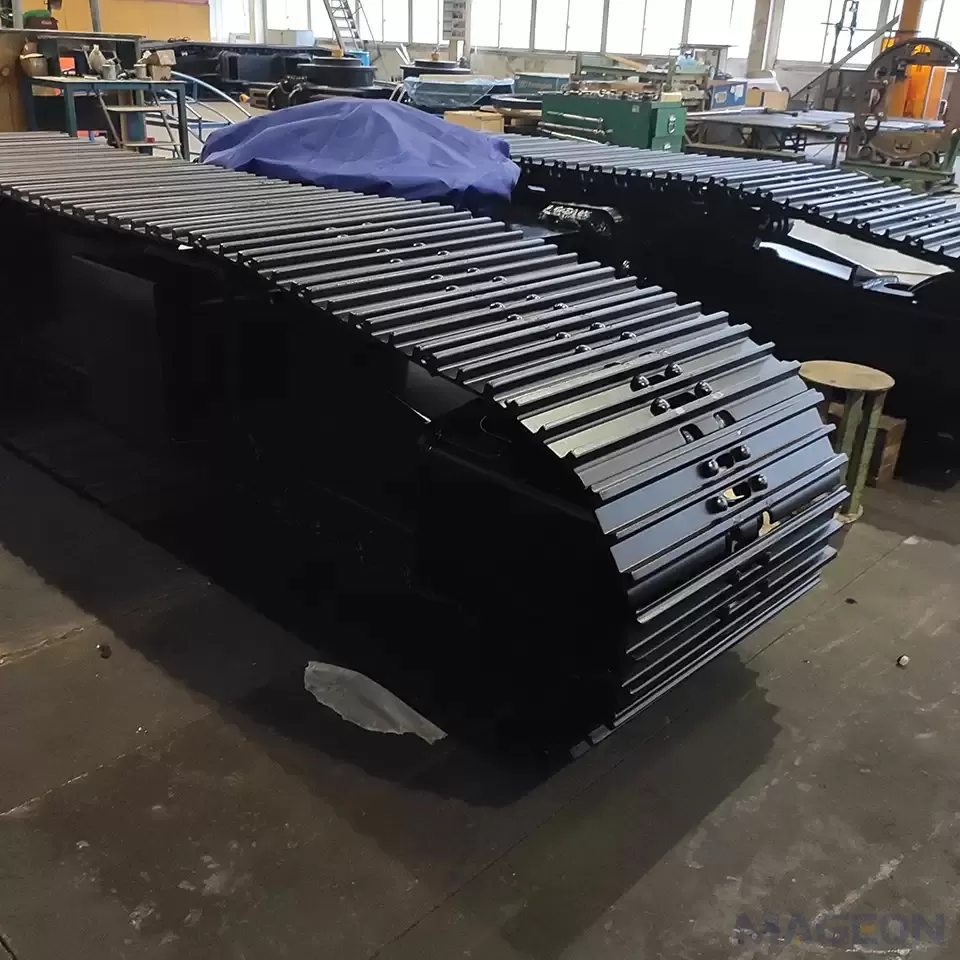
In construction machinery, agricultural equipment and other industries, steel crawler chassis have become the core component of many types of equipment due to their strong load capacity and excellent complex terrain adaptability. Since standard products often cannot meet the differentiated demands of various scenarios, custom steel track undercarriage solutions are required. As a professional undercarriage manufacturer, MAGEON provides full-process customized services. This guide breaks down the complete customization workflow and key notes at each stage to help customers avoid risks and obtain high-quality custom solutions.
2. Scheme Design: Technical Drawings as the Blueprint of Customization
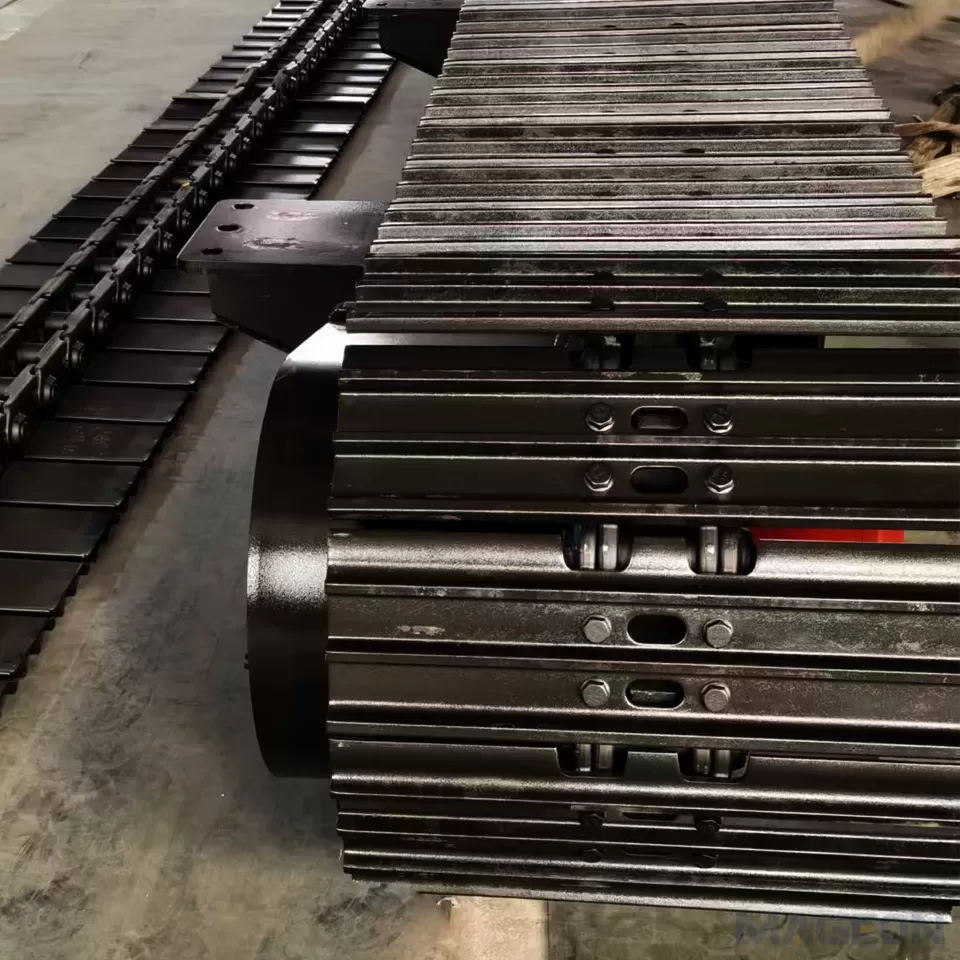
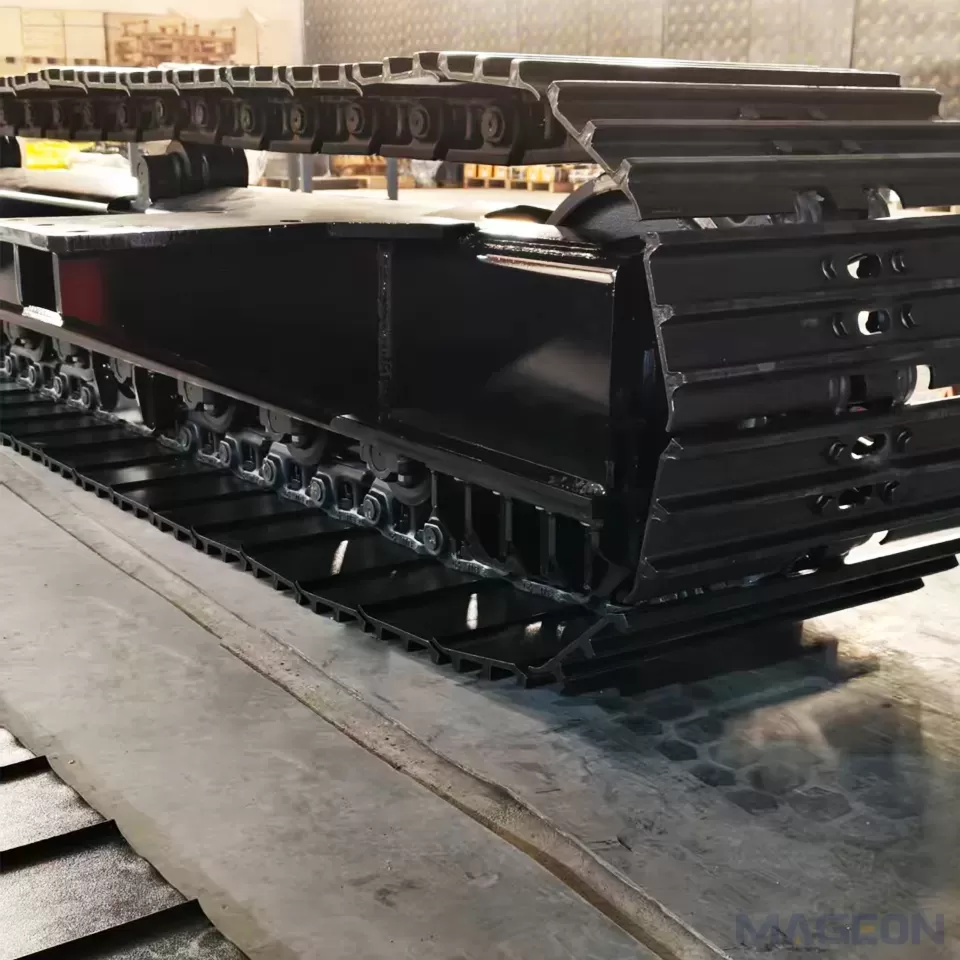
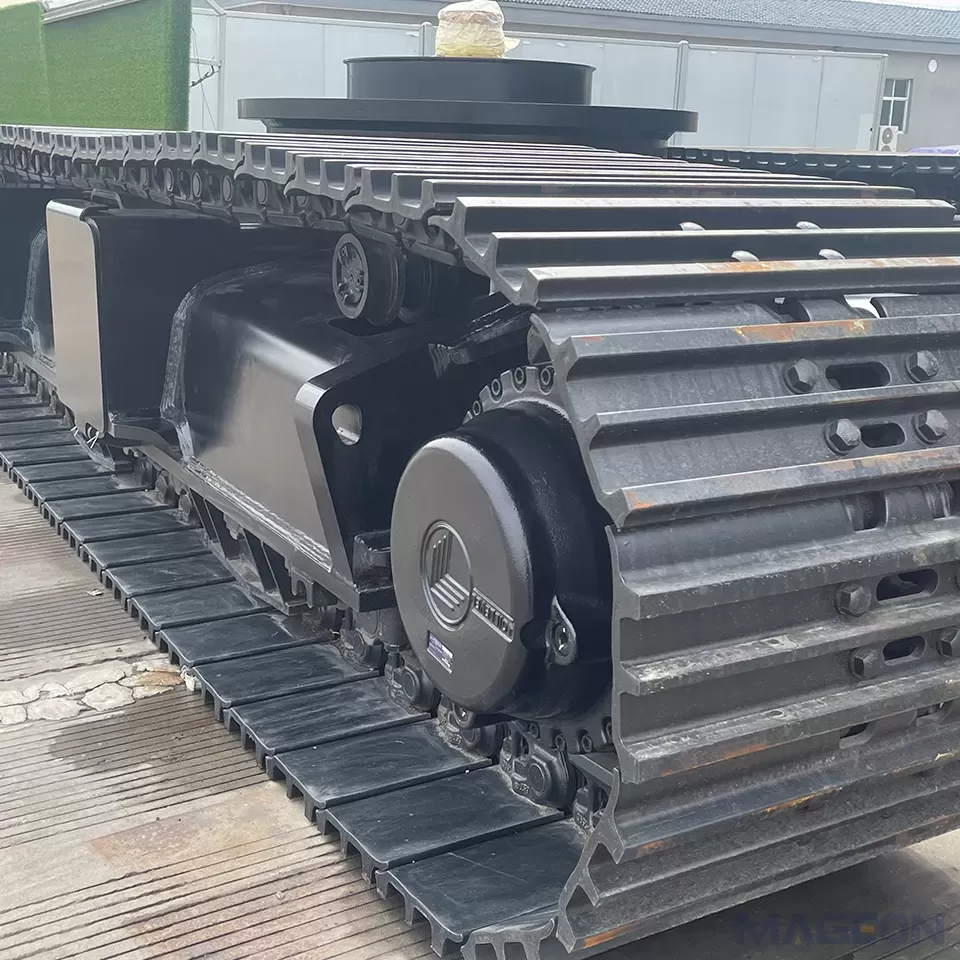
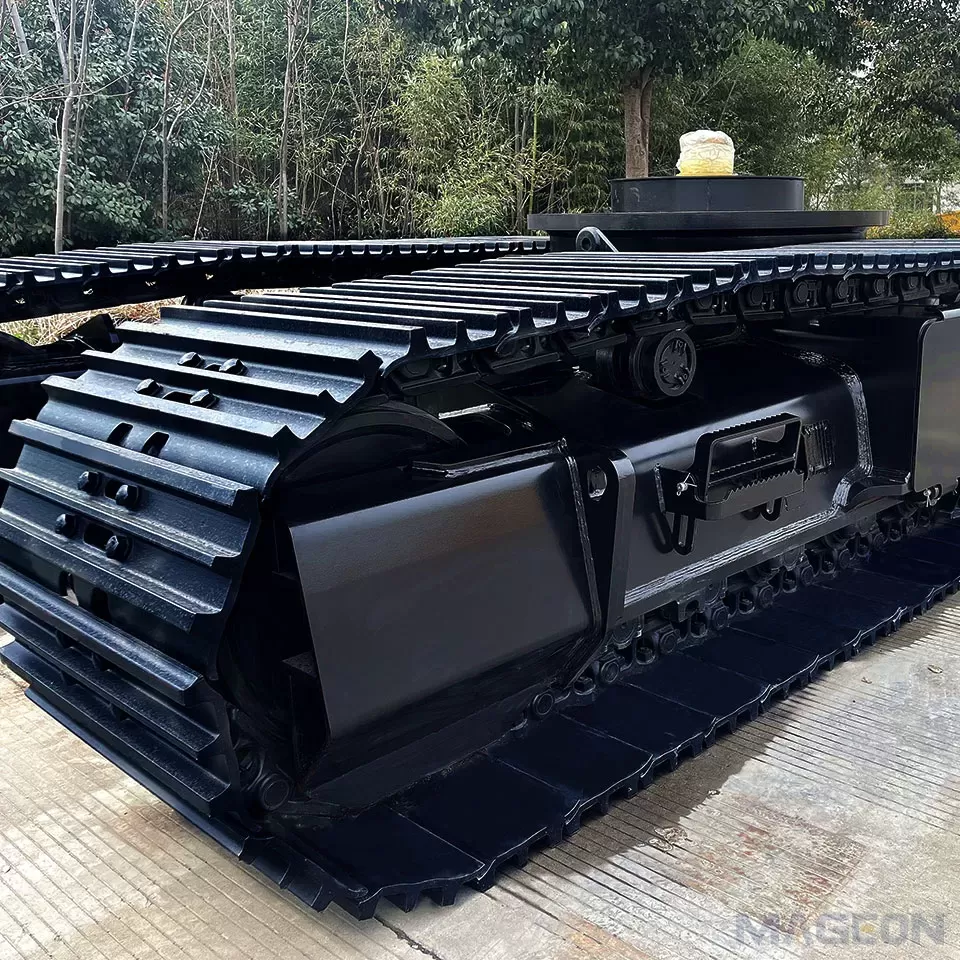
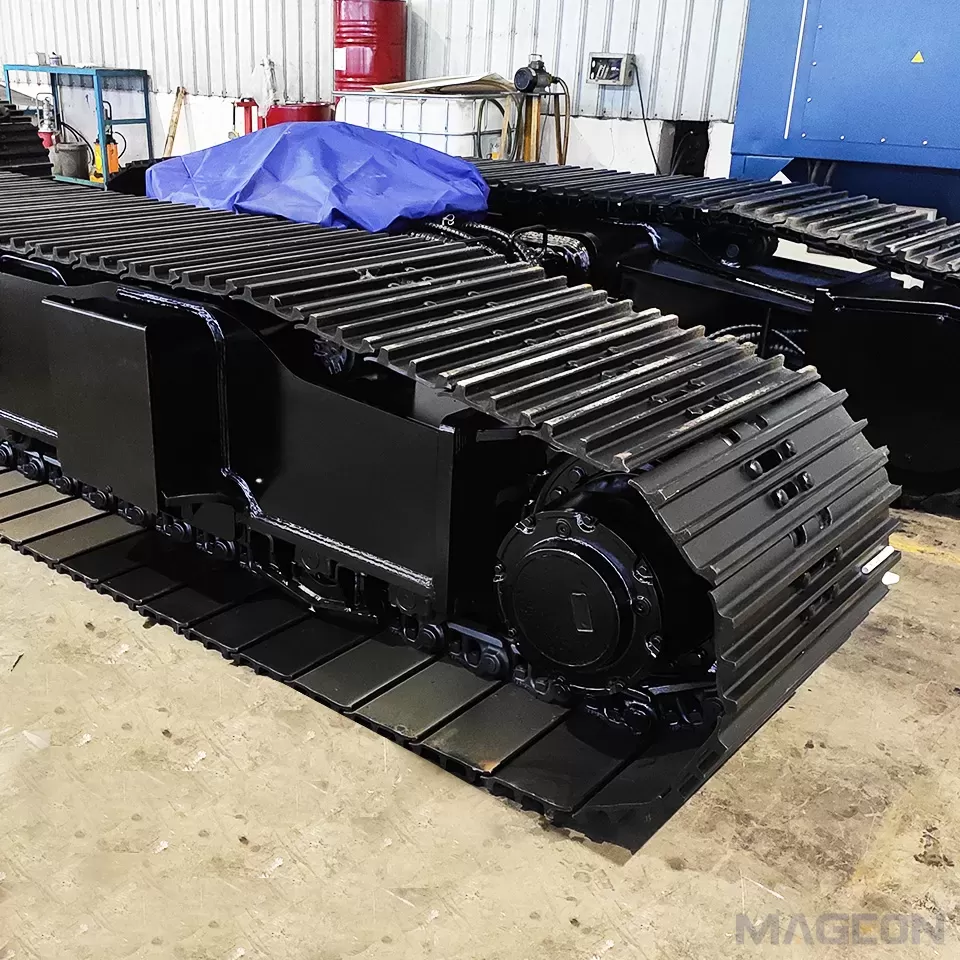
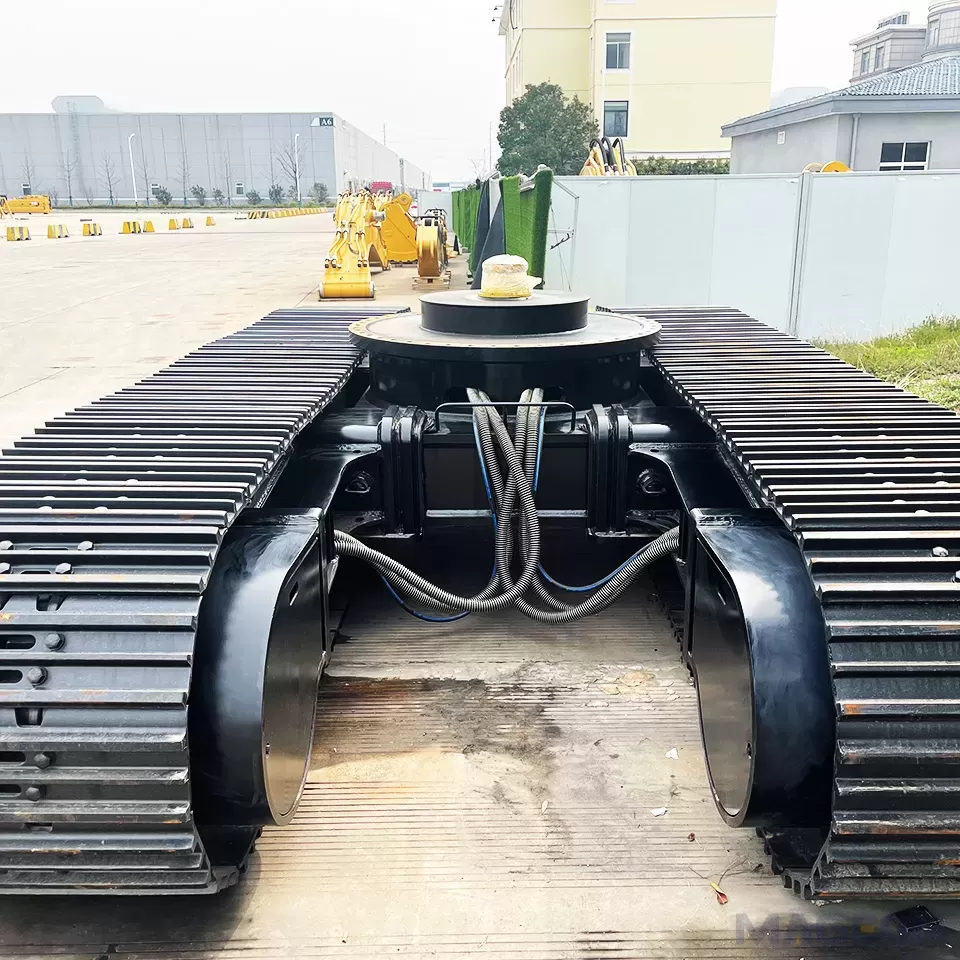
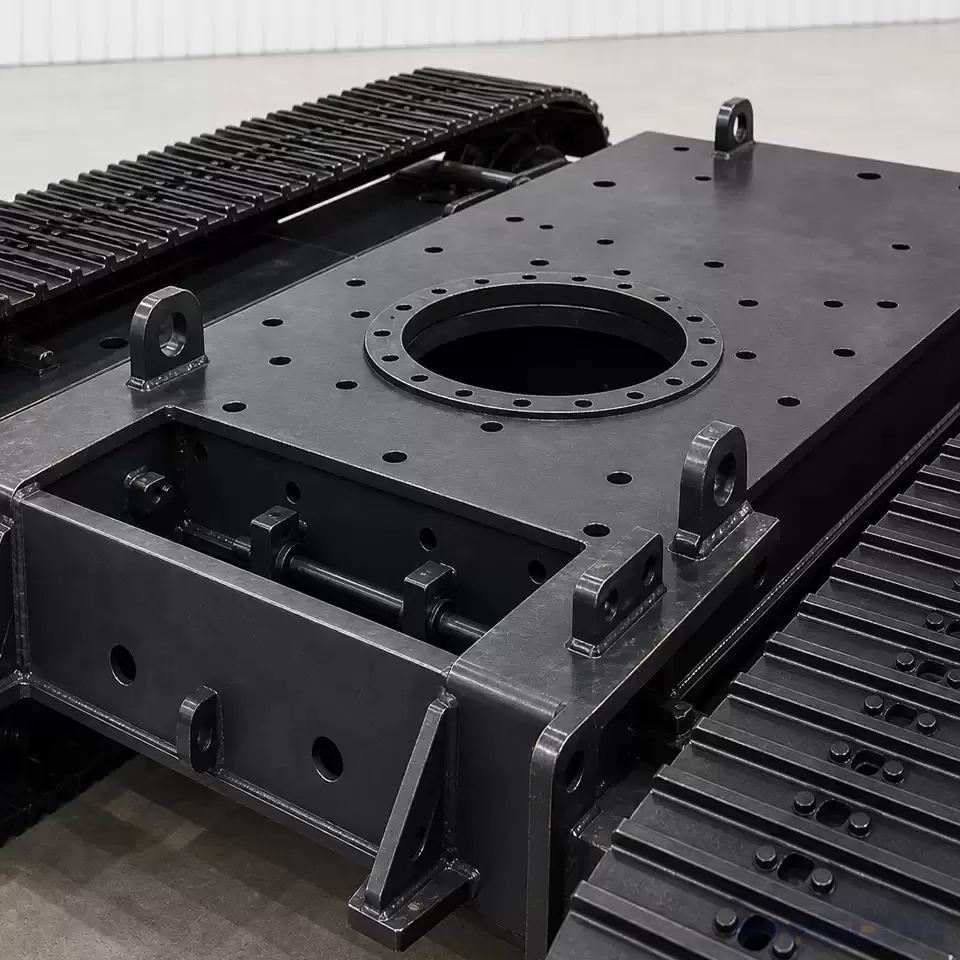
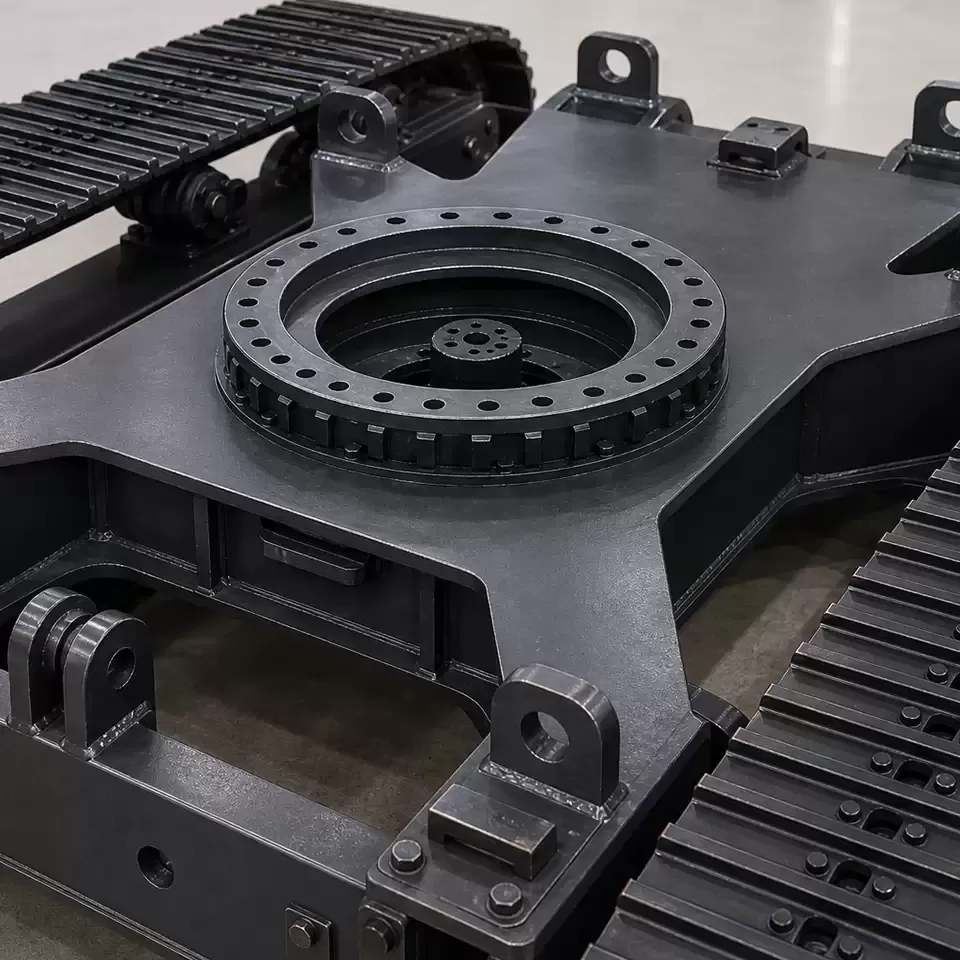
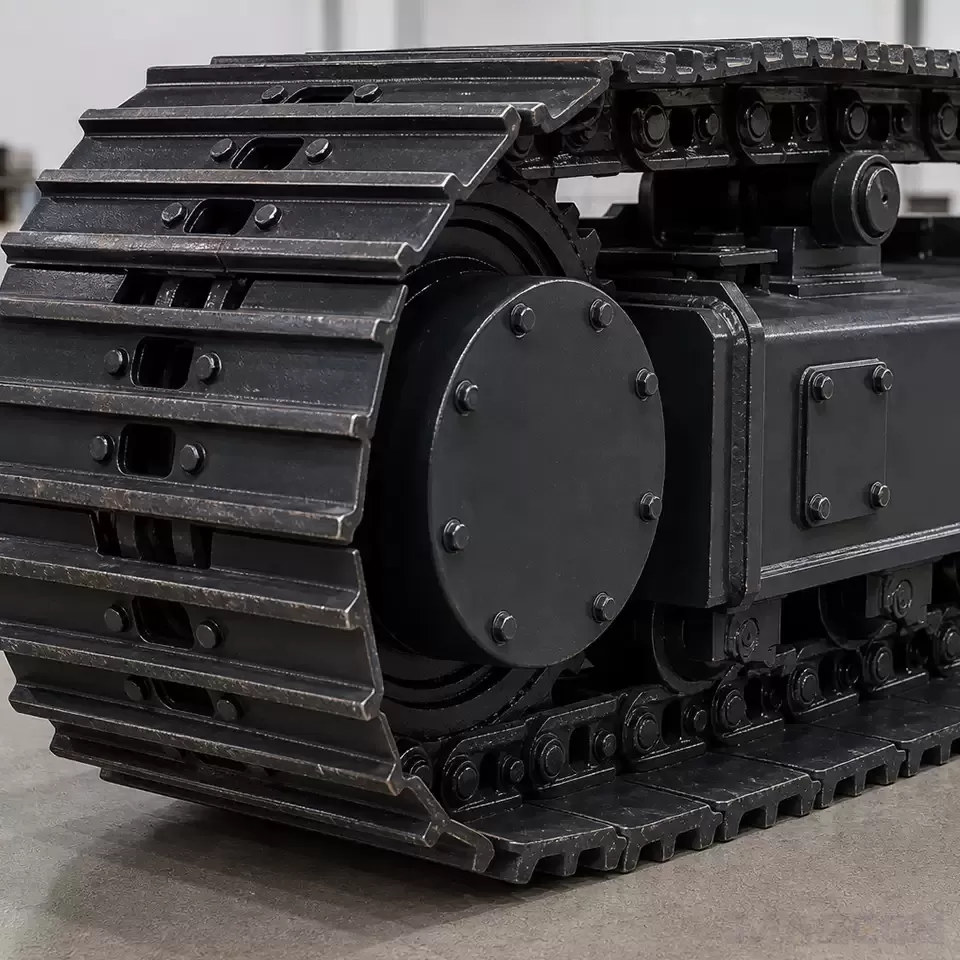
A professional manufacturer will design detailed technical drawings according to customer needs, including the overall chassis structure, track shoe dimensions, and positions of sprockets and idlers. Two key points require special attention during design:
The matching accuracy of track pitch and gauge must be ensured to achieve seamless adaptation with the equipment power system.
High-strength steel and full penetration welding process are recommended for the chassis frame to improve overall structural rigidity.
A well-optimized design can effectively reduce slipping on complex terrains and significantly improve the overall passability of the equipment.
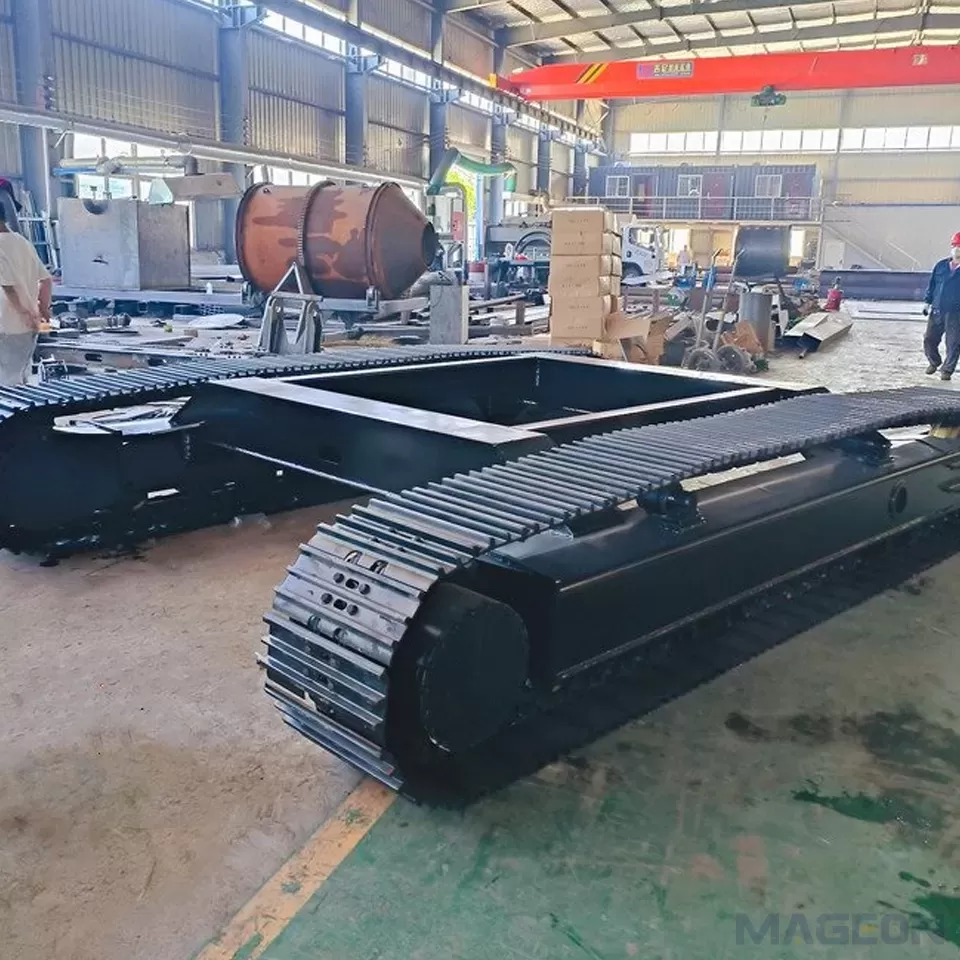
Core Customization Stages & Quality Control Standards
The complete customization process follows standardized management, with clear quality control indicators for each stage. Key details are summarized as follows:
| Customization Stage | Core Tasks | Key Control Points | Quality Standard |
|---|---|---|---|
| Demand Confirmation | Parameter collection & scenario analysis | Load capacity, working terrain, host interface parameters | 100% demand matching verification |
| Scheme Design | Structural drawing & system matching | Track pitch & gauge matching, frame rigidity design | Full penetration welding design standard |
| Material Selection | Steel grade & thickness confirmation | Wear resistance, corrosion resistance, load strength | Full material certification traceability |
| Manufacturing & Processing | Cutting, welding, assembly & debugging | Machining accuracy, heat treatment effect | Dimensional tolerance ≤ 0.5mm |
| Quality Acceptance | No-load & load test & delivery | Operation stability, structural deformation | 1.2x rated load test passed |
1. Demand Confirmation: Clarify Core Parameters Before Customization
The first step of customization is to clearly define the demand parameters, which directly determines the core configuration of the chassis such as load capacity, track width and drive mode. Customers need to provide information including total equipment weight, main working scenarios (mining, farmland, construction, etc.), and terrain conditions (flat road, muddy mountain, slope, etc.).
For example, for a 5-ton mini excavator operating in rugged mining terrain, the customization will focus on track shoe wear resistance and chassis frame strength to ensure reliable performance under long-term impact and abrasion conditions.
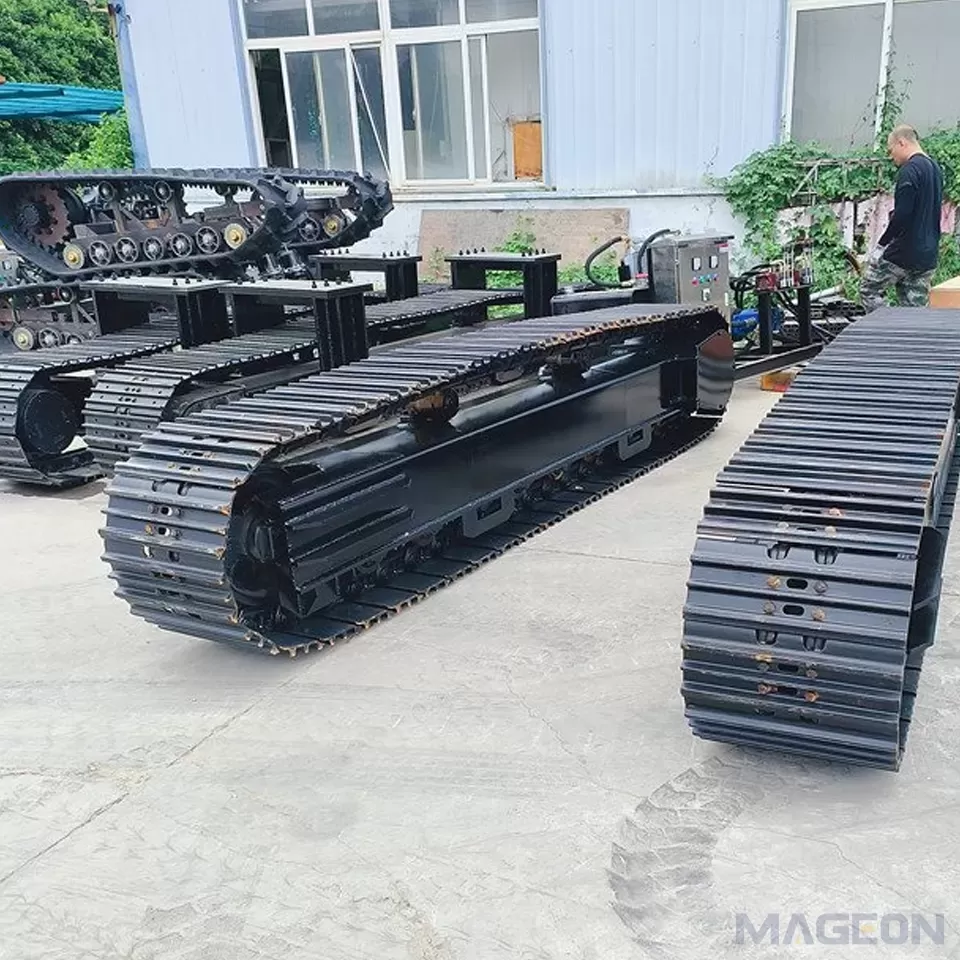
2. Scheme Design: Technical Drawings as the Blueprint of Customization
A professional manufacturer will design detailed technical drawings according to customer needs, including the overall chassis structure, track shoe dimensions, and positions of sprockets and idlers. Two key points require special attention during design:
🎖️ The matching accuracy of track pitch and gauge must be ensured to achieve seamless adaptation with the equipment power system.
🎖️ High-strength steel and full penetration welding process are recommended for the chassis frame to improve overall structural rigidity.
🎖️ A well-optimized design can effectively reduce slipping on complex terrains and significantly improve the overall passability of the equipment.
3. Material Selection: The Foundation of Long-Term Durability
Material selection is critical to the service life of steel crawler undercarriage. Common material options include:
Q345B low-alloy high-strength steel: Suitable for general working conditions, with balanced strength and cost performance.
NM400 wear-resistant steel plate: Recommended for heavy-load scenarios such as mining and quarrying, with excellent impact and abrasion resistance.
Stainless steel: Ideal for agricultural machinery operating in humid environments, with good corrosion resistance.
The material thickness shall be determined according to equipment weight and operation intensity. For heavy-load equipment, the thickness of the chassis frame is recommended to be no less than 15mm to avoid structural deformation under long-term heavy load.
4. Manufacturing & Processing: Process Details Determine Product Quality
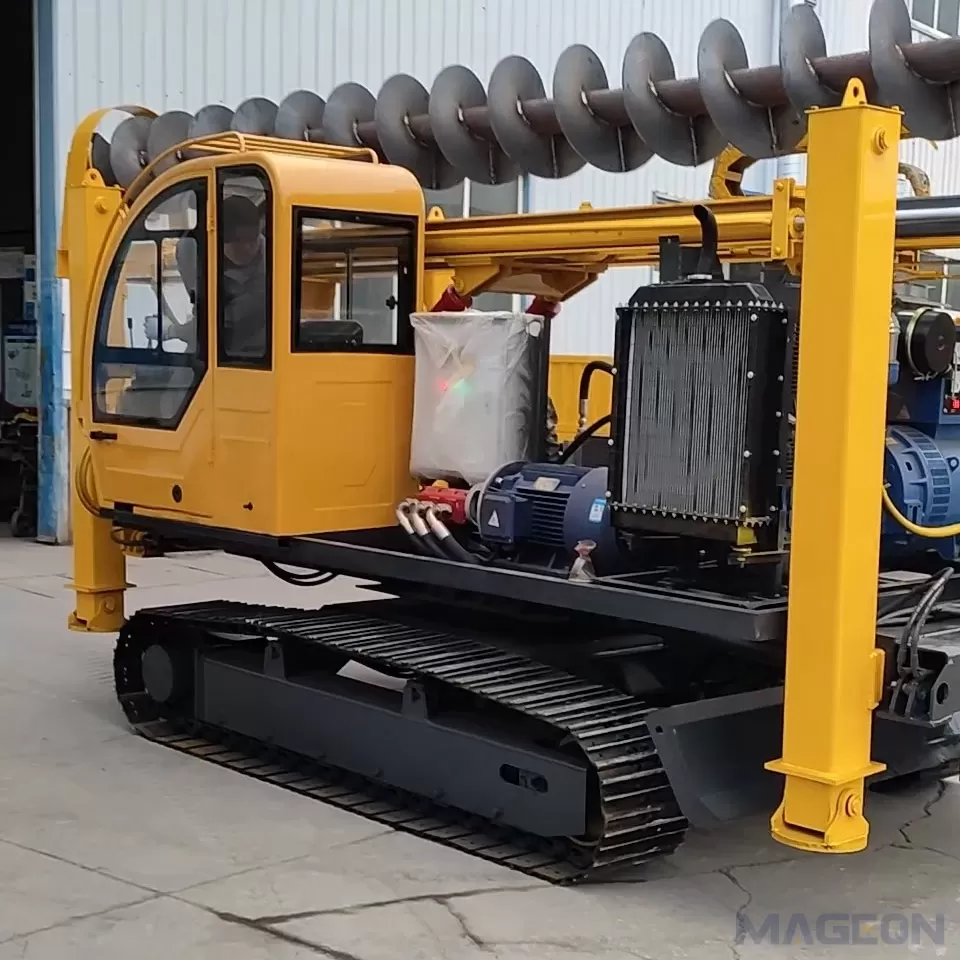
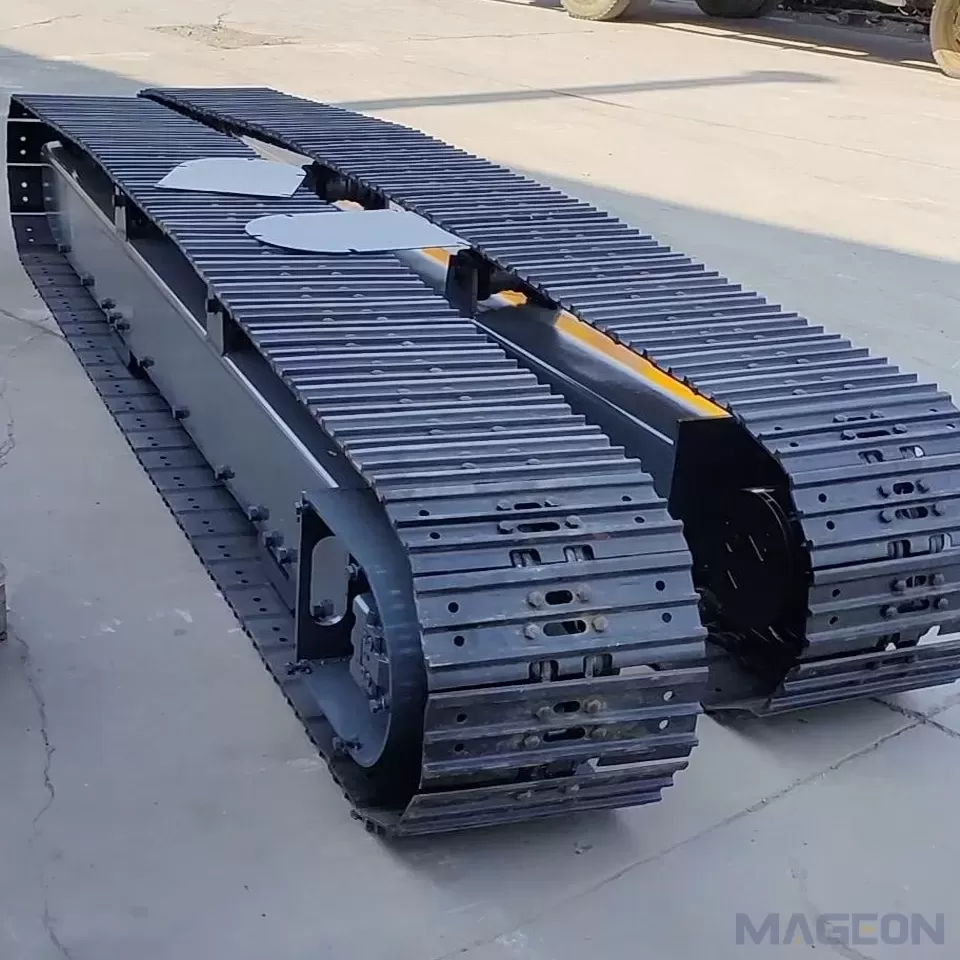
In the production process, multiple key links directly affect the final quality of the product, including quenching treatment of track shoes, flaw detection (such as X-ray inspection) after chassis welding, and meshing debugging between sprockets and tracks.
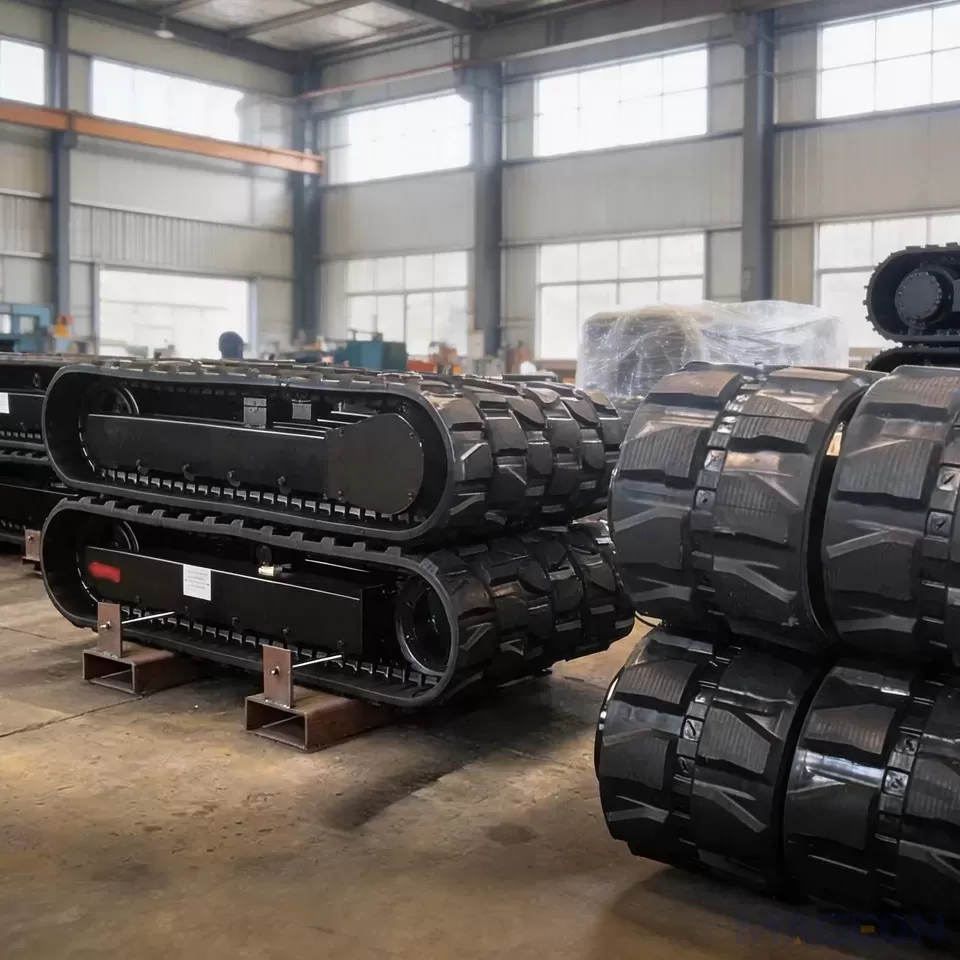
MAGEON is equipped with CNC processing equipment to ensure high precision of track shoe tooth profile and chassis frame dimensions, with dimensional error controlled within 0.5mm. This high-precision manufacturing effectively reduces abnormal noise and component wear during operation, and extends the overall service life of the chassis.
5. Quality Acceptance & After-Sales: Reliable Guarantee for Long-Term Use
Before delivery, strict performance tests will be carried out, including no-load test to check whether the chassis runs smoothly, and load test with 1.2 times the equipment weight to observe structural deformation.
MAGEON provides a standard warranty period of 6–12 months and complete after-sales maintenance support, including free replacement of wearing parts within the warranty period and regular on-site commissioning services. Customized products are not a one-time transaction — we provide long-term technical support to ensure stable operation of customer equipment.
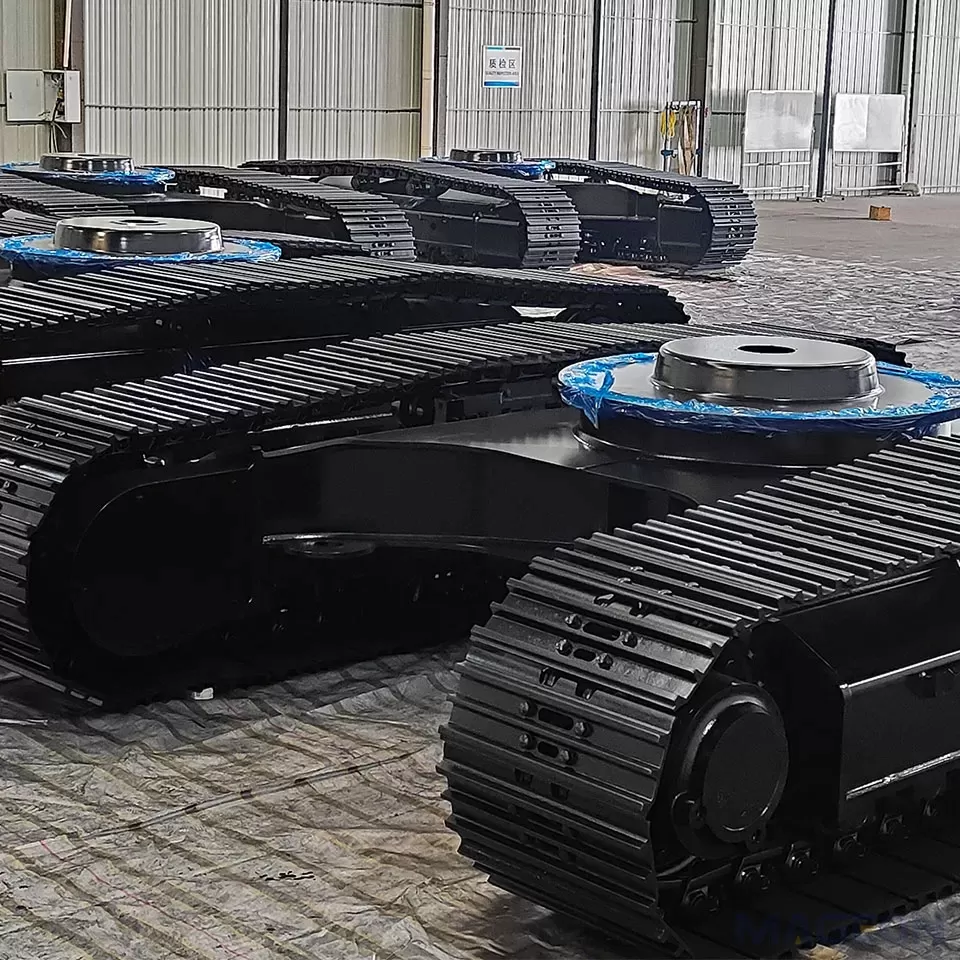
This professional custom crawler track undercarriage can achieve a perfect match with the host equipment. Choosing a professional manufacturer and clarifying your own parameters will effectively improve operation efficiency and reduce long-term maintenance costs.
Frequently Asked Questions
Q: What parameters need to be provided before customizing a steel track undercarriage?
A: You need to provide: total equipment weight, main working scenario and terrain conditions, host equipment installation interface dimensions, drive mode requirements, and any special functional requirements such as corrosion resistance and low temperature resistance. The more detailed the parameters, the higher the matching degree of the customization scheme.
Q: How long does the design phase of custom crawler chassis usually take?
A: For conventional customized solutions, the design cycle is generally 3–7 working days after demand confirmation. For highly customized special configurations, the cycle will be extended appropriately. We will provide a complete design drawing and scheme description for customer confirmation before entering the production stage.
Q: How to choose the right track shoe material for different working conditions?
A: For general construction and municipal scenarios, Q345B low-alloy steel is recommended with good cost performance; for mining and quarrying with strong abrasion, NM400 wear-resistant steel is preferred; for humid and corrosive environments such as agriculture and coastal areas, stainless steel or anti-corrosion treated steel can be selected.
Q: What is the machining accuracy of MAGEON custom undercarriage?
A: With the support of CNC processing equipment, the core dimensional tolerance of our custom undercarriage is controlled within 0.5mm, and the tooth profile accuracy of track shoes and the meshing fit of sprockets are strictly tested to ensure stable and low-noise operation of the chassis.
Q: What tests will the chassis go through before delivery?
A: Before delivery, two core tests will be carried out: no-load running test to check the smoothness of operation, steering and noise; and load test with 1.2 times the rated load to verify whether the frame structure is deformed and whether all components work normally.
Q: What is the warranty period for custom track undercarriage?
A: The standard warranty period is 6–12 months, covering manufacturing defects and structural quality problems. We also provide long-term after-sales support, including wearing parts supply, on-site commissioning and technical consultation, to reduce customers' later maintenance costs.
Q: How long is the total production cycle for custom undercarriage?
A: The total cycle depends on the customization complexity. For conventional models, the production cycle is generally 3–6 weeks after scheme confirmation. For special material and structure customization, the cycle will be adjusted accordingly. We will provide a clear delivery schedule at the initial stage of demand docking.
Q: Can the configuration be adjusted after the customization scheme is confirmed?
A: Minor adjustments such as surface treatment and accessory configuration can be supported before entering the formal production stage. Once production starts, large-scale structural modification is not supported to avoid affecting product quality and delivery cycle. It is recommended to confirm all requirements at the demand stage.
Q: What are the advantages of custom undercarriage compared with standard products?
A: Custom undercarriage can be fully matched according to the host equipment parameters and working conditions, avoiding the problems of insufficient adaptability and low efficiency of standard products. It can significantly improve equipment operation stability, extend service life, and reduce long-term comprehensive operation costs.
Q: Do you provide on-site installation and commissioning services?
A: Yes. We provide on-site installation guidance and commissioning services. Professional technicians can guide the equipment docking and debugging on site to ensure that the chassis achieves the best performance after assembly. We can also provide operation and maintenance training for the customer's team.
Applicable products:
Custom steel track undercarriage can be adapted to various types of host equipment in multiple industries. Main applicable models include:
✨ Mini & medium excavators, bulldozers and other construction machinery
✨ Drilling rigs, piling machines and engineering drilling equipment
✨ Mining transport vehicles and quarry operation equipment
✨ Agricultural machinery and orchard operation equipment
✨ Special engineering vehicles and custom operation platforms
Please leave your customization requirements, and we will contact you as soon as possible!
Leave your requirements, we'll get back to you within 24 hours.