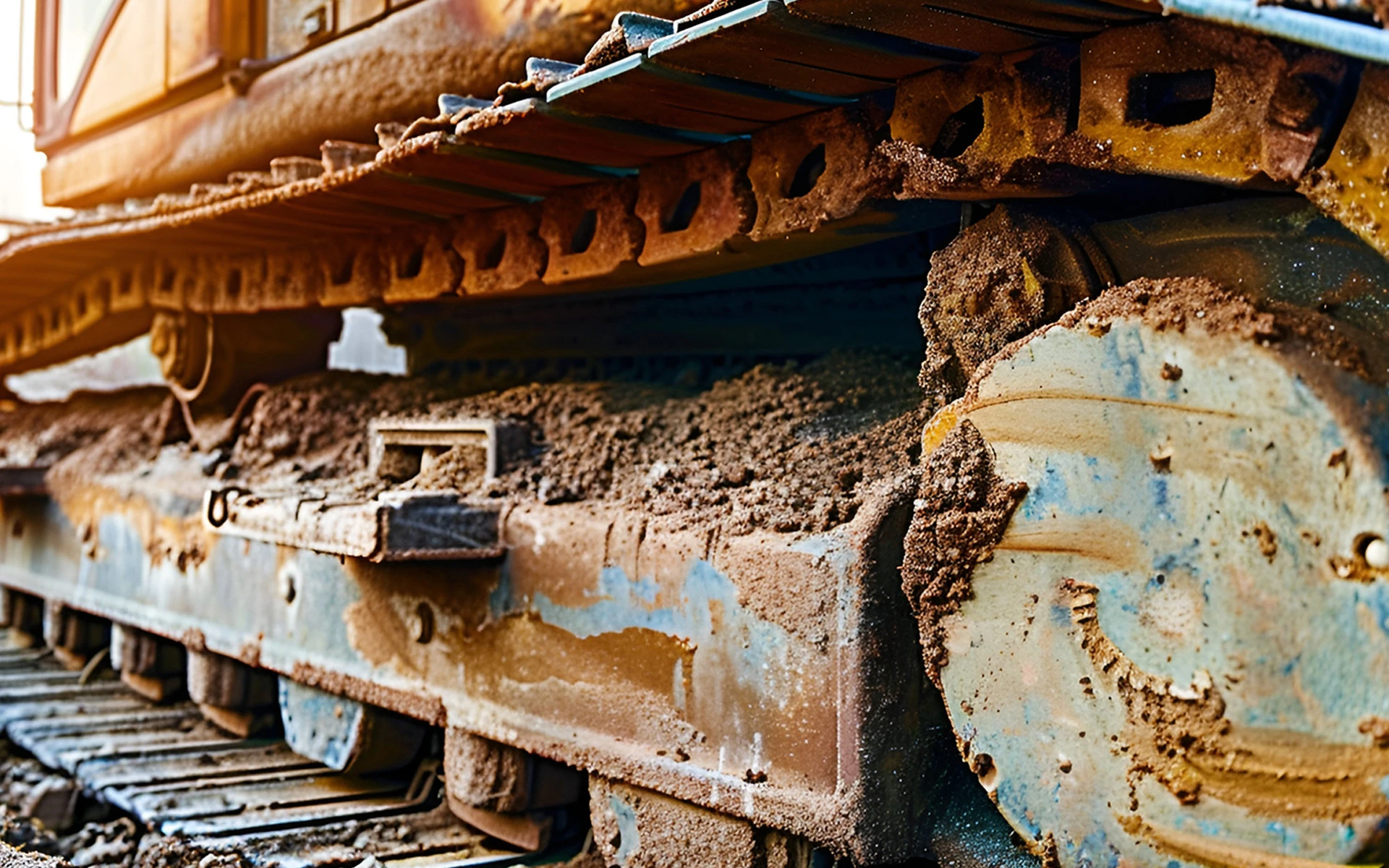
Wheeled vs Tracked Skid Steer Loader: How to Choose the Right Undercarriage for European Job Sites in 2026
The Core Question: Ground Adaptability vs. Mobility Efficiency
When European contractors, municipal authorities, and agricultural operators evaluate skid steer loader procurement, the single most consequential decision is whether to specify a wheeled or tracked configuration. This is not merely a preference — it is an engineering trade-off between ground adaptability and mobility efficiency that directly determines machine productivity, operating cost per hour, and compliance with increasingly stringent EU site regulations.
The global compact track loader market is projected to grow from approximately USD 2.5 billion in 2024 to nearly USD 4.8 billion by 2033, at a CAGR of 6.3%–7.5%, driven largely by European infrastructure modernization and the mechanization of agriculture 来源. At Bobcat Demo Days 2026 held in Dobříš, Czech Republic — the company's EMEA headquarters — the new R-Series Evolution compact track loaders (T66-2, T76-2, T86-2) and the T650 Stage V compact track loader debuted, signaling that tracked configurations are now the mainstream direction for regulated European markets
Decision Matrix: Wheeled vs. Tracked Skid Steer at a Glance
| Selection Dimension | Wheeled Skid Steer | Tracked Skid Steer (CTL) |
|---|---|---|
| Optimal Ground | Hard surfaces (asphalt, concrete, compacted gravel) | Soft/uneven terrain (mud, sand, snow, slopes) |
| Ground Pressure | High (≈35-55 kPa) | Low (≈15-30 kPa) |
| Travel Speed | Fast (12-18 km/h) | Slower (8-12 km/h) |
| Traction | Limited on loose surfaces | Superior, especially on grades >25% |
| Ground Protection | Poor — tires scuff and tear turf | Excellent — low ground pressure preserves surfaces |
| Initial Cost | Lower (baseline) | 15-30% higher |
| Undercarriage Maintenance | Simple (tire rotation/replacement) | Complex — requires tracked undercarriage inspection, tension checks, roller service |
| Lifecycle Cost | Lower per operating hour on hard ground | Higher track replacement cost, but greater productivity on soft ground may offset |
| EU Regulatory Fit | Standard CE under EN 474-3:2022 | Same CE requirements + additional tracked chassis structural integrity verification under EN 474-3:2022 |
| Typical European Applications | Urban construction, warehouse logistics, municipal road maintenance (e.g., Berlin, Paris, Milan) | Landscaping (Netherlands tulip farms), Alpine slope construction (Switzerland, Austria), peatland agriculture (Ireland, Scotland), Scandinavian snow removal |
Tracked Skid Steer Loader: Deep-Dive Analysis
Why the Tracked Undercarriage Dominates European Soft-Ground Applications
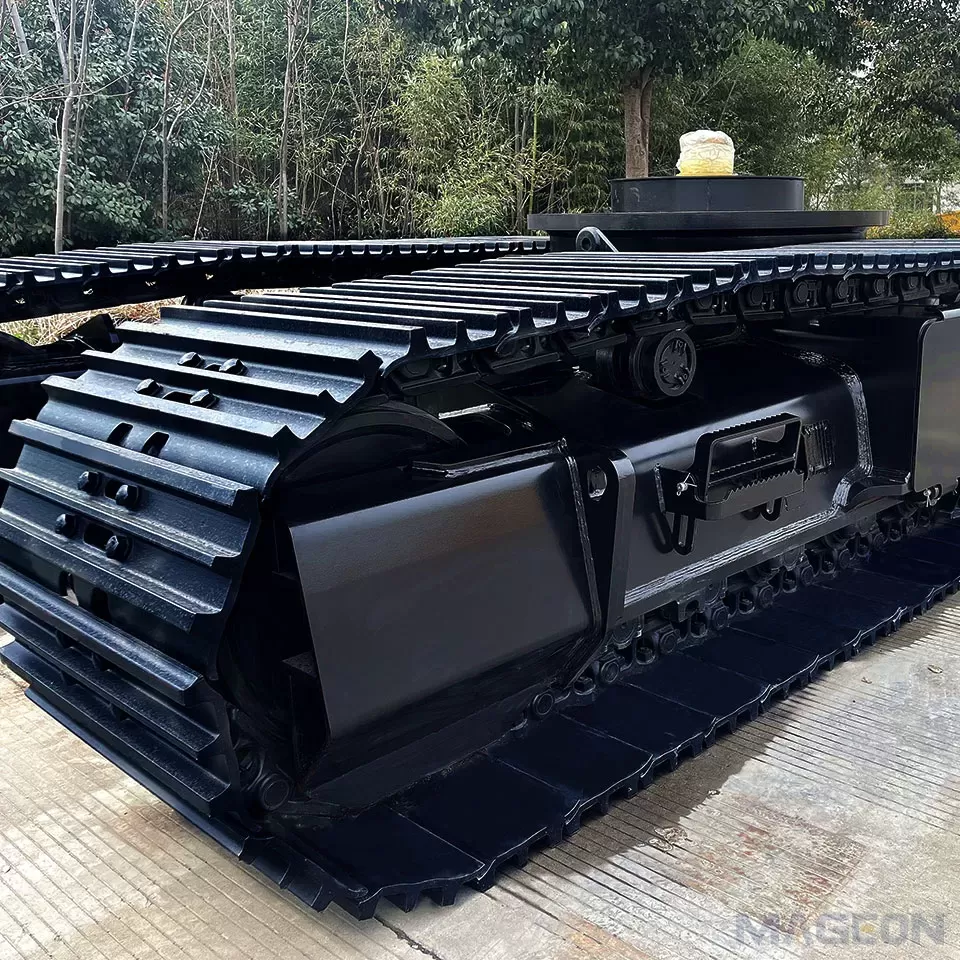
The defining advantage of a tracked skid steer loader lies in its tracked undercarriage — a system that distributes the machine's weight across a substantially larger contact patch than four pneumatic tires. On European job sites with high seasonal rainfall (e.g., UK construction sites averaging 150+ rain days per year, Dutch polder landscapes with high water tables), a wheeled skid steer loader will routinely bog down where a compact track loader continues operating.
Key technical parameters of a quality tracked undercarriage:
| Parameter | Standard Range | Why It Matters |
|---|---|---|
| Ground Pressure | 15–30 kPa | Below 20 kPa is considered "turf-friendly"; essential for EU landscaping tenders |
| Track Width | 320–450 mm | Wider tracks = lower ground pressure, but increased turning resistance |
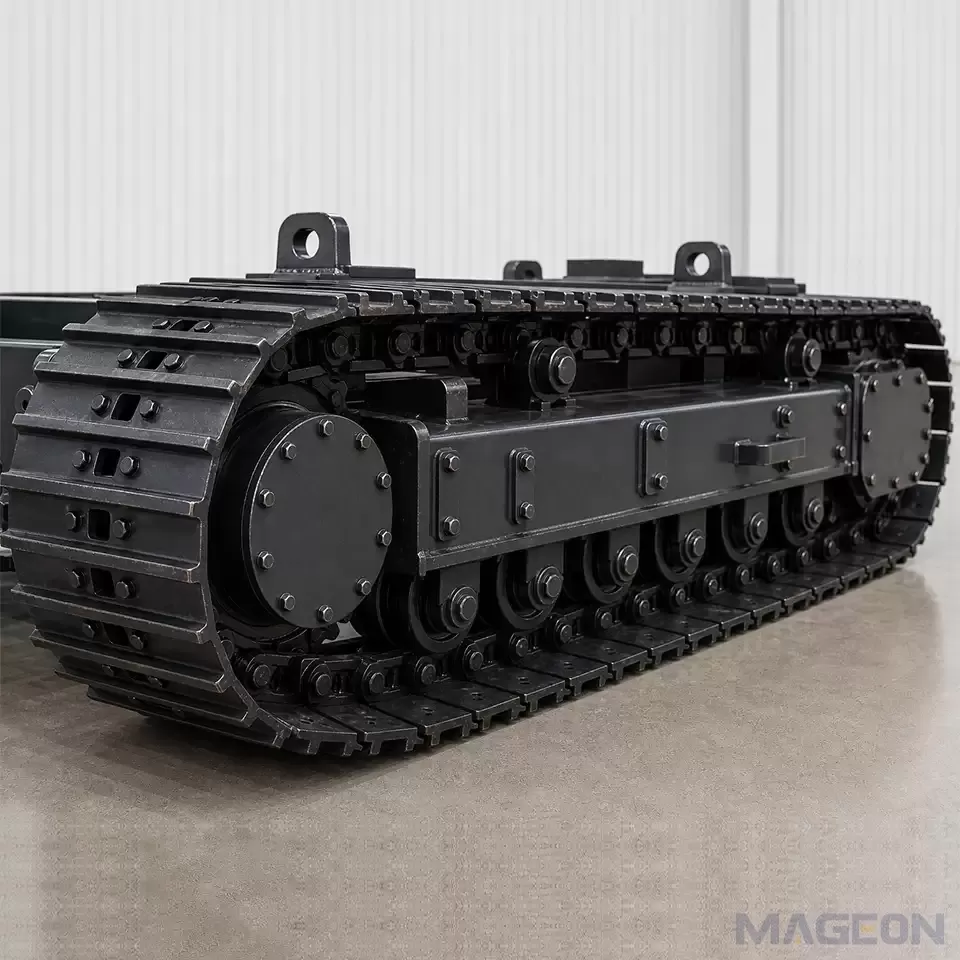
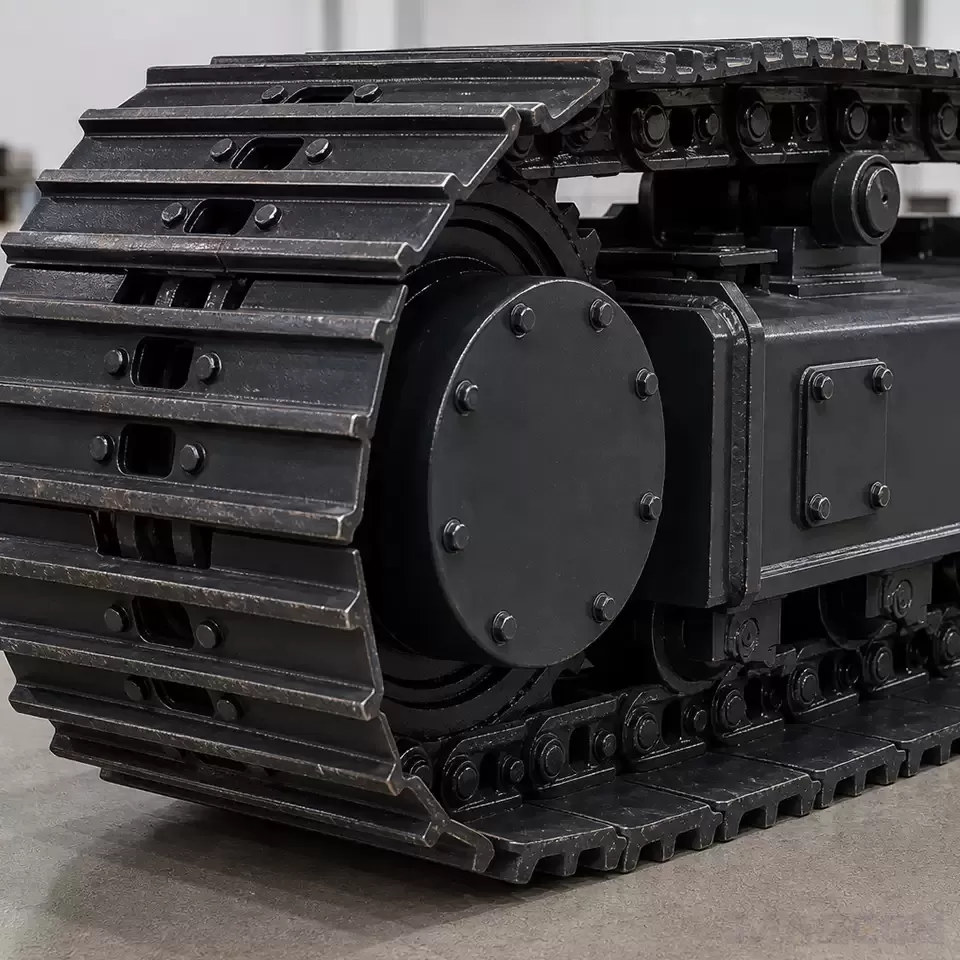
| Roller Configuration | 4–5 double-flange rollers per side | Distributes load evenly; reduces point-load wear on rubber tracks |
| Track Tension Range | 2%–3% sag under machine weight | Under-tension → derailment risk; over-tension → accelerated roller/bushing wear |
| Sprocket Pitch | Matched to track pitch (±0.5mm tolerance) | Mismatch causes "spocket jump" and premature track failure |
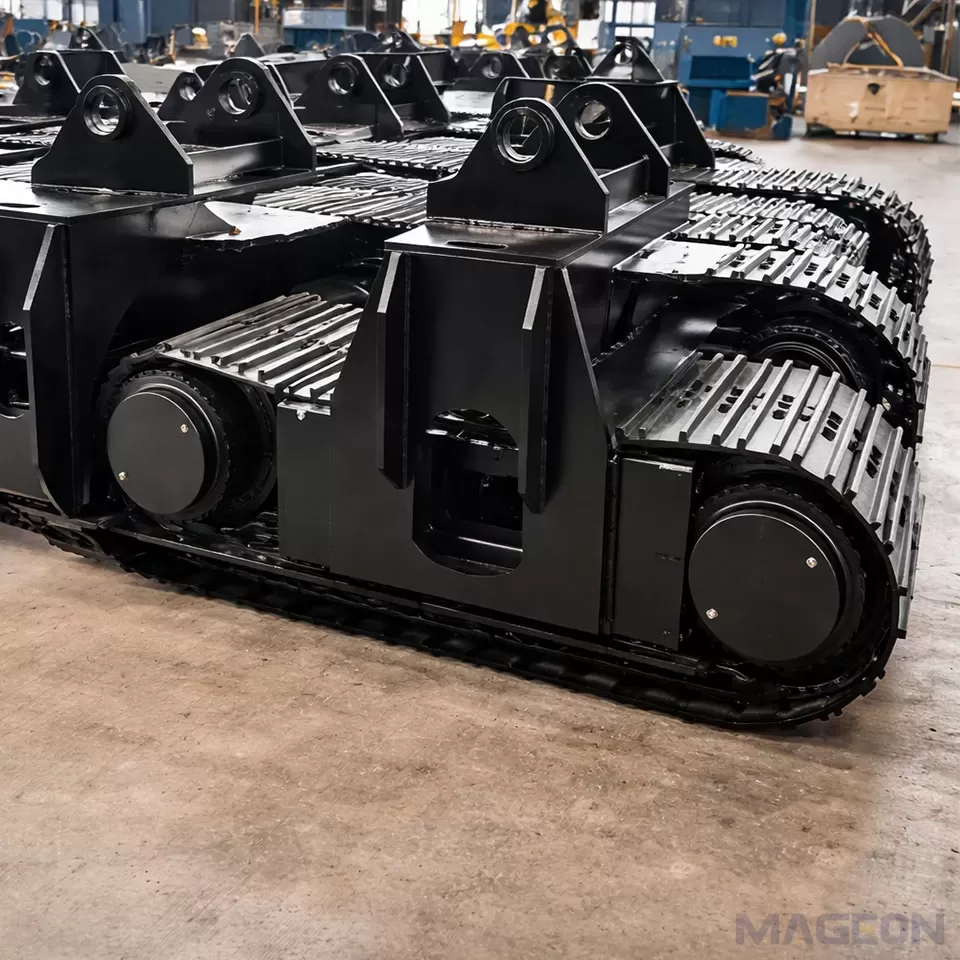
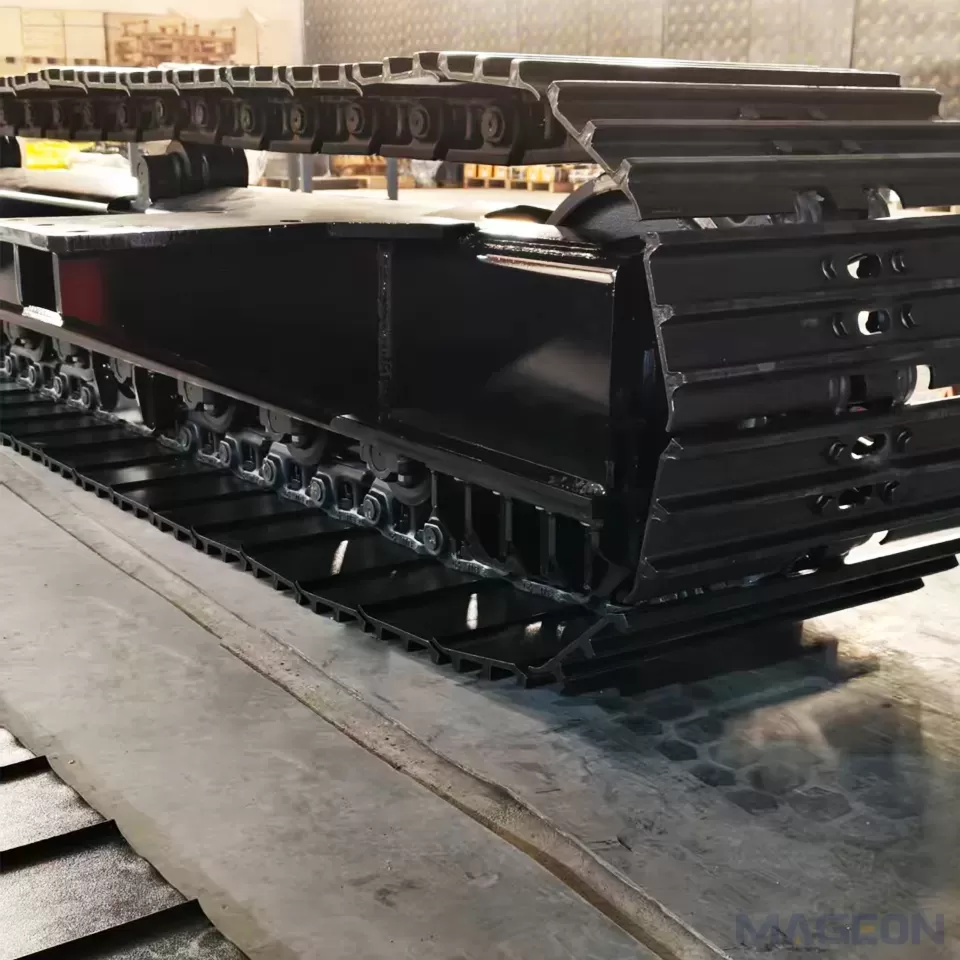
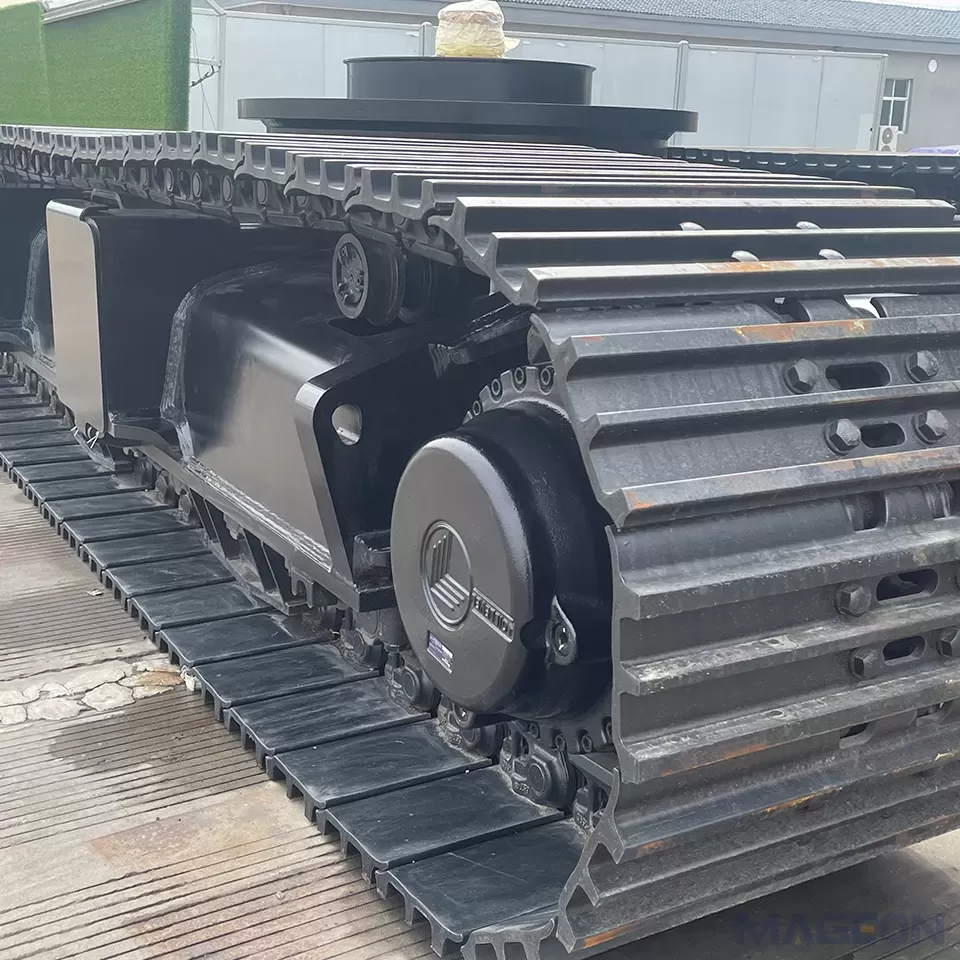
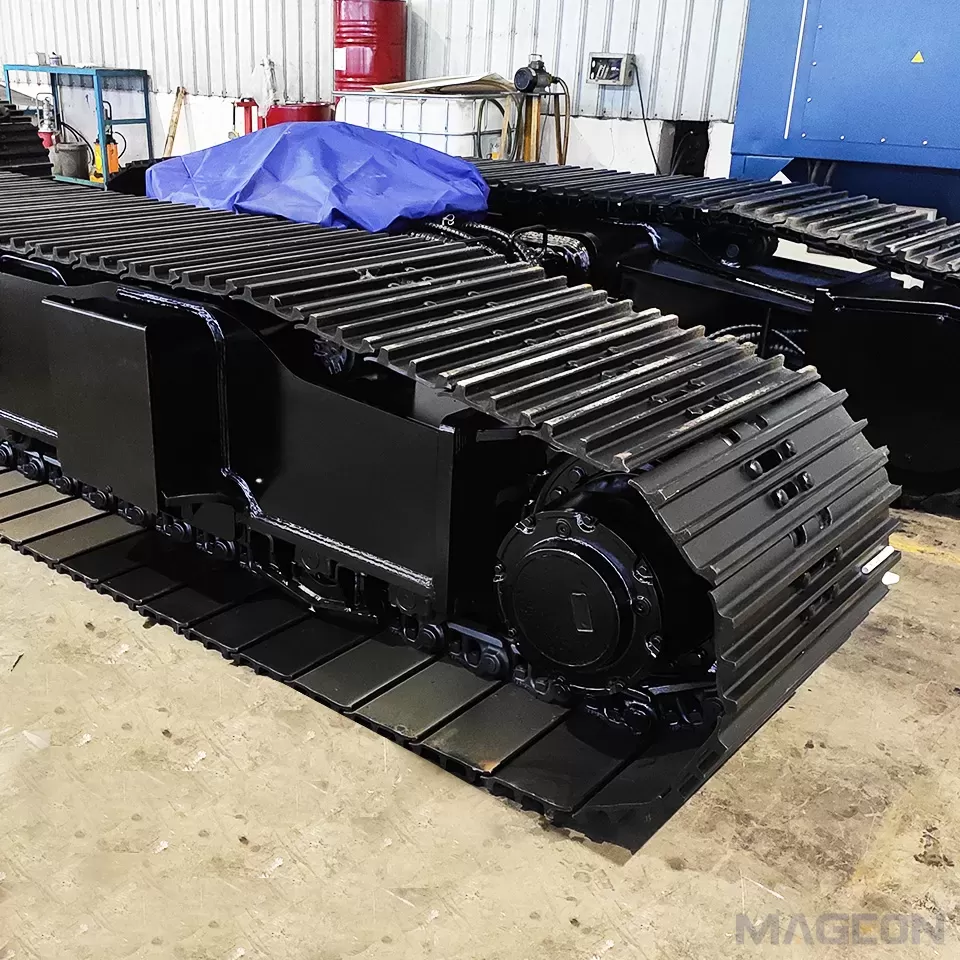
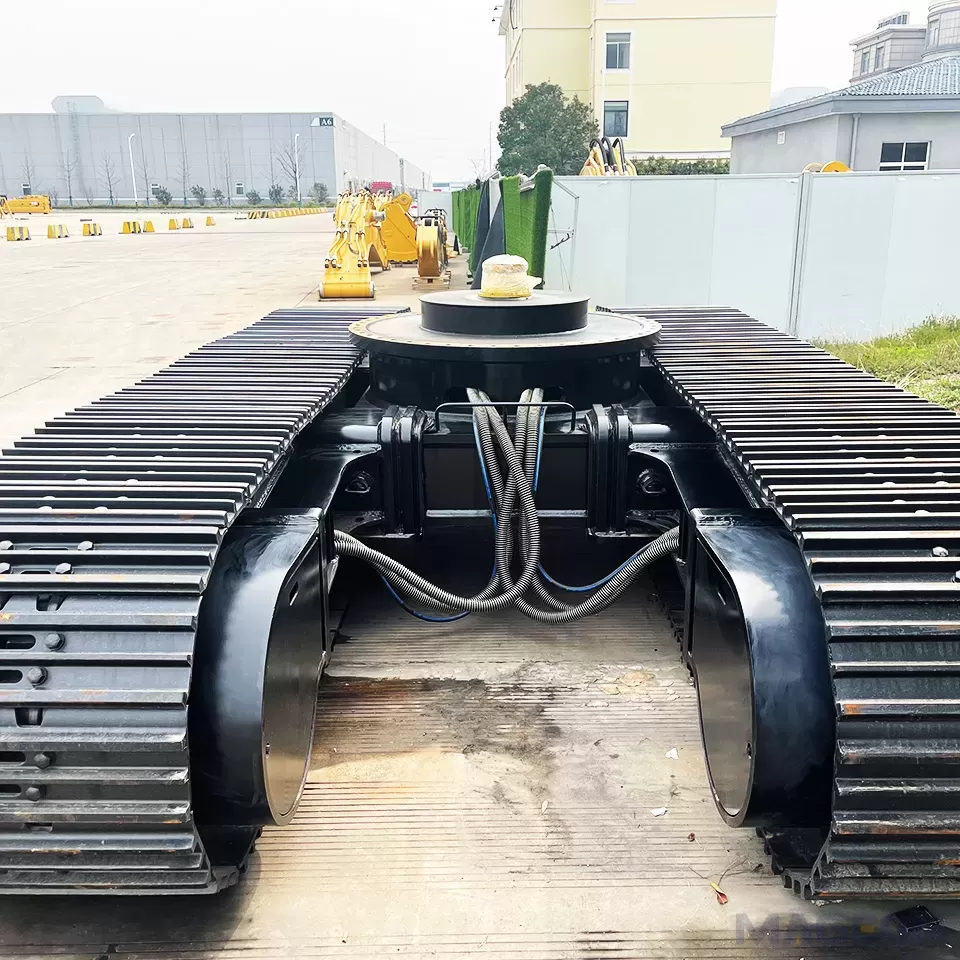
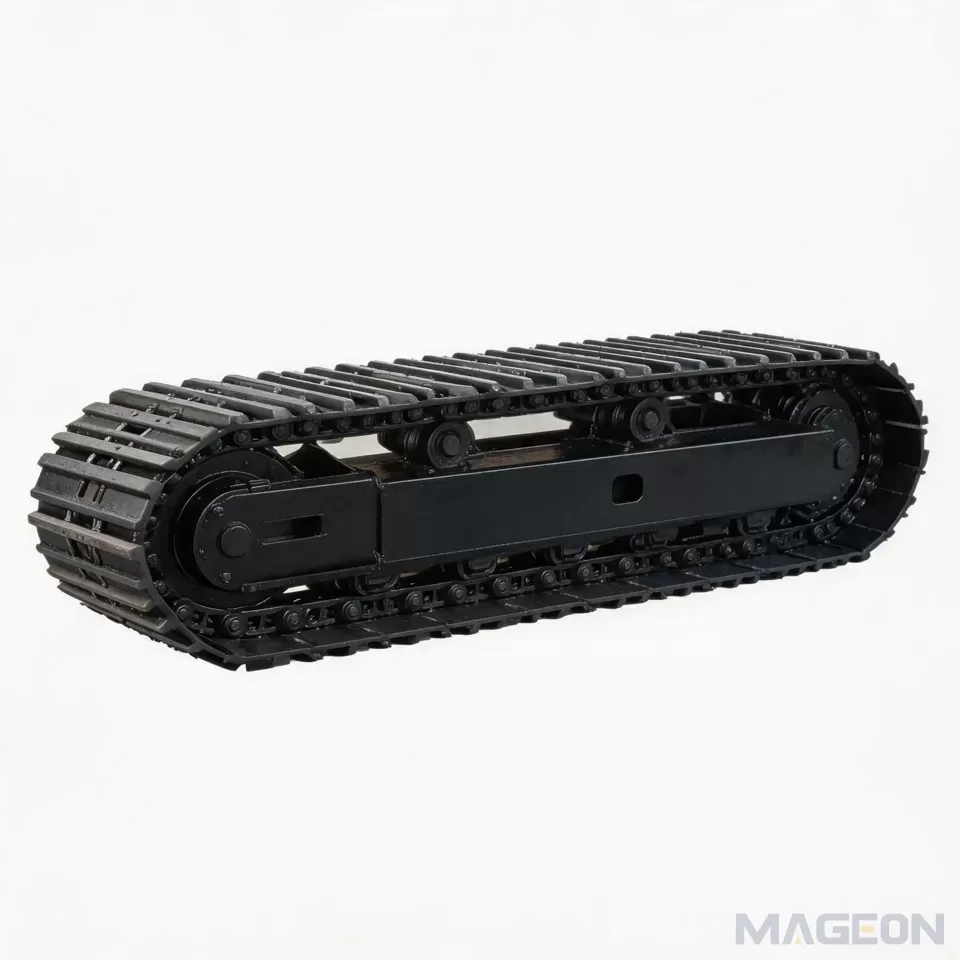
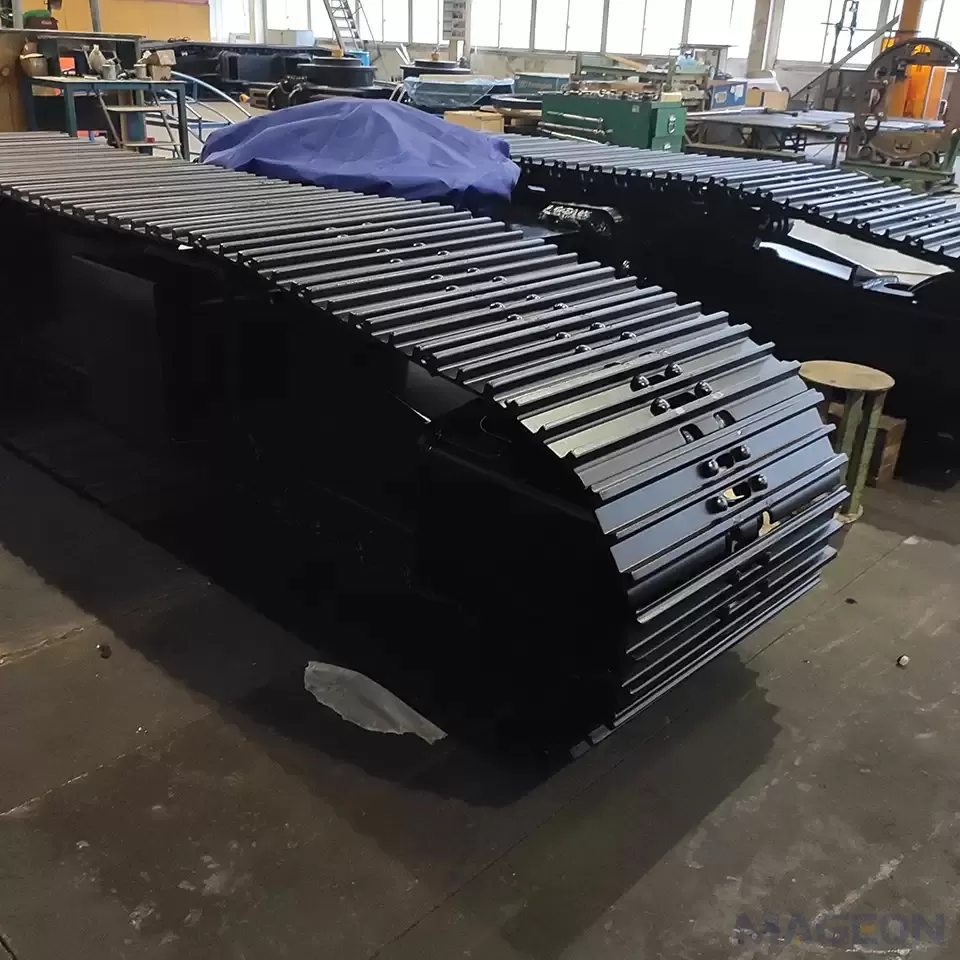
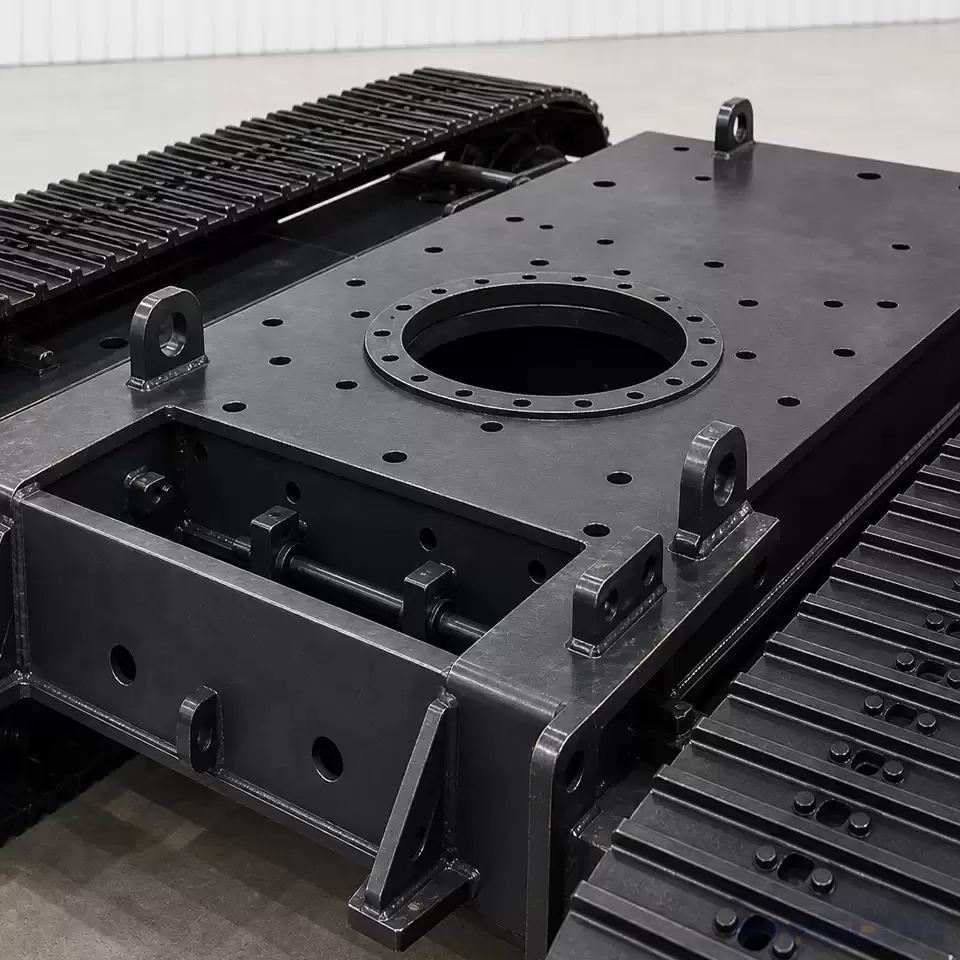
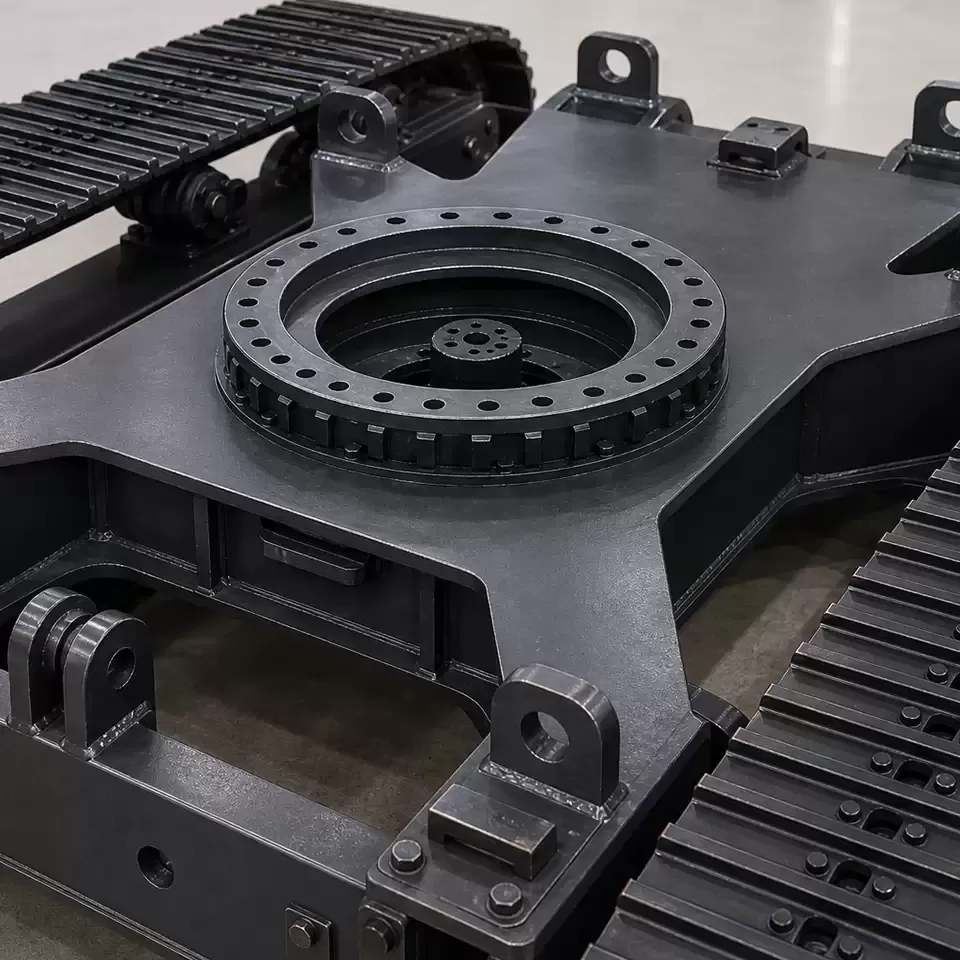
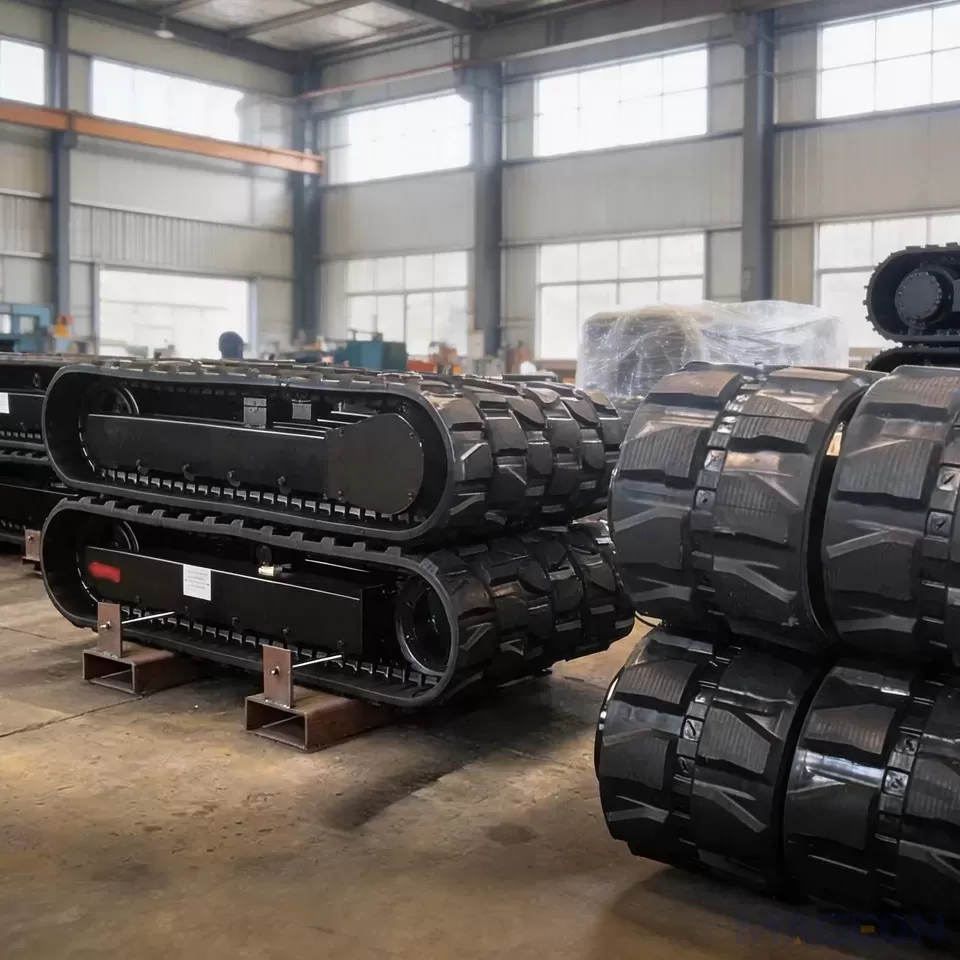
A well-engineered track chassis is the structural backbone of any compact track loader. Unlike a wheeled axle assembly, a track chassis must absorb multidirectional impact loads — vertical from uneven terrain, lateral from side-slope operations, and longitudinal from pushing and grading forces. In European alpine applications (Swiss cantonal road maintenance, Austrian ski resort infrastructure), the track chassis is subjected to freeze-thaw cycles that demand corrosion-resistant steel grades and sealed bearing assemblies.
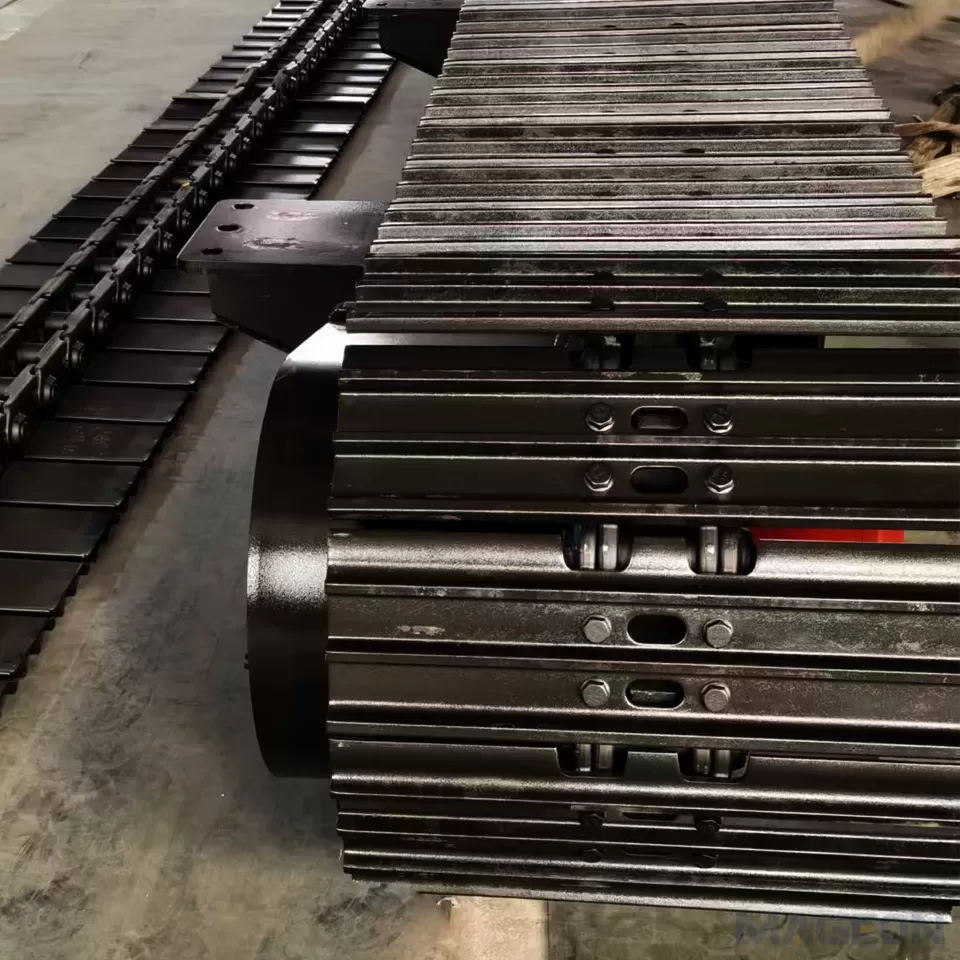
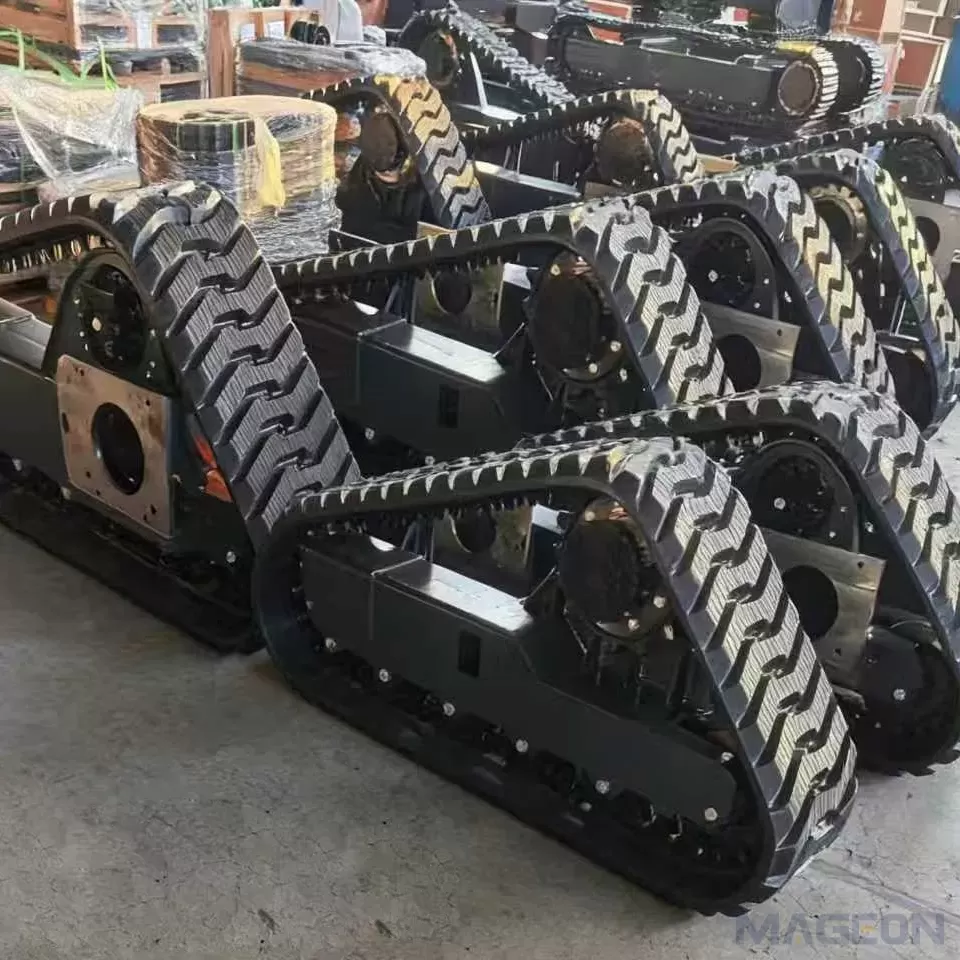
| Comparison Dimension | Steel Track Undercarriage | Rubber Track Undercarriage |
|---|---|---|
| Best Terrain | Demolition sites, quarries, rocky terrain, scrap yards | Landscaping, agriculture, asphalt/concrete surfaces, turf |
| Traction on Hard Rock | Superior — steel grousers bite into rock | Limited — rubber flexes and slips on sharp rock |
| Surface Damage | Severe — will gouge asphalt, tear turf, crack concrete | Minimal — non-marking compounds available for sensitive surfaces |
| Wear Life | 2,000–4,000 operating hours in moderate conditions | 800–1,500 operating hours, shorter in abrasive environments |
| Replacement Cost | Higher per-unit cost but longer interval | Lower per-unit cost, more frequent replacement |
| Noise Level | High — 85–95 dB(A) at operator position | Moderate — 75–82 dB(A), compliant with EU 2003/10/EC noise directive |
| Vibration | High — transmitted to operator and chassis components | Low — rubber absorbs shock, reducing operator fatigue |
| EU Urban Compliance | Often restricted in German/Dutch city centers (noise/vibration ordinances) | Preferred for urban European projects; meets BBodSchG soil protection requirements |
| Typical MAGEON Recommendation | Demolition, quarrying, scrap handling, extreme-duty forestry | General construction, landscaping, municipal maintenance, agriculture across EU |
Common Track Chassis Failure Modes and European Site Prevention
European B2B fleet managers should be aware of the following track chassis failure patterns identified from field data across German, French, and UK contractor fleets:
Roller Bearing Seizure: Caused by water ingress through degraded seals — particularly common in Scandinavian and UK wet-climate operations. Prevention: specify double-lip nitrile seals and implement 250-hour grease intervals.
Idler Misalignment: Lateral frame deflection under continuous side-slope work (Alpine grading, Dutch dike maintenance). Prevention: reinforced track chassis frame gussets and 500-hour alignment checks.
Track De-tensioning: Rubber track elongation beyond 3% of original pitch length. Prevention: weekly tension checks using the "two-finger sag test" at mid-span between the drive sprocket and front idler.
Sprocket Tooth Wear: Accelerated when rubber track pitch no longer matches sprocket pitch due to track stretch. Prevention: replace track and sprocket as a matched set.
Wheeled Skid Steer Loader: When It's Still the Right Choice
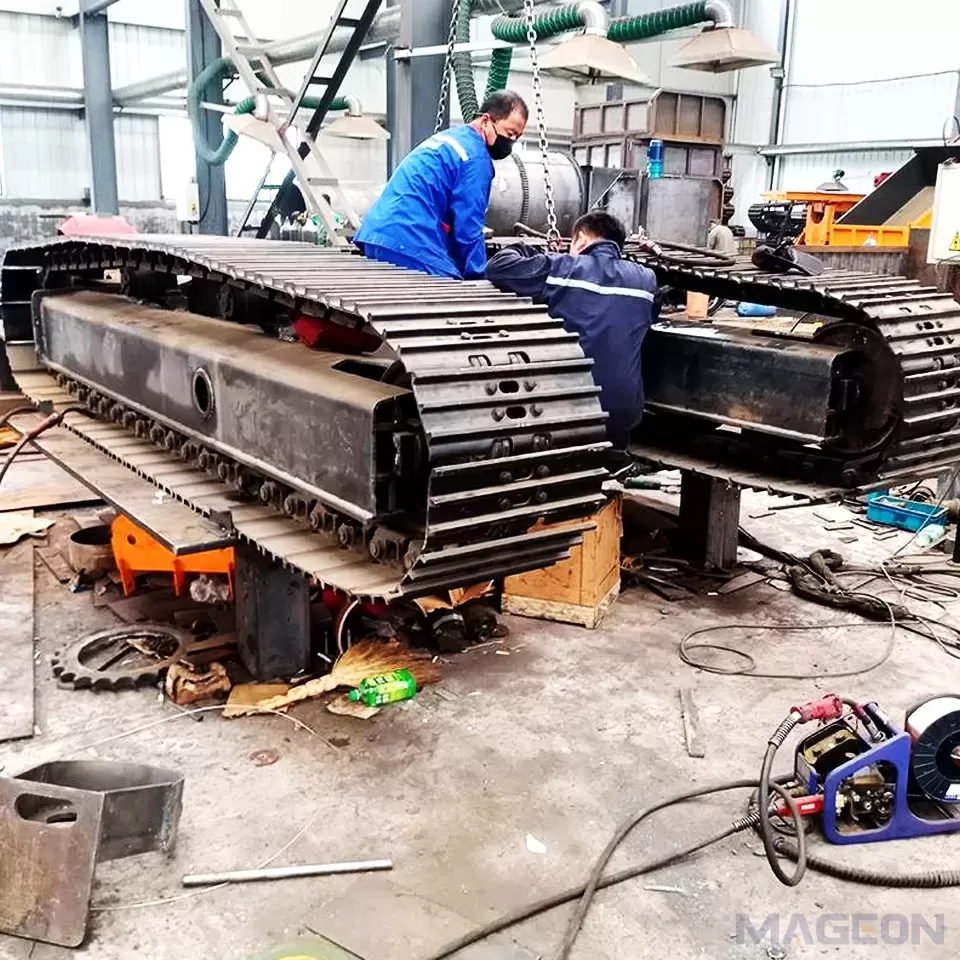
Despite the market shift toward tracked configurations, wheeled skid steer loaders remain the superior choice for a specific subset of European applications:
Multi-Site Logistics Operations: Large agricultural cooperatives in France (e.g., cereal farms in Beauce region) and German industrial parks where machines frequently travel 500m–2km between work zones on paved roads.
Indoor Demolition & Warehouse: Confined-space work where the tighter turning radius and absence of track marks on finished concrete floors are essential.
Budget-Constrained Municipal Fleets: Eastern European municipalities where initial purchase price is the dominant procurement criterion.
Dedicated Hard-Surface Operations: Port warehouses (Rotterdam, Hamburg), logistics centers, and recycling facilities with continuous concrete/asphalt surfaces.
The OTT (Over-the-Tire) Track Option: Bridging the Gap
For European operators who already own a wheeled skid steer loader but occasionally encounter soft-ground conditions, MAGEON supplies Over-the-Tire (OTT) rubber track systems that convert a wheeled machine into a temporary tracked configuration without modifying the track chassis.
OTT Advantages for European Operators:
Bolt-on installation in 30–45 minutes — no permanent tracked undercarriage modification required
Reduces ground pressure by approximately 40-60% vs. bare tires
Preserves asphalt and paving stone surfaces in sensitive EU heritage zones (e.g., Italian historic centers, French village squares)
Seasonal flexibility: install OTT tracks for winter mud season in UK/Ireland, remove for summer hard-surface work
EU Regulatory Compliance: What 2026–2027 Means for Your Undercarriage Choice
European B2B buyers must account for two critical regulatory milestones when procuring skid steer loaders:
EN 474-3:2022 — Earth-Moving Machinery Safety Standard for Loaders
This harmonized standard under the Machinery Directive mandates specific requirements for both wheeled and tracked configurations, including: ROPS/FOPS cab certification, hydraulic lock valves on lift cylinders, three-stage braking systems (service, emergency, parking), and structural integrity verification of the tracked chassis under dynamic loading conditions. As of 2026, EN 474-3:2022 is the mandatory compliance pathway for CE marking of loaders exported to the EU
EU Machinery Regulation (EU) 2023/1230 — Effective 20 January 2027
The new regulation replaces Directive 2006/42/EC and introduces mandatory traceability requirements — every major component of the tracked undercarriage (rollers, idlers, sprockets, track links) must bear permanent, machine-readable identification for lifecycle tracking. MAGEON has already implemented laser-marked component traceability across its full track chassis product line in preparation for this regulatory transition
Total Cost of Ownership: European Fleet Economics
A 5-year TCO comparison for a mid-size skid steer loader operating 1,200 hours/year in a typical European mixed-terrain application (Netherlands/Germany benchmark):
| Cost Category | Wheeled | Tracked (Rubber) | Tracked (Steel) |
|---|---|---|---|
| Initial Purchase | 45,000–55,000 | 58,000–72,000 | 65,000–80,000 |
| 5-Year Undercarriage Replacement | 3 sets tires ≈ 6,000 | 4-5 sets rubber tracks ≈ 12,000–18,000 | 1-2 sets steel tracks ≈ 8,000–14,000 |
| Undercarriage Maintenance Labor | 500/year | 1,200/year | 900/year |
| Downtime Cost (Soft Ground) | High — frequent bog-downs | Low | Low |
| Fuel Efficiency Penalty | Baseline | +8-12% (higher rolling resistance) | +12-18% (higher weight + resistance) |
| Residual Value at Year 5 | 35-40% | 40-45% | 45-50% |
Bottom Line: For European contractors with ≥40% soft-ground operating hours, the tracked configuration — despite higher upfront and maintenance costs — typically delivers a 15-25% lower effective cost per cubic meter of material moved, primarily through reduced downtime and higher daily throughput.
MAGEON's Tracked Undercarriage Engineering Advantage for the European Market
MAGEON designs and manufactures tracked undercarriage systems specifically calibrated for European operating conditions. Our engineering approach incorporates:
Corrosion-Resistant Steel Grades: All track chassis frames use Q355NE or S355J2WP structural steel with hot-dip galvanized finish, tested to 1,000-hour salt spray (ISO 9227) for Nordic and coastal European durability.
Sealed-for-Life Roller Assemblies: Double-lip polyurethane seals with synthetic hydrocarbon grease, eliminating the 250-hour re-grease interval required by conventional designs — critical for remote European forestry and agricultural sites.
Modular Tracked Chassis Architecture: Interchangeable roller, idler, and sprocket modules across MAGEON's full product range, reducing European dealer inventory requirements and enabling same-day field repairs.
CE Compliance Documentation Package: Every MAGEON tracked undercarriage ships with a full EU Declaration of Conformity, risk assessment dossier (per EN ISO 12100), and component traceability records — ready for EU Machinery Regulation 2023/1230 transition
Applicable products:
Steel track chassis (5-120 tons)
Four wheels and one belt (supporting wheels/driving wheels/guide wheels/track shoes/chain rail joints)
Please leave your customization requirements, and we will contact you as soon as possible!
Leave your requirements, we'll get back to you within 24 hours.