MAGEON: Your European Partner for Premium Rubber Crawler Track Undercarriage Solutions — Engineered for Sensitive Terrain
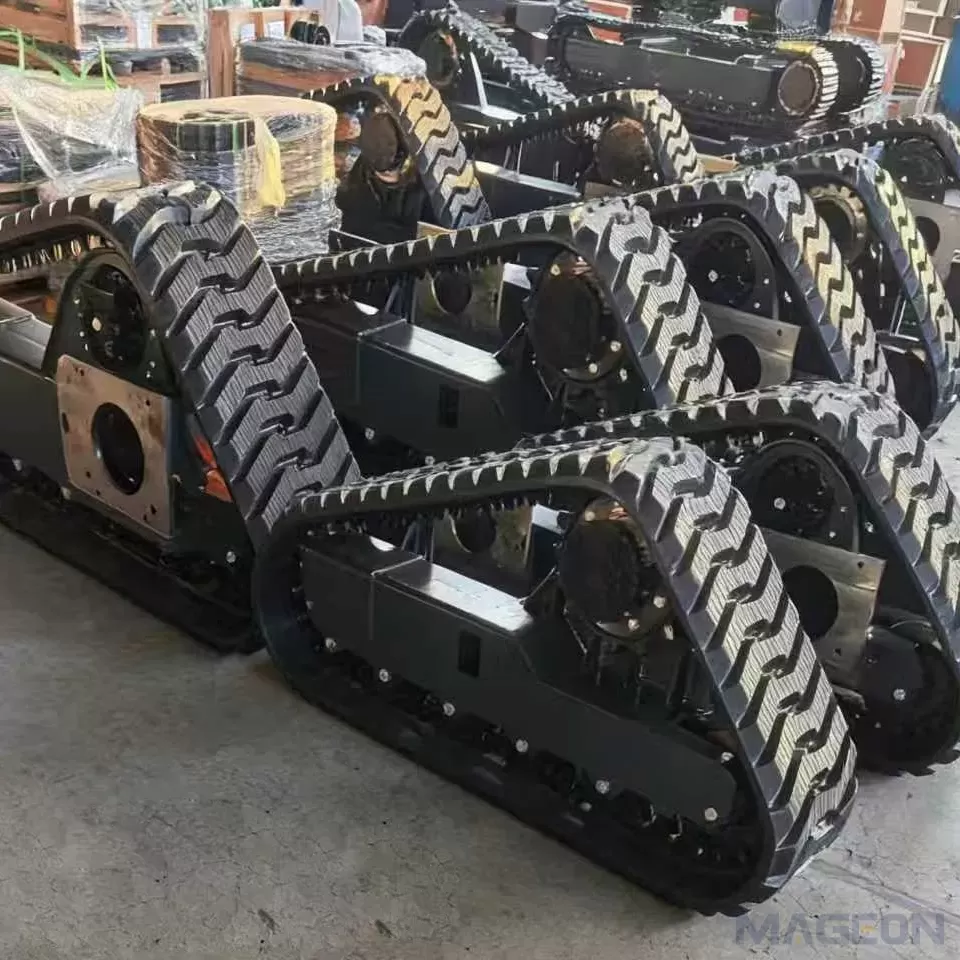
In the evolving landscape of European industrial manufacturing, the demand for high-performance, application-specific crawler track undercarriage systems has reached unprecedented levels. As infrastructure projects grow in complexity and environmental regulations become more stringent — particularly under the EU Green Deal and national soil protection directives — the need for advanced walking systems that combine load-bearing capability with ground protection has moved from optional to essential. MAGEON has positioned itself as a dedicated engineering partner for European equipment manufacturers and distributors seeking premium rubber crawler chassis solutions that meet the continent's exacting technical and regulatory standards.
Part I: The European Market Shift — Why Rubber Track Undercarriages Are Dominating
The Paradigm Shift from Steel to Application-Specific Rubber Systems
For decades, the heavy machinery industry defaulted to steel tracks for any application requiring durability. But the modern European construction, agricultural, and municipal sectors tell a fundamentally different story. Urban densification projects in cities like Paris, Berlin, and Amsterdam demand equipment that can operate on finished asphalt and paved plazas without causing surface damage that costs thousands of euros to repair. Agricultural operations across France, the Netherlands, and Denmark face increasingly strict soil compaction regulations that penalise operators for degrading arable land. Indoor demolition and renovation in occupied buildings require zero floor marking.
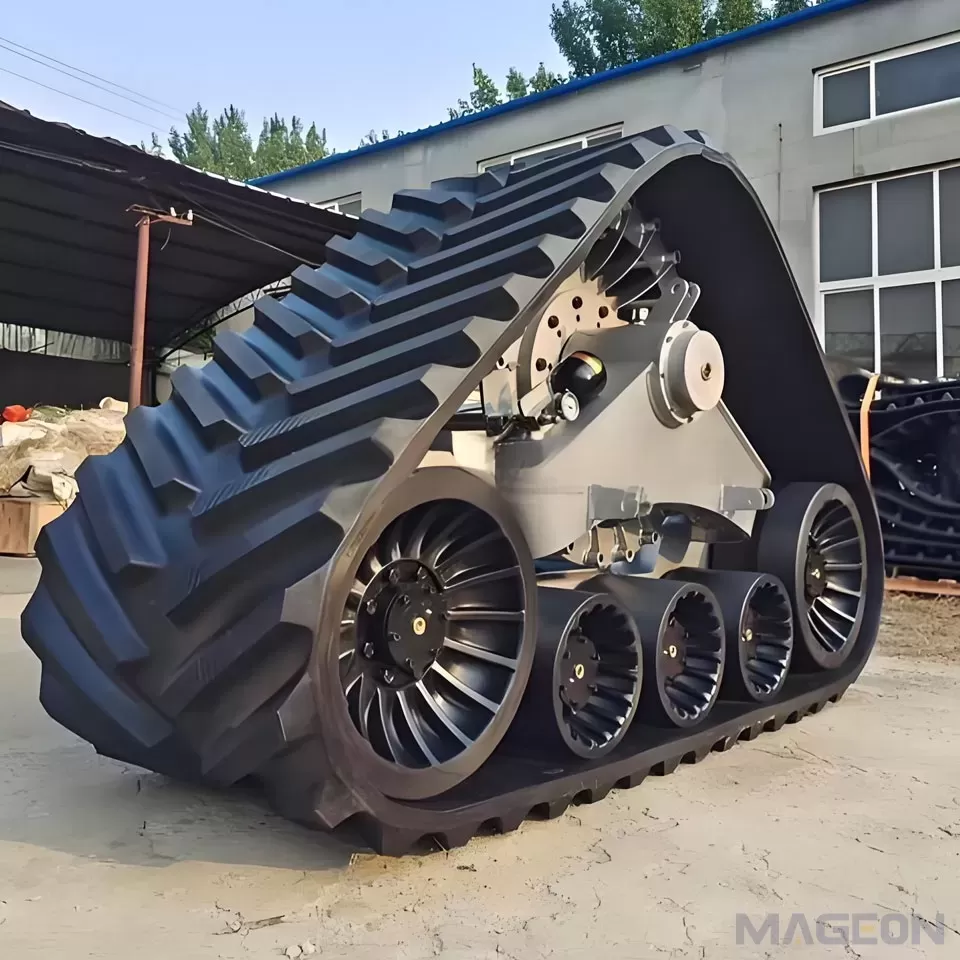
This has created a structural market shift toward rubber crawler track undercarriage systems. These systems distribute the machine's weight across a larger contact area — typically achieving ground pressure as low as 0.15-0.30 kg/cm² compared to 0.50-1.00 kg/cm² for equivalent steel configurations — while the rubber compound absorbs surface irregularities and eliminates the scoring, gouging, and vibration damage associated with steel grousers.
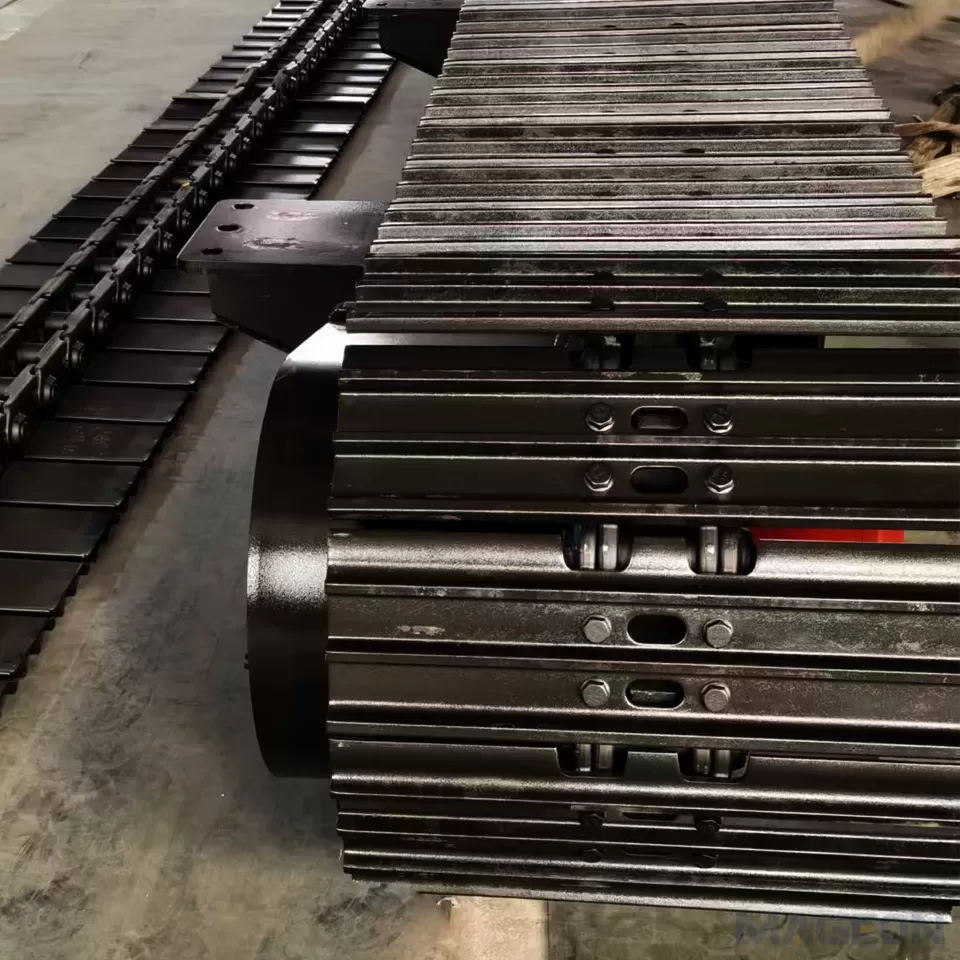
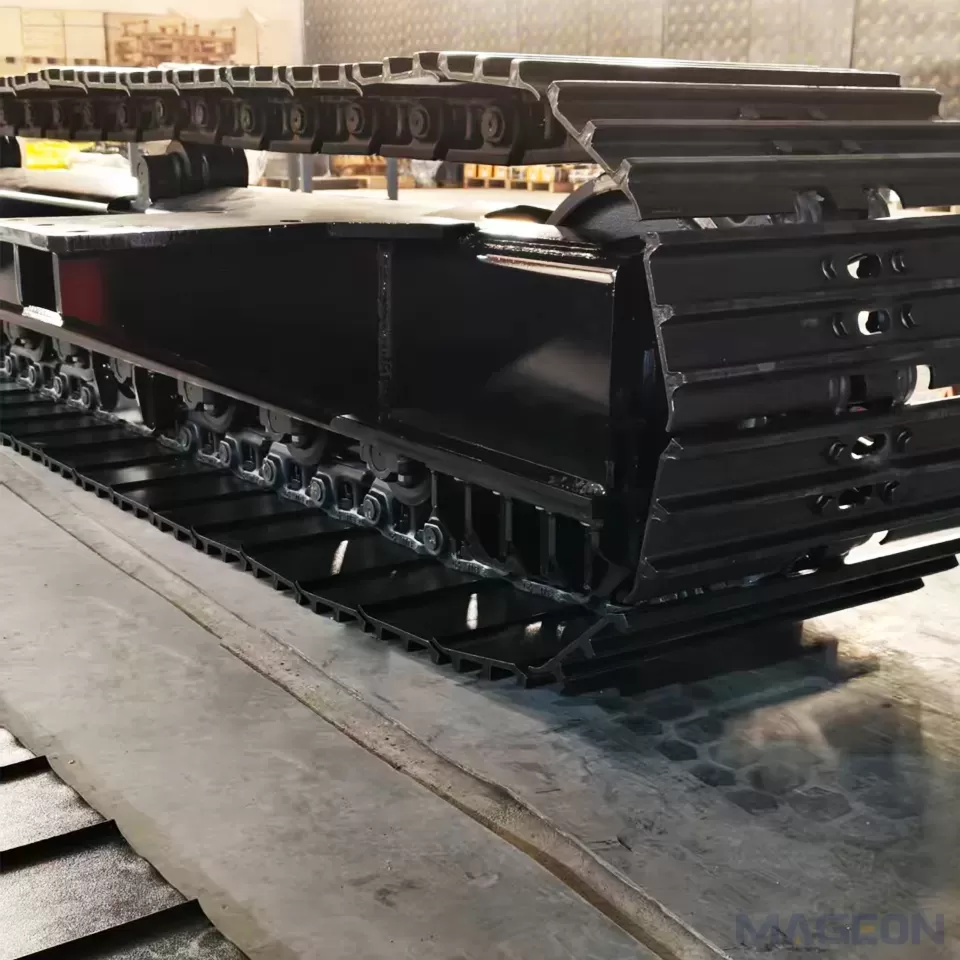
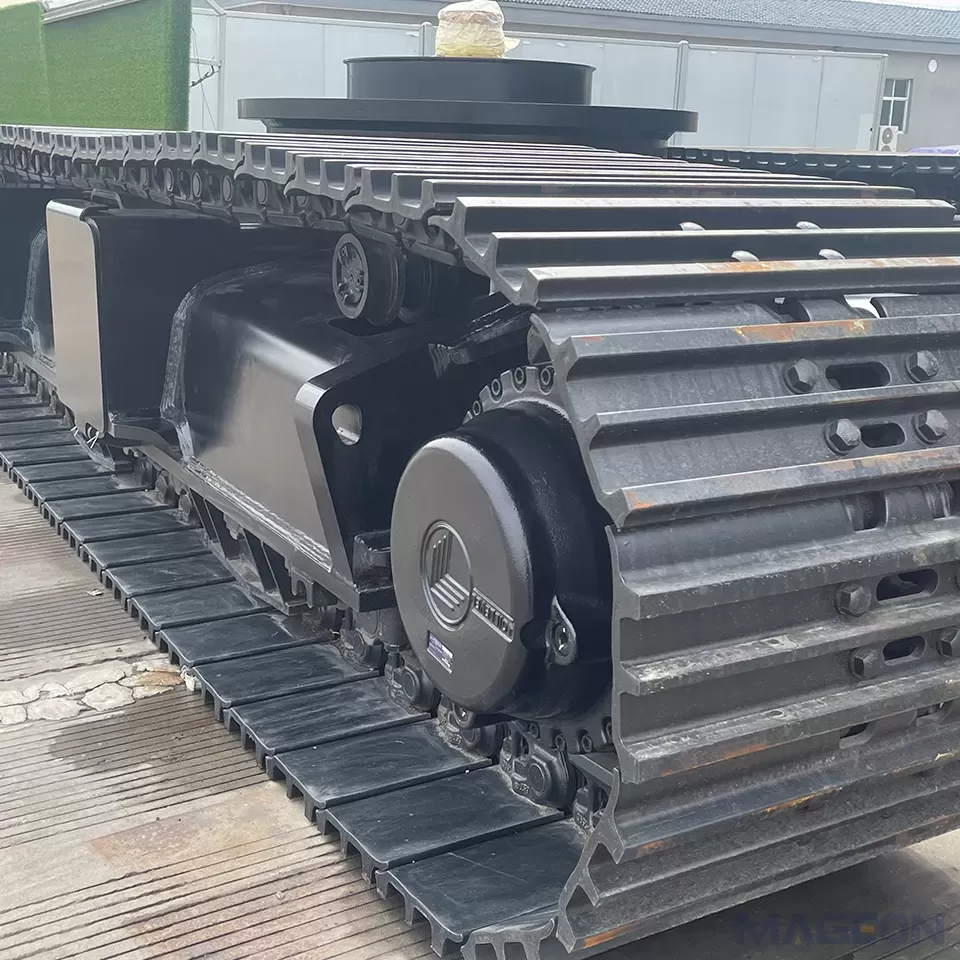
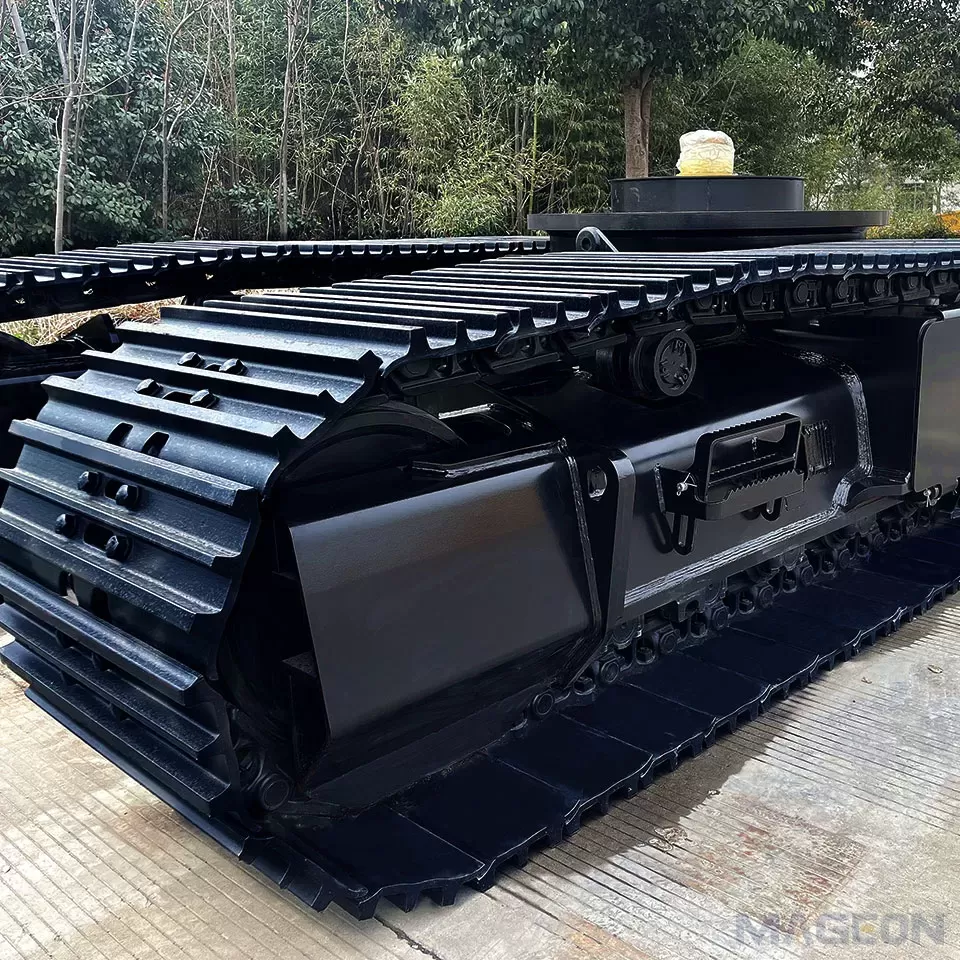
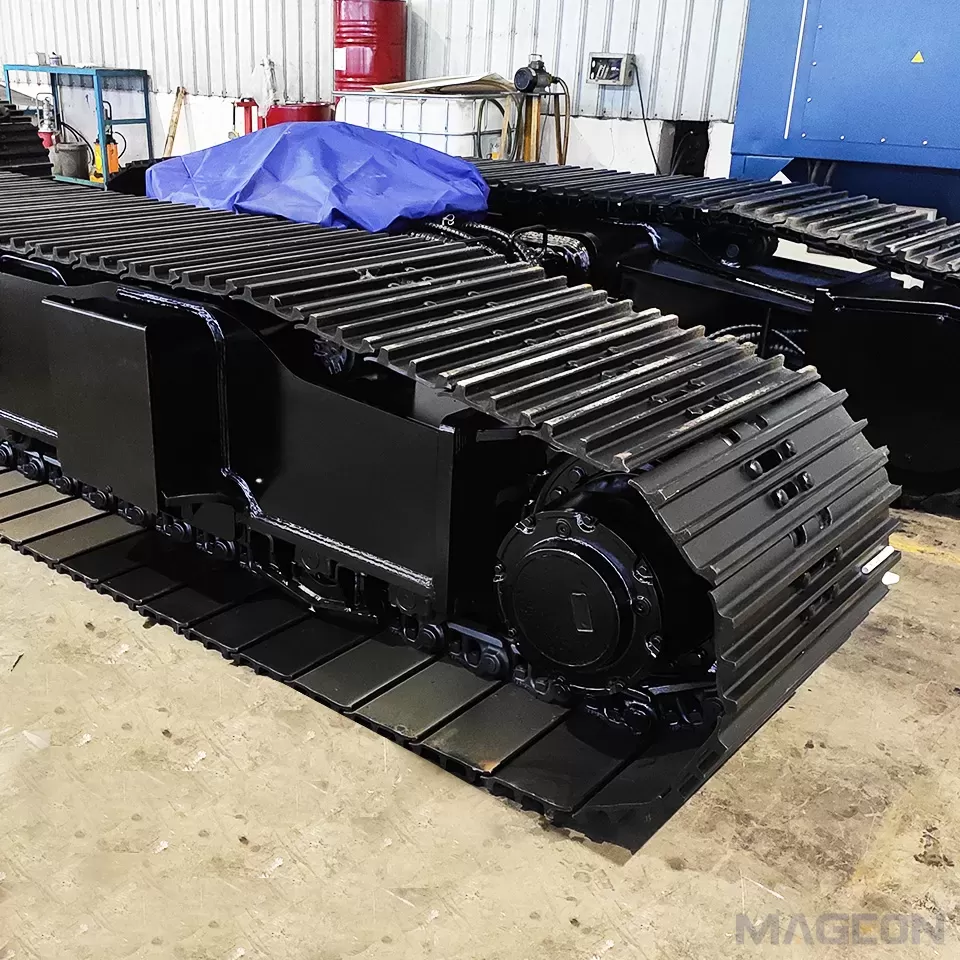
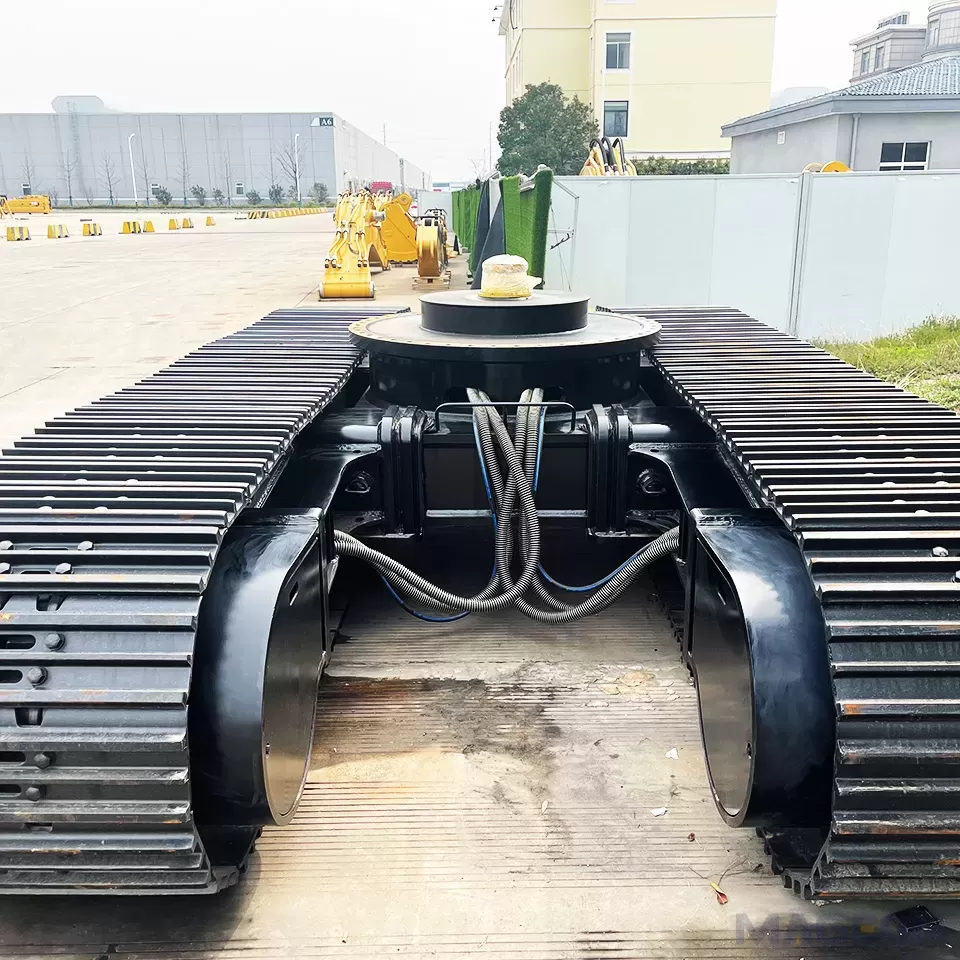
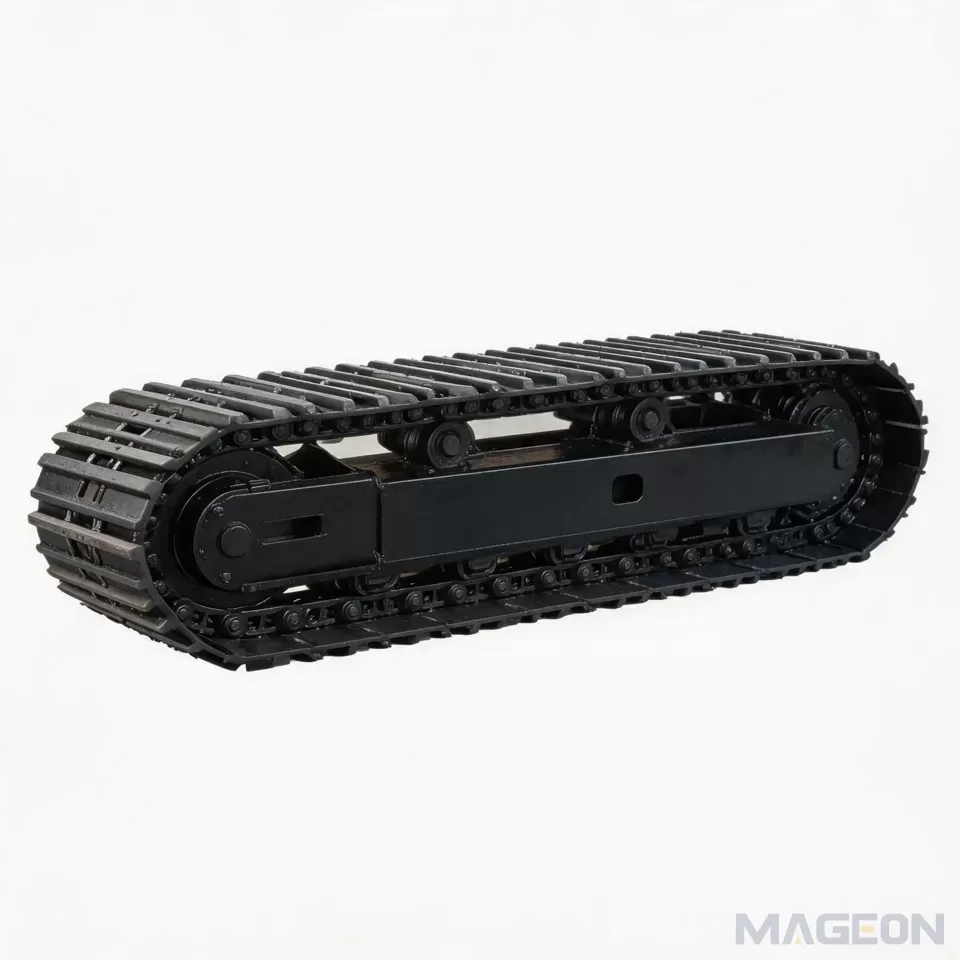
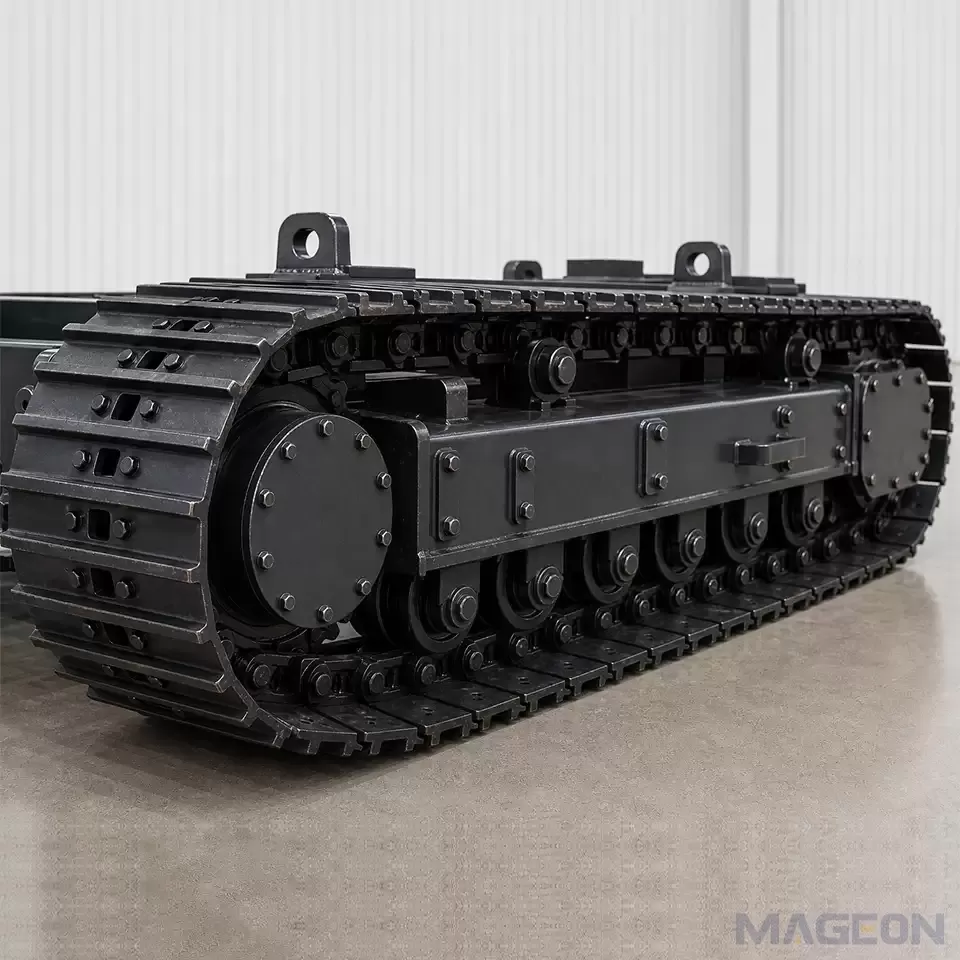
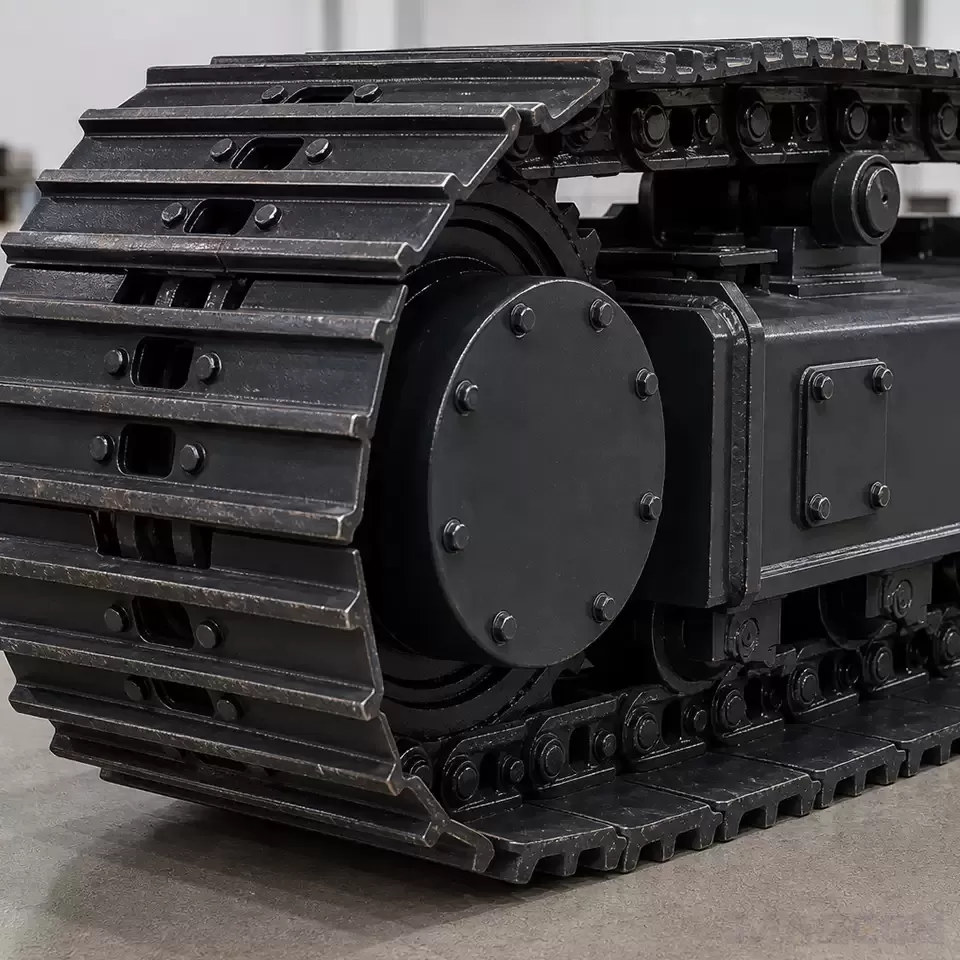
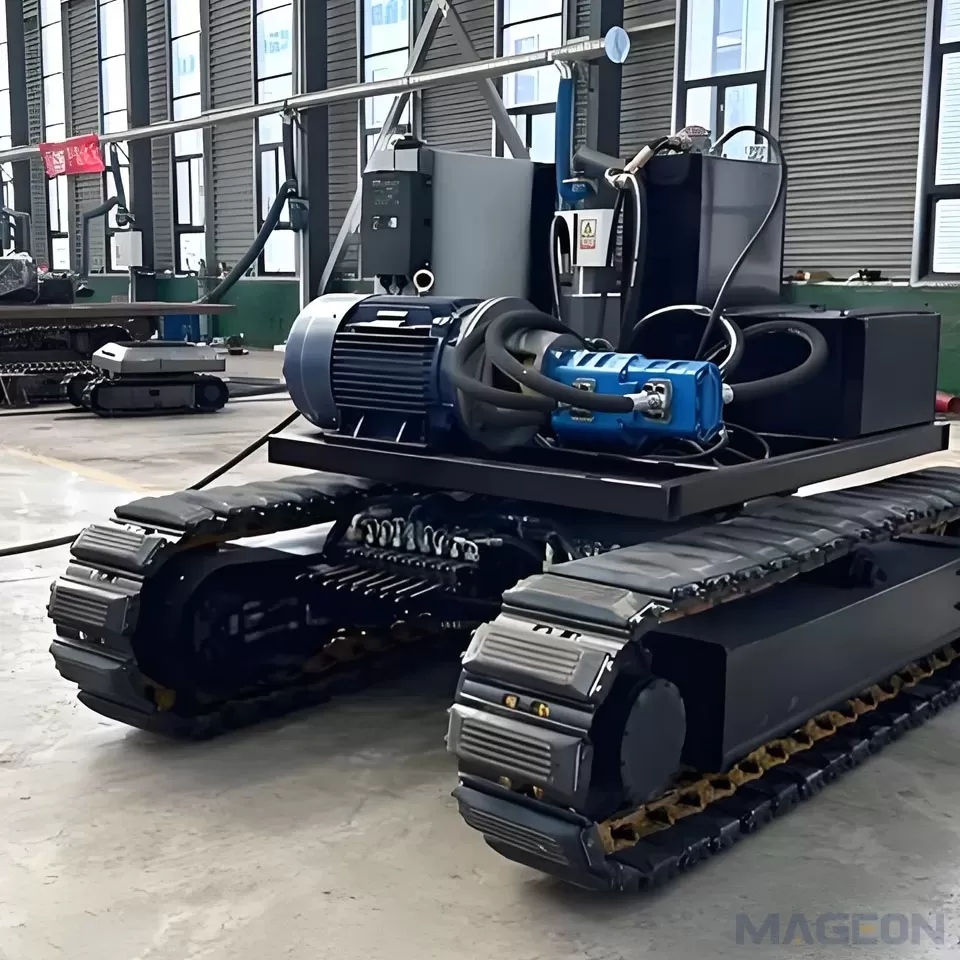
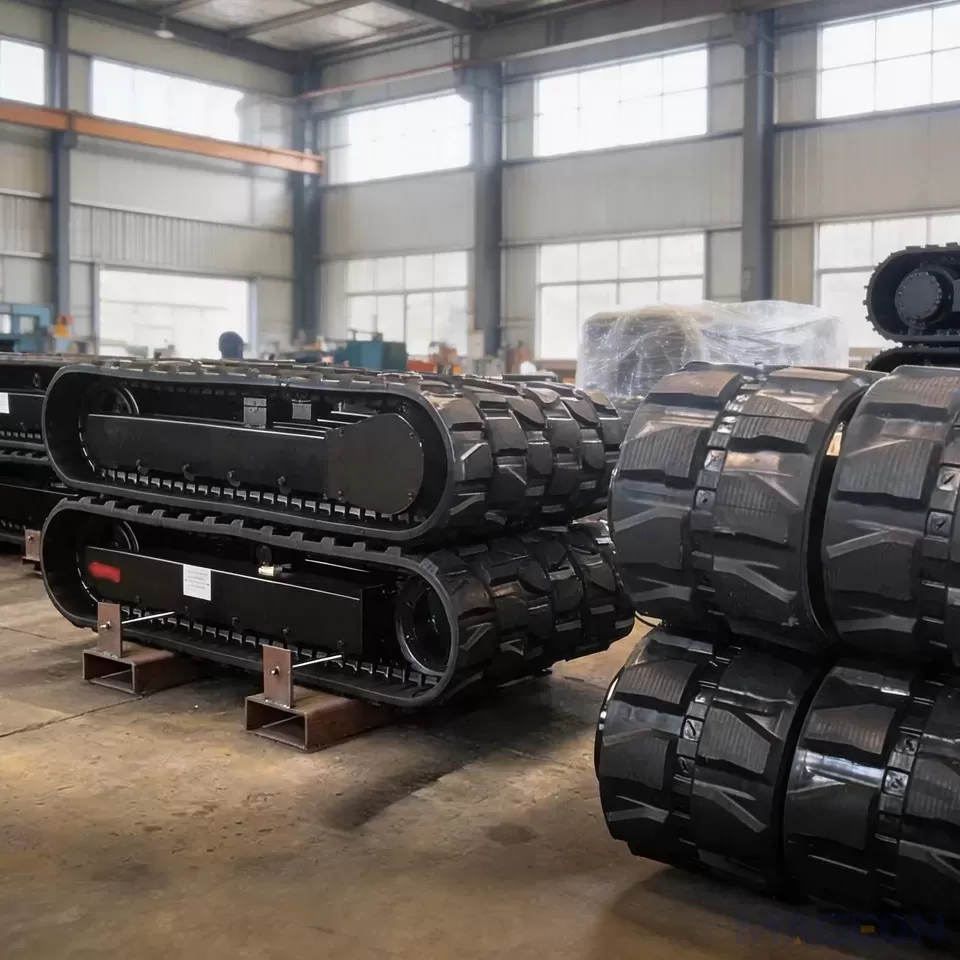
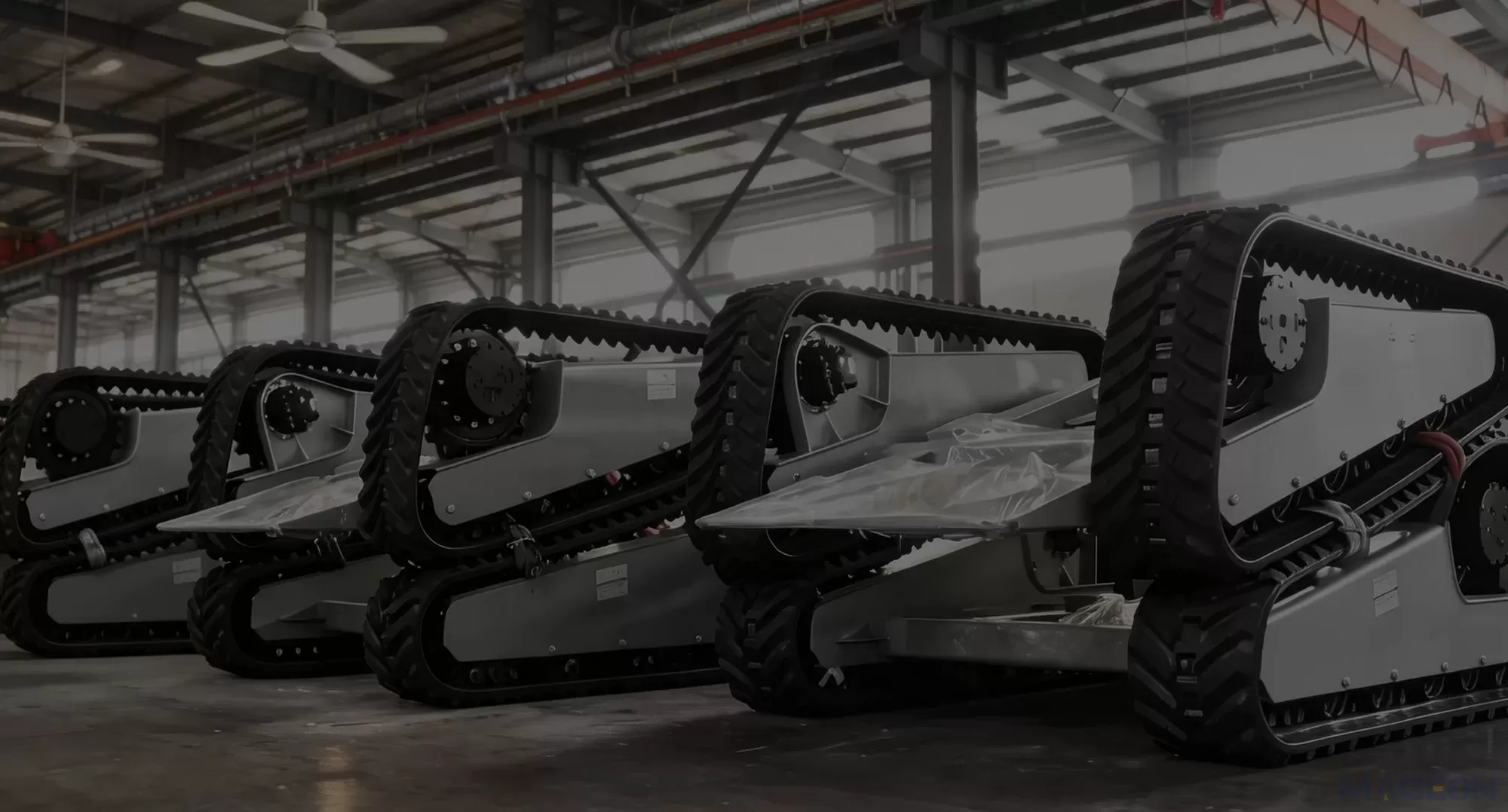
MAGEON's rubber crawler chassis product line, engineered for equipment ranging from 0.8 to 30 tons, delivers this balance of load-bearing integrity and surface protection. Every undercarriage assembly we produce is a fully integrated system: precision-machined track rollers, top carrier rollers, induction-hardened idlers, heat-treated drive sprockets, and an advanced hydraulic or mechanical tensioning mechanism — all engineered to work as a single, cohesive unit rather than a collection of compatible parts.
Technological Integration: The Rise of Precision Walking Systems
A defining trend shaping the rubber crawler chassis industry is the convergence of mechanical engineering with automation and sensing technologies. Modern European work-sites — from automated warehouse logistics to remote-controlled demolition — increasingly require undercarriages that function as precision instruments rather than passive structural supports.
MAGEON's engineering team addresses this through integrated design: our rubber crawler track undercarriage platforms are engineered with pre-configured mounting interfaces for speed sensors, tension monitoring transducers, and temperature probes at critical wear points. For autonomous and semi-autonomous applications — including firefighting robots, hazardous-environment inspection vehicles, and remote-operated agricultural platforms — we provide the mechanical foundation with embedded data pathways that interface directly with the machine's CAN bus or proprietary control architecture.
The extendable undercarriage assembly represents another technological frontier. Systems that retract for transport on European roadways (complying with width restrictions under EU Directive 96/53/EC) and expand for operational stability on-site are becoming a requirement for equipment that moves frequently between urban job sites. MAGEON's extendable chassis designs maintain full structural integrity in both configurations, with hydraulic locking mechanisms tested to 1.5× rated load in the expanded position.
Sustainability, Soil Protection, and Regulatory Compliance
Environmental sustainability has become a primary driver in European undercarriage procurement — not as a marketing claim, but as a regulatory and operational reality. Three converging pressures make rubber crawler track undercarriage systems the default choice for a growing share of European equipment:
Soil Compaction Regulations: The EU Soil Monitoring Law (proposed) and existing national frameworks in Germany (BBodSchG), France, and the Netherlands impose increasingly stringent limits on soil pressure from agricultural and construction machinery. A rubber crawler chassis distributing 0.20 kg/cm² can operate on Class 2 and Class 3 agricultural soils without exceeding compaction thresholds that would trigger remediation requirements or subsidy penalties.
Urban Infrastructure Protection: Municipal authorities in major European cities now routinely specify maximum ground pressure limits and surface protection requirements in tender documents for public works contracts. Equipment without a compliant rubber undercarriage assembly is simply not eligible to bid.
Noise and Vibration Compliance: EU Directive 2000/14/EC (noise emission in the environment by equipment for use outdoors) and Directive 2003/10/EC (noise at work) create a regulatory framework where steel tracks' characteristic noise profile — typically 85-95 dB(A) at operator position — is increasingly difficult to reconcile with urban and residential project requirements. MAGEON's rubber track systems typically reduce operator-position noise by 8-12 dB(A) compared to equivalent steel configurations, a difference that often determines regulatory compliance.
Part II: MAGEON's Engineering Excellence — How We Build a Premium Rubber Undercarriage
One-to-One Custom Engineering: No Two Projects Are Identical
MAGEON operates on a fundamental principle that separates dedicated engineering partners from component suppliers: every crawler track undercarriage we deliver begins as a blank engineering canvas, not a catalog selection. Our technical engagement process starts with a comprehensive operational profile that captures:
| Parameter | What We Analyse | Why It Matters |
|---|---|---|
| Upper equipment weight & CG | Static + dynamic load distribution, centre of gravity coordinates | Determines roller spacing, frame section modulus, and track tension baseline |
| Required travel speed | Maximum and typical operating speeds | Dictates drive sprocket pitch diameter and hydraulic motor displacement |
| Maximum gradient | Climbing angle under full load | Determines required traction coefficient and drive torque margin |
| Ground surface profile | Soil type, moisture range, presence of hard debris | Determines rubber compound formulation, tread pattern, and track belt construction |
| Operating temperature range | Minimum and maximum ambient + surface temperatures | Dictates rubber compound glass transition requirements and steel grade selection |
| Duty cycle | Hours per day, days per year, expected service life | Determines bearing selection, seal specification, and maintenance interval design |
| Regulatory requirements | CE, national road travel, noise, soil pressure | Determines documentation package and design compliance verification scope |
Using advanced 3D solid modelling and Finite Element Analysis (FEA), MAGEON's engineering team simulates the complete crawler chassis under full-spectrum loading conditions — including asymmetric loading during slope traversal, dynamic shock loading from ground obstacles, and thermal expansion across the operating temperature range. Only after simulation validation do we release the design for production.
Material Science: The Foundation of Rubber Track Longevity
The performance difference between a premium and an average rubber crawler track undercarriage begins at the molecular level — in the rubber compound formulation, the steel cord construction, and the bonding interface between them.
Rubber Compound Engineering: MAGEON specifies application-specific rubber formulations, not a single general-purpose compound. For Nordic European operations in sustained sub-zero temperatures, we compound with low-temperature plasticisers that maintain flexibility and grip at -30°C without excessive softening at summer ambient temperatures. For Mediterranean and Southern European applications with high UV exposure and surface temperatures exceeding 60°C, we incorporate anti-ozonant and thermal stabiliser packages that resist cracking and hardening over multi-year service intervals. For indoor and clean-room applications, we formulate non-marking, low-volatile-organic-compound (VOC) compounds that leave zero residue on finished surfaces.
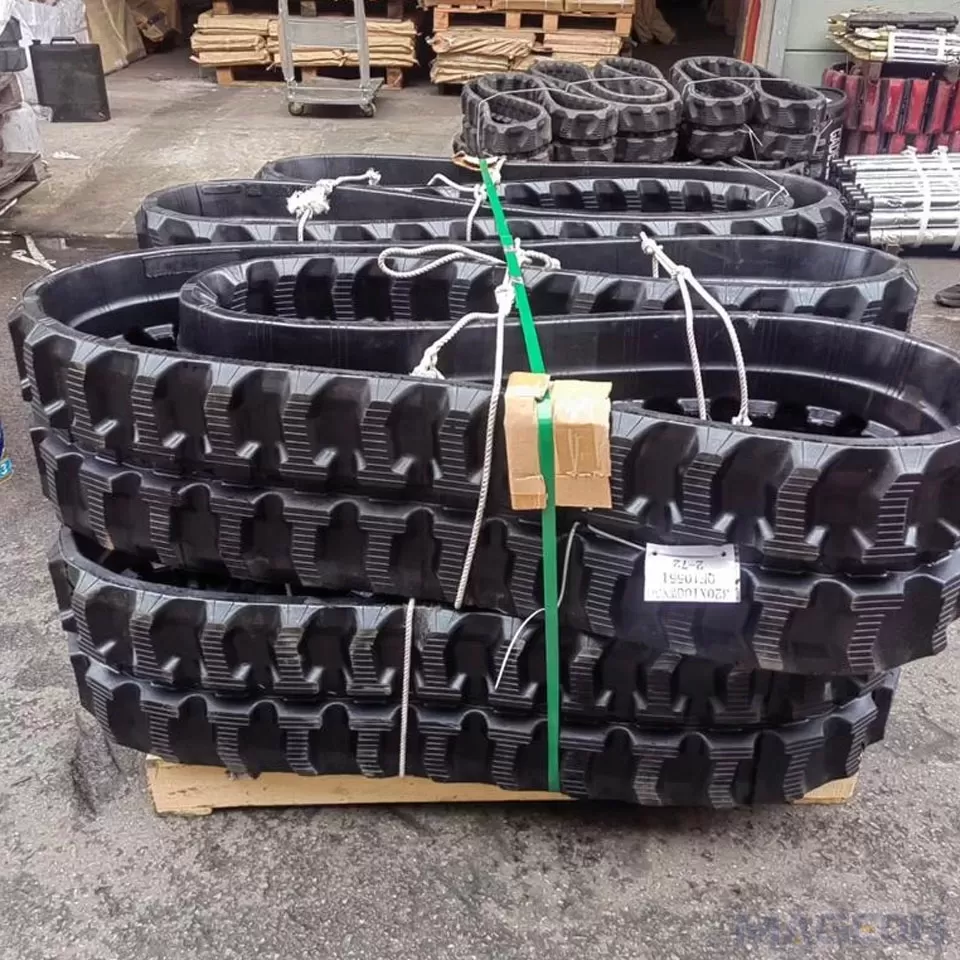
Steel Cord Architecture: The continuous steel cord reinforcement within the rubber track belt is the structural backbone of the entire undercarriage assembly. MAGEON specifies high-tensile steel cord with a minimum breaking strength appropriate to the load class, wound in a continuous helix with zero internal splices. The cord lay angle, cord diameter, and cord spacing are optimised per application — tighter cord density for high-traction requirements, optimised spacing for weight-sensitive applications.
Bonding Integrity: The interface between rubber and steel cord is the single most common failure point in rubber tracks. MAGEON employs a multi-stage bonding process: brass-coated steel cord for primary adhesion, a proprietary bonding agent interlayer, and controlled vulcanisation parameters (temperature, pressure, time) verified by batch-sample peel testing to ensure bond strength exceeds the rubber's internal tear strength — meaning the rubber will tear before the bond fails.
Precision Manufacturing: From Raw Material to Finished Undercarriage Assembly
MAGEON's vertically integrated manufacturing model for rubber crawler track undercarriage systems encompasses every critical production stage under a single quality management framework:
Steel Component Fabrication:
Track rollers, idlers, and sprockets are machined from forged alloy steel blanks, not castings — providing superior grain structure and fatigue resistance
Induction hardening of wear surfaces to 52-58 HRC with a case depth specified per load class
Precision grinding of roller running surfaces to IT6 tolerance for reduced vibration and extended bearing life
100% dimensional inspection using coordinate measuring machines (CMM) on critical mating surfaces
Rubber Track Belt Production:
Computer-controlled rubber compounding and mixing for batch-to-batch consistency
Continuous steel cord winding under precisely controlled tension — typically 2-4% of cord breaking strength — to maintain uniform preload
Multi-stage vulcanisation in segmented moulds that apply uniform pressure and temperature across the full track circumference
100% visual and dimensional inspection of every finished track belt, with sample destructive testing per production batch
Final Undercarriage Assembly:
Clean-room assembly environment for hydraulic tensioning systems — particulate contamination is the leading cause of premature cylinder seal failure
All fasteners torqued to specification with calibrated tools and recorded in the assembly quality document
Complete undercarriage assembly functional testing: track rotation under load, tensioning system cycling, hydraulic circuit pressure-hold testing
Pre-shipment factory acceptance test (FAT) documentation provided as standard for every European order
Part III: Application Spectrum — Where MAGEON Rubber Undercarriages Deliver Value
Urban Construction and Municipal Engineering
European urban construction represents the single largest application sector for MAGEON's rubber crawler chassis systems. Mini and midi excavators (1.5-8 tons) equipped with our rubber crawler track undercarriage operate daily on asphalt streets, concrete pavements, and interlocking paving blocks in city centres across the continent. The non-marking rubber compound eliminates the surface restoration costs that would otherwise consume 5-15% of a typical urban project budget. For equipment working in pedestrian zones, historic districts with protected surfaces, and underground parking structures, a rubber undercarriage assembly is not a preference — it is a contractual requirement.
Agriculture and Viticulture
European agriculture — particularly in France, Italy, Spain, and Germany — increasingly specifies rubber crawler track undercarriage systems for tractors, harvesters, and specialised vineyard equipment. The operational rationale extends beyond soil compaction compliance: rubber tracks enable operation on wet soil after rainfall — when wheeled equipment would be immobilised — effectively extending the available working days per season. For vineyard operators in Burgundy, Tuscany, and Rioja, where narrow row spacing demands compact crawler chassis designs with exceptional manoeuvrability, MAGEON engineers track systems with optimised width-to-length ratios and zero-turn-radius capability through independent hydraulic drive control.
Aerial Work Platforms and Access Equipment
The European rental equipment market for tracked aerial work platforms (AWPs) and spider lifts has expanded significantly, driven by urban maintenance, façade restoration, and indoor installation projects. These machines require a crawler chassis that is simultaneously lightweight for transport, narrow for door access (typically 600-800 mm wide), and stable when the boom is extended to 20+ metres. MAGEON's extendable rubber undercarriage assembly for this sector features hydraulic width adjustment from transport to working configuration, automatic self-levelling track tension, and non-marking white rubber compound as standard — critical for operation on finished indoor flooring in occupied commercial buildings.
Emergency Response, Defence, and Specialised Robotics
The most demanding applications for rubber crawler track undercarriage systems are those where failure is not an option. MAGEON supplies undercarriages for firefighting robots deployed in petrochemical facilities and tunnel fire scenarios, where the crawler chassis must maintain mobility at ambient temperatures exceeding 200°C. For explosive ordnance disposal (EOD) robots and hazardous materials inspection platforms, our undercarriage assembly incorporates spark-free materials and ATEX-compliant component selection where specified. In the environmental sector, MAGEON's corrosion-resistant undercarriages — featuring stainless steel hardware and fully sealed bearing arrangements — operate submerged in water treatment ponds and coastal cleanup applications.
Part IV: European Compliance and Quality Assurance
Every MAGEON rubber crawler track undercarriage delivered to a European destination is accompanied by a complete technical documentation package:
| Document | Content | Regulatory Reference |
|---|---|---|
| CE Declaration of Conformity | Affirmation of compliance with applicable EU directives | Machinery Directive 2006/42/EC → EU Machinery Regulation 2023/1230 (from Jan 2027) |
| Risk Assessment Report | Hazard identification, risk estimation, and mitigation measures per EN ISO 12100 | EN ISO 12100:2010 |
| Material Certificates | Mill test certificates for all structural steel, rubber compound batch test reports | EN 10204 Type 3.1 |
| Dimensional Inspection Report | CMM verification of critical dimensions against approved drawings | ISO 2768 / customer-specified tolerances |
| Factory Acceptance Test (FAT) Report | Functional testing results: load test, tension cycling, hydraulic pressure hold, track rotation | Per customer-approved FAT procedure |
| Maintenance Manual | Illustrated spare parts catalogue, lubrication schedule, tension adjustment procedure, wear limit specifications | — |
| Surface Treatment Certificate | Coating system specification, DFT measurements, corrosion resistance classification | ISO 12944 (where applicable) |
This documentation package is not an optional extra — it is standard with every MAGEON rubber crawler chassis shipped to Europe. For equipment manufacturers integrating our undercarriage assembly into their own CE-certified machines, this documentation provides the traceability and evidence chain required for their technical file compilation.
Conclusion: Engineering Mobility for Europe's Most Demanding Applications
The European market for rubber crawler track undercarriage systems is not defined by a single product category — it is defined by a philosophy of engineering precision, material integrity, and regulatory rigour. Whether the requirement is a non-marking crawler chassis for indoor renovation in a historic building, a high-traction undercarriage for year-round vineyard operations in Bordeaux, or a fire-rated undercarriage assembly for an autonomous firefighting robot, MAGEON brings the same disciplined engineering approach to every project: analyse, simulate, validate, manufacture, verify, document.
For European equipment manufacturers, dealers, and fleet operators, MAGEON is not merely a component supplier — we are an engineering partner committed to ensuring that the walking system beneath your machine is as advanced as the working system above it.
Contact MAGEON's engineering team to discuss your rubber crawler track undercarriage requirements, request material samples, or schedule a technical consultation with full CE documentation review.
Applicable products:
Steel track chassis (5-120 tons)
Four wheels and one belt (supporting wheels/driving wheels/guide wheels/track shoes/chain rail joints)
Please leave your customization requirements, and we will contact you as soon as possible!
Leave your requirements, we'll get back to you within 24 hours.