Hydraulic Steel Track Undercarriage: Structure, Components and Working Principle
Project Overview:
This article provides a systematic introduction to the structure, core components, working principle and performance advantages of MAGEON hydraulic steel track undercarriage. It breaks down the technical features of 8 key component modules, offering professional reference for equipment selection and daily maintenance. The product adopts a full hydraulic drive system and modular structural design, with excellent off-road passability and high load capacity, and can be widely adapted to various types of engineering and agricultural equipment.
Hydraulic Steel Track Undercarriage: Structure, Components and Working Principle
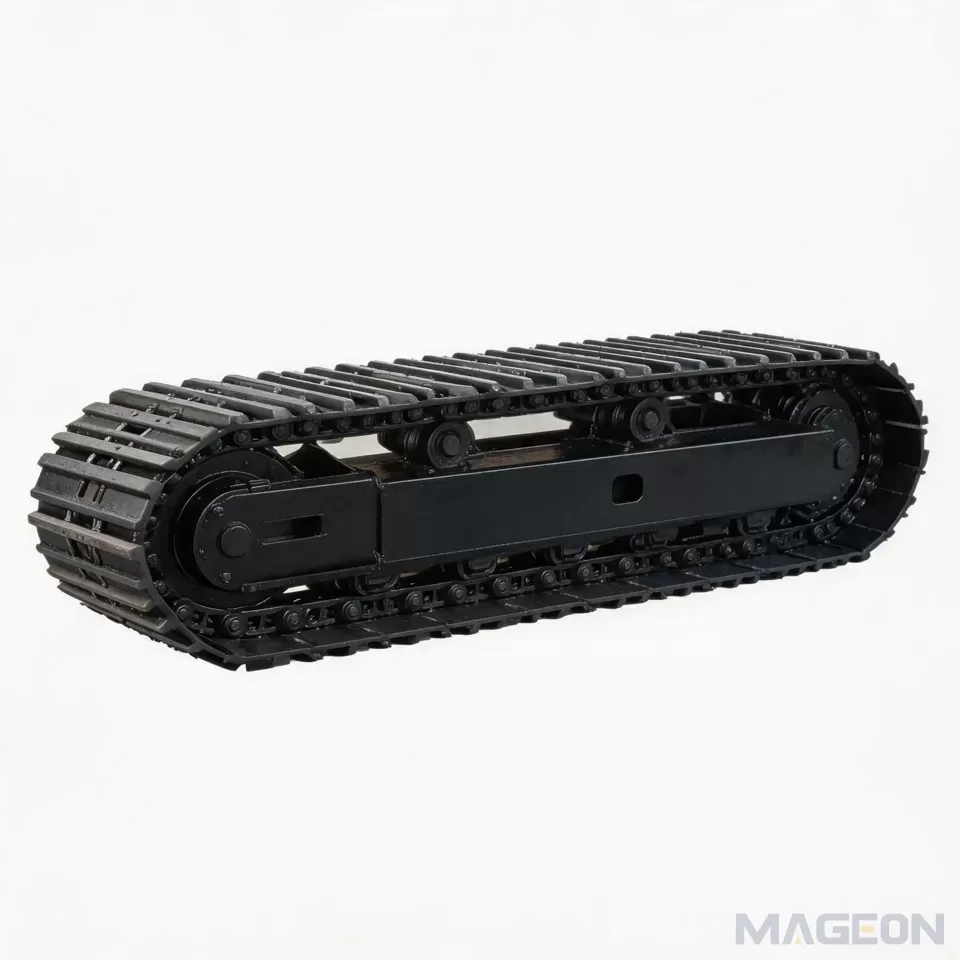
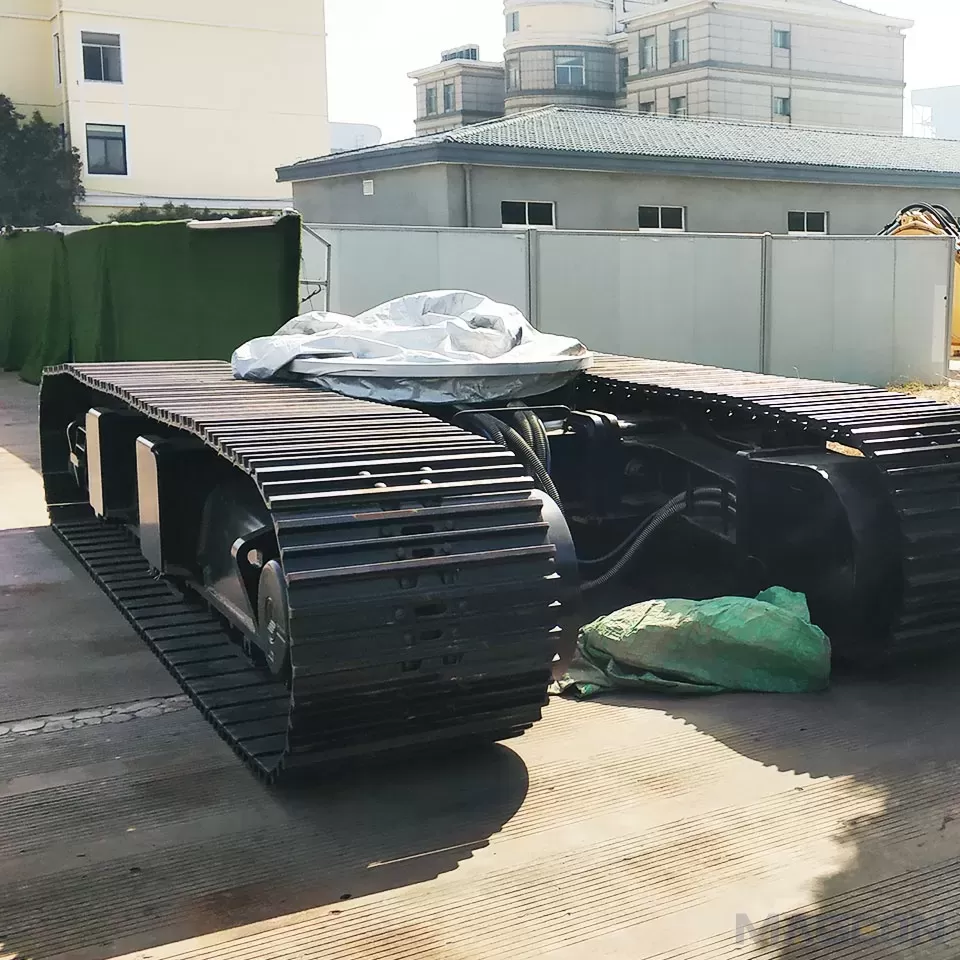
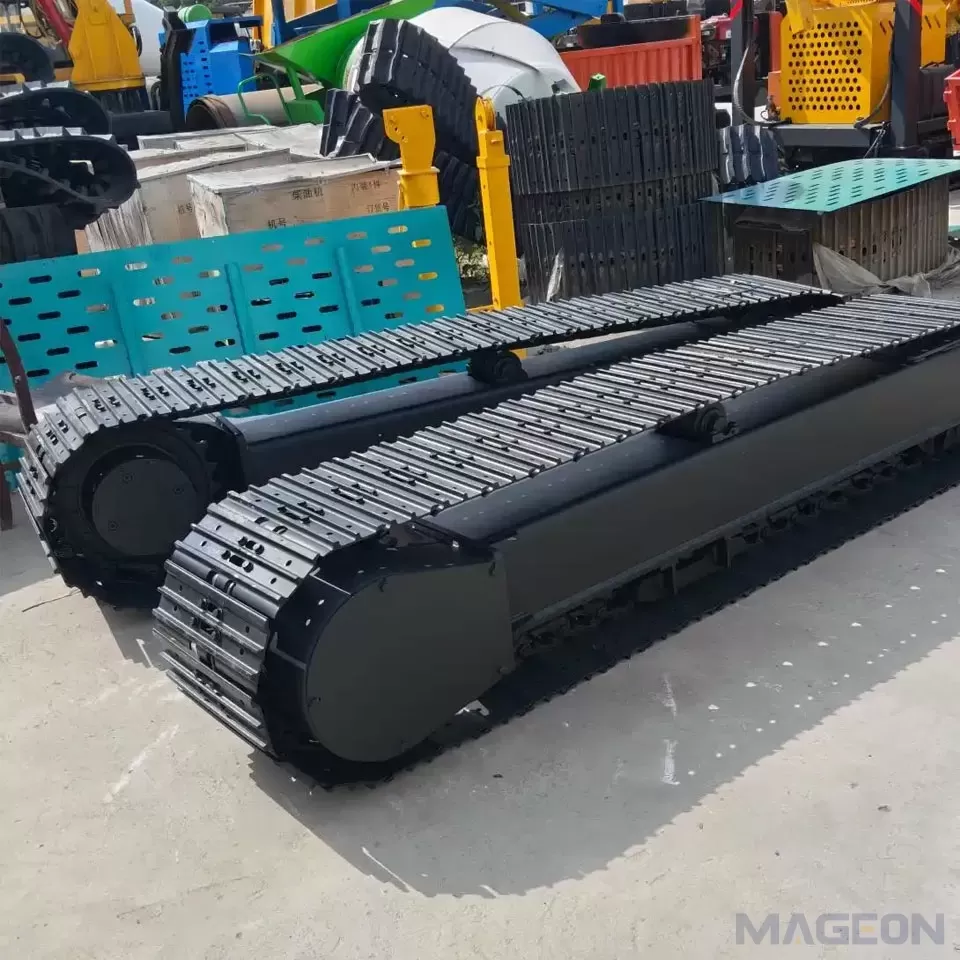
Hydraulic steel track undercarriage is a universal travel base for engineering equipment, powered by a hydraulic system and traveling via ground-contacting steel tracks. As a professional undercarriage manufacturer, MAGEON offers high-performance hydraulic crawler solutions that serve as the fundamental travel platform for piling rigs, drilling machines, crushers and small construction machinery, delivering reliable load-bearing capacity and terrain adaptability for diverse operation scenarios.
Core Components & Technical Specifications
The hydraulic crawler chassis consists of 8 core component systems, each with targeted design for heavy-duty operation. Detailed specifications are as follows:
| Component System | Sub-parts | Material / Configuration | Core Function |
|---|---|---|---|
| Track Assembly | Track shoes, track pins, rubber bushes | Wear-resistant steel plate; high-strength pin shaft | Ground contact & traction; anti-slip and load-bearing; flexible rotation with reduced wear |
| Drive Mechanism | Hydraulic travel motor, drive sprocket | High-torque hydraulic motor; quenched alloy steel gear | Converts hydraulic power into travel power; engages tracks to drive forward/reverse movement |
| Guide & Tensioning Unit | Idler, tensioning cylinder, buffer spring | Alloy steel idler; hydraulic cylinder + spring assembly | Guides track alignment; auto-adjusts track tension; prevents track derailment on bumpy terrain |
| Roller & Carrier Wheel Assembly | Track rollers, carrier rollers | Quenched alloy steel; double-lip sealed structure | Track rollers share overall weight and ensure smooth rolling; carrier wheels support upper track to avoid sagging and deviation |
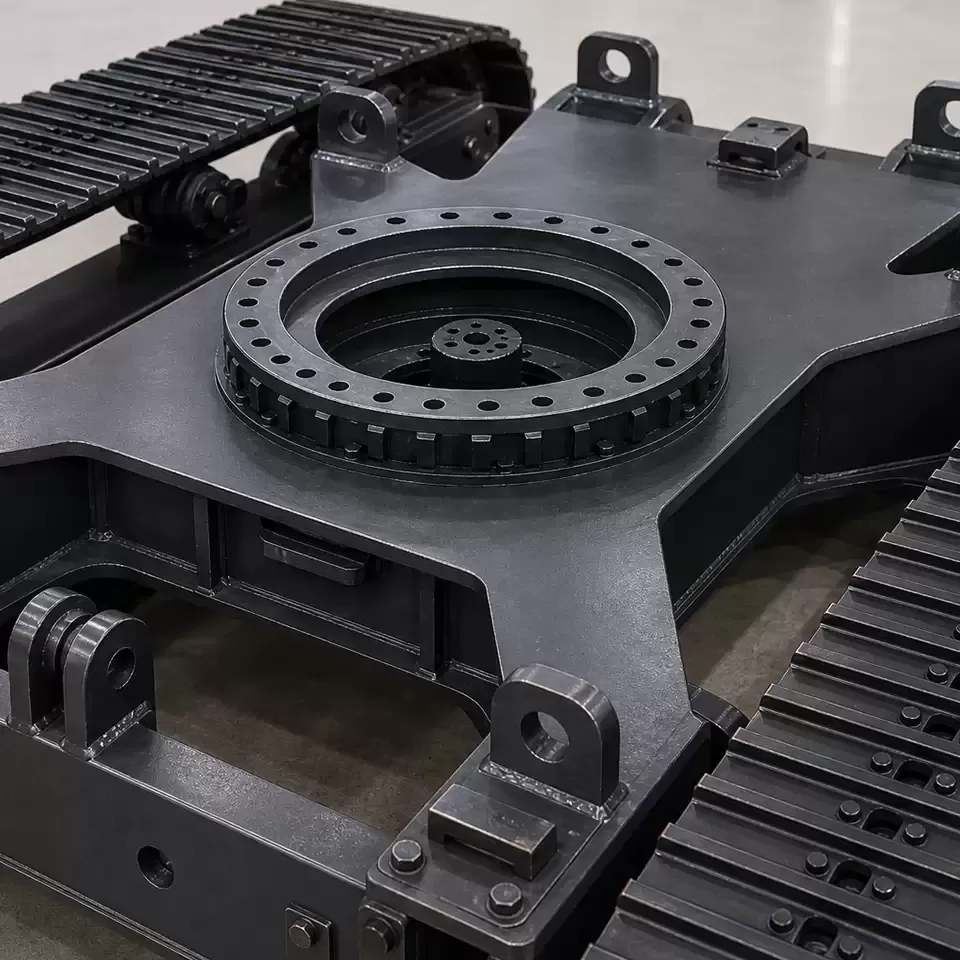
| Main Frame | Integrated welded frame | Thickened structural steel | Load-bearing skeleton; supports upper equipment, hydraulic tank and engine; maintains structural rigidity |
| Hydraulic Control System | Hydraulic pump, multi-way directional valve, hydraulic hoses & fittings | High-pressure hydraulic components | Delivers hydraulic power; controls forward/reverse, steering and start/stop; distributes oil pressure |
| Shock Absorption Components | Buffer rubber blocks, damping springs | High-damping rubber & spring steel | Absorbs road vibration; protects main body and hydraulic parts; extends service life |
| Auxiliary Accessories | Mounting supports, protective baffles, oil tank, operation base | Customizable steel structure | Facilitates installation of various working heads; provides safety protection and system support |
1. Core Functions & Performance Advantages
As the basic travel base for engineering equipment, the hydraulic track undercarriage undertakes four core functions: bearing the full weight of the machine, enabling climbing and off-road movement, supporting 360° in-situ steering, and ensuring smooth and stable travel. Its core advantages include:
🏅Large ground contact area: avoids sinking in muddy, sloped and potholed roads, with far better passability than wheeled chassis
🏅Strong hydraulic power: excellent load capacity and climbing performance for heavy-duty operation
🏅360° in-situ steering: flexible operation in narrow and confined work sites
🏅Superior shock absorption: stable operation with minimal bumping and tilting, protecting upper equipment
2. Detailed Introduction to 8 Core Components
(1) Track Assembly
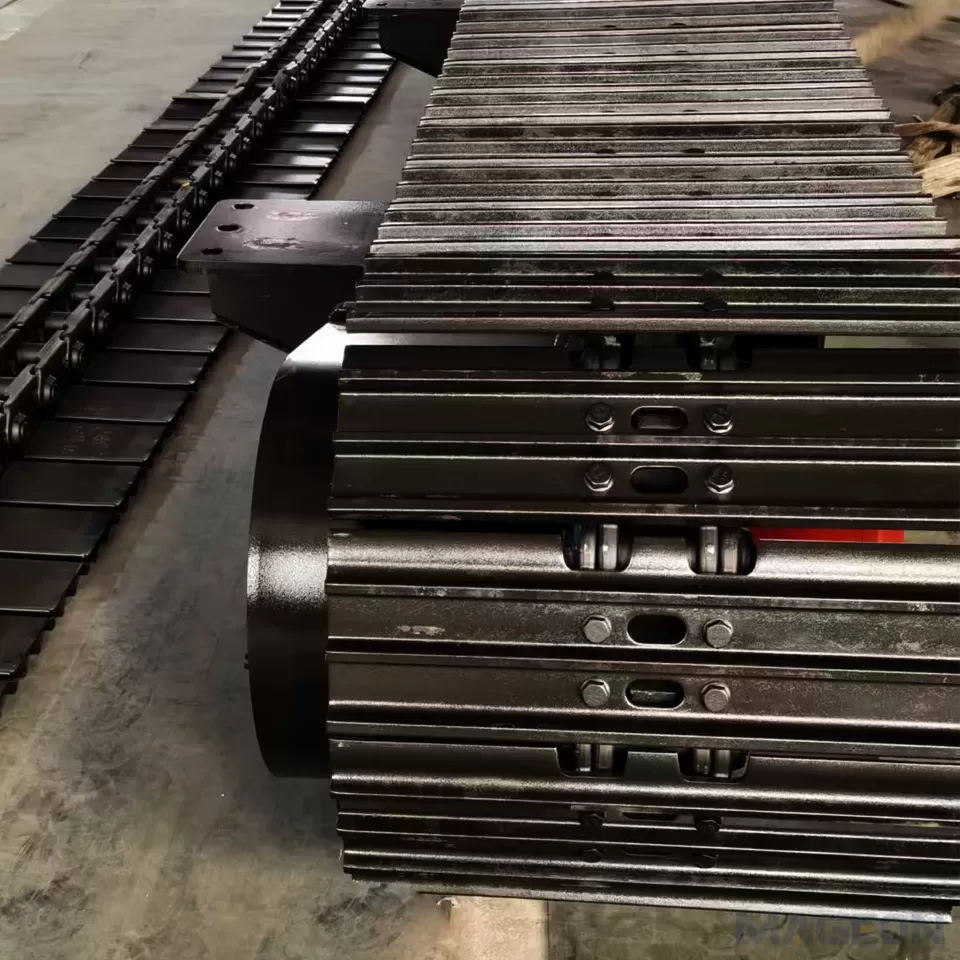
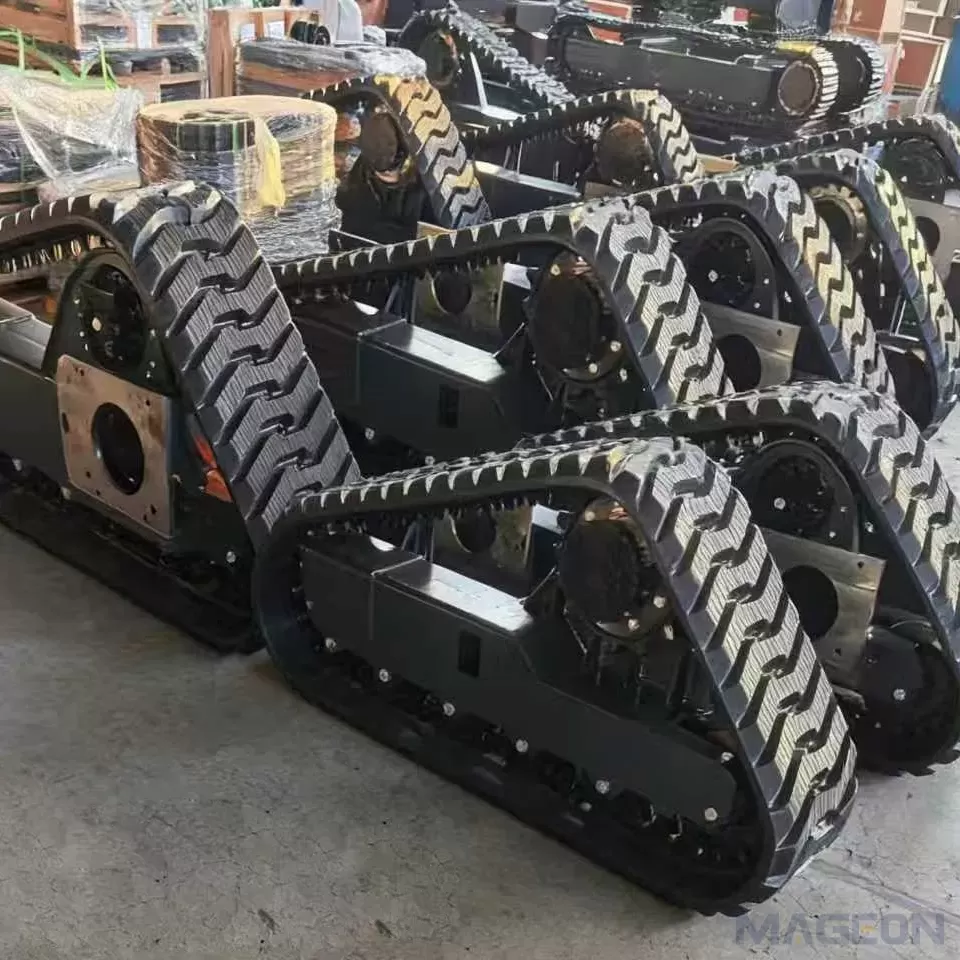
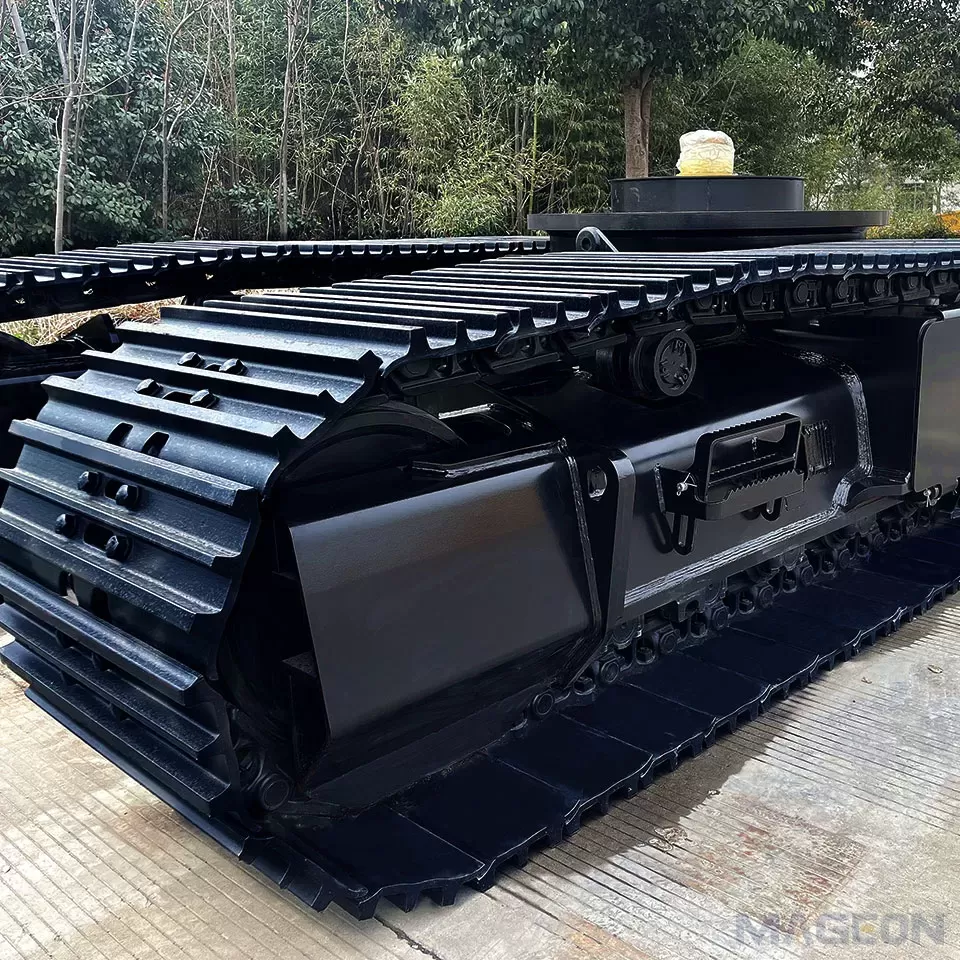
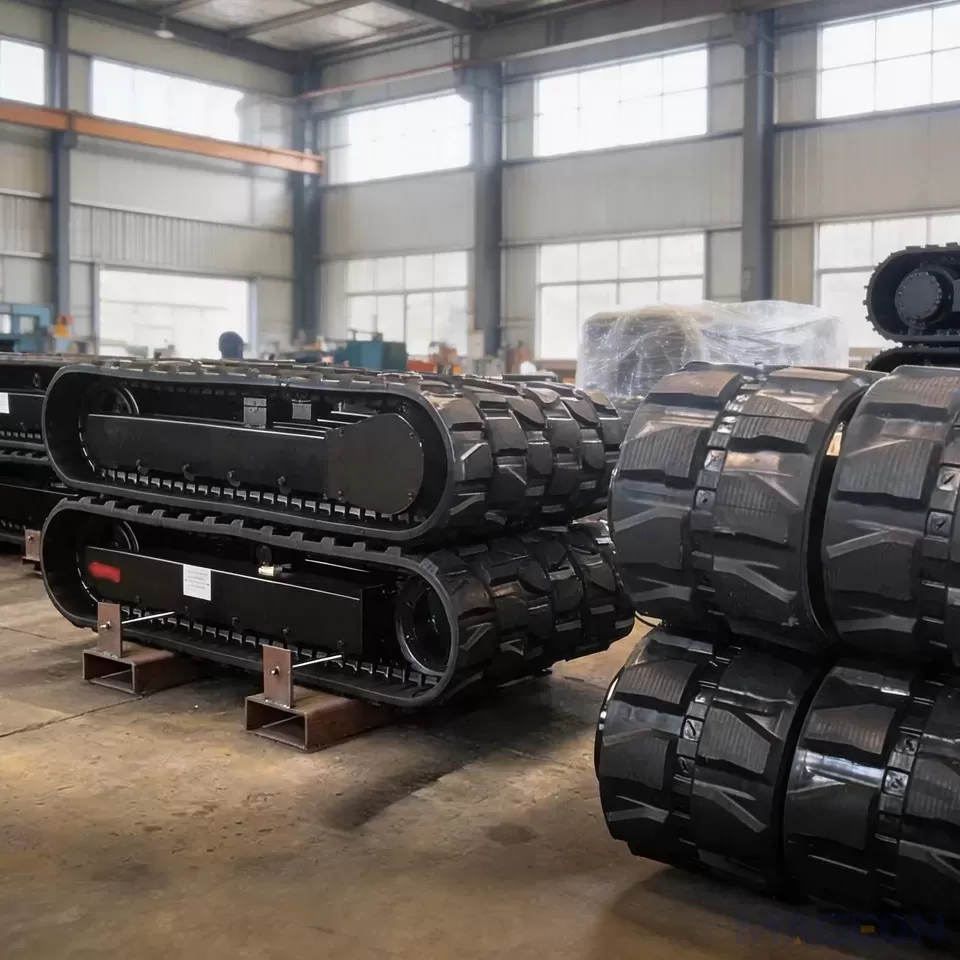
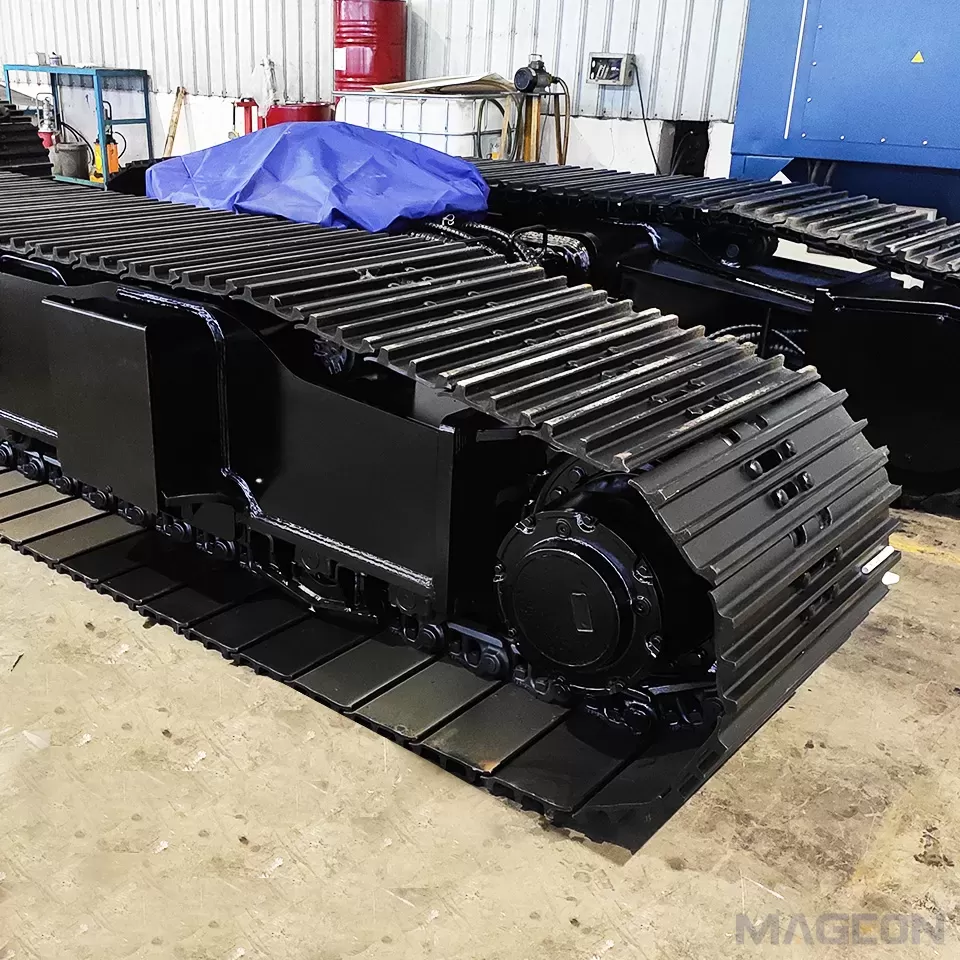
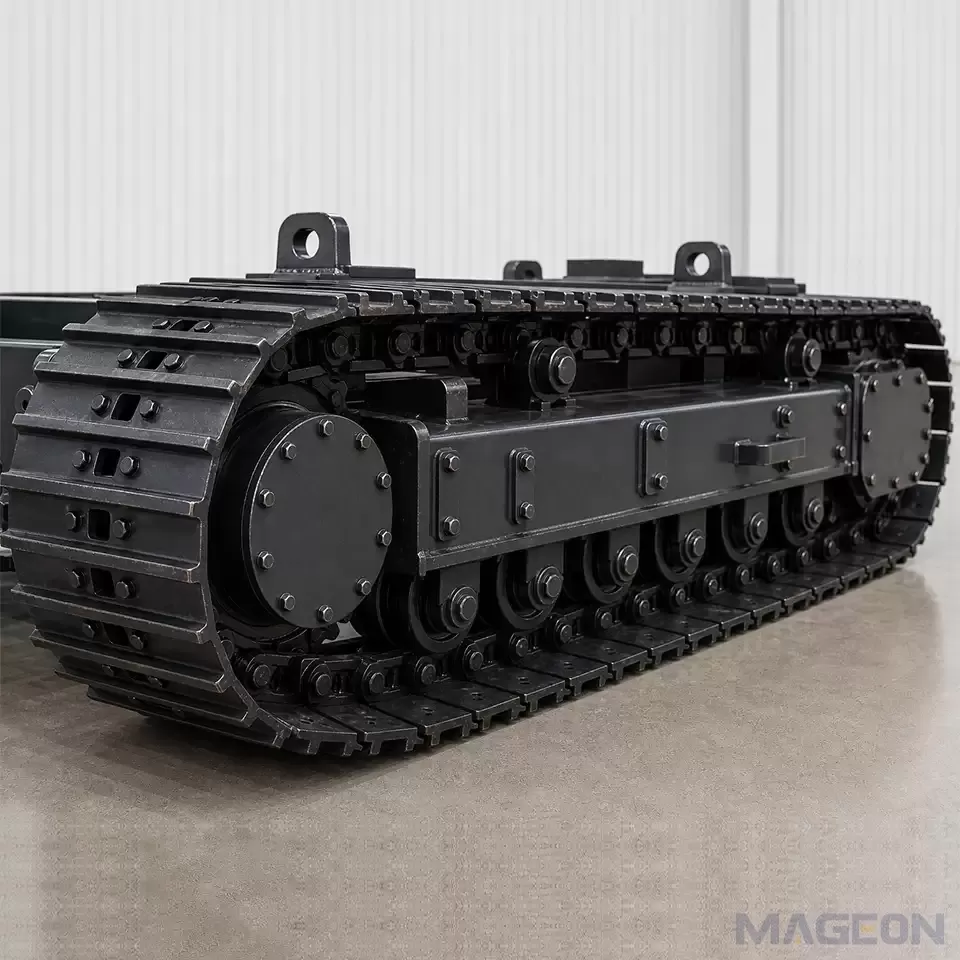
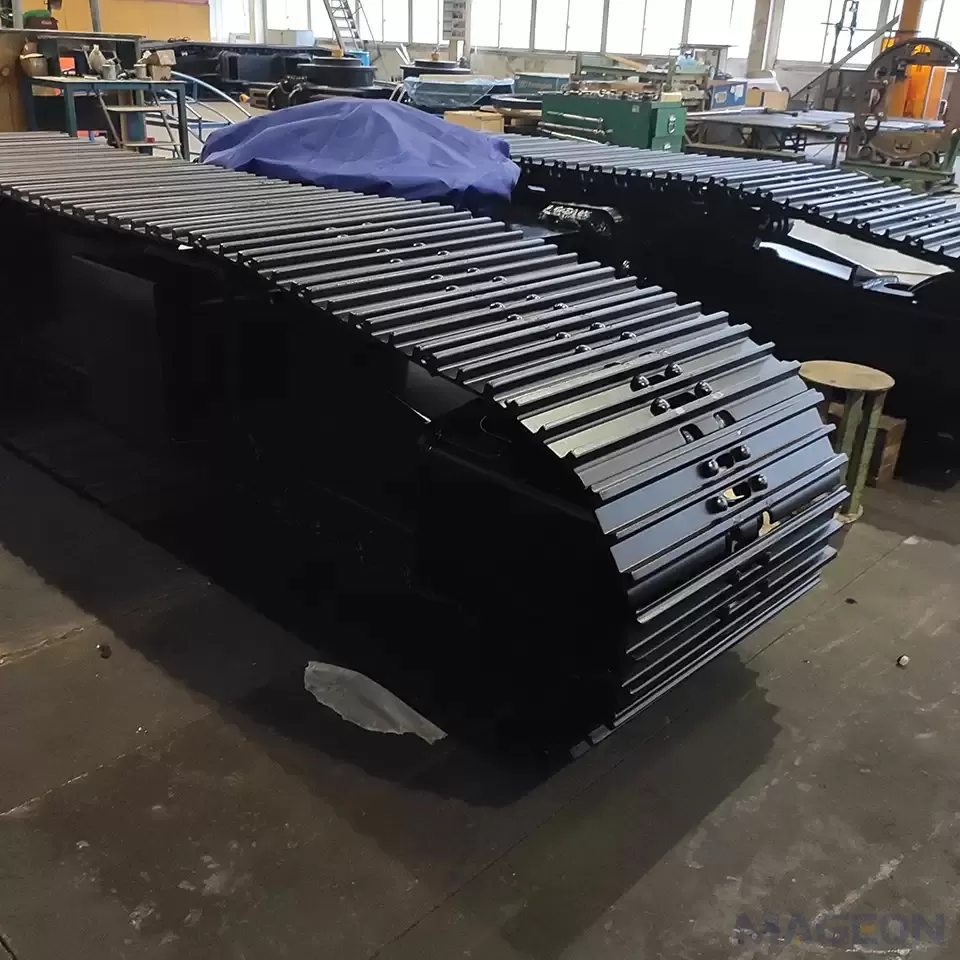
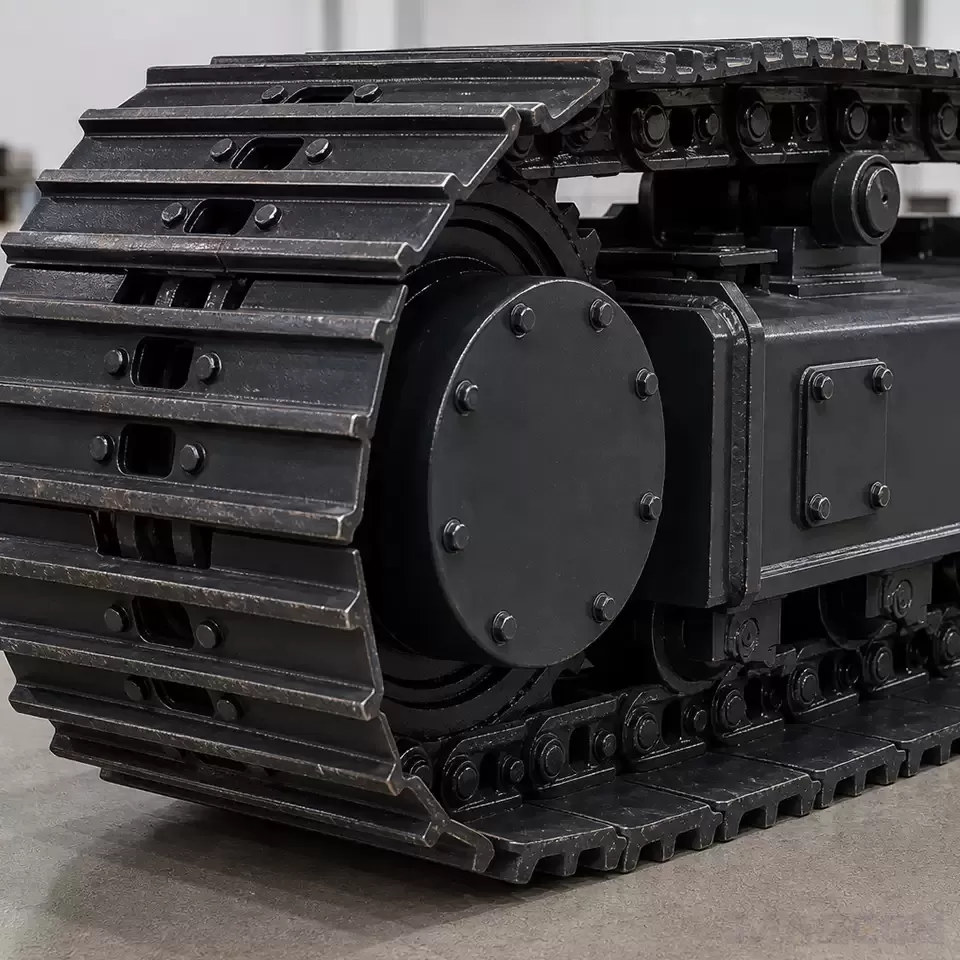
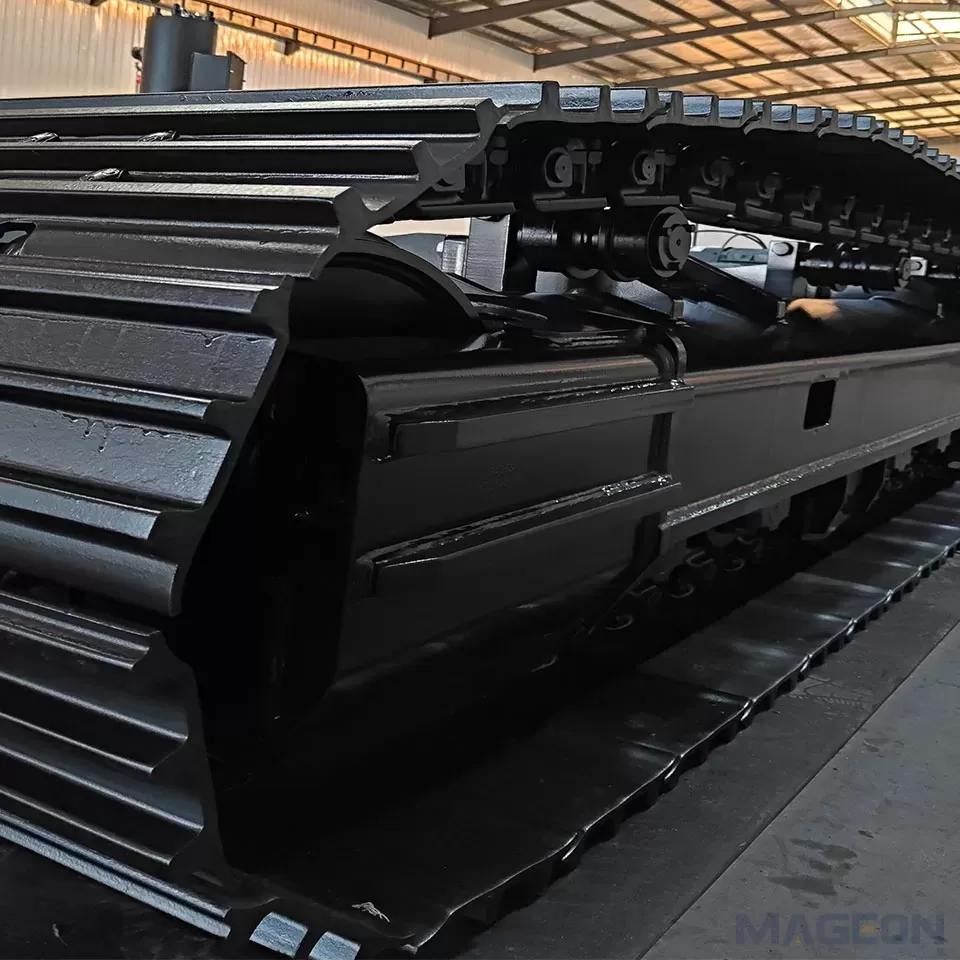
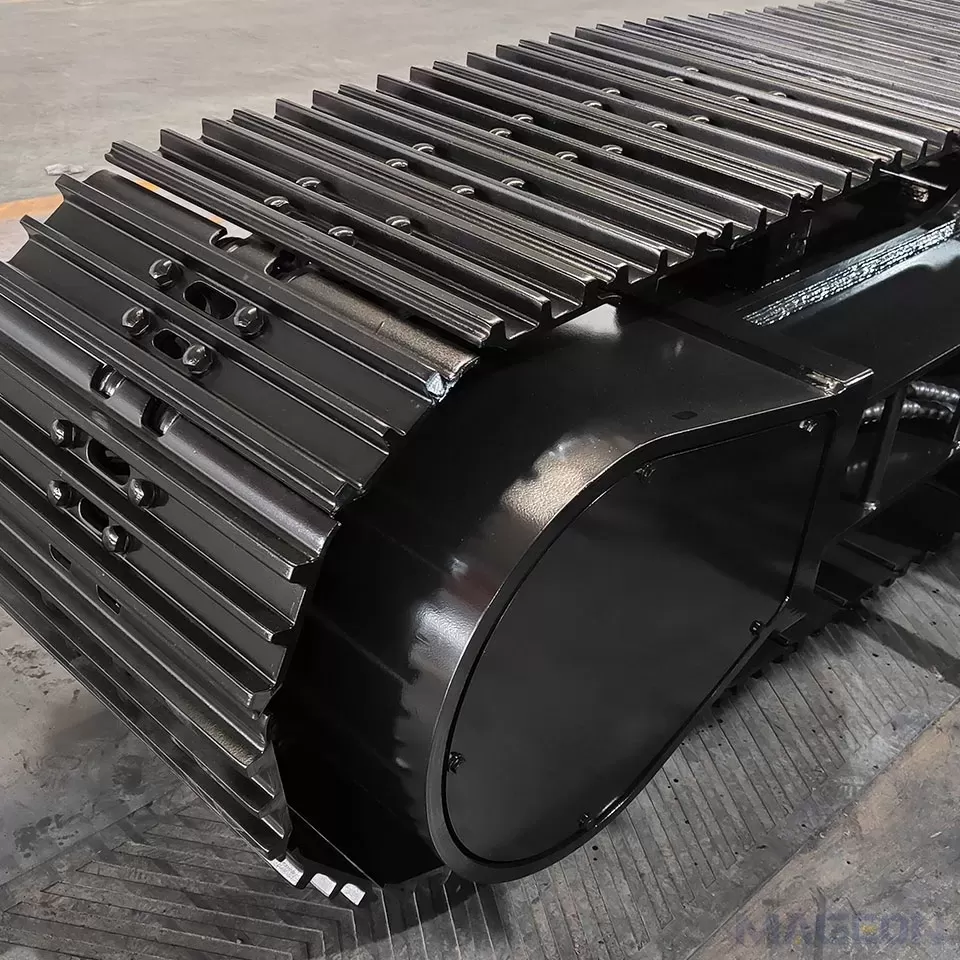
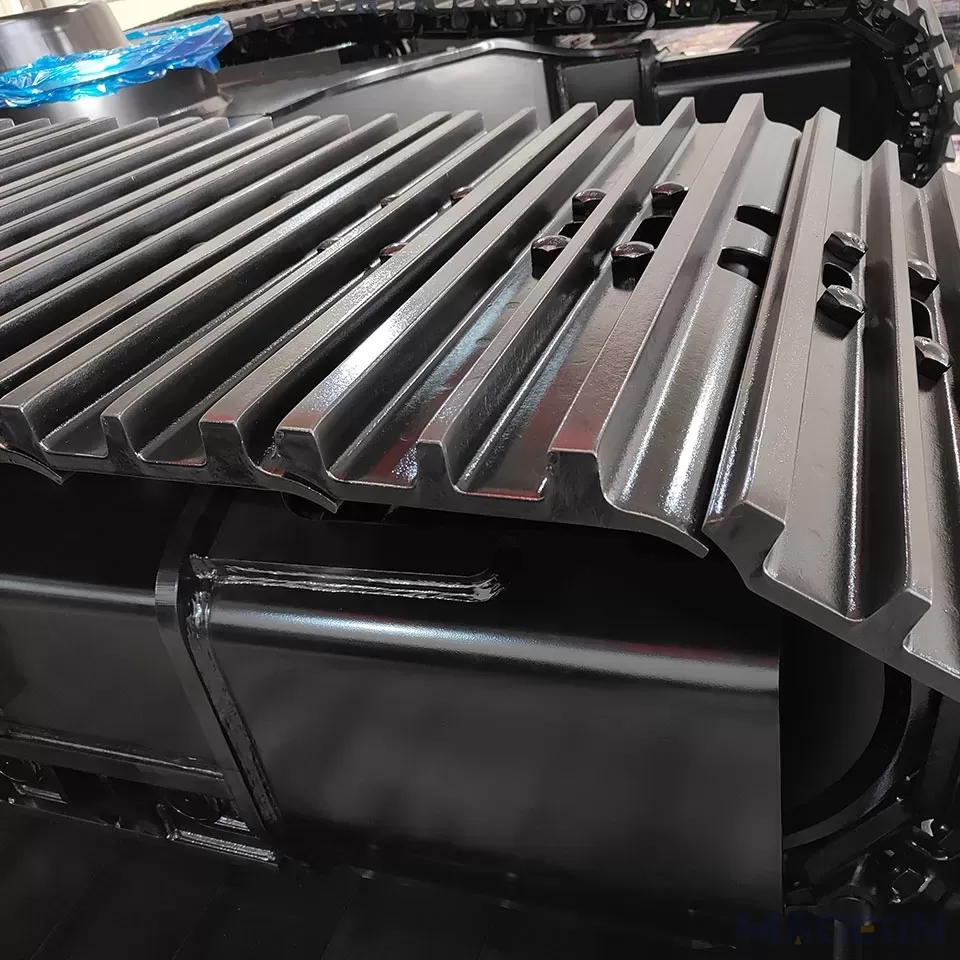
As the ground-contacting part of the whole machine, the track assembly is made of wear-resistant steel track plates with anti-slip and load-bearing properties. Track pins and rubber bushes connect each track shoe, ensuring flexible rotation and reducing friction wear during long-term operation.
(2) Drive Mechanism
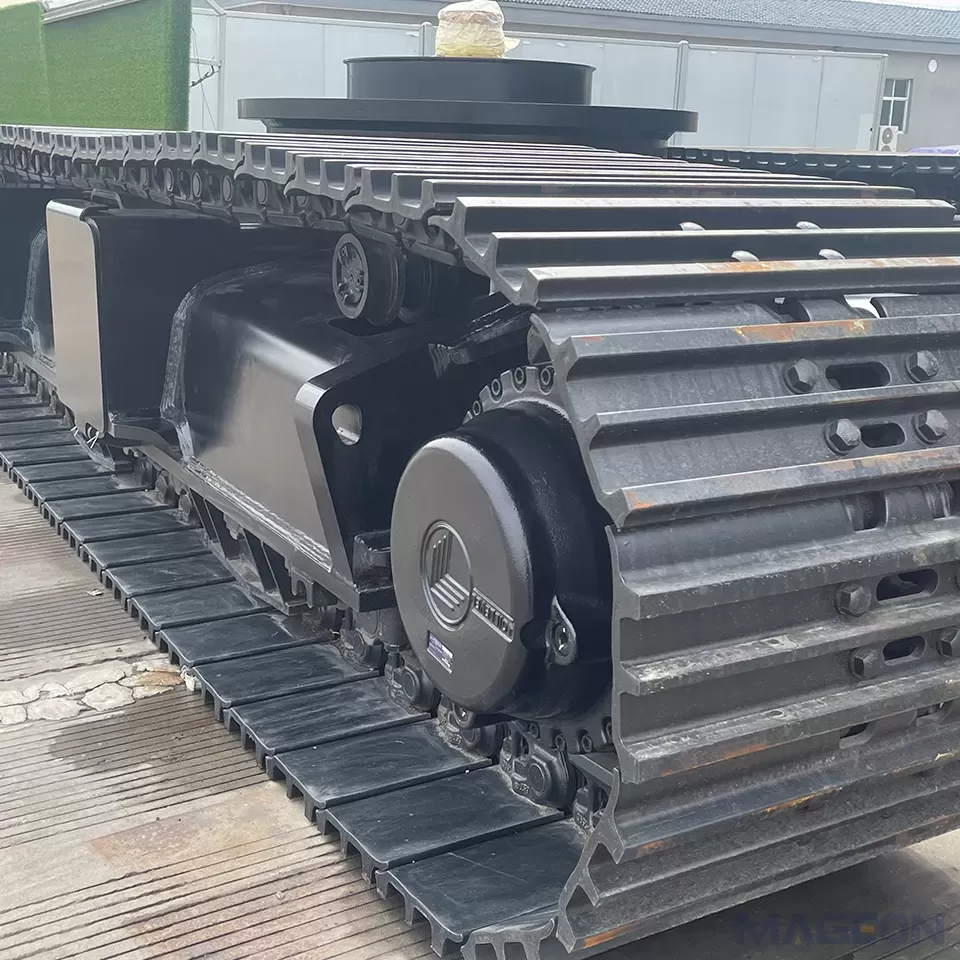
As the power output end, it consists of a hydraulic travel motor and a drive sprocket. The hydraulic motor converts hydraulic pressure into mechanical power, and the toothed drive sprocket engages with the track to drive the whole machine forward and backward.
(3) Guide & Tensioning Mechanism
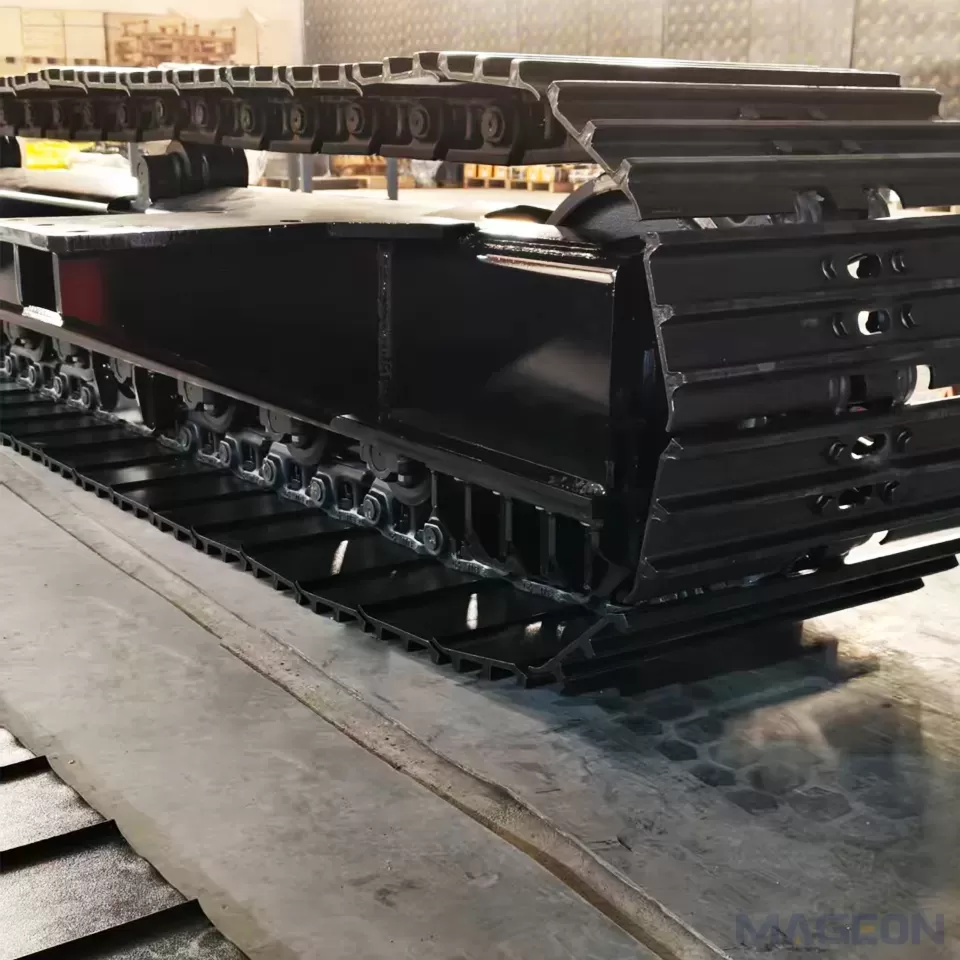
The idler guides the running direction of the track to prevent derailment. The tensioning cylinder with buffer spring automatically tightens the track, adapting to different road conditions and keeping the track properly tensioned even on bumpy roads.
(4) Carrier Wheels & Track Rollers
Track rollers are installed close to the lower side of the track, sharing the overall weight of the machine and ensuring smooth rolling. Carrier wheels hold up the upper track to prevent sagging and lateral deviation during travel.
(5) Main Frame Body
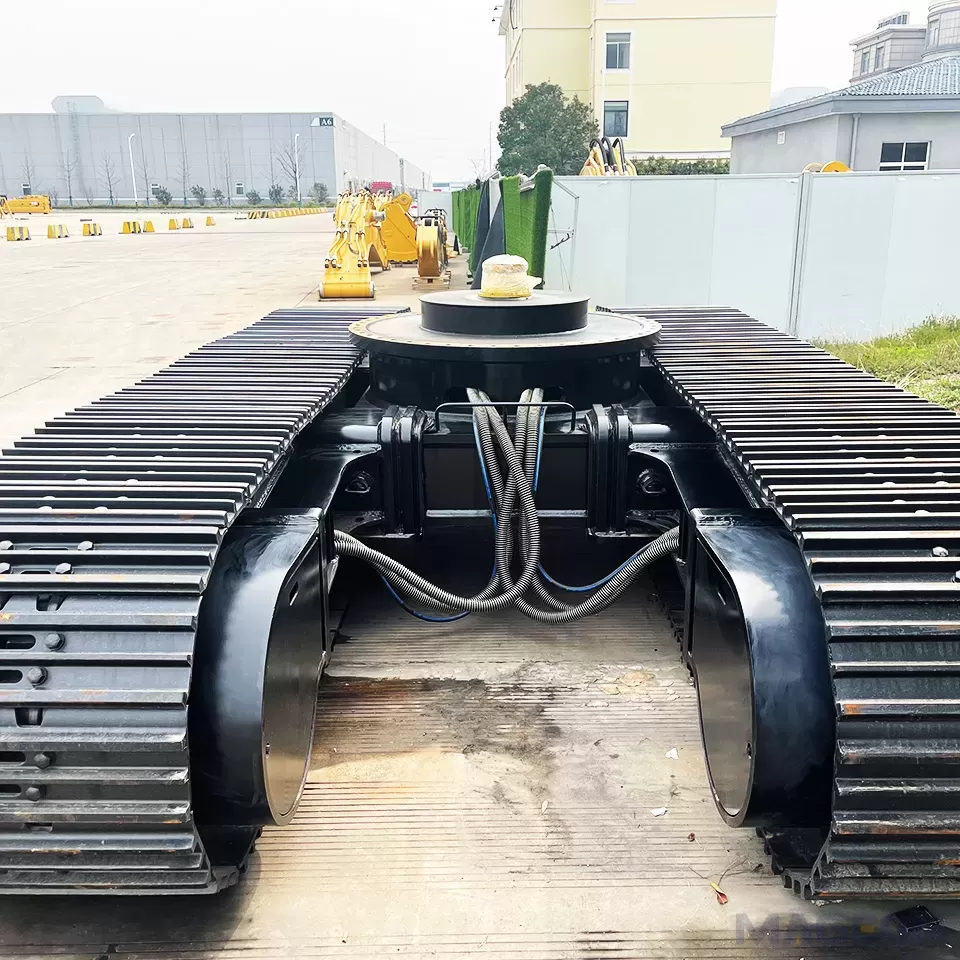
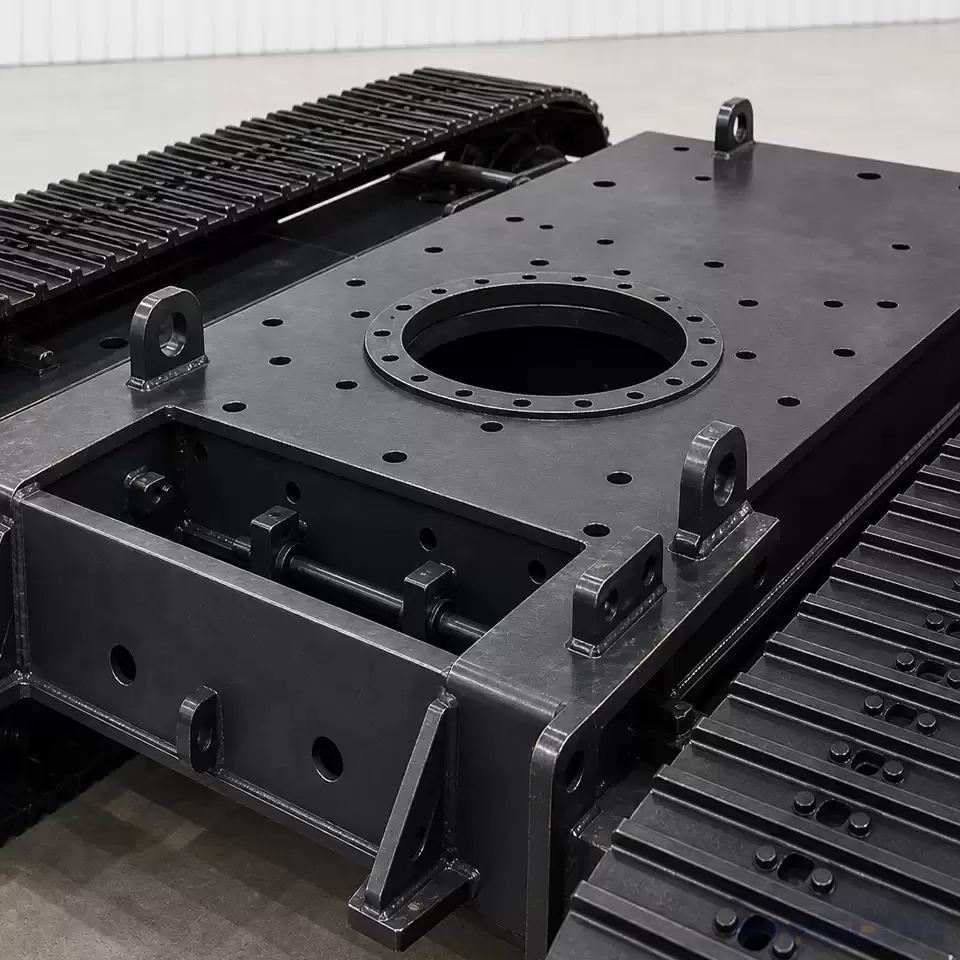
It adopts a thickened steel welded integrated frame, which serves as the load-bearing skeleton of the whole machine. It can carry all upper equipment, hydraulic oil tanks and engines, with high structural rigidity and no deformation under long-term heavy load.
(6) Hydraulic Control System
Known as the power core of the chassis, it includes a hydraulic oil pump that delivers hydraulic oil for power, a multi-way directional valve that controls forward, reverse, left turn, right turn and start/stop, as well as hydraulic hoses and fittings for oil pressure transmission and power distribution.
(7) Shock Absorption & Buffer Components
Buffer rubber blocks and damping springs effectively filter road vibration, reduce impact transmitted to the upper fuselage and hydraulic components, and significantly extend the service life of precision parts.
(8) Auxiliary Supporting Structures
Including mounting supports, protective baffles, oil tanks and operation connection bases, these components facilitate the installation of various working heads and meet the matching needs of different host equipment.
3. Working Principle
The operation of this heavy-duty crawler undercarriage follows a clear hydraulic transmission flow:
The engine drives the hydraulic pump to generate hydraulic pressure
Hydraulic pressure is delivered to the travel motor through pipelines
The travel motor drives the drive sprocket to rotate
The sprocket pulls the track to circulate continuously
The chassis realizes forward, reverse, steering and climbing movements
4. Key Structural Features
Full hydraulic transmission: simple operation and strong power output
Track-type ground contact: off-road passability far exceeds wheeled chassis
Split modular structure: convenient maintenance and part replacement
Integrated heavy-duty frame: stable load bearing, durable and impact-resistant
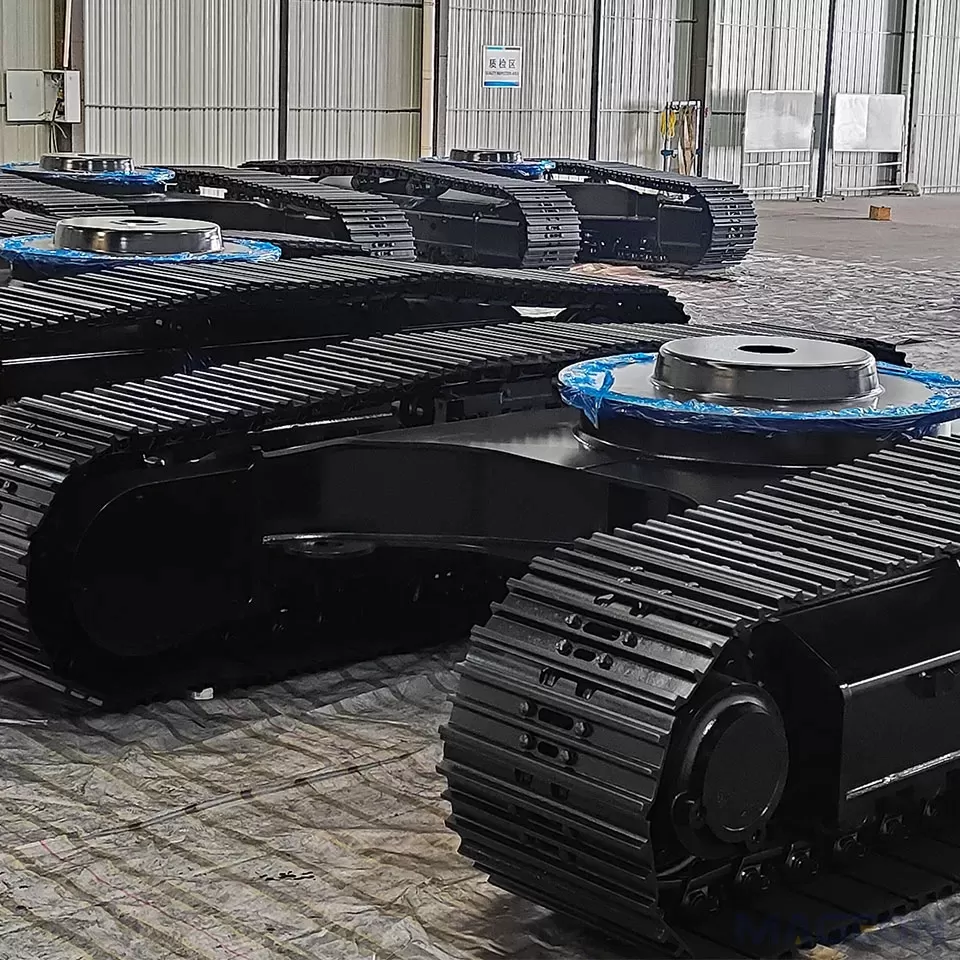
This modular crawler track undercarriage balances load capacity, terrain adaptability and maintenance convenience, making it an ideal travel solution for small and medium-sized engineering equipment.
Frequently Asked Questions
Q: What is a hydraulic track undercarriage, and what is its core function?
A: A hydraulic track undercarriage is a universal travel base for engineering equipment, powered by a hydraulic system and traveling via steel tracks. Its core functions include bearing the full weight of the machine, enabling climbing and off-road movement, supporting flexible steering, and ensuring stable travel for upper equipment.
Q: What advantages does hydraulic crawler chassis have over wheeled chassis?
A: Hydraulic crawler chassis has a larger ground contact area, which avoids sinking on muddy and soft roads and delivers better off-road passability. It also has lower ground pressure, more stable load bearing and better shock absorption, making it more suitable for complex construction sites and rugged terrains.
Q: How many core components does a hydraulic track undercarriage consist of?
A: A complete hydraulic track undercarriage mainly consists of 8 core component systems: track assembly, drive mechanism, guide & tensioning unit, roller & carrier wheel assembly, main frame, hydraulic control system, shock absorption components and auxiliary accessories.
Q: What material is the track shoe made of, and how is its durability?
A: The track shoe is made of high-strength wear-resistant steel plate, which has excellent anti-slip, load-bearing and compression-resistant properties. It can maintain stable performance under long-term heavy load and friction, with a service life significantly better than ordinary steel track shoes.
Q: What is the working principle of the hydraulic drive system?
A: The engine drives the hydraulic pump to generate hydraulic pressure, which is delivered to the travel motor through pipelines. The motor then drives the drive sprocket to rotate, and the sprocket pulls the track to circulate continuously, so as to realize the forward, reverse, steering and climbing movements of the chassis.
Q: What is the function of the tensioning mechanism?
A: The tensioning mechanism is composed of a tensioning cylinder and a buffer spring, which can automatically adjust the tightness of the track. It keeps the track in proper tension under different road conditions, prevents track derailment on bumpy terrain, and reduces the wear of track parts.
Q: Can hydraulic track undercarriage realize 360° in-situ steering?
A: Yes. Thanks to the independent hydraulic drive design of double tracks, the chassis can realize 360° in-situ steering by controlling the forward and reverse rotation of the left and right tracks respectively, which is very suitable for operation in narrow and confined sites.
Q: What are the benefits of the modular structural design?
A: The split modular structure allows individual disassembly and replacement of each component, which greatly reduces the difficulty and cost of daily maintenance and repair. Users can also replace corresponding modules according to different working conditions to improve equipment adaptability.
Q: What types of equipment is the hydraulic track chassis suitable for?
A: It is widely suitable for solar piling rigs, foundation drilling rigs, mini excavators, crushers, conveying equipment, garden engineering machinery and other small and medium-sized engineering equipment, and can also be customized for special equipment.
Q: What should be paid attention to in daily maintenance of hydraulic track chassis?
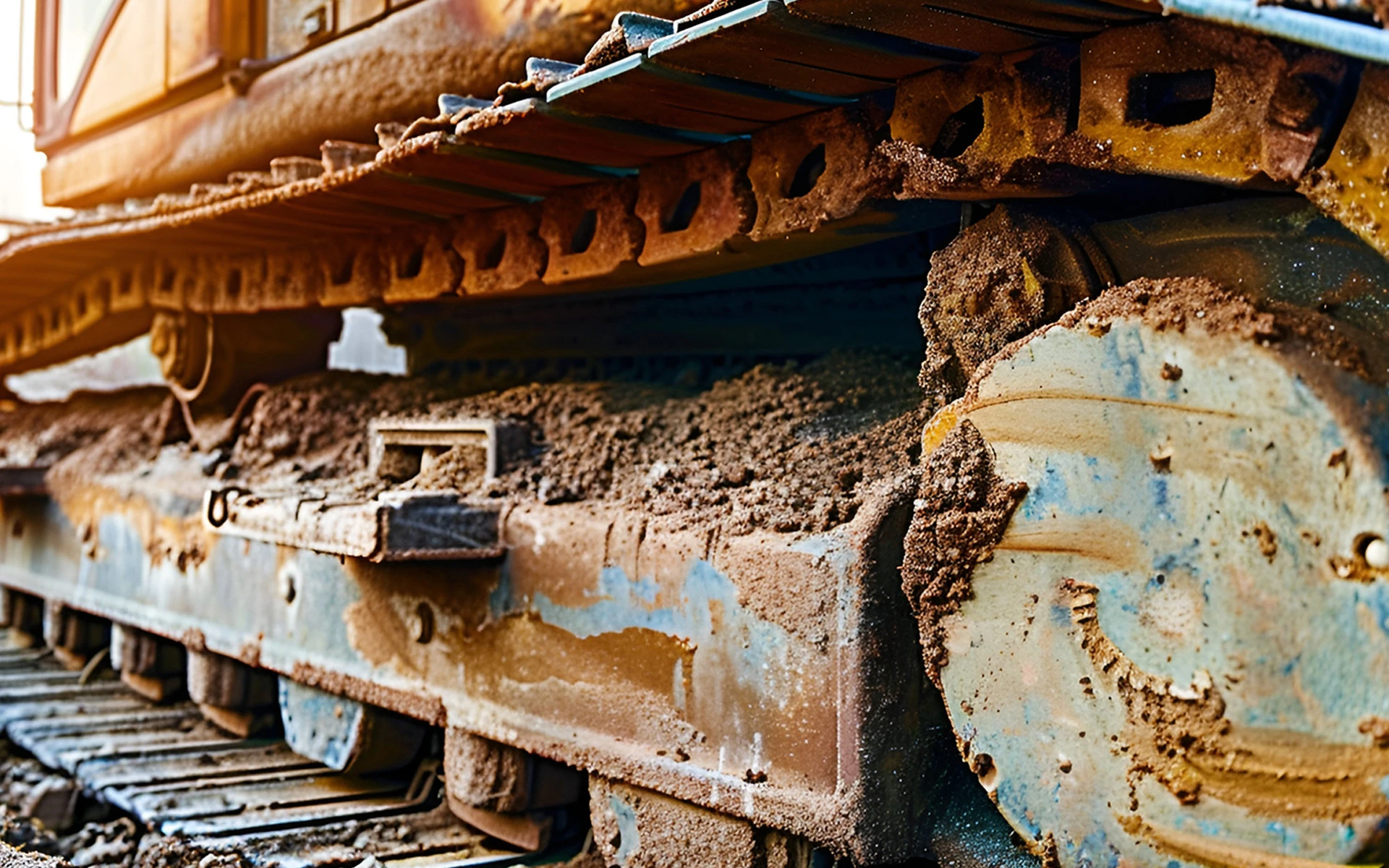
A: Daily maintenance mainly includes: regularly checking track tension and wear condition, checking hydraulic oil level and pipeline sealing, lubricating each pin shaft and rotating parts regularly, and cleaning track and roller attachments in time after operation in muddy environment.
Applicable products:
Compatible Equipment & Product Applications
This hydraulic steel track chassis is universally compatible with various medium and small engineering and agricultural equipment. Main applicable models include:
🎖️Solar piling rigs and foundation drilling rigs
🎖️Mini excavators and small crushing equipment
🎖️Conveying equipment and material handling machinery
🎖️Garden engineering machinery and orchard operation equipment
🎖️Small roadheader and tunnel construction equipment
Please leave your customization requirements, and we will contact you as soon as possible!
Leave your requirements, we'll get back to you within 24 hours.