How do I choose to use steel crawler chassis or rubber crawler chassis?
Project Overview:
This article provides a systematic selection guide for steel and rubber track undercarriage solutions. It introduces 5 core questions for rapid demand diagnosis, conducts a multi-dimensional comparative analysis from 5 key dimensions including load capacity, ground protection, terrain adaptability, driving performance and service life, and clearly defines the applicable scenarios of the two types of products. Intended for B2B equipment buyers and engineering decision-makers, it helps users match the most suitable undercarriage scheme based on actual working conditions, so as to optimize equipment performance and reduce full-life-cycle operation costs. MAGEON provides both standard and customized configurations of steel and rubber crawler chassis to meet diversified operation demands.
Steel vs Rubber Crawler Undercarriage: How to Select the Right Solution for Your Equipment
Choosing between a steel crawler undercarriage and a rubber track system is one of the most common and critical decisions for machinery buyers. At MAGEON, we believe the key to a correct recommendation lies in accurately matching the equipment’s working conditions and the customer’s core requirements, rather than simply comparing advantages and disadvantages in isolation. This guide breaks down the full selection framework to help you make the lowest-risk, highest-value choice.
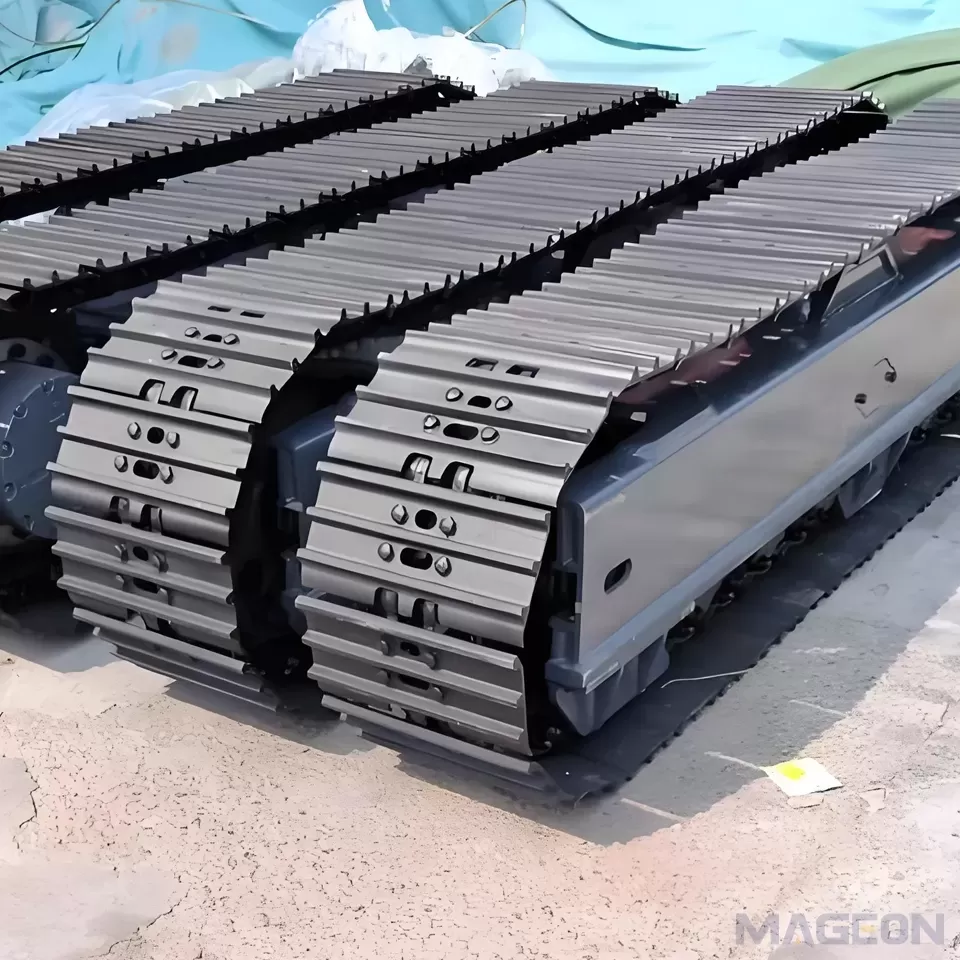
Core Comparative Analysis & Specifications
We have conducted a full-dimensional comparative analysis of steel and rubber crawler chassis, with clear recommendation principles for each dimension. Details are as follows:
| Characteristic Dimension | Steel Crawler Undercarriage | Rubber Crawler Undercarriage | Recommendation Principle |
|---|---|---|---|
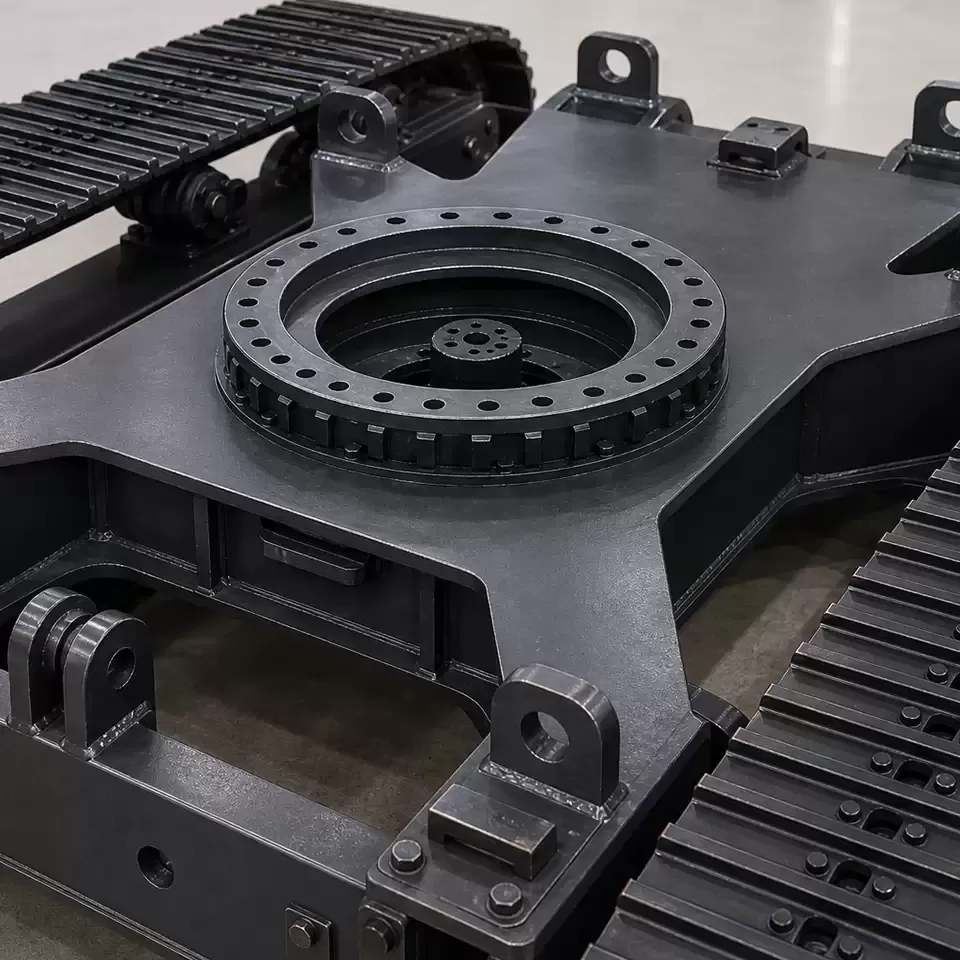
| Carrying Capacity | Extremely strong. Suitable for heavy and ultra-heavy equipment such as large excavators, drilling rigs and cranes. | Moderate to good. Suitable for small and medium-sized equipment such as mini excavators, harvesters and forklifts. | If equipment tonnage exceeds 20 tons, or an extremely stable operating platform is required, steel structure is the only safe and reliable choice. |
| Ground Damage Impact | Significant. Will crush asphalt and damage cement floors, leaving obvious marks on sensitive surfaces. | Extremely minor. Rubber track makes soft contact with the ground, providing good protection for asphalt, cement, indoor floors and lawns. | If equipment needs to work on municipal roads, hardened sites, farm lawns or indoors, rubber tracks are mandatory to avoid high-cost ground compensation. |
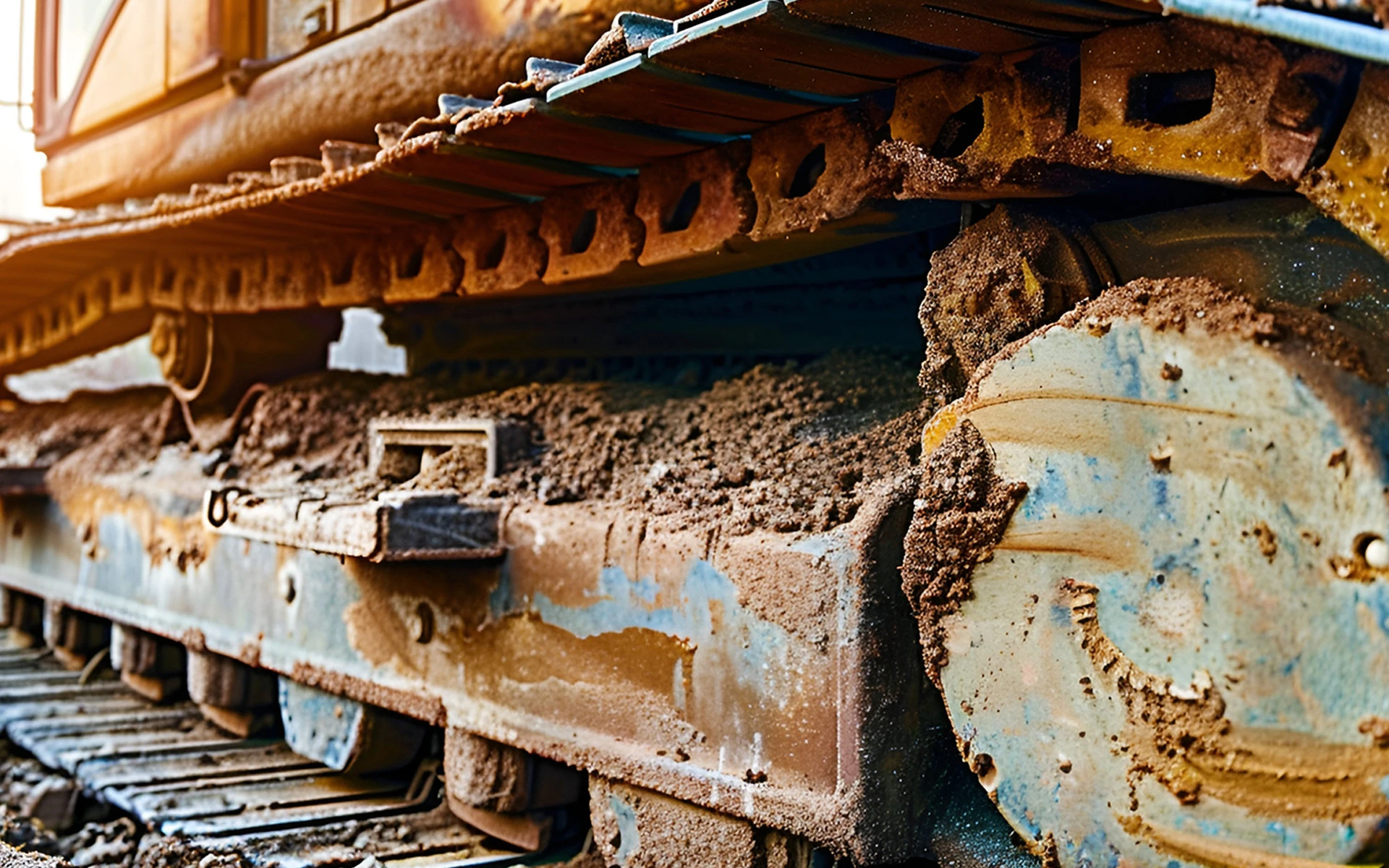
| Terrain Adaptability | Extremely strong. Suitable for extremely harsh conditions: mines, rocky areas, demolition sites and dense shrubs. Puncture and cut resistant. | Selective adaptability. Suitable for relatively uniform soft ground such as mud, sand and snow. Vulnerable to sharp rocks, steel bars and broken glass. | If the site has 大量 exposed rocks, construction waste or unknown sharp debris, steel tracks minimize accidental damage and downtime risks. |
| Travel Performance | Relatively slow speed (usually < 4 km/h), high noise, large vibration, and extremely high traction. | Relatively fast speed (up to 10 km/h), low noise, smooth and comfortable driving, and good traction. | If equipment needs frequent site transfer or on-road travel, or has operational comfort requirements (e.g. long-hour cab operation), rubber tracks have obvious advantages. |
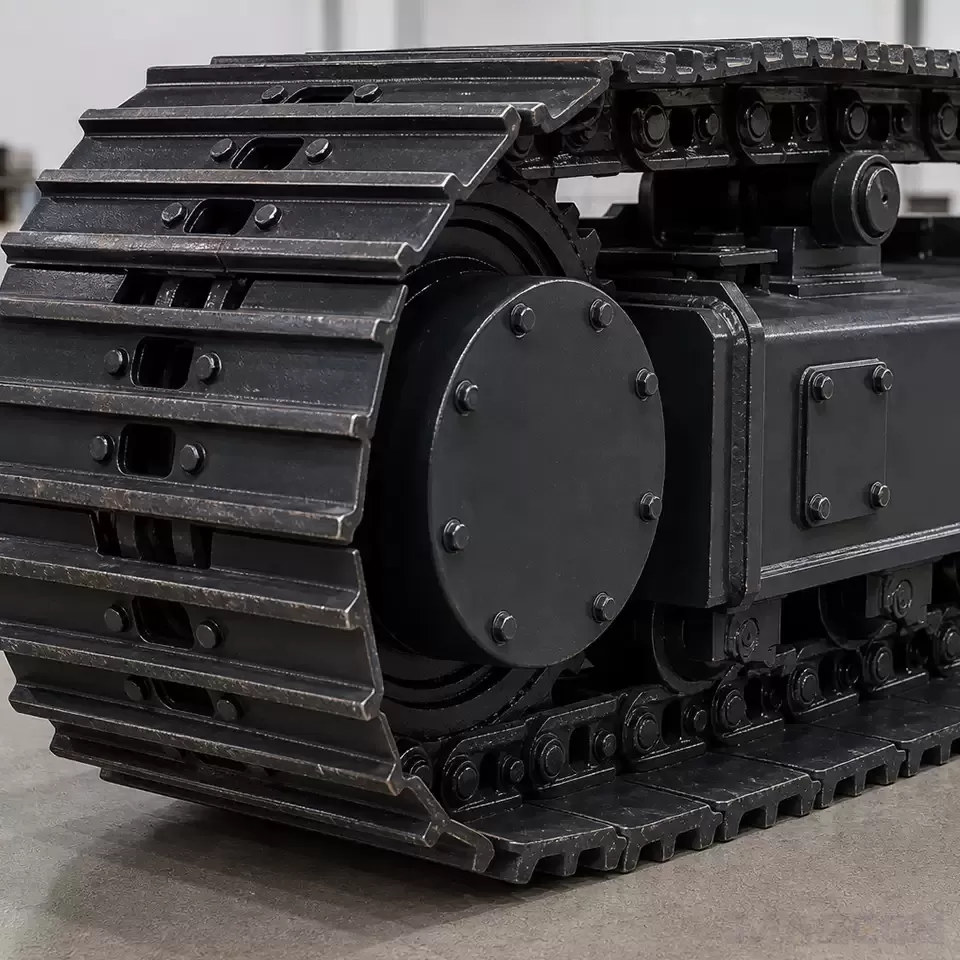
| Lifespan & Maintenance | Extremely long overall service life (several years or even a decade). Rollers and idlers are wearing parts, and worn track shoes can be replaced individually. | The rubber track itself is a wearing part, with a service life of usually 800–2000 hours. Once internal steel cords break or rubber tears, the entire track usually needs replacement. | From a full-life-cycle perspective, steel tracks are more economical and durable on harsh construction sites; on good road surfaces, rubber tracks save ground protection and travel efficiency costs despite replacement needs. |
5 Core Questions for Rapid Demand Diagnosis
In customer communication, we can quickly identify actual needs through the following five questions, so as to accurately match the most suitable solution:
1、What are the self-weight and maximum working weight of your equipment? – Determines load-bearing requirements and basic structural strength standards.
2、On what kind of ground/environment does the equipment mainly work? – Determines wear resistance requirements and ground protection needs.
3、What performance aspects do you care about the most? – Clarifies priorities among ground protection, high speed, low noise and extreme durability.
4、What is the typical working speed of the equipment? Does it need frequent site transfer or road travel? – Determines travel performance and mobility requirements.
5、What are your initial procurement budget and long-term maintenance cost considerations? – Evaluates full-life-cycle cost and economic efficiency.
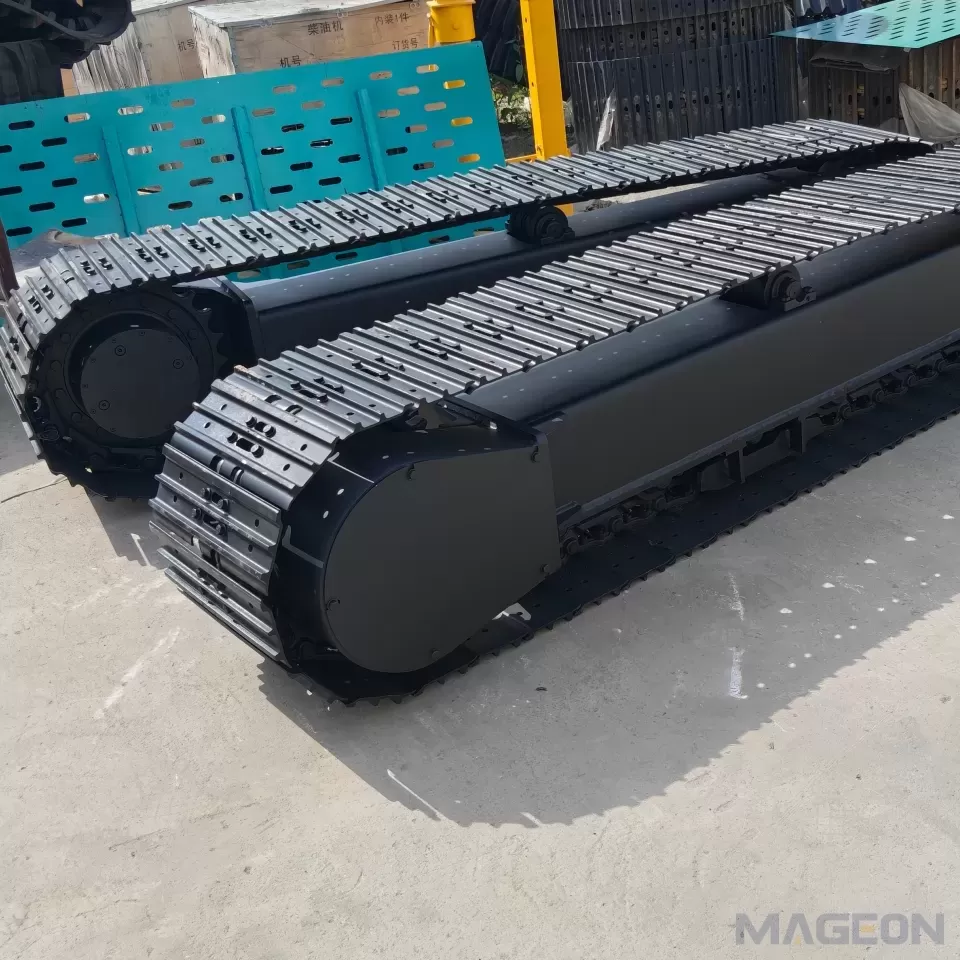
When to Recommend Steel Track Undercarriage
When a customer’s scenario meets any of the following conditions, steel track undercarriage is the firmly recommended solution:
Extreme working conditions: Mining, rock excavation, building demolition, metal smelting plants, and virgin forest logging operations.
Ultra-heavy equipment: Large and super-large engineering machinery with high load requirements.
Unknown ground risks: Complex site ground conditions where sharp hard objects cannot be excluded.
Absolute durability as core demand: Scenarios where unplanned downtime caused by track damage is unacceptable.
When to Recommend Rubber Track Undercarriage
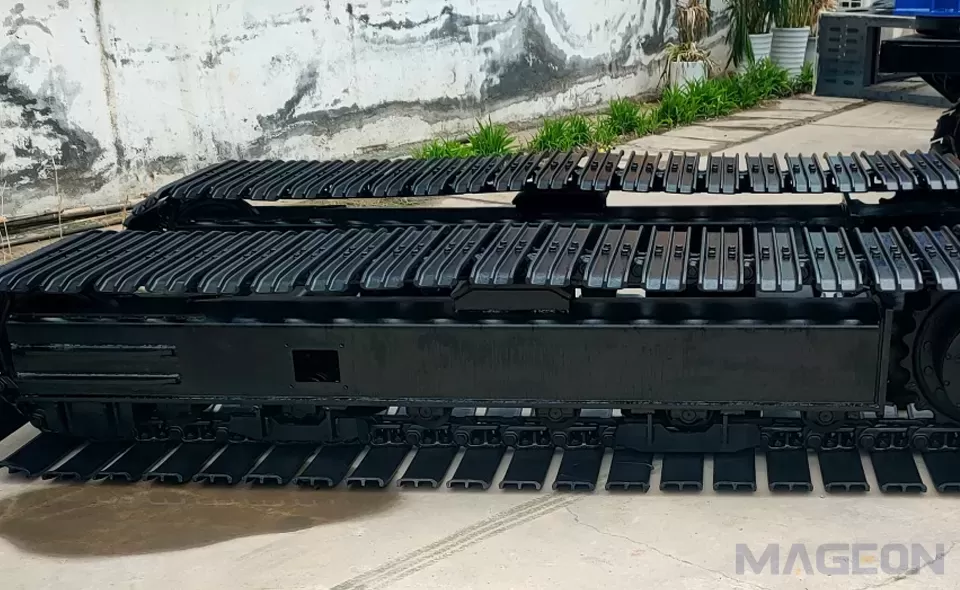
When a customer’s scenario meets any of the following conditions, rubber track undercarriage is the optimal choice:
Ground protection requirements: Municipal engineering (asphalt/concrete roads), farmland (cultivated soil/lawns), indoor venues, stadiums and landscape areas.
Road travel and speed demand: Equipment that often needs self-transfer or short-distance travel on public roads.
Comfort and environmental protection pursuit: Scenarios with strict noise and vibration requirements, such as operations near residential areas, hospitals and campuses.
Regular earthwork operations: Excavation and handling on construction sites with uniform soil quality and no sharp foreign objects.
Conclusion
There is no universally “best” solution – only the most suitable one. MAGEON’s expertise lies in helping you select the solution with the lowest risk and highest comprehensive benefit based on your actual working scenarios.
This professional crawler track undercarriage selection framework has helped hundreds of global OEM customers complete equipment matching. For customized demand consultation, you can contact our technical team directly for targeted scheme recommendation.
Frequently Asked Questions
Q: What is the biggest difference between steel crawler undercarriage and rubber crawler undercarriage?
A: The core difference lies in load capacity, ground protection and terrain adaptability. Steel tracks have higher load capacity and stronger extreme terrain adaptability, but cause greater ground damage and higher noise; rubber tracks have better ground protection, lower noise and faster driving speed, but have lower load upper limit and are afraid of sharp objects.
Q: How many tons of equipment are suitable for steel track undercarriage?
A: Generally, equipment with a tonnage of more than 20 tons, or heavy-duty equipment with extremely high requirements for operational stability, is recommended to choose steel track undercarriage. For equipment below 20 tons, the selection should be combined with specific working conditions and ground requirements.
Q: Will rubber track undercarriage damage asphalt and lawn ground?
A: No. The rubber track makes soft contact with the ground, with low ground pressure, which will not scratch asphalt pavement or crush lawns, and will basically not leave obvious driving marks. It is very suitable for municipal and landscape operation scenarios with ground protection requirements.
Q: What is the service life of steel track and rubber track respectively?
A: The overall service life of steel track is extremely long, usually several years or even more than ten years, and individual track shoes can be replaced after wear. The rubber track itself is a wearing part, with a normal service life of 800–2000 hours, which needs to be replaced as a whole after damage.
Q: Can steel track undercarriage be used on municipal roads?
A: It is not recommended. Steel tracks will cause crushing damage to asphalt and cement pavement, and are easy to leave permanent marks, which may bring high ground compensation costs. For municipal road operations, rubber track undercarriage should be selected.
Q: Is rubber track easy to be damaged on rocky construction sites?
A: Yes. Sharp rocks, steel bars, broken glass and other hard debris on the construction site are easy to puncture and tear the rubber track, resulting in the need for overall replacement. For such complex and unknown ground conditions, steel tracks with puncture resistance are more reliable.
Q: Which type of undercarriage has lower full-life-cycle cost?
A: It depends on the working scenario. On harsh construction sites such as mines and rock areas, steel tracks have lower full-life-cycle cost and are more economical and durable; on municipal and good road surfaces, rubber tracks save ground compensation and transfer efficiency costs, with higher comprehensive cost performance.
Q: Can the track type be modified after the equipment is purchased?
A: It can be modified technically, but it needs professional adaptation design for the frame, drive system and size parameters. It is recommended to determine the track type according to the working conditions at the initial stage of equipment procurement to avoid secondary modification costs.
Q: Which type of undercarriage has better climbing and traction performance?
A: Steel crawler undercarriage has stronger ultimate traction and better heavy-load climbing ability; rubber tracks also have good traction performance, and have advantages in speed and driving smoothness on gentle slopes and conventional terrain.
Q: How to choose the most suitable undercarriage type for my equipment?
A: You can judge from five dimensions: equipment tonnage, main working ground, core performance demand, transfer frequency and budget. If you are not sure, you can provide specific working condition parameters, and MAGEON technical team will give targeted recommendation schemes.
Applicable products:
Compatible Equipment & Product Applications
Steel and rubber track undercarriages are respectively suitable for different types of host equipment. Main compatible models are as follows:
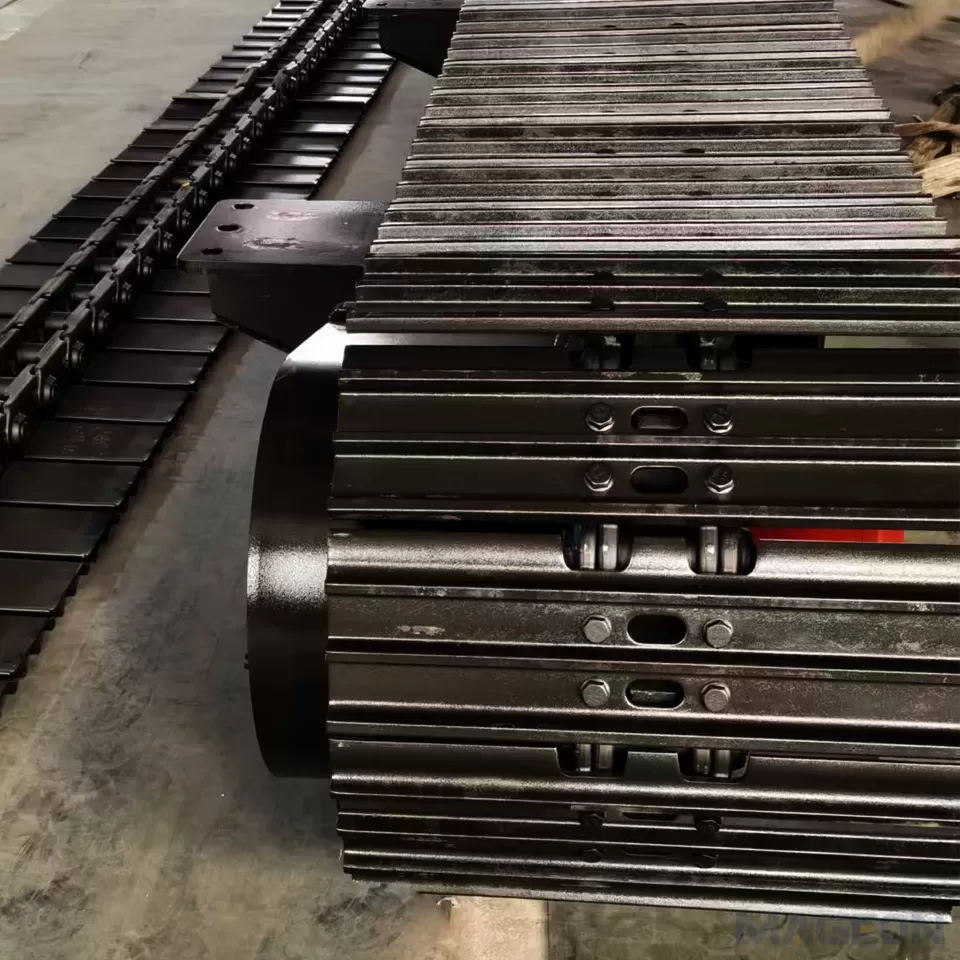
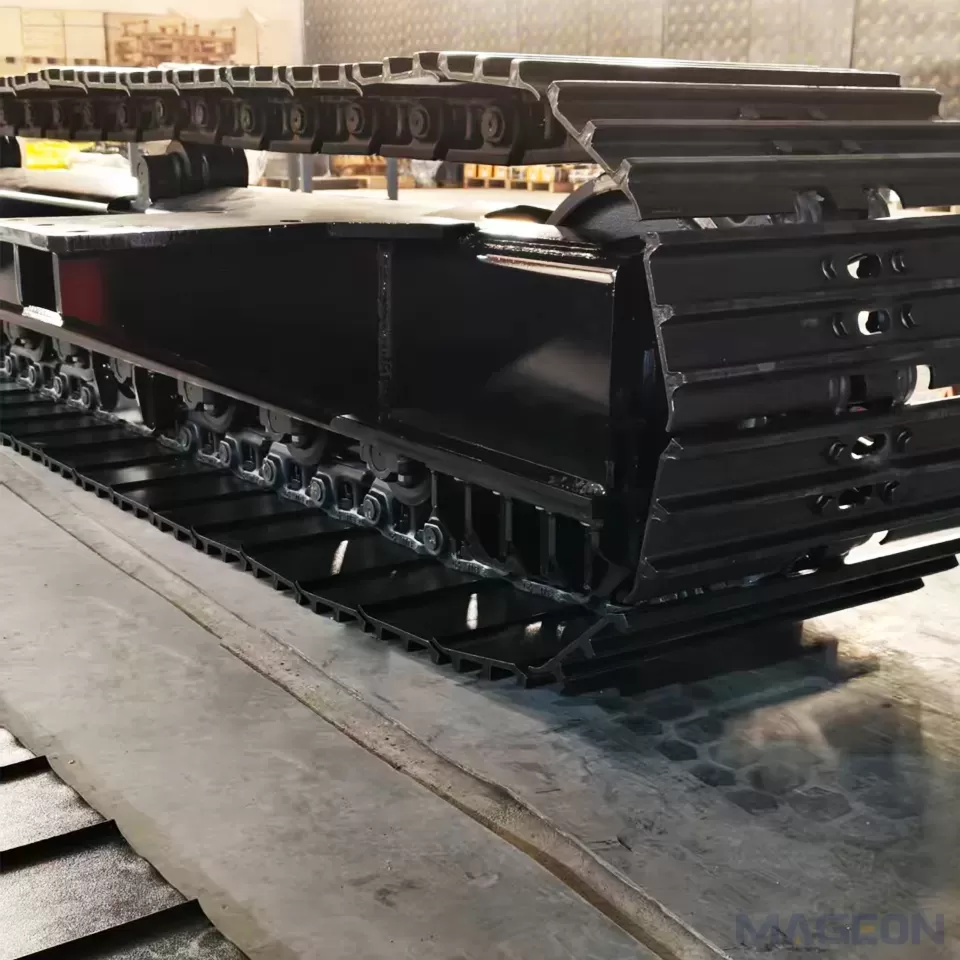
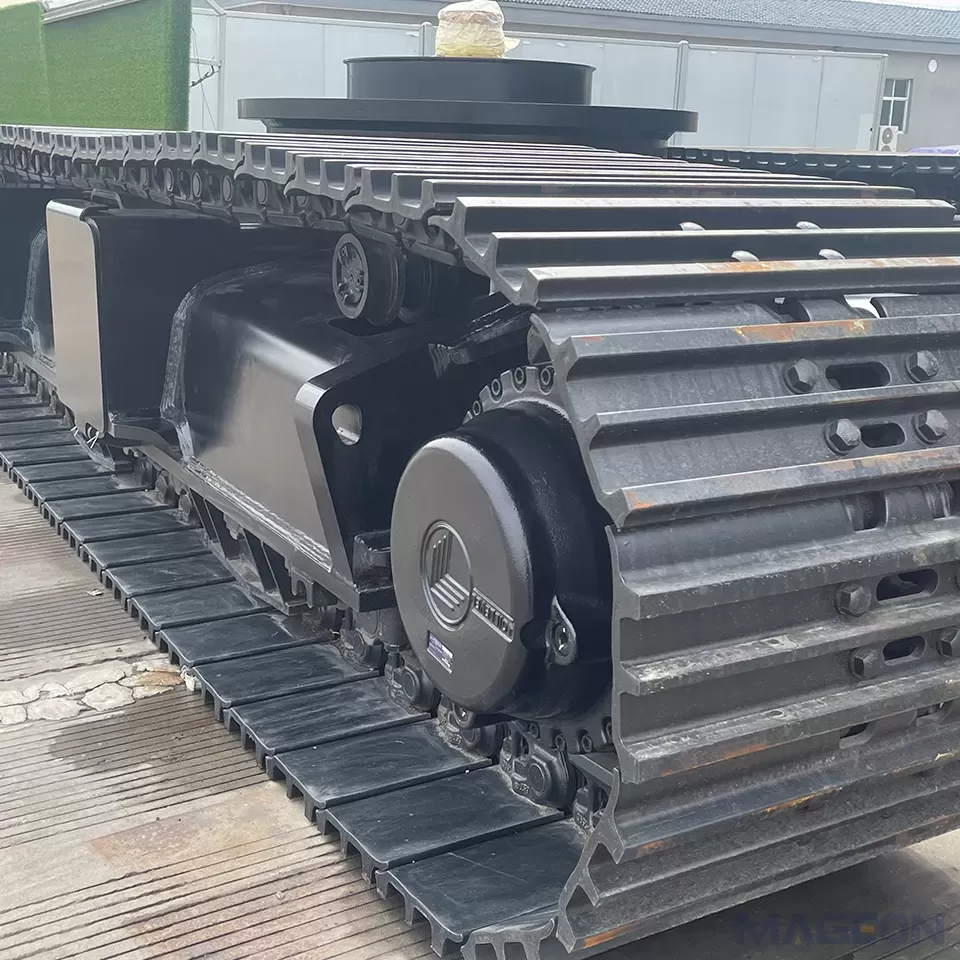
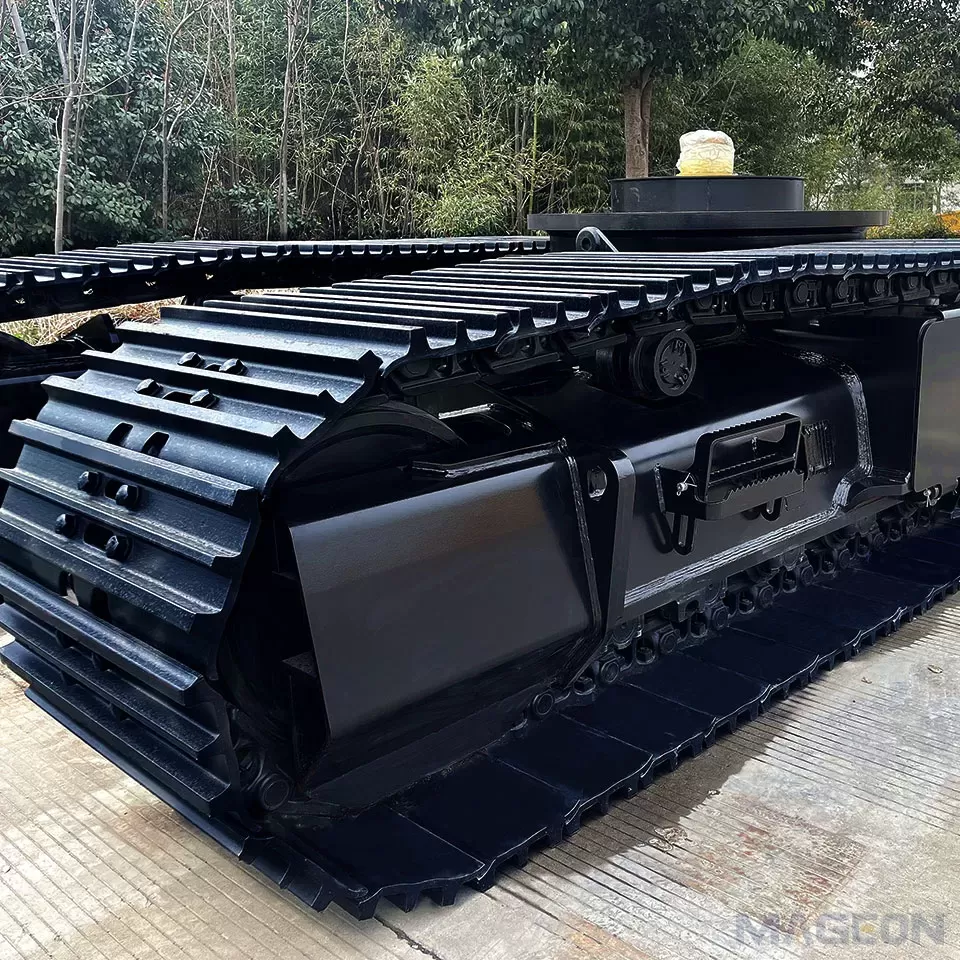
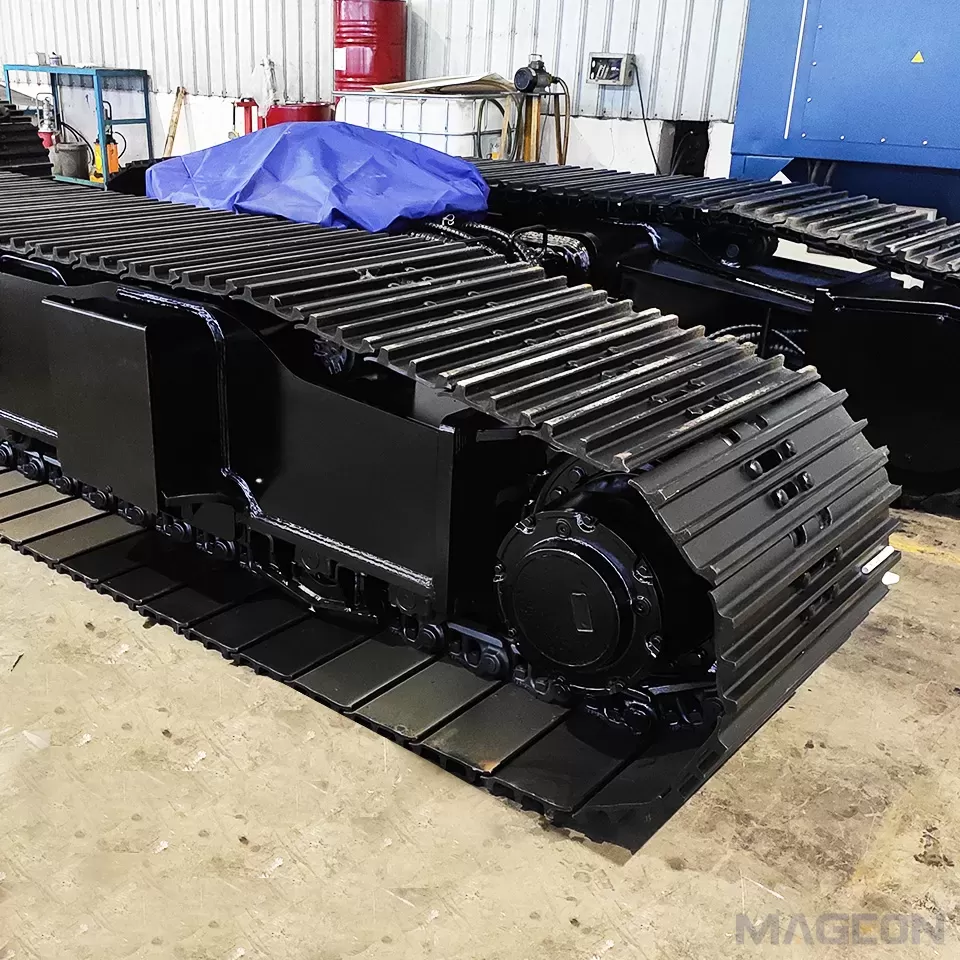
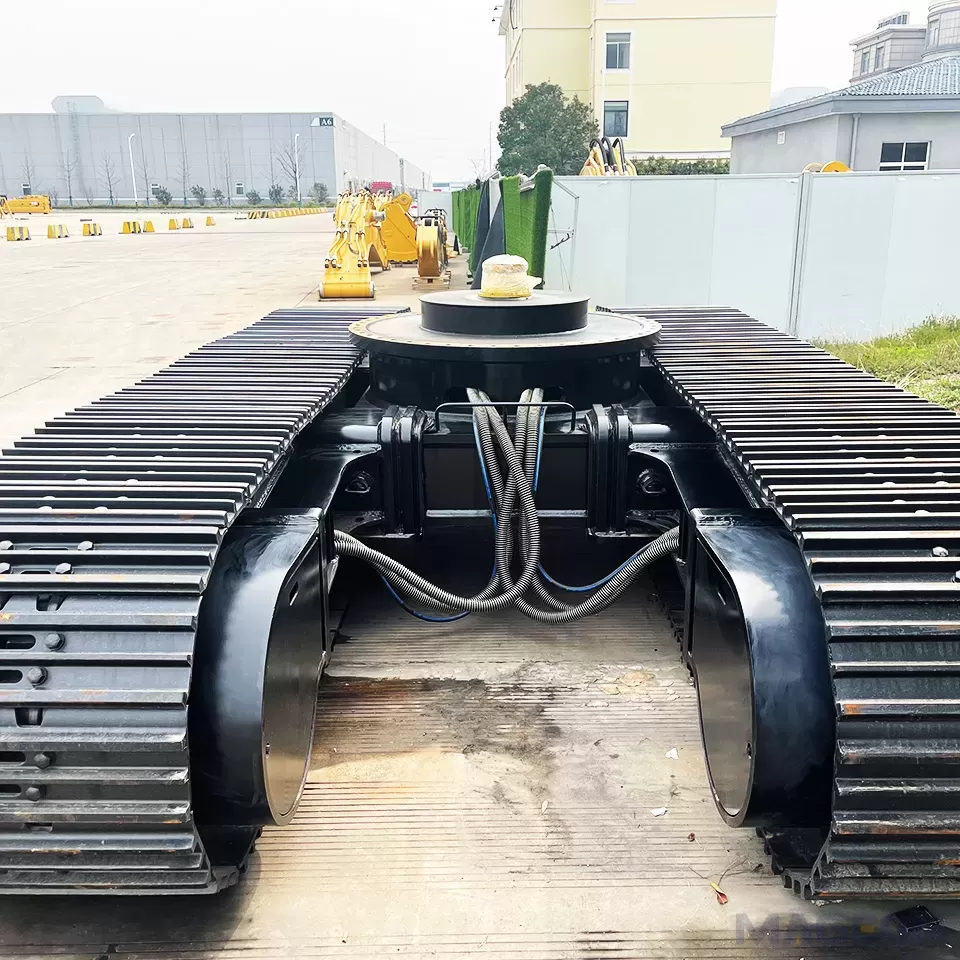
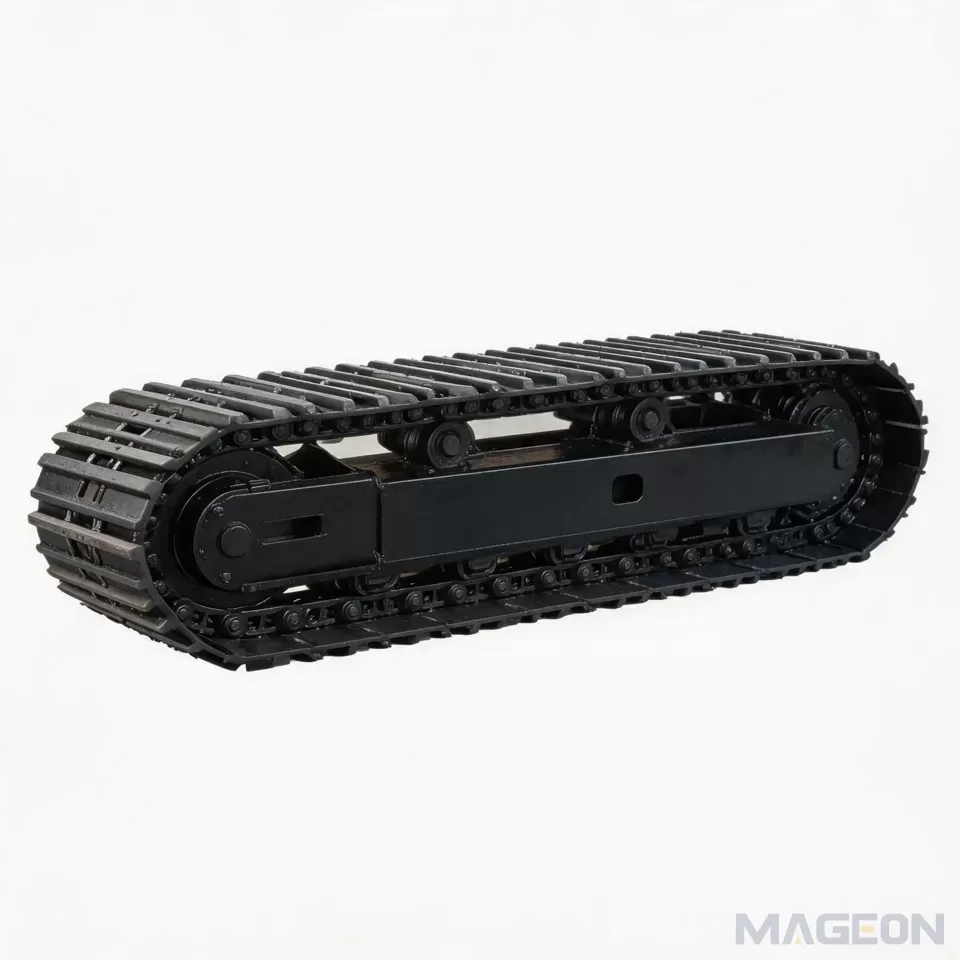
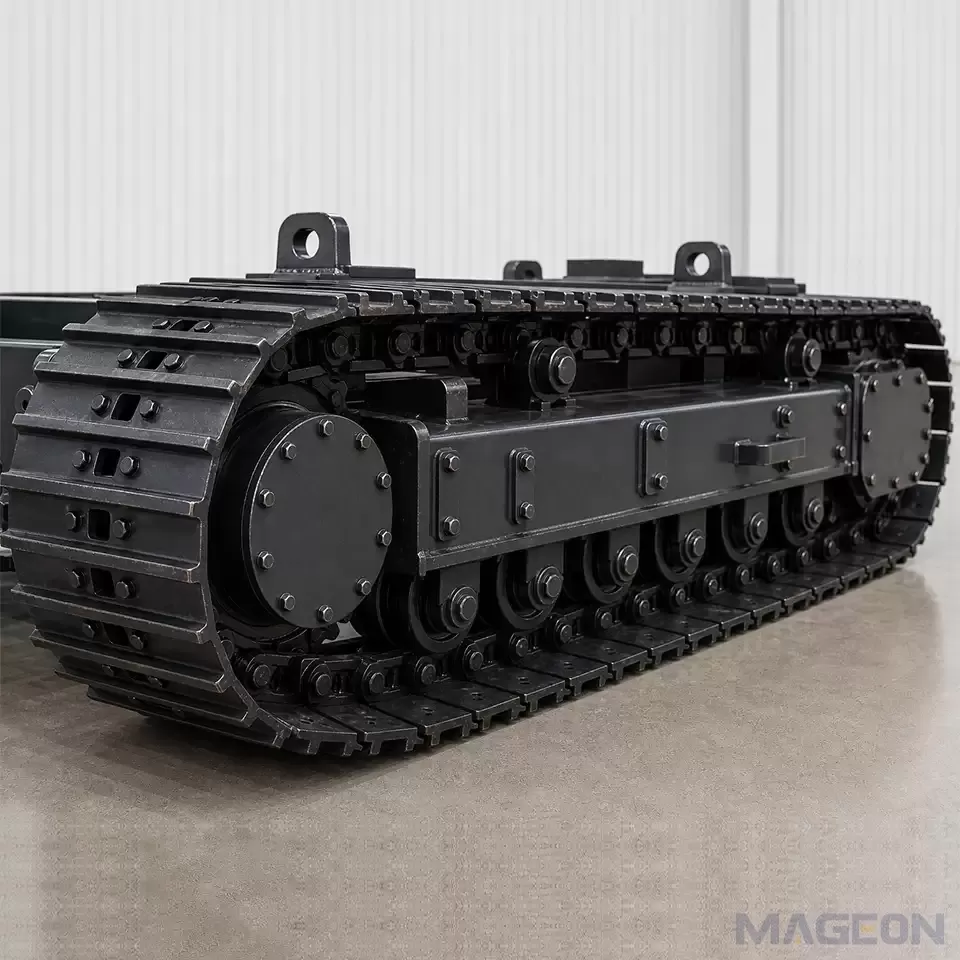
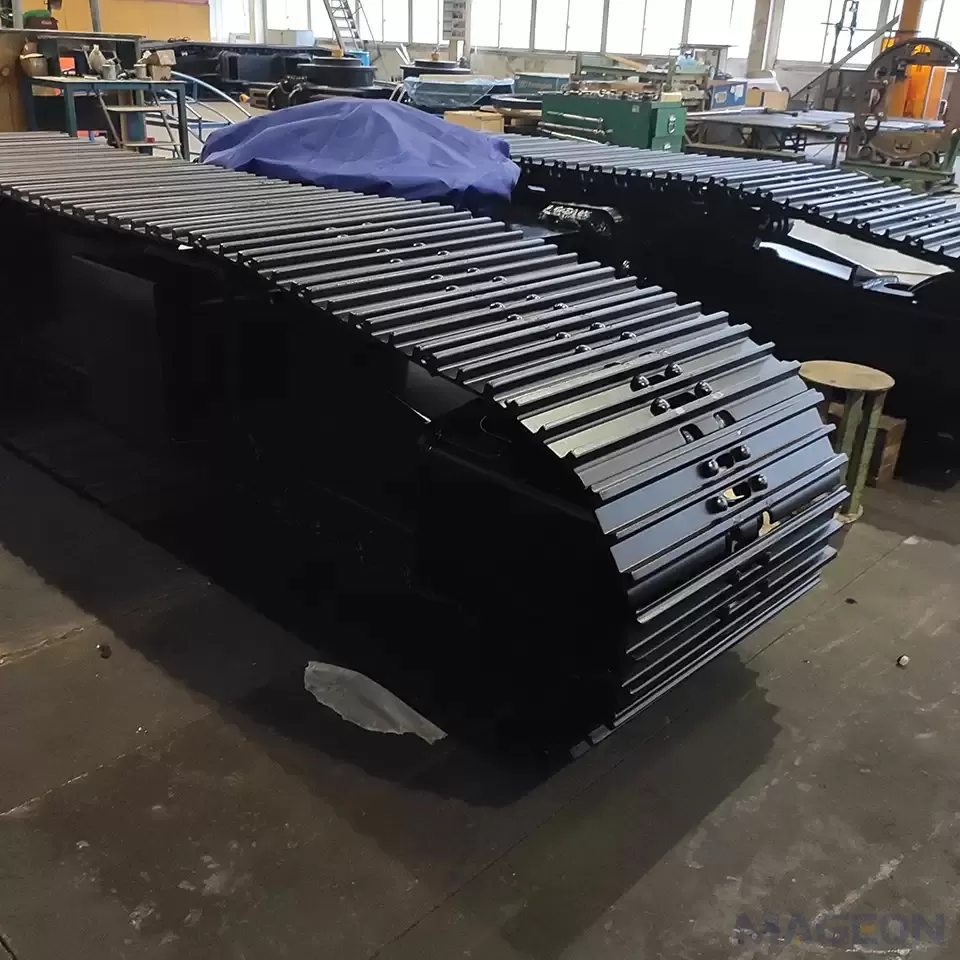
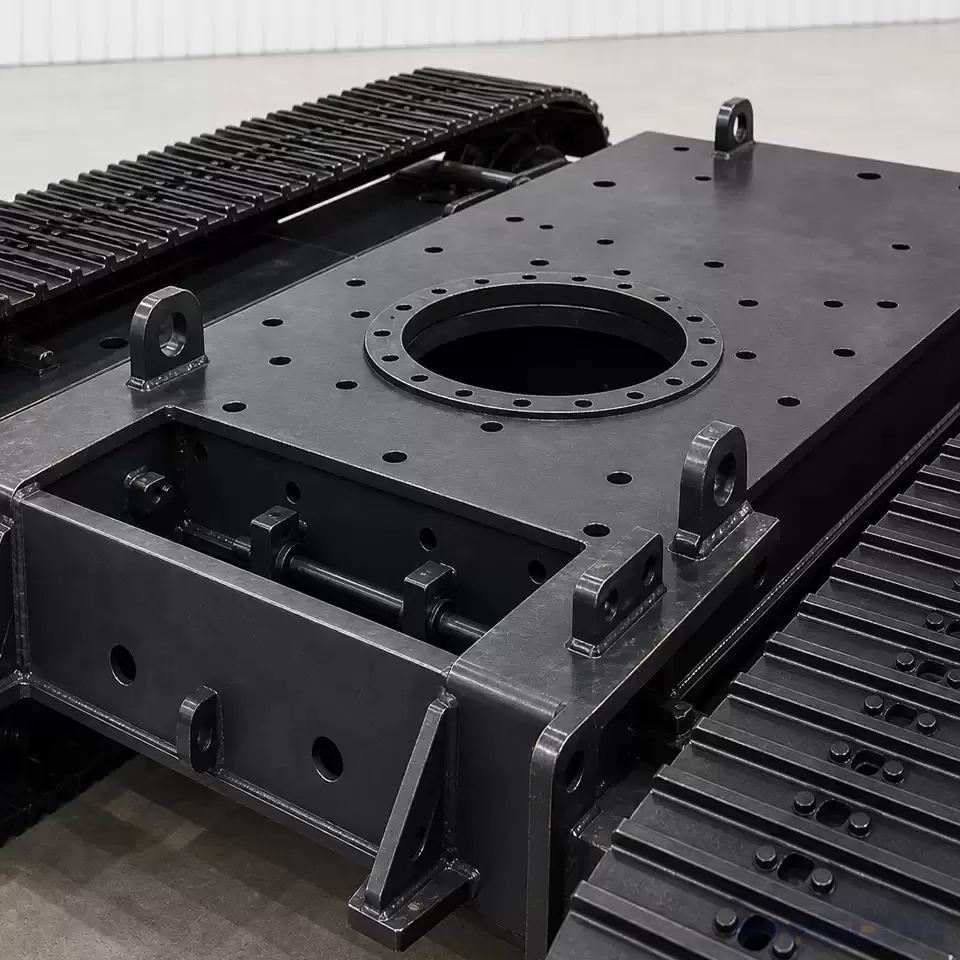
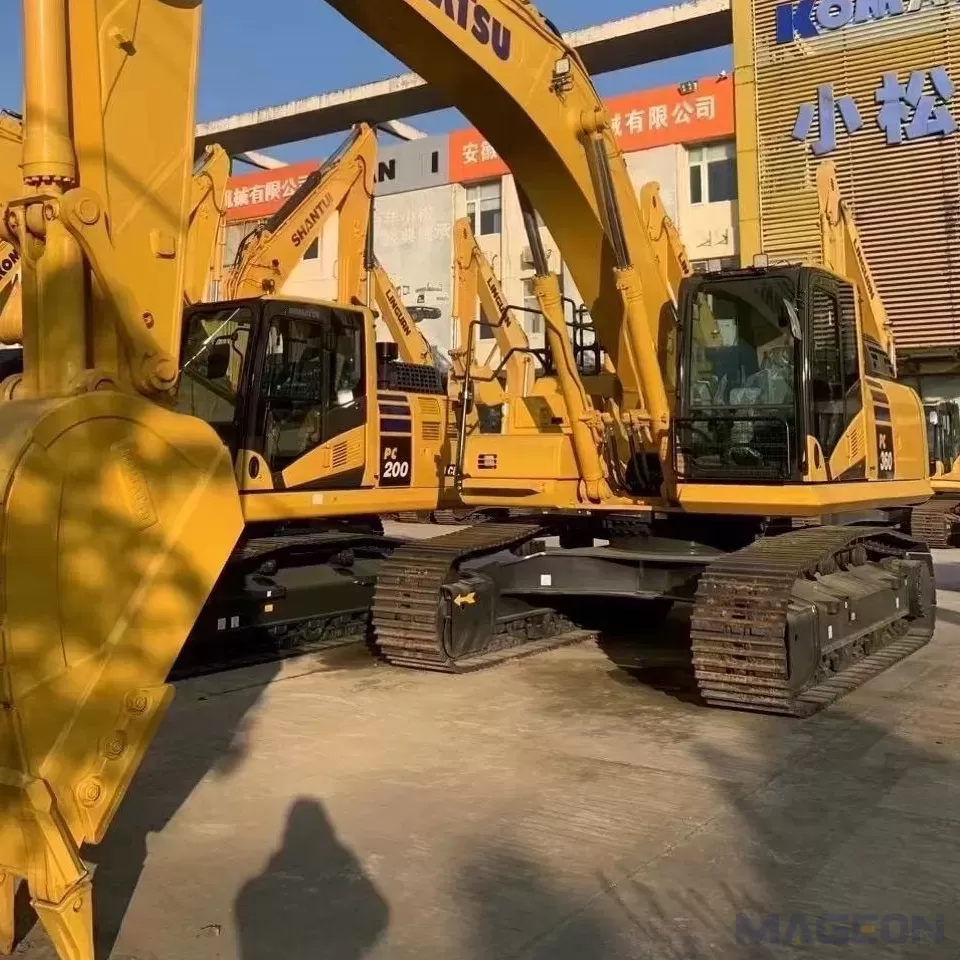
Steel crawler undercarriage: Large excavators, mining drilling rigs, crawler cranes, bulldozers, demolition equipment, forest logging machinery
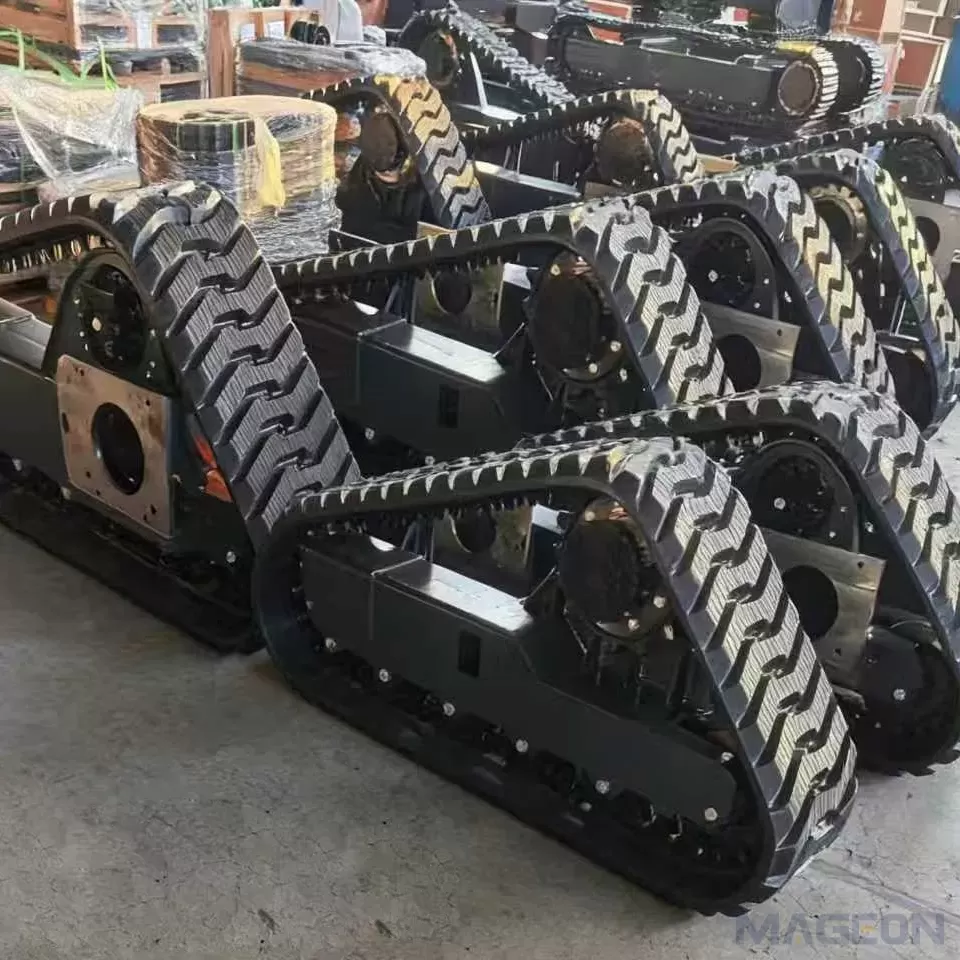
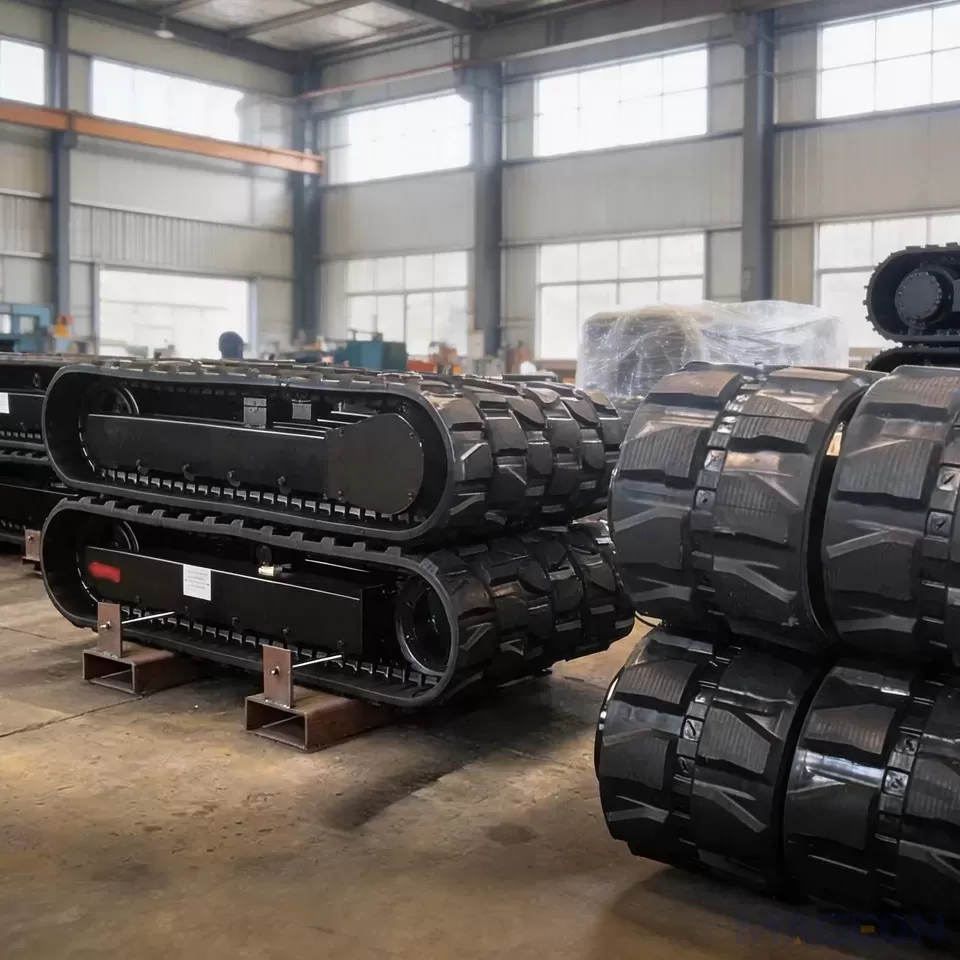
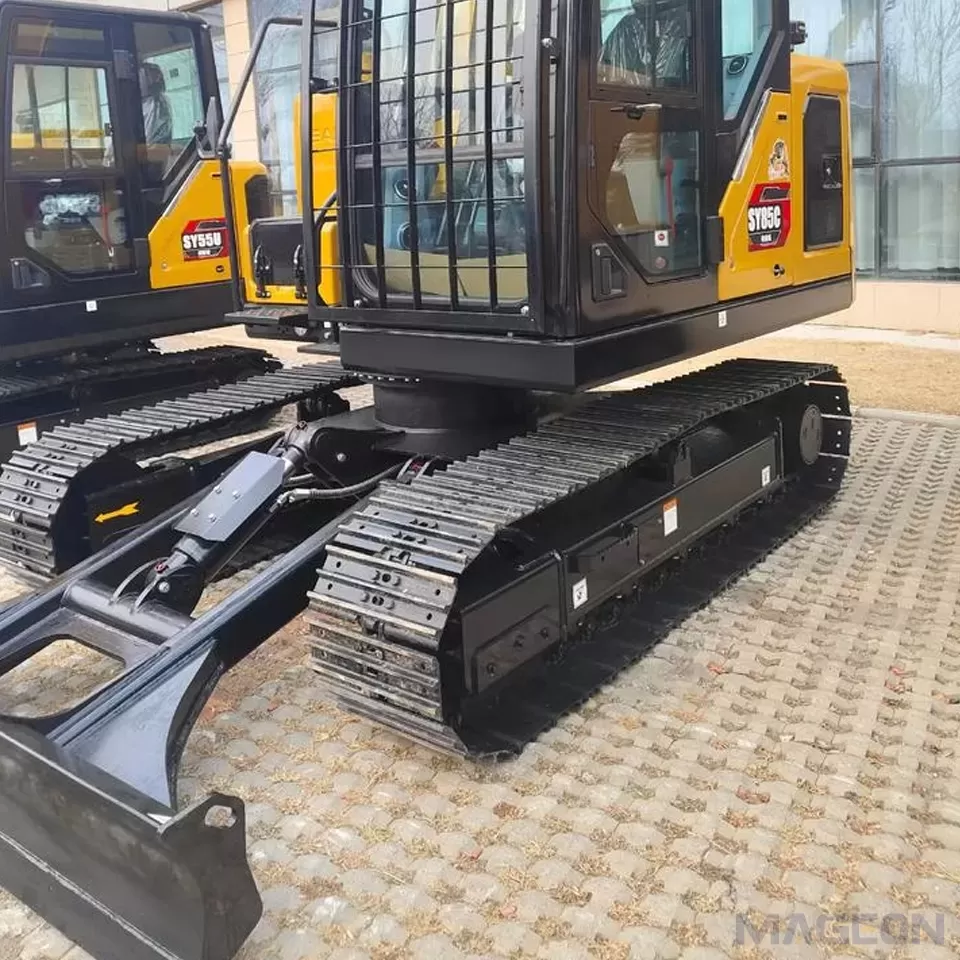
Rubber crawler undercarriage: Mini & medium excavators, municipal cleaning vehicles, aerial work platforms, agricultural harvesters, lawn maintenance equipment, indoor construction machinery
Please leave your customization requirements, and we will contact you as soon as possible!
Leave your requirements, we'll get back to you within 24 hours.