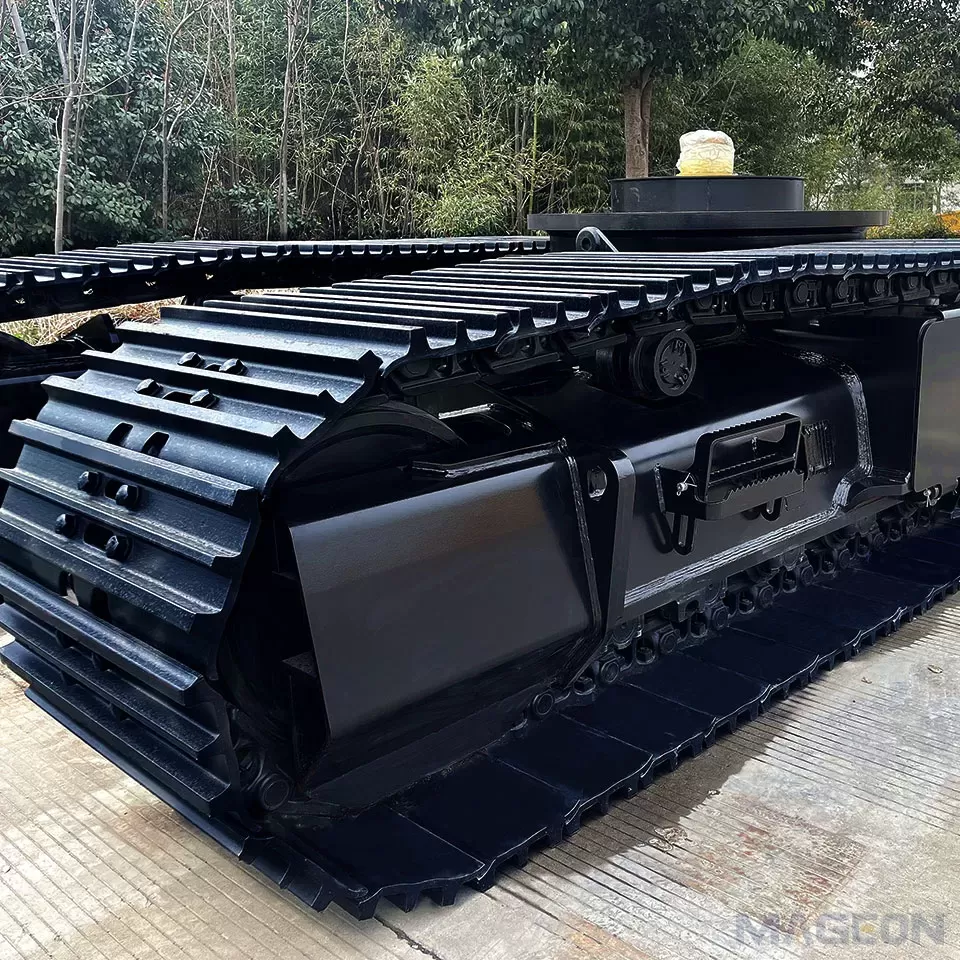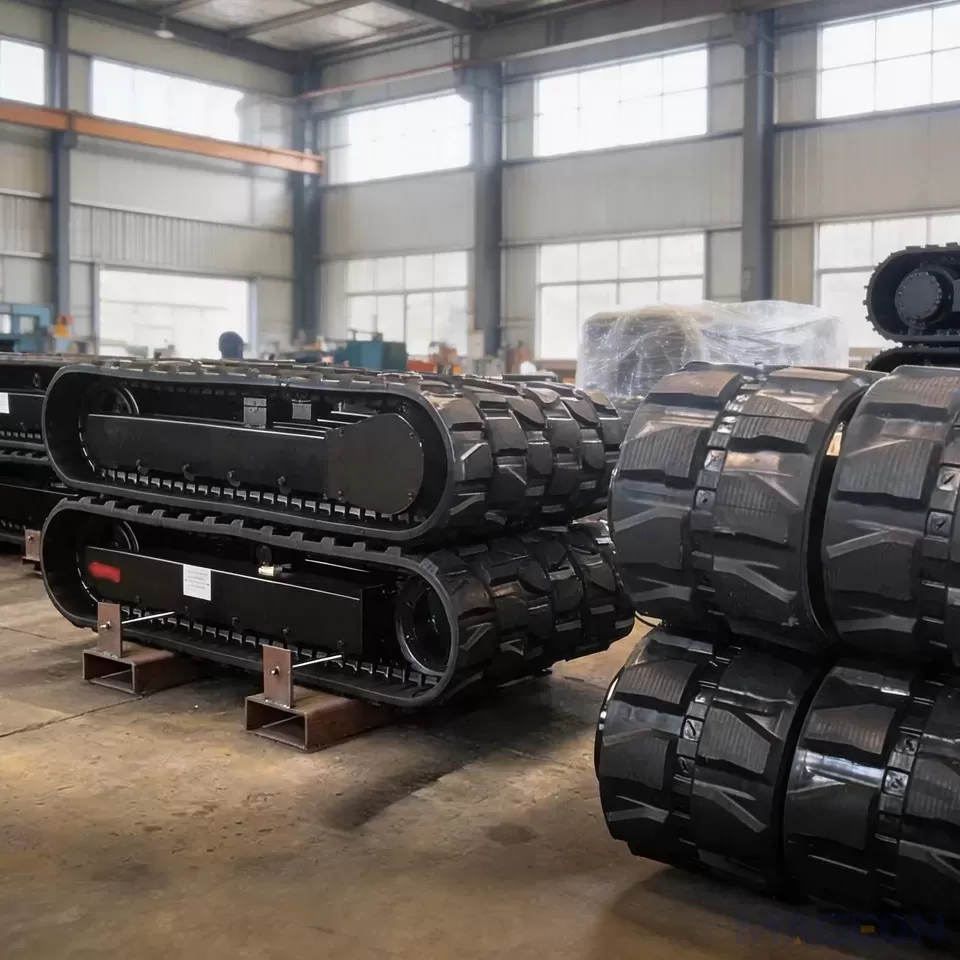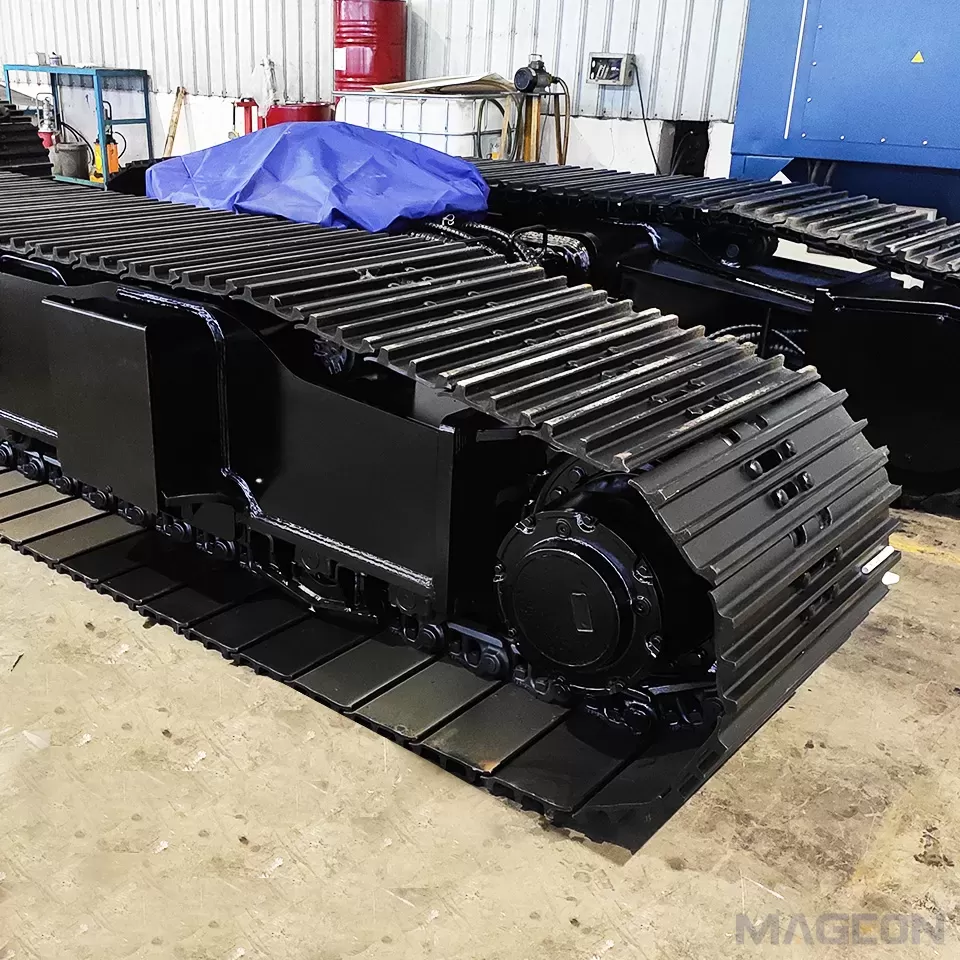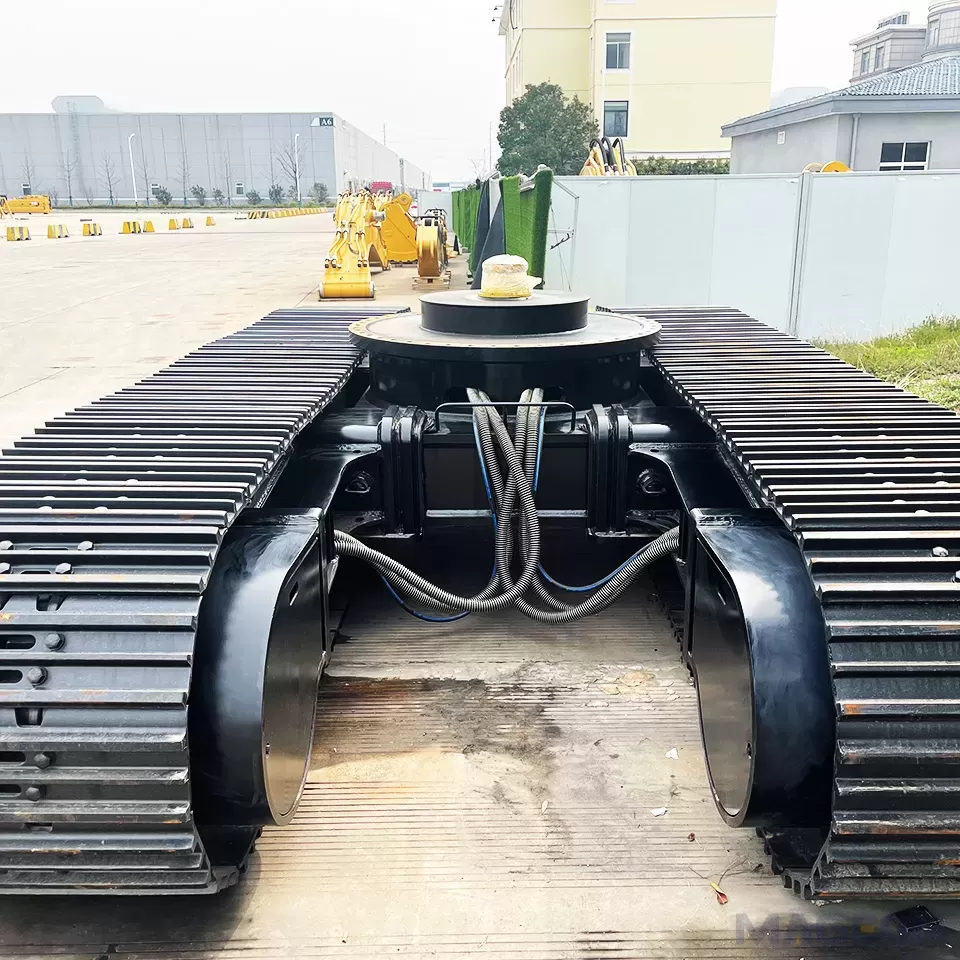
How can heavy steel crawlers be designed and customized to suit complex projects?
Project Overview:
This article systematically sorts out the full technical framework of heavy machinery track undercarriage design, covering six core dimensions: structural strength & stiffness, stability & balance, durability & service life, powertrain matching, environmental adaptability, and safety compliance. It also introduces maintainability optimization, lightweight design, customized solutions and design focus of typical application scenarios. Guided by multi-disciplinary collaboration, MAGEON integrates mechanical analysis, material science, dynamic simulation and actual working condition verification into each custom project, to deliver reliable, efficient and long-life undercarriage solutions for global customers.
Key Technical Points in Heavy Machinery Crawler Undercarriage Chassis Design
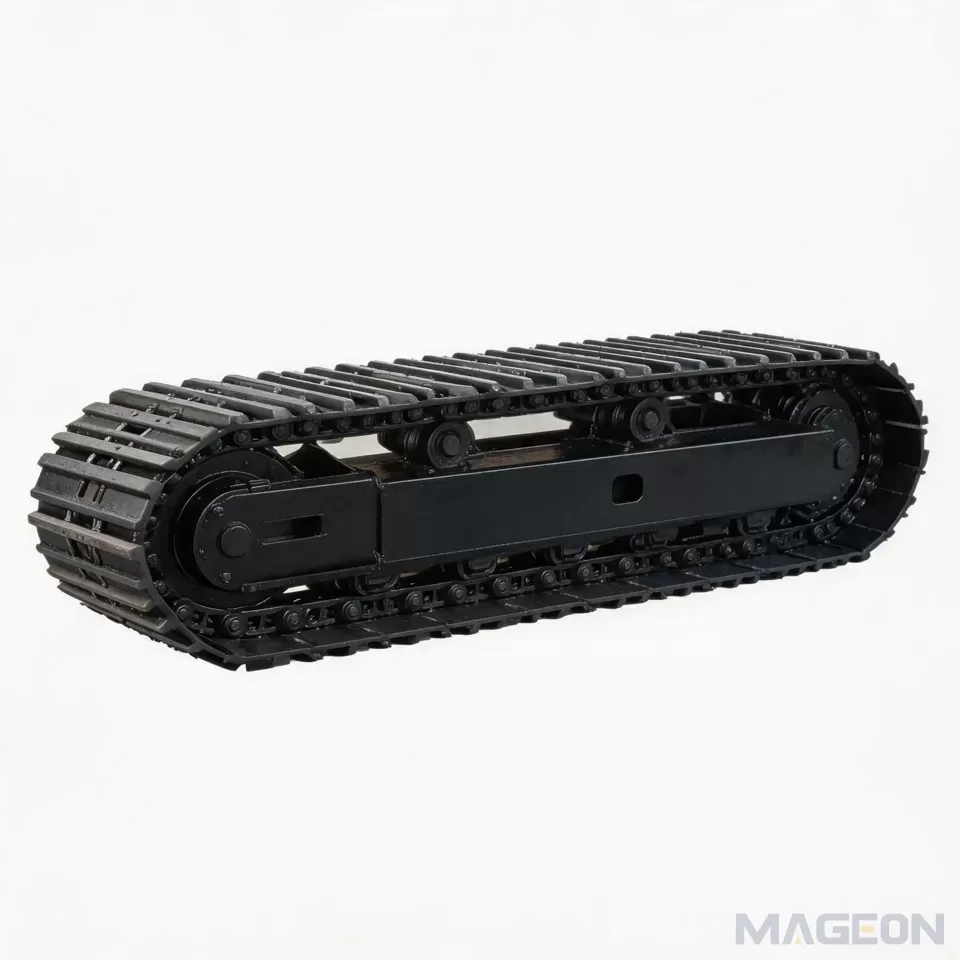
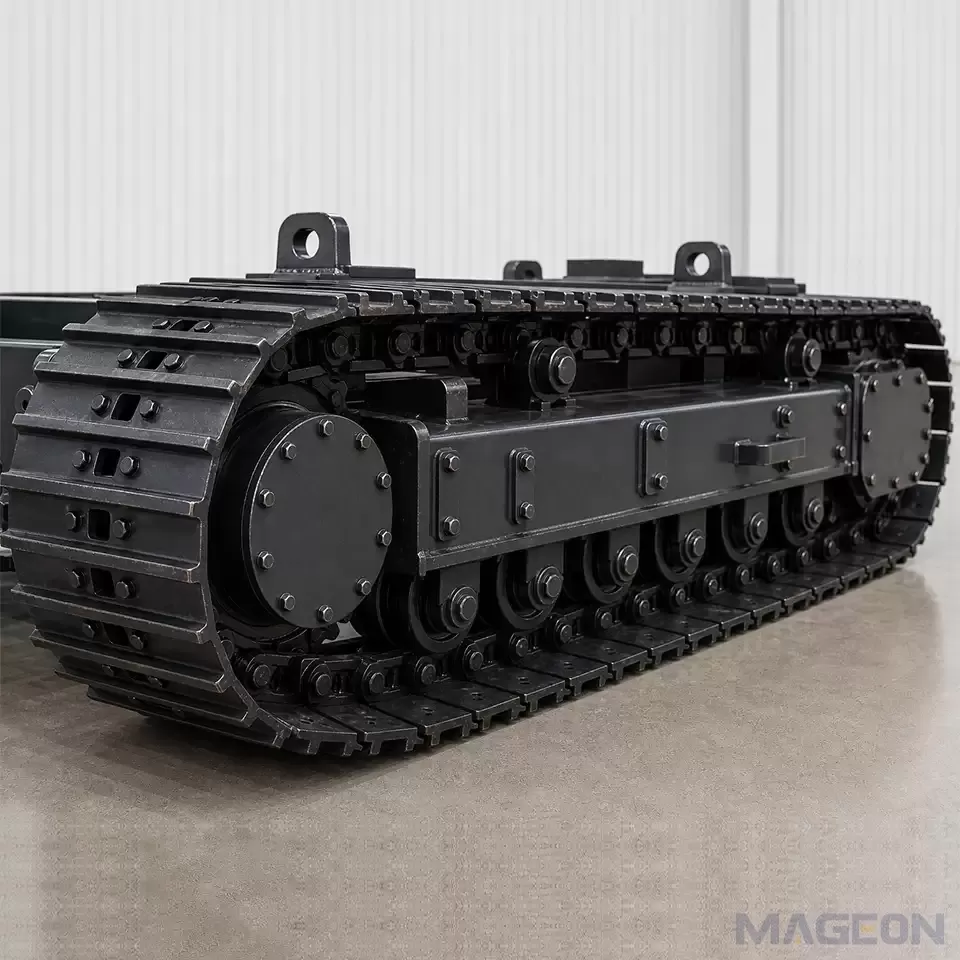
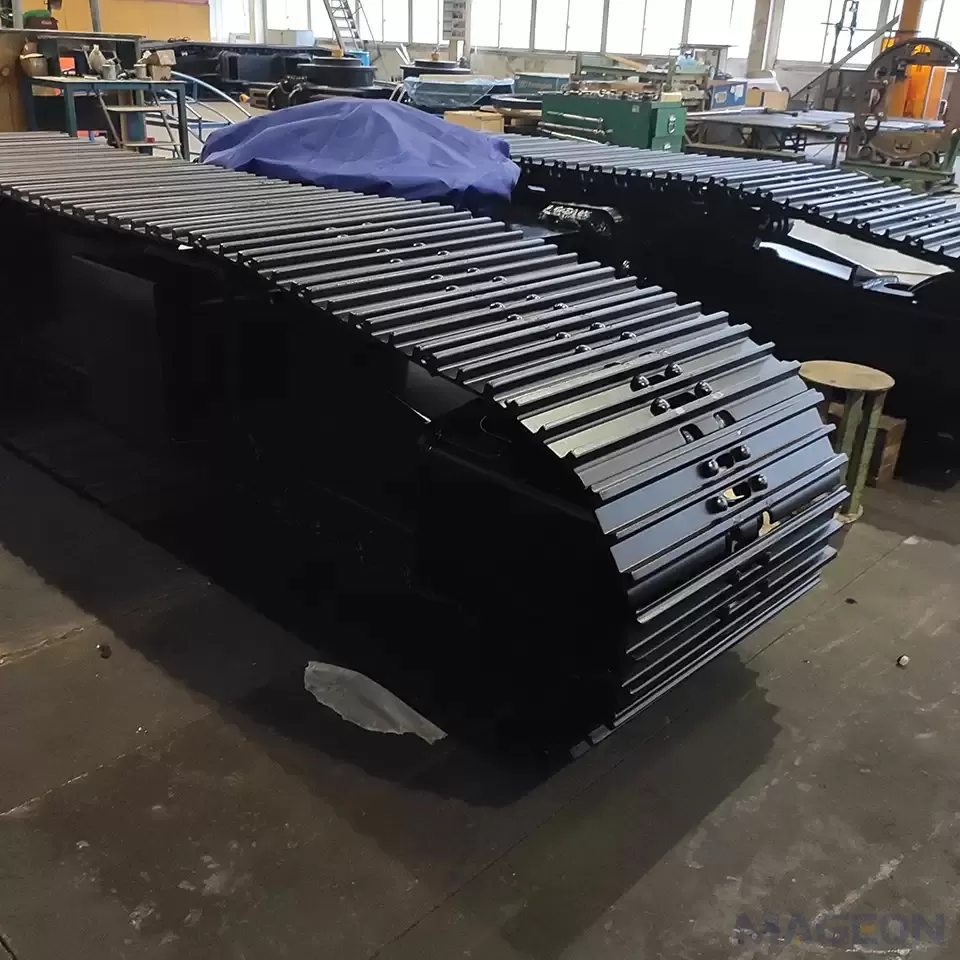
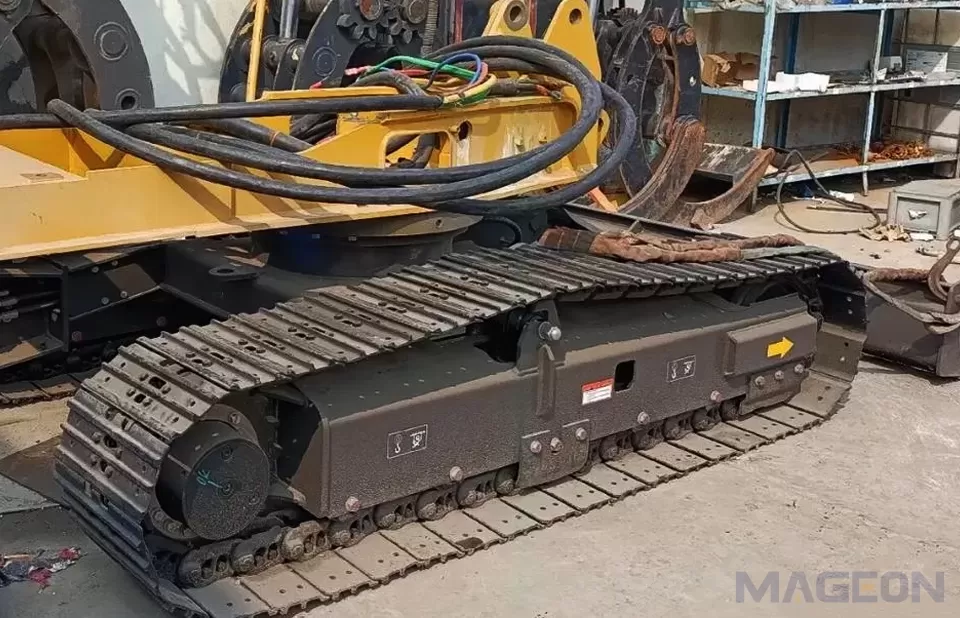
The heavy machinery crawler undercarriage is the core component that supports the overall equipment structure, transmits power, bears loads and adapts to complex working conditions. Its design must comprehensively consider safety, stability, durability and environmental adaptability. As a professional undercarriage manufacturer, MAGEON follows strict engineering standards in all custom projects. This guide breaks down the core design requirements and technical key points to provide reference for equipment R&D and procurement teams.
Core Design Dimensions & Technical Specifications
The design of heavy-duty crawler chassis follows a multi-dimensional control system. Key technical dimensions and corresponding standards are summarized as follows:
| Design Dimension | Core Technical Requirements | Typical Implementation Methods |
|---|---|---|
| Structural Strength & Stiffness | Withstand static, dynamic and working loads without plastic deformation or fracture | High-strength steel material, FEA stress verification, box girder / I-beam structure |
| Stability & Balance | No rollover risk under extreme working conditions; smooth operation on uneven terrain | Low center of gravity layout, optimized track gauge & wheelbase, shock absorption suspension |
| Durability & Service Life | Long fatigue life; adapt to corrosion and wear environments | Fatigue-resistant design, anti-corrosion coating, replaceable wear-resistant liners |
| Powertrain Matching | High transmission efficiency; stable power output; no overheating under continuous operation | Short transmission path layout, optimized hydraulic motor matching, dedicated heat dissipation design |
| Environmental Adaptability | Adapt to complex terrain and extreme temperature & dust environments | Sufficient ground clearance, IP67+ sealing protection, wide-temperature material selection |
| Safety & Compliance | Meet international safety standards; redundant protection for key functions | ROPS/FOPS structure, redundant braking system, ISO standard compliance |
1. Core Design Requirements
(1) Structural Strength and Stiffness
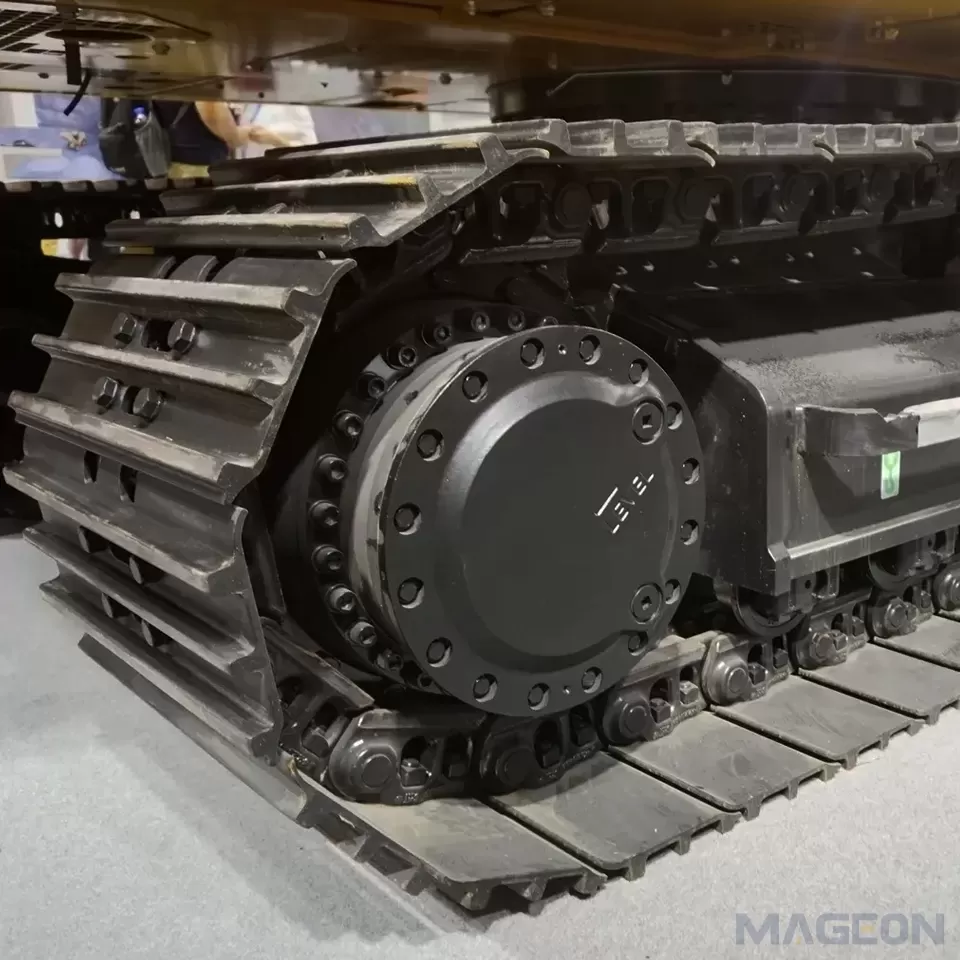
Load Analysis: It is necessary to calculate static loads (equipment self-weight, load capacity), dynamic loads (vibration, shock) and working loads (excavation force, traction force, etc.) to ensure the chassis does not suffer plastic deformation or fracture under extreme working conditions.
Material Selection: High-strength steel (such as Q345, Q460), special alloys or welded structures are adopted, taking into account tensile strength, fatigue resistance and machinability.
Structural Optimization: Stress distribution is verified through finite element analysis (FEA), and box girders, I-beams or truss structures are adopted to enhance bending and torsional stiffness.
(2) Stability and Balance
Center of Gravity Control: Reasonably allocate the center of gravity position of the equipment (such as lowering the engine position and designing counterweights) to avoid rollover risks.
Track Gauge & Wheelbase: Adjust track gauge and wheelbase according to the working environment (uneven terrain or flat ground) to enhance lateral and longitudinal stability.
Suspension System: Design hydraulic suspension, oil-air springs or rubber shock absorbers based on the vibration characteristics of heavy machinery to reduce dynamic impact.
(3) Durability and Service Life
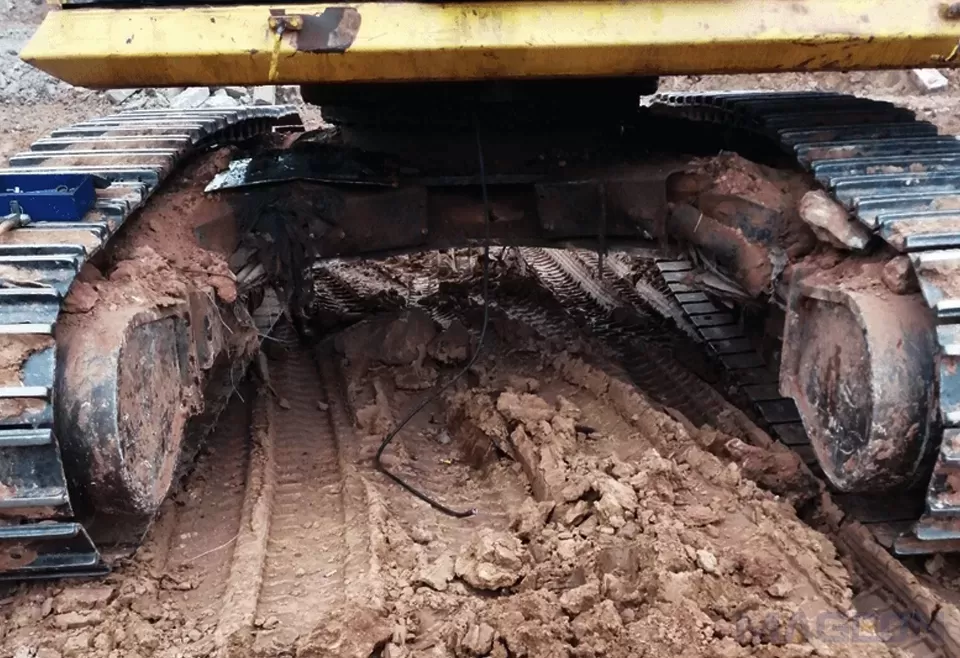
Fatigue-Resistant Design: Fatigue life analysis is conducted on critical parts (such as hinge points and weld seams) to prevent stress concentration.
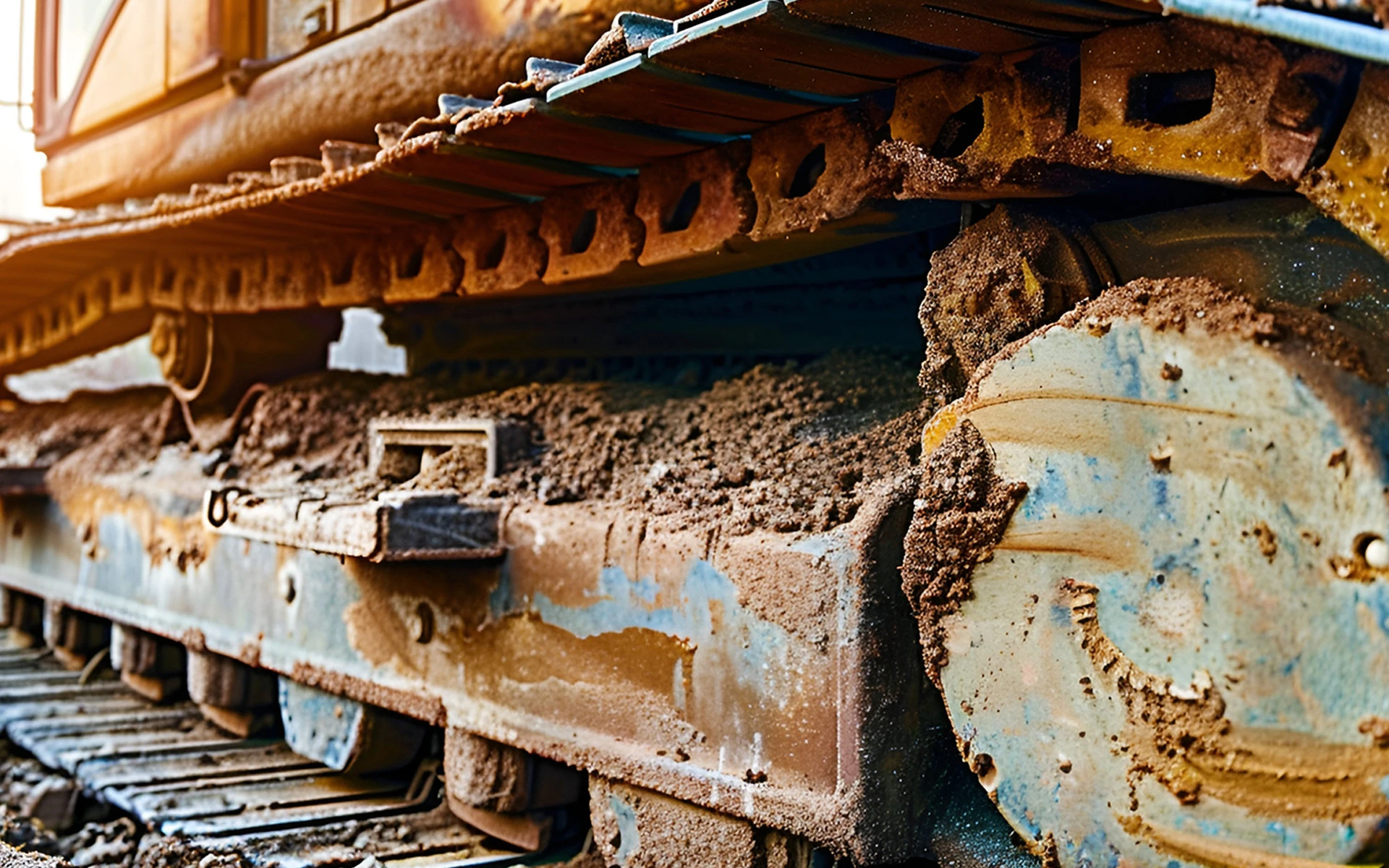
Anti-Corrosion Treatment: Hot-dip galvanizing, epoxy resin spraying or composite coatings are adopted to adapt to harsh environments such as humidity and salt spray.
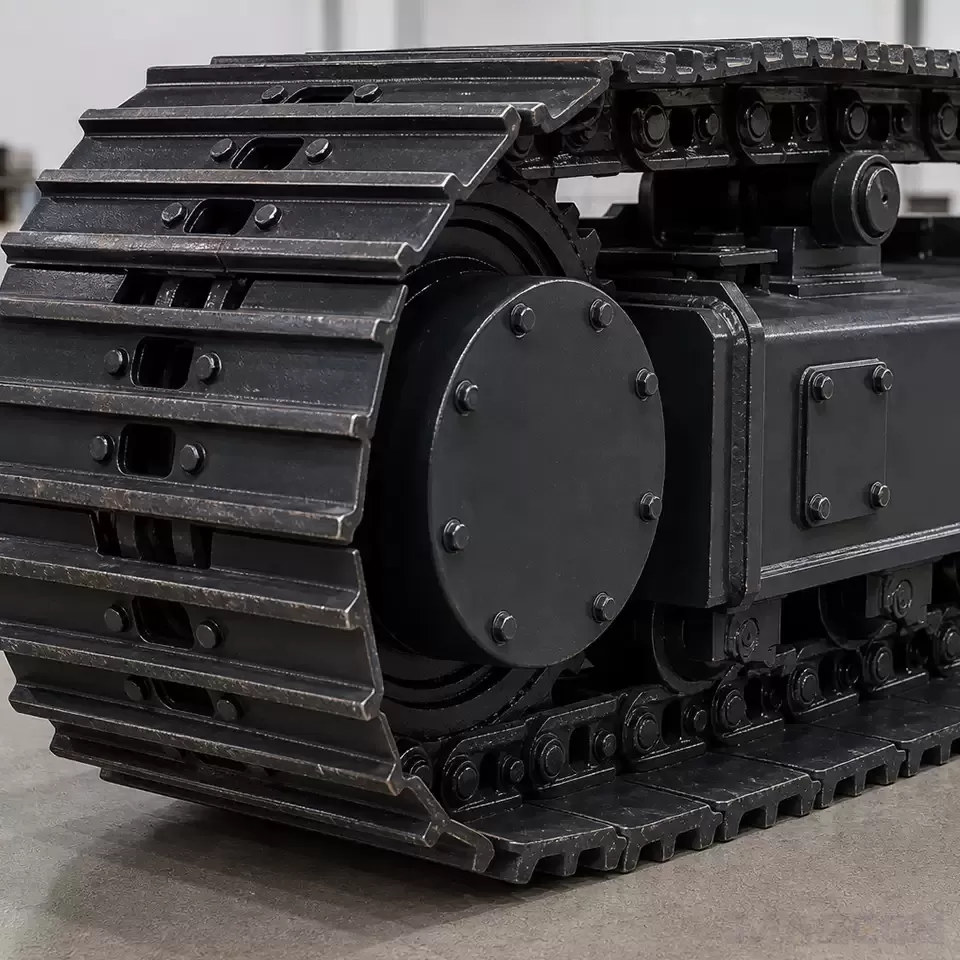
Wear-Resistant Protection: Wear-resistant steel plates or replaceable liners are installed in wear-prone areas such as track links and undercarriage plates.
(4) Powertrain Matching
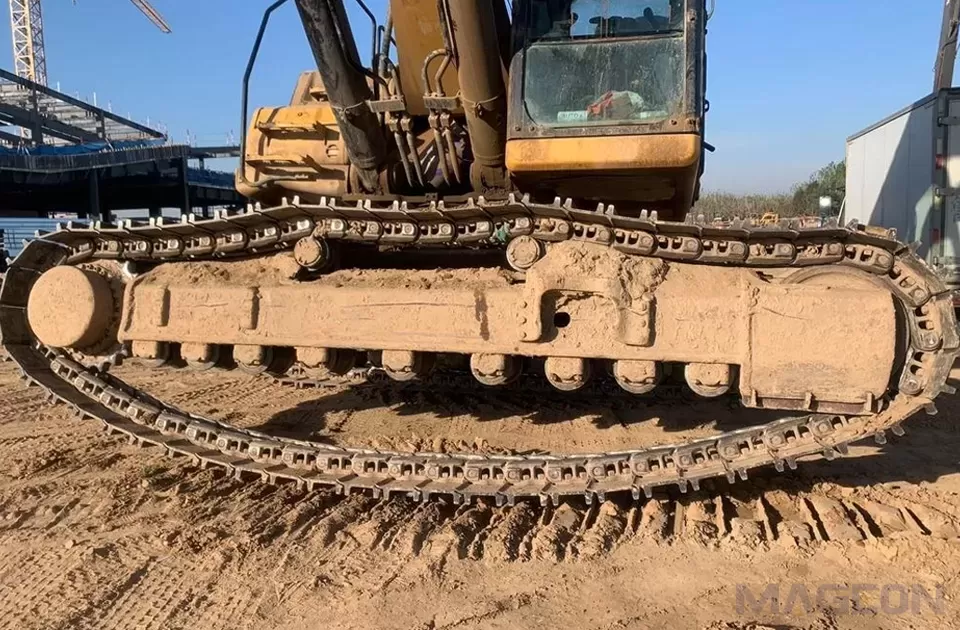
Powertrain Layout: The arrangement of engine, transmission and drive axle shall ensure the shortest power transmission path to minimize energy loss.
Transmission Efficiency: Optimize the matching of gearboxes, hydraulic motors or hydrostatic drives (HST) to ensure efficient power transmission.
Heat Dissipation Design: Reserve heat dissipation channels or integrate cooling systems to prevent overheating of transmission components.
2. Environmental Adaptability Requirements
(1) Terrain Adaptability
Travel Mechanism Selection: Track-type chassis with low ground pressure for soft ground, or wheel-type chassis with high-speed mobility for hard ground.
Ground Clearance: Design sufficient ground clearance according to passability requirements to avoid chassis scraping against obstacles.
Steering System: Adopt articulated steering, wheel steering or differential steering to ensure maneuverability in complex terrains.
(2) Extreme Operating Condition Response
Temperature Adaptability: Materials must be able to operate within the range of -40°C to +50°C to prevent low-temperature brittle fracture or high-temperature creep.
Dust & Water Resistance: Critical components (bearings, seals) shall be protected with IP67 rating or higher. Important parts can also be enclosed in a box to prevent sand and dirt intrusion.
3. Safety and Regulatory Requirements
(1) Safety Design
Roll-over Protection: Equipped with ROPS (Roll-over Protective Structure) and FOPS (Fall Protection Structure).
Emergency Braking System: Redundant braking design (mechanical + hydraulic braking) to ensure rapid response in emergencies.
Anti-slip Control: Enhance traction through differential locks or electronic anti-slip systems on wet slippery roads or slopes.
(2) Compliance
International Standards: Conform to standards such as ISO 3471 (ROPS testing) and ISO 3449 (FOPS testing).
Environmental Requirements: Meet emission standards (such as Tier 4/Stage V for non-road machinery) and reduce noise pollution.
4. Maintainability & Repairability
Modular Design: Key components such as drive axles and hydraulic pipelines adopt modular structure for quick disassembly and replacement.
Maintenance Convenience: Inspection holes are provided and lubrication points are centrally arranged to reduce maintenance time and costs.
Fault Diagnosis: Integrated sensors monitor parameters such as oil pressure, temperature and vibration, supporting remote early warning or OBD systems.
5. Lightweighting & Energy Efficiency
Material Weight Reduction: Utilize high-strength steel, aluminum alloys or composite materials while ensuring structural integrity.
Topology Optimization: Adopt CAE technology to eliminate redundant materials and optimize structural forms such as hollow beams and honeycomb structures.
Energy Consumption Control: Improve the efficiency of the transmission system to reduce fuel or power consumption.
6. Customized Design Services
MAGEON provides targeted customized design according to customer requirements:
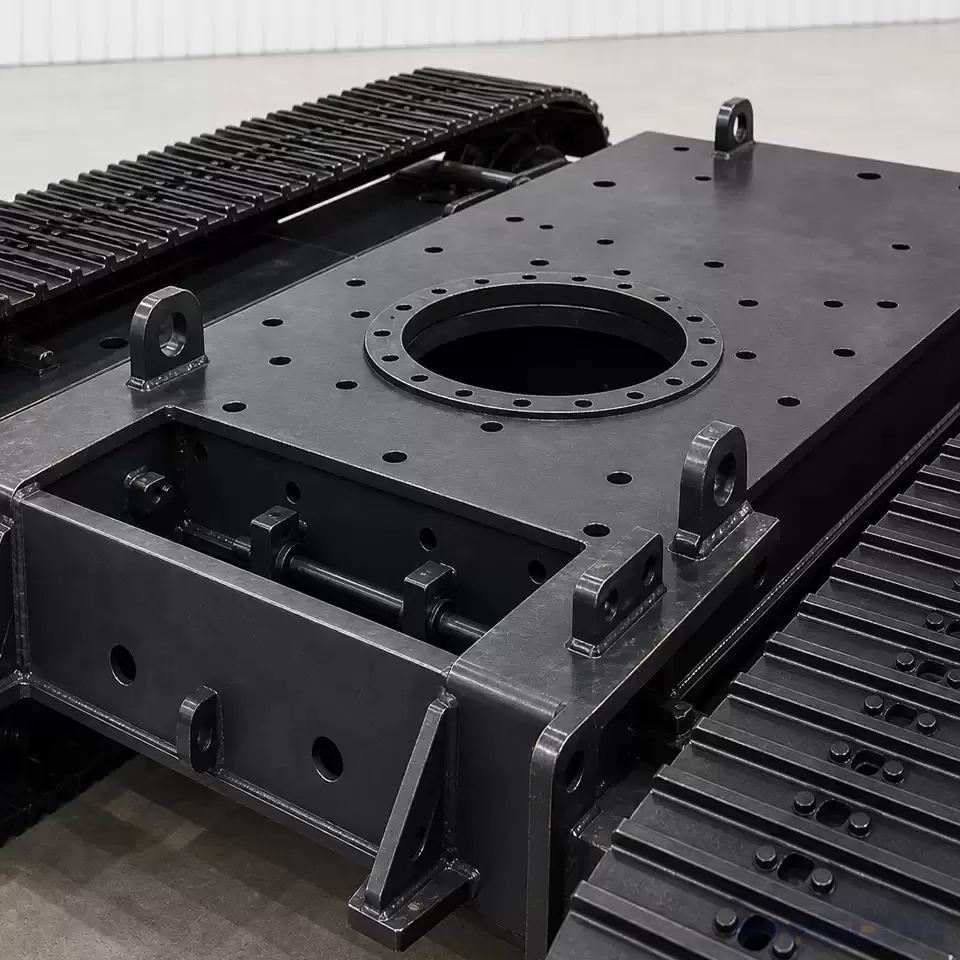
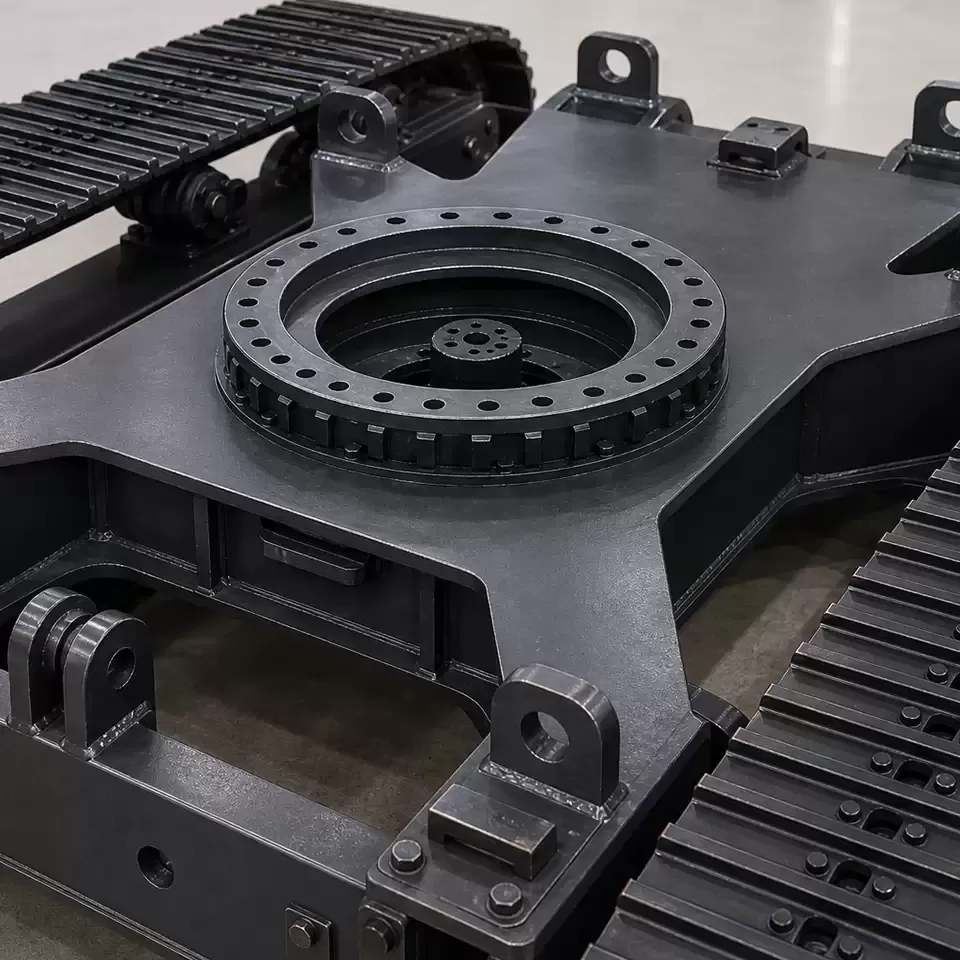
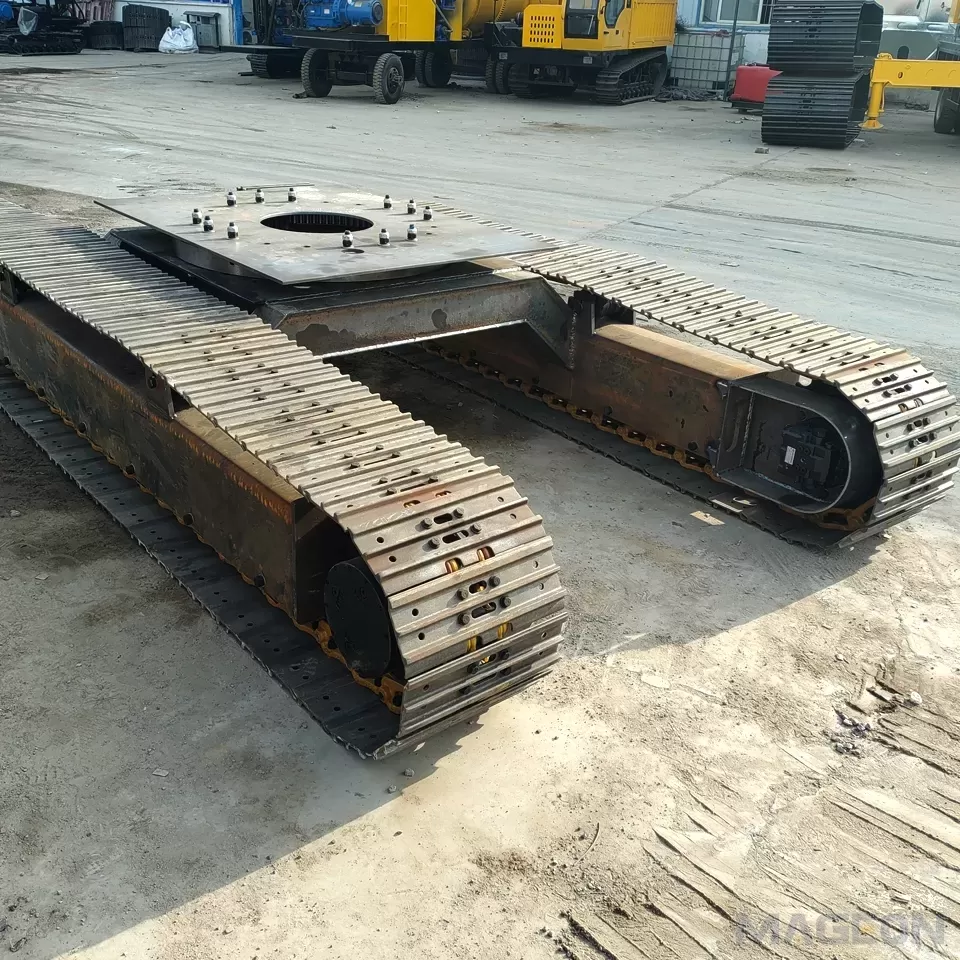
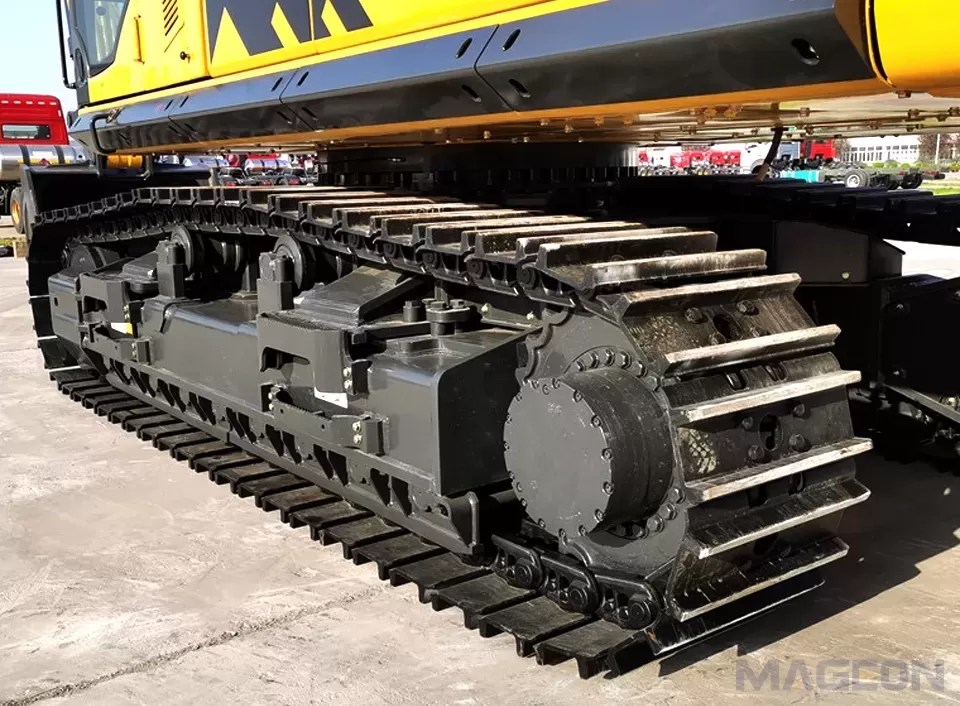
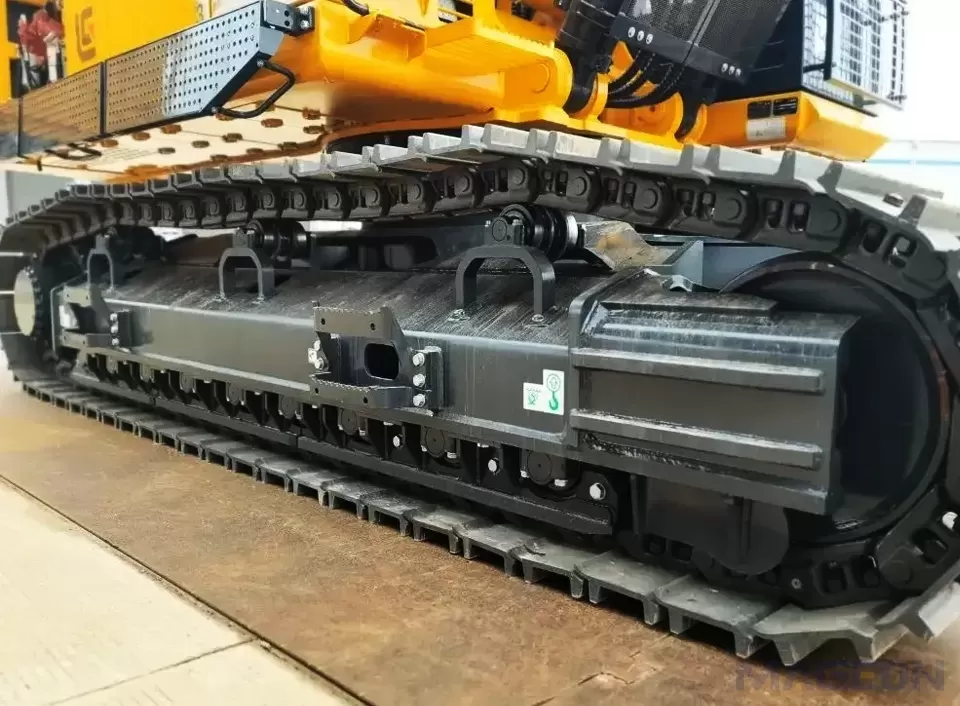
Intermediate connection structure: Optimize beams, platforms and columns based on the load-bearing and connection requirements of upper equipment.
Lifting lug design: Design standard lifting points according to equipment hoisting requirements.
Branding customization: Print or engrave logos according to customer requirements.
7. Design Focus of Typical Application Scenarios
| Machinery Type | Core Undercarriage Design Focus |
|---|---|
| Mining Excavators | Excellent impact resistance, track wear resistance, high ground clearance |
| Port Cranes | Low center of gravity, wide wheelbase, wind load stability |
| Agricultural Harvesters | Lightweight structure, soft ground passability, anti-entanglement design |
| Military Engineering Machinery | High mobility, modular rapid maintenance, electromagnetic compatibility |
Summary
The design of heavy machinery crawler track undercarriage shall be based on multi-disciplinary collaboration, integrating mechanical analysis, materials science, dynamic simulation and actual working condition verification, to ultimately achieve the goals of reliability, efficiency and long service life. During the design process, priority shall be given to user scenario requirements, and space for technological upgrades such as electrification and intelligence shall be reserved.
Frequently Asked Questions
Q: What are the core requirements for heavy machinery crawler undercarriage design?
A: The core design requirements include four dimensions: structural strength and stiffness, stability and balance, durability and service life, and powertrain matching. On this basis, environmental adaptability, safety compliance, maintainability and lightweight optimization shall also be considered.
Q: How to ensure the structural strength of the undercarriage frame?
A: Firstly, select high-strength steel materials suitable for load requirements; secondly, conduct detailed load analysis including static, dynamic and working loads; finally, verify stress distribution through finite element analysis (FEA) and optimize structural forms such as box girders to enhance stiffness.
Q: What design methods can improve the operational stability of the chassis?
A: The main methods include: lowering the overall center of gravity through layout optimization, reasonably adjusting track gauge and wheelbase to increase stability margin, and configuring a professional shock absorption suspension system to reduce dynamic impact and rollover risks.
Q: How to improve the service life of the undercarriage in harsh environments?
A: Three layers of protection are usually adopted: fatigue-resistant design for key stress parts to avoid early damage; anti-corrosion surface treatment to adapt to humid and salt spray environments; replaceable wear-resistant liners are installed in easily worn areas to reduce maintenance costs.
Q: What safety structures must the heavy machinery chassis be equipped with?
A: According to international standards, it shall be equipped with ROPS (Roll-over Protective Structure) and FOPS (Fall Protection Structure); at the same time, a redundant emergency braking system and anti-slip control function shall be configured to ensure operation safety under extreme working conditions.
Q: What international standards should crawler undercarriage design comply with?
A: The main safety standards include ISO 3471 (ROPS performance test) and ISO 3449 (FOPS performance test); in terms of environmental protection, it shall meet the corresponding non-road machinery emission standards such as Stage V in Europe and Tier 4 in the United States.
Q: What is the role of modular design in undercarriage design?
A: Modular design enables quick disassembly and replacement of key components such as drive axles and hydraulic pipelines, greatly reducing on-site maintenance time and downtime; it also facilitates batch production and quality control, and reduces later upgrade costs.
Q: How to achieve lightweight design of the chassis without reducing strength?
A: On the premise of ensuring structural strength, two methods are mainly adopted: material lightweight, using high-strength steel, aluminum alloy or composite materials; topology optimization through CAE technology, removing redundant materials that do not bear force, and optimizing structural forms such as hollow beams.
Q: Can targeted design be carried out for special working environments?
A: Yes. MAGEON provides targeted customized design for special environments: for example, wide-temperature material selection and low-temperature start configuration for cold regions; anti-corrosion treatment for coastal salt spray; sealed dust-proof structure for desert and mining areas.
Q: What customized design services do you provide?
A: We provide full-process customized design services, including structural optimization of intermediate connection beams and platforms according to upper equipment parameters, design of special lifting lugs according to hoisting requirements, and brand logo customization. We can also carry out targeted R&D for special working conditions.
Applicable products:
Compatible Equipment & Product Applications
The undercarriage design framework covers all types of heavy engineering equipment. Main applicable models include:
Mining excavators, bulldozers and heavy construction machinery
Port crawler cranes and material handling equipment
Agricultural harvesters and large farm operation machinery
Military engineering vehicles and special operation equipment
Drilling rigs and piling machinery for engineering construction
Please leave your customization requirements, and we will contact you as soon as possible!
Leave your requirements, we'll get back to you within 24 hours.