The Hidden Costs Behind Custom Tracked Undercarriages For Non-Standard Equipment
This article was written for the MAGION engineering team
Published in: June 12, 2026
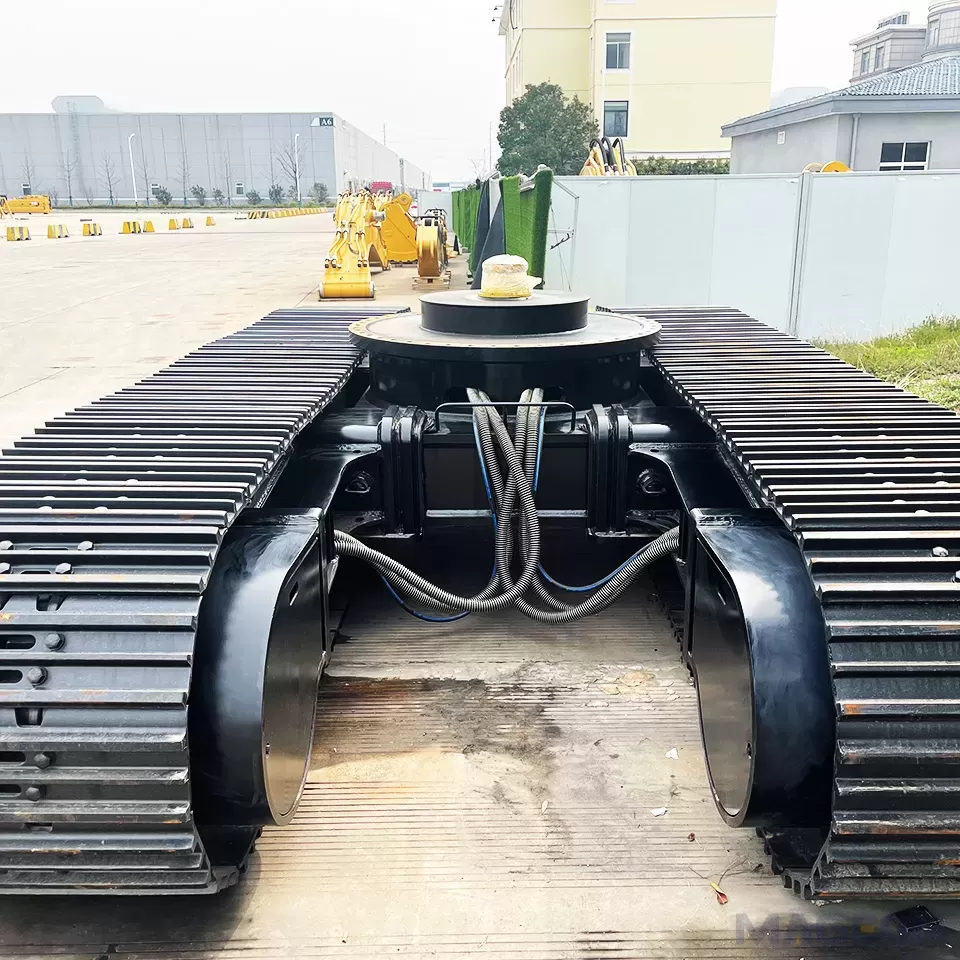
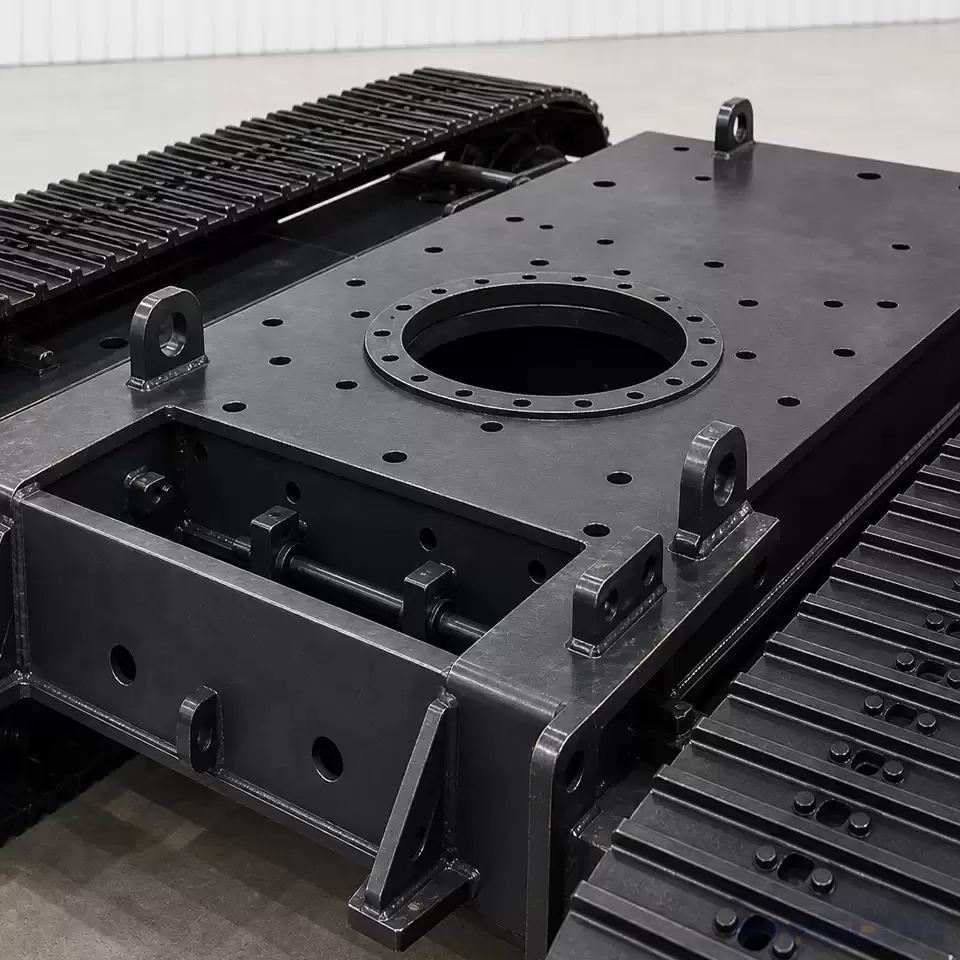
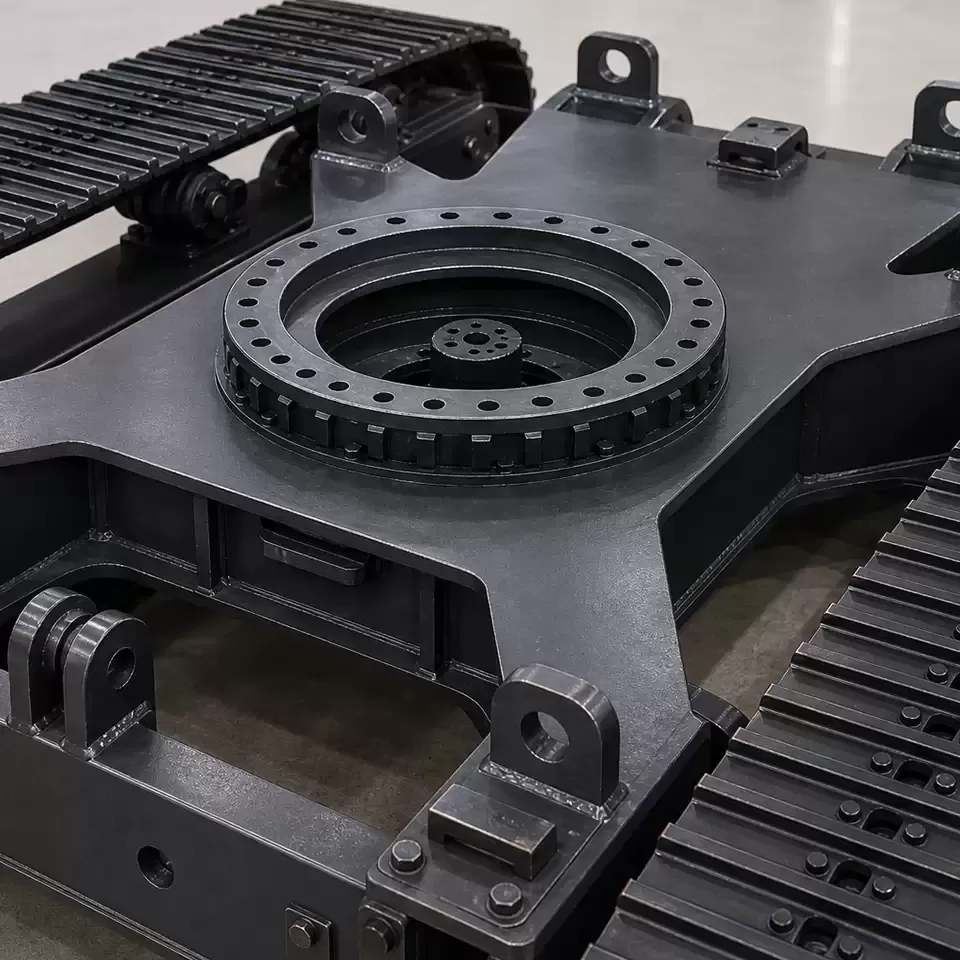
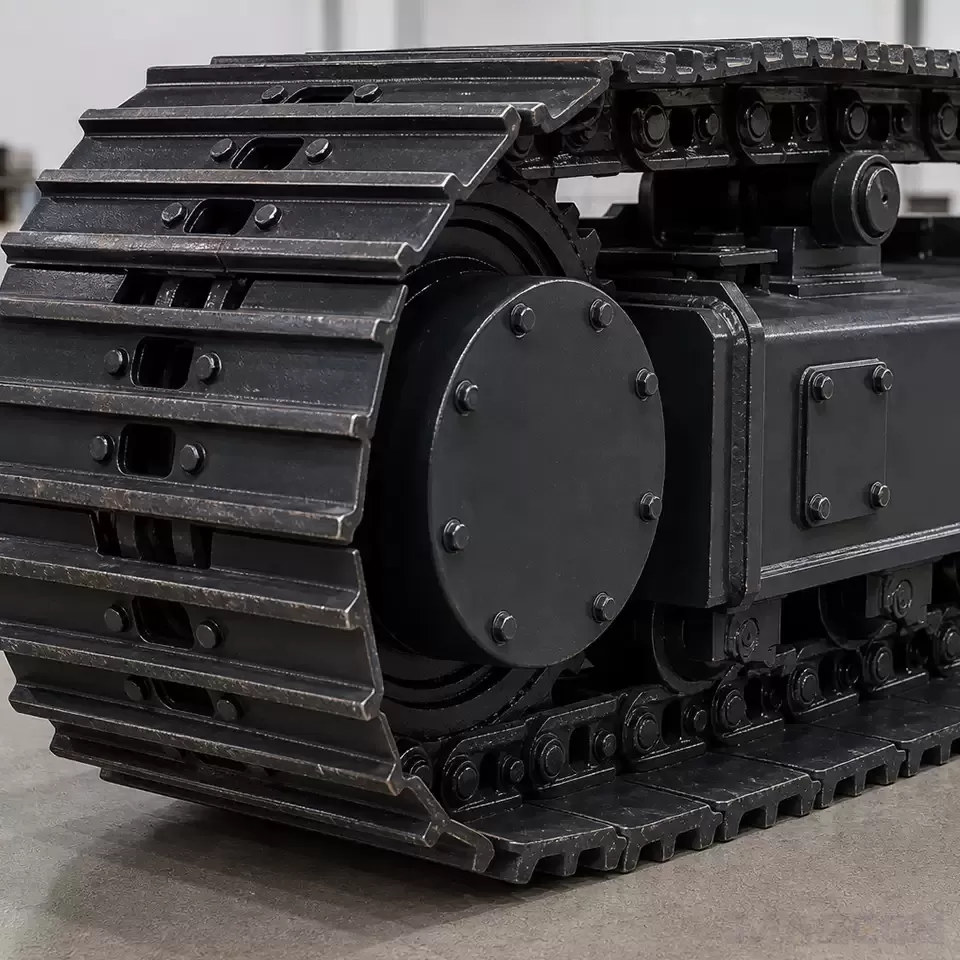
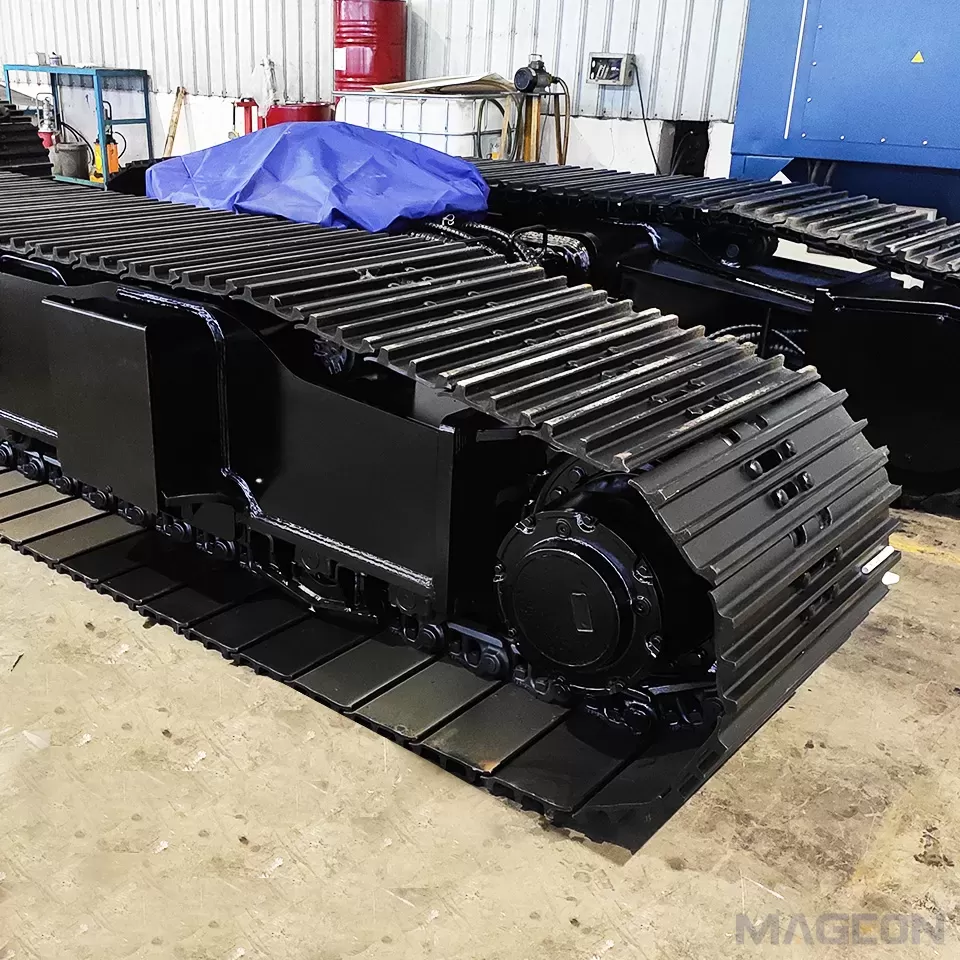
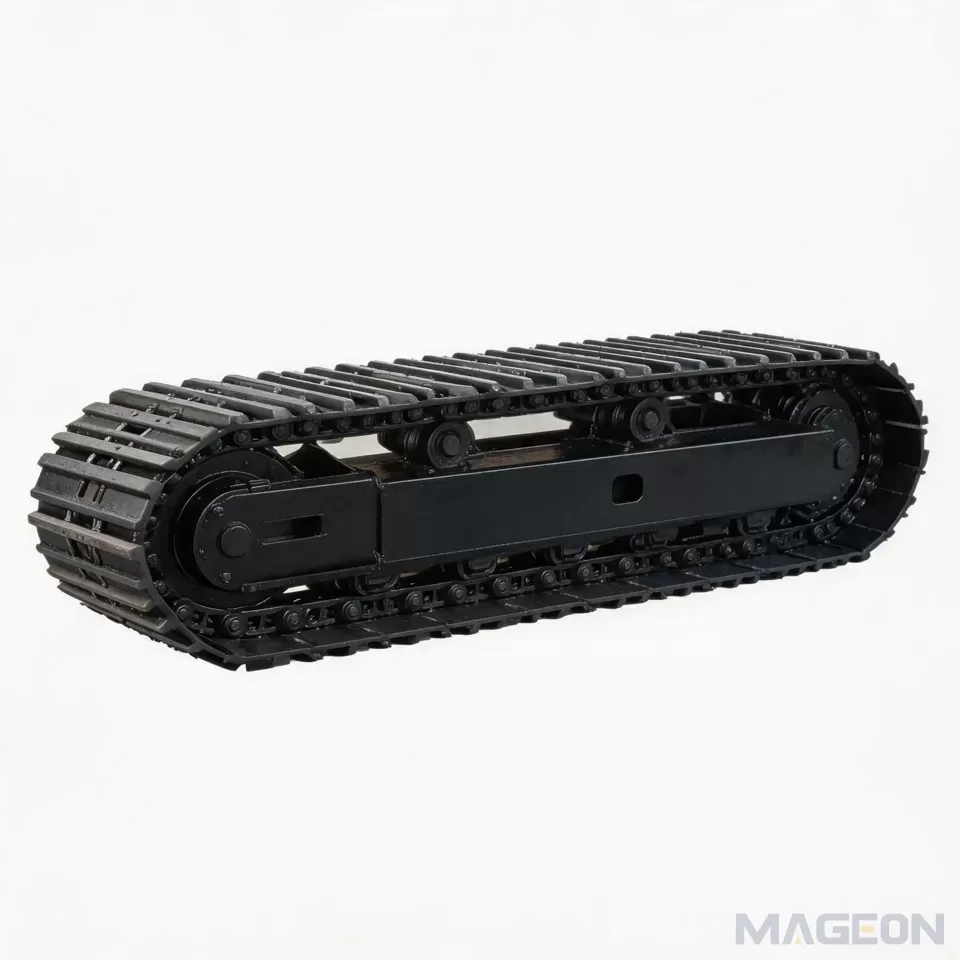
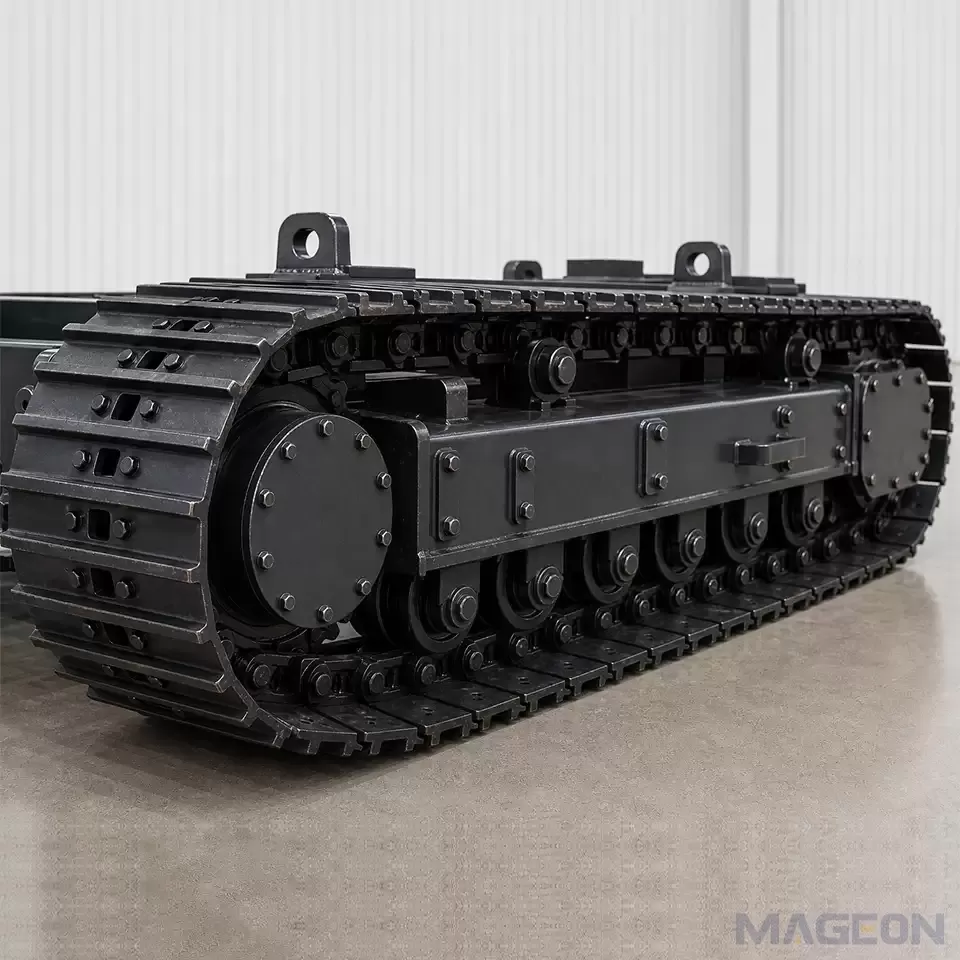
Custom tracked undercarriage is an essential foundation for non-standard heavy equipment, most of all when standard off-the-shelf chassis simply cannot cater to the complex working environment requirements.
In custom undercarriage procurement, the initial unit price is typically the only focus for procurement managers and engineers, which leads them to pay very little attention to the significant sunk costs only discovered after months of operation, ending up with the total project cost increasing by more than 32%.
Involvement of traditional undercarriage suppliers is generally at a very basic level and, in fact, they hardly get to be a part of early-stage Design for Manufacturing (DFM) and application analysis activities. Such lack of early involvement leads to the inability to control premature wear, unexpected downtime, and also, the mismatched terrain performance which results in continuous efficiency loss. We are going to break down the major cost traps hidden in the process that customers usually do not see, and make use of a quantitative decision matrix to help in manufacturing the undercarriage accurately and also getting the best ROI. We shall see what is concealed by surface pricing, the parts of technology that are overlooked and result in the quiet erosion of profits.
Ultimately, the custom mining undercarriage's first-year operating cost dropped by 55%, and the service life jumped from 1200h to 2800h. **Maintenance downtime has been enhanced so well that manual adjustment has been totally done away with. Besides, the entire project's monthly production loss was reduced by 12%, and in addition, 32% of the client's hidden operating costs were directly wiped out. The client signed a 3-year exclusive supply agreement with MAGEON, and from now on, all their mining undercarriage parts will be produced by us.
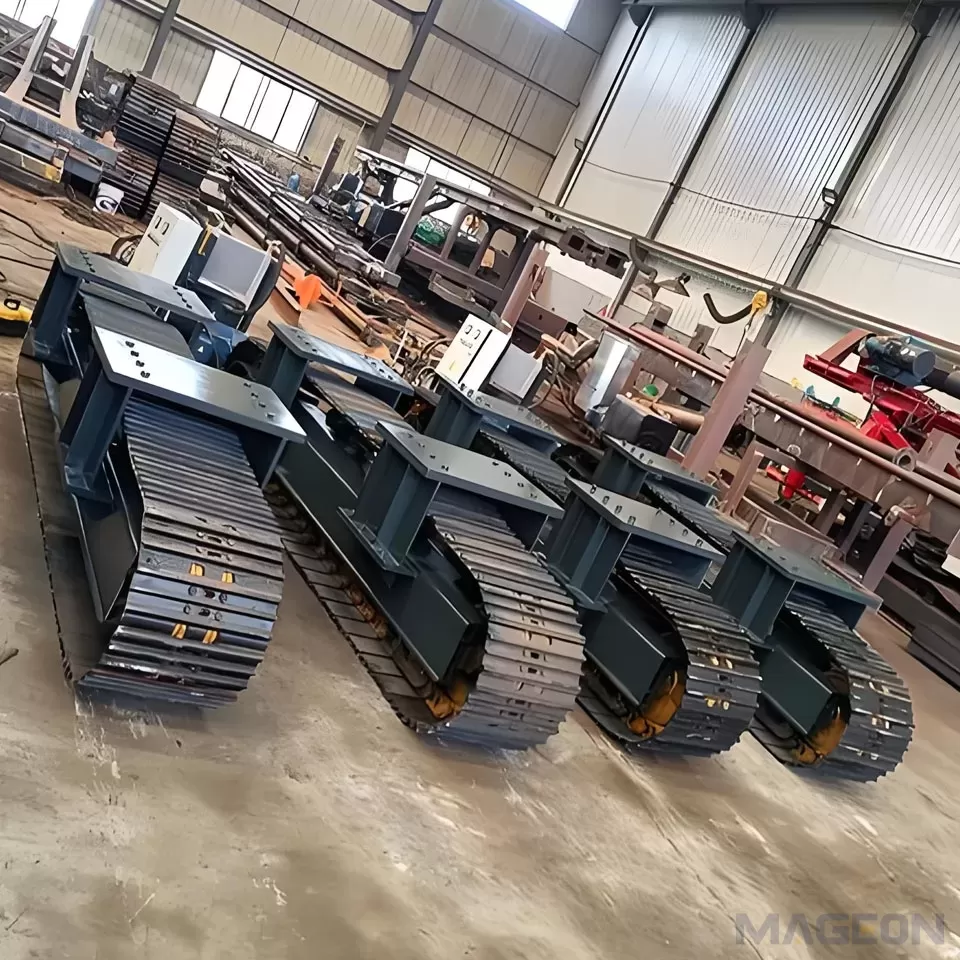
Quick Overview of Core Cost Optimization Solutions for Custom Tracked Undercarriage
Cost Trap Types | Traditional Solution Average Loss | MAGEON Optimization Solution | ROI Improvement |
Premature Wear & Replacement Cost | Component replacement every 1200h, annual parts cost $12,000 | Induction-hardened alloy components + sealed track chains | Extends service life to 2800h, cuts annual parts cost by 55% |
Manual Tension Maintenance Cost | Weekly adjustment time 4h, downtime cost $800/month | Automatic hydraulic track tensioning system | Eliminates 90% of manual adjustment, reduces downtime by 85% |
Terrain Mismatch Efficiency Loss | 25% lower work efficiency in harsh terrain, extra fuel cost $500/month | Customized ground pressure & track pad design | Improves work efficiency by 30%, cuts fuel consumption by 15% |
Non-standard Spare Parts Cost | Spare parts lead time 14 days, emergency shipping cost $1,200 | Modular standardized component system | 95% of parts are universal, parts delivery within 48h |
Key Takeaways
- Premature wear and maintenance downtime are the top causes of uncontrolled costs in custom undercarriage. Automatic tensioning and sealed components cut annual maintenance costs up to 60%.
- For equipment working in special terrain, customized undercarriage design is a must to exclude extra efficiency loss and fuel costs.
- By using DFM simulation and the ISO 9001 system, MAGEON assists customers in cutting their total procurement costs for custom undercarriage parts by as much as 28%.
Why Trust MAGEON's Experience In Custom Tracked Undercarriage Solutions?
By following the industry's best practices and leveraging over 20 years of experience in custom crawler chassis manufacturing, we at MAGEON have provided our custom tracked undercarriage solutions to more than 200 first-class equipment manufacturers globally across mining, agriculture, construction, and special vehicle industries. Our commitment to quality is so strong that we strictly follow the ISO 9001:2015 quality management system, which is also a guarantee of product traceability at each phase of manufacturing.
Our experiential learnings from the Australian iron ore mining project, 2024 reveal that conventional suppliers mainly start the process planning only after the order is confirmed, which results in 80% of cost issues being identified during the operation phase. Our engineering team participates extensively in the design phase to uncover possible risks early through Design for Manufacturing (DFM) analysis.
Also, we are CE certified, which means we have a very comprehensive quality control system in place that monitors every step of the way, from raw material acceptance to the delivery of finished product. Our in-house tests reveal that early DFM engagement can trim down overall project costs by 28%, which is way above the industry average of 11%. We have a collection of more than 800 sets of standard modular undercarriage components, enabling us to produce custom chassis of various load capacities ranging between 0.5ton and 50ton.
20 years of industry experience + dual system certifications, early DFM can reduce costs by 28%. Download our "Custom Undercarriage Cost Reduction White Paper" now to master the core skills of custom tracked undercarriage service.
Why Does Premature Wear Drive Up Your Custom Undercarriage Operating Budget?
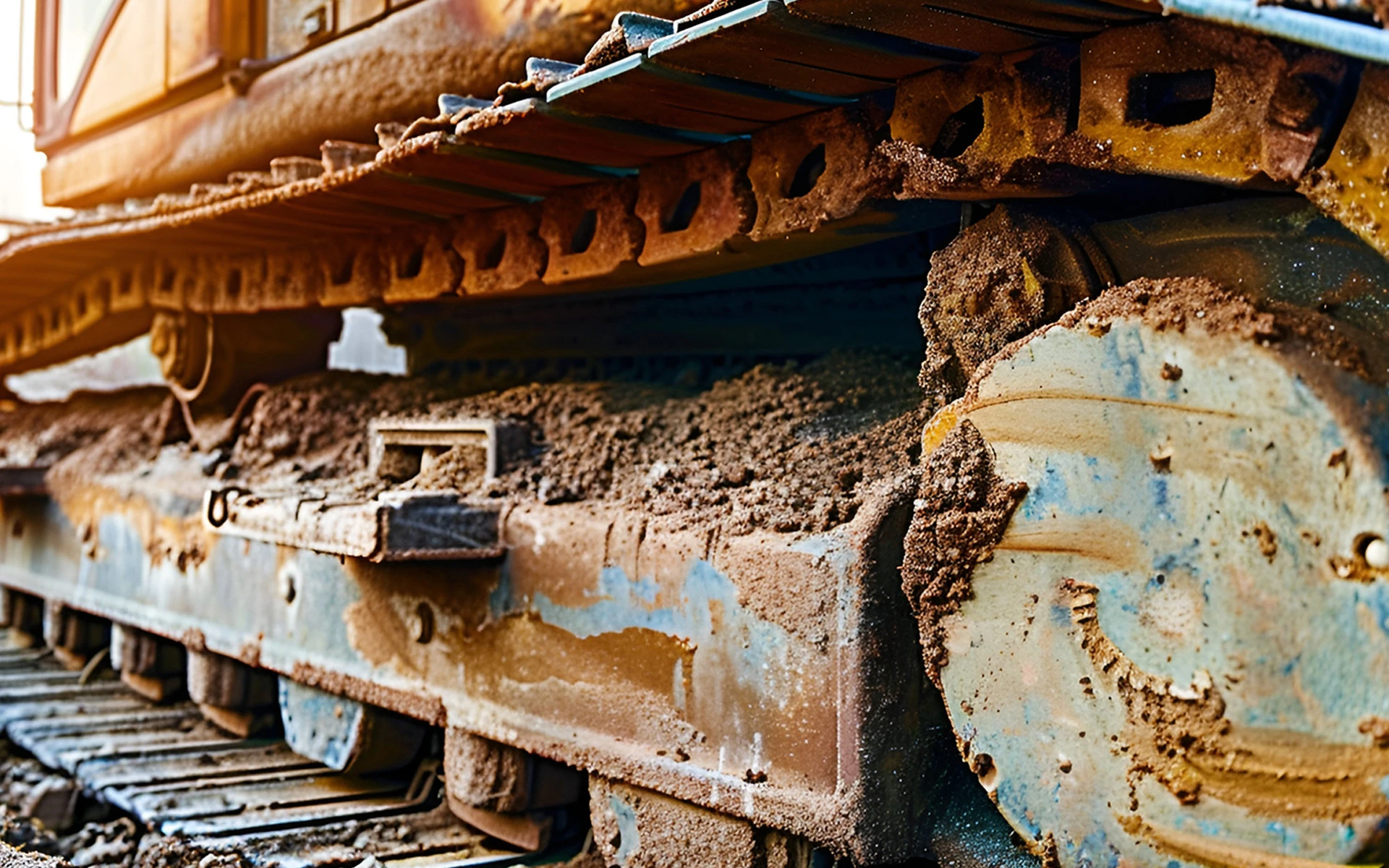
Insufficient material processing and protection can directly lead to undercarriage components wearing out way before their expected lifecycle, and the resulting frequent replacement and downtime are the top hidden cost traps that push up the comprehensive budget of custom tracked undercarriage.
Differences in Material Processing and Wear Resistance
Each material behaves quite differently from the others for their wear resistance property, which is the biggest reason why it is very difficult to control component life. Using a simple analogy, it is like wearing different shoes on rocky ground: ordinary canvas shoes will wear out in days, while professional hiking boots can last for months.
For ordinary carbon steel components, in abrasive mining terrain, the wear rate can reach 0.1mm per 100 working hours, leading to replacement after only 1200h.
For induction-hardened alloy steel, at the same terrain, the wear rate is only 0.04mm per 100 working hours, extending the service life to over 2800h.
Wear of all components increases exponentially when sand or debris enters the pin-bushing joints.
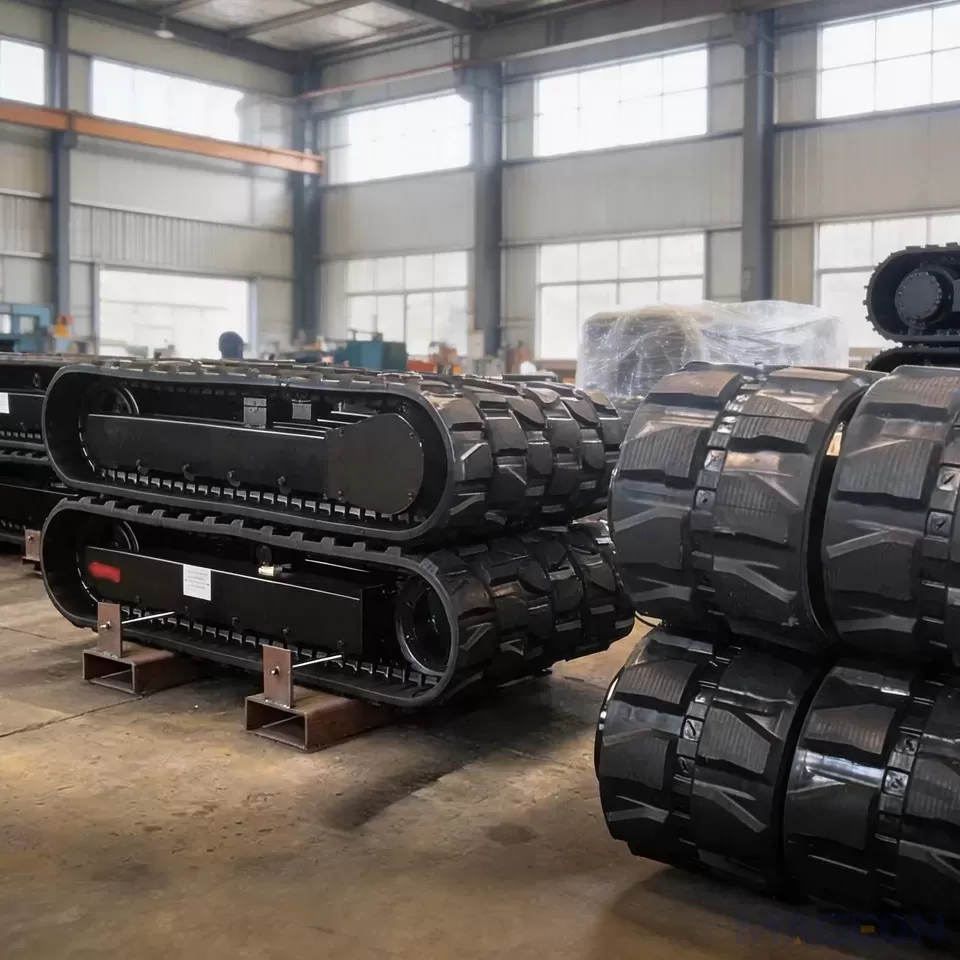
This is the hardest technical problem to be accurately resolved in custom undercarriage service by mere ordinary material selection.
Comparison Table of Wear Performance for Different Material Processing
Material Type | Wear Rate (mm/100h) in Mining Terrain | Average Service Life | Annual Replacement Cost |
Ordinary Carbon Steel | 0.10 | 1200h | $12,000 |
Normal Alloy Steel | 0.07 | 1800h | $8,000 |
Induction-hardened Alloy Steel | 0.04 | 2800h | $5,400 |
Induction-hardened + Sealed Chain | 0.025 | 3500h | $4,200 |
Repeated replacement and downtime create huge custom undercarriage hidden costs, which compromise the precision in predicting component life and directly reduce project profit margins.
Sealed Track Chain Substitutes Frequent Replacement
Whereas traditional manufacturers depend on ordinary open track chains, allowing sand and debris to enter the joints and accelerate wear, a lack of protection results in not only material wastage on a large scale but also no assurance of batch uniformity. MAGEON uses sealed and greased track chains that completely block the intrusion of abrasive particles, accurately protecting the internal pin-bushing joints and so directly overcoming the problem of accelerated wear caused by debris.
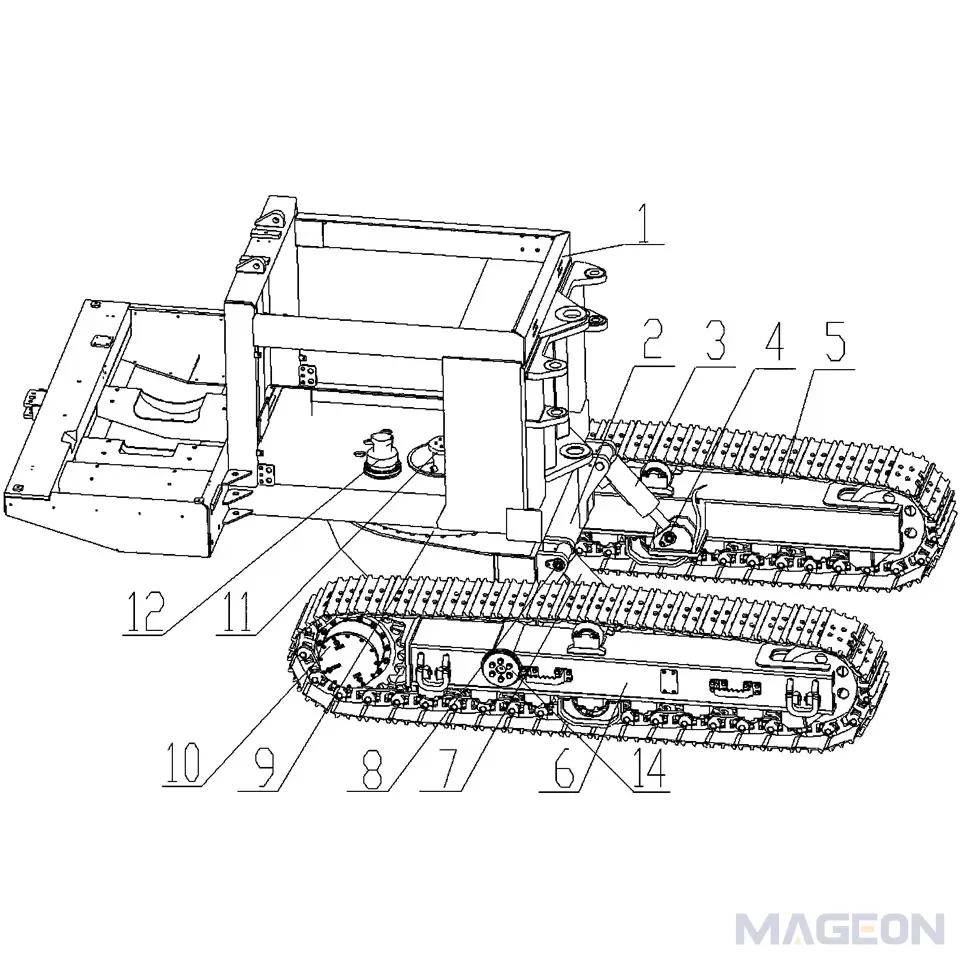
Such digital technique is quite capable of advancing process stability and manufacturing of non-standard components consistency.
How Can Maintenance Downtime Be Controlled In Custom Tracked Undercarriage?
If you are using a traditional manual tensioning undercarriage in harsh terrain, the continuous change of track tension will result in frequent manual adjustment requirements, this way making the final downtime completely uncontrollable.
Track Tension Tolerance Multiplication Effect
Even the standard track chain has a natural elongation of 0.5mm per 100h during operation. In harsh terrain, this minuscule change will get larger very quickly.
- Due to track elongation, the tension will become too loose after a week, leading to track derailment risks.
- If the tension is adjusted too tight, it will over-stress the pins and bushings, accelerating wear by 30%.
- Old-fashioned manual adjustment methods are not capable of negating the effect of real-time tension changes.
This topic is quite noticeable in the heavy duty custom undercarriage service.
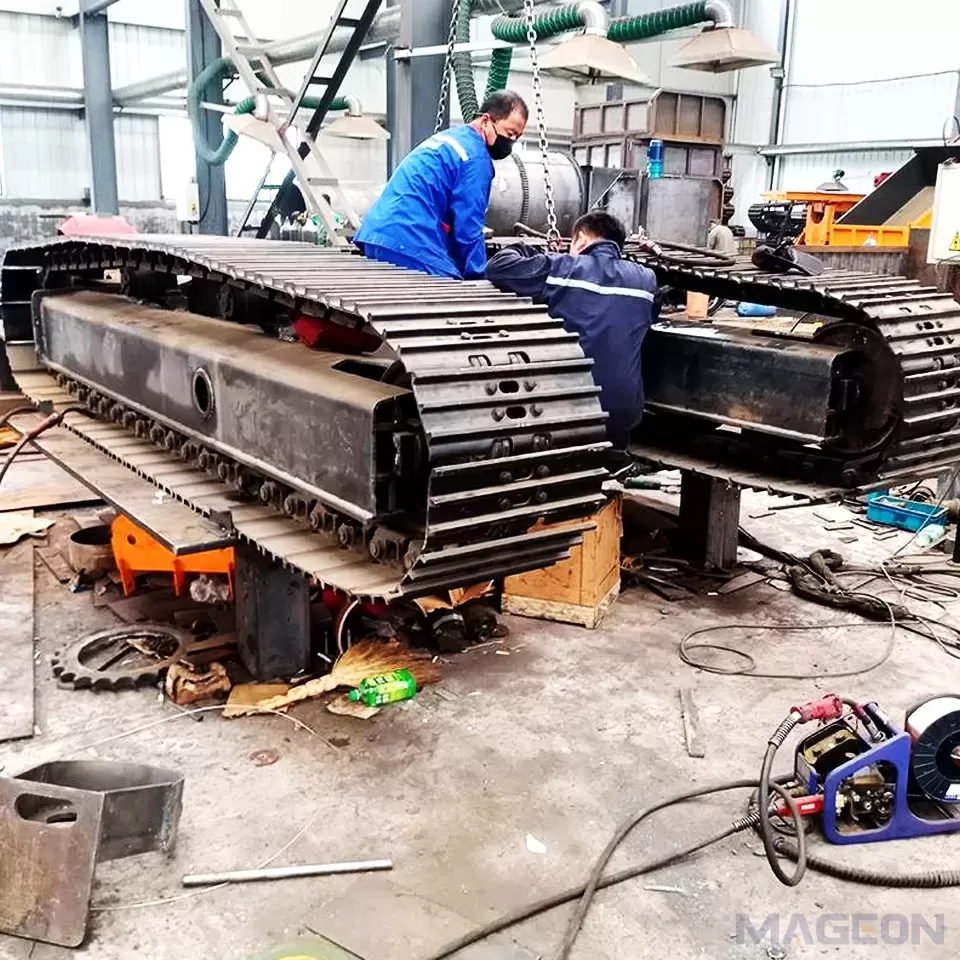
Undercarriage Maintenance Accuracy and Cost Comparison
Process Dimension | Traditional Practice | MAGEON Optimization Solution | Procurement ROI Impact |
Wear Control | Open track chain, manual cleaning daily | Sealed track chain + induction-hardened components | Reduces annual replacement cost by 55%, saves 90% of daily cleaning time |
Tension Control | Manual weekly adjustment, 4h per time | Automatic hydraulic tensioning system, real-time adjustment | Eliminates 90% of manual adjustment, reduces downtime by 85% |
Terrain Adaptation | Standard track pads, one-size-fits-all | Customized track pads and ground pressure design | Improves work efficiency by 30%, cuts fuel consumption by 15% |
Spare Parts Supply | Non-standard parts, 14 days lead time | Modular components, global spare parts warehouse | 95% parts delivery within 48h, eliminates emergency shipping cost |
MAGEON employs an automatic hydraulic tensioning system, which together with real-time tension monitoring was able to achieve ultra-precise tension control so that the real-time correction of tension changes can be made. Parts that are out of tension not only add to the custom undercarriage cost but also lower the operation safety and might even result in long downtime of the whole equipment.
The final component life is securely held within the expected range. This method guarantees that the performance of all custom tracked undercarriage parts meet the requirements consistently.
Automatic tensioning system locks in stable performance, reducing first-year maintenance cost by 60%. Contact us now for free DFM to optimize cost control for your custom tracked undercarriage service.
Why Do Terrain Mismatch Boost Your Non-Standard Undercarriage Cost Unexpectedly?
Using standard undercarriage in special terrain can very easily double your operation cost, as such mismatch will lead to more fuel consumption, lower work efficiency, and also the safety risks that come with poor traction.
The Principle of Terrain Adaptation
When the undercarriage's ground pressure and traction do not match the terrain, the equipment will have to consume more power to move, and in severe cases, it will get stuck or sink.
In soft wetland terrain, standard undercarriage with 0.3kg/cm² ground pressure will sink into the mud, leading to 40% efficiency loss.
In steep slope terrain, standard track pads will have poor traction, leading to slippage and safety risks.
In cold winter terrain, standard seals will harden, leading to track freezing and failure.
All in all, these defects greatly increase the custom undercarriage operation cost, inadequately protect the working efficiency, and finally compromise the product's competitiveness in the market.
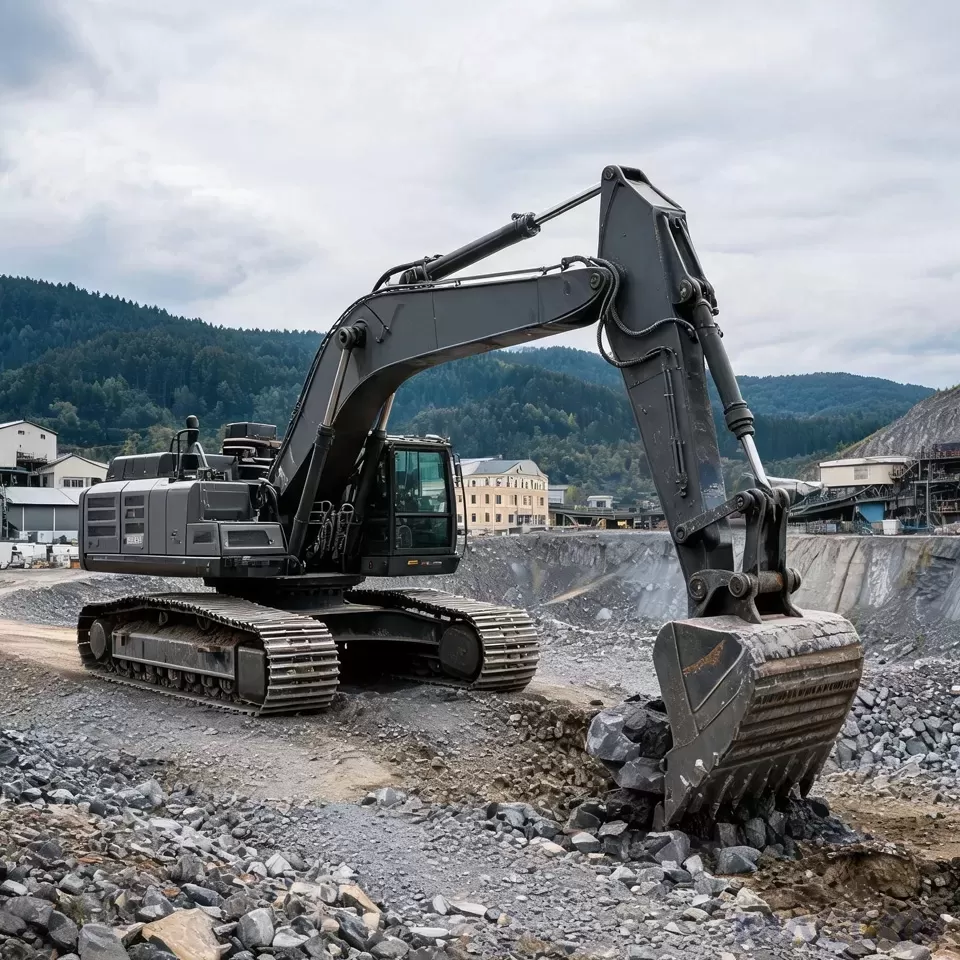
Implementation of Custom Terrain Adaptation Design
MAGEON implements the use of customized track pad and ground pressure design based on the customer's specific working terrain, carries out the terrain simulation in the design phase, and finally adds targeted functional components, together with these measures, it is possible to completely solve the terrain mismatch problem. This method is the only one that is viable for custom undercarriage parts with special terrain requirements, and it is becoming the standard in the high-end custom crawler chassis industry.
What Modular Component Advantages Eliminate Your Spare Parts Cost?
Blindly using fully non-standard undercarriage components in design will require you to face long lead time and high cost for spare parts, thereby transferring the high supply chain costs in custom undercarriage service to you.
Supply Chain Characteristics of Standard Modular Components
Standard components used in custom undercarriage have already been harmonized in our system. Such components are apt to being found at any of our global warehouses and are fairly cheap.
- For our modular system, we have more than 800 sets of standard components covering 95% of common customization requirements.
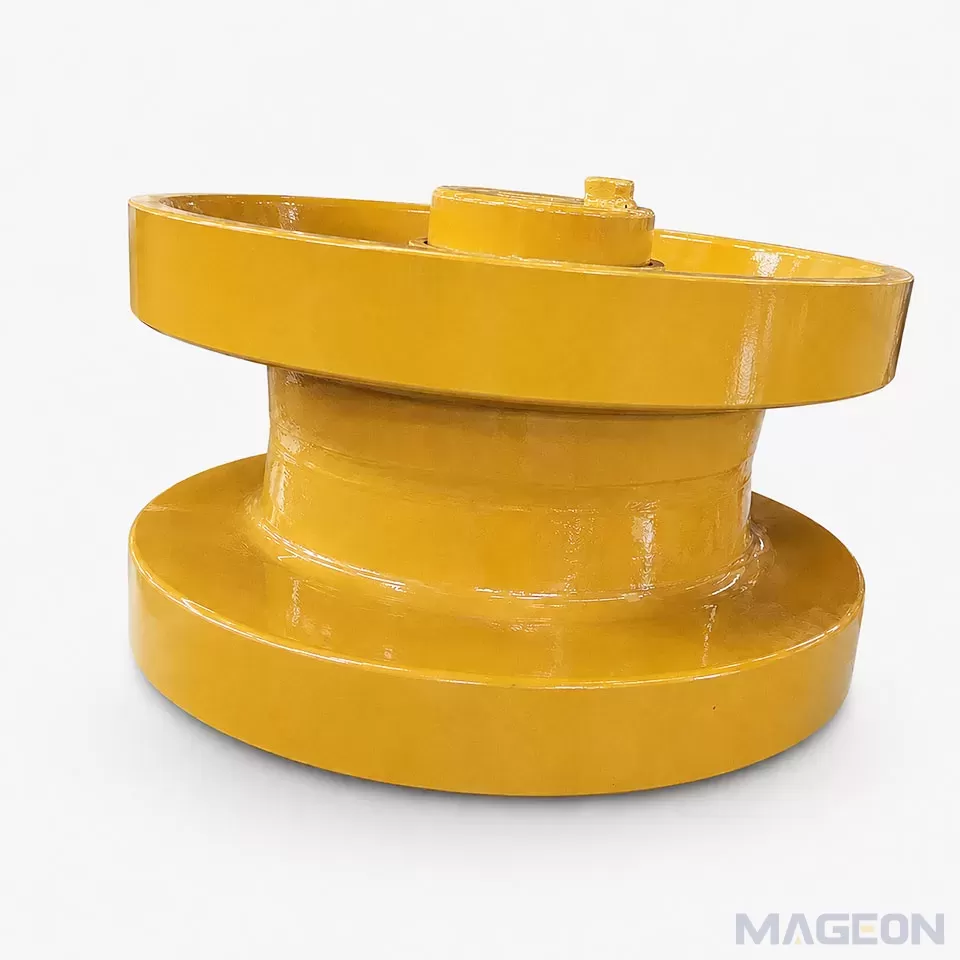
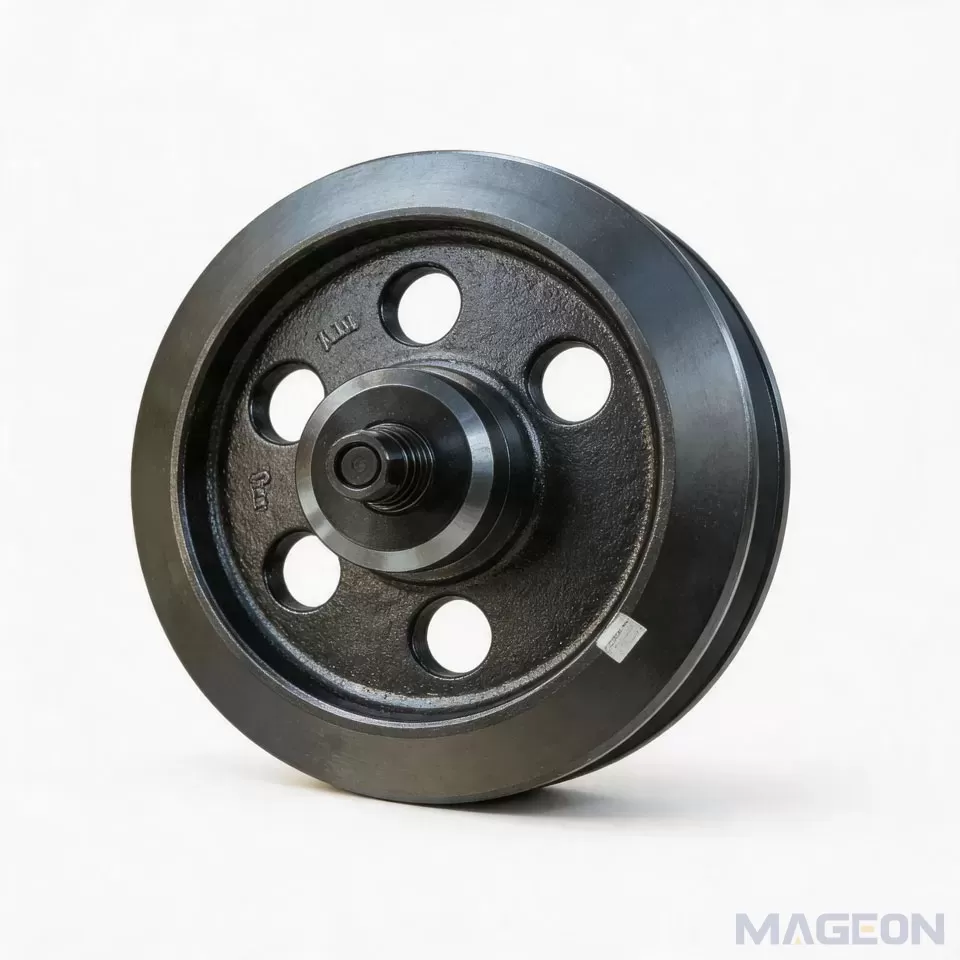
- Standard track rollers, idlers, and sprockets conforming to established standards can be delivered within 48 hours.
- Cost of fully non-standard custom components is generally 3-5 times higher than modular components, and the delivery cycle is 7-14 days.
As a result, it will affect the delivery cycle of custom undercarriage service and cause increased spare parts inventory pressure as well as time costs for your projects.
Advantages of Our Modular Undercarriage System
MAGEON has more than 800 sets of standard modular undercarriage components that provide the support for changing the chassis parameters in a flexible way and cover more than 95% of common customization requirements. This advantage acts as a deciding factor in the non-standard components manufacturing which require quick reaction time.
Our engineers are on standby to help customers in the optimization of their design during the Design for Manufacturing (DFM) process, in eliminating unnecessary non-standard component costs by sticking to standard specifications as much as possible. We can offer our customers more affordable custom tracked undercarriage service.
MAGEON Case Study: Canadian Iron Ore Mining Custom Undercarriage Project
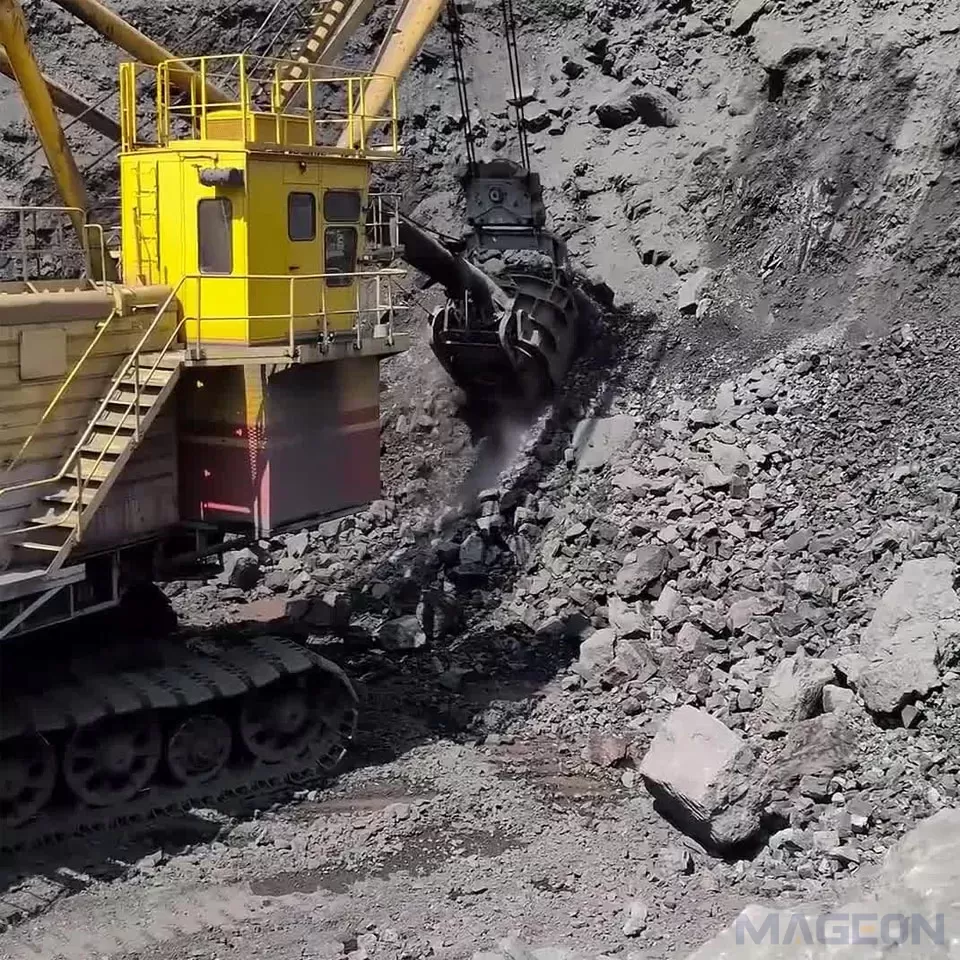
Customer Challenges
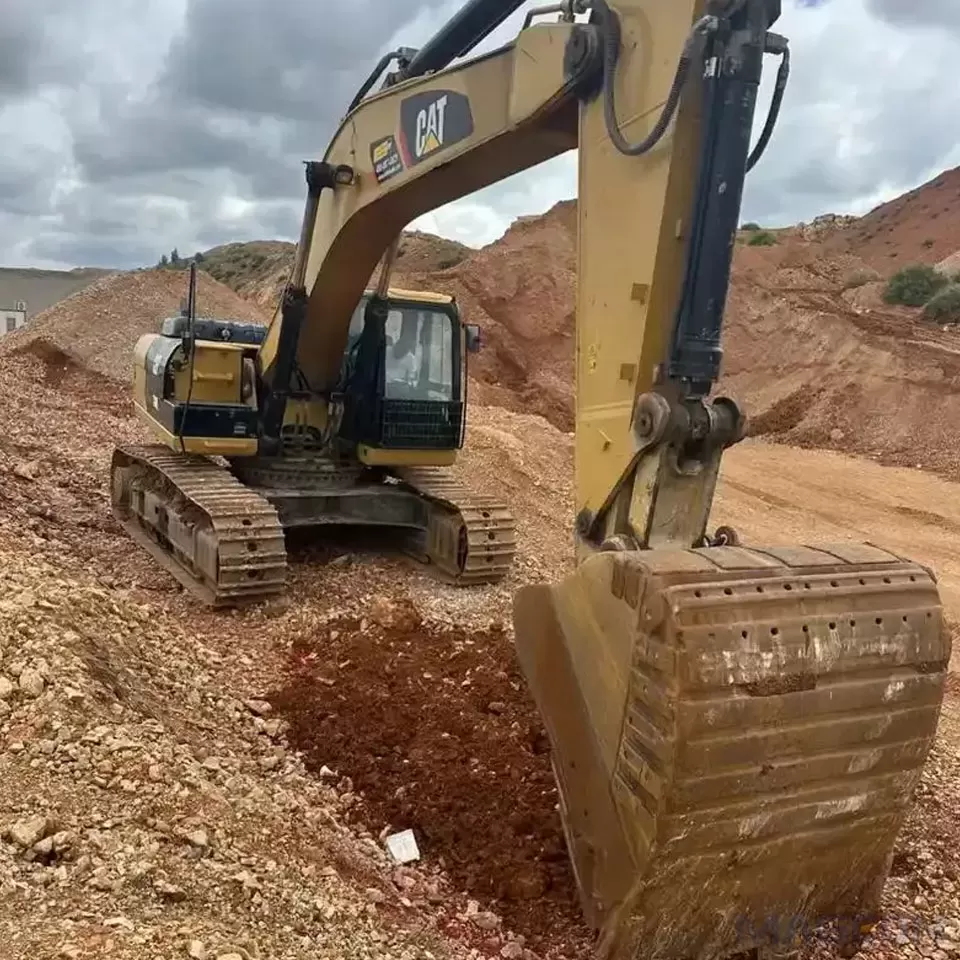
One of the key technical challenges a Canadian mining company encountered was aiming to customize a 30ton tracked undercarriage for their iron ore mining drill rig. The equipment needs to work in quartz rock terrain with high abrasion, the original standard undercarriage only had 1200h service life, and the weekly maintenance took 4 hours, leading to frequent downtime. As a result, the annual maintenance cost reached $15,000, and the downtime caused 15% of production loss, this way delaying the project completion by 2 weeks every month.
MAGEON Solution
Within 24 hours after the client sent the requirements, the senior engineering members at MAGEON had already prepared a detailed DFM analysis report.
- Initially, we went through the terrain analysis using our 3D simulation tool to optimize the material selection, using induction-hardened alloy components and sealed track chains to resist the abrasive rock environment.
- At the same time, we installed the automatic hydraulic tensioning system onto the undercarriage, to eliminate the manual adjustment work and prevent wear caused by improper tension.
- Raw materials undergo hardness and wear testing, our selected testing methods to check for batch consistency, 100% of the time.
Results and Value
Ultimately, the custom mining undercarriage's first-year operating cost dropped by 55%, and the service life jumped from 1200h to 2800h. **Maintenance downtime has been enhanced so well that manual adjustment has been totally done away with. Besides, the entire project's monthly production loss was reduced by 12%, and in addition, 32% of the client's hidden operating costs were directly wiped out. The client signed a 3-year exclusive supply agreement with MAGEON, and from now on, all their mining undercarriage parts will be produced by us.
Mining undercarriage project achieved a 55% cut in annual maintenance cost and reduced overall operating costs by 32%. Send us your requirements now to get a customized and accurate quote for custom tracked undercarriage parts.
FAQs
Q1: How long does it take to get a quote for custom tracked undercarriage?
MAGEON is able to provide a precise quote within 24 hours after receiving the main requirements and parameters. We also do free professional DFM process analysis and are able to respond very quickly to various inquiries on custom undercarriage customization.
Q2: How does MAGEON guarantee the long service life of custom undercarriage in harsh terrain?
We have sealed track chains and induction-hardened components, with real-time tension monitoring technology. This closed-loop protection of components is very effective in preventing the accelerated wear in harsh terrain, this way ensuring the long service life of the undercarriage all the time.
Q3: Can you completely solve the terrain mismatch problem to help reduce our operating costs?
By using customized ground pressure design and terrain-specific components, we can completely solve the terrain mismatch problem. This way there no more efficiency loss and extra fuel cost which results in well saved operating costs and production time.
Q4: What is the minimum order quantity (MOQ) for custom tracked undercarriage with complex requirements?
We are flexible about MOQ as we cater to sample production, small batch customization, as well as large scale mass production. Using a fully automated production line and modular components helps to optimize production setup costs, thereby lowering a lot the entry barrier to small batch customization of complex undercarriage parts.
Q5: How do you manage performance variations when producing multiple batches of custom undercarriage?
We follow ISO 9001 standard for incoming materials control and test the mechanical properties of the components batch after batch. Production parameters are automatically updated by the system, which not only precisely counters performance differences of materials but also guarantees uniform processing across all batches.
Q6: Are the custom undercarriage parts supplied to customers with global standard certification documents?
Every custom undercarriage belongs to a batch that is accompanied by a complete set of compliance documents, starting with raw material quality certificates, 100% dimensional inspection reports, and CE certification documents, which meet overseas procurement and industry compliance acceptance requirements.
Q7: Will MAGEON help me to change my non-standard undercarriage design so we can reduce costs?
We provide free professional DFM design optimization services that mainly focus on non-standard structures and special component changes to elude high-cost fully custom parts, and at the same time, effectively decreasing overall undercarriage production and operating costs.
Q8: How does MAGEON ensure the safety of our IP during collaborating on custom undercarriage service?
We are committed to an NDA confidentiality agreement throughout the collaboration. Customer design data and product information are all placed on an encrypted internal server with tiered access permissions and operation logs, enabling full traceability and thorough protection of our customers' intellectual property security.
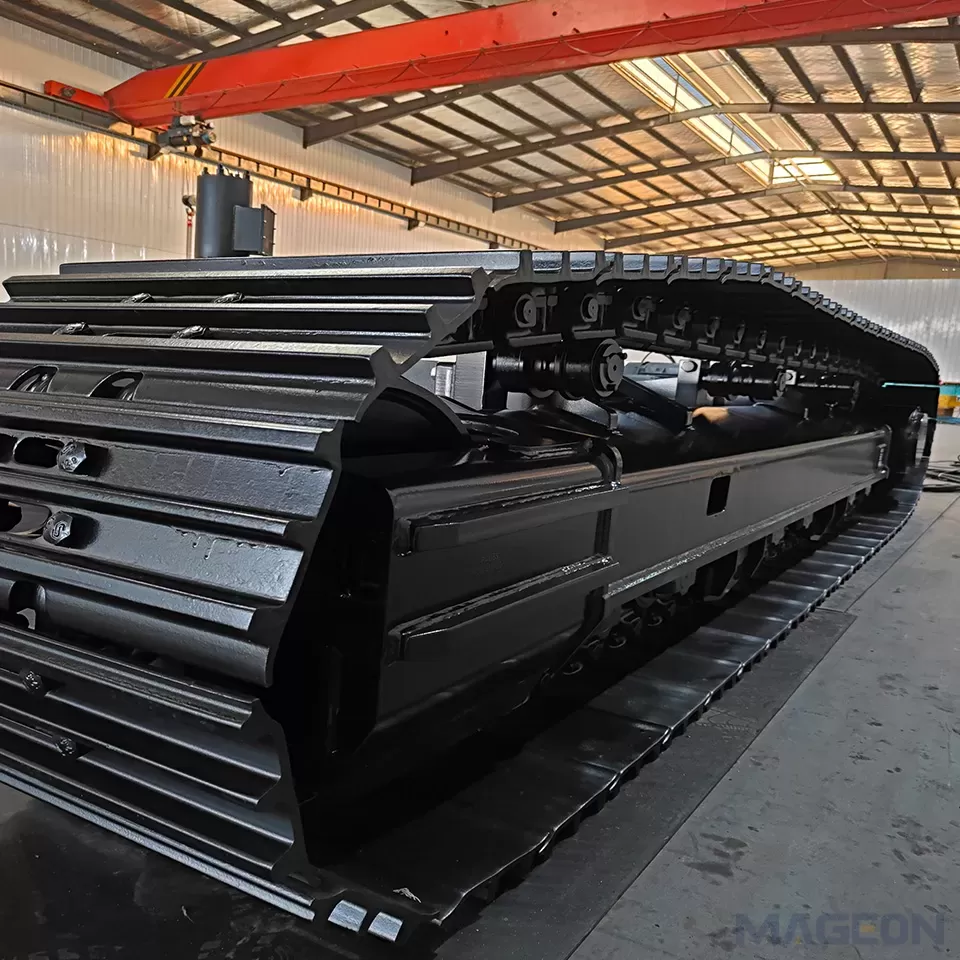
Summary
Purchasing custom tracked undercarriage at the lowest possible initial price cannot be done by just looking at the supplier's quote. The real costs that determine a project's result are hidden in the premature component wear, maintenance downtime, terrain mismatch efficiency loss, and expensive spare parts supply. If you choose a professional factory that has done a lot of DFM simulation, uses leading modular component systems and has a quality control system ISO 9001, then you can largely do away with these potential profit problems. This, in turn, will allow you to get the best solution to the overall production cost throughout the product life cycle.
Would you like to stop the rework and hidden costs that are caused by non-standard undercarriage designs? Just send us your requirements and working terrain information, and MAGEON's custom undercarriage experts will give you a free, no-obligation quote. Also, our team will in parallel provide a detailed Manufacturing Feasibility Analysis (DFM) within 24 hours. Trust us to protect your project with our proven custom manufacturing down to the finest detail!
Please leave your customization requirements, and we will contact you as soon as possible!
Leave your requirements, we'll get back to you within 24 hours.